The country that we have visited most on our travels is Thailand. This is a combination of many factors such as the warm friendly people, the excellently priced shopping, the fantastic sailing around the islands and most of all the delicious food. I’d confidently say that Thai food is in my top 2 cuisines, alongside Italian pastas.
The defining characteristics of Thai curry is the perfect balance of five fundamental tastes: sweet, sour, salty, spicy, and creamy, supported by the aromatic herbs and spices that give Thai food that distinctive and moreish flavour.
I learnt to make Thai green chicken curry after our very first trip. I learnt that green is the hottest, red – slightly milder and yellow curry is the mildest of the lot. Then I stumbled on this thing called Penang curry: The restaurant was called Kati – a little wooden hut on the island of Koh Chang, positioned beneath the lush greenery of the Thai jungle that extends into the interior of the island.
We climbed a few wooden steps that were lined with the sandals of the patrons. We slipped off our flip flops and were guided to a little table.
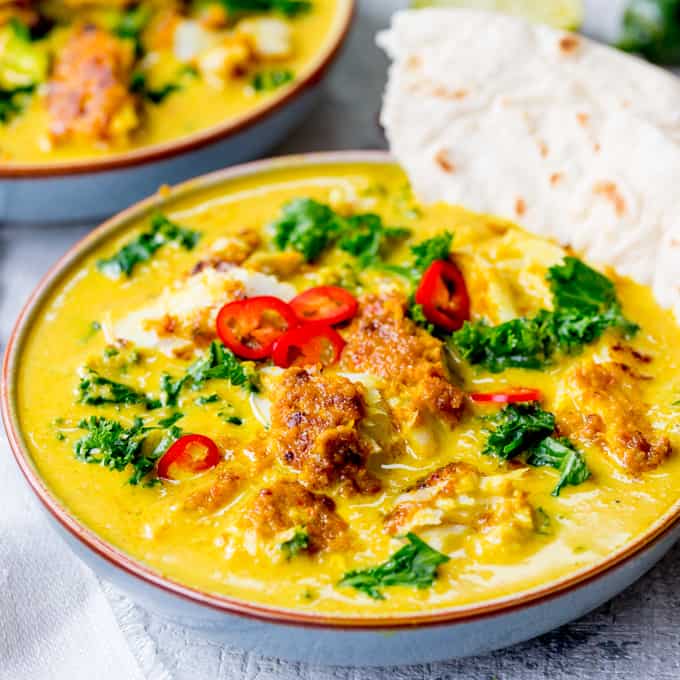
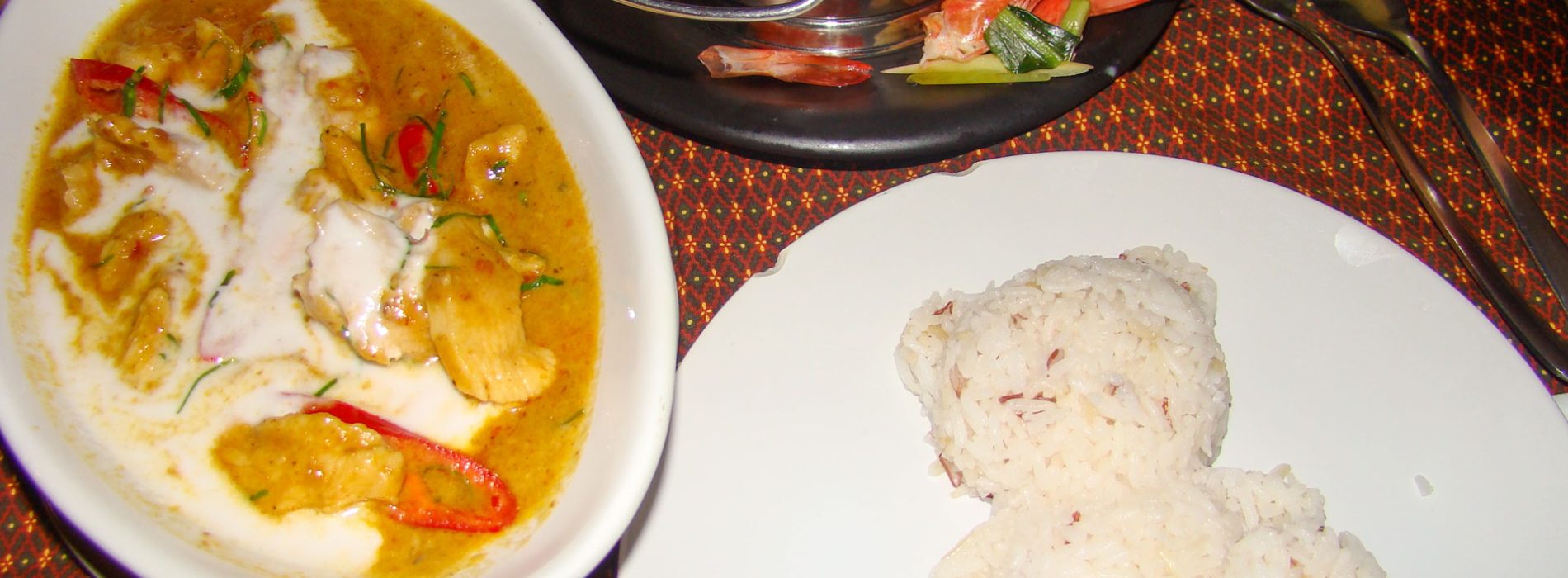
The restaurant was cosy and intimate and the food was delicious. The Penang curry was finished off with a swirl of coconut cream (as you can see in the header picture of this story.) The rice was served in little moulds. I got a Teddy Bear and Geoff got a heart
The charming entrance to Kati's restaurant
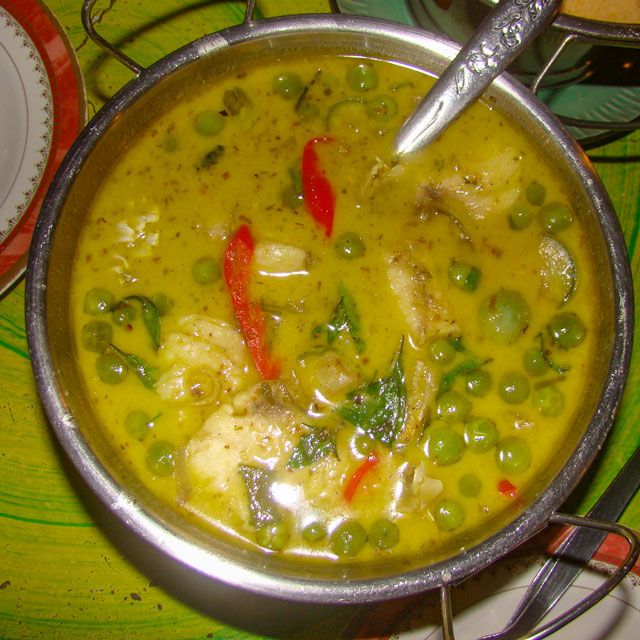
Green curry
Red curry
Yellow curry
While very similar to red curry, Penang is usually seasoned to be less spicy than red curry and has the added ingredient of peanuts that gives it a sweeter flavour. I’m salivating just thinking about it! This establishment made the perfect golden brown Penang curry sauce – nutty, with a touch of heat and a sticky creaminess that had me mopping up the sauce with the last grains of fragrant jasmine rice.
I can’t think about Penang curry without remembering the time that Marie and I ordered the Penang curry (at another restaurant – also in Koh Chang) and we were told by the feisty Thai waitress : “Not happening!” She repeated this holding her hands up emphatically. We wondered what politics were going on behind the scenes in the kitchen for her to announce that things were simply “not happening”. Only later did it dawn on us that she was saying, “no ha’ Penang”🤣
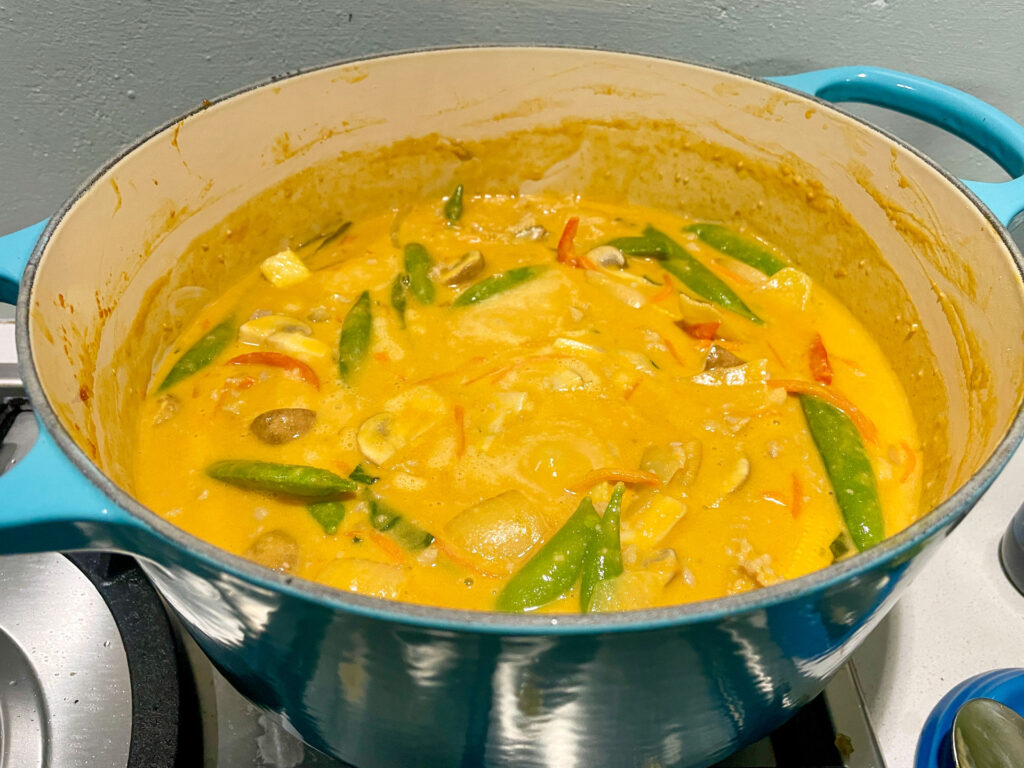
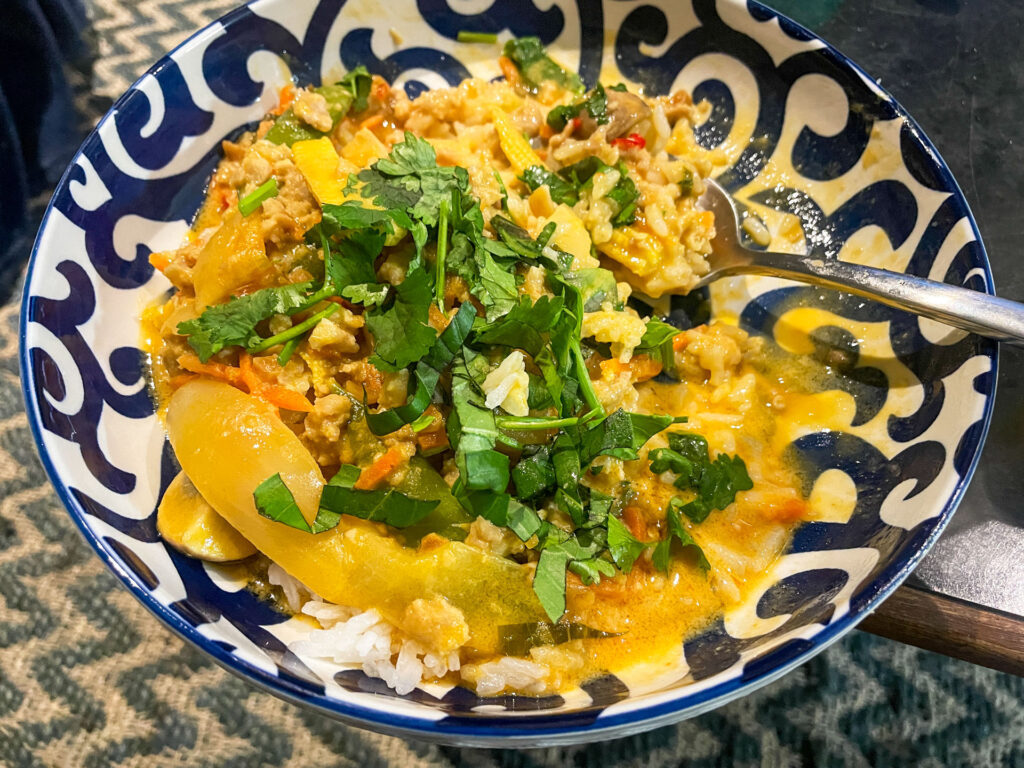
Nothing is quite as comforting to me as Thai curry. I’ve experimented over the years to create a recipe that embodies all the things I love in a Thai curry: the right amount of heat; a touch of saltiness, yet some sweetness; and the correct ratio of coconut milk; thick, rich texture; and all the fresh aromatics of lime and coriander.
I cannot claim that my Penang Thai curry is 100 percent authentic, but I try to get as many authentic ingredients as I can find in the local Eastern grocers.The most important part of any curry is going to be the curry paste as the base of the sauce. There are countless recipes out there to make your own–however, I find that I like to just leave it up to the professionals rather than keep so many specialised ingredients on hand.For Panang curry,I start with a red curry paste, preferably from the brand Mae Ploy, Blue Elephantalthough our local Woolies makes a good one. I’m also incredibly picky about the quality of the coconut milk that I use – again Mae Ploy or Aroy D is good. Please do not use some low-fat coconut milk garbage!
Coriander
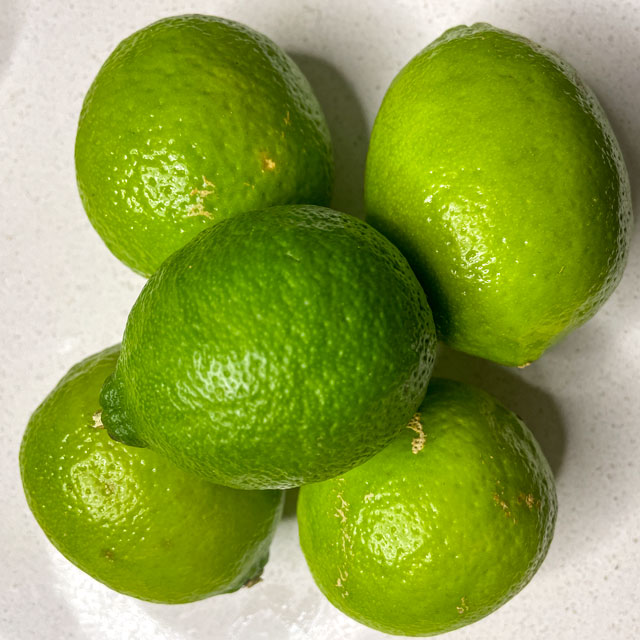
Limes
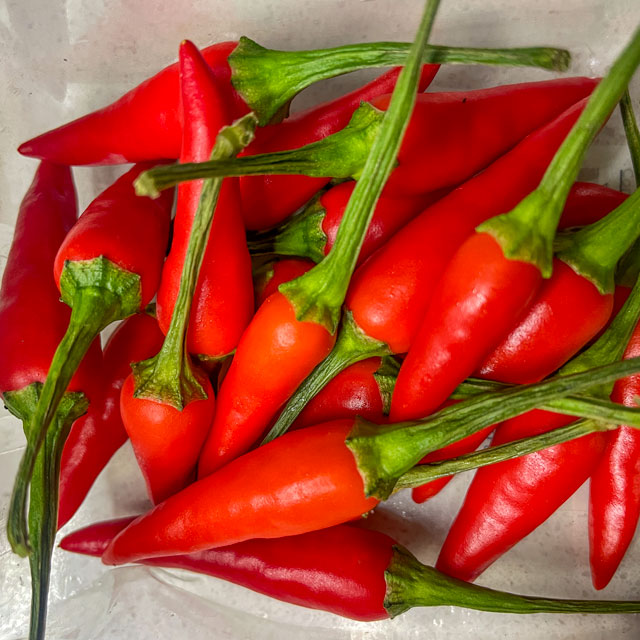
Thai birds-eye chilli
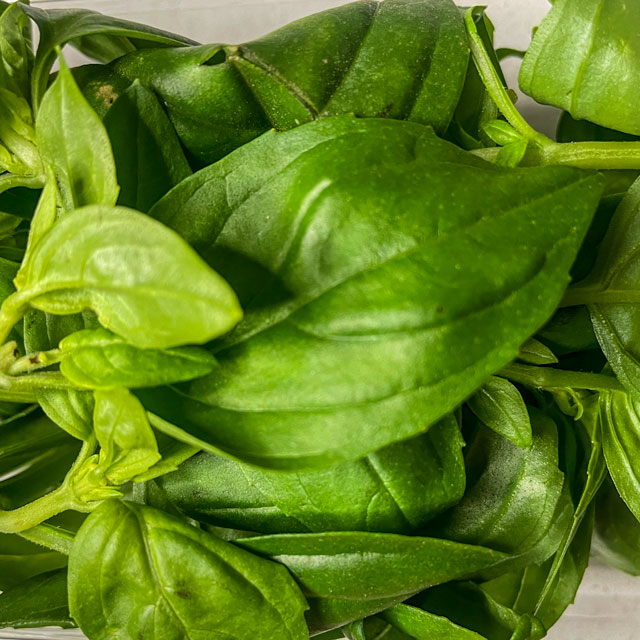
Basil
The choice of protein is personal, but Penang is often paired with pork which is one of my favourite meats. I like to use small strips of pork fillet. The trick is to slice it thinly, toss with cornstarch and gently fry in a separate pan before topping with curry sauce and veggies. This helps to give texture and caramelisation to the meat. It also creates an attractive golden brown colour on the meat, rather than greyish cooked look. I have also made the dish with pork mince and at a push, the innards of a classic English pork sausage!
Off course, Thai curry is best enjoyed with an ice-cold beer – preferably Singha, if you can get it – but even the alcohol free varieties bring out the best when paired with Thai food.
Geoff and I at Kati's restaurant
The perfect accompaniment to a Thai dish
Ingredients
1 tablespoon vegetable oil (canola or coconut)
1/4 cup red curry paste (use a bit less for a milder flavour)
2 stalks lemongrass, cut into pieces and smashed with the back of your knife
1 inch fresh ginger (or galangal if you can find it), coarsely sliced
4-6 kaffir lime leaves (6 if they are very small, 4 if they are larger)
2 cans full-fat canned coconut milk
2 oz palm sugar (you can substitute brown sugar )
1 tablespoon good quality fish sauce (Check for minimal ingredients – i.e. just anchovy, salt and sugar and no additions)
1 lb. pork fillet, trimmed of silver skin and thinly sliced
1 tablespoon corn starch
2 heaped tablespoons crunchy peanut butter
1 brown onion, chopped longways, not in rings, (like the segments in an apple)
2 carrots, peeled and sliced into sticks or shaved in ribbons
1 red bell pepper, cored and sliced into narrow strips
1 cup basil leaves, finely chopped
1 cup chopped coriander for garnish
1 lime, zest and juice
steamed jasmine rice, for serving
Method
Mix sliced pork with 1 tablespoon of cornstarch, working the cornstarch well into the meat, set aside.
In a heavy duty pan, heat 1 tablespoon of the oil. Add curry paste, lemongrass and ginger/galangal and lime leaves. Add the onion.
Using a wooden spoon, sauté the paste and aromatics for about 3-4 minutes allowing the onion to soften and until the paste starts to brown.
Add the pork and sear it for 2-3 minutes, tossing it in the curry paste.
Add coconut milk and bring to simmer, using the wooden spoon to scrape up browned bits.
Reduce the sauce a bit until the curry sauce has darkened slightly.
Add the peanut butter, palm sugar, fish sauce and lime juice and zest and cook until sugar has completely dissolved.
Taste sauce and add fish sauce/sugar/lime as necessary.
Add bell pepper and carrot and simmer for 5-7 minutes, until tender. Stir in the basil and simmer for another 5 minutes.
Taste for any additional seasoning. Serve topped with coriander over steamed jasmine rice.