Southern Namibia🇳🇦: A photographic adventure – Part 1
SUNDAY By unfortunate coincidence, the Cape Town Cycle Race (the world’s largest individually timed cycling event) was planned for the exact day of our departure – meaning roads on the southern Cape peninsula were closed from the early hours.
As a result Jon picked us up in Simon’ Town shortly after 4am. Pleasant cool weather, but little did we realise that this would be the last we would experience for some days.
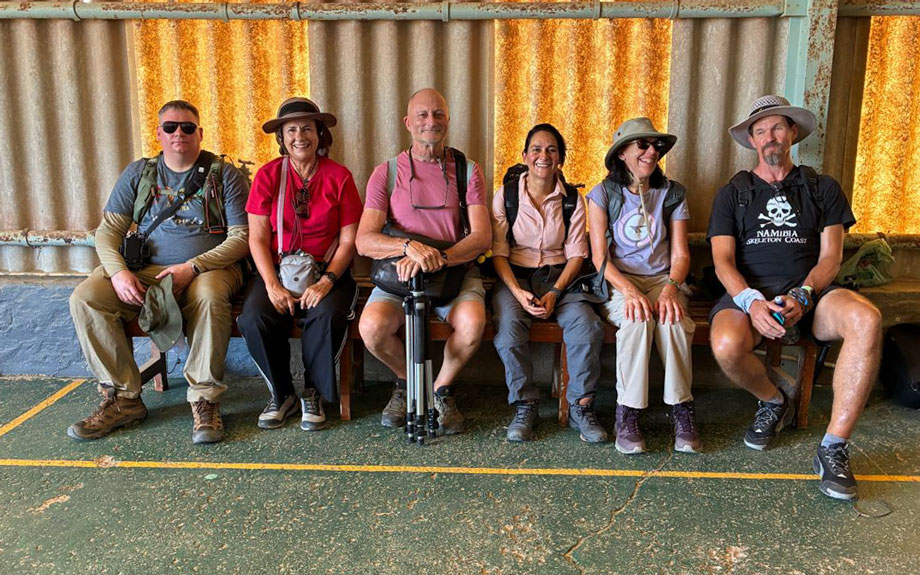
We’re doing a photographic trip with VentureKJ, led by professional (award-winning) nature photographers Kyle and Jon.
We collected Rosie in Muizenberg and the “A” team was ready to hit the road.
Literally gagging for coffee, our first stop was just outside Malmsbury where we circled like hyenas waiting for the first shift to arrive and fire up the coffee machine!
Later we stopped for a roosterkoek brekkie at De Tol at Citrusdal.
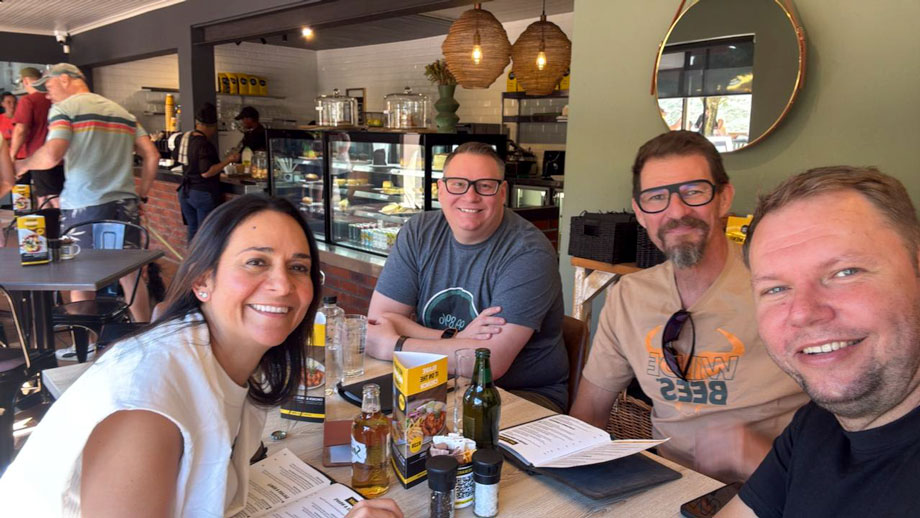
The Advance Party (Rosie, Nikki, Geoff - Jon taking pic)
The "B" team, who later tried to rechristen themselves as the "A+" team (Ana, Matt, Johann and Kyle)
Arrived at Kamieskroon by midday and were able to have a much-needed snooze in our room.
Later we wandered down to Ye Olde Shoppe and ordered milkshakes and chicken mayo sarms with an interesting pasta salad. Let the carb-loading begin!
We went for a stroll around the village to see the church etc. Gosh this is a crazy hot part of the world! I was informed that the Northern Cape boasts only 1 person per square km. It was hard to imagine the area flooded with flowers in Spring.
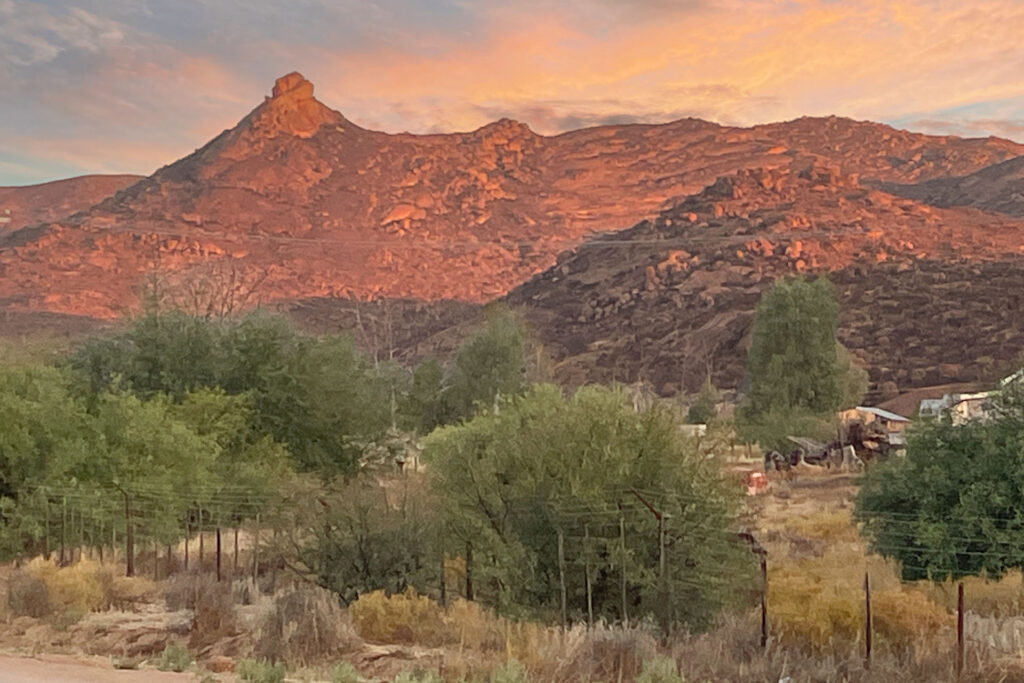
The kroon (crown) of Kamieskroon
We lazed around reading until 6pm and then went to the hotel for dinner. Great to meet the rest of the crew, Kyle with Matt, Ana and Johann.
We had a surprisingly delicious roast chicken and cottage pie for supper. Rosie’s vegetarian pasta was also proclaimed delicious. Agreed that we were off to a good start, food wise.
MONDAY We slept well and were up early for our 6h30 departure for Namibia.
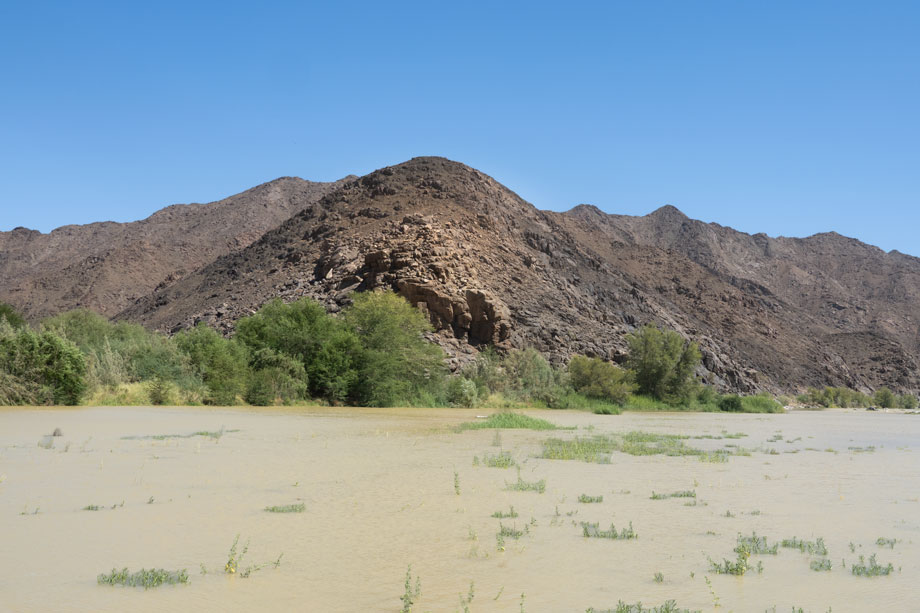
Quite a stunning drive through Namaqualand via Springbok. Nice to see a full and flowing Orange River.
Getting through the border at Vioolsdrift was painless.First we had to have the car sprayed for Foot-and-Mouth disease and all of us had to step into trays of disinfectant.
We had a tense encounter when Jon was stopped at one of the checkpoints and asked: “Any dairy on board?”
At that very moment, Geoff and I were busy spooning yogurt into our mouths so we just froze, shook our heads, hoping for the best.
We headed off on the C13. Shortly afterwards we stopped at a Wimpy for brekkie. It felt like the adventure had officially begun.
From here on we passed endless mesmerising scenery of the Richtersveldt: beautiful craggy mountains, fields of grapevines. We passed environmentally-friendly informal settlements, their abodes insulated with grass and sticks. There appeared to be zero people around. The road wound along the Orange River and later we also crossed the Fish River.
We stopped at Rosh Phinah to deal with the punctured tyre on Kyle’s vehicle. At this point, Jon and Kyle paused to deflate the tyres for the dirt roads ahead. It was a mere 37 degrees.
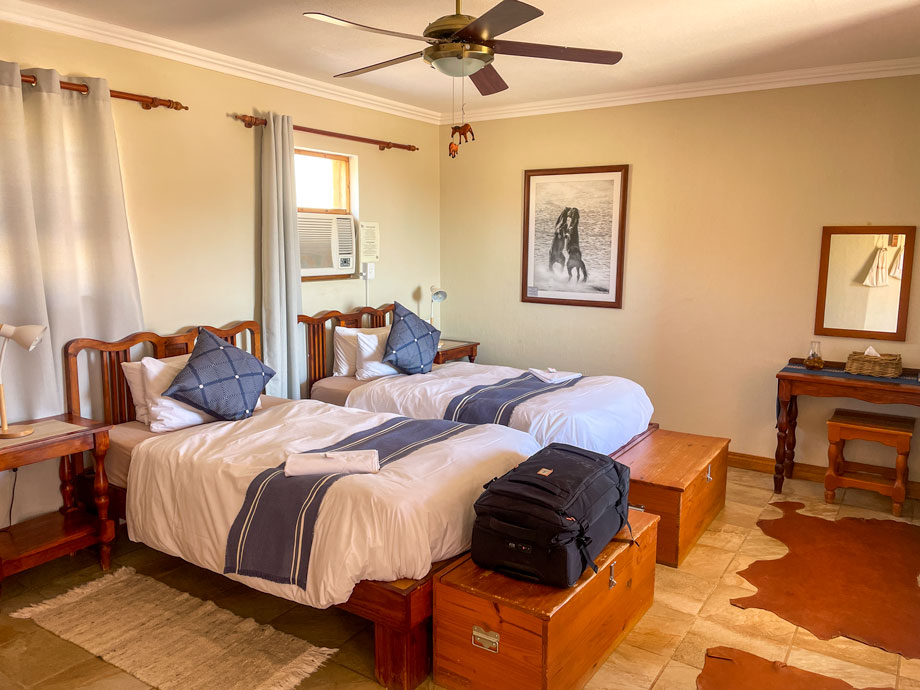
We arrived at Klein-Aus around 2pm. Surrounded by the rocky Aus hills, the Desert Horse Inn is a delightful base to see some of the southern Namibian treasures. It’s a charmingly appointed wooden resort with a very welcoming pool given the 40 degree dry heat. I was less delighted to hear that they had just removed a puff-adder from the reception area. What? It slithered up all those stone steps? With all those people around?
Nasty piece of metal lodged in our tyre!
We were relieved to have aircon in our room. Had lunch with Rosie on the deck ordering Bratwurst (when in Rome) and a chicken mayo pie.
After lunch we enjoyed a refreshing swim and then we lay around reading. We all headed out at 5:30pm in search of the wild horses.🐎
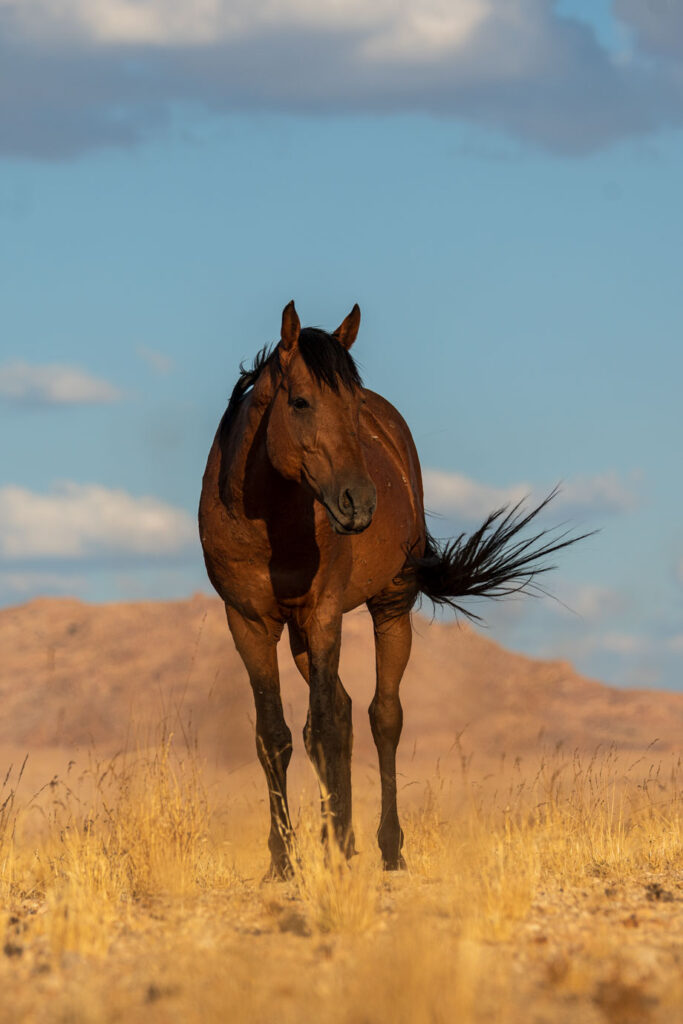
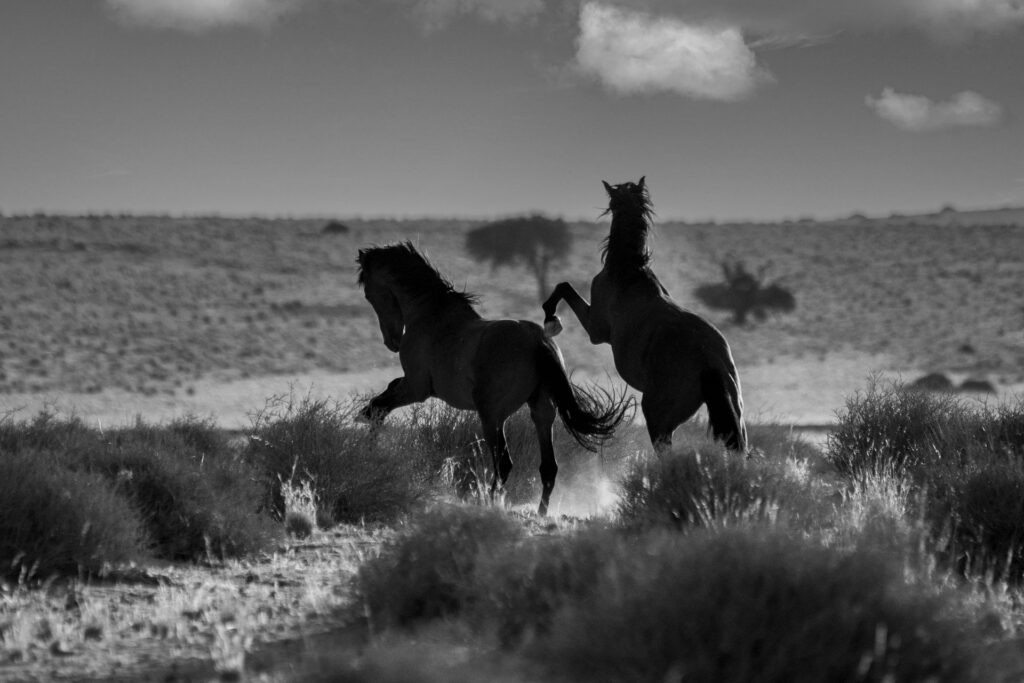
And we found them! We hopped out of the vehicles and strolled across the dry, gravel land. The breeze gently moved their tangled tails and manes, with the dust exploding in puffs as their hooves hit the sand. On noticing another horse in the distance, they broke into a trot.The dynamics between them are fascinating to watch – their greeting rituals, include jumping up on hind legs, usually with a snort and a kick. Quite a challenge to capture the moment on camera and at a distance.
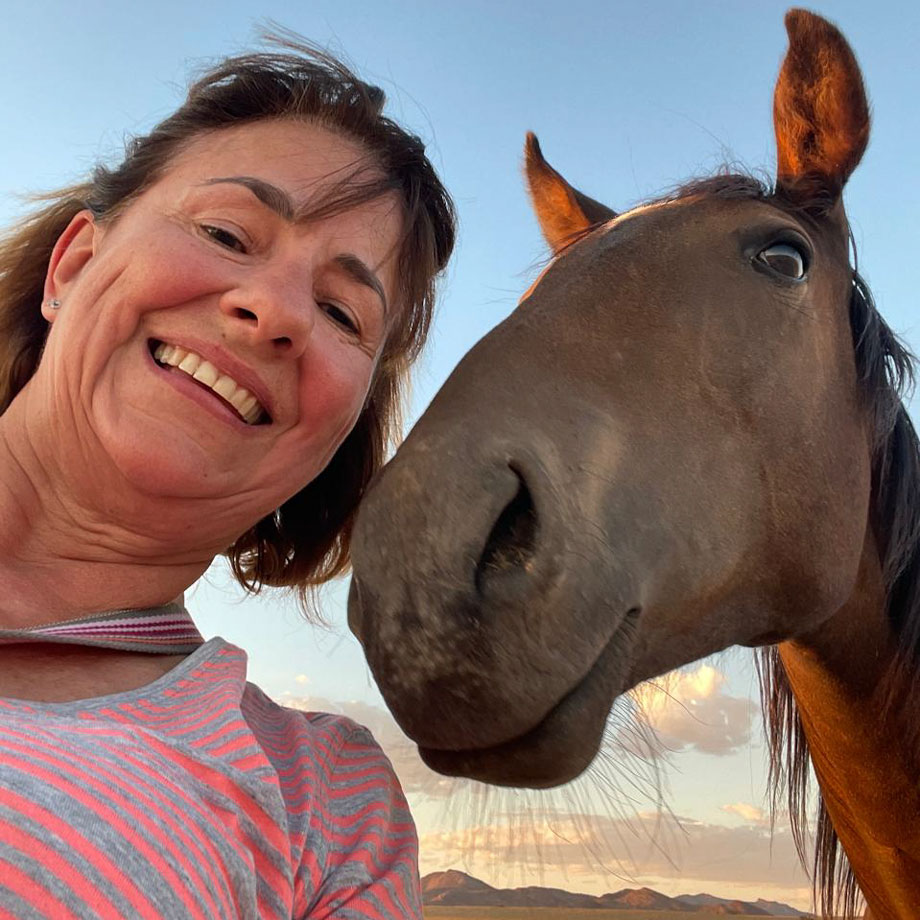
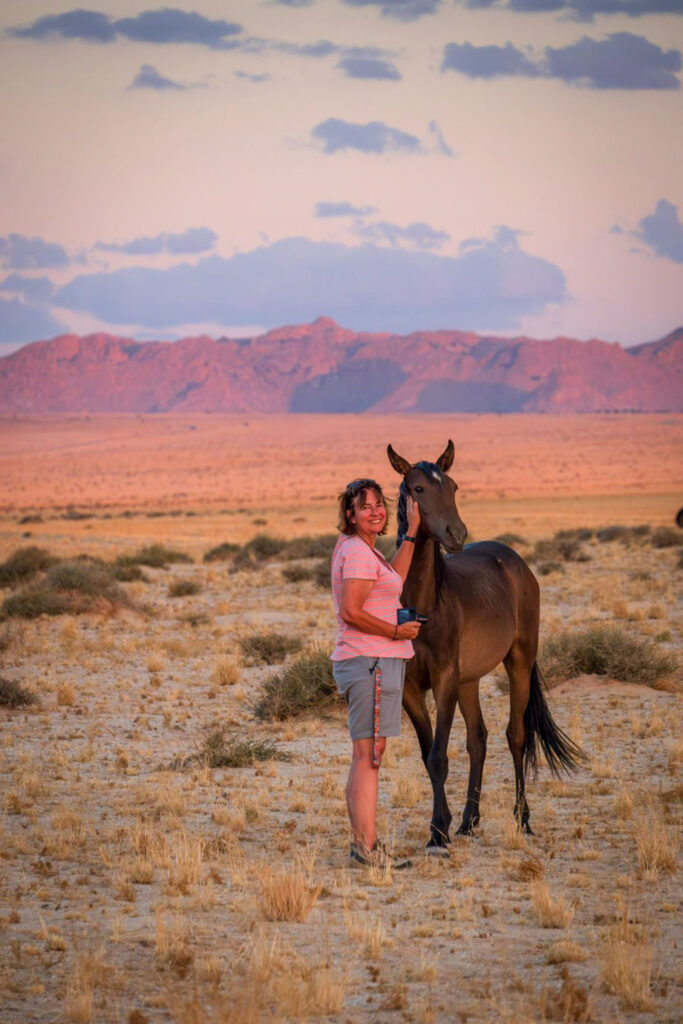
I moved a bit closer because my little camera doesn’t have the zoom capacity of the bigger lenses. Supposedly feral, these sensitive curious creatures approached me. I was a little nervous as one horse, perhaps hoping for an apple, began nuzzling me and allowing me to scratch his beautiful face. Totally surreal experience to be amongst these striking animals as the sun set around us, highlighting the landscape in yellows and pinks. Sadly they are continuously under threat of extinction due to hyenas attacking their foals.
The Namib horses are descended from the Kubub stud farm breeding horses, established at the beginning of the twentieth century, only 35km from where they are today. The farm was abandoned during World War One, leaving the unfenced and ownerless horses to follow the grazing. The Namib horses adapted their behaviour to ensure their survival in the desert, allowing a certain amount of dehydration. This condition would severely stress a domesticated horse. (Nambia’s Wild Desert Horses; Africageographic.com)
Gosh, it was so hot and dry. We headed back to the lodge after sunset and for dinner. Only ended eating around 9h30pm. I tried the Oryx spaghetti bolognese which was quite tasty. Geoff had the pork belly which was braaied like chops, but delicious.
We’re not used to eating so late at night but had a complete inability to say no to delicious food!.
Showered off the dust of the day and to cool off.
TUESDAY
Awake at 4:20 feeing hot and a bit overfed 🐖. Our aircon had kicked off and we didn’t work out that it was on a timer…
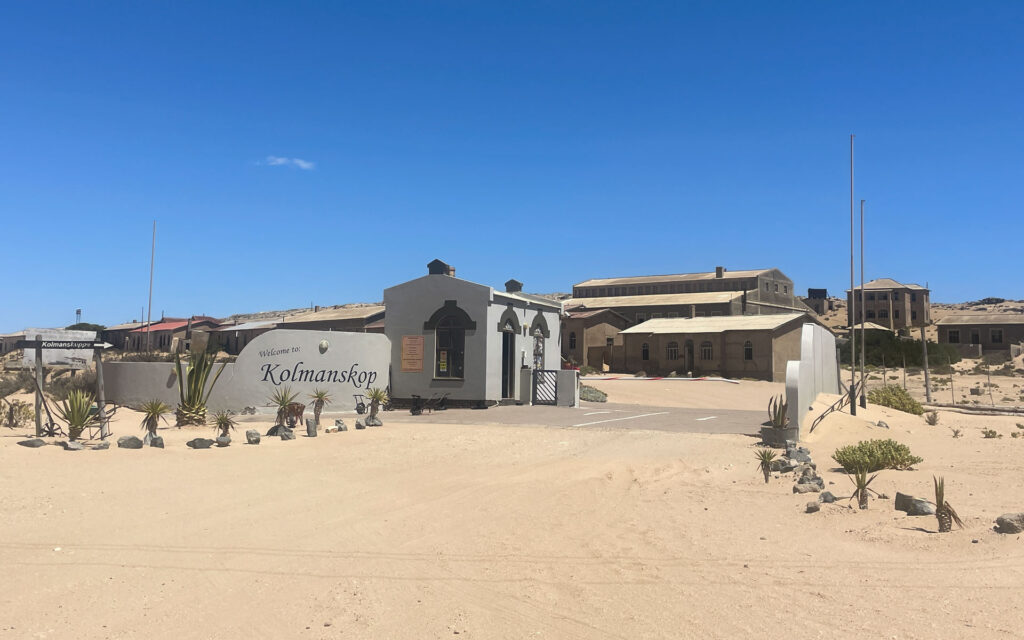
Departed at 5am for Kolmanskop.
We were a bit startled to see that it was already 30 degrees at 5h30 am 🥵 and then 35 by 6am and, quite terrifyingly, it continued to climb to over 40 during the day.
There was none of the chill desert air we recalled from our April 2015 visit. Ana told us how they had frozen to death on their last trip, resulting her having packed no less than 3 puffer jackets! Sadly they remained unused for the entire trip.
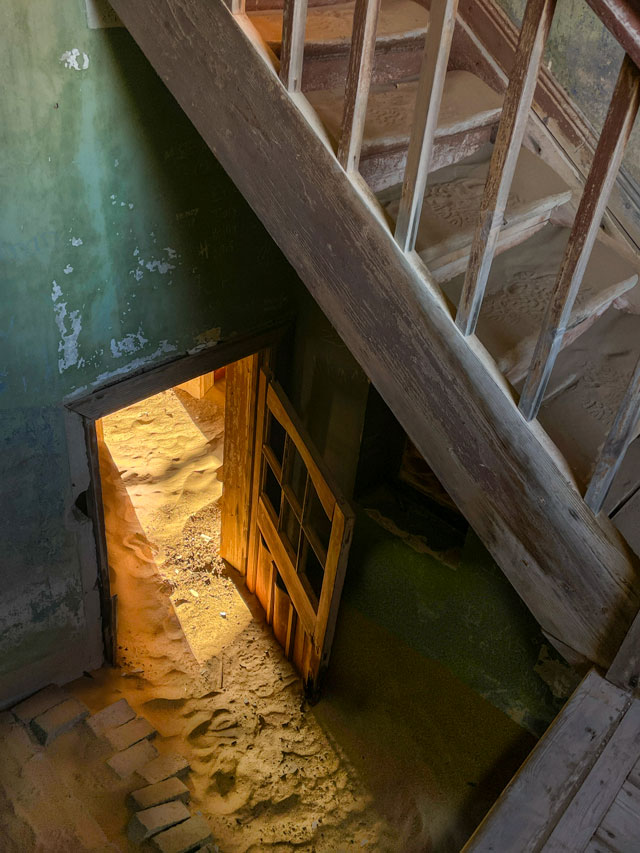
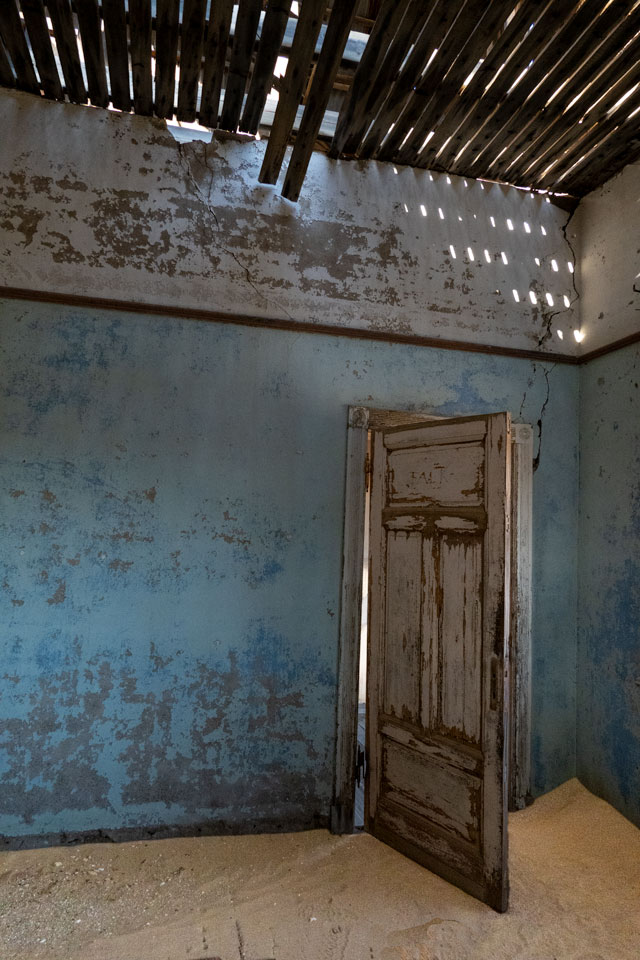
Getting in early to Kolmanskop requires special photographic passes which Jon and Kyle had procured for us. Fortunately we were the only photographers on site as the sun began to emerge, as we were told about their previous trip where the jostling for prime sunrise spots was almost cutthroat.
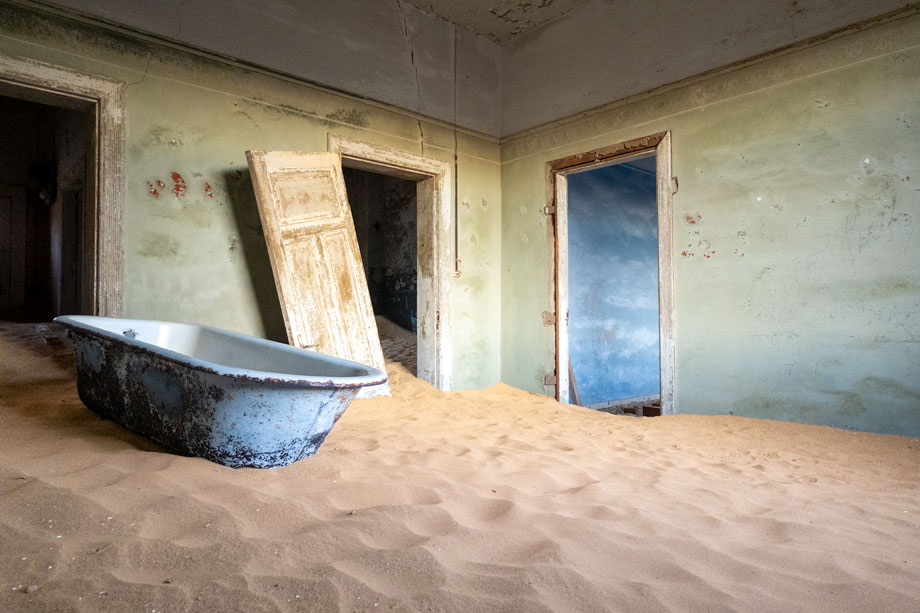
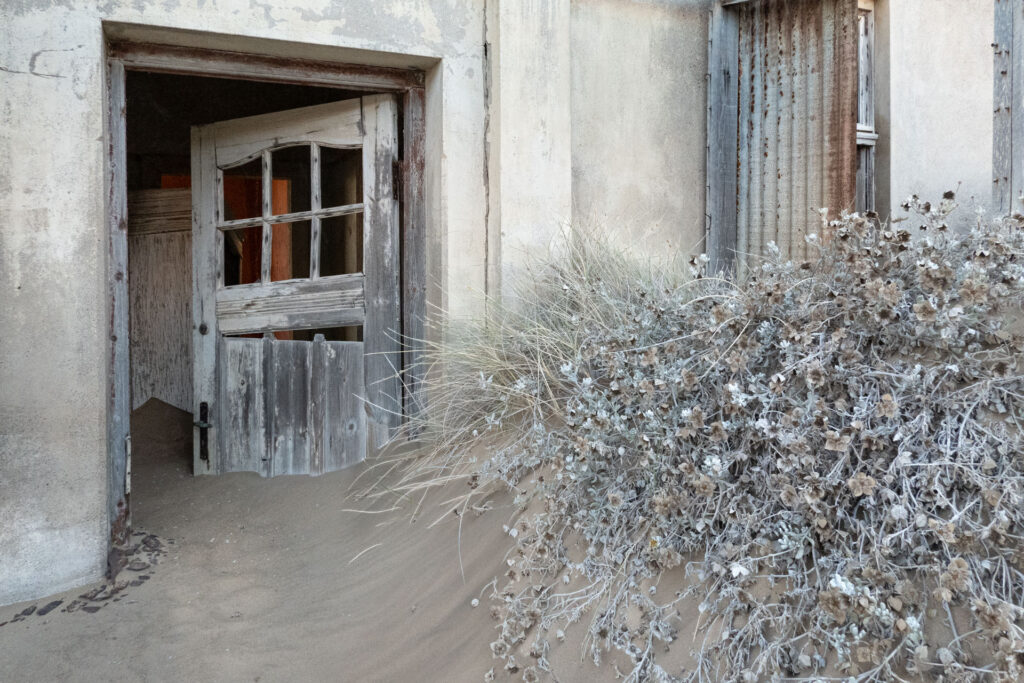
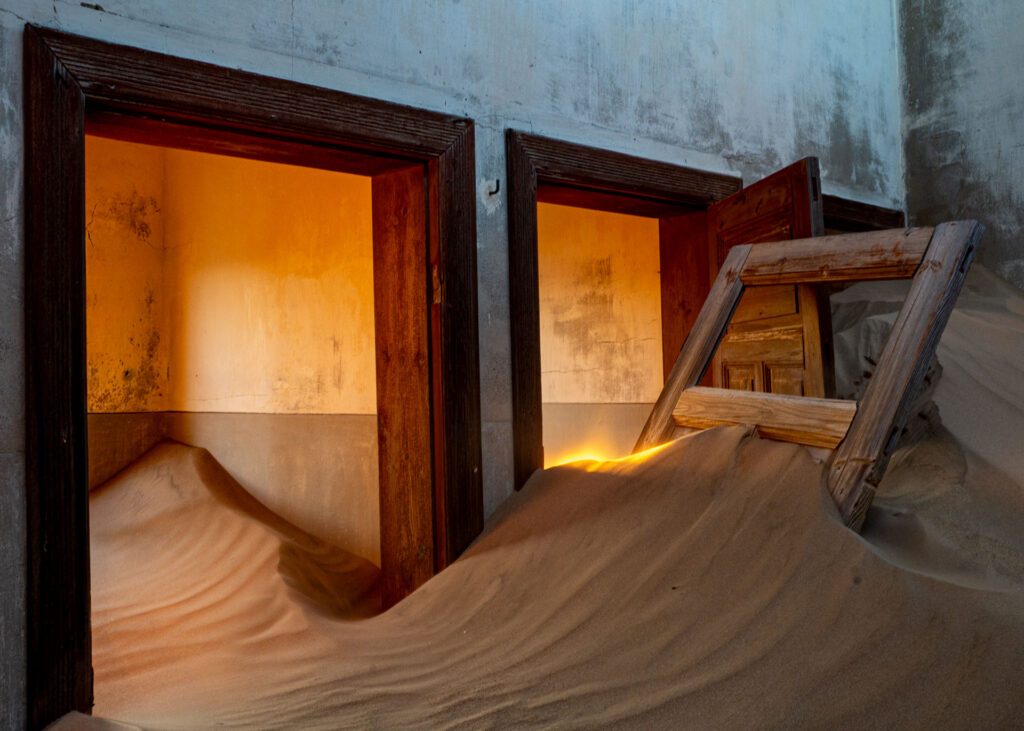
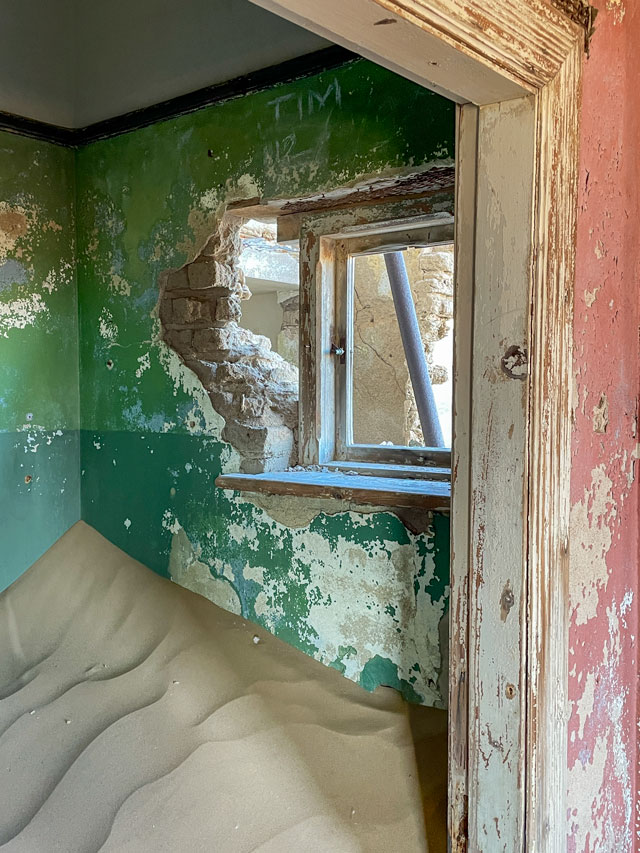
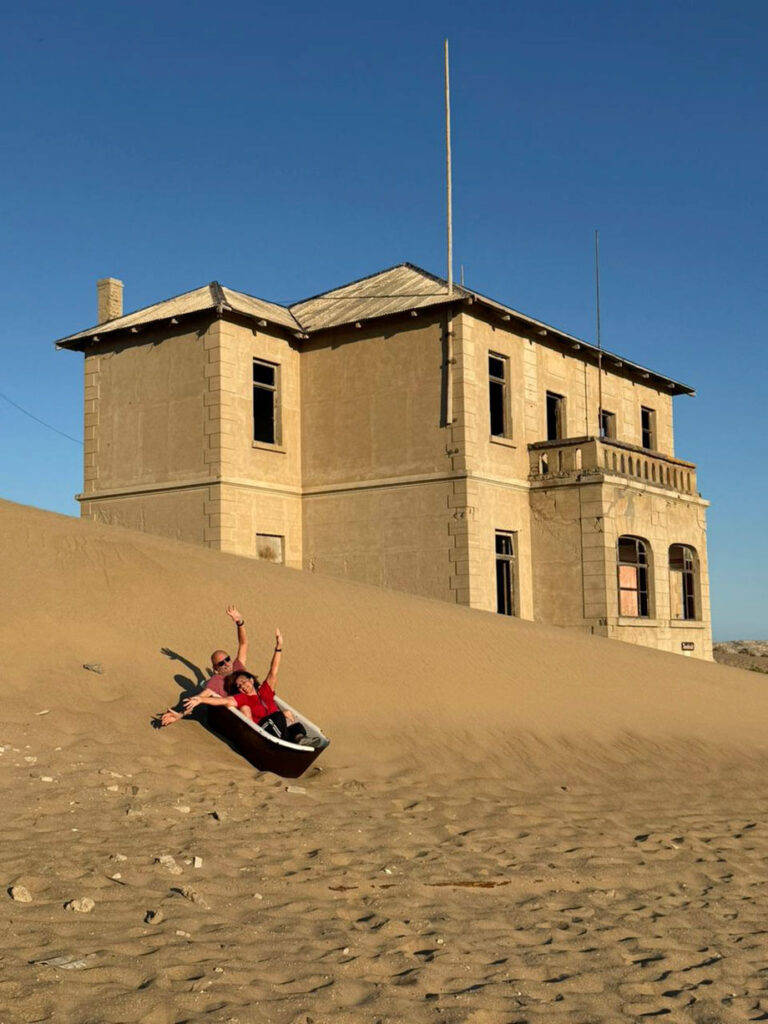
Kolmanskop is a famous, abandoned diamond-mining “ghost town”, located about 10km inland from Lüderitz. Established in 1908 during a diamond rush, it was once a wealthy, modern German-style town that was completely deserted by 1956. Following the diamond discovery, the town grew rapidly, featuring luxury amenities like a casino, theatre, ice factory, bowling alley, and the southern hemisphere’s first X-ray station. It was abandoned after richer deposits were found further south in the 1920s and mining operations were moved. 💎
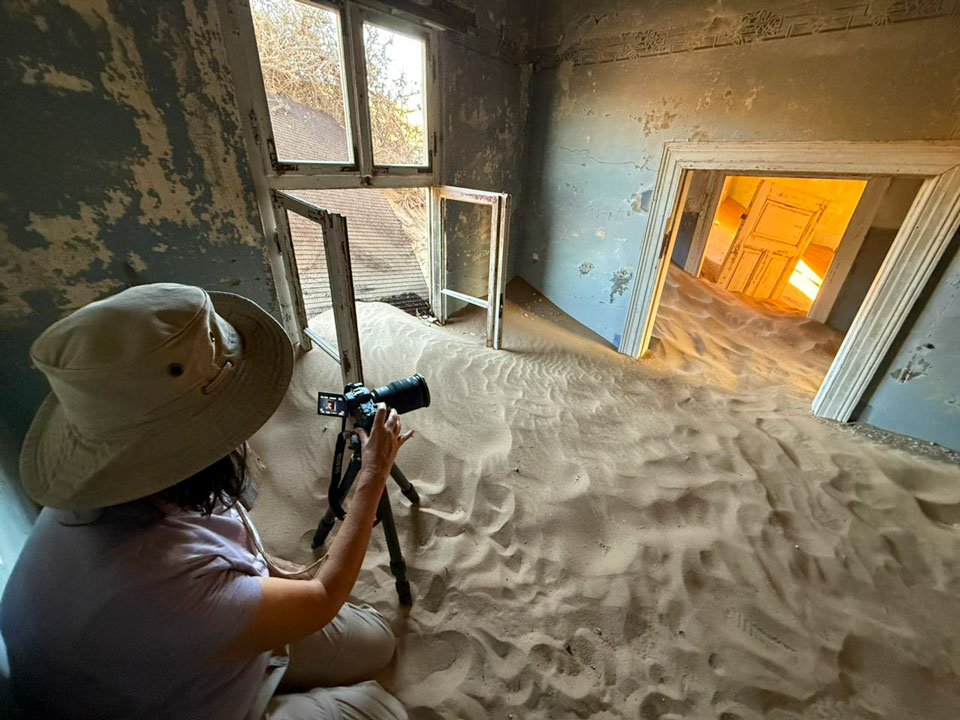
Soon after arriving, a hot wind began ruffling the sand. It continued building to an intense blasting that caught you as you crossed between the buildings. The advantage was that the layers of footprints from previous visitors were swiftly removed from our foregrounds, but unfortunately our cameras were immediately covered in a fine layer of dust.
Even with just 8 of us shooting, it was quite hard to make elbow room so we tackled different areas and then switched, dashing about to make the most of the gorgeous golden light peeking through the windows and onto the wooden window frames and piles of encroaching sand. Jon and Kyle rallied between shots with nifty puffing tools and brushes to salvage our lenses.
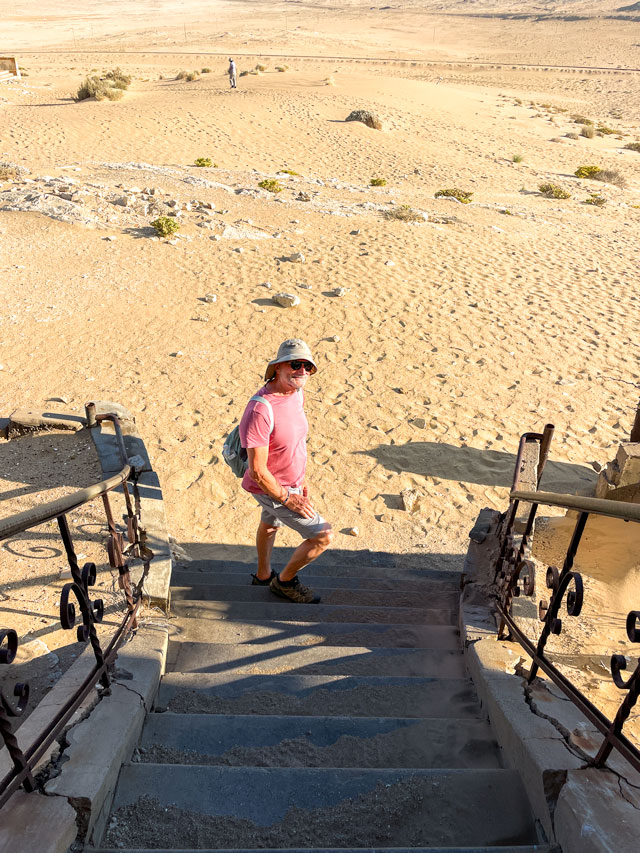
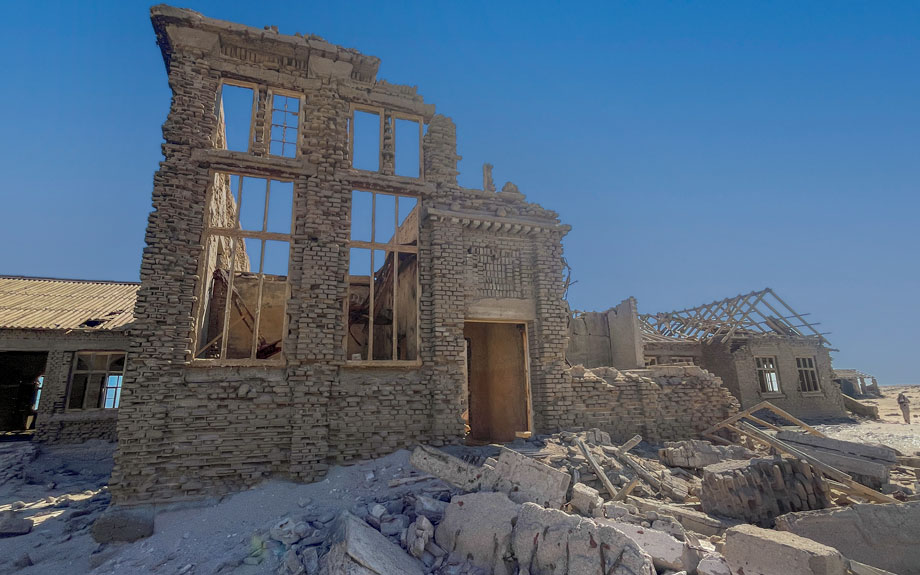
Geoff and I noted that there was a lot more sand and deterioration since we were last here which made me sad that in the not too distant future there might be little that remains.
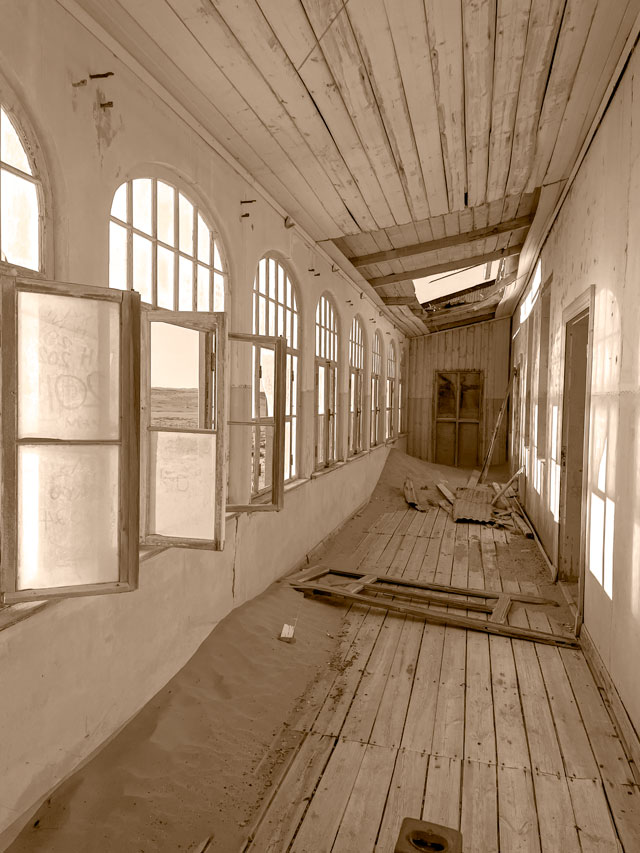
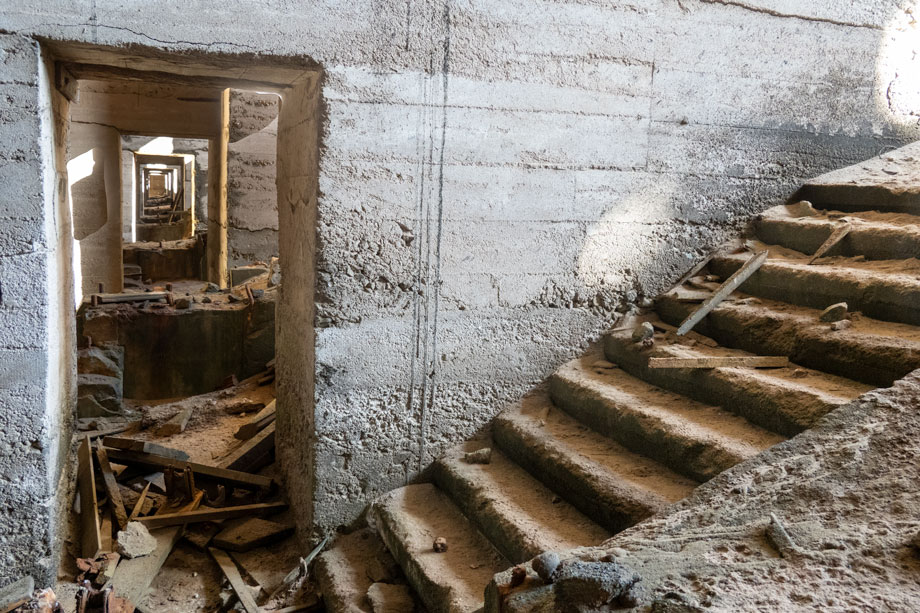
We split up and wandered around. I revisited the dramatic passages of the Krankenhaus, the double storey architect’s home and many others.
By 8am the heat was already unbearable and the relentless wind was exhausting. I probably gave up too soon but really found it to be tough going and hard on our equipment so we retreated to a shady spot in a courtyard and ate our packed breakfast.
Afterwards we headed into the coffee shop which was still sweltering but a bit more comfortable than being outside.
Geoff and I forewent the tour, having been on it before, but also to avoid being exposed to the elements. Returning from the tour some of the others reminded us that In the town’s heyday, the precious stones were so easy to find that they could be picked out of the sand. Workers armed with jam jars would crawl on hands and knees, filling them with diamonds. The diamond concentration was so high that in its prime, the town produced about 1 million carats a year, representing nearly 12% of the world’s total diamond production at that time.
The plan was to head to Luderitz, mellow out and have a spot of lunch.
We found a cafe that was fairly basic but a trifle cooler than being anywhere else. Discovered a drink called a Malawi Shandy which comprises Dry Lemon, Ginger Ale and a splash of bitters. With lots of ice, it proved to be refreshing! Our waiter was amusing in his inefficiency. Johann requested “no tomatoes”, only to be told: “I’m probably going to forget that you don’t want tomatoes on the ham, cheese and tomato sandwich”. And then when he brought it, oozing with tomato, he said “I told you I’d forget “😂
Later we headed back to Kolmanskop where we were met by Klaus who took us in an air-conditioned van to the Sperregebiet (restricted area) of Elizabeth Bay’s derelict diamond mine. We were informed in a most authoritative tone: “Don’t pick anything up!”
“While Kolmanskop captures the headlines, Elizabeth Bay hides the secrets. If Kolmanskop is a museum of the past, E-Bay is a raw masterclass in urban exploration. Here, the ruins feel visceral; the decrepit buildings and rusted machinery stand as skeletal witnesses to a history fueled by ambition and greed.
Born in a flurry of activity between 1920 and 1926, E-Bay was a feat of sheer will. Every brick, beam, and engine was hauled across the desert by rail from Lüderitz to support a global force of German engineers and local laborers. For a brief, glittering moment, the earth gave up 1.25 million carats of diamonds—until the Great Depression brought the world to its knees. By 1940, the town was a ghost. Today, the wind whistles through a graveyard of industry that has seen mining life flicker on and off for decades, now entering a new chapter under modern ownership.” (Bogenfelsnamibia.com)
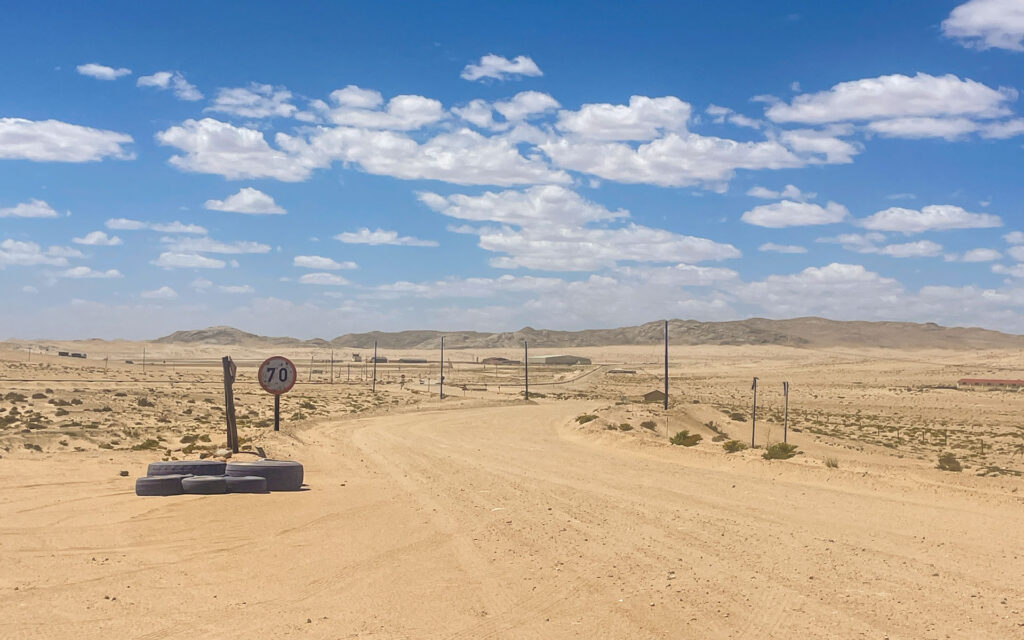
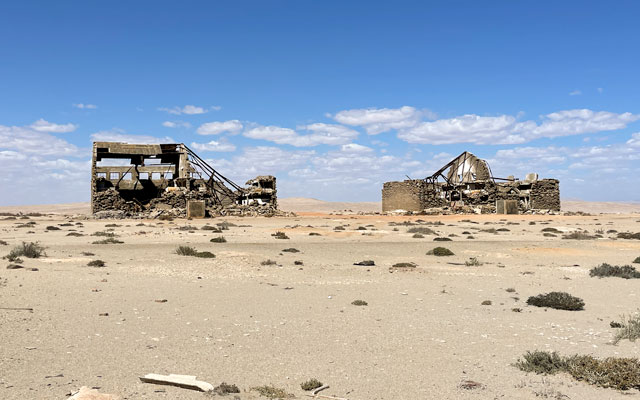
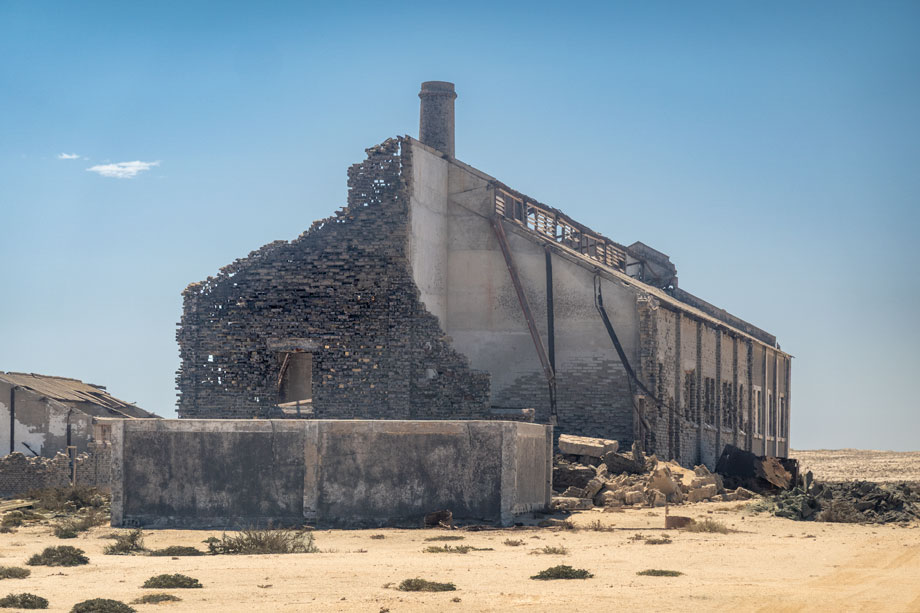
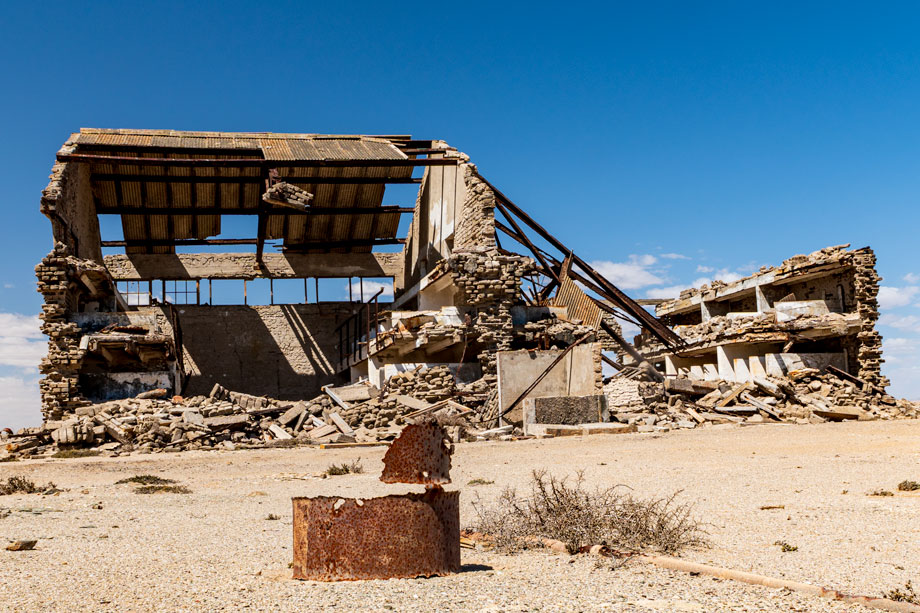
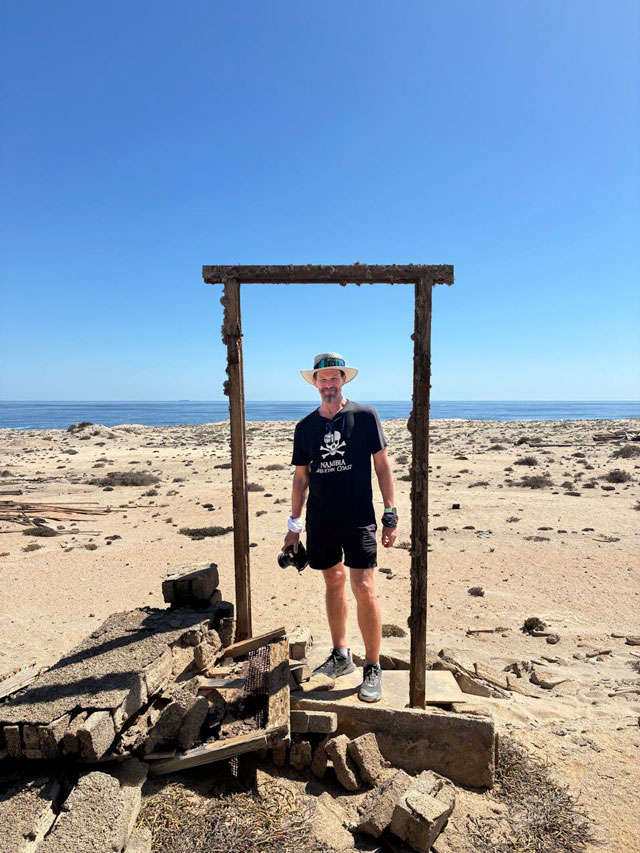
We were ushered in to the Namdeb control point. Once cleared for entry into the restricted southern territory, we traversed the 26km stretch to Elizabeth Bay, which is located about 20 km inside of the Forbidden Zone, – an area of the Namibian desert that’s closed to the public. It’s a fascinating settlement with decrepit buildings and rusted, broken-down machinery that tells of a dark, greedy history.
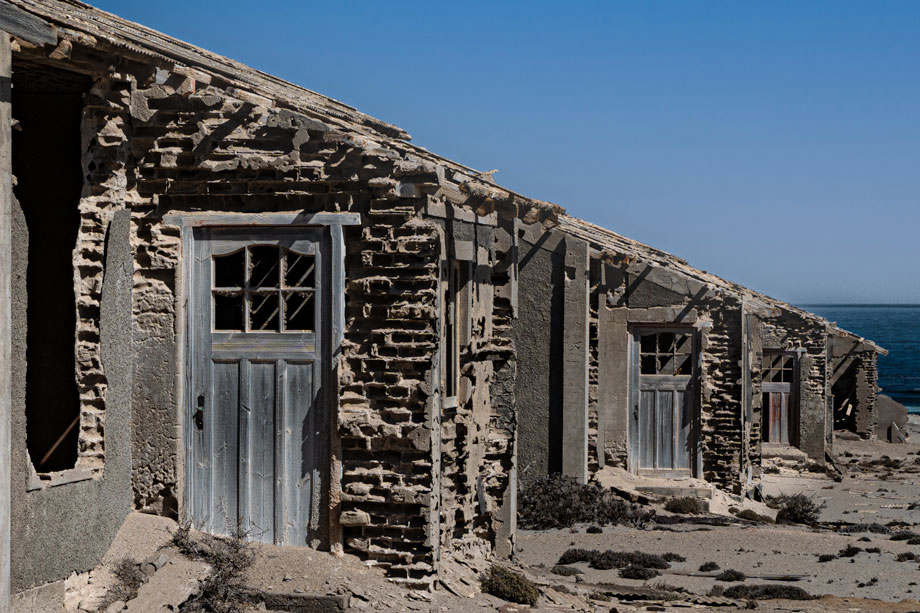
These "slots" are where the miners would sleep...
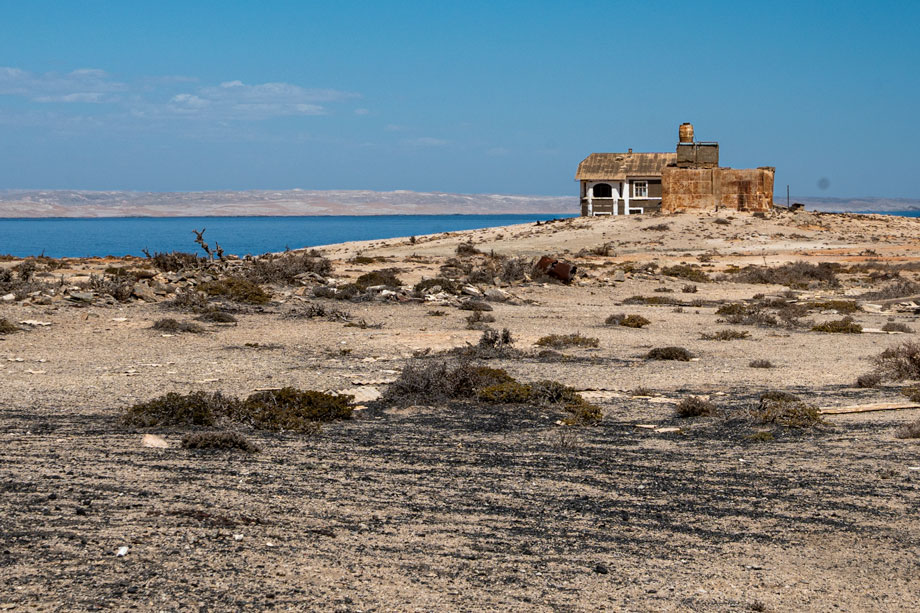
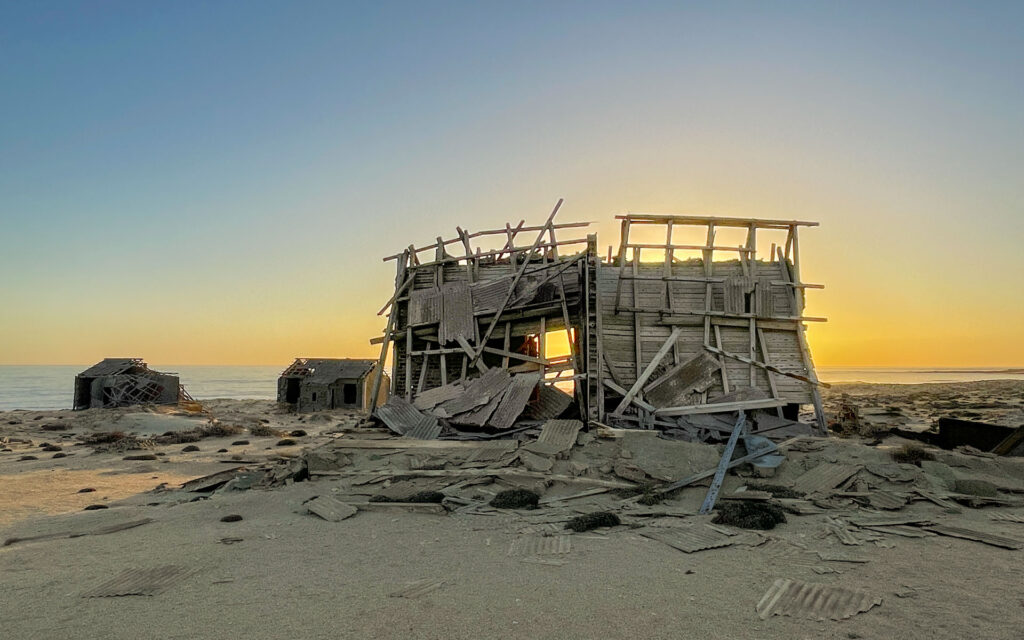
...contrasted with the supervisors' abodes overlooking the sea
While the German workers enjoyed proper housing, the Namibian miners were subjected to quite different conditions. Their housing and washrooms were all shared. The buildings where they slept contained cot-size beds separated by a small wall divider. About 20 beds ran along each side of the buildings and in some, rows were stacked on top of each other forcing more men into the cramped conditions. The doors to these “houses” were locked at night and their windows were small and high off the ground to discourage any workers from escaping overnight.
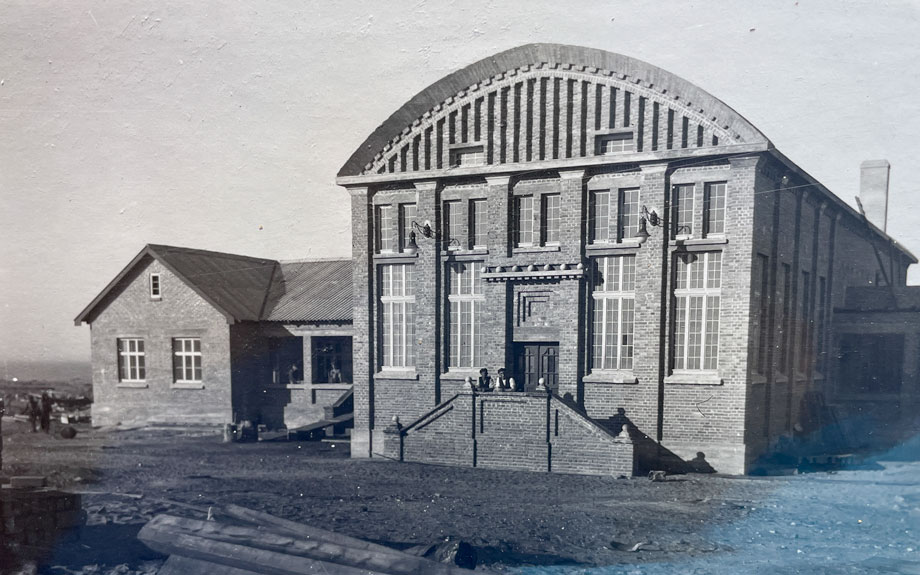
After a quick flash of success, the town closed in 1948. Then, in 1991, a new Elizabeth Bay mine was opened and was still in operation until 2024, when they eventually closed due to the competitive pressure from cheaper, artificial ‘diamonds’ manufactured in China and Russia. The remains of the original town still stand, weather-torn and beaten, but still resilient as they capture the memories of when the town was at its peak. Klaus shared the photograph of the original casino building while we stood in front of its dilapidated fasçade.
Photography conditions were less than ideal with the dazzling stark light and extreme shadows. Klaus made sure we had plenty of cold water to drink as we drifted between buildings, capturing the hauntingly sad decline, or simply soaking in the silence of the past whenever we found a slither of shade.
Absolutely stinking hot at Elizabeth Bay with no shade to speak of and a fair wait til golden hour. The only positive was that the wind had died so at least we weren’t being sand blasted.
We wandered through the skeletal remains of another once-thriving town: marvelling at the ruins of the grand entertainment hall and casino, where the elite once toasted their fortunes while overlooking the Atlantic.
A double-take moment as a lonely jackal limped past us and vanished into the shadows between the houses.
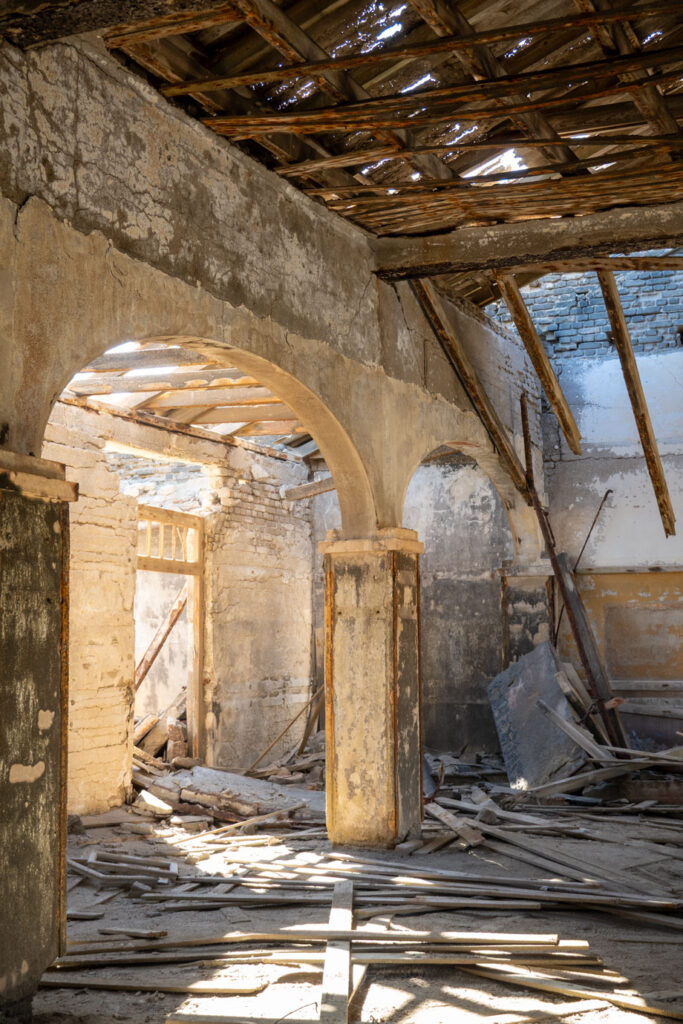
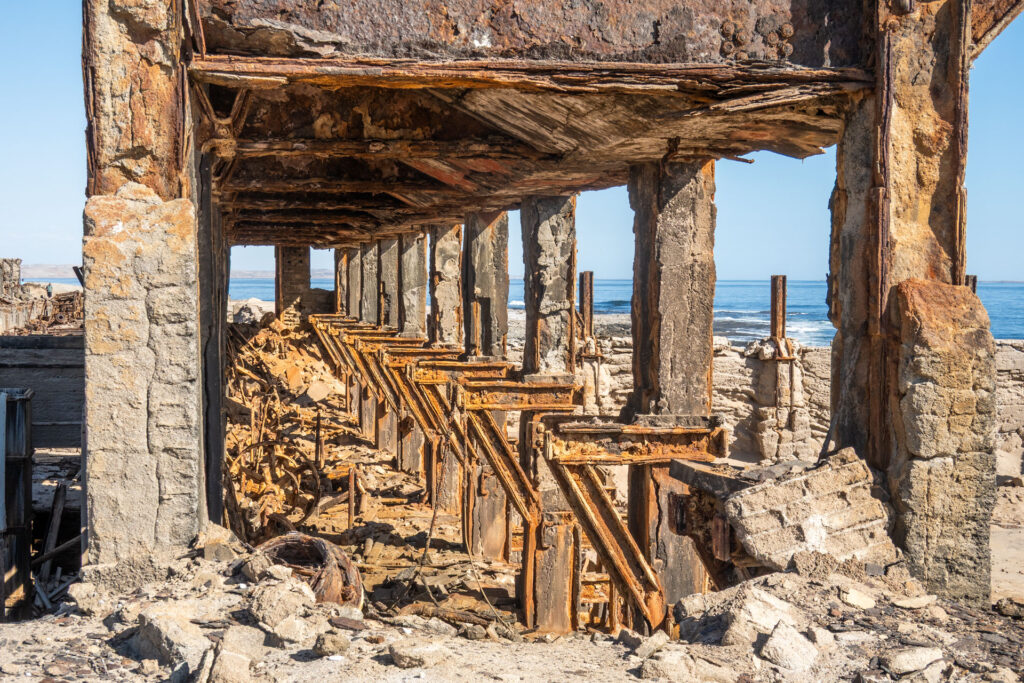
The settlement is in various stages of decline. It is sad to see the beautiful wooden struts and floors buckling under the weather and seemingly tossed aside by the wind. Solid window frames in reasonable condition are strewn about. An icy cold blue sea surrounds the deserted accommodation.
We made our way through the massive industrial heart of the mine to the Separation Plant where we gazed in awe at the staggering feats of engineering.
Despite being appalled at how dangerous the zone is, literally crumbling and rusting around us, we were so grateful to be able to experience this place. Extreme crumbling drops and fall-off’s from collapsed or teetering trusses, and sharp shrapnel from rusted metal everywhere. When Rosie caught her balance against one wall, it collapsed under her touch (narrowly missing Johann – who accused her of trying to kill him 🤣). The beach was a waiting tetanus shot of rusting beams, although the icy-cold ocean seemed quite compelling.
Just when it couldn’t get any hotter, the Germans offered us coffee and cake 😂 in the old mine manager’s house.
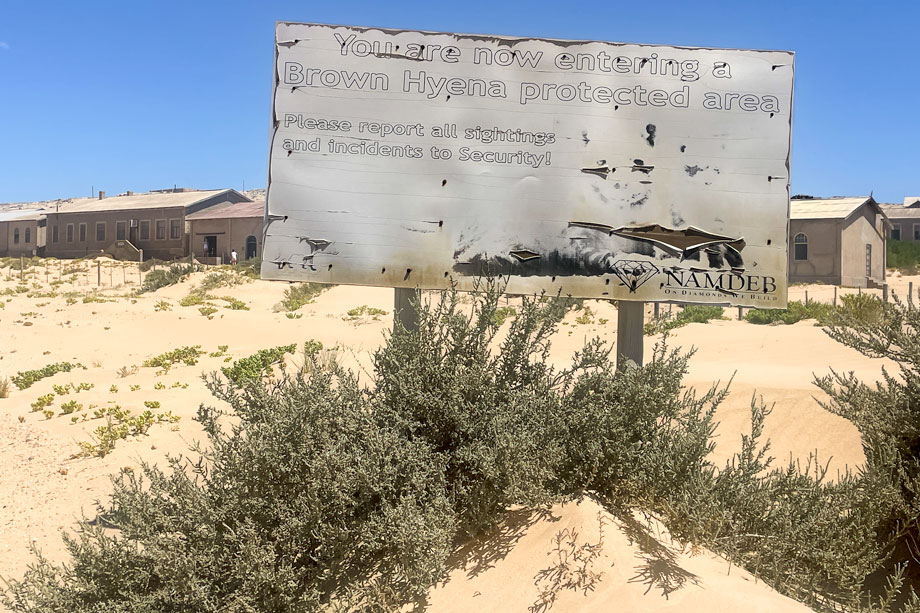
Elizabeth Bay isn’t just a graveyard of industry; it is also a sanctuary for the Brown Hyena. Also known as the strandwolfthese elusive, “ghost-like” carnivores are one of Namibia’s most fascinating species. It is a specialized, solitary scavenger that thrives in the harsh Namib Desert, often walking up to 30–40 km per night in search of food, particularly the shorelines for marine carrion, such as washed up dead seals.
We were introduced to Marie, a knowledgeable French scientist, who is sponsored by the mine to do brown hyena research. She pretty much lives with them and showed us some unbelievable photos. The hyenas had been tracked to deep within the mines that day, so unfortunately we were not going to be able to shoot any of them.
And then suddenly the light was perfect and we dashed about taking a few sunset pics followed by a mad dash to get out of the area by the curfew of sunset. .
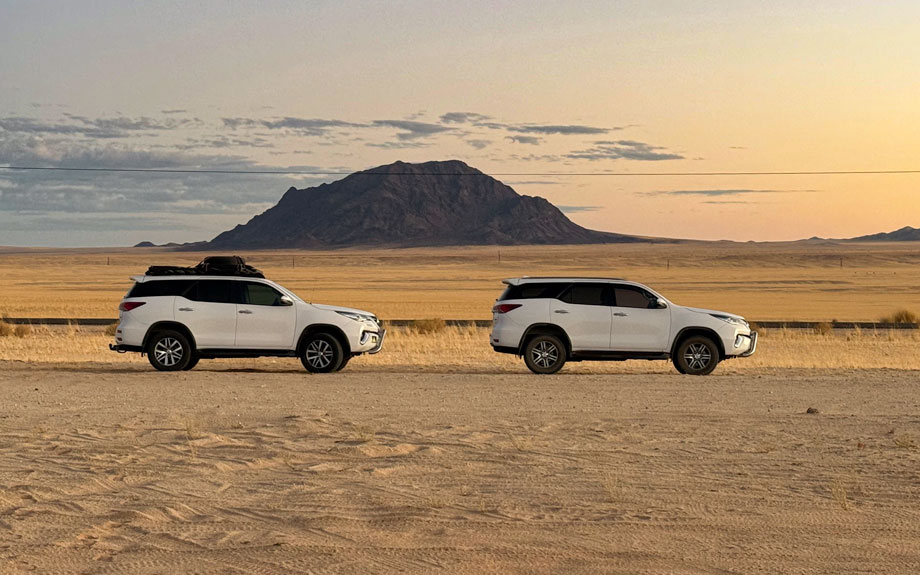
Soaked in sweat, covered in fine sand, sunburnt and dehydrated, we gratefully got back into the air conditioned Fortunas and got driven back to Klein-Aus arriving at 9pm. Very grateful to Jon and Kyle for their fortitude.
For once I was too shattered to eat. I enjoyed a refreshing swim and then had a hot shower, washed my hair, did some basic laundry. Meanwhile Geoff enjoyed lamb shanks for dinner.Feeling overtired, I struggled to fall asleep.
WEDNESDAY
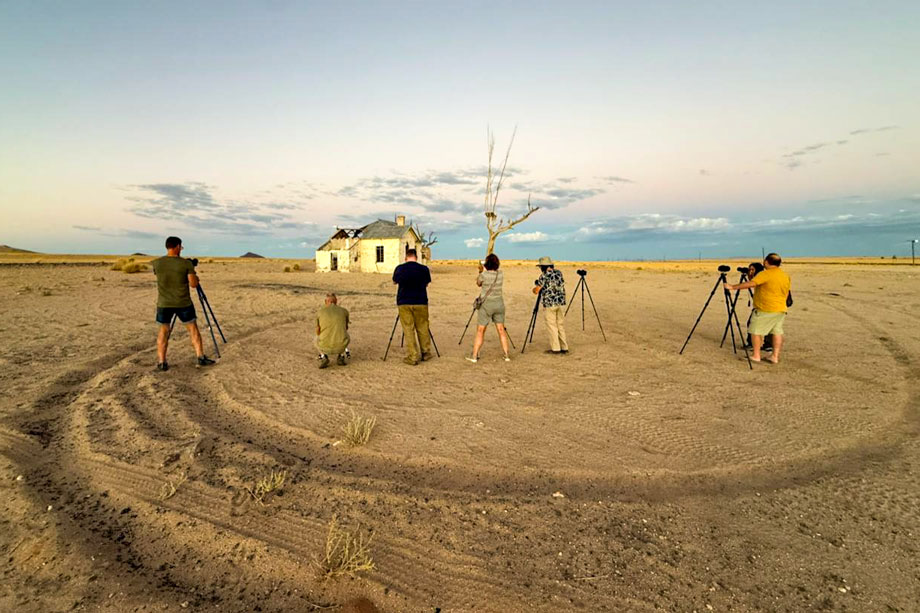
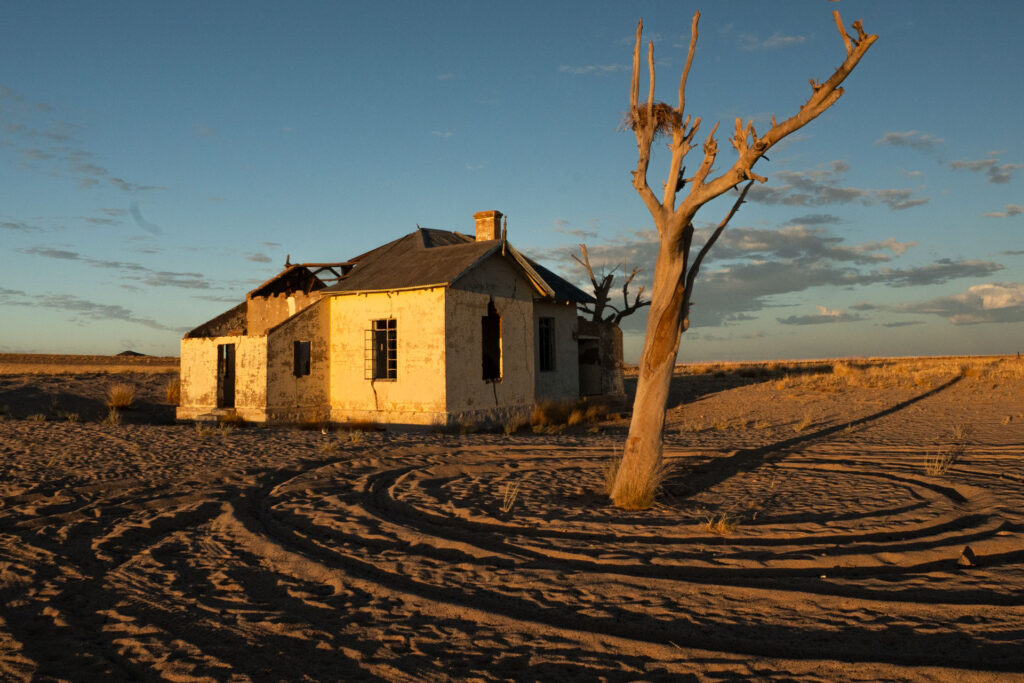
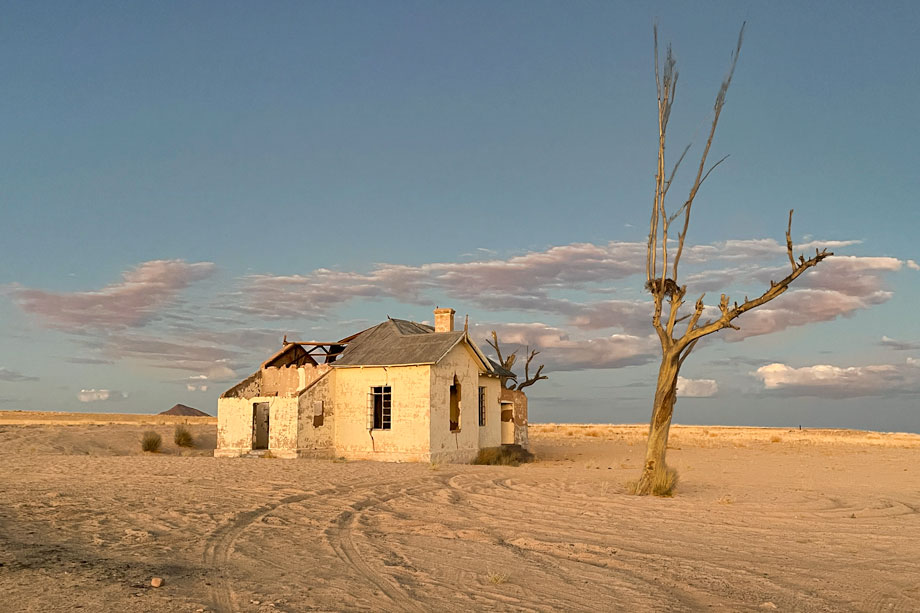
However! We were up early and off by 6am to shoot the station master’s old house! 🏠 So lucky to have some pretty clouds in the background. I loved the endless railway line with the bursts of sun-bleached veld grasses.
Back to the lodge for a wholesome brekkie. I was enthralled by the brave little birds helping themselves to the buffet.
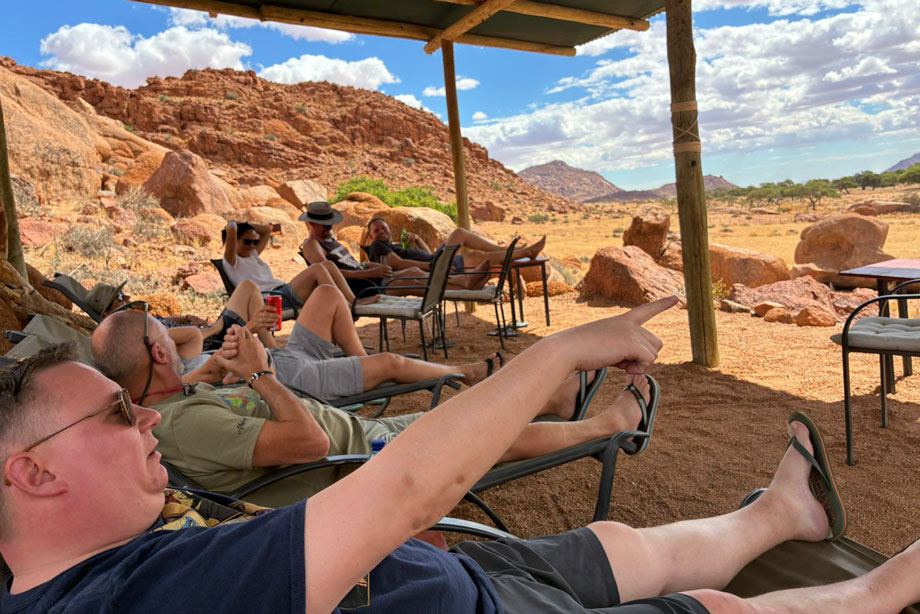
We were able to have a quick snooze, then we packed and vacated our room. We all lazed around the pool area for a bit chatting and reading. Hard to believe but I’m still scratching sand from my ears, eyes and scalp.
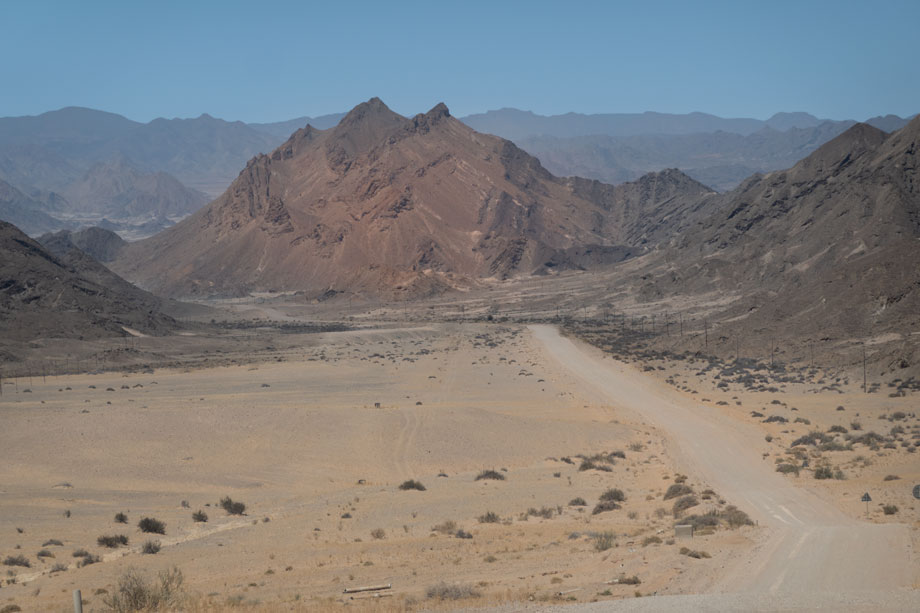
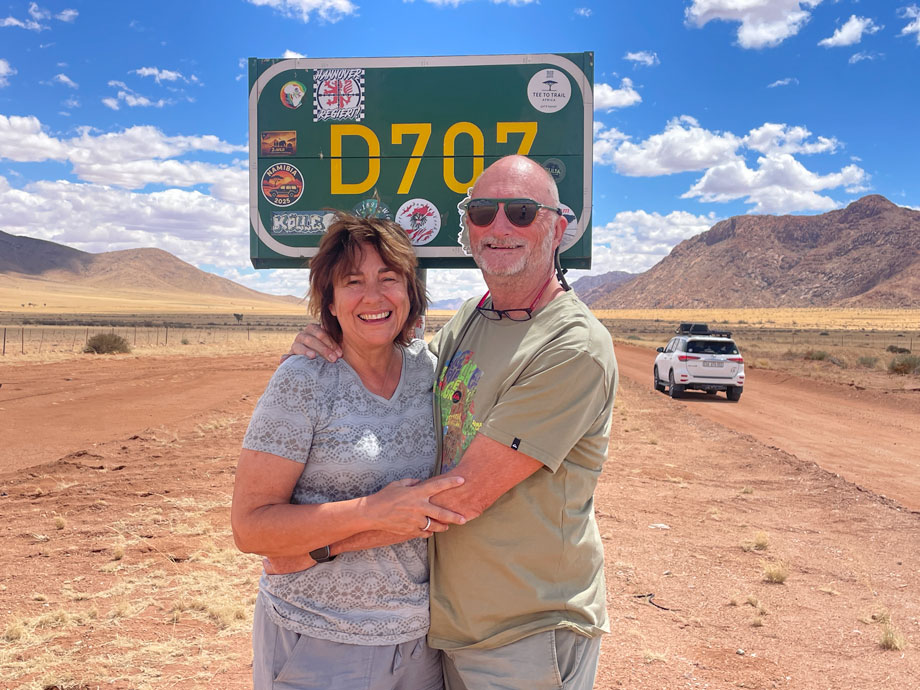
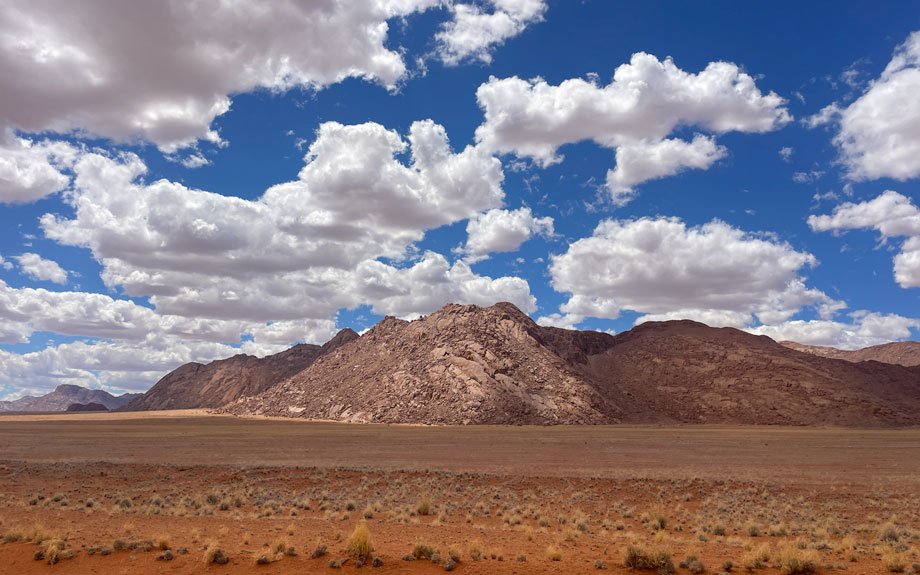
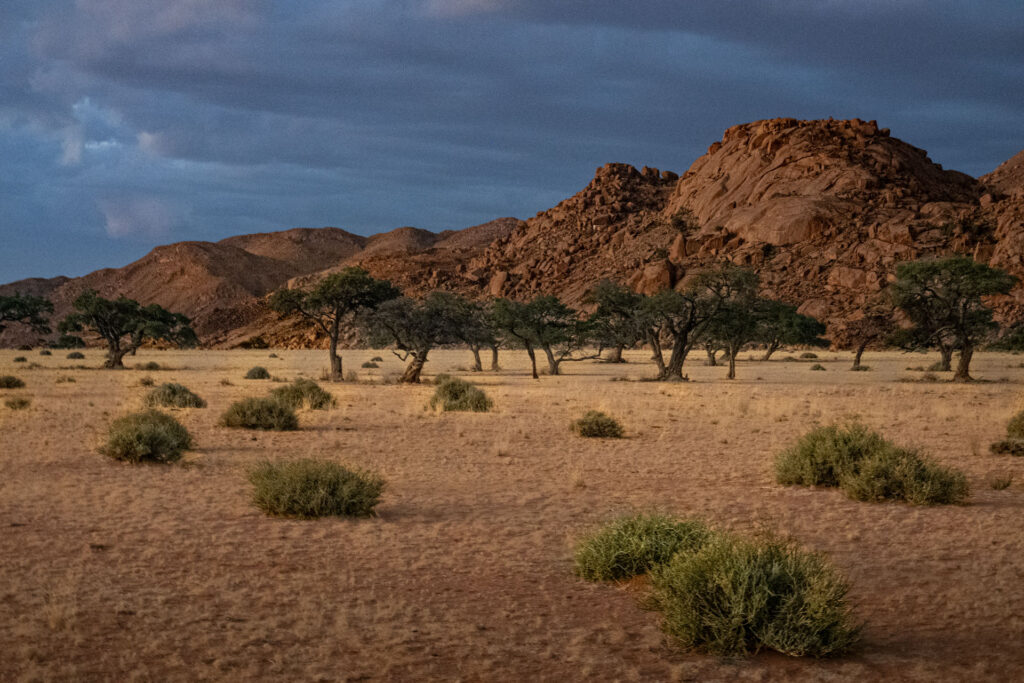
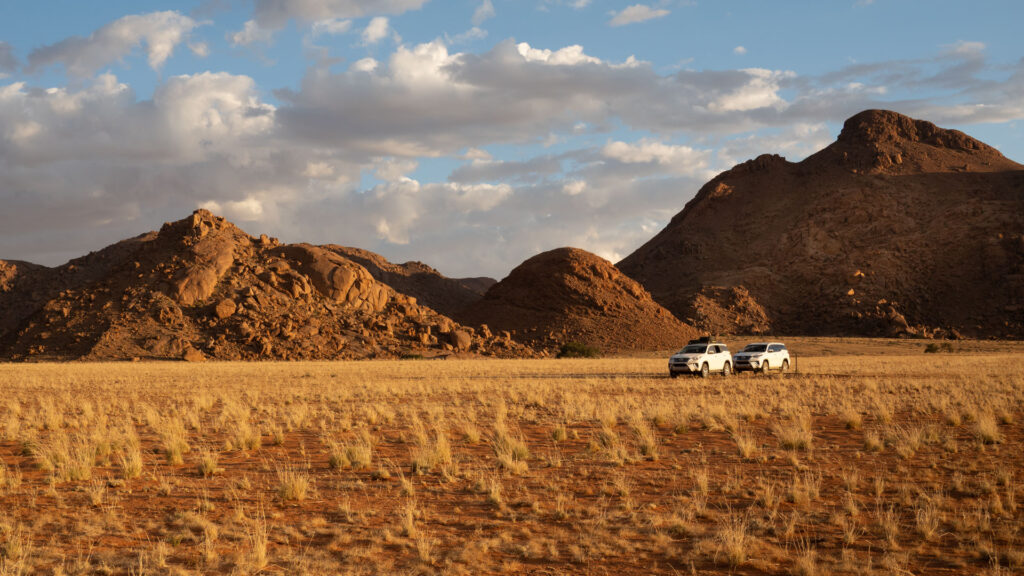
Later on we headed off for Namtib on D707. This has to be one of the most picturesque drives in the country. It passes through a vivid landscape with gorgeous rocky hills on the route towards Sesriem.We were blessed with spectacular clouds too.
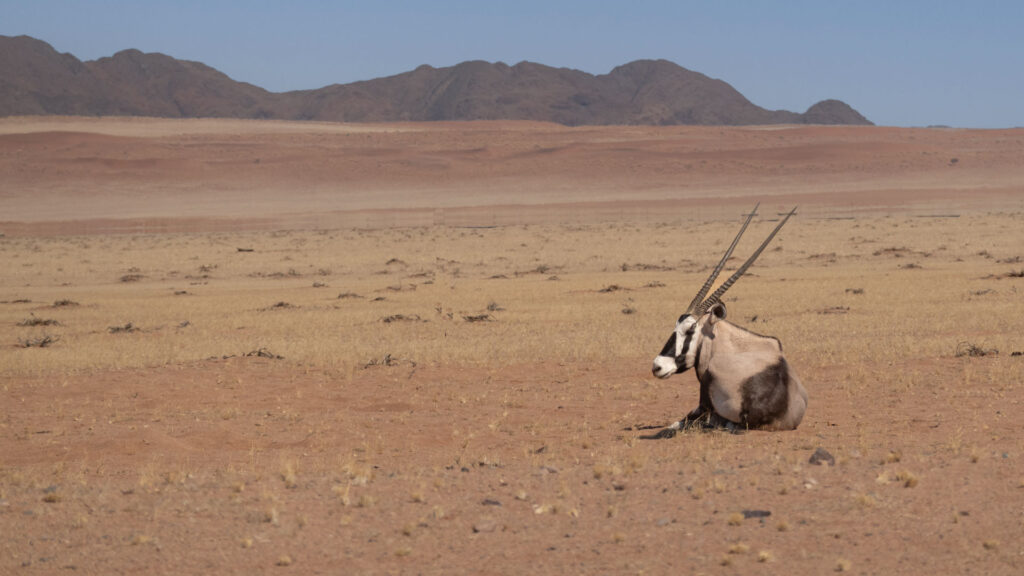
We spotted our first oryx chilling alone quietly, surrounded by miles of nothing.
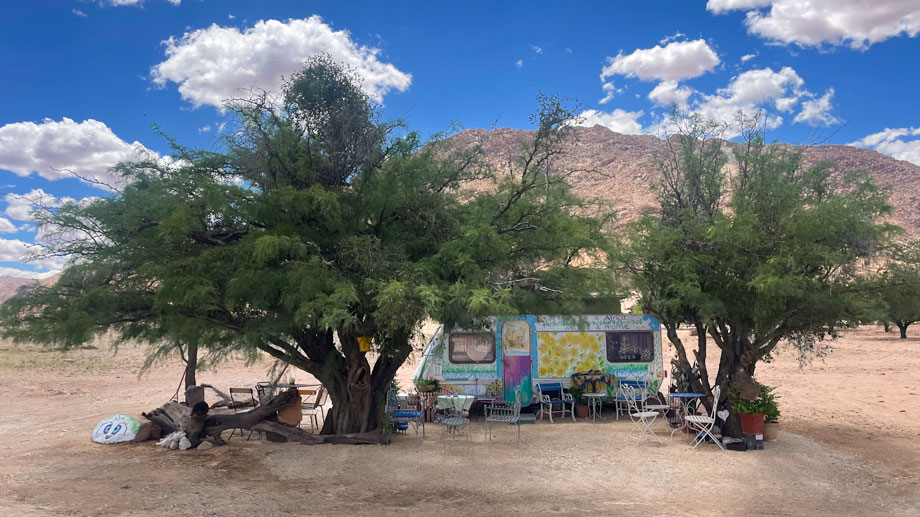
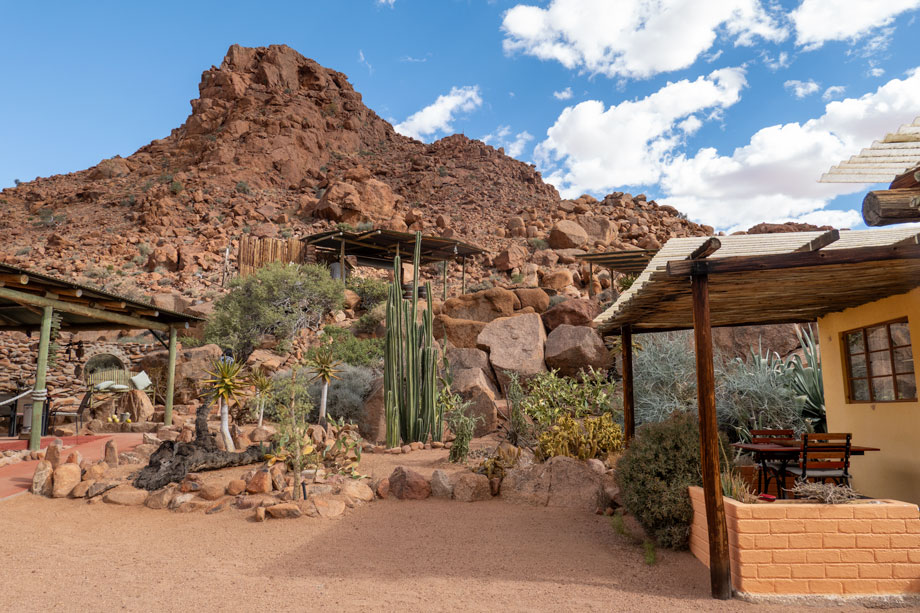
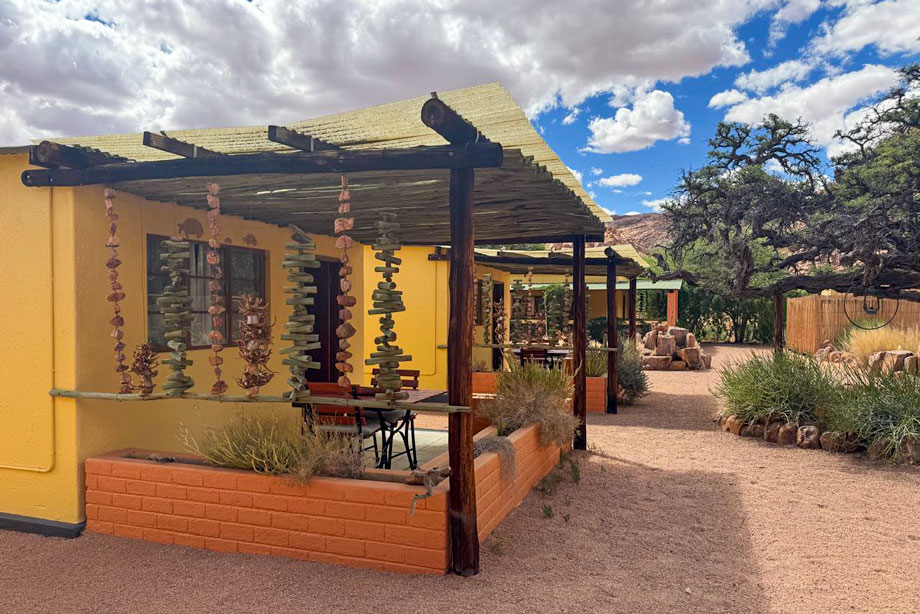
We arrived early afternoon at the little sanctuary of Namtib Desert Lodge, which is surrounded by mountains and expertly created rockeries with exquisite trees and shrubs. They have an “honesty bar” high on a ledge overlooking the plains below. (We spent some time there making a dent in the TafelRadler stash.)
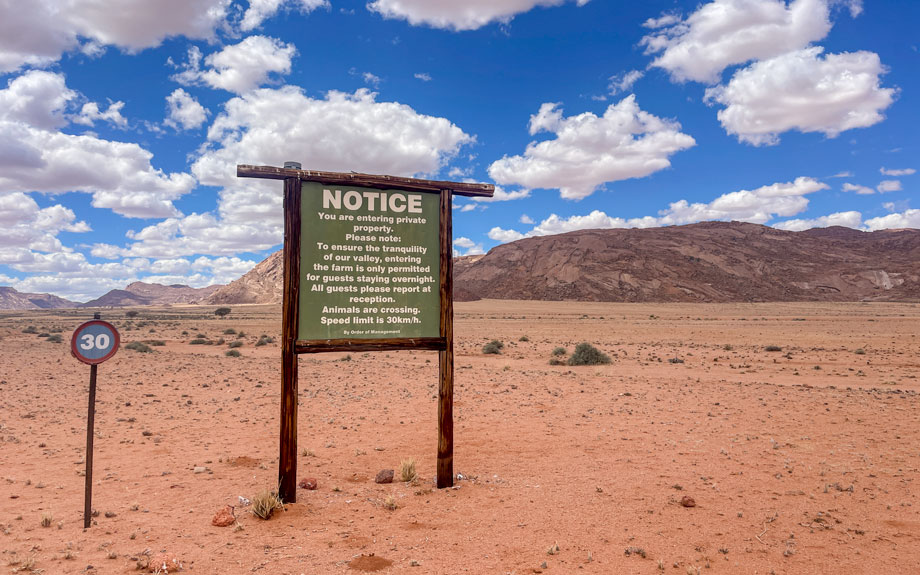
Namtib biosphere reserve has been the home of the Theile Family since 1982. Nestled in a valley of the Tiras Mountains at the edge of the Namib Desert, the farm covers an area of 16 400 ha. The prevailing arid conditions at the edge of the oldest desert in the world provide a challenging environment for commercial farming activities.
Out of these harsh conditions the need arose to find a way of utilizing the land in accordance with guidelines that would ensure the protection and rehabilitation of the sensitive environment, whilst still allowing the sustainable use of the available natural resources and provide a foundation for economic growth. Renate shared how she had divined their borehole, but at 180m! The water was delicious, though.
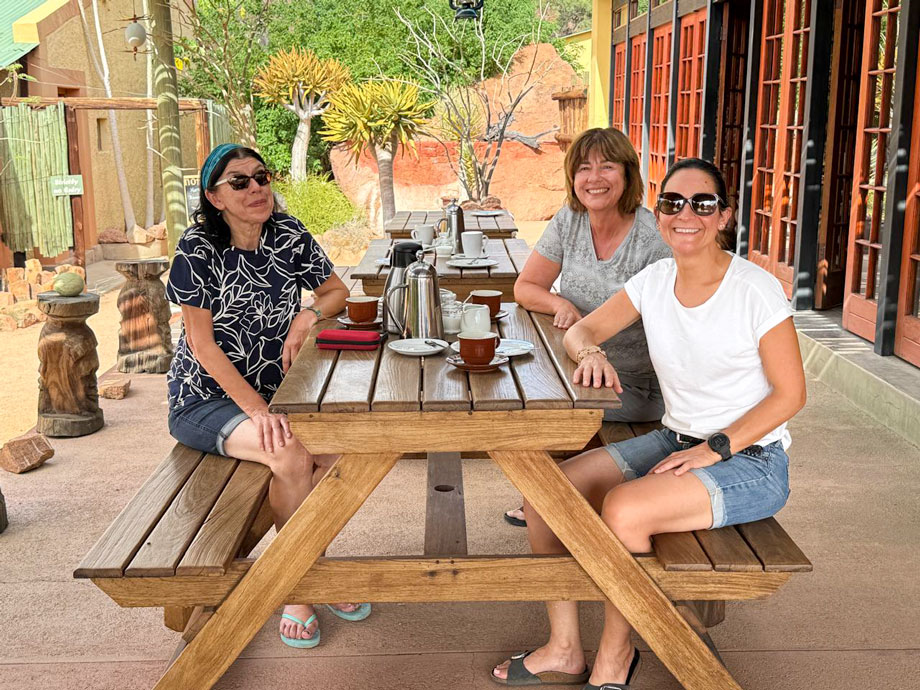
As is the German way, we were served coffee and guava cake which seemed an unlikely choice for a stinking hot afternoon but it was so delicious and certainly hit the spot!
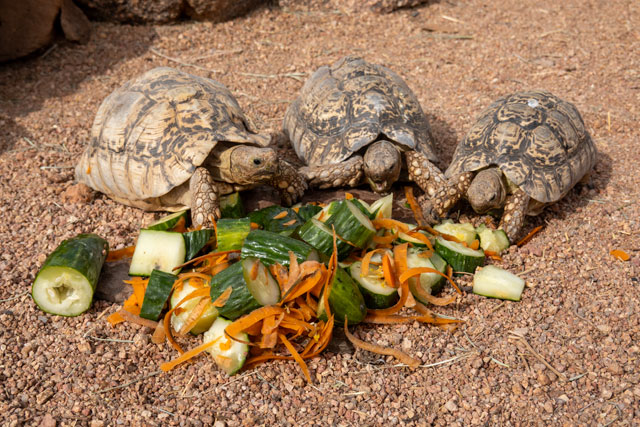
So nice to see a tortoise enclosure with expertly designed hidey holes. We watched them being fed like cheeky, demanding pets, gorging on juicy cucumbers and carrots.
What a harsh lifestyle especially in the extremes of summer and winter!
The owners have developed a pretty set-up for the bedrooms, with private courtyards between the room and the bathroom areas. It was absolutely boiling hot in the room so I sprawled out ‘upstairs’ at the bar and managed to nod off in a deck-chair. I was awakened by a minor cloud burst and the sharp spatter of rain on the roof, accompanied by the gorgeous aroma of damp earth as I overlooked the dramatic plain below.
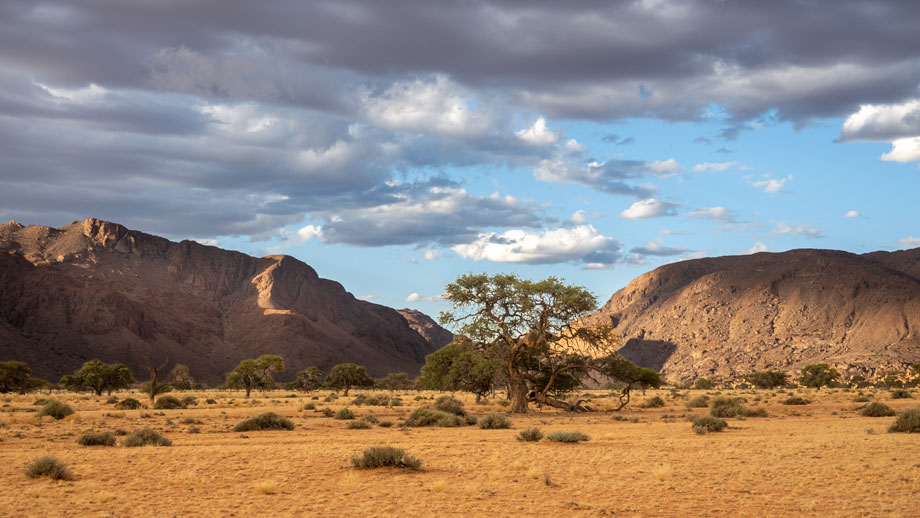
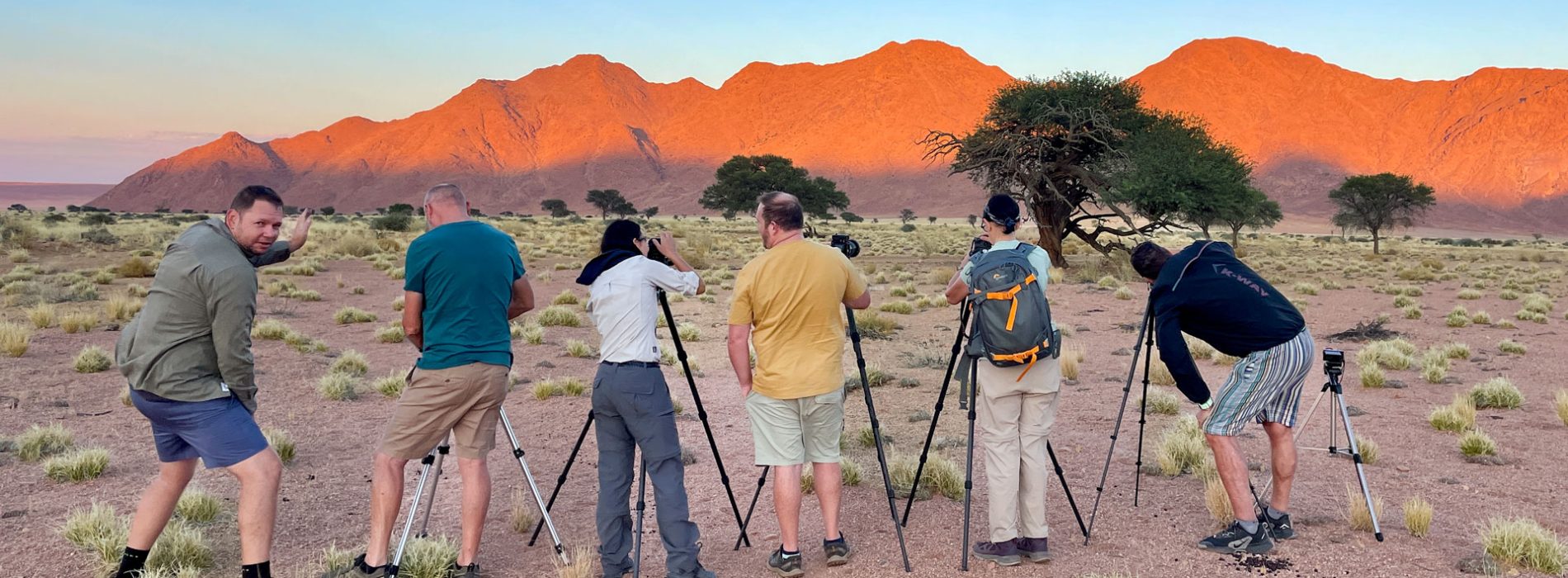
We all headed out for a sunset shoot. The idea was to case the joint for focal points to use in the astro-photography shoot planned for the evening. We were spoilt for choice with so many gorgeous trees to choose from and we were happy to have plenty of atmospheric clouds to boot.
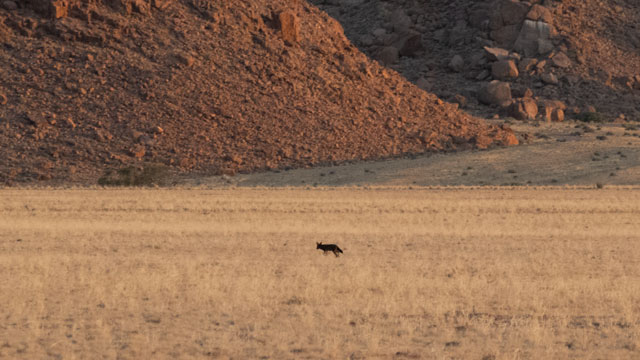
We spotted some oryx and also tracked a pair of jackal calling to each other across the plains as they headed to their lair. The light was gorgeous!
Back to the lodge for supper. Our hosts are Renata and Walter. They shared stories of having lived here for decades and raising their 3 kids, one of whom now runs the farm with her husband. A really tough life due to the extreme years of drought which literally has resulted in having to get rid of all their animals. Both interesting characters and passionate about their country of choice. We had a laugh when Renate asked Matt where he was from and his response of “USA”, received pointedly raised eyebrows and lots of unspoken questions in her body language.
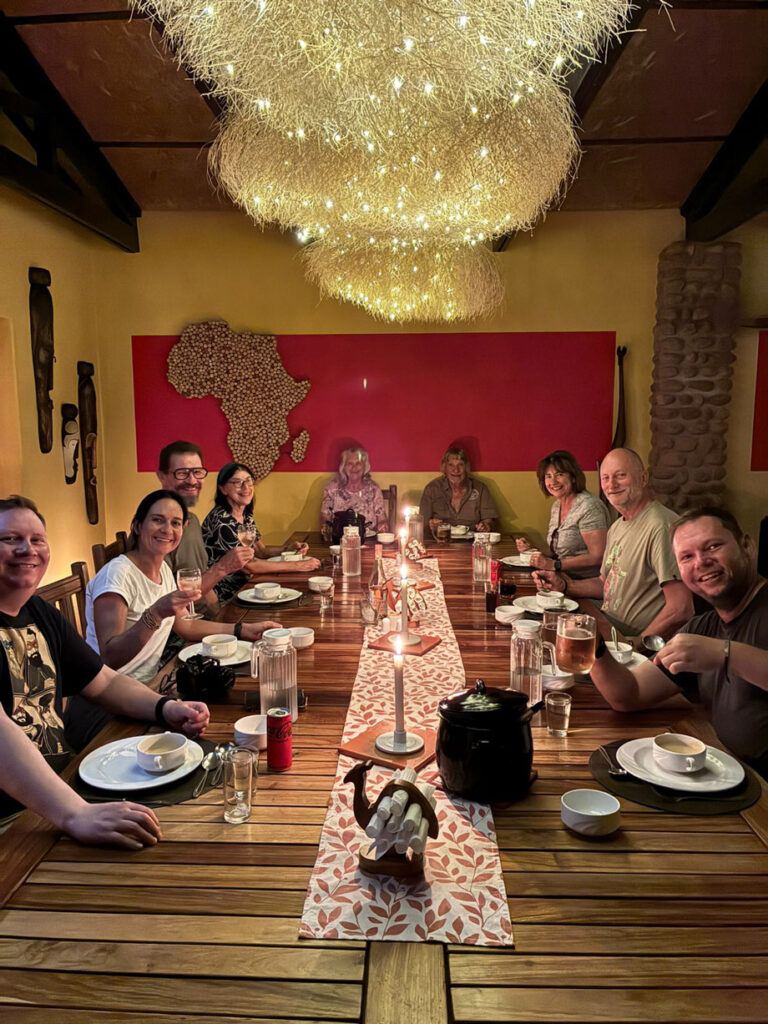
For supper we gathered at an enormous table and were spoilt with home-made butternut squash soup, followed by oryx potje, then jelly and custard. Everything was so tasty.
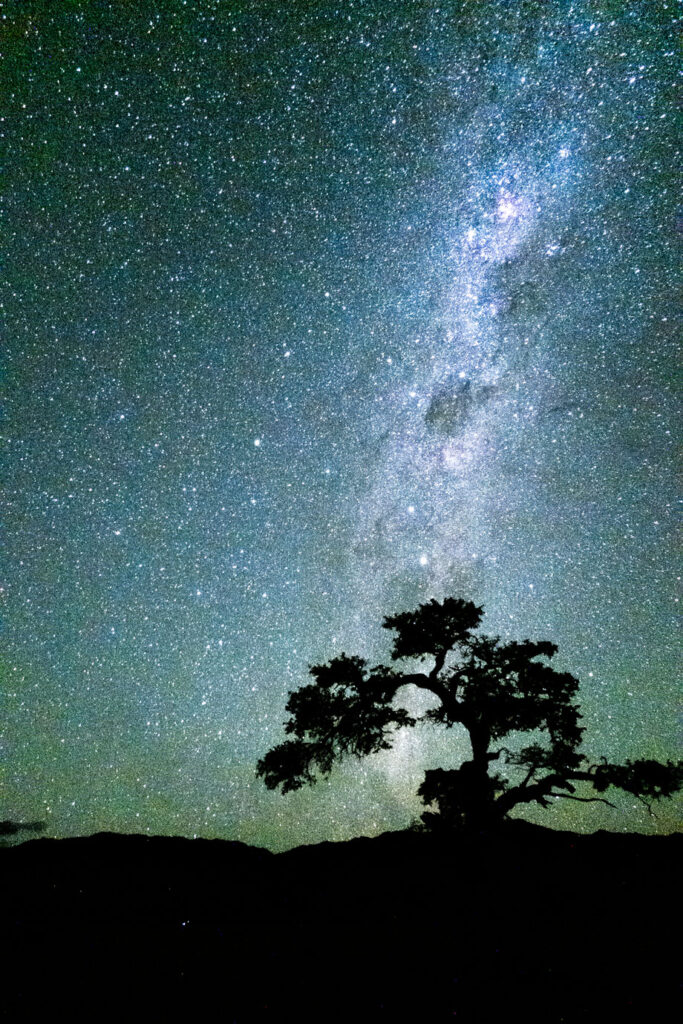
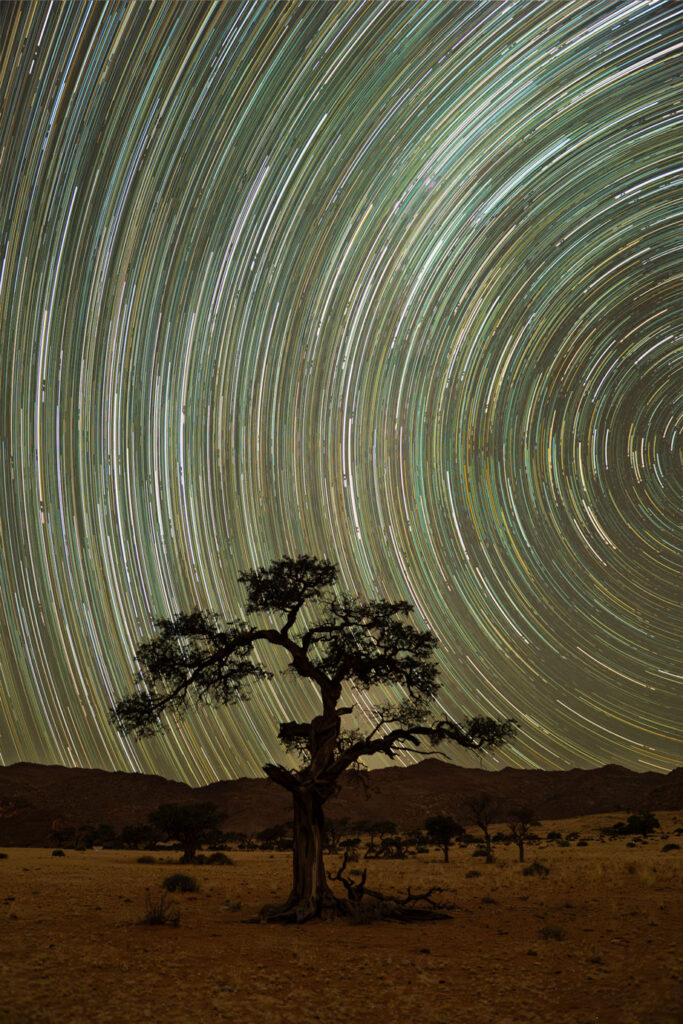
Around 10pm, we headed out to practice Astro, for milky way shots, time-lapse and star trails. I struggled because a) I couldn’t really understand which thing was which and b) the camera settings are completely alien to me and I needed lots of help from Geoff and Jon. Jon also showed me how to shoot night shots on my iPhone, which turned out quite well!
Although I was feeling very tired and grumpy and not looking forward to being out after midnight, the sight of the night sky was just spectacular and we were lucky that the clouds had vanished and there was no wind. We hardly needed a jacket as we lay in our reclining camping chairs and marvelled at the dominating stars and dramatic Milky Way. Ana and Johann organised a round of Amarula on the rocks. Perfection.
Nikki's Milky Way
Geoff's Star Trail
The NamibRand Nature Reserve was officially declared Africa’s first International Dark Sky Reserve (IDSR) in 2013. It also became the world’s first IDSR to be awarded Gold Tier status, declaring it an environment with exceptionally little to no impact from artificial light. With the nearest town situated 90 miles away, the reserve is not only free of light pollution but also boasts one of the darkest skies ever measured.
We only got to bed around 1pm and had to be up again at 6am for the sunrise.
THURSDAY
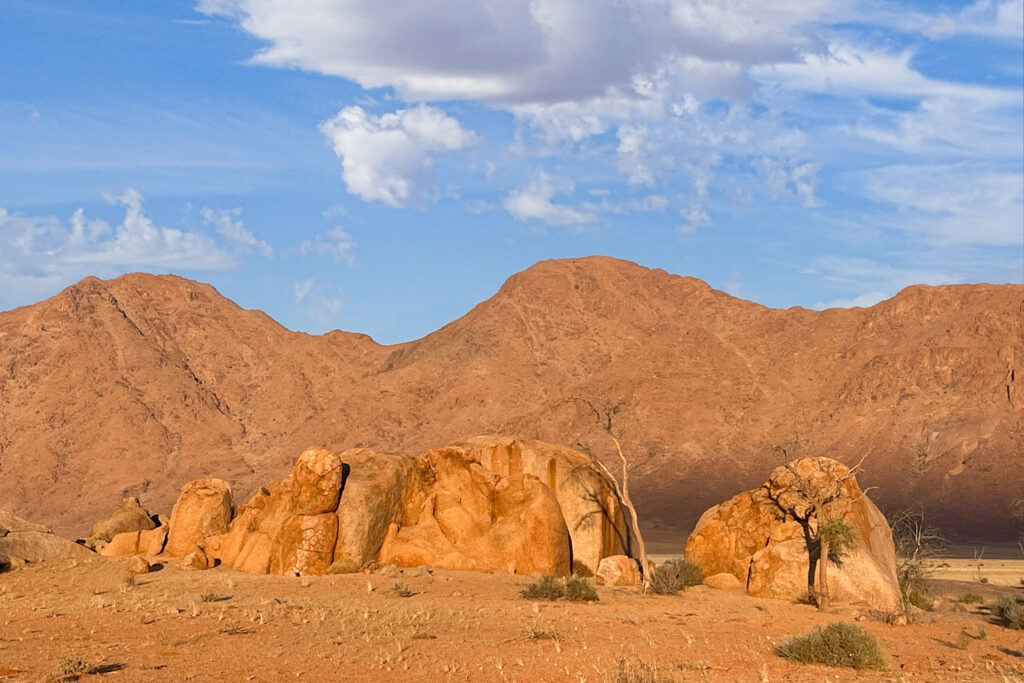
Early morning and we captured the lovely reds that actually make the boulders glow, and were also graced with some more oryx and a pair of mountain zebra.
We headed home for eagerly anticipated coffee and a homely breakfast of local produce including fruit salad, egg salad (my favourite), dried meats and home made cheeses and jams on home baked rustic bread.
Then it was time to pack and move on by 9h30. We all felt quite sad to be leaving this particularly special place after only one night.