Castelo de Vide: A hilltop gem in Alentejo, Portugal
Often the most fun part of any holiday for us is The Roadtrip. 🚗
Gary and Athene dropped us at Lisbon airport. One minute we were in their warm care, being chauffeured by Gary, expertly navigated by Athene, while we lolled around relaxing in the back seats. The next minute we were fending for ourselves again, wheeling luggage through the chaotic airport, trying to locate Sixt Car Rental.
We’d hoped for a sexy Fiat 500, but we were issued with a brand new Opal Corsa. It was still very nice – suitably small for country villages, but big enough for our luggage to be covered in the boot, which was a criterion strongly advised by many.
And then we were off! It turned out to be easy to get out of Lisbon airport and onto the highway. Geoff is adjusting to a left hand drive without having to think these days!
Because we were heading for a self catering Air BnB, we decided to stop at Lidl for groceries and basic supplies. Always such fun exploring the groceries, the new brands and the fascinating balance between certain types of foods compared to home.
We were a little appalled to note that the temperature reached 39° C in line with a heatwave warning for the Iberian peninsula. So much for thinking that May would ensure cool Spring weather! 🥵
Then I read that the Alentejo region is famous for its scorching summers. Apparently the hottest place in Portugal is located disconcertingly close to where we were heading, (the small town of Amareleja, on the Spanish border) where , “temperatures reaching an astounding 48ºC degrees during the summer can be experienced.” This incredibly harsh climate has shaped the lifestyles of the region’s residents over the centuries. That’s probably why this part of Portugal is known for its slow-paced rhythm, stillness, and quiet – staying out of the heat!
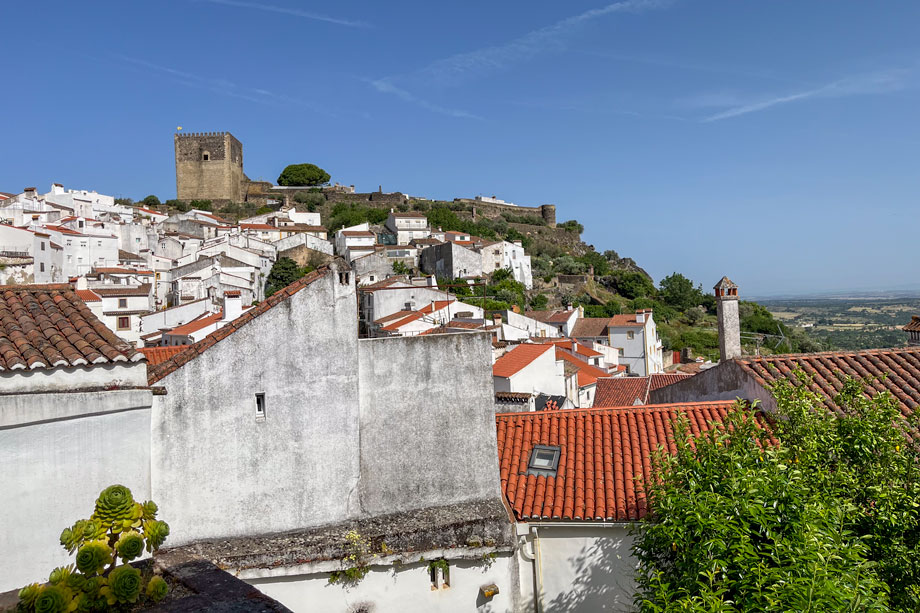
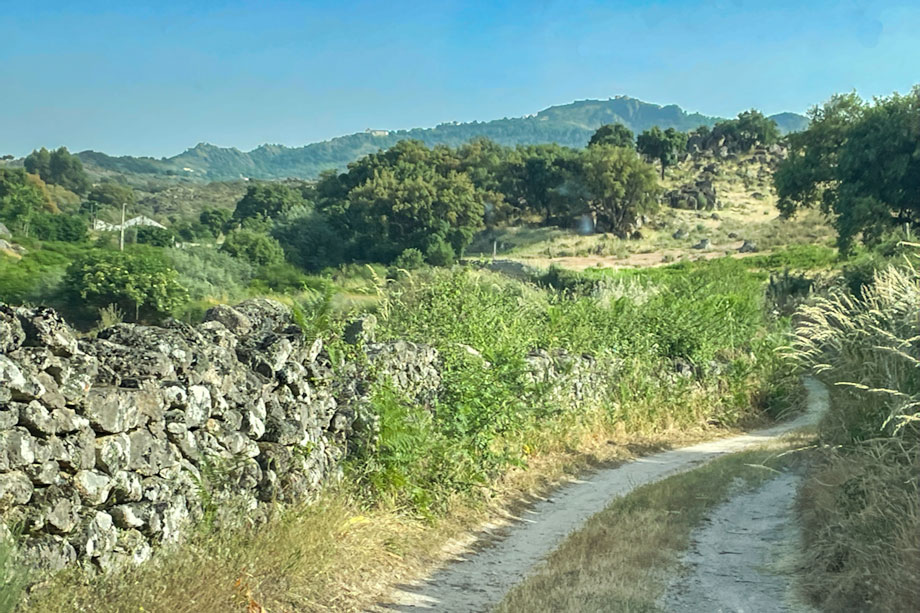
The Alentejo is characterised by small walled villages with medieval centres and intriguing Roman ruins, watched over by ancient hilltop castles. It is Portugal’s largest region and agricultural heartland. The mountainous countryside is planted with cork forests, olive groves, vineyards, other crops. People seem to go about their daily rhythms and customs much as they did hundreds of years ago. Castelo de Vide is one of the more charming white-washed hilltop settlements, hailing back to 1276.
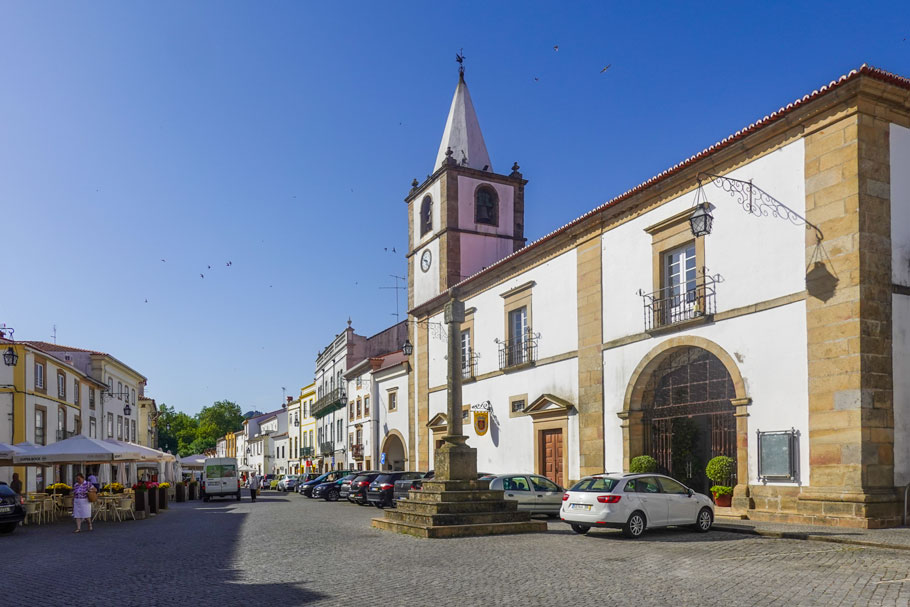
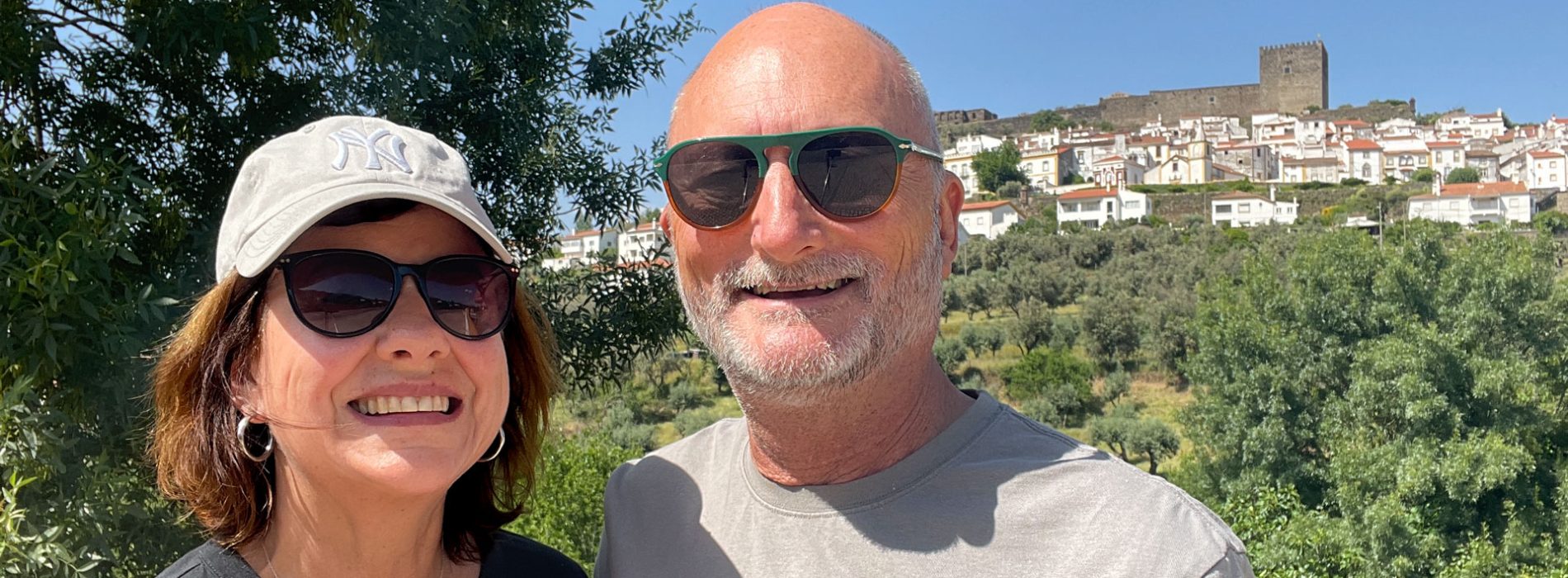
The approach provided enticing views of the castle high on the hill with the gleaming white village below. It was somewhat reminiscent of driving in Sicily as we eased along ever narrowing and winding streets. We reached the central church square and found a vacant ‘free’ parking bay and zipped into it to regroup and work out where our accommodation might be. Our host had sent us a series of photos marked with arrows. Once we’d located the first photo which was a bit tricky, we found our accommodation in the old Jewish Quarter fairly easily.
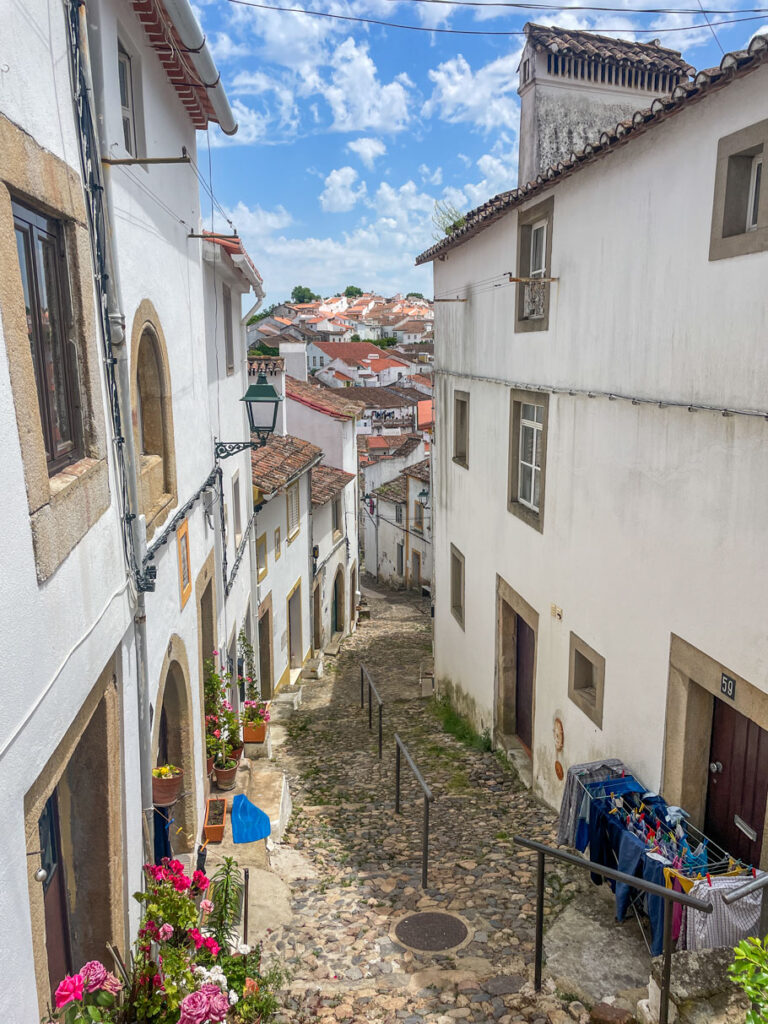
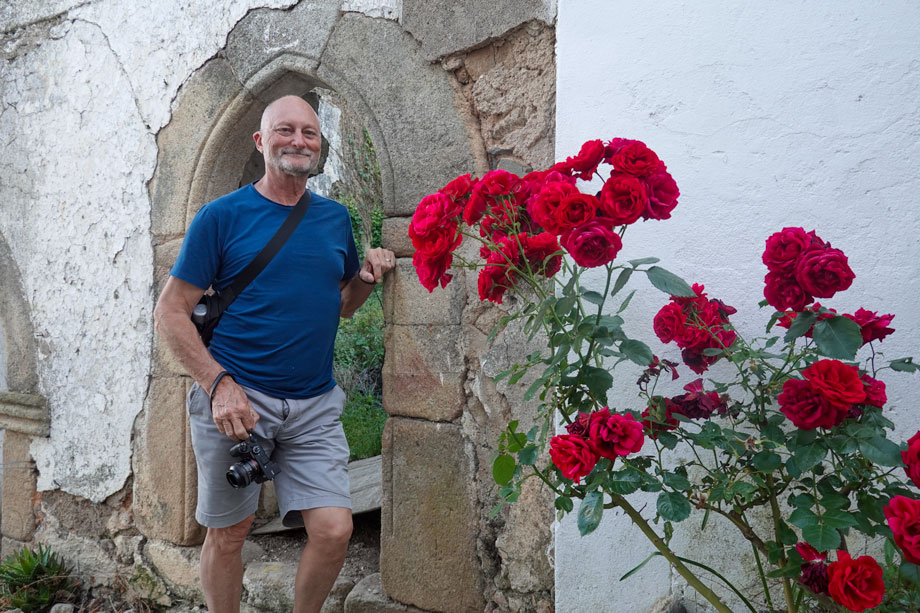
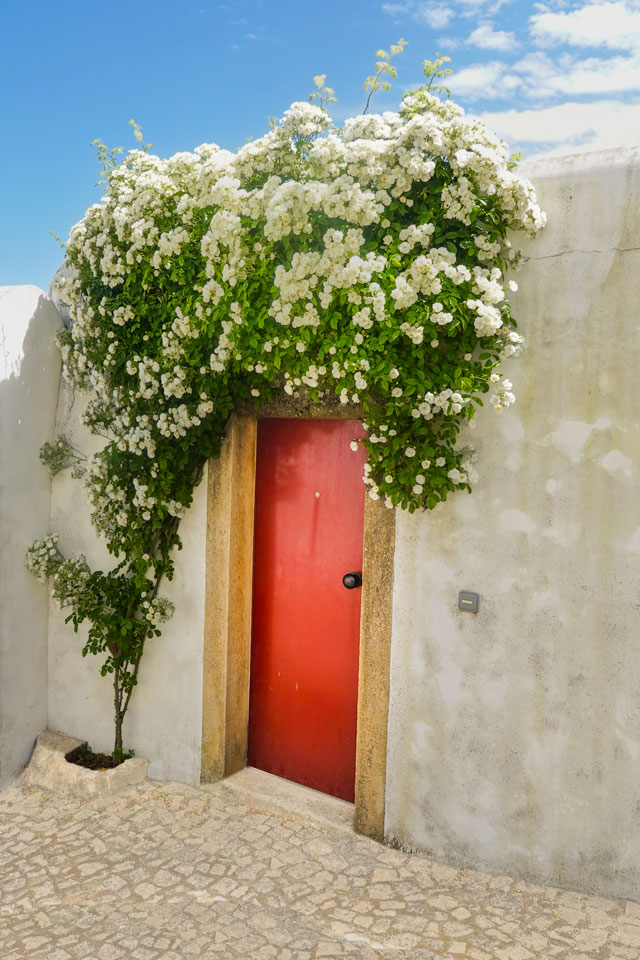
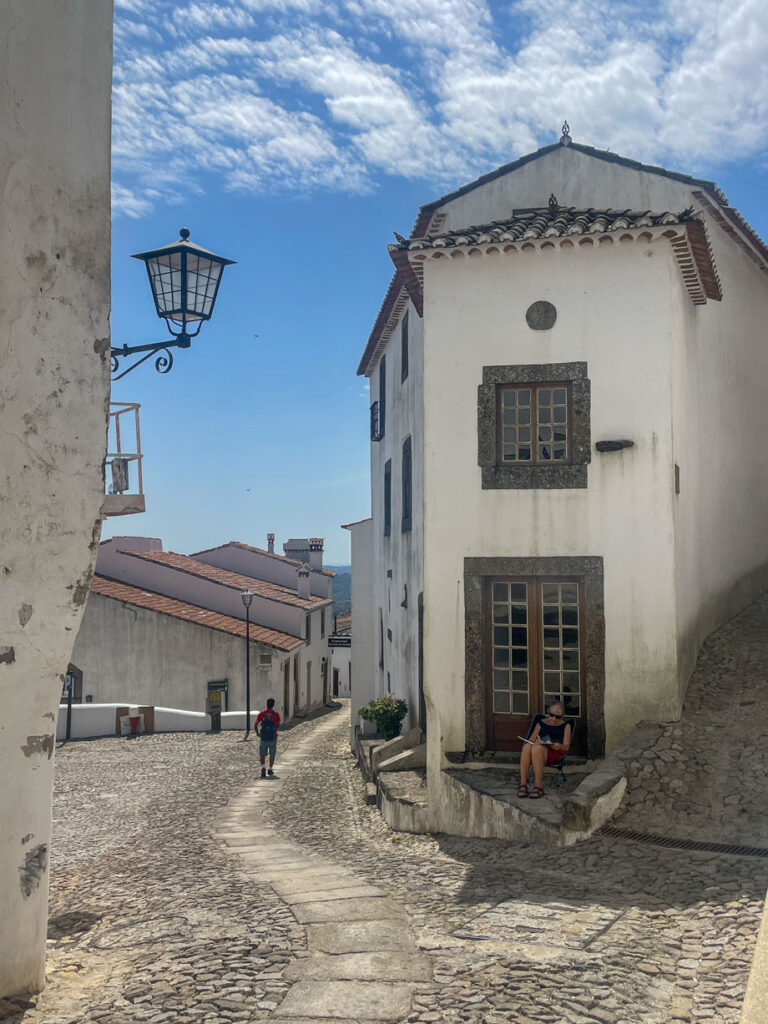
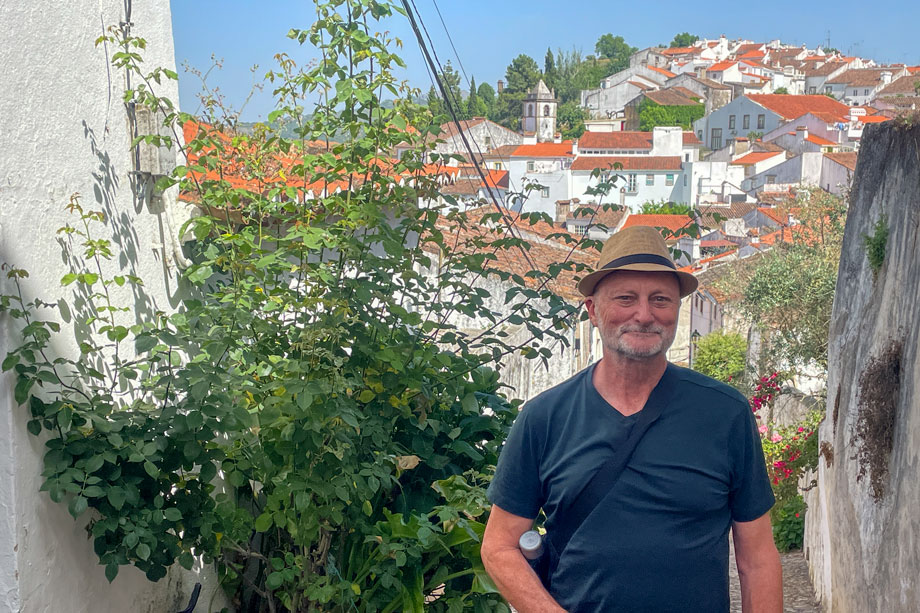
Geoff at our front door and to the right is our street leading down the hill
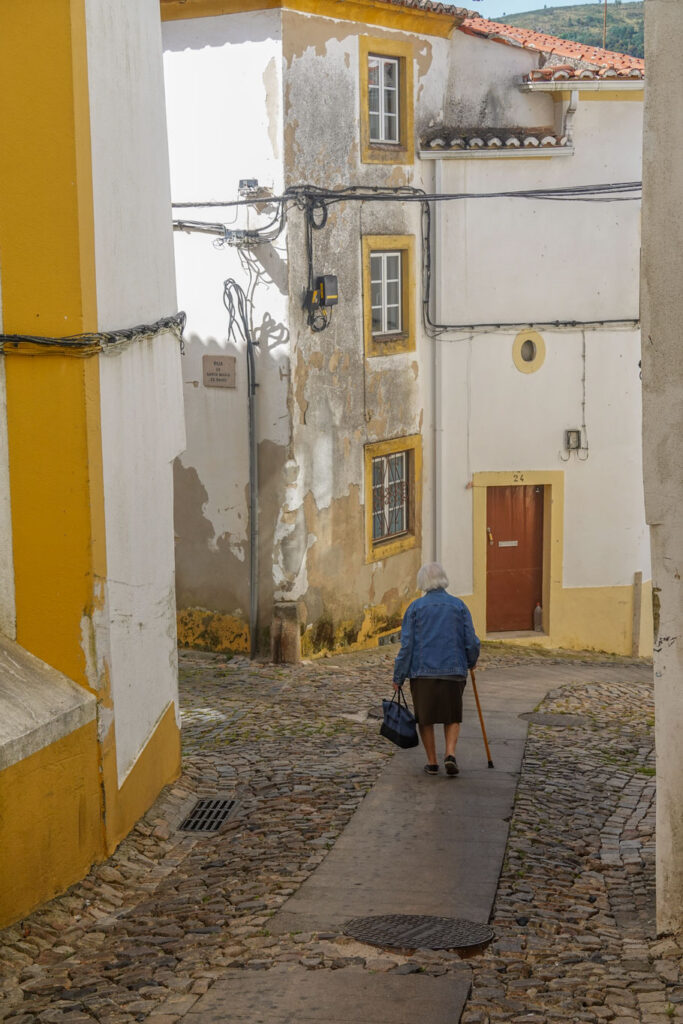
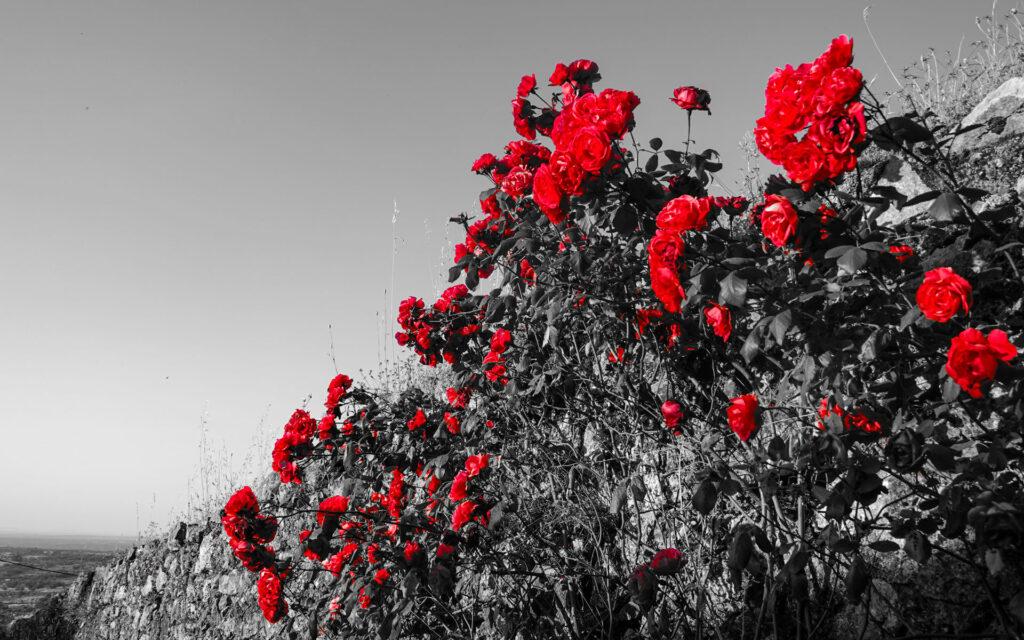
We tried to leave the things we wouldn’t need in the next few days in the boot. This meant that we had a mixture of clothing and shoes, souvenirs and gifts, chaotically entangled. We trundled our marginally lighter suitcases along meandering cobbled streets that had been lovingly tended with roses and brightly coloured flowers. Each lane seemed to be in competition with the next. Within the cobbles, there was a nice smooth path of paving stones down the centre which made it easier to walk (or pull luggage).
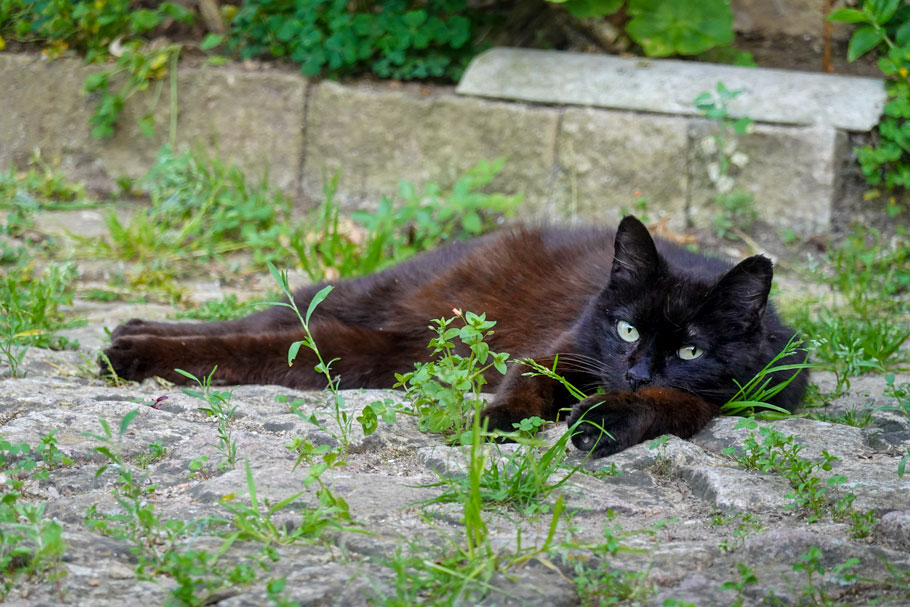
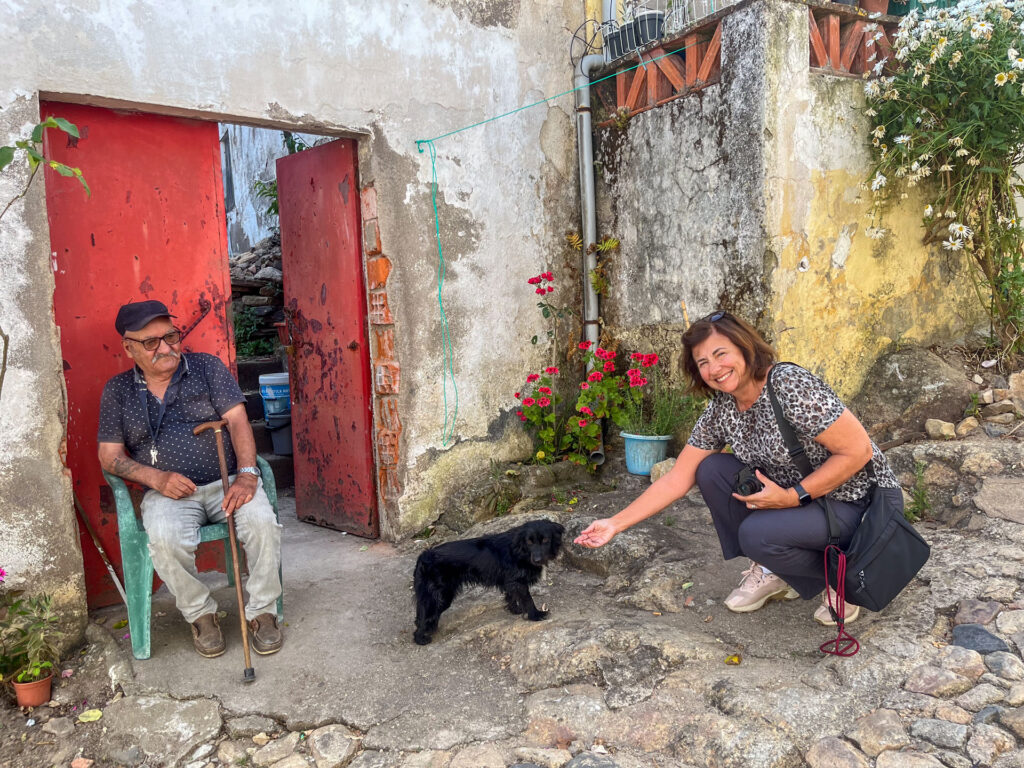
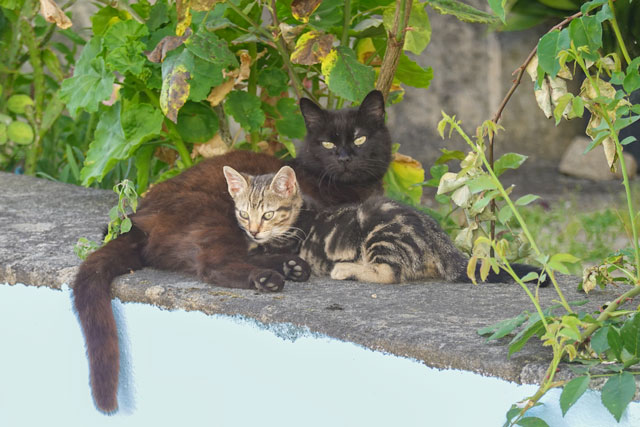
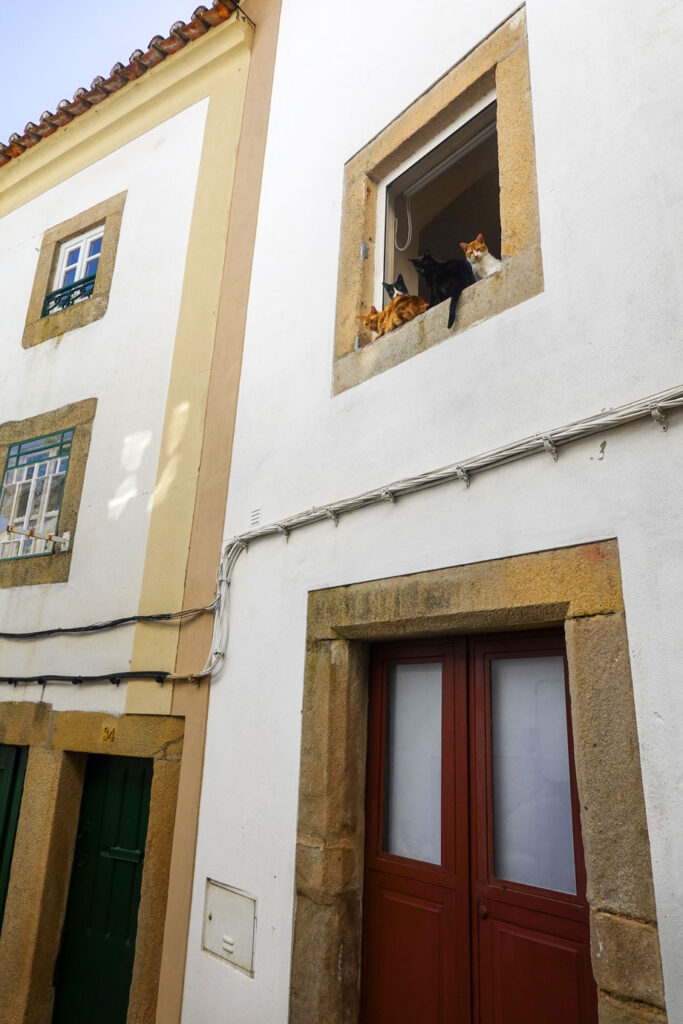
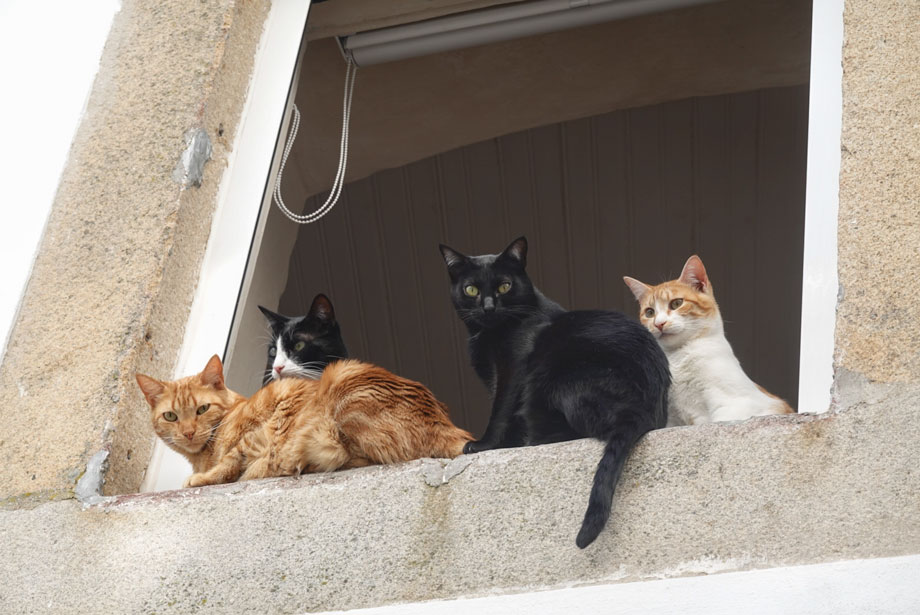
Cats dozing in doorways and window-sills regarded us through slit eyes, watchful but lazy from the oppressive heat. It was nice to see a couple of really old cats warming their bones. I couldn’t help comparing them to the prevalence of very elderly residents using sticks or plodding around town, stooped but independent. Living next door to our apartment was the really old cat (pictured below left). He would lie around sleeping in the shade all day, looking weak and feeble, but when he was hungry, he would stand at the door to his home and yell at the top of his voice, continuously until he got some service!
Sadly there were also many neglected or empty buildings, some verging on dilapidated. It is disappointing to see the slow decay that has set in as elderly people die and youngsters move awayto the cities. Many homes are begging for restoration but it seems unlikely as some have deteriorated beyond just a fix-me-upper and now present substantial structural challenges.
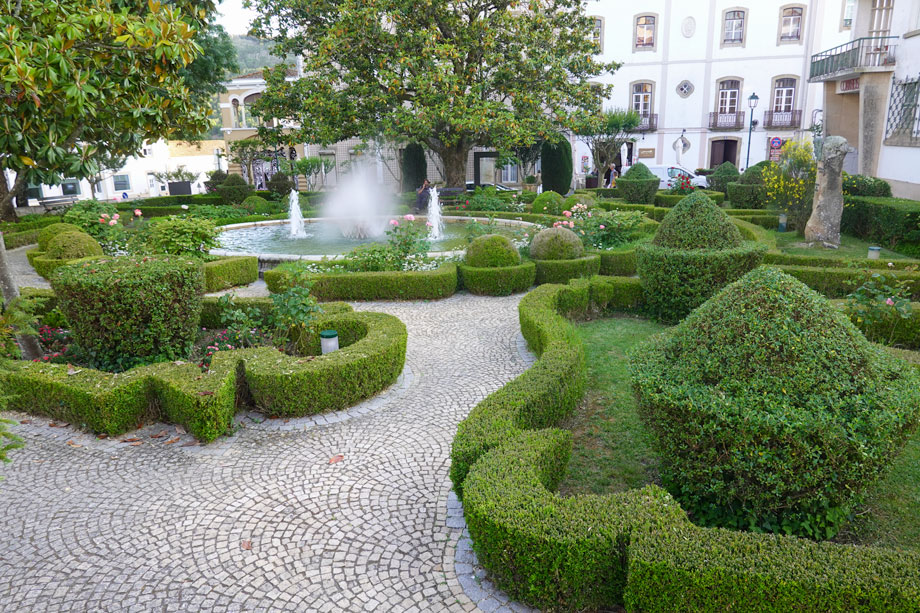
But despite some of the recent decline, the village was charming and inviting. Curving pathways, beckoning staircases, intriguing lanes, more cats. Pot after pot of foliage and bountiful flowers. Clean and tidy and cared for. Vibrant colours bursting out of flower boxes and climbing vines of bougainvillea. Small quaint squares and shaded gardens kept cool with age-old water fountains, people chatting in the shaded areas during the morning or late afternoon.
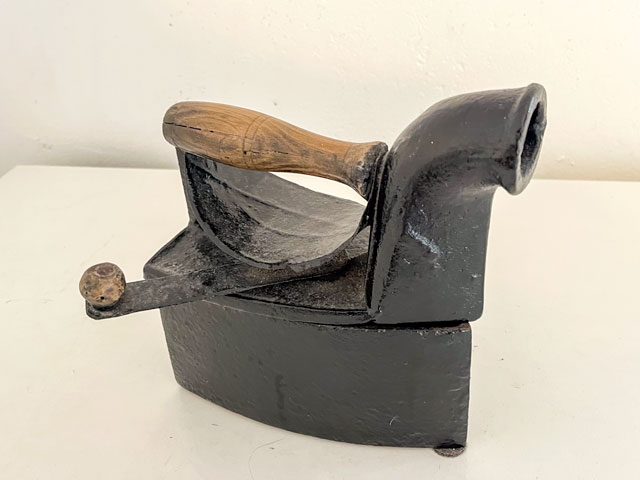
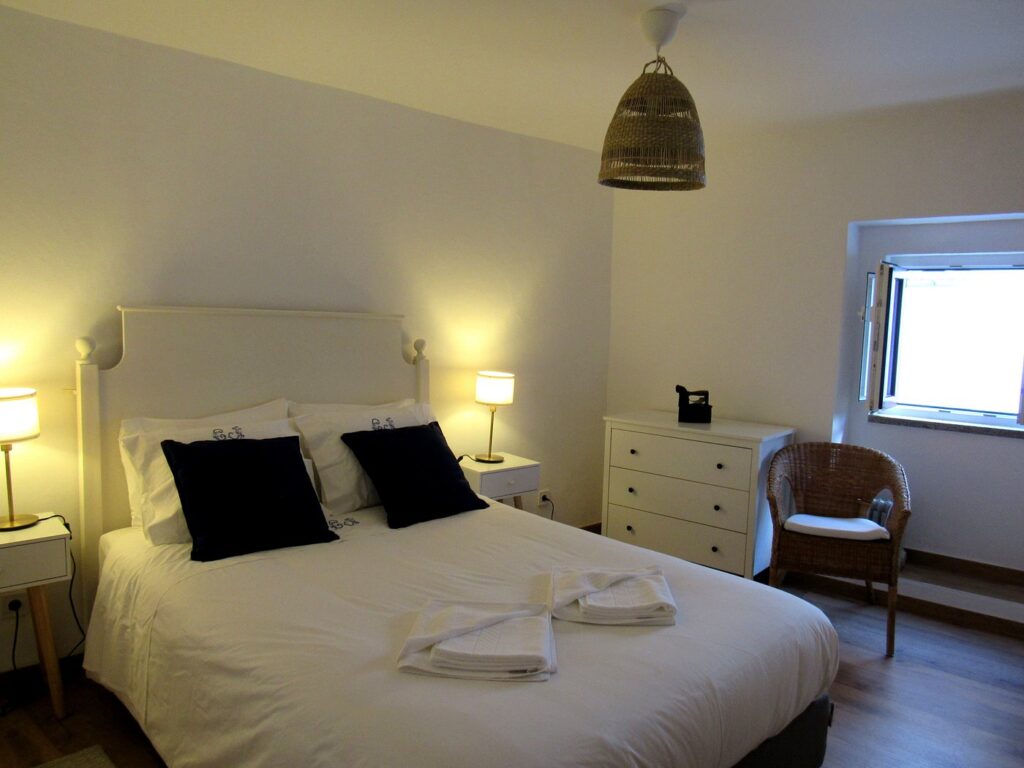
Eduardo, our friendly and gregarious host at “Casa da Judeiria” was ready to welcome us. Eduardo works in research at the university and speaks excellent English and is also very knowledgeable about the area. Our accommodation was surprisingly cool within the thick walls, we hardly needed the aircon. We had a spacious lounge, kitchen, dining area. A roomy bedroom and a teeny but spotless bathroom. Eduardo explained that this was originally the old tailor’s house which is why it hadinteresting elements on display such as sewing scissors, coat hangers and an old Singer machine. We admired the handmade embroidered cushions.
Eduardo treated us to a basket of local produce including homemade marmalade and honey, fruit and typicalbaked goods of the region. We decided to have supper early for a change. This still meant it was around 8pm when we finished. We cooked chicken and made a salad which was sooo good. Nothing like simple home fare after days of eating out in restaurants.
Before sunset we decided to step out to explore our neighborhood. Amazingly it was still quite hot. Even more cats were out and about, enjoying the crepuscular hour. Local folk had gathered in the square near the big church and in small groups on the main D. Pedro V square.There sure are lots of churches in this town! We took plenty of photos admired the statues, the rose gardens and kept an eye out for nice restaurants.
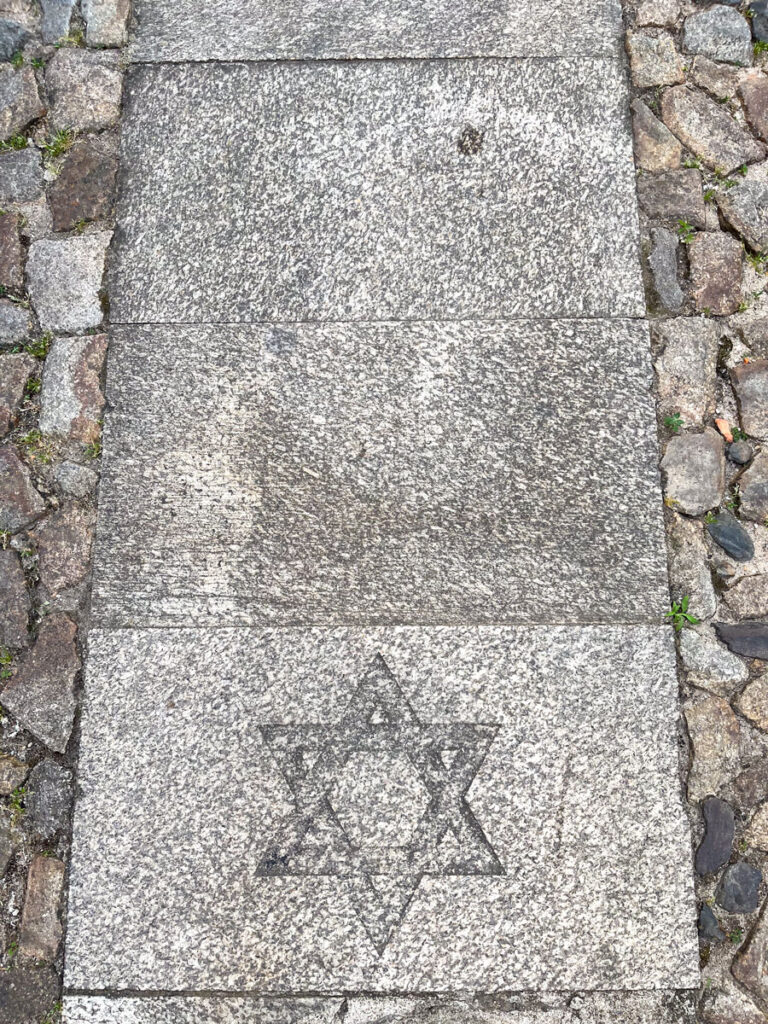
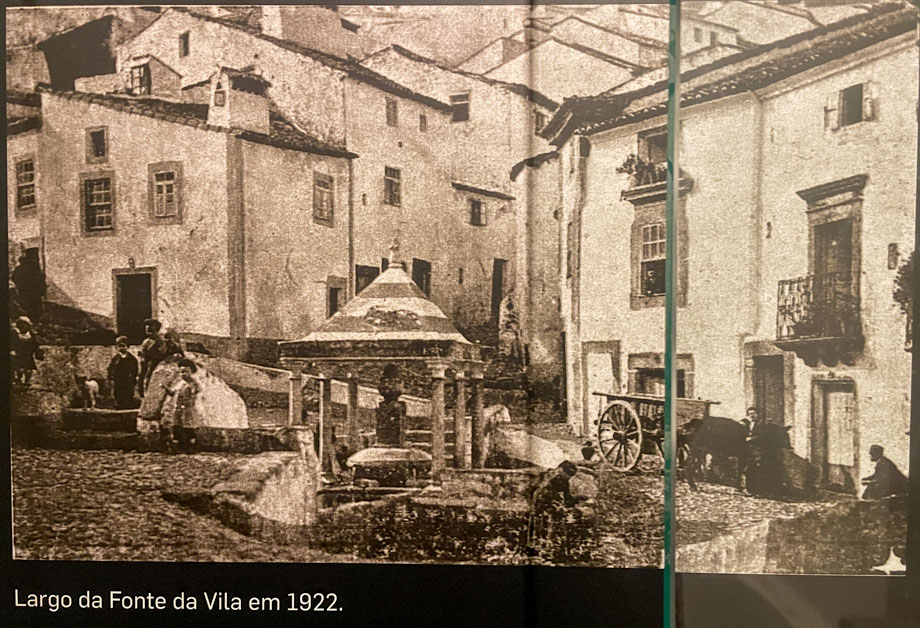
We are staying in Judiarea, the Jewish quarter that was established in 1492 when a group of Jews arrived en masse, pushed out of Spain by the edict of the Catholic Kings. They settled in the Alto Alentejo. They were allowed to live near the castle gate and so this district in Castelo de Vide developed, and it spreads along the eastern slope, going downhill from the castle, to Fonte da Vila. 4 years later a new interdict forced Jewish people to convert to Christianity or leave the country. Because you can’t simply change people’s religion by decree, the vast majority continued to practise Jewish services in secret. To this day, Easter in Castelo de Vide is an example of an interesting blend of religious customs, with the Blessing of the Lambs and the Chocalhada, a unique practice in the country, where where inhabitants fill the streets holding and ringing chocalhos (cowbells).
The names of the medieval streets have a Jewish influence: Rua da Judiaria (Street of Jews), Rua Nova (New Street), where Jews converting to Christianity lived and were known as new-Christians, Rua do Arçário (Street of Arcades), the source of the community’s wealth and the Rua das Espinosas, named in honour of the 17th century philosopher Spinoza, son of a Castelo de Vide resident.
The houses in the Jewish Quarter have some interesting features. On the ground floor, two doors connect with the street. One leads into the ‘store’ where the business was run e.g. tailor, and the other leads onto stairs going up to the two higher level floors which were the living quarters.
At the crossroads between Rua da Judiaria and Rua da Fonte we came across the former synagogue, which served as both a meeting place and school for the Jewish community. According to what is known, through to the 12th century, this was a modest house before being transformed into a place of worship in the 14th century. In the 16th century, with the order given to expel all Jews, it again returned to being a residence. Within one of the walls, a tabernacle and a receptacle were discovered confirming the building’s former purpose. The tabernacle, divided into two, served to store the sacred manuscripts and the holy oils used in religious ceremonies. The receptacle, was used to hold the scriptures.
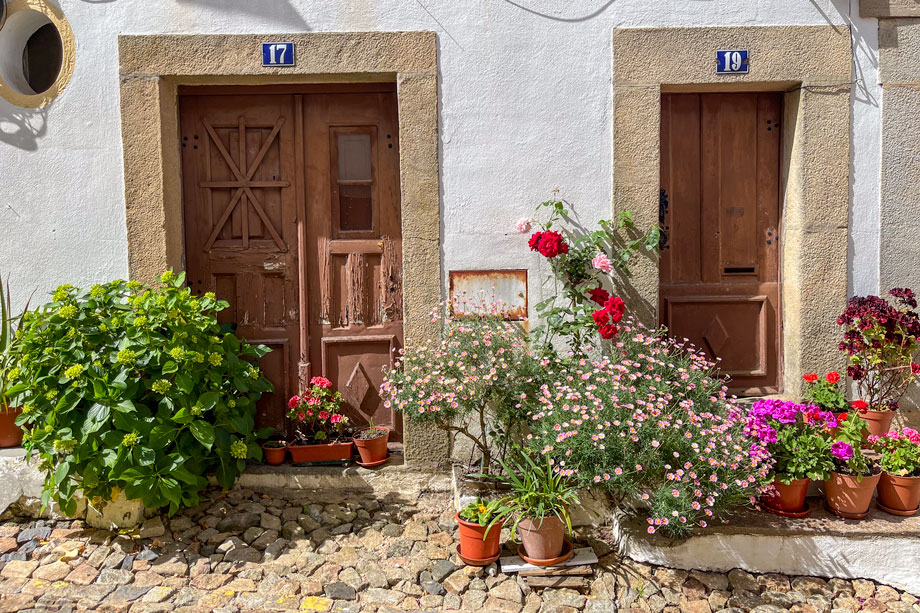
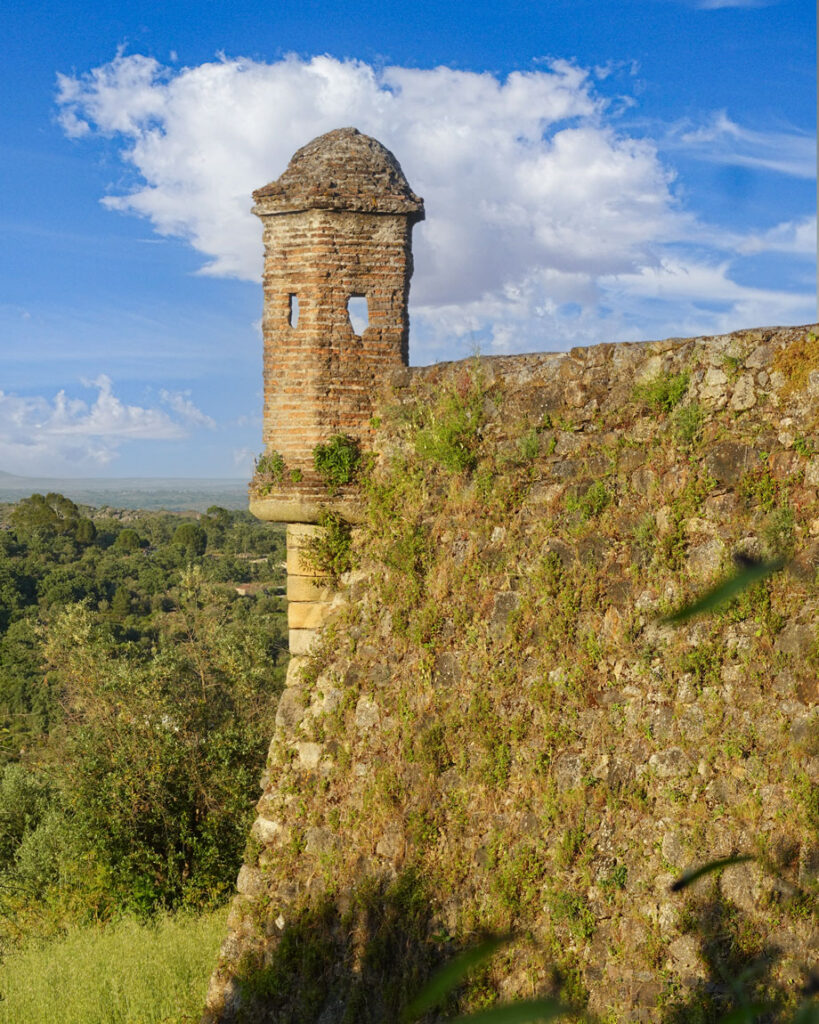
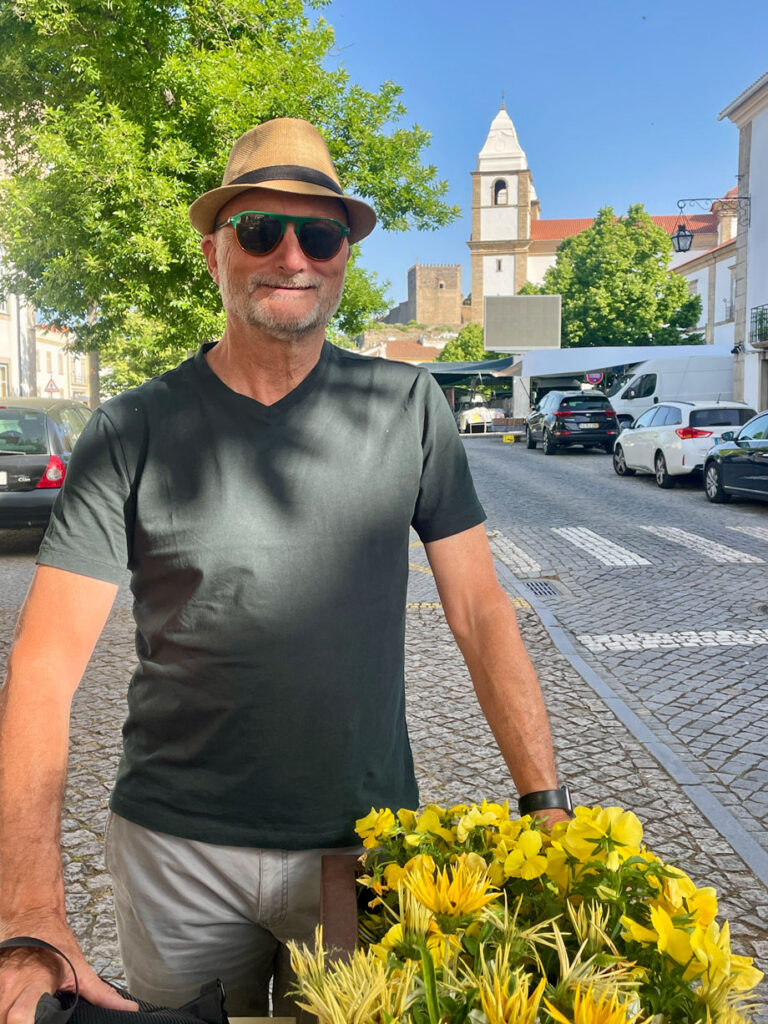
Castelo de Vide is characterised by very white walls with egg-yolk yellow trims surrounded by the protective ancient wall with guard lookouts, remnants of a fort and a crumbling castle. We loved strolling around the perimeter at dusk when it got a bit cooler. We found endless charm in the maze of narrow winding streets where homeowners are immensely proud of their front doorsteps, which are filled with quirky displays, flowers, tiles and of course, cats. We discovered that there is indeed a competition for the prettiest street. 🌷
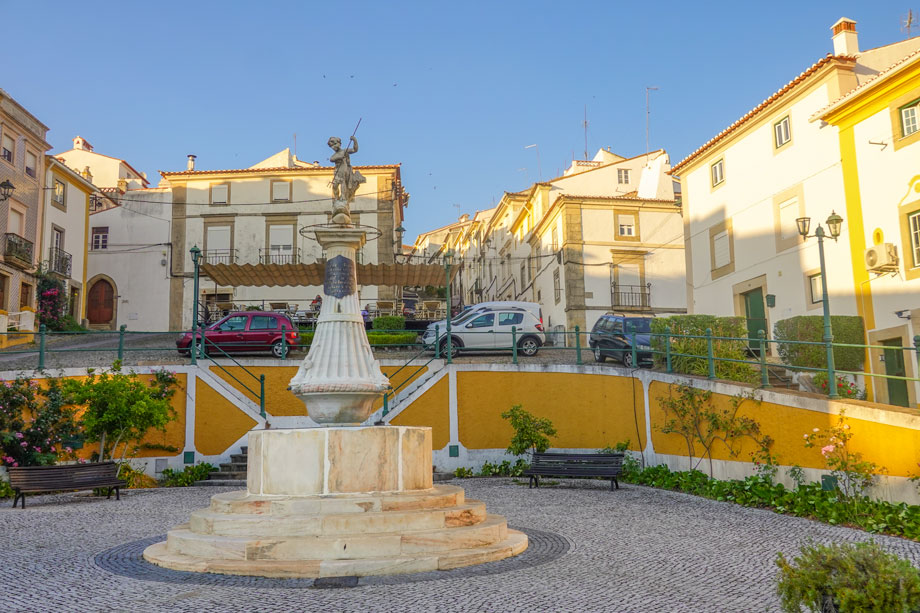
Heading down the north slope, our stroll ended in a pretty square pleasantly set off by a fountain at the lower end of the Jewish Quarter dating from 16C.
Very tired once again. Showered, cleaned up our house and fell into bed!
Our plan was to wake up early to get a head start before the heat of the day set in, however we struggled to get moving. Only after a brekkie of bagels and cream cheese did we drag ourselves out. Eduardo had supplied us with quite a comprehensive hit list of activities and sights and combined with Geoff’s research, we had lots to cover.
First stop was to visit the castle at the top of the hill. We parked below the impressive battlements.
Marvão Castle’s construction was attributed to an Islamic knight in 876 and then taken over by King Afonso I’s Christian army in the 12th century. Various innovative military reinforcements and embellishments were added over the course of the next five centuries and despite Spanish attacks in the 18th century, the castle is in remarkable condition.
The garden in front of the castle adds to its photo-worthiness but the views across the village and landscape are the best part. We spent a substantial amount of time strolling through the alleys and looking into the little shops.
The #1 New York Times bestselling book, ‘1000 Places to See Before You Die’ written by the Nobel Prize-winning Portuguese author José Saramago contains the words: ‘It is understandable that from this place, high up in the keep at Marvão Castle, visitors may respectfully murmur, ‘How great is the world’’’.
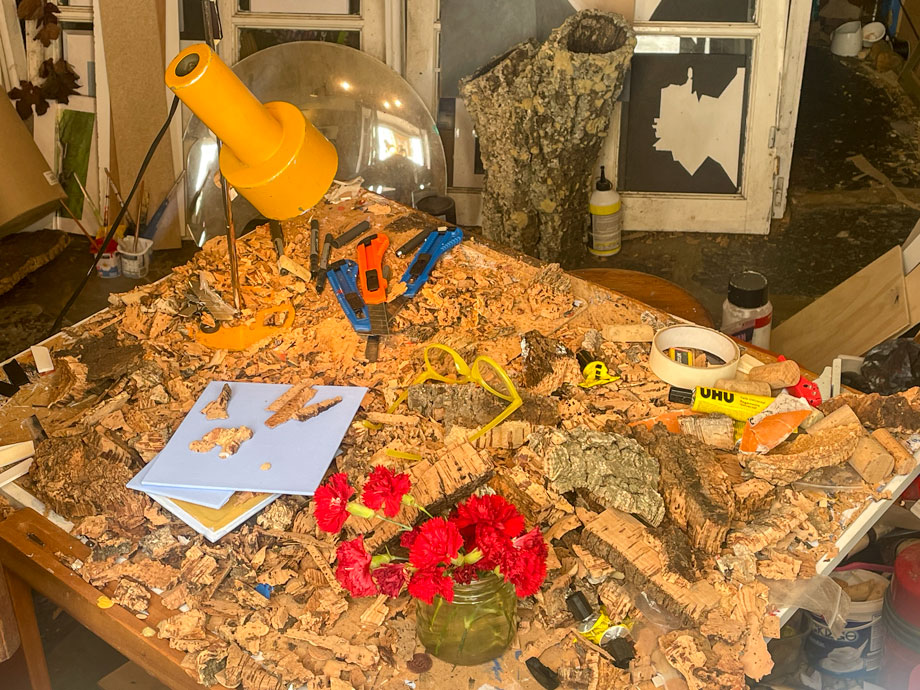
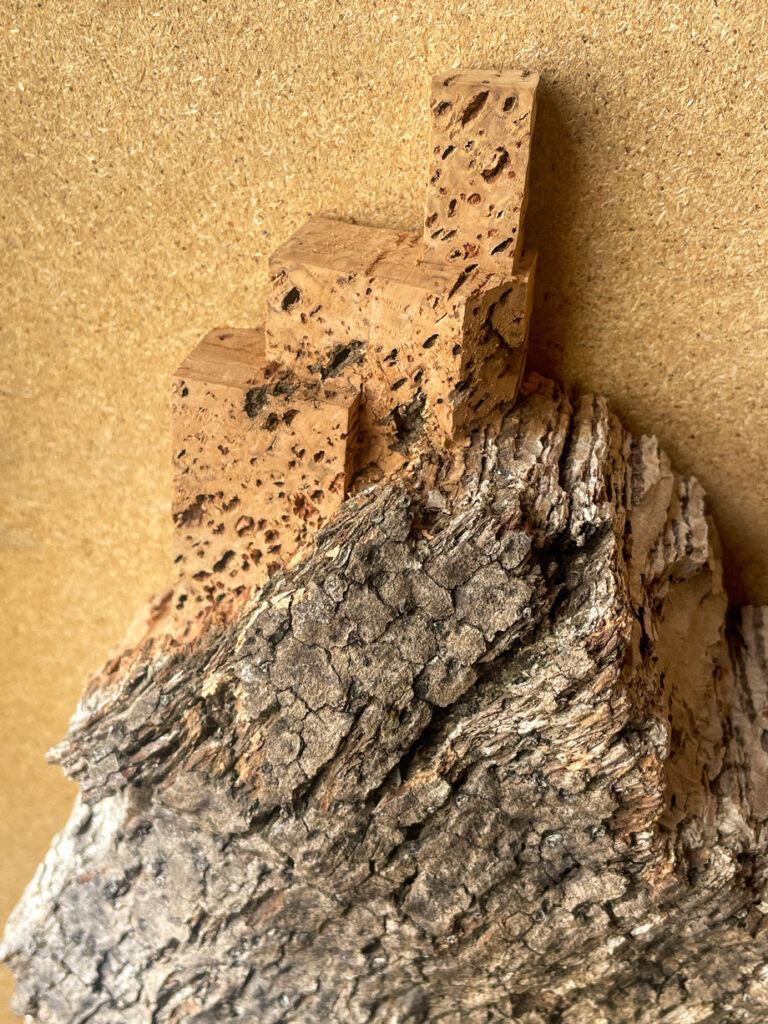
The region is famous for cork production and crafts made from cork. It was fascinating to look in on the workshop of a cork craftsman and to see how the cork emerges from behind the bark of the tree
Not surprisingly, the souvenir shops of the region are filled with items made from cork. Handbags, shoes, table mats, hats and even furniture.
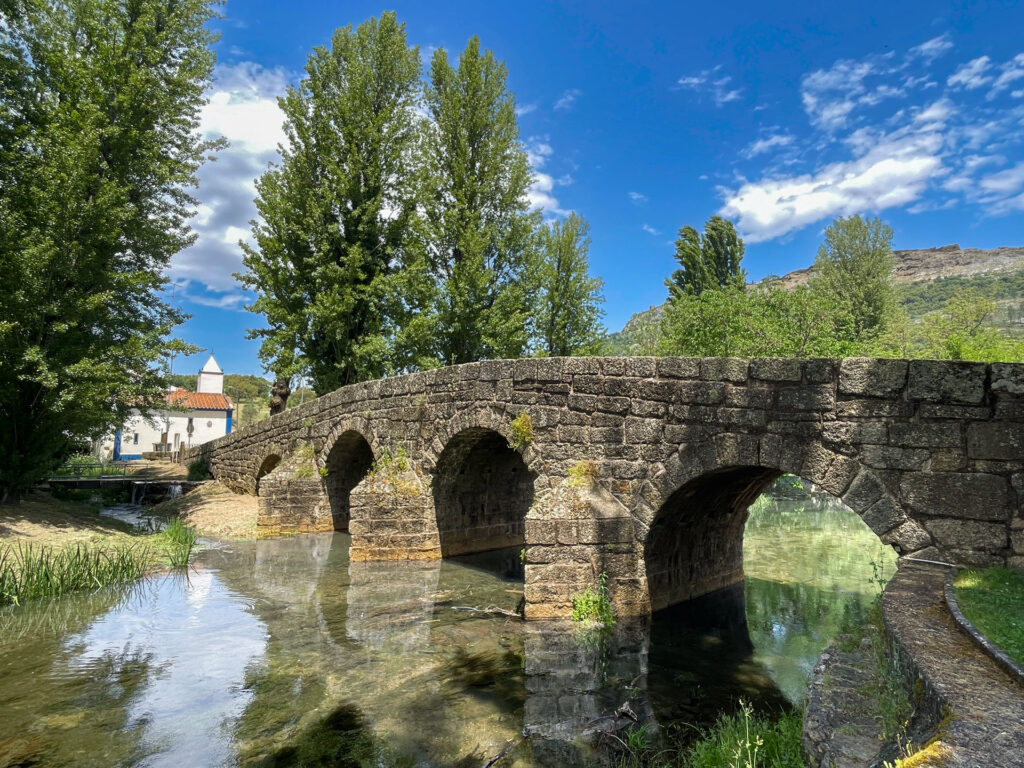
After our morning meander, we took a drive along winding country roads and located the Old Portagem Bridge situated not too far from Marvão, and located over the Sever river, in a peaceful and picturesque setting. What a relief to find a pleasant natural pool, that brought some relief from the heat.
The bridge is considered to be one of the most perfect engineering works ofAlentejo’s region and there are varied theories about its origins, beginning in the 16th century. Locally it is known as “Roman Bridge” probably because of its proximity with the Roman Town of Ammaia, but also by the presence of Roman materials in its surroundings.
For such an old structure it is incredibly well preserved. It is over a hundred metres long and has six arches with portico-shaped eyeholes in between. It was part of the Roman road that once linked Lisbon with Mérida (once the capital of Lusitania). The bridge has undergone a successive series of renovations since the 1930s and was still used for commercial traffic until the recent construction of a new road bridge nearby.
Such an neat little village and we loved this cute little church with its vivd blue trim.
We popped home to escape the 38 degree heat. (I had a coaching session – such a joy to be able to work from anywhere in the world!)
Later we decided to take a drive to see some more of the recommended sites.
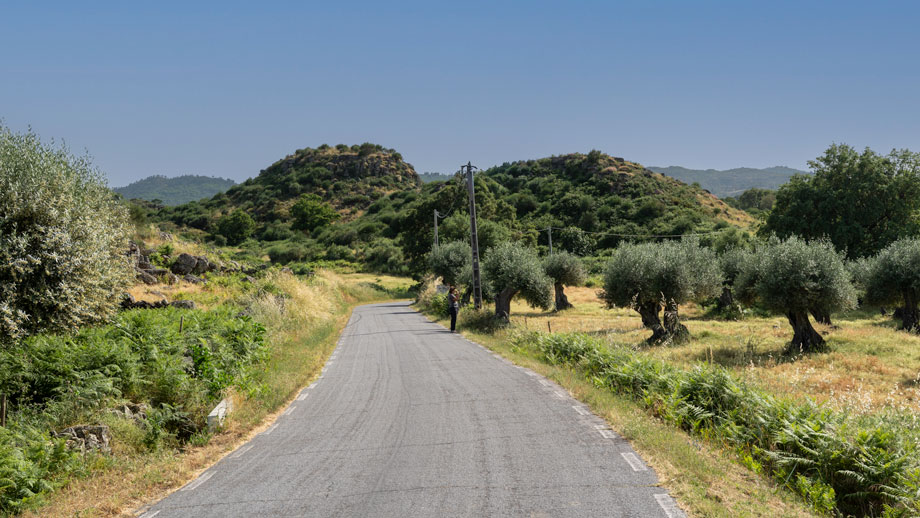
This time we headed towards Melrica on a narrow winding road. We passed plantations of what we eventually worked out were Cork trees. Until today, I ignorantly did not know that cork came from a tree. 🫢
Portugal is in fact the world’s leading producer and exporter of cork. It contains the largest area of cork oak forest in the world, covering over 1.8 million acres. That represents over one-third of the world’s total cork woodlands. Portugal exports around 65% of the world’s cork.
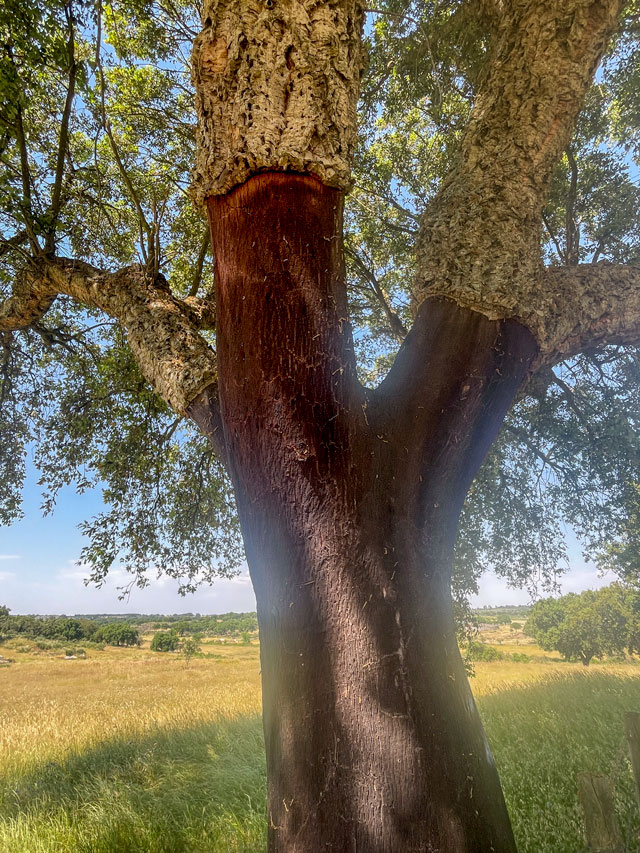
Cork is a renewable product, which regenerates after being harvested. The cork oak is the only tree whose bark regenerates, acquiring a smoother texture following each harvest.
We learnt that you can harvest the bark without chopping down or harming the tree. However, it takes 25 years after planting for a cork oak to start to produce cork! A careful stripping process is carried out during the summer months. The trees are harvested by hand. Over the course of its lifetime, which can last over 200 years, a cork oak tree may be stripped around 17 times. The skills needed to harvest cork bark have been handed down through generations, and the workers are among the highest paid agricultural workers in the world.
It was tricky making sense of these numbers, but we discovered that:
Cork trees are numbered by painting the last digit of the year of their harvest directly onto the trunk, a practice that acts as a sustainable “nature’s calendar” for harvesting
Why They Are Numbered: Because cork bark can only be sustainably harvested once every 9 to 12 years without harming the tree, the number indicates when the bark will be ready for the next extraction.
The Numbering System: A number (0–9) is painted on the tree during the harvest, which typically takes place between May and August.
Example: A tree harvested in 2025 is painted with the number “5”. Foresters will know that this tree will not be ready for harvesting again until 2034.
Methodology: The bark is peeled from the trunk, and the number is applied to the bare trunk afterwards to mark the year of that, say, 3rd, 4th, or 5th harvest.
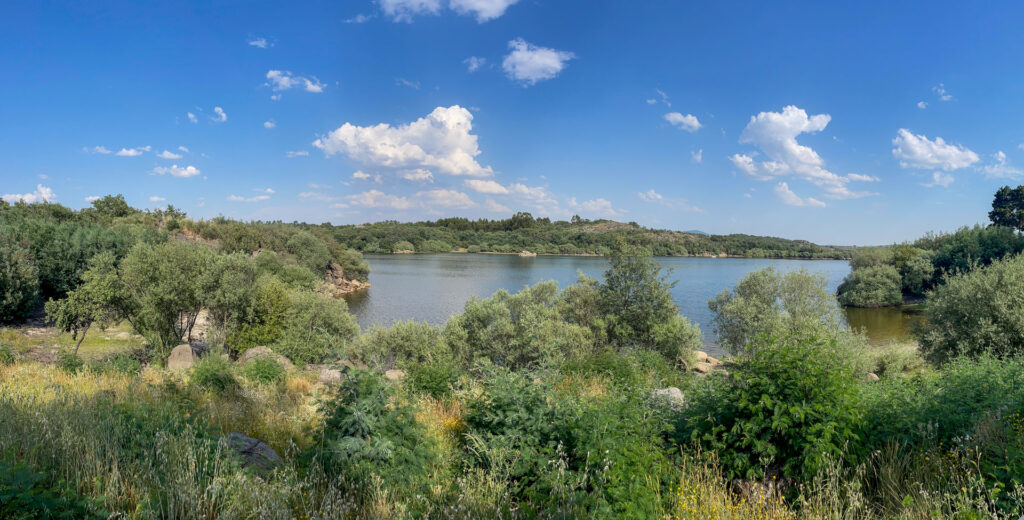
Cruising the narrow roads in the region and approximately 11 km northwest of Castelo de Vide we came upon the waters of Barragem de Nisa.
Officially known as The Barragem de Póvoa e Meadas (Póvoa Dam), it was built in 1927 and is Portugal’s first and largest hydroelectric dam fed by the waters of the Nisa stream. The dam’s construction created a water area of 236 hectares, which is encircled by a great hiking trail.
There are granite rocky outcrops that not only give it some beauty but are rich in birdlife. We spotted some storks. We also noticed a guy fishing peacefully albeit in the blazing sun. It seemed like a great location for a weekend picnic.
A traffic light system at the narrow bridge manages the single file cars with alternate timed breaks.
Beyond the bridge, we came upon the pretty town of Póvoa e Meadas which was founded as a settlement by the Knights Templar in the late thirteenth century (“povoamento” in Portuguese means “settlement”)
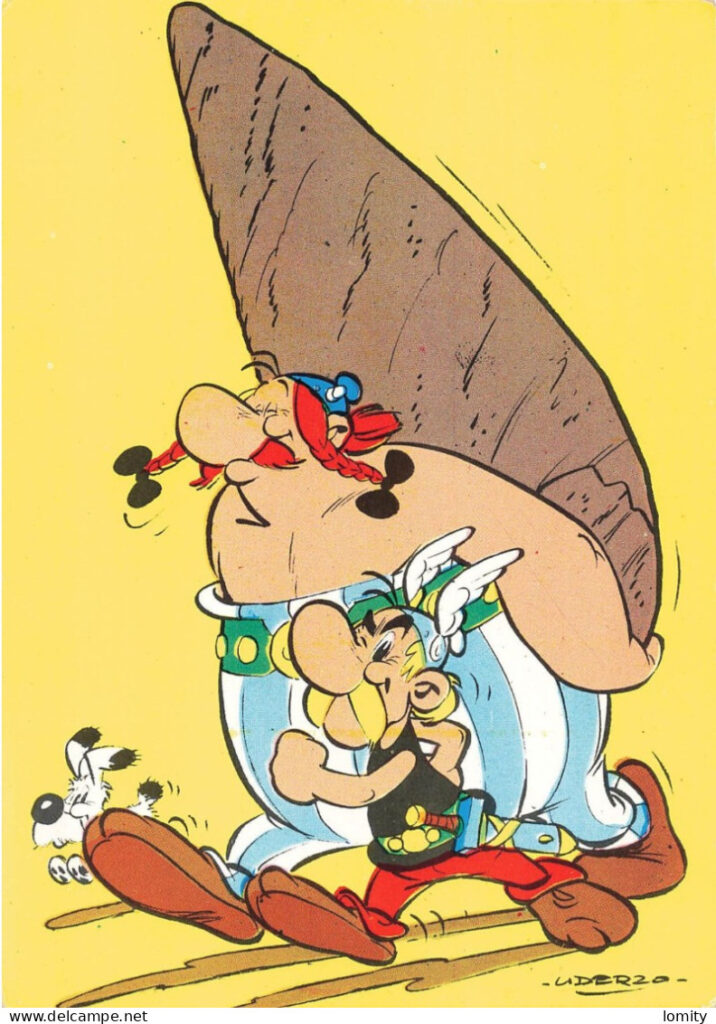
Another thing I was unaware of is that Portugal has a significant concentration of Neolithic menhirs and megalithic complexes, particularly in the Alentejo region. These ancient balancingstones, dating back as far as 6000 BCE, are among the oldest in Europe and were likely used for ritual, social, or astronomical purposes. Ignorant me. I thought menhirs were a fictional something Obelisk lugged around and was totally in agreement with the druid Getafix who once remarked, “we still don’t know what menhirs are for”. 😜
With over a thousand individual megaliths in the Evora and Estremoz region of the Alentejo alone, it is testament to an early civilisation having made their home here, and the countryside is strewn with these prehistoric stone monuments—both in the form of isolated menhirs (single stones), cromlechs (stone circles) and dolmens (burial tombs or chambers).
The megaliths that we tracked down ranged from those on private land that tend to be forgotten piles of rocks in the corner of a field, right down to some of the most important and spiritual sites in Iberia, if not Europe.
One of the more accessible menhirs, is Anta da Melriça. For this one we had to cross a large field, negotiating furrows as we went, but the stones loomed ahead of us standing proudly in the middle of a wide field. It is fascinating to think that these enormous stones have stood here for millennia, watching the comings and goings of countless generations.
The Menhir of Meada is believed to be the largest menhir in the Iberian Peninsula that was entirely carved by humans.
Discovered in two pieces, it was restored in the 1990s, when the two parts were joined and the complete stone was replaced in its original location.
The menhir’s total length is about 7.5 metres, with a maximum diameter of 1.25 metres and a circumference of 3.9 metres at the base. It weighs around 18 tons.
Based on radio carbon dating of coal discovered underneath the base, the menhir is believed to have been raised around 5000 BCE. If this dating is correct, it would make the menhir the oldest yet discovered anywhere in the world.
I’m looking at you, Obelix!
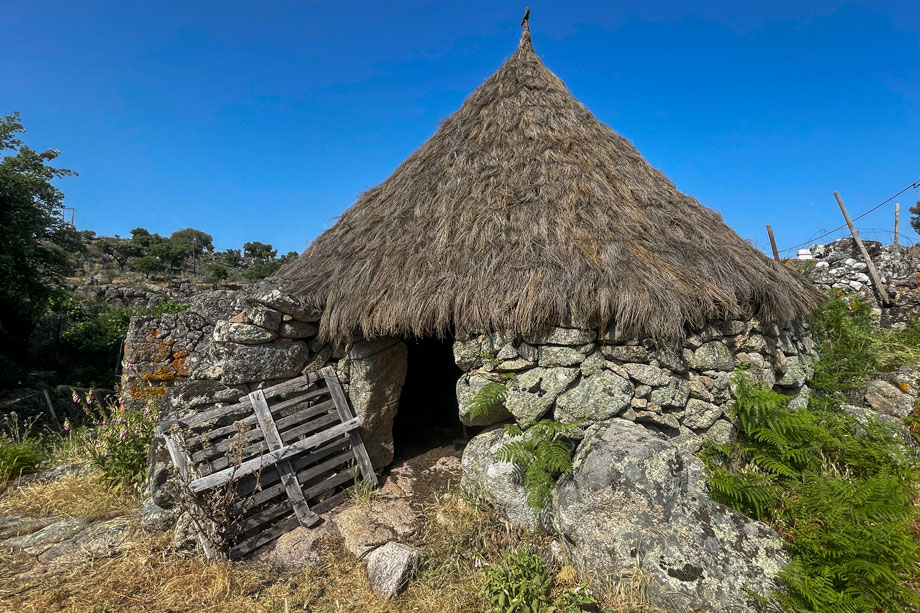
Another charming discovery was stumbling on the quaint Shepherds huts, straight out of a fairy tale.
Chafurdão of the Cales valley is an ancient type of dwelling or shelter for shepherds, their sheep or the feed. It is a round rondawel type construction made from stone and mud, and is lovely and cool inside.
The origin of the name comes from the portuguese word chafurdar that means wallow and was given by the farmers and shepherds of the region due to its similarities with some pigsties.
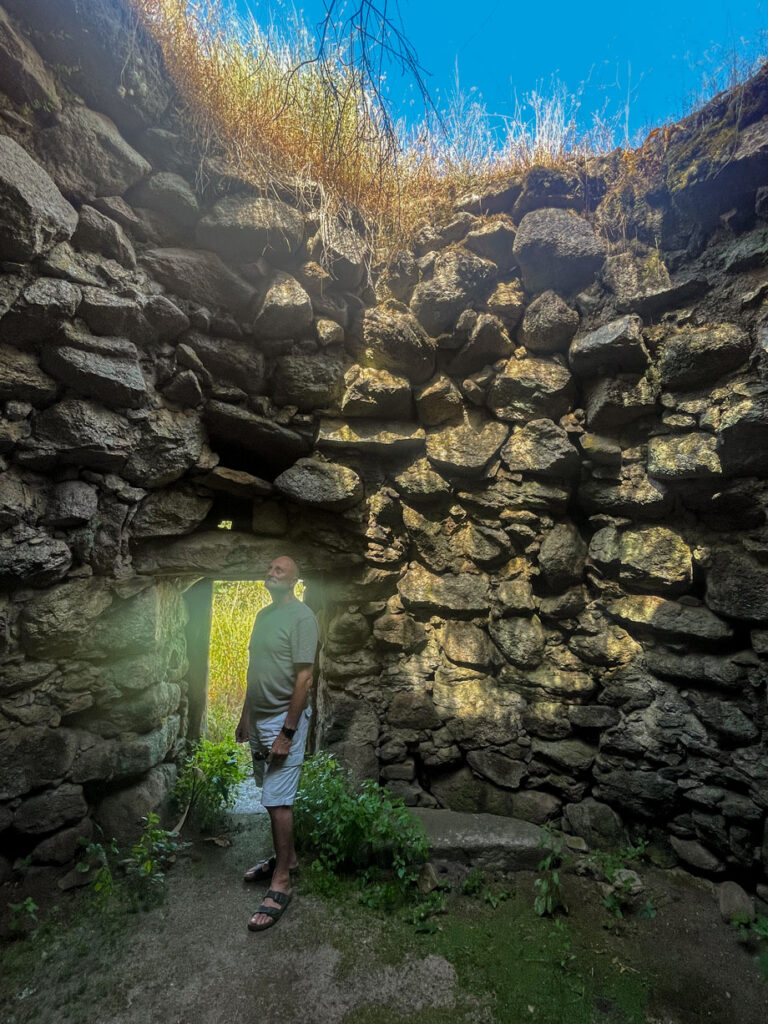
On entering we surprised some sheep who were chilling inside the cool hut.
Those kept in good condition are all from recent years (the only one with a proven date of construction is from 1733).
The entrance of these huts faces the sunrise and has a light and ventilation system that works through the gaps between the thick stones in the walls. There are also niches in the walls, perhaps for storage. The diameters of these constructions range between 3.50m and 10m and sometimes exceed 3m in height. The roof is made from a compact layer of dirt that includes grasses that strengthen the structure. The construction technique uses slabs of granite that are arranged horizontally and close gradually as they approach the top (reminded me of our stay at the corbelled house in Carnarvon). At the maximum height, this structure is finished with a mobile slab that aids ventilation.
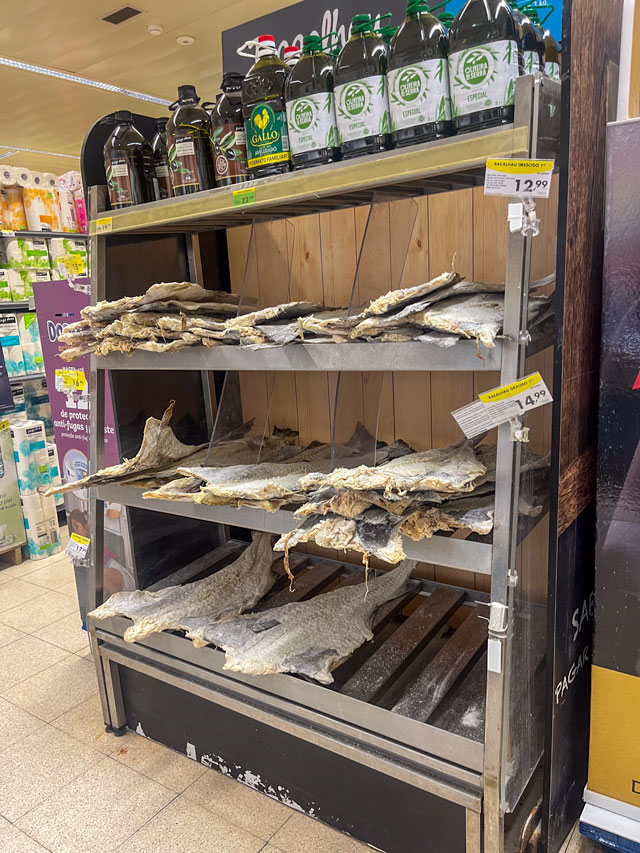
Exploring a foreign supermarket is always a treat and Pingo Doce became our local spot. Unusual to see the open shelves of salted fish, called Bacalhau (dried, salted cod) – a cornerstone of Portuguese cuisine.
On our way home we picked up fresh ingredients for our next two home cooked meals – fresh salmon and pork chops, potatoes and asparagus.
Bacalhau is heavily cured with coarse sea salt, requiring 24–72 hours of soaking in water—changing it regularly—to rehydrate and remove excess salt before cooking.
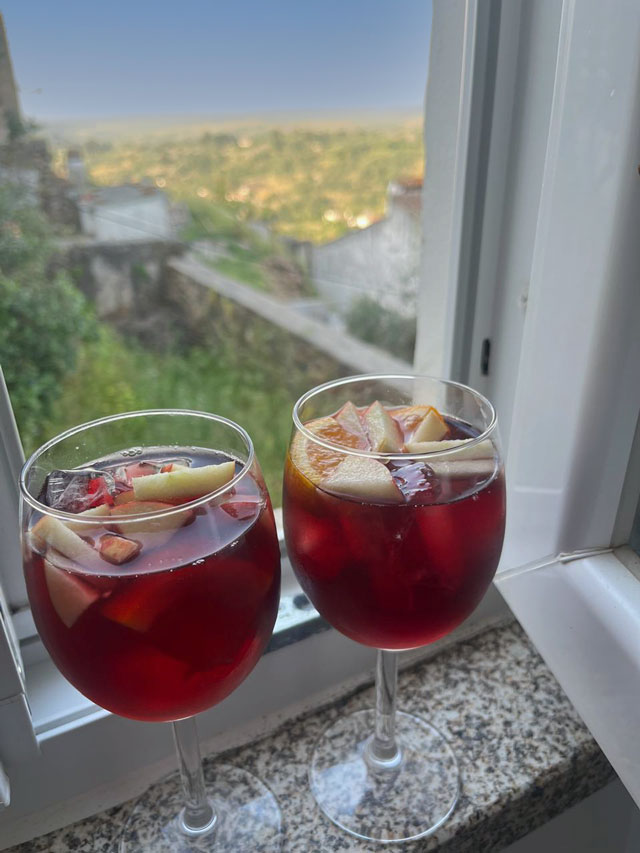
We are adept at making home-made hollandaise sauce using the delicious fresh eggs. Accompanied by the obligatory bottle of Sangria which is always surprisingly good.
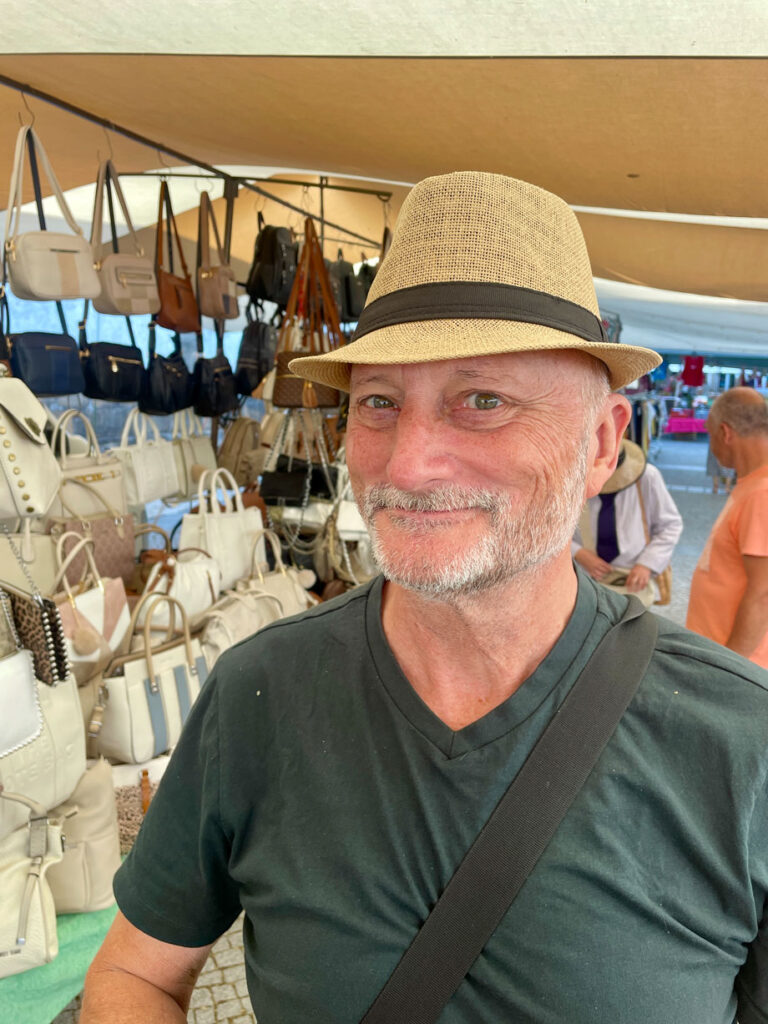
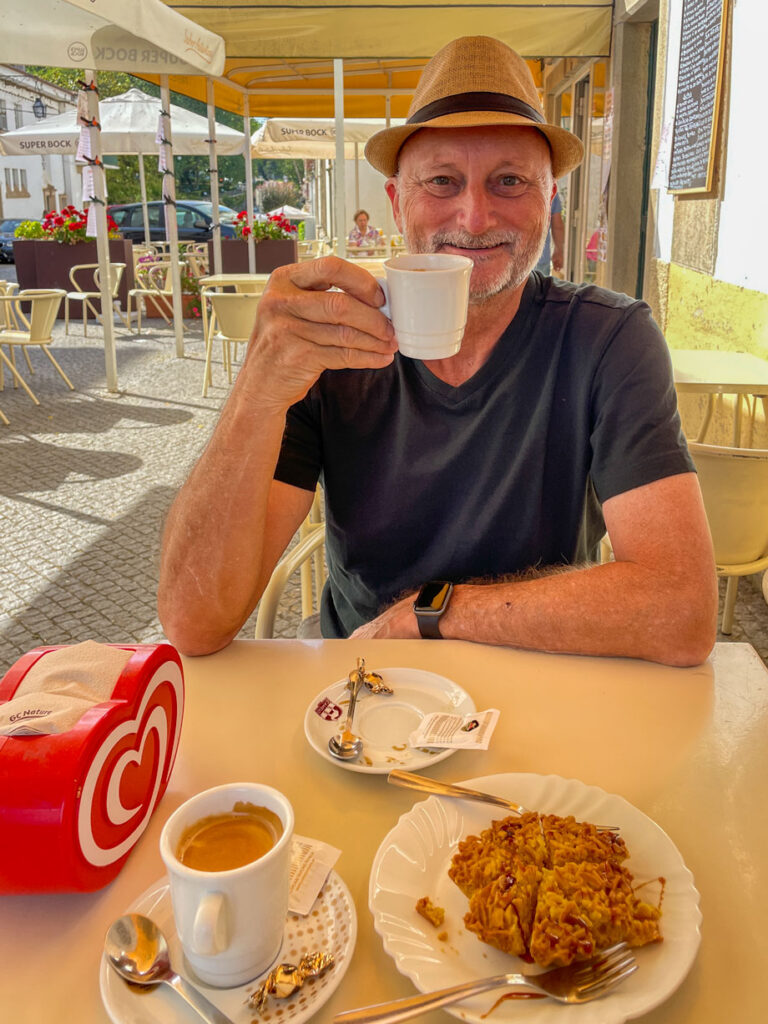
Nipped out early-ish the following morning for coffee and to find a spot that sells the almond tarts I’d seen in someone else’s blog. Settled for Pasteis de Nata instead and marvelled again at the excellent coffee this country produces with consistency.And then we located the almond tart and had a second cuppa. We wandered through a street market where Geoff procured a rather dashing hat.
We have been promising ourselves to slow down and stop with the go-go-go and to enjoy a chilled day at home. We put some washing on and wandered down to visit the fresh produce market. We draped our washing out in the lane to dry (just like locals) while we lazed around reading and blogging.
Later we bumped into Eduardo who told me about his ginger cat who went missing for 5 months but turned up at Pingo, approaching bravely one day when the clever kitty recognised the sound of his car! Such a heartwarming story.
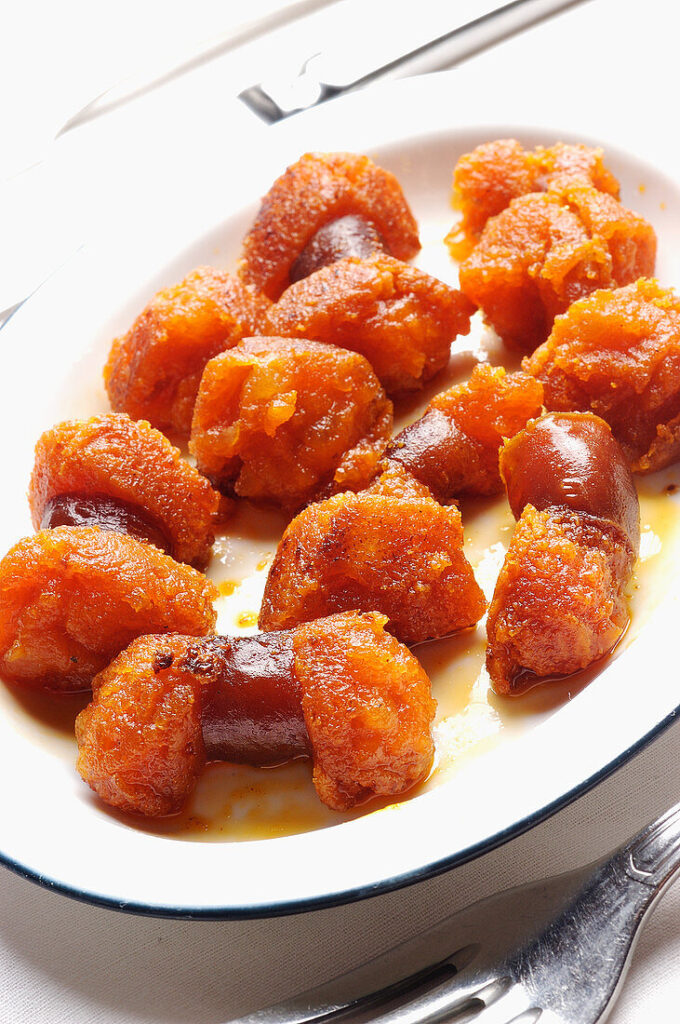
We popped out for more groceries. Geoff tried the local sausage which he fried up for lunch. Not sure if it’s representative of the best they have to offer. Farinheira is a smoked Portuguese sausage typically with a soft, doughy texture. Unlike meat-heavy sausages like chouriço, it is made primarily from wheat flour, pork fat, and a blend of seasonings including white wine, paprika, garlic, and pepper. Tastes something like a finely ground tee-wurst but quite good when it gets crispy
Later we set off in the car in search of the charming old railway station that is famous in the area. Our GPS took us a narrow scenic route that was quite startling in that the road is intended for traffic in both directions. Locals speed around the corners so it is quite scary. We passed a stone quarry and the old stone works that have ceased operating.
Some typical roads that are actually 2-way!
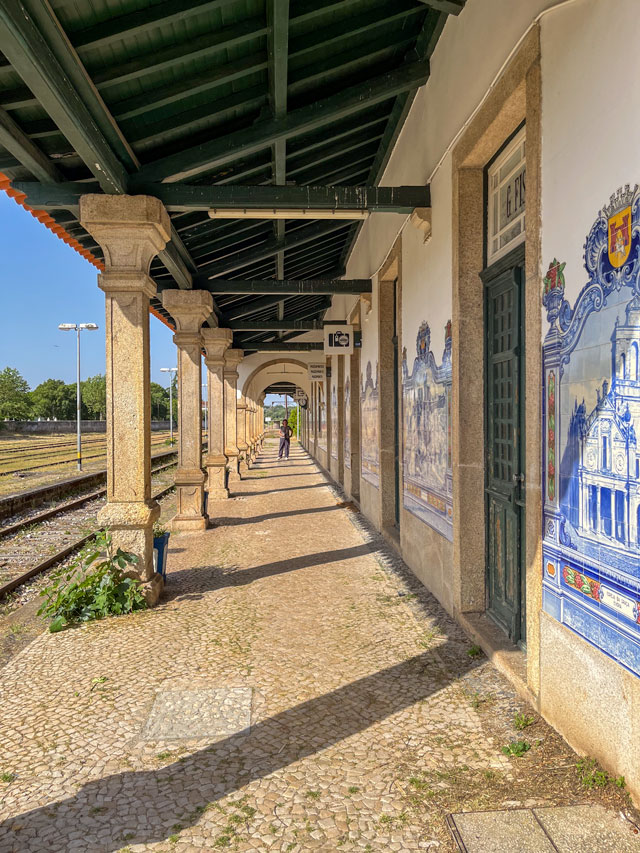
The Mãrvao – Beirã train station dates back to the 19th century with the first train departing on 6 June 1880.
By 1926, the station had became more important and was enlarged. The extension included a customs office, better accommodation for staff, a restaurant and even some overnight rooms for passengers. The station was fully operational until 2011.
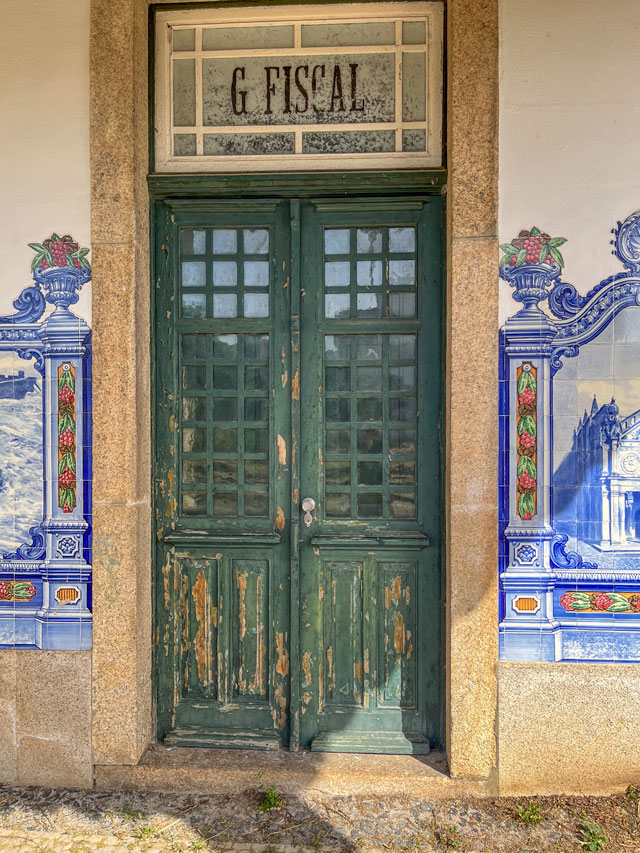
This station is particularly special because of its artwork. The magnificent blue tiled walls depict some of the most important places to visit in Portugal. There’s Sintra, the Roman Temple of Évora, Belêm, the castle of Mãrvao etc. The station remains a key element of Portugal’s Architectural Heritage.
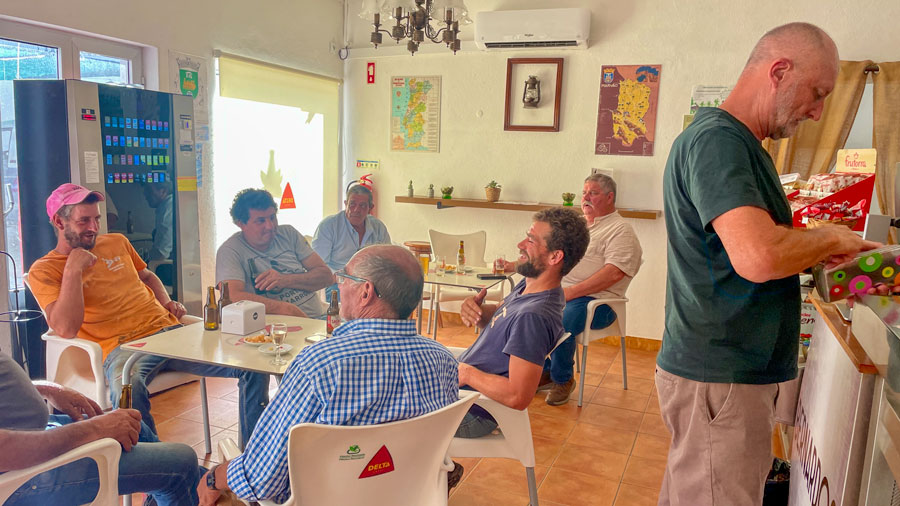
Rudely warm even at 6pm, we stopped in Beira for an old fashioned iced lolly. Walking into the cafe was like stepping though the saloon doors in a spaghetti western. The group of 7 or 8 gents, paused mid conversation and looked us up and down. For a second I felt like I should whip out some pistols, but everyone resumed their conversation and ignored us.
We took a very scenic route home along a narrow dirt track, praying for no on-coming traffic.
On our final morning, we packed up and then decided to take a quick visit to the Casa da Inquisição” (House of the Inquisition) museum, a centre that interprets the Portuguese Inquisition through augmented reality. This museum, located in the “Casa do Morgado,” allows visitors to explore different phases of an Inquisition trial, including the case of Guiomar Mendes, a woman from Castelo de Vide who was imprisoned by the Lisbon Inquisition in 1662. It was rather lifelike and graphic!
The Spanish Inquisition began in 1478, and for more than 300 years it pushed aggressively to repress what the monarchy saw as heresy. The Inquisition pursued its mandate in Spain, Portugal and across the Spanish colonies, including Mexico. It particularly targeted Jewish “conversos” — Jews who had been compelled to renounce their Judaism and to convert to Catholicism, but who secretly continued Jewish religious practices.
Such a delightful stay in a picturesque village. We were sorry to trundle all our luggage for the last time, past the pretty alleys and lovely cats that we had gotten to know over the last few days.