Day trips from Porto: Viana do Castelo ⛪︎ and Douro Valley 🍇
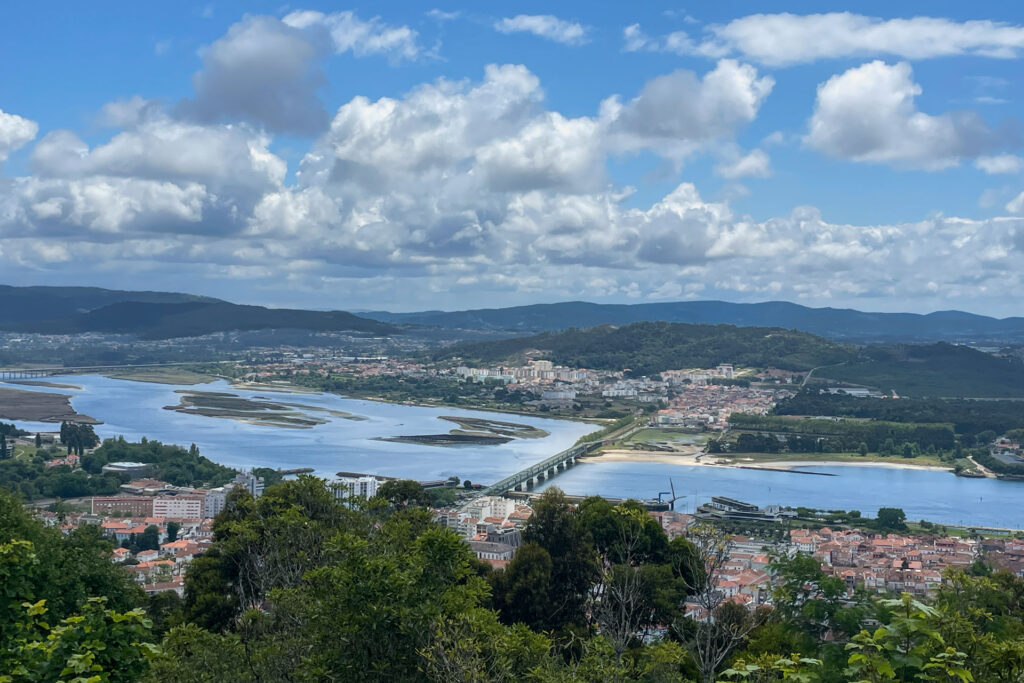
Viana do Castelo Because I was still recovering from the ‘flu, it was so nice to be spoiled with a day of sightseeing by car. Athene and Gary drove us to Viana do Castelo where we swept up the eucalyptus-clad hillside above the town, offering amazing views down the coast and up the Lima valley.
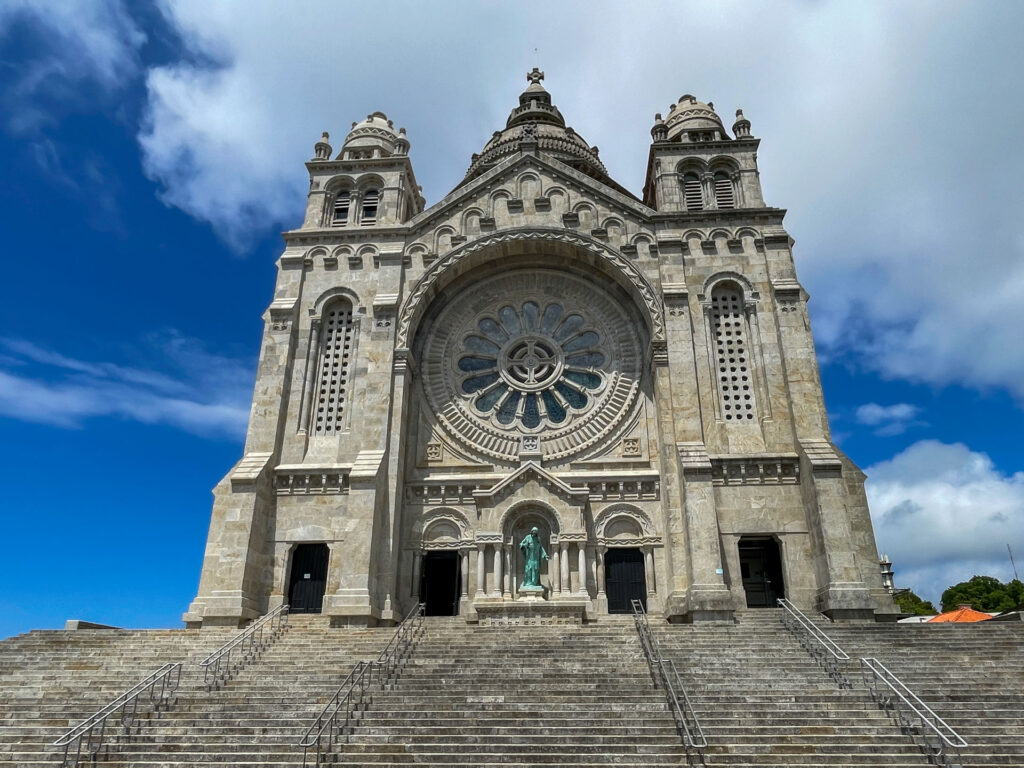
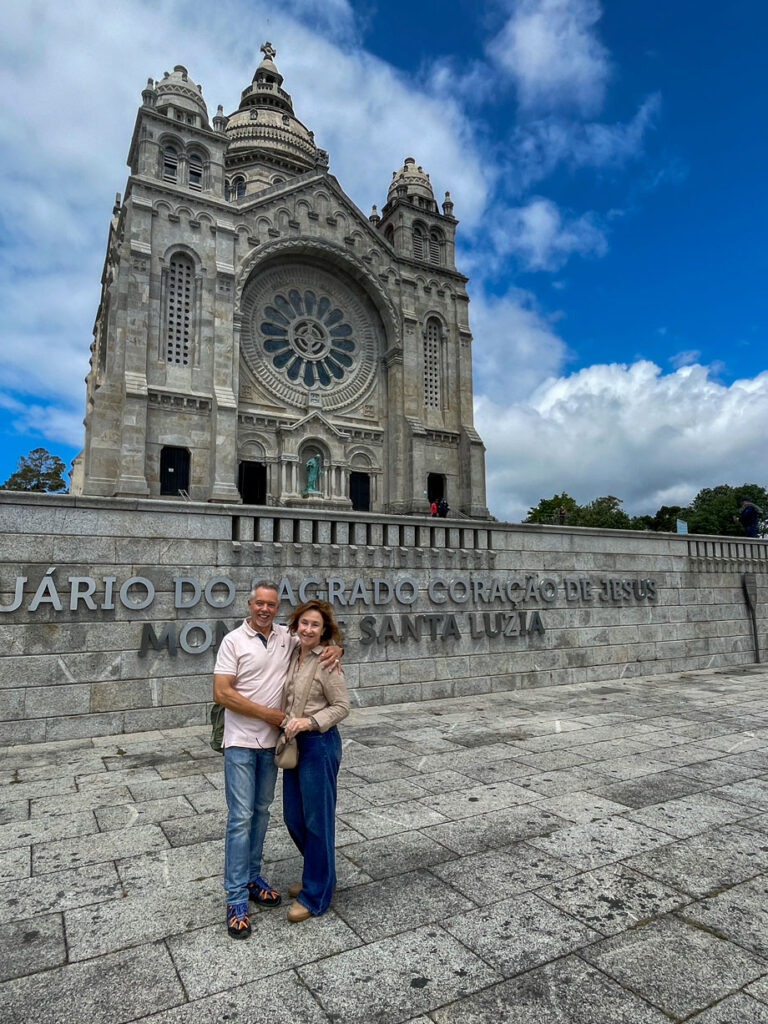
We were here to visit the 20th-century, neo-Byzantine Santuário de Santa Luzia. This beautiful church (which felt like a cathedral) honors Santa Luzia, the Patron Saint of Sight. The building is laid out in a Greek cross plan with a dominant dome located in the centre of the building, with smaller domes marking another four towers.
It was commissioned in 1904 and fully completed in 1943, although it feels much older due to the gothic style.
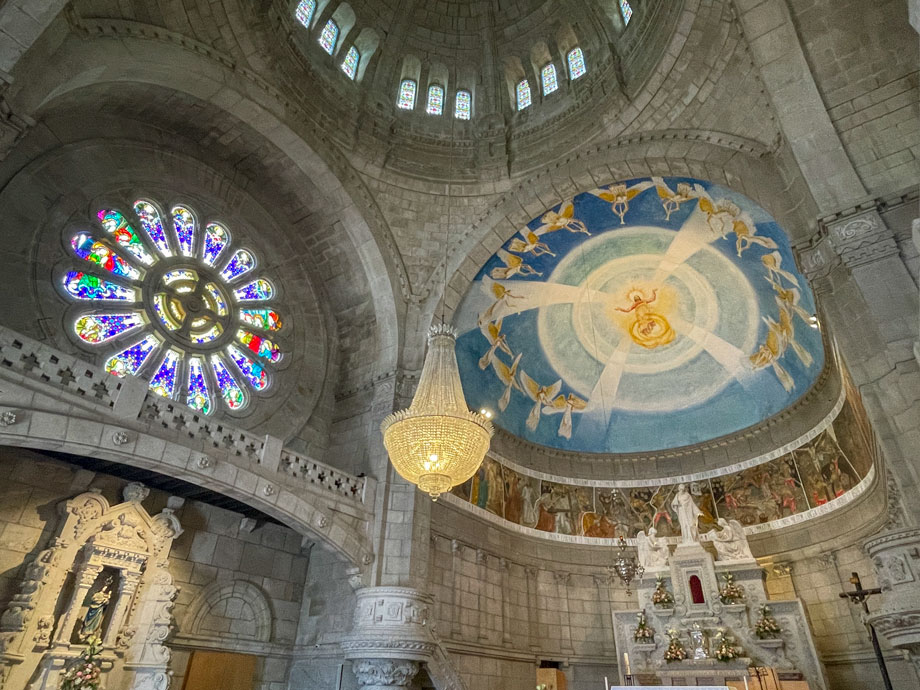
We wandered around the outside, taking in the endless view and then popped inside to get a glimpse of the spectacular rose windows (apparently the largest rose windows in the Iberian Peninsula).
Viana is about 40 minutes northwards by car from Porto. Gary and Athene drove us down the hill and through the compact historic centre. You can walk from one end to the other in fifteen minutes. The streets follow a grid pattern that was laid out in the 15th and 16th centuries, when Viana was one of Portugal’s most important ports. Ships left here for Newfoundland (cod fishing), West Africa, and Brazil. The merchants who built their fortunes on these voyages built houses to match: granite facades, wrought iron balconies, and carved stone doorways.
Praca da Republica is the heart. The old town hall (a 16th century building) anchors one side. Cafes fill the square from morning to late evening. We wandered through the pretty square on our way to lunch. We had delicious cheese burgers in a cosy restaurant.
After lunch and heading back towards Porto, we took a drive to Vila do Conde, a picturesque coastal town that’s brimming with history, charm and maritime heritage.
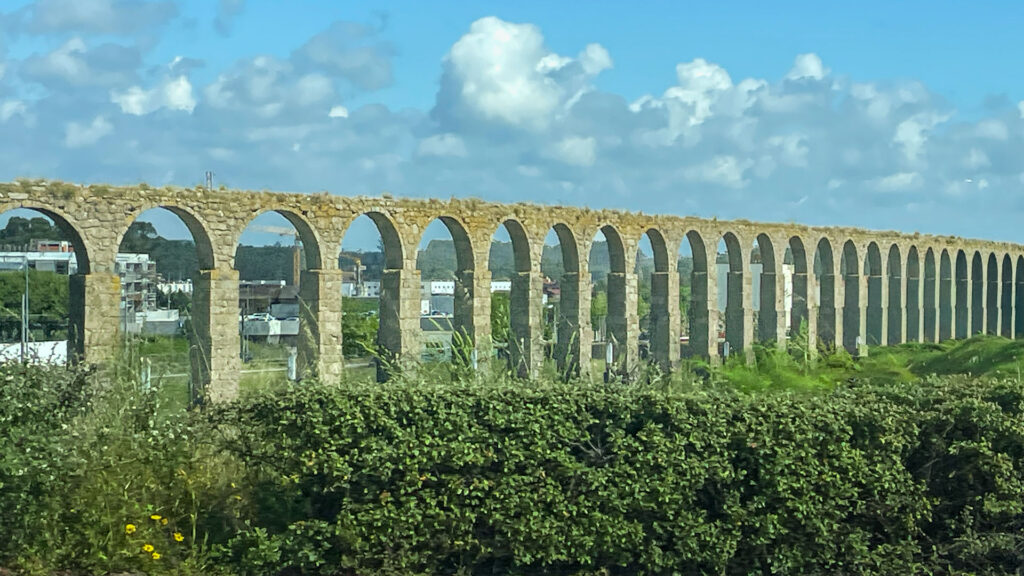
Vila do Conde The town’s most striking feature is visible from a distance: the Aqueduct of Santa Clara, a 17th-century engineering marvel whose 999 arches carry water some 4 kilometers from a spring to the Convento de Santa Clara.
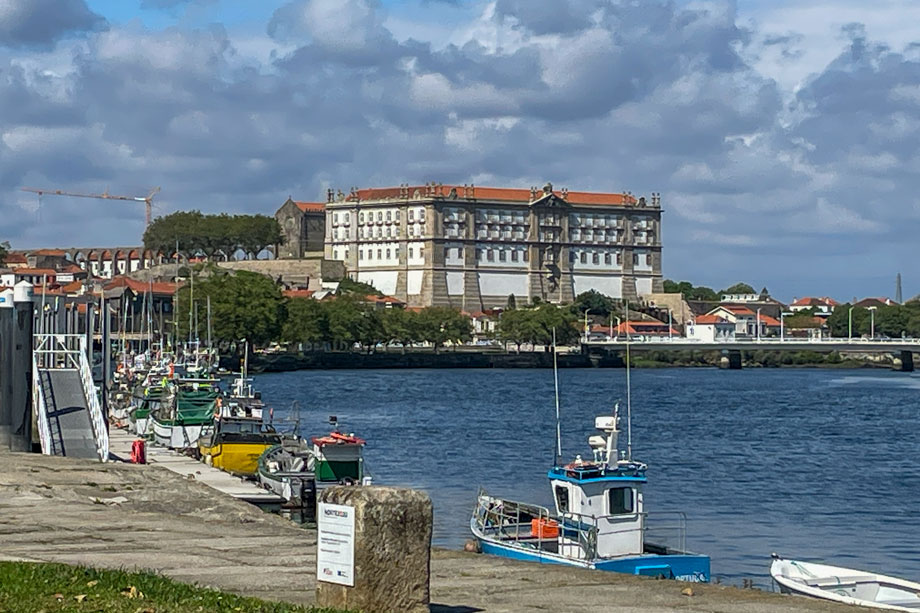
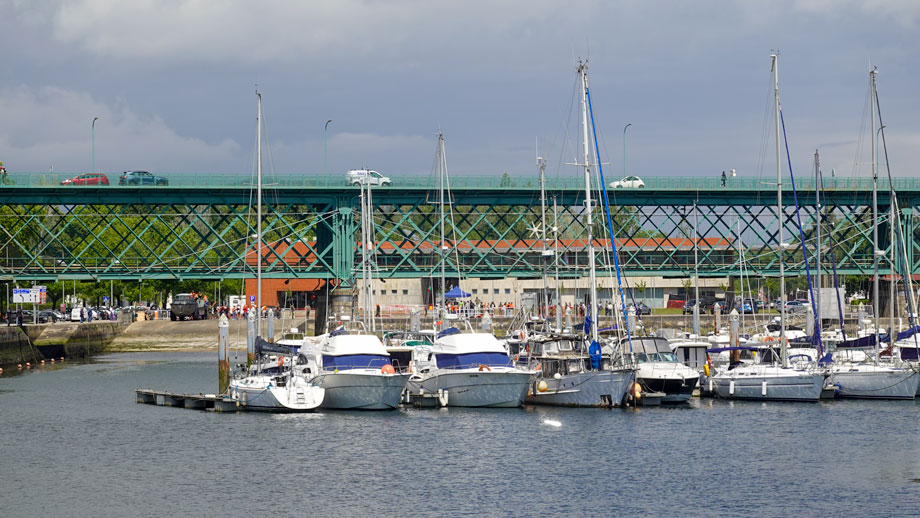
The riverfront has been thoughtfully developed. A wide promenade runs along the Lima, connecting the fishing harbour (where working boats still tie up alongside pleasure craft) to the cultural centre. We took a slow drive along the promenade, admiring the various sculptures, boats and monuments.
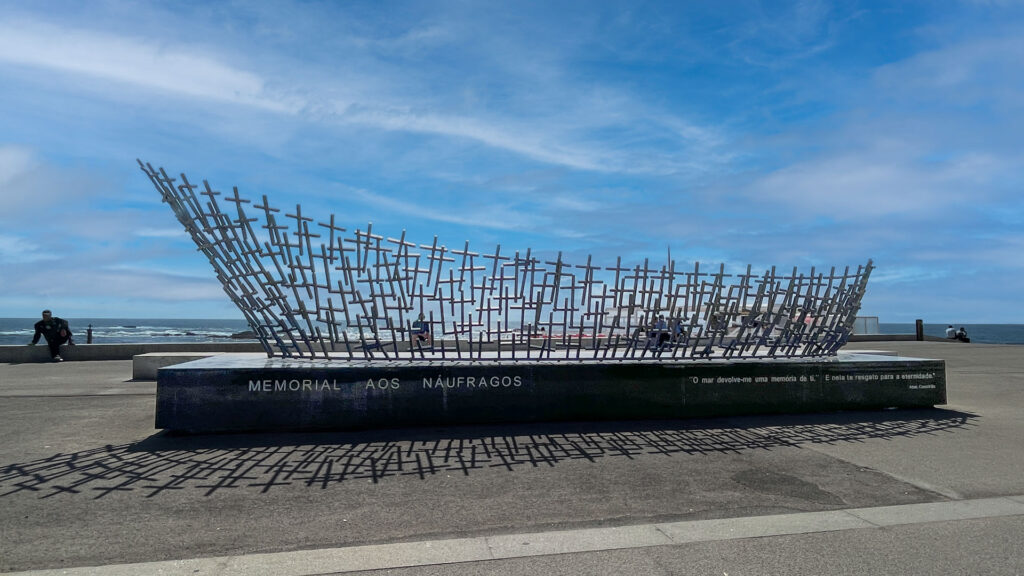
The Memorial aos Náufragos is a touching seafront sculpture shaped into the silhouette of a boat from crosses. Built as a touching tribute dedicated to local fishermen and navigators who lost their lives at sea, honouring the constant danger of shipwrecks tied to the region’s seafaring history.
Even though it wasn’t high season, there were lots of people enjoying the lovely warm day. The shoreline has long stretches of golden sandy beaches.
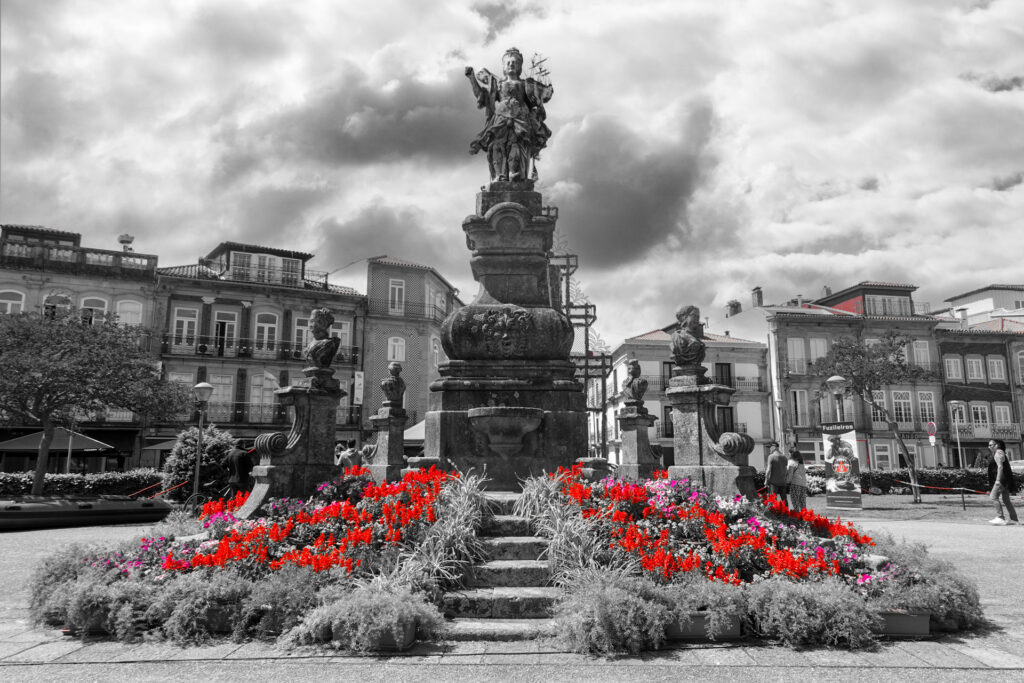
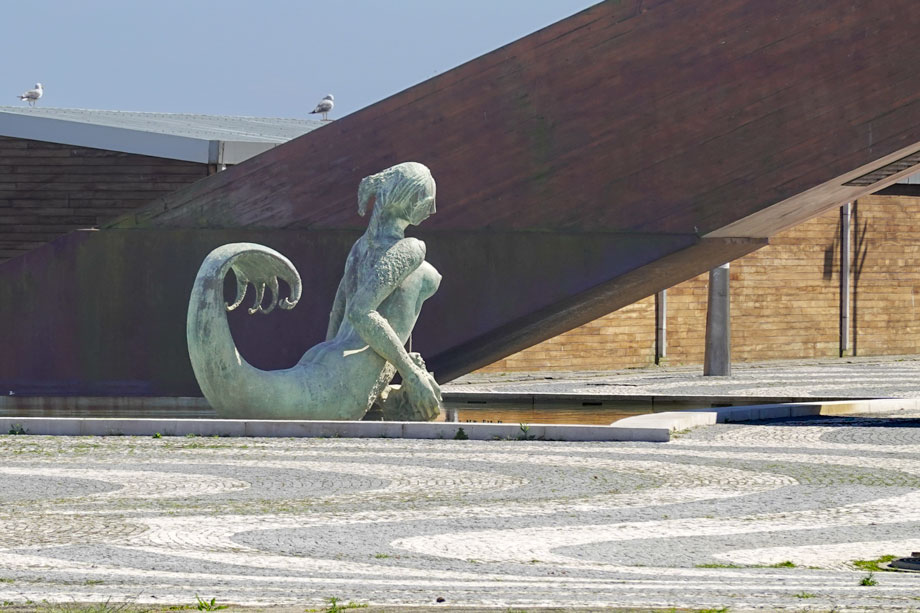
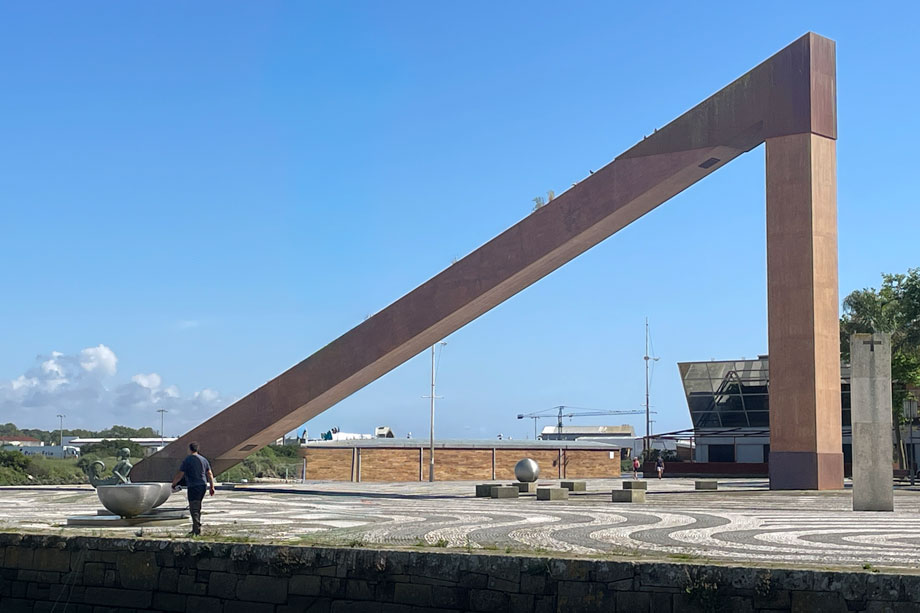
King John II’s Square, shows various celebrations of the Portuguese Discoveries, such as the columns of the “five corners of the world”, the lake of the mermaid, several fountains in the shape of a globe and in particular a big sundial.
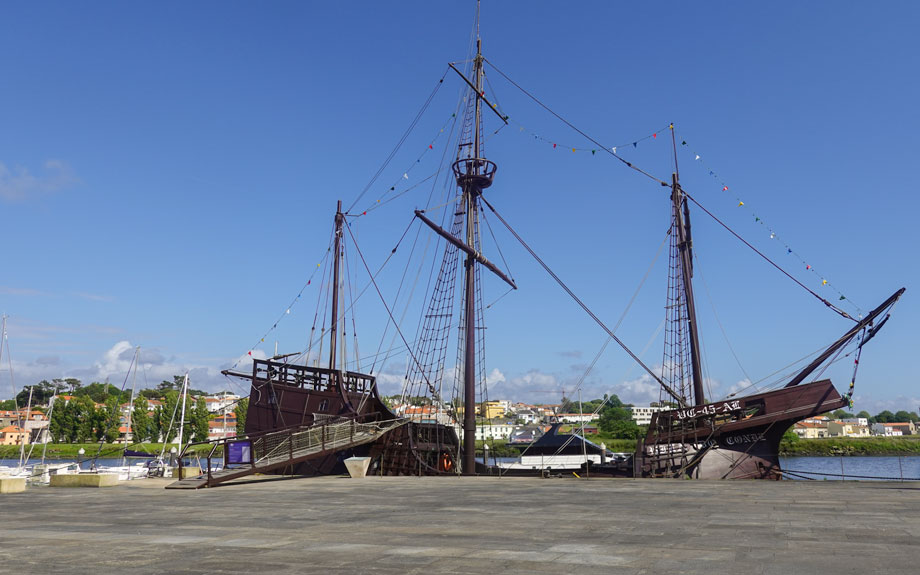
We cruised past the Nau Quinhentista Ship, which is a replica vessel (full-scale 27.50-meter) of a 16th-century Portuguese carrack built in 2007. Visitors can walk-through the ship and experience the living conditions of the crew quarters, see navigation equipment of the time, as well as the types of artillery that was used.
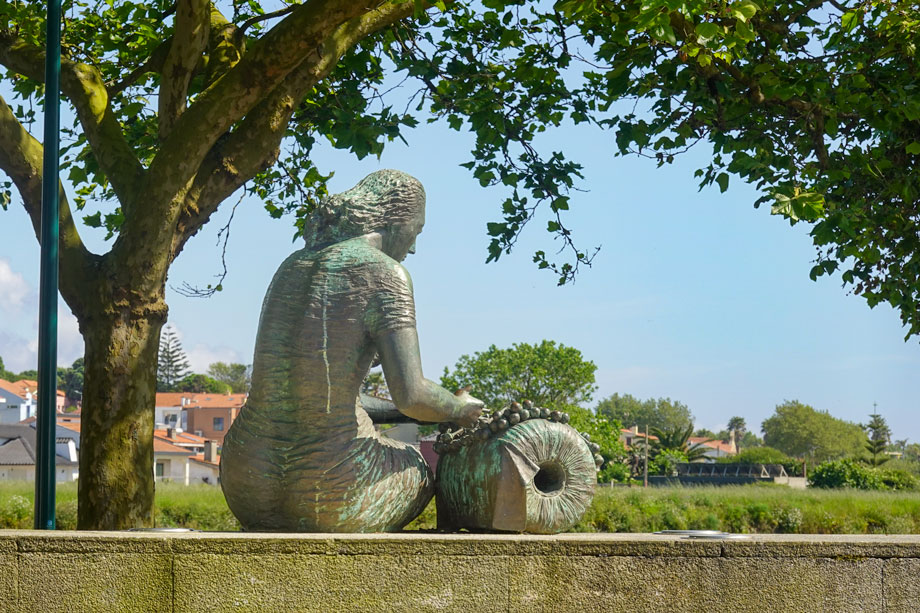
Vila do Conde has a centuries-old tradition of bobbin lace crafting, known as rendas de bilros.
This sculpture is the Monument to the Lacemaker, a bronze tribute honoring local women and their centuries-old tradition of bobbin lace. This traditional textile craft involved the twisting, crossing, and braiding of cotton or linen threads wound onto pear-shaped wooden bobbins. 17th century women relied on this meticulous handcraft to support the family while men were away fishing.
Such a delightful day and a wonderful opportunity to see a little bit of the northern coastline between Porto and Braga.
Pinhǎo, Doura Valley We set off early after a quick breakfast of bagels and cream cheese. Gary once again gallantly acting as chauffeur
As we got closer to the our destination, we came across the Corgo Valley Bridge (Viaduto do Corgo), just on the edge of the Douro region.
Completed in 2004, the curved, twin-deck prestressed concrete structure carries the IP4 / A4 highway high over the valley. Its soaring concrete piers reach up to 70 meters high, while the total drop to the valley floor below is roughly 80 meters. The curved design was engineered using the balanced cantilever method to navigate the steep, terraced, schist-covered hillsides typical of the region.
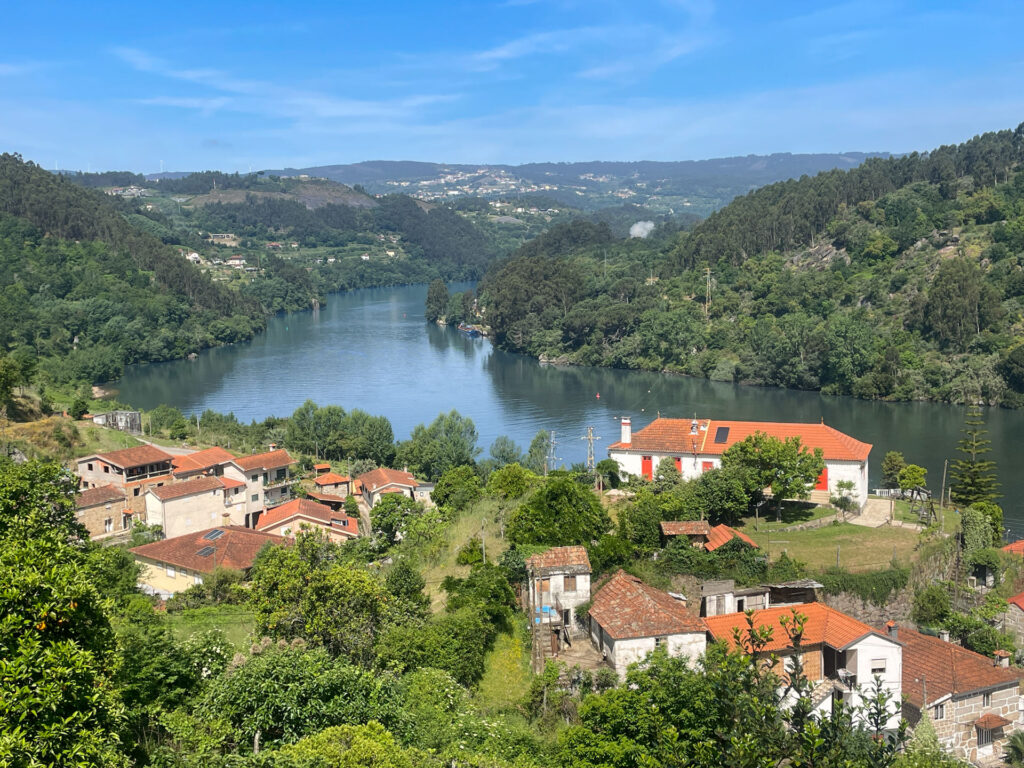
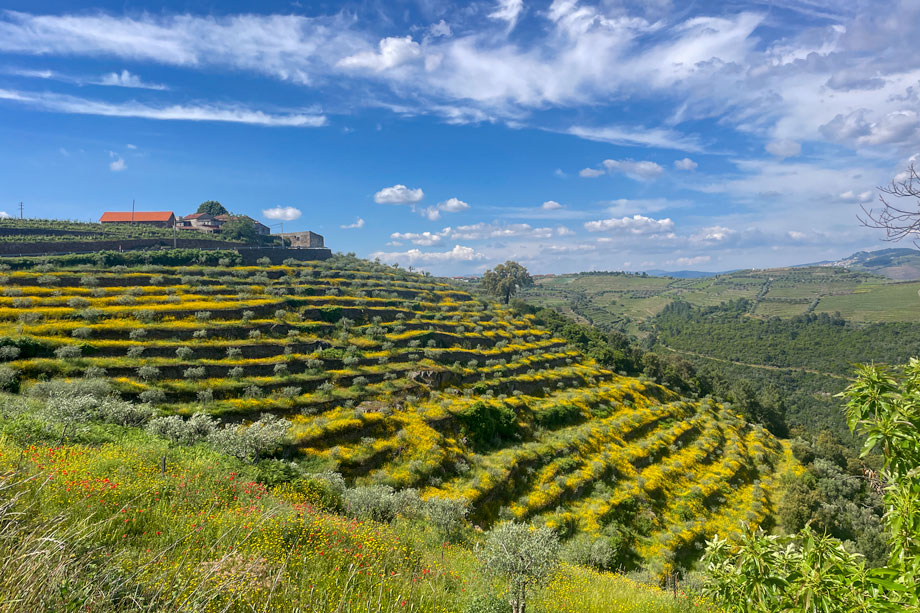
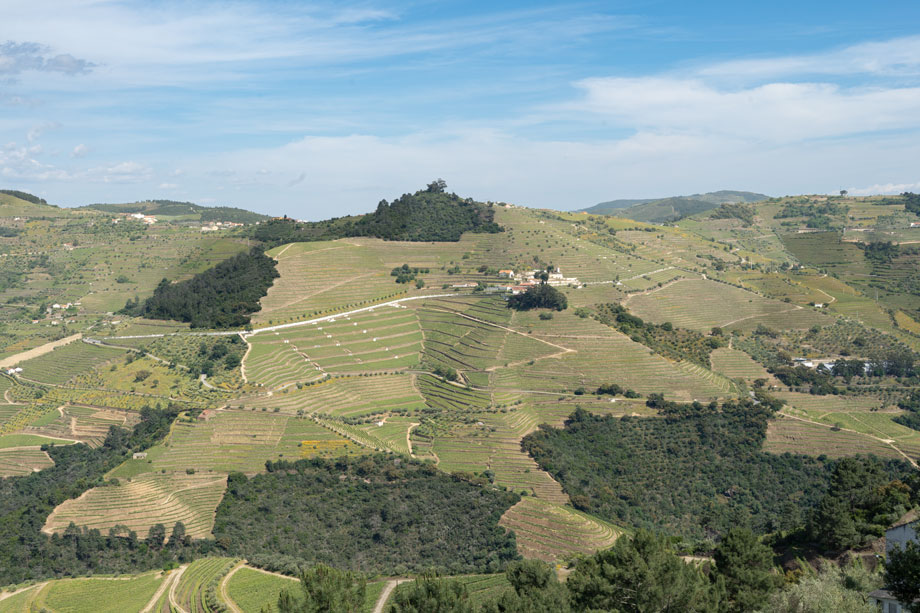
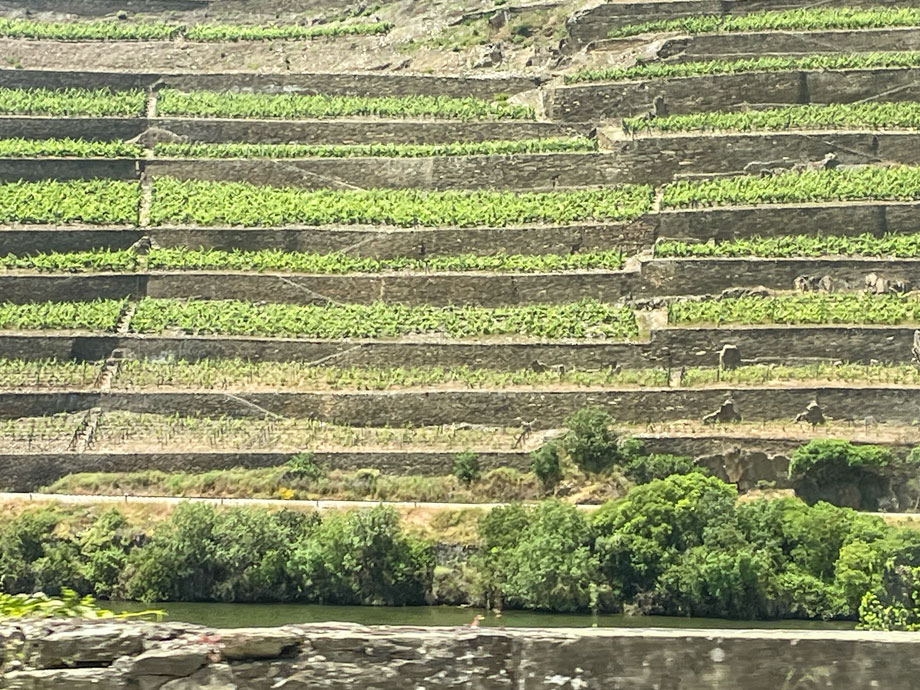
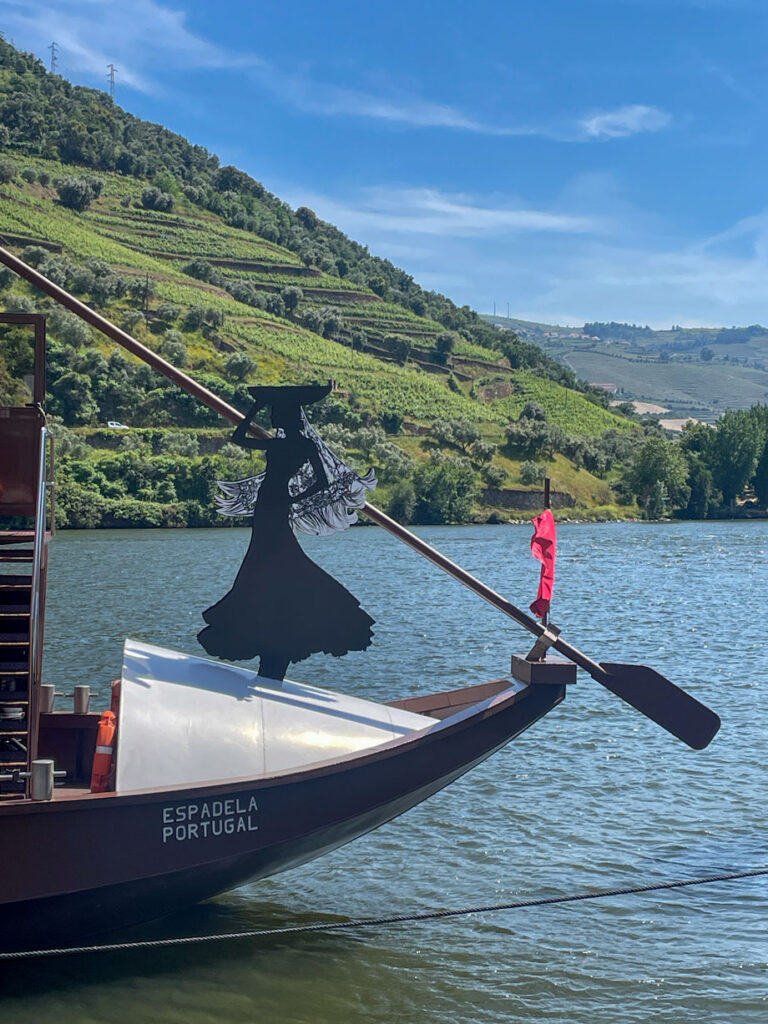
The Douro Valley surprises with its sweeping vistas, rolling hills covered in vineyards and a brilliantly blue river snaking through.This area is famous for its centuries-old port-making. True port wine comes only from vines grown on these terraced hillsides.
Not only is the area a UNESCO World Heritage Site, but I was interested to learn that the Valley is the oldest demarcated wine region in the world (boundaries were set in 1756). While it tends to be a little less well known compared to wine regions like Bordeaux or Champagne, wine has been made in the Valley since the 3rd or 4th century AD. But beyond wine, the area is historically significant with the remains of Iron Age settlements and Roman bridges, Romanesque churches, Cistercian monasteries, and 17th-century palaces.
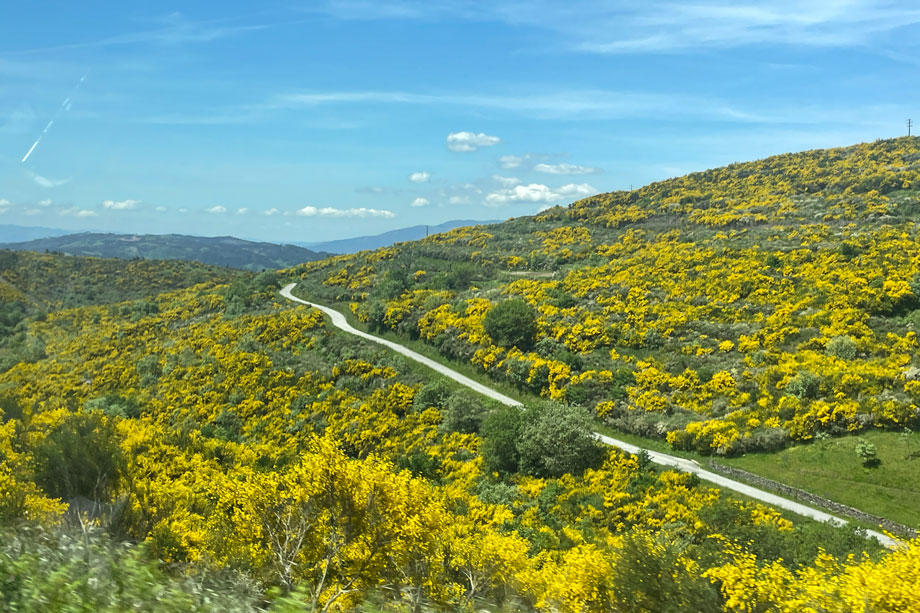
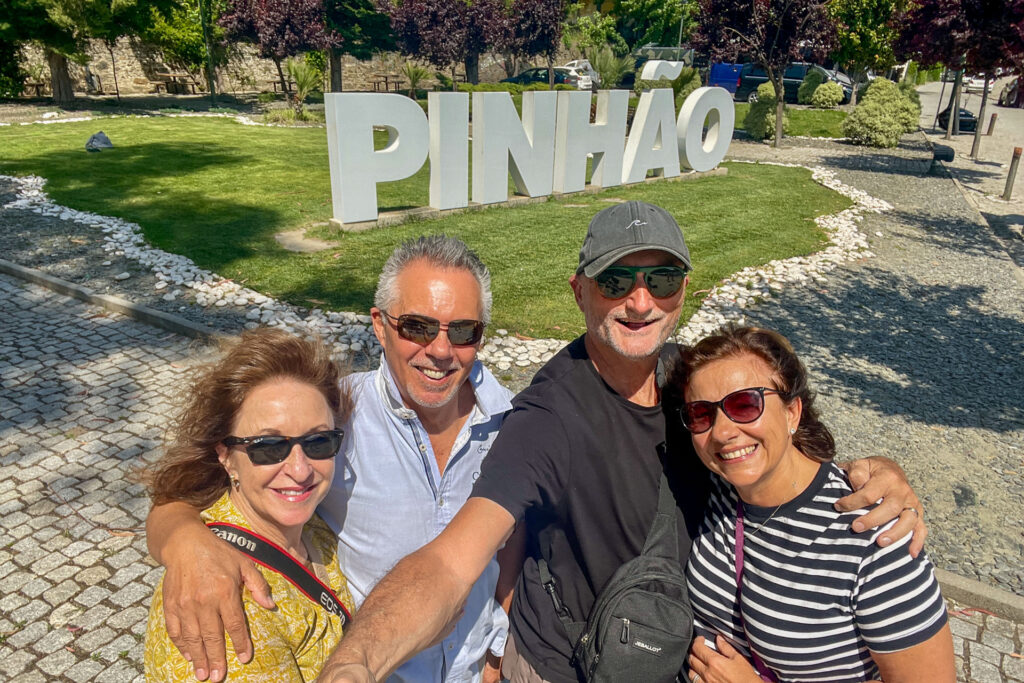
The little village of Pinhão is where Gary and Athene were taking us. Our journey took about 2 hours allowing for some quick photography stops. Cutting through the heart of the Douro Valley, the N222 is considered by some to be one of the most beautiful roads in the world.This particular route snuggles up to the river as it winds, connecting the tiny wine villages in the region, and occasionally climbing high for panoramic views of the terraced, vine-covered hills below.
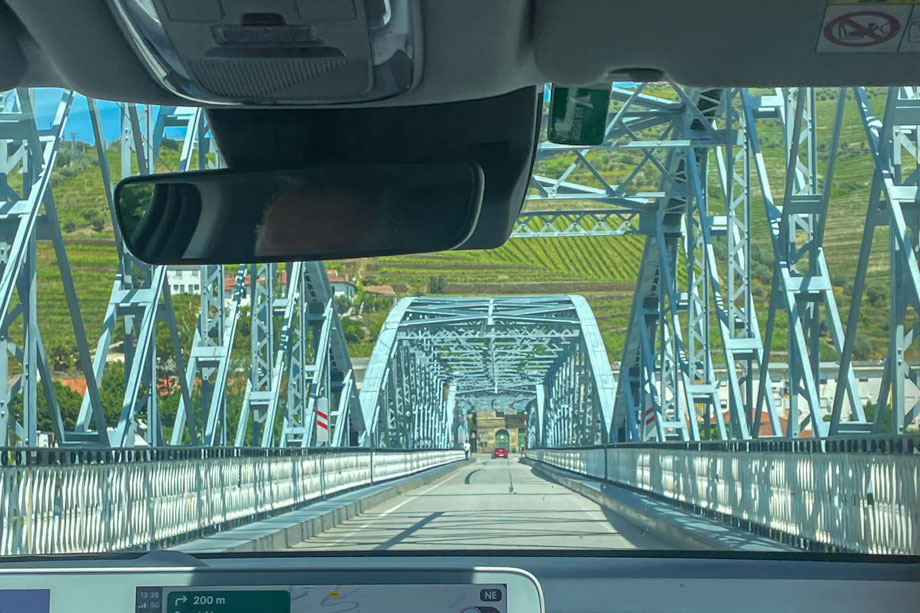
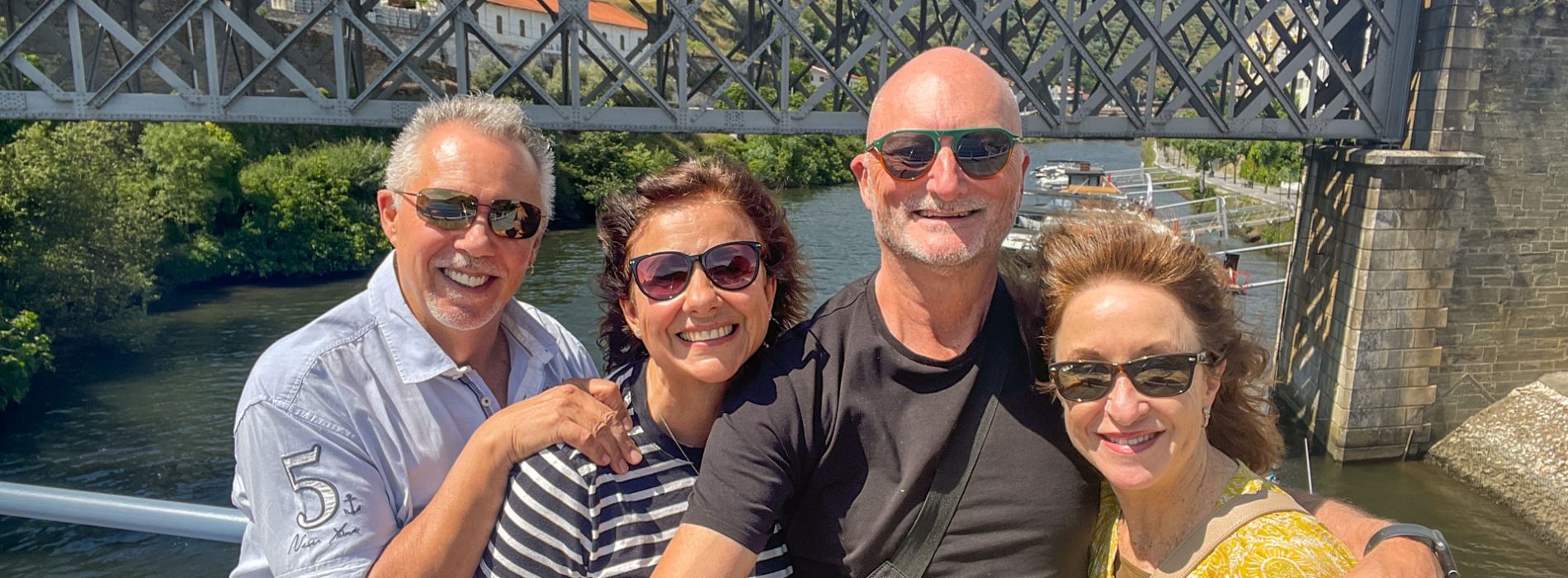
The Pinhão Bridge is a historic iron roadway bridge crossing the Douro River towards the picturesque wine-producing village of Pinhão. Completed in 1906, it is widely reputed to have been designed by the renowned architect Gustave Eiffel. It connects the local communities and acts as an iconic vantage point in the Douro Valley.
We were blessed with beautiful sunny weather and it was perfect to stroll around and admire the pretty village while we chose a spot for lunch.
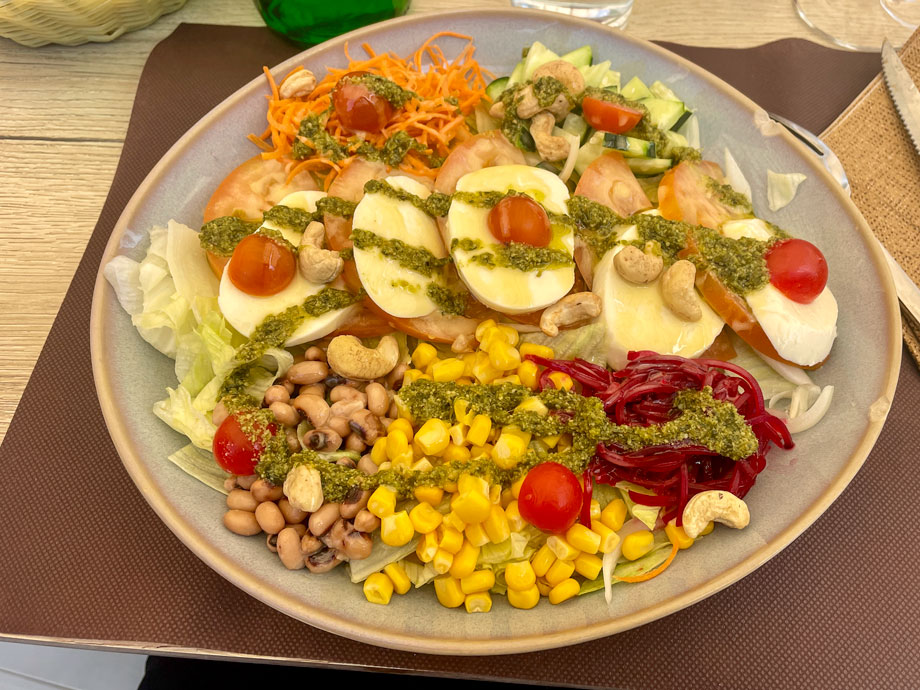
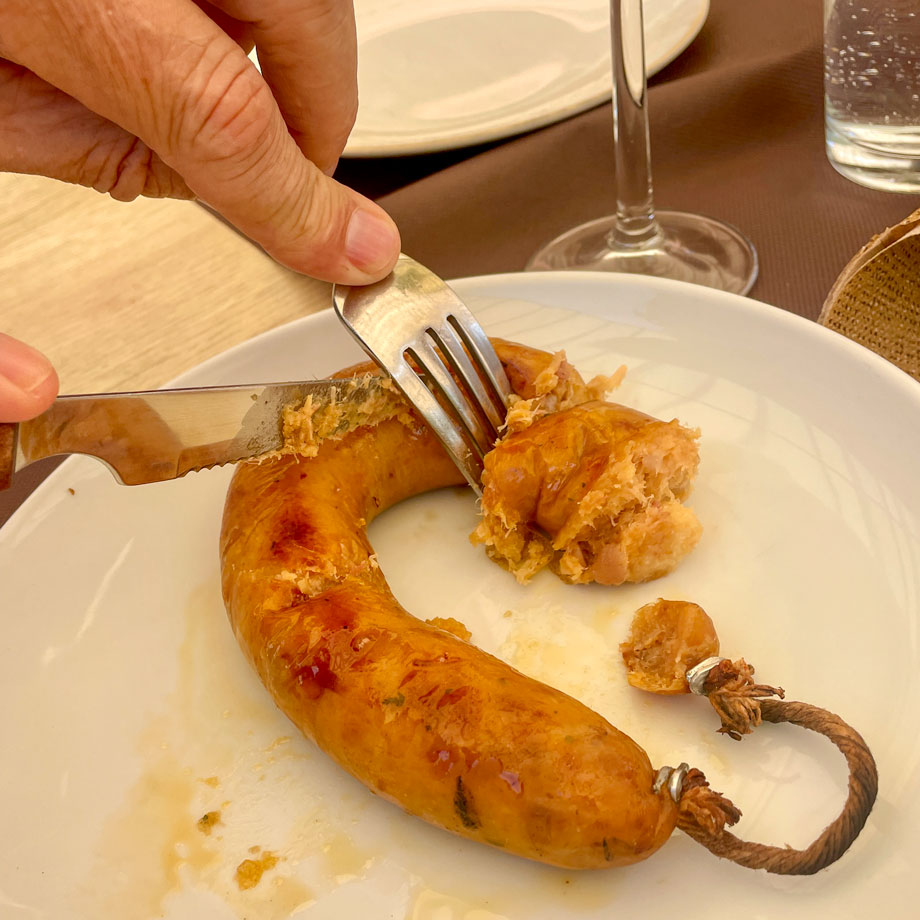
We had spectacularly substantial salads and also sampled the special local sausage, farinheira. It is a smoked sausage made using wheat flour, lard, garlic, and spices instead of meat. It reminded me of a German Tee Wurst in its texture and smoky taste.
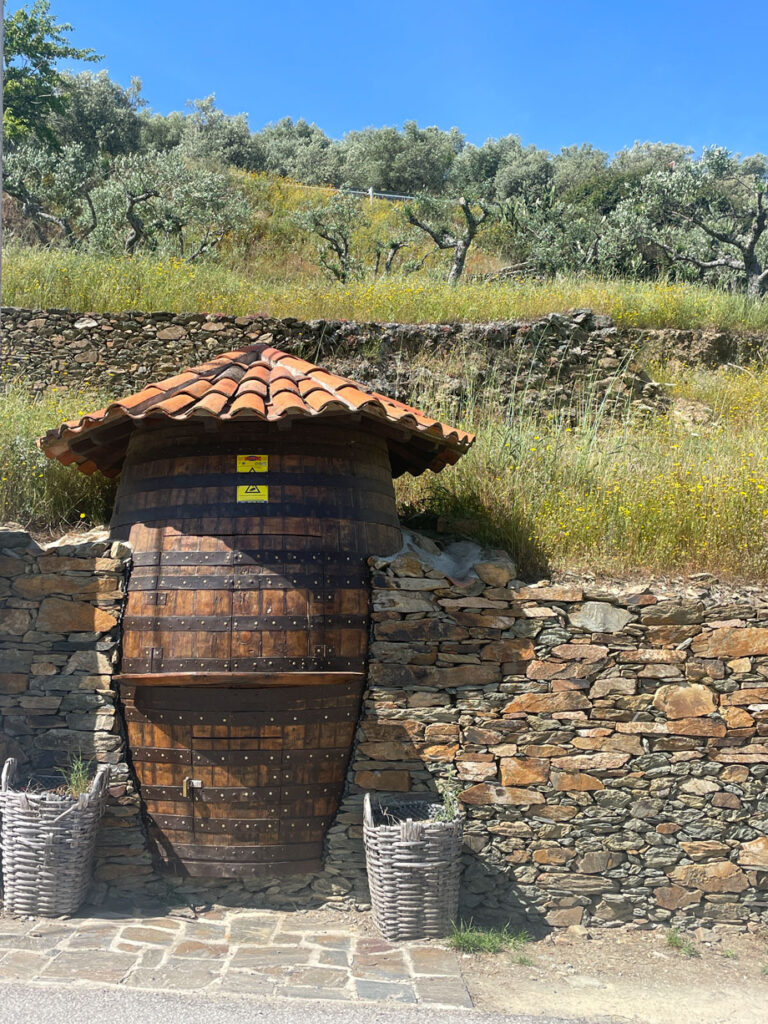
To make the finest port, many vineyards along the Douro still stomp grapes by foot — not out of deference to tradition, but because machines break the grapes’ seeds, thereby releasing too many tannins, which makes for bitter port. But soft soles against stone keep the seeds intact. During harvest time (mid-September through early October), the grapes are poured into big granite tubs called lagares. A team of two dozen stompers line up across from each other, put their arms on each other’s shoulders, and march, military-style, to crush the grapes. The stomping can last three to four days, and generally devolves into a party atmosphere — with tourists sometimes joining in…but only later in the evening, after the serious work is done. Unlike regular table wines, Port is afortified wine. During its fermentation process, a neutral grape spirit called aguardente (brandy) is added. This halts the fermentation early, preserving the natural sugars of the grapes and resulting in Port’s signature sweetness and higher alcohol content (typically around 19–22%.)
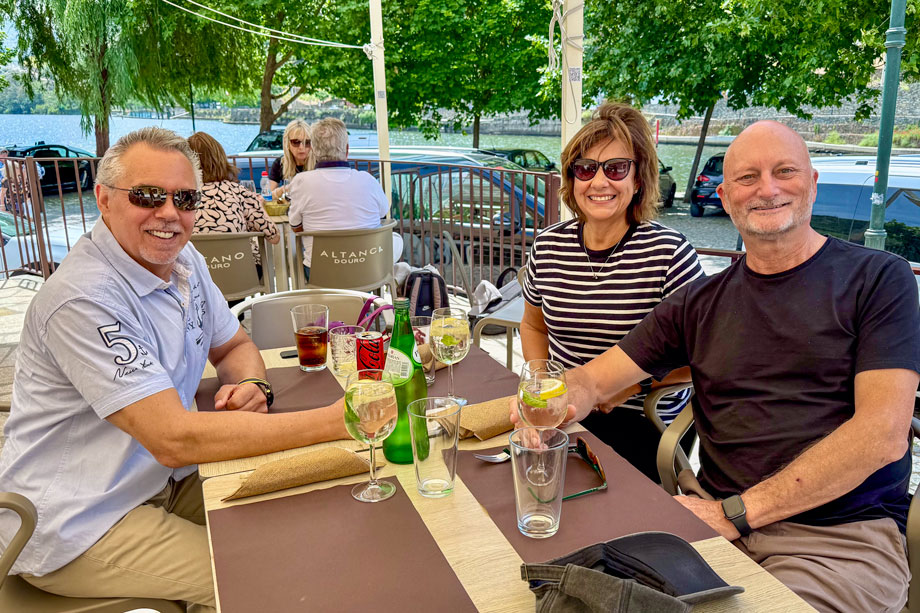
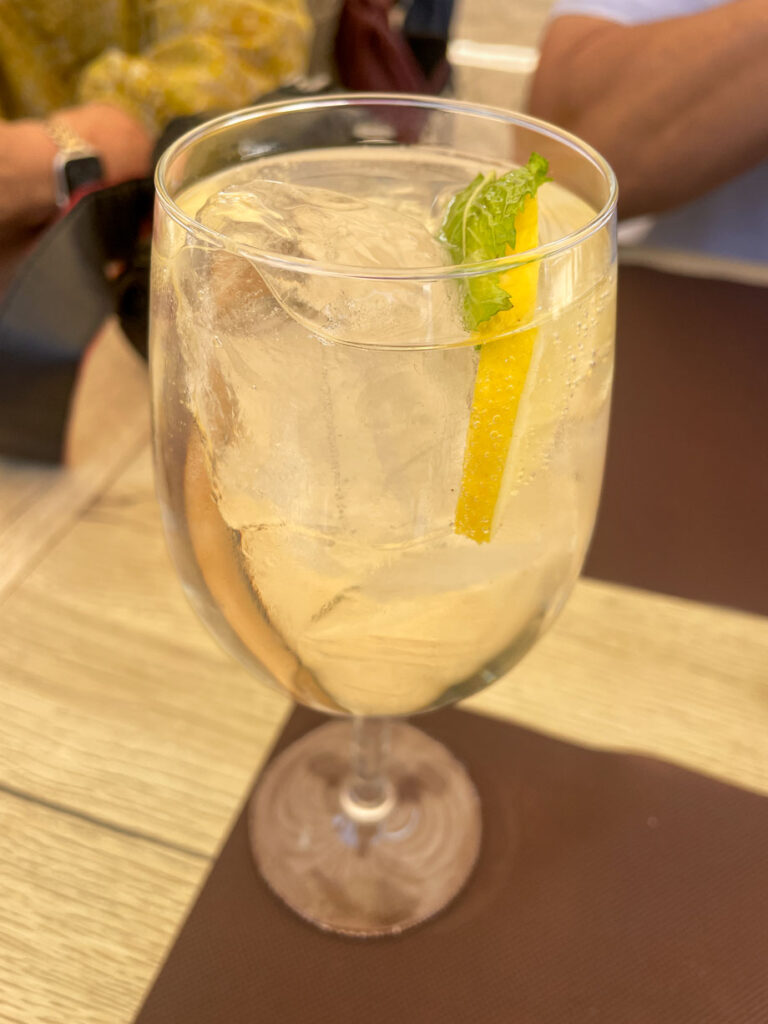
Athene introduced us to our new favourite drink. I have to admit that I assumed Port was always a dark red drink. But white port is just as common and is often served chilled, neat, on the rocks, or mixed with tonic water as an aperitif or cocktail, paired with salted nuts or olives.
Porto Tónicowas born on the sun-drenched terraces of the Douro Valley and is a vibrant take on a classic gin and tonic.
We found it to be a crisp, effervescent and refreshing aperitif.
After lunch we took a slow stroll around the village.
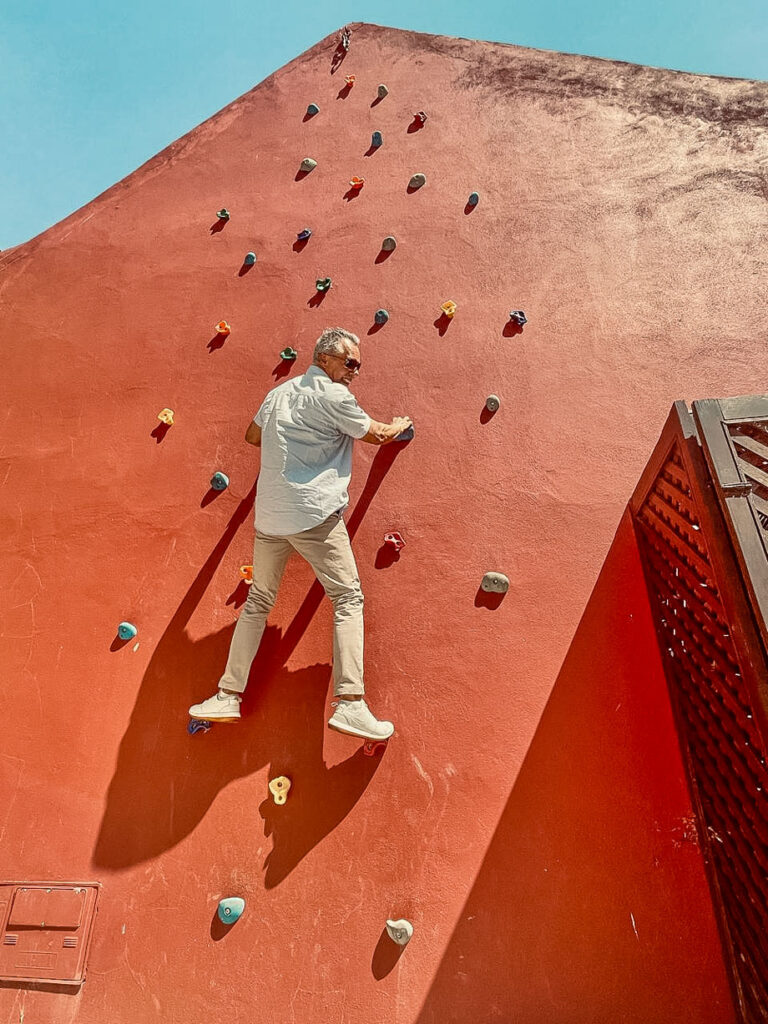
Gary : Camel man 🐪
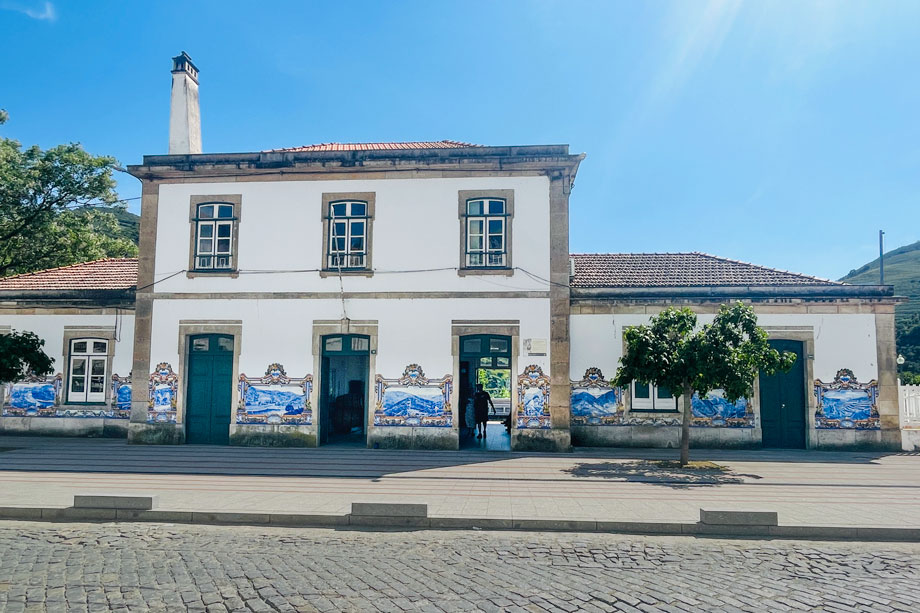
The historic train station is something special to visit. It’s covered in the iconic blue and white (and yellow) azulejos, vivid tiles that depict the process of port wine making and showcase what life was like in the area. I loved how the railway station had this old world feel, as though nothing had changed since the 1930s.
A tantalising taste of a beautiful iconic area that made us wish we’d had time to stay a few days and get stuck into the whole port-making (and sampling!) experience. Next time!