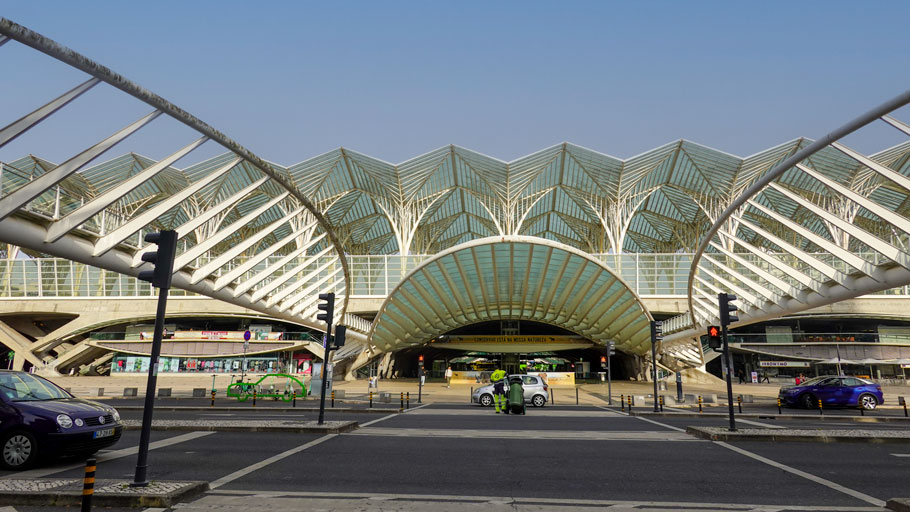
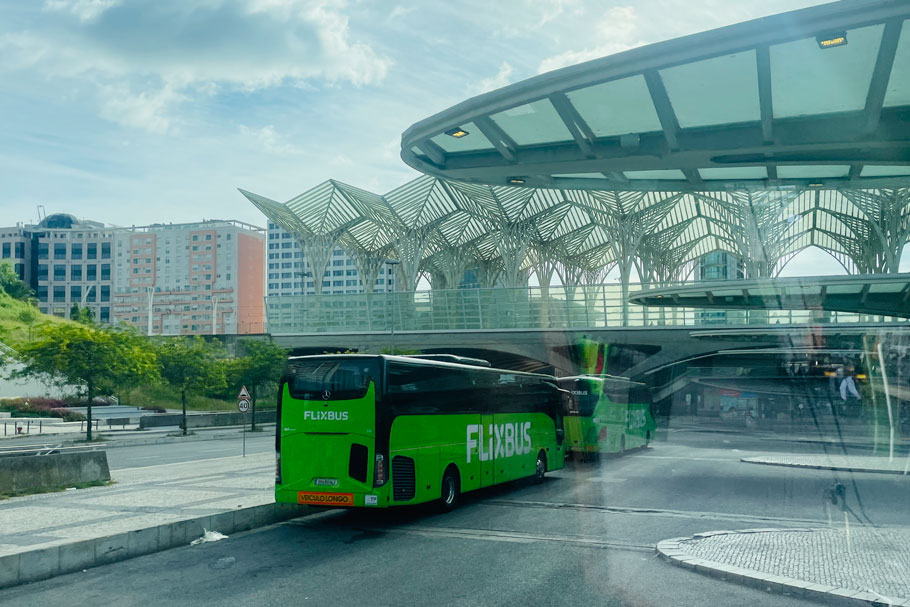
Lisbon has been treating us well, but we are beside ourselves with excitement as we head for the station to pick up our FlixBus coach to Porto where we will be reunited with Athene and Gary – our main reason for being in Portugal. They have been living permanently in Porto for approximately 8 months and we’ve really missed not being able to simply meet for a catch-up meal in Cape Town.
The coach trip is just under 3 1/2 hours and we have great seats up front that provide us with excellent views of the Portugese countryside. However, the aircon setting would make a polar bear shiver and before long, even my thoughts have frostbite. Sadly, soon I am snivelling and I can feel the first waves of a cold set in.
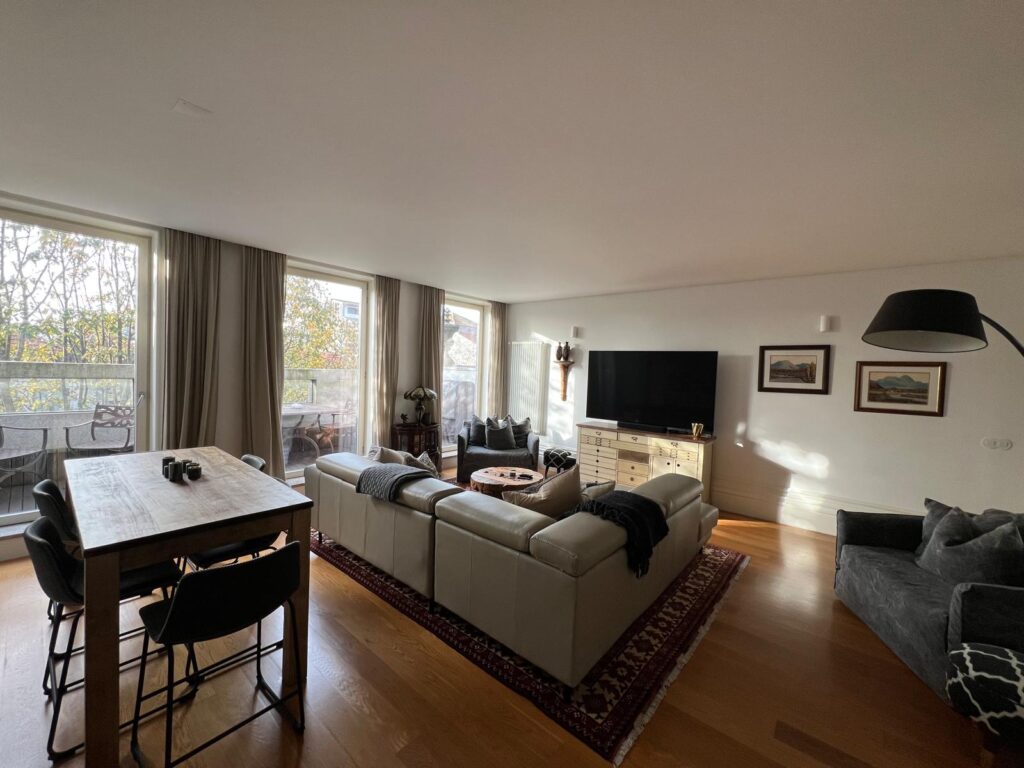
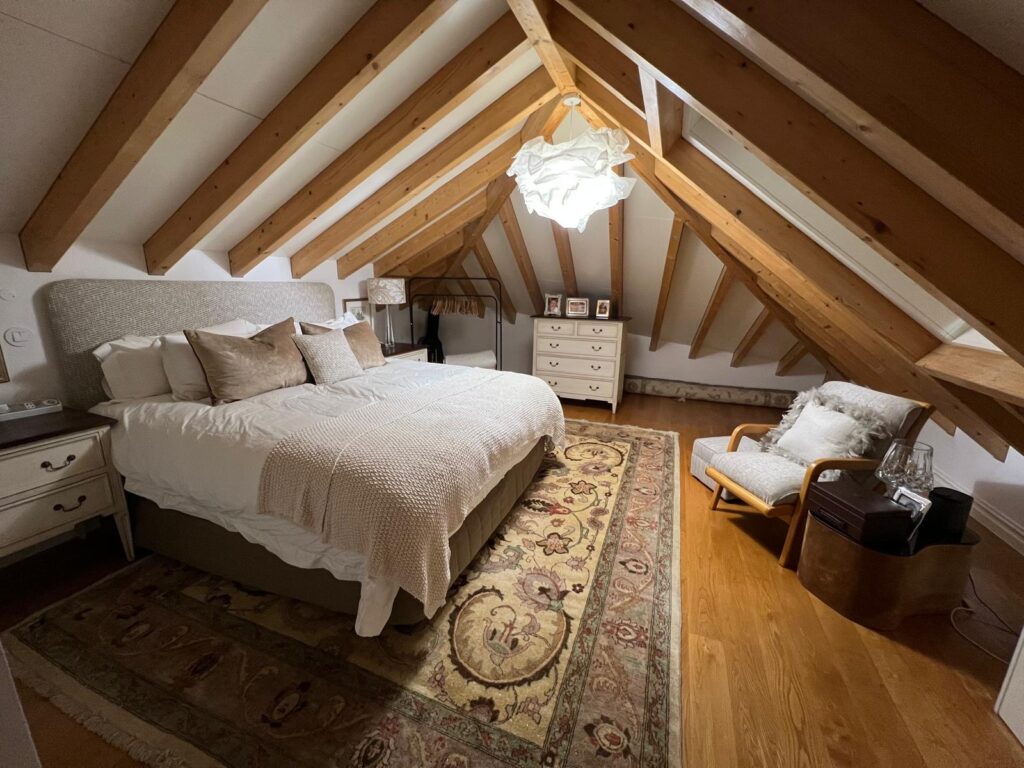
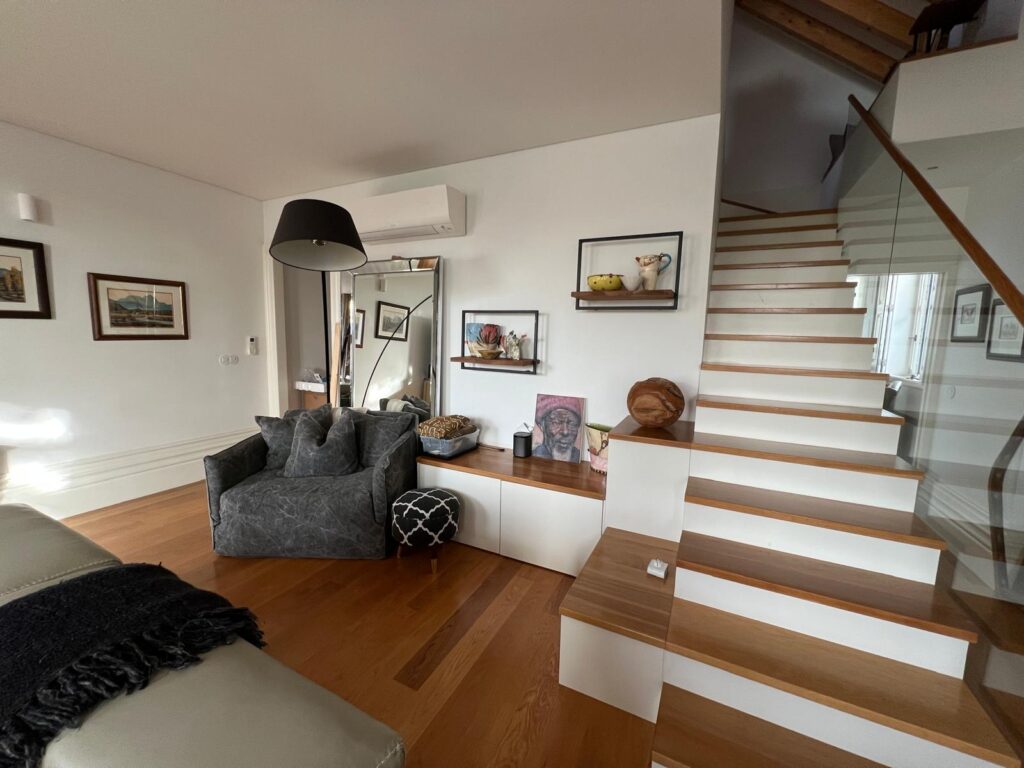
Athene and Gary are there to meet us at the bus terminal with their sexy new electric car and they whisk us home to their gorgeous, spacious apartment, which is located within walking distance of the central city. Gary has a garage just around the corner of the established, tree-lined street. Our room is upstairs in the loft, lovingly decorated and so comfy that we feel right at home. I love the skylight that lets in the fresh air and blue sky. We are spoilt with a delicious lunch of local patés, hams and cheeses and left to settle in and rest. I unfortunately have to dive into my stash of Corenza C.
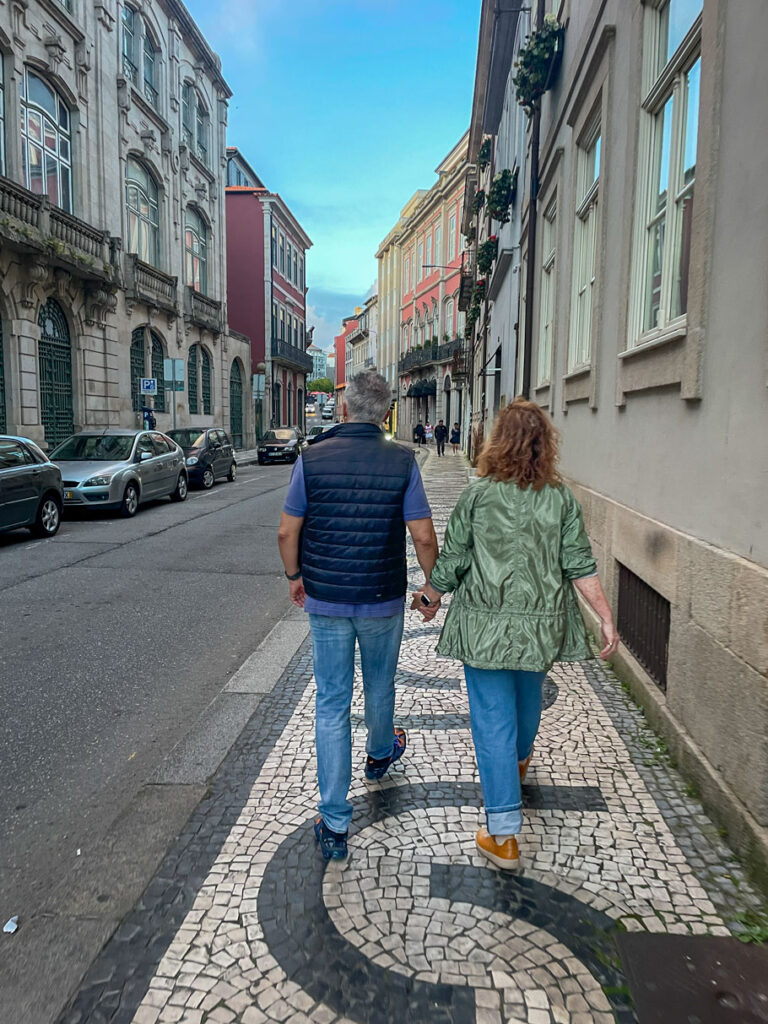
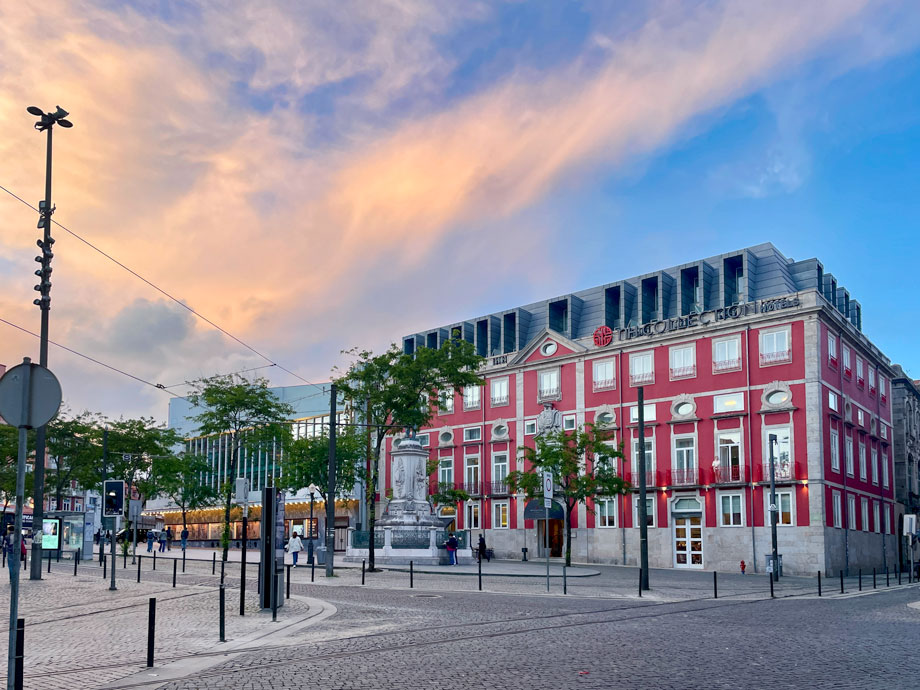
Later we step out for an orientating stroll through the city led by our friends. It’s a perfect evening with clouds and beautiful light for taking pictures. The patterns of the cobblestone pavements are transfixing.
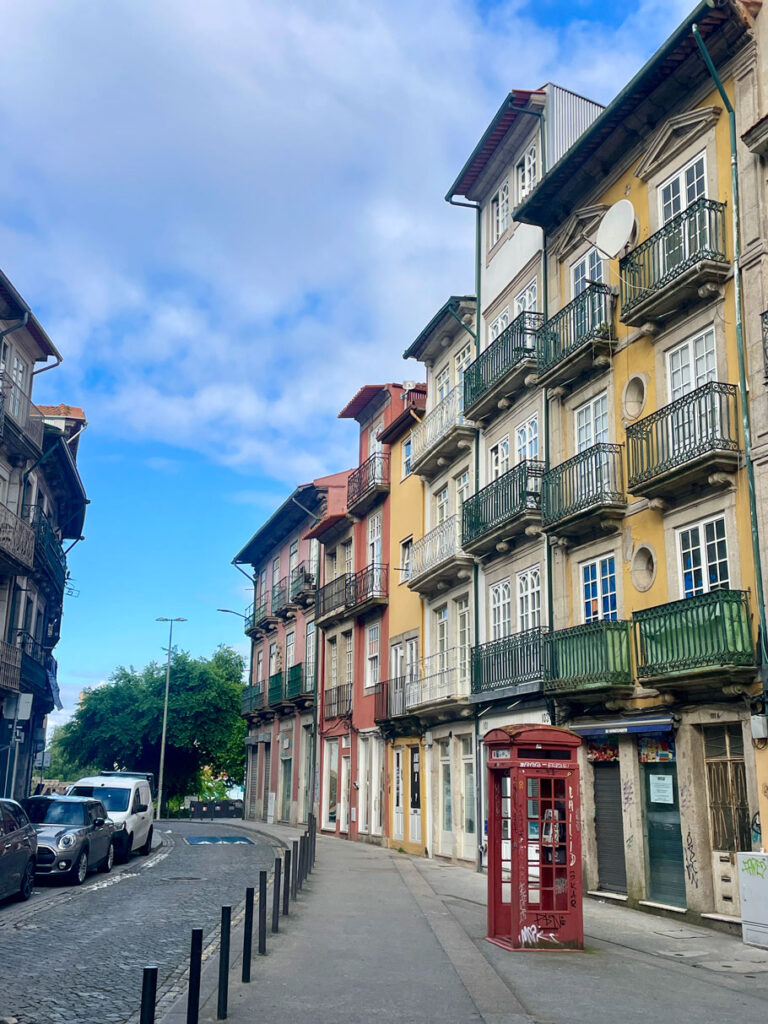
Spared by the 1755 earthquake that toppled Lisbon, Porto is charmingly well preserved, and the city has kept its Old Worlde atmosphere.
Porto’s nickname is Invicta. Invicta, meaning ‘invincible’ in Portuguese.
This nickname comes from the 19th century Portuguese civil war. During this time the enemy failed to conquer Porto and the city managed to survive a siege that lasted more than a year.
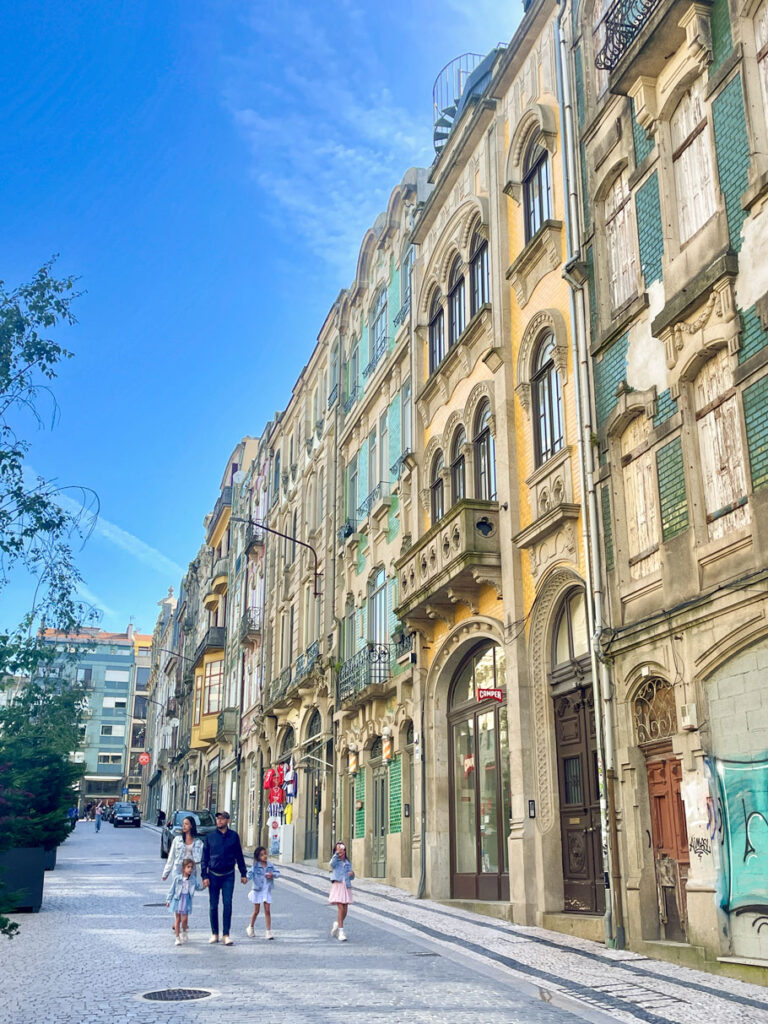
It’s fascinating to see the deliberate effort going into the restoration and reconstruction of the buildings. Cranes punctuate the skyline and scaffolding and protective screens circle many buildings.
Athene explains that many of the facades which had smashed windows and broken tiles have now been beautifully restored. New hotels, apartments and restaurants have opened. Although there is still much that remains the same, the centre is certainly being given a makeover to faithfully repair what was once there, but also signalling that Porto is changing.
In researching our trip I read that increasing foreign investment and the spike in tourism numbers (said to have tripled in the last decade) is a key factor for the much-needed regeneration.
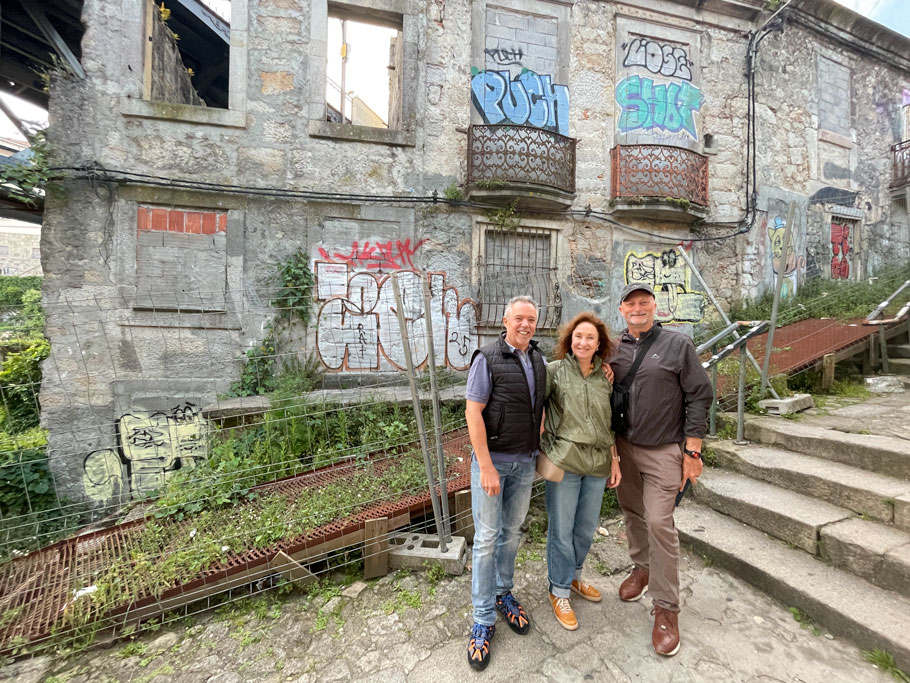
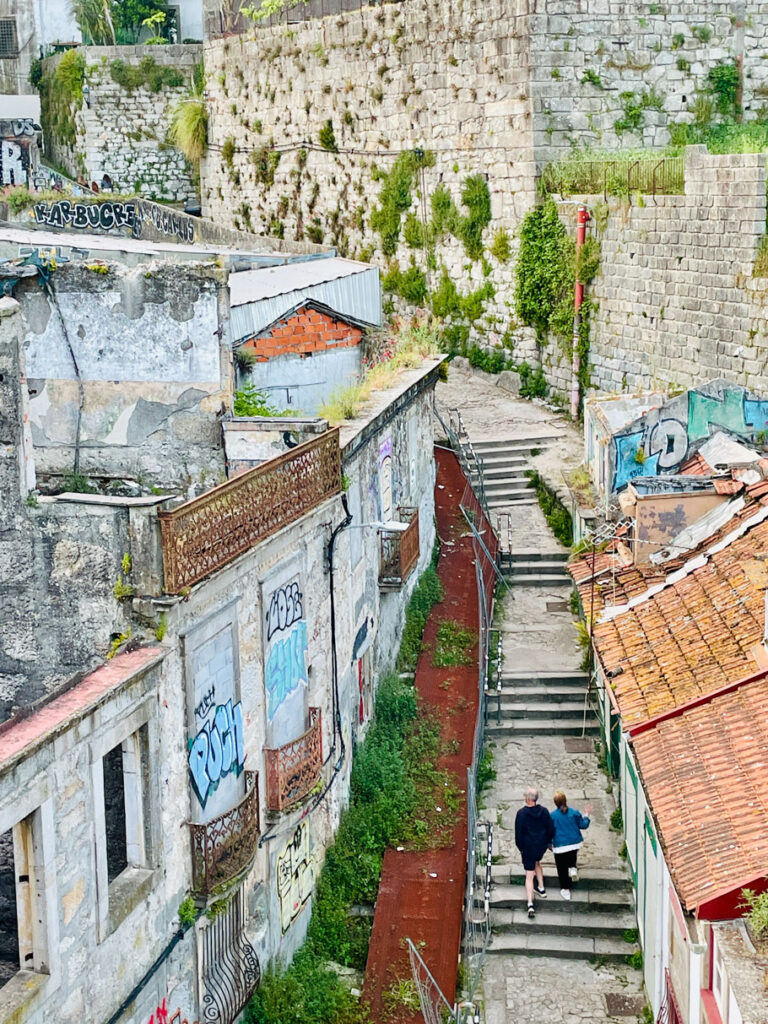
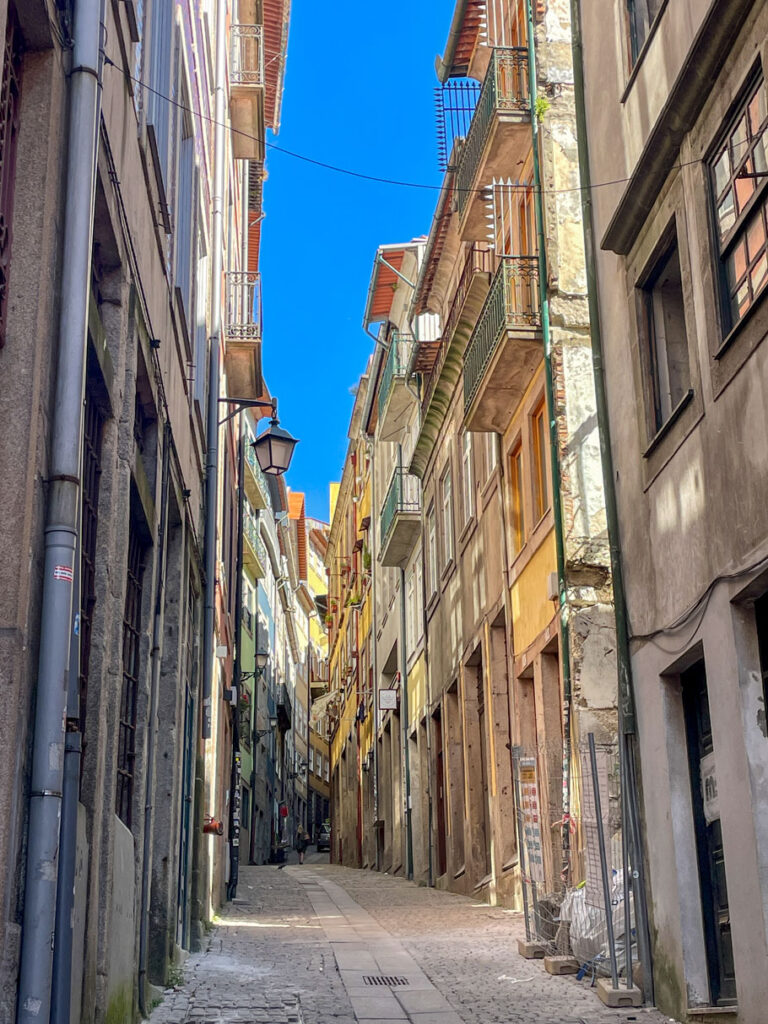
So right now, Porto is a city full of contrasts, where grand architecture and glossy gastro-pubs exist alongside more worn-down corners. You can still feel the presence of poverty in parts of the city, particularly in some of the back streets where time-worn, once-dazzling facades are awaiting their turn for rejuvenation
Athene tells us about the developing food scene and we’re excited to hear about one of the restaurants that we will be trying.
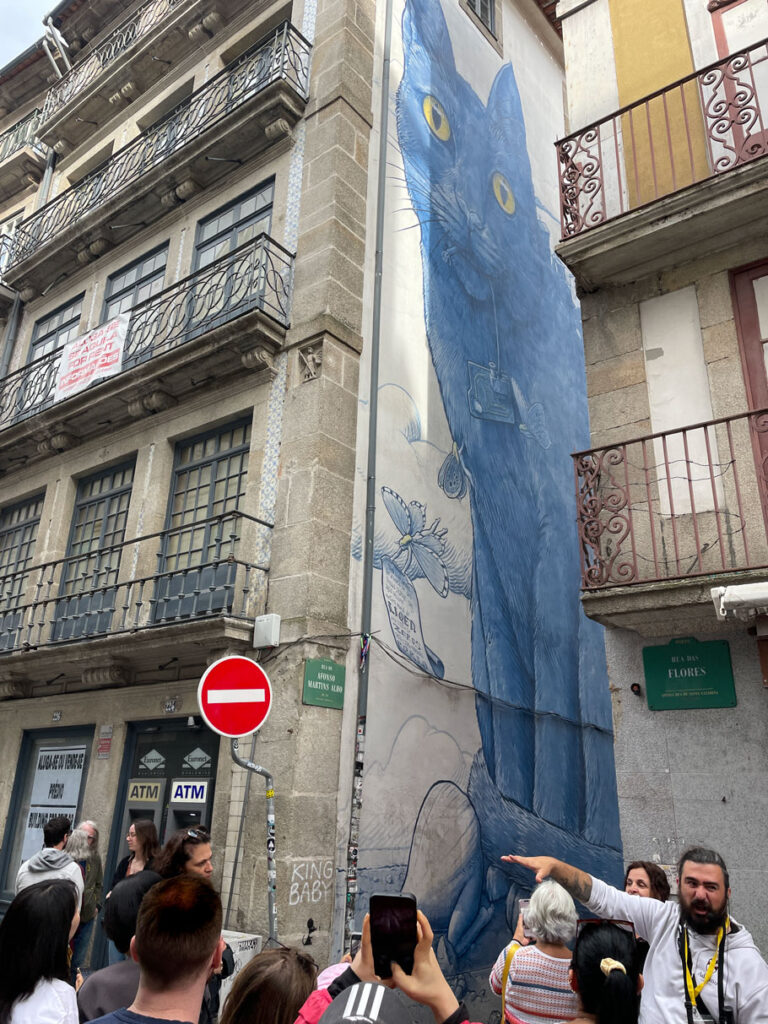
In 2018, the Spanish artist Ligen painted El Gato de Cobalto, (the Cobalt Blue Cat), known as Perspéntico, in a narrow street off the Rua das Flores. The four-story tall painting includes symbols that reflect the artist’s thoughts about our reliance on technology. We loved how he peeps through the tiny alleyway between two buildings, drawing quite a crowd. 🐱
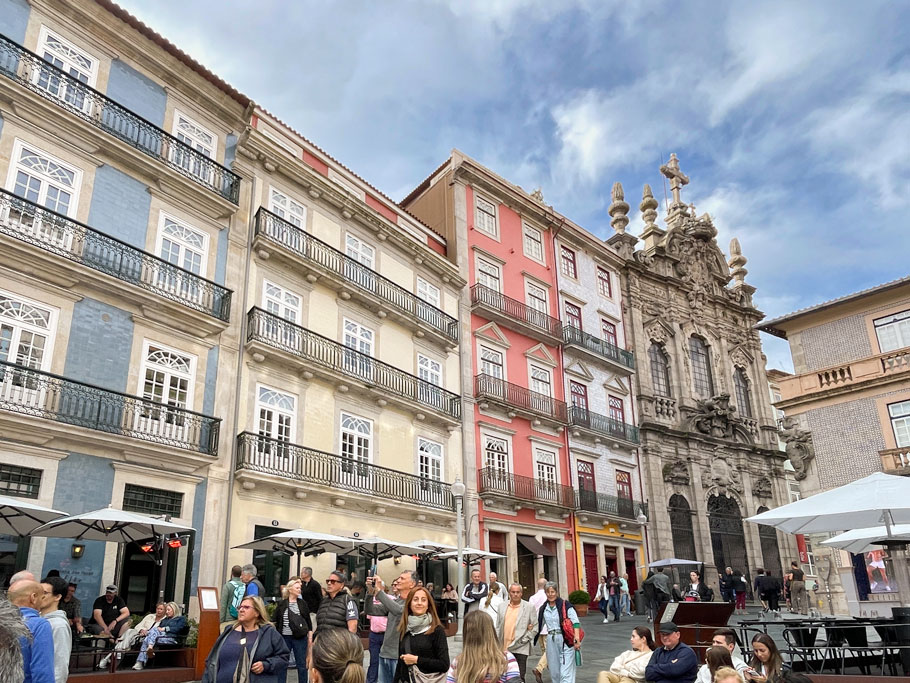
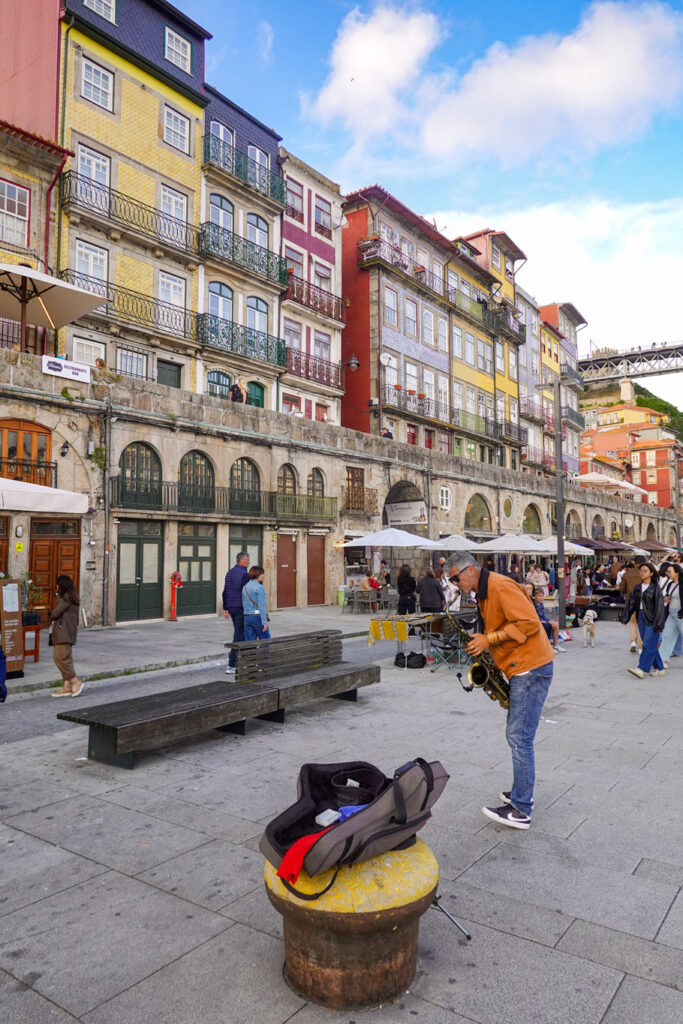
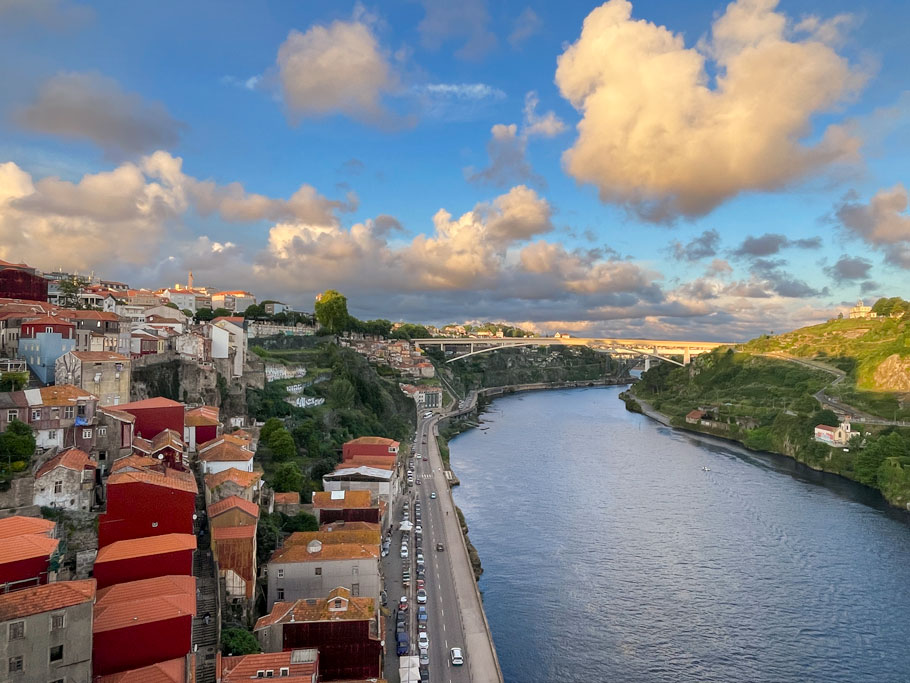
We wander down bustling shopping streets, pass architecturally lavish churches, wind through narrow lanes on our way to the Ribeira district which is located in the heart of Porto’s historic old town, directly along the northern bank of the Douro River.
As one of the city’s oldest and most iconic neighbourhoods, Ribeira is characterised by winding cobblestone streets that cascade down the hillside to the waterfront quayside, known as Cais da Ribeira. We note that it’s going to be a helluva steep climb home!
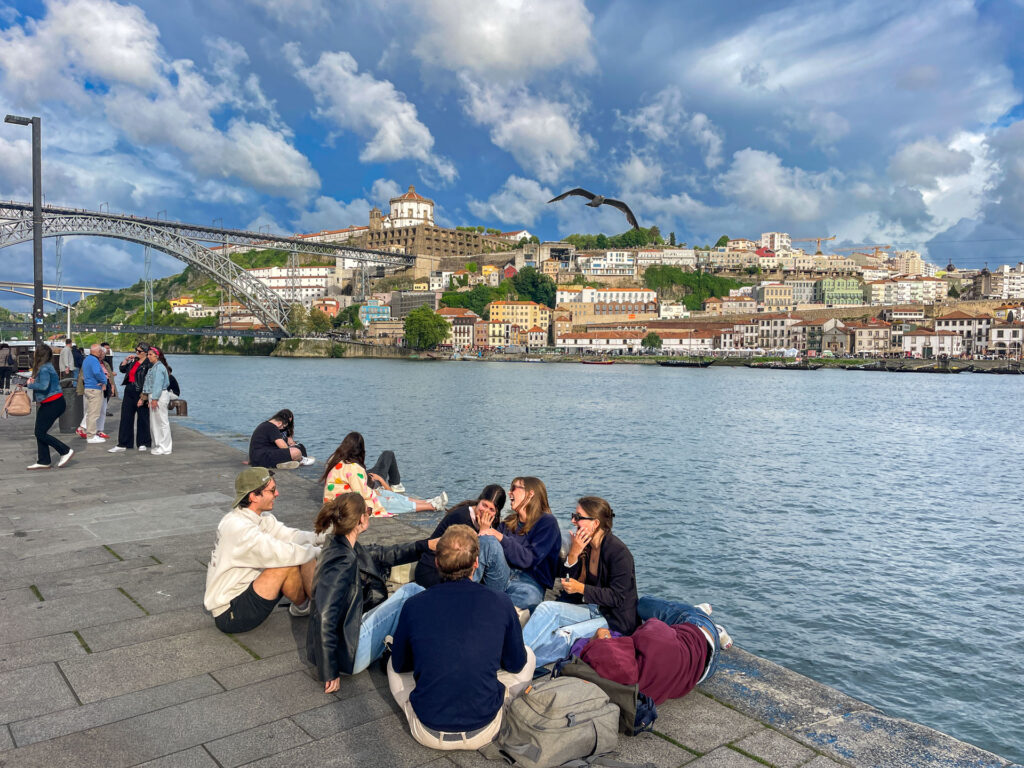
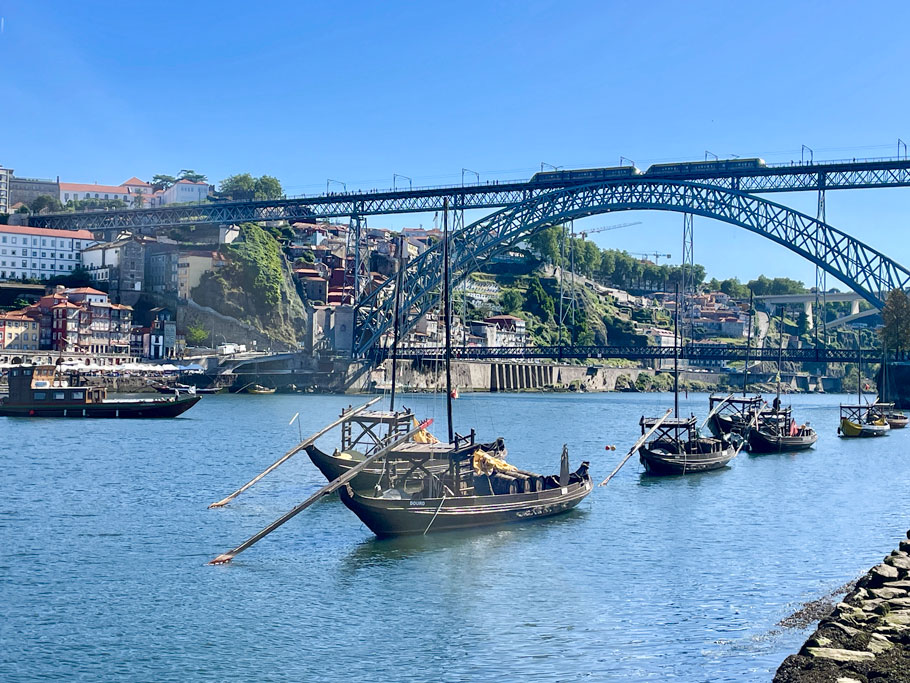
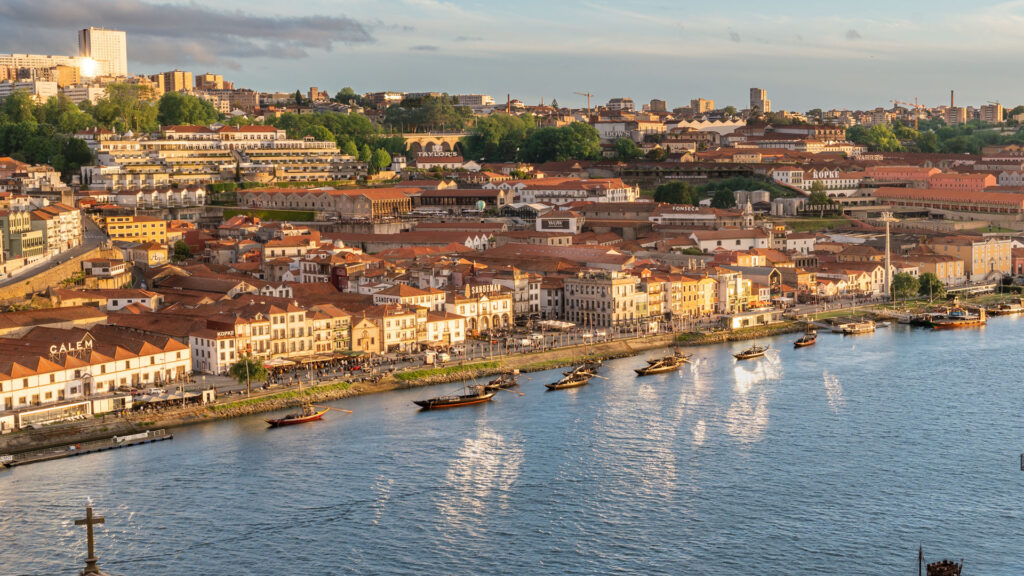
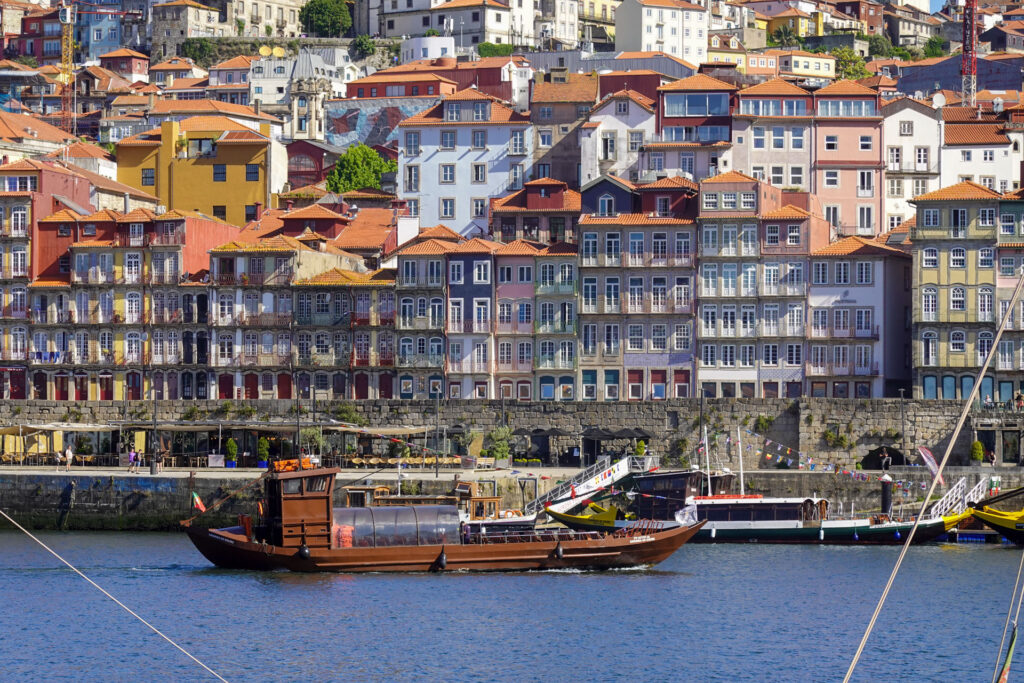
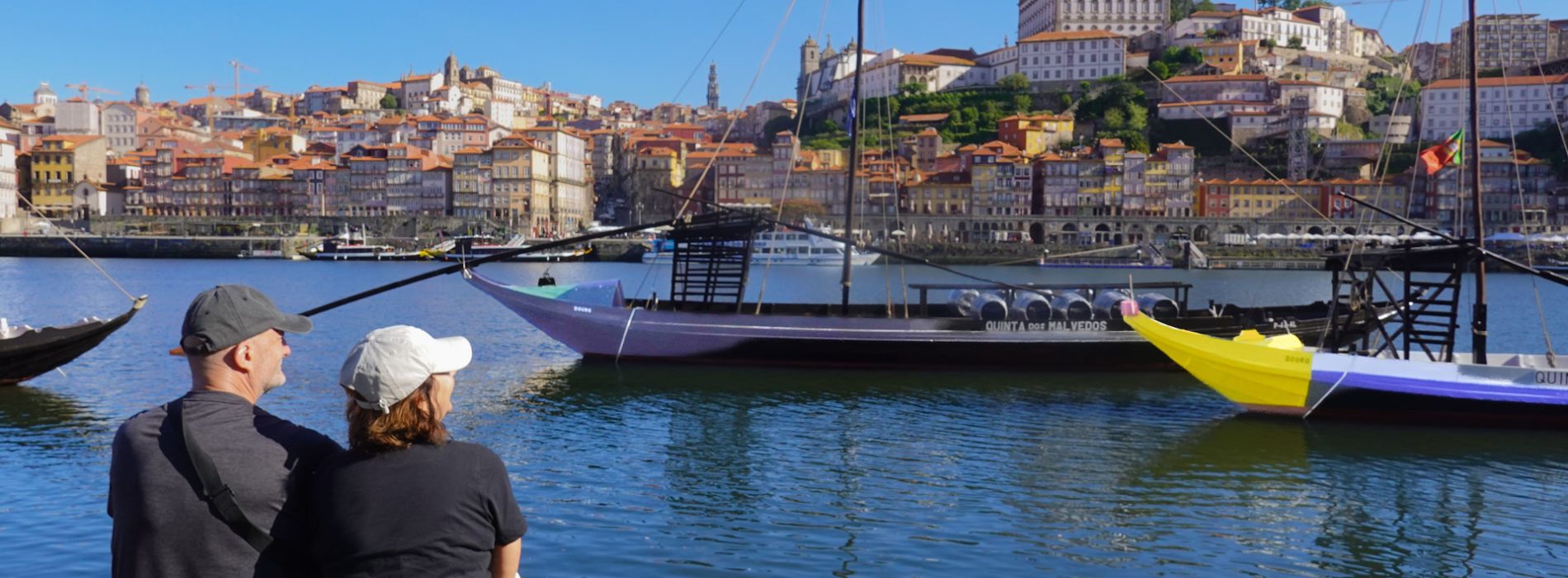
It’s a magnificent scene as we stroll onto the Cais da Ribeira. There is a lot of traffic on the water and unique old sailing boats moored and gliding up and down river. Young people gather on the edge of the water and both locals and tourists enjoy the setting sun. Above us is the impressive Dom Luis 1 Bridge.
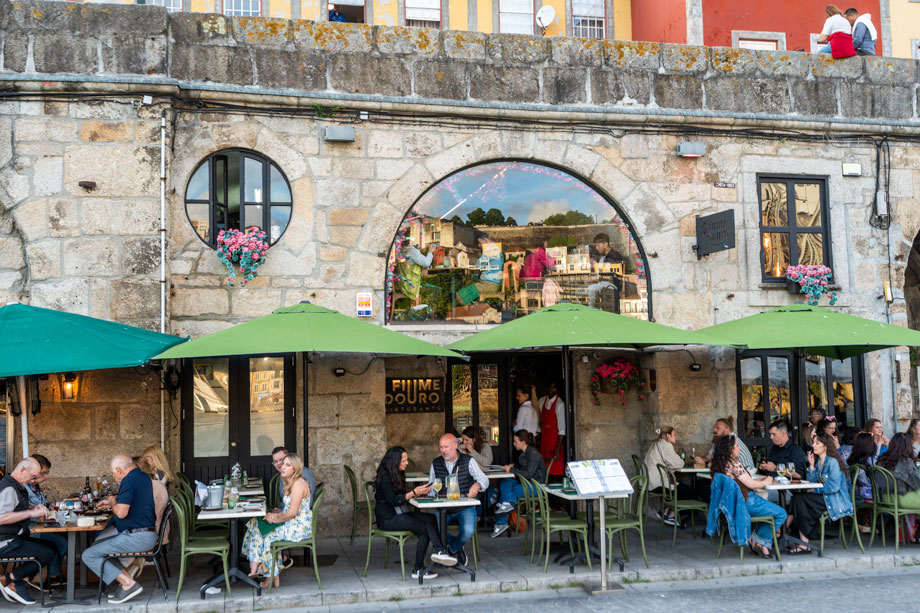
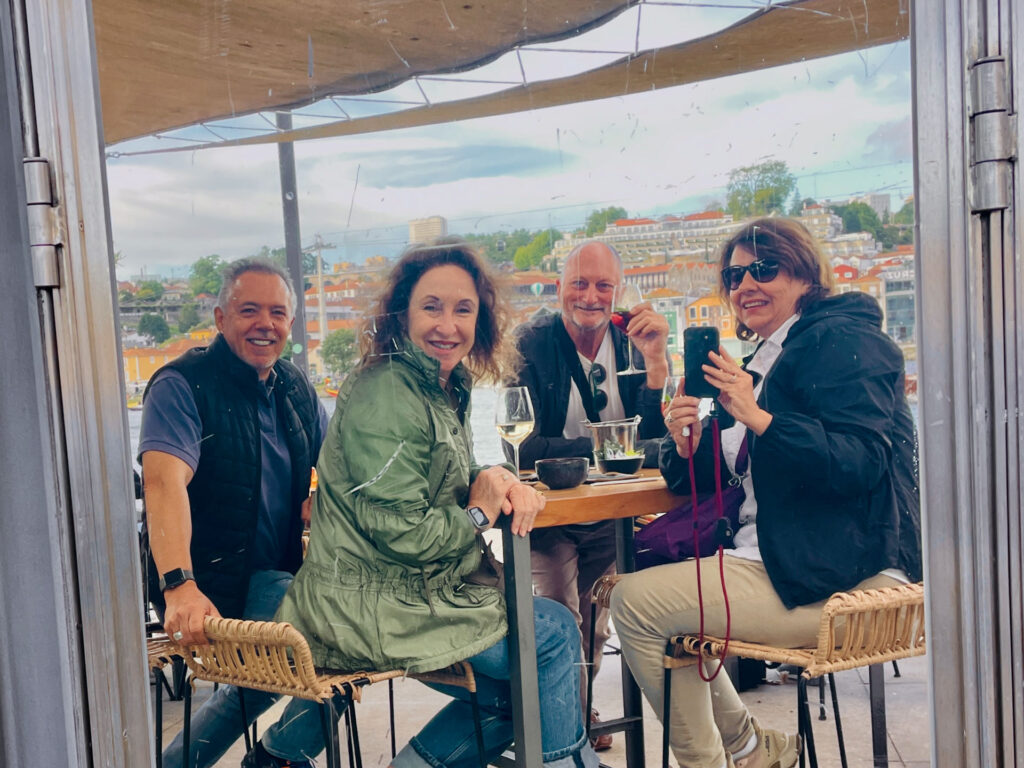
Gary and Athene grab us a table at a delightful restaurant with a view of all the action and we enjoy the people watching, sipping on our aperitif and some tasty petiscos (small bites). I find it irresistible not to hop up all the time to take photos of the boats and (just across the river) the port-wine lodges in Vila Nova de Gaia. It really is incredibly picturesque.
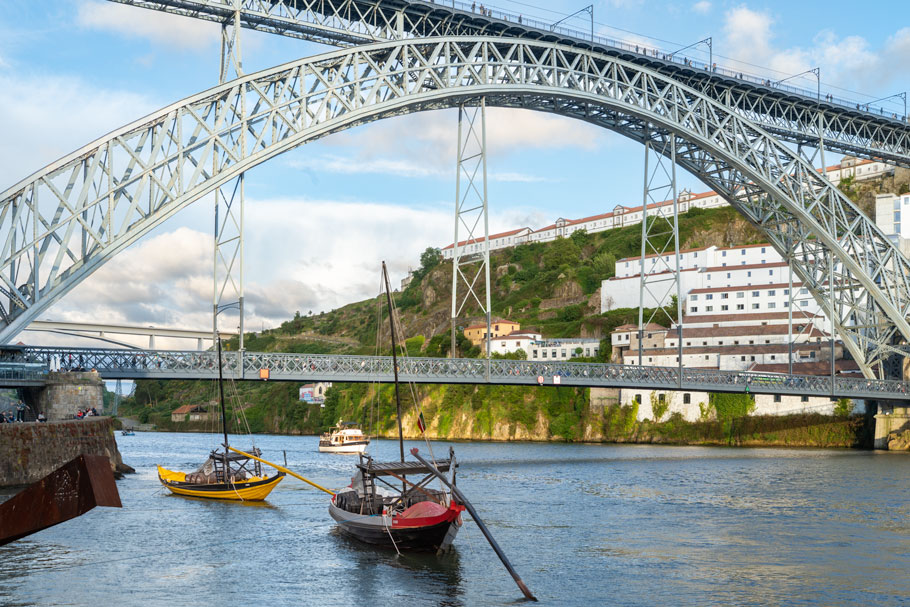
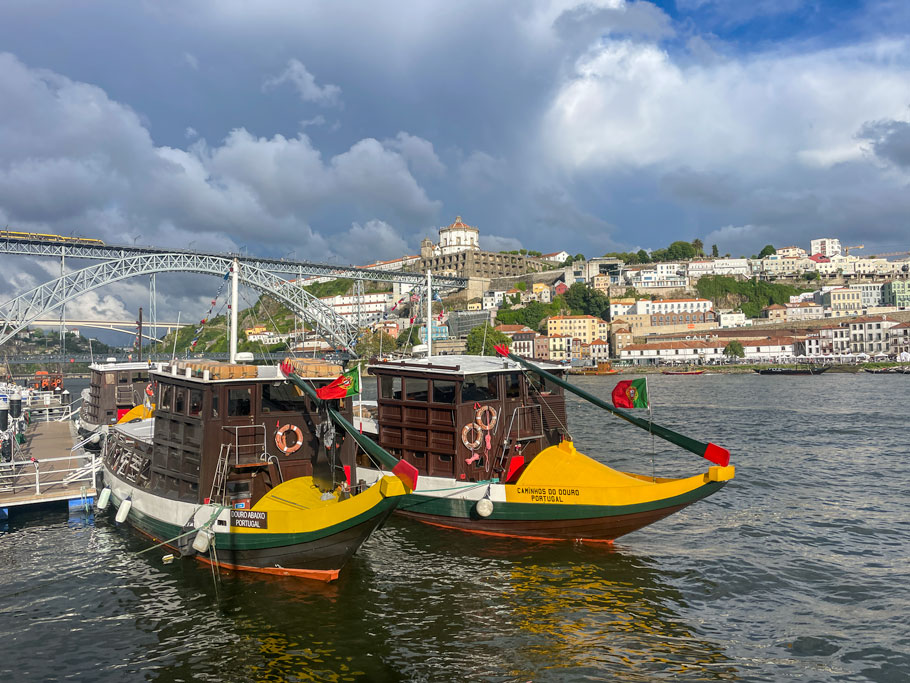
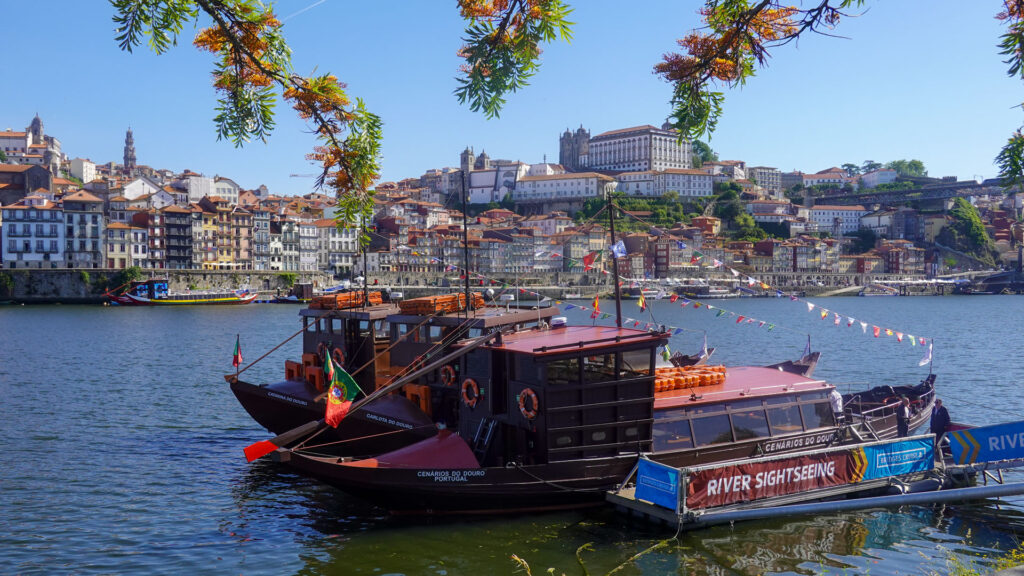
The boats on the Douro are called Rabelos. They are unique to this river and played an important role in the global success of Port wine.
“For centuries, the Douro River was the only way to get wine from the inland vineyards to the coast. These boats would navigate the rapids because the Duoro used to be a furiously wild mountain river before the dams were built in 1970. The boats could carry between 40 and 100 barrels of wine. Coming back upstream was the hardest part. Without a motor, the crews (and often oxen) had to literally tow the boats back up the river using ropes from the banks.”
Rabelos have no keel. Instead, they have a flat bottom. This was essential for skimming over shallow, rocky parts of the river. They are steered by a massive, tail-like oar at the stern called an espadela, which gave them their name—rabelo means “little tail”.
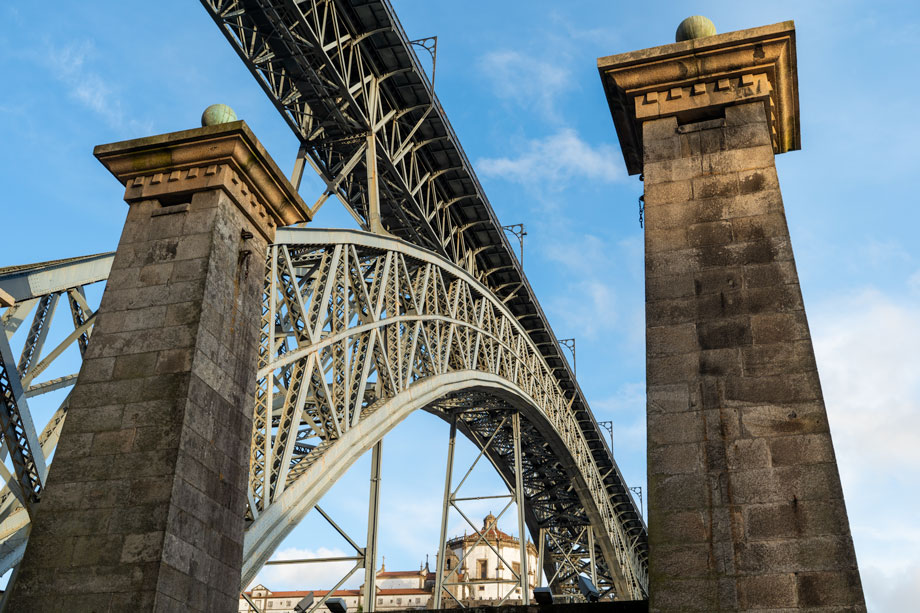
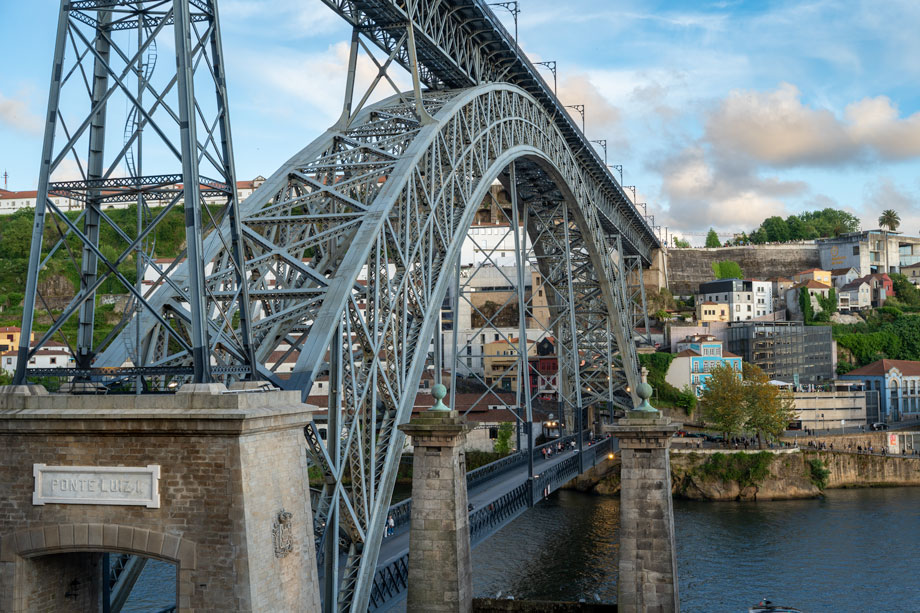
Later we gravitate towards the staggeringly high bridge. The Ponte de Dom Luís I is a double-deck metal arch bridge that spans the Douro River, connecting the Ribeira district of Porto with the port wine lodges of Gaia. Completed in 1886, it was once the longest iron arch bridge in the world, with a span of 172 metres. (Apparently it was designed by a former partner of Gustave Eiffel, hence some similarities in structural style).
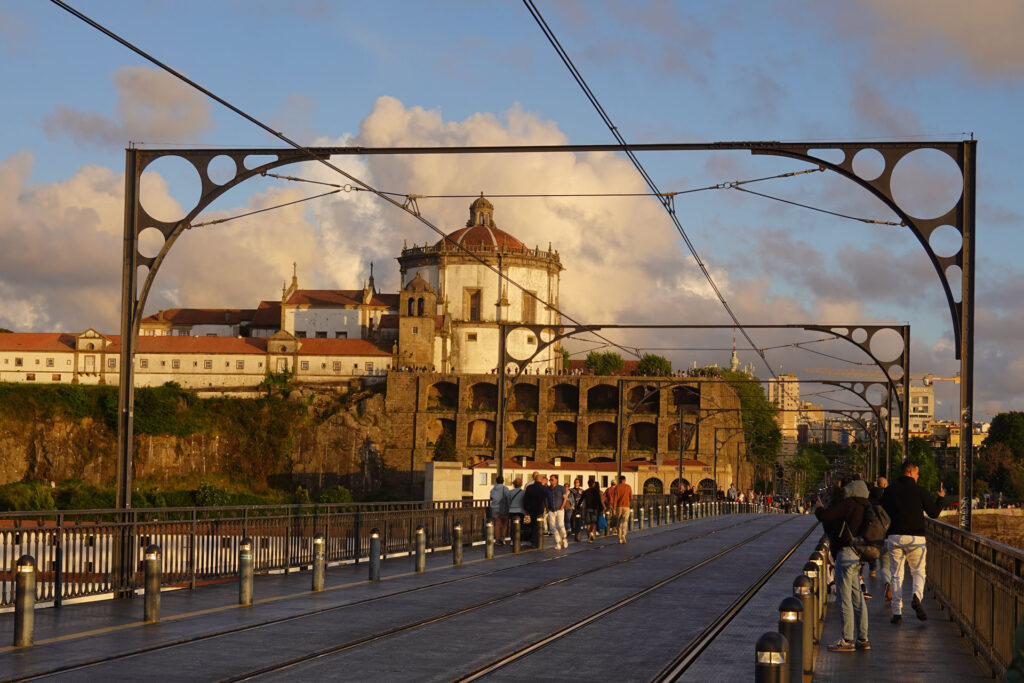
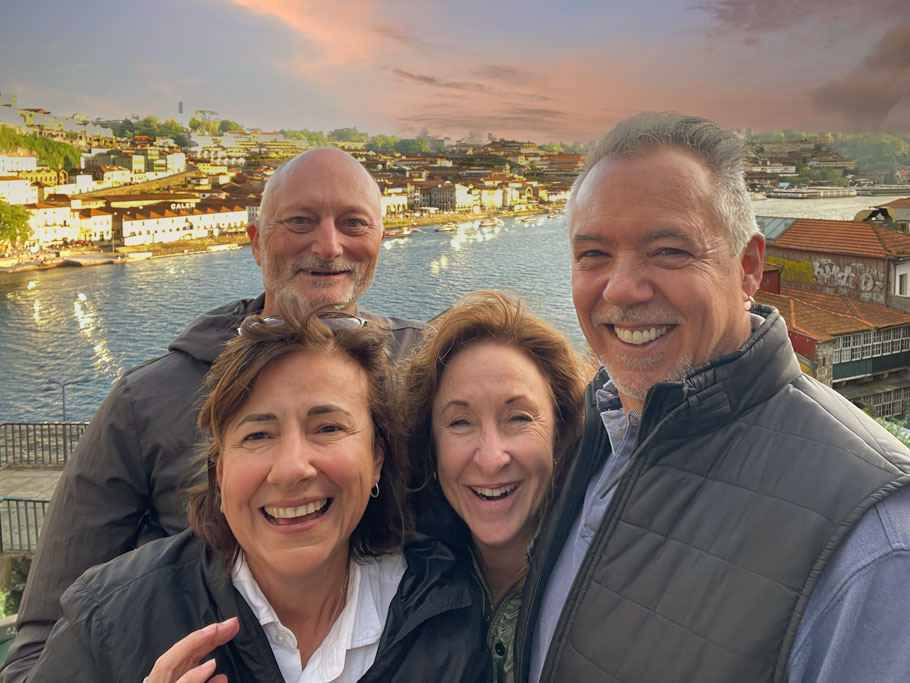
Before we know it, we have climbed the steps to the highest level which is where the trams run. From here it’s not such a steep walk home. We pass interesting sights and stop regularly to admire the view, the street art and to take selfies.
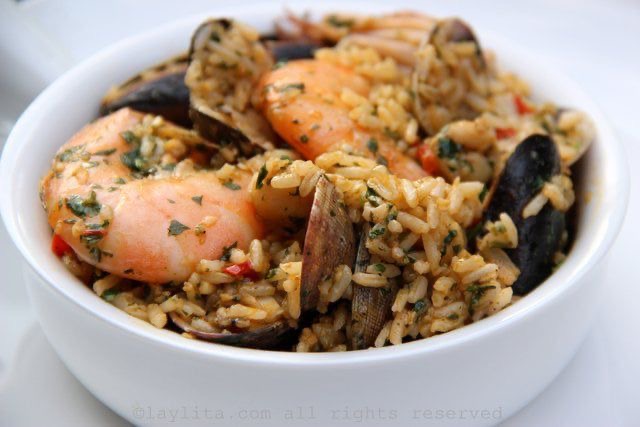
Back home, Athene treats us to a delicious, traditional homemade prawn dish (Arroz com Camarões) that hits the spot. I am starting to feel sorry for myself and the comfort food makes me feel better. I sneak upstairs for an early night and another Corenza C, while Geoff enjoys a whisky with our friends.
The next morning, we sleep in a bit and then enjoy being able to relax and chat in the kitchen with Gary and Athene while having great coffee and a cream cheese bagel. They shoo us out with a formidable list of must-see sights while they hunker down working on their Portugese lessons. (It is a requirement for their citizenship that they have a reasonable proficiency in Portugese.)
Gary has created a neat workshop space for his metal work in a corner of one of the rooms which doubles as his ‘office’.
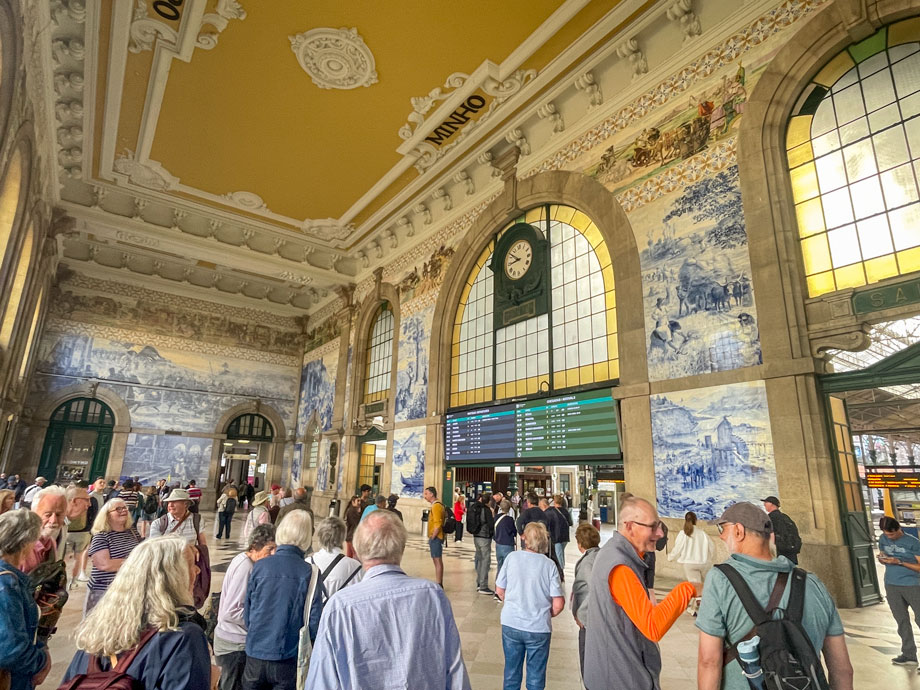
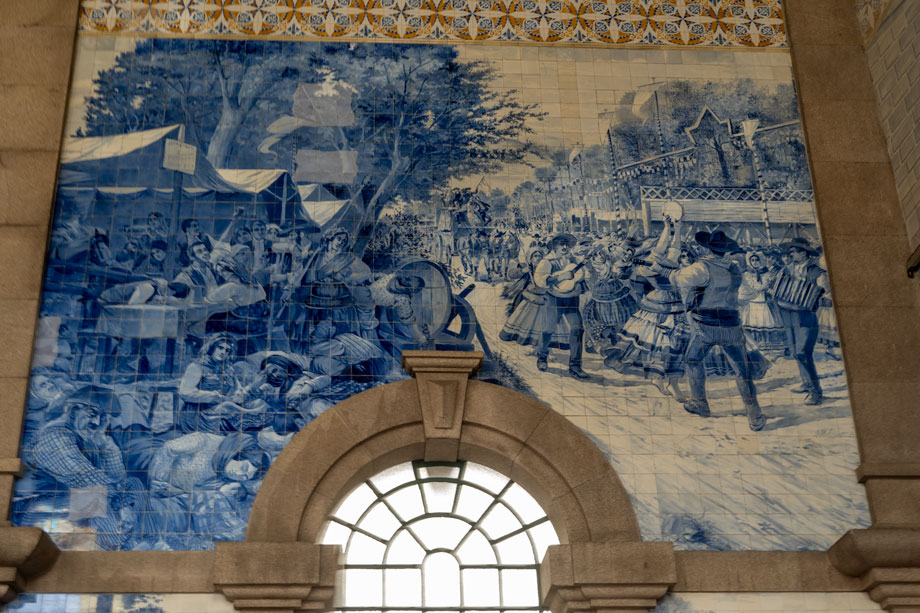
Porto’s artistry is evident in its azulejos, or hand-painted tiles, which cover everything from train stations to churches.
Our first stop is São Bento Station revered for its 20,000+ azulejos that depict scenes from Portuguese history. This station feels more like a gallery than a busy train station. We wander around just taking it all in.
The station replaced the Convent of São Bento de Ave-Maria, which was demolished in the late 19th century following the extinction of religious orders in Portugal in 1834. Construction began in 1900 and lasted until 1916, with the first train actually arriving at the site earlier, in 1896, before the permanent building was complete.
Delightfully, it is rumored that the ghost of the last nun from the former convent still haunts the station.
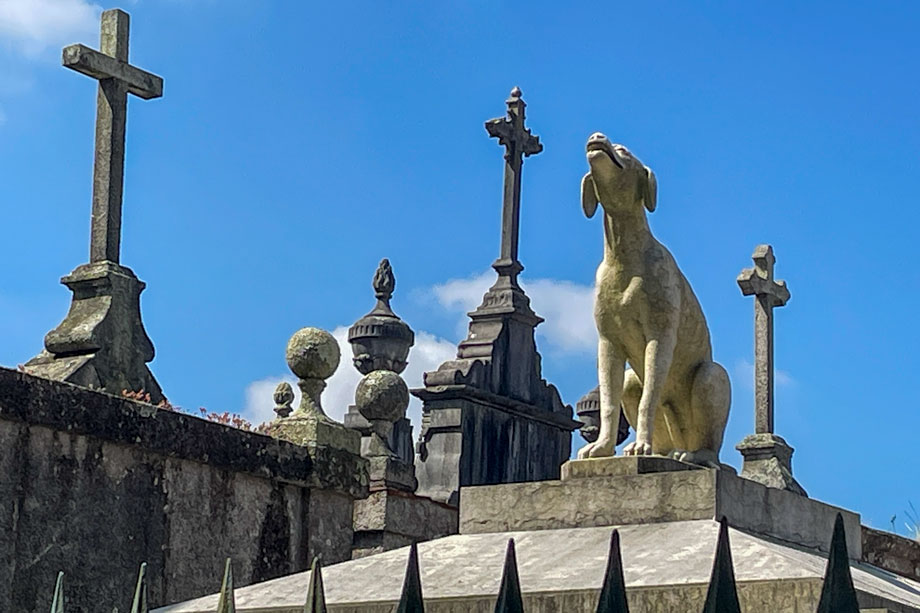
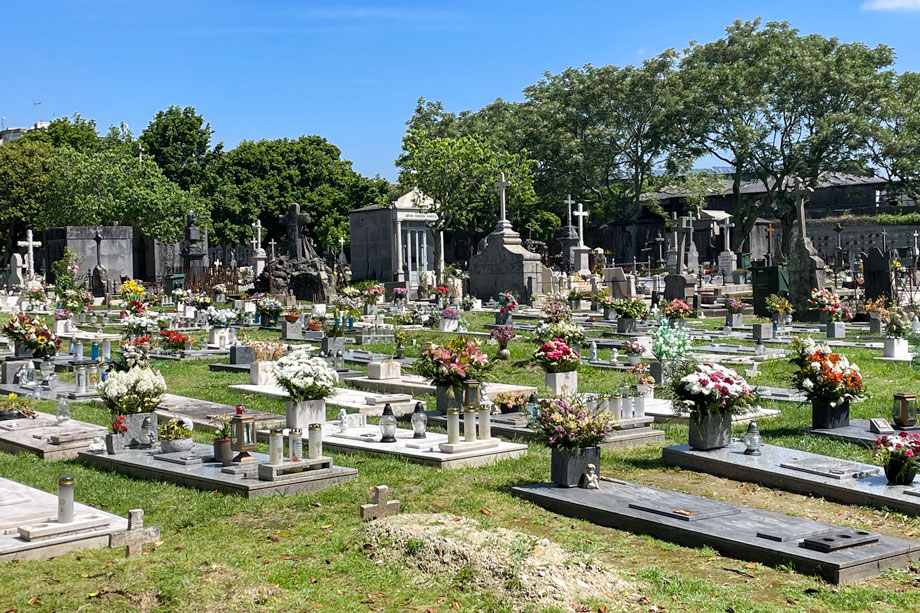
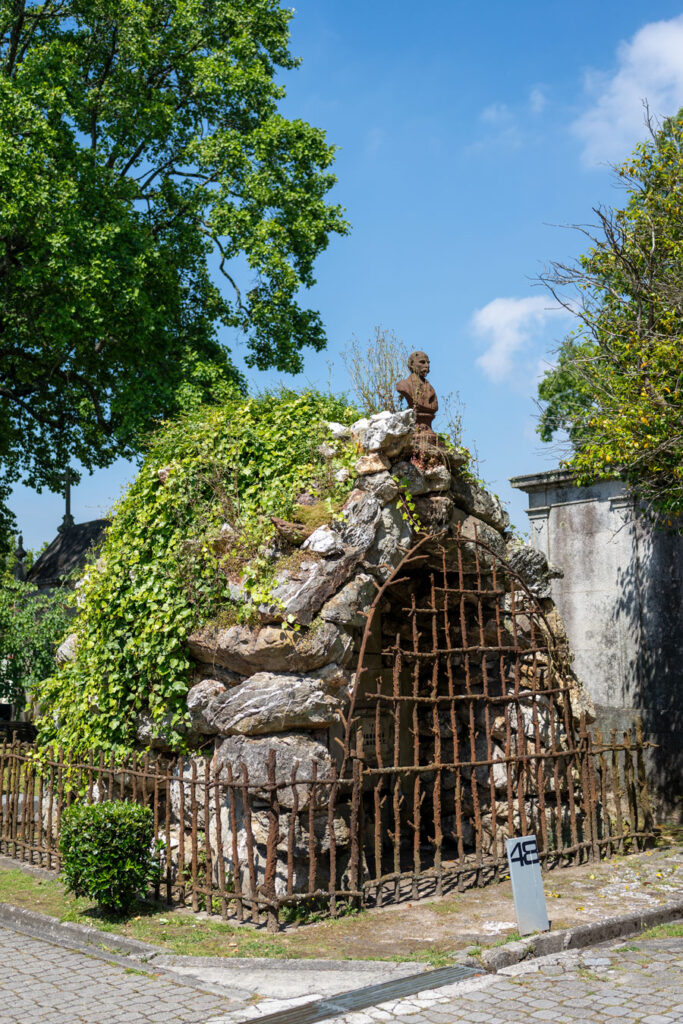
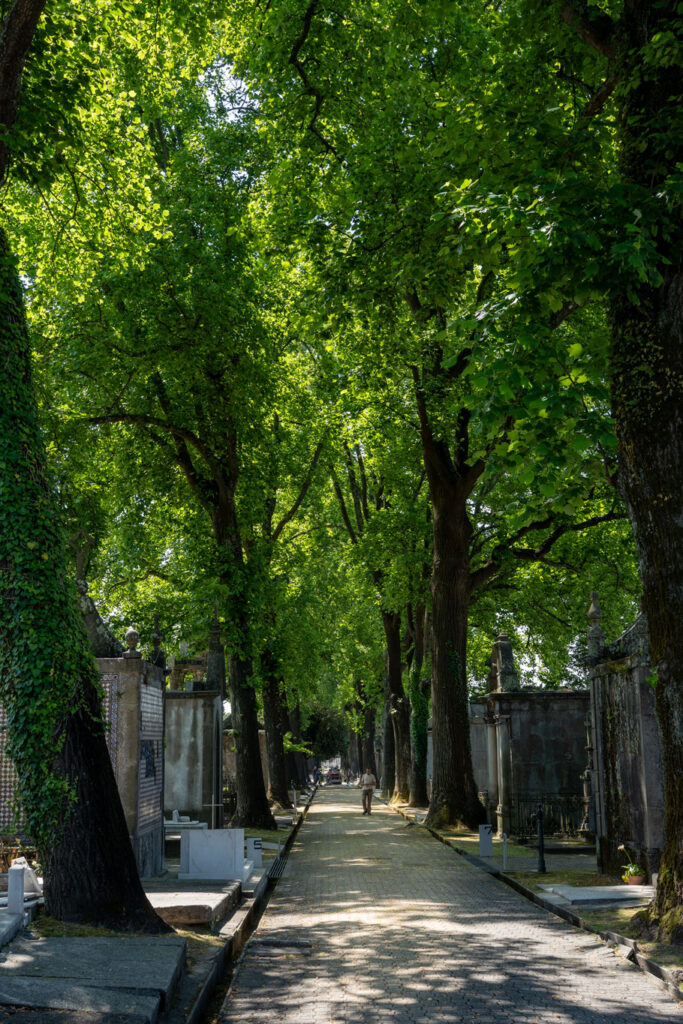
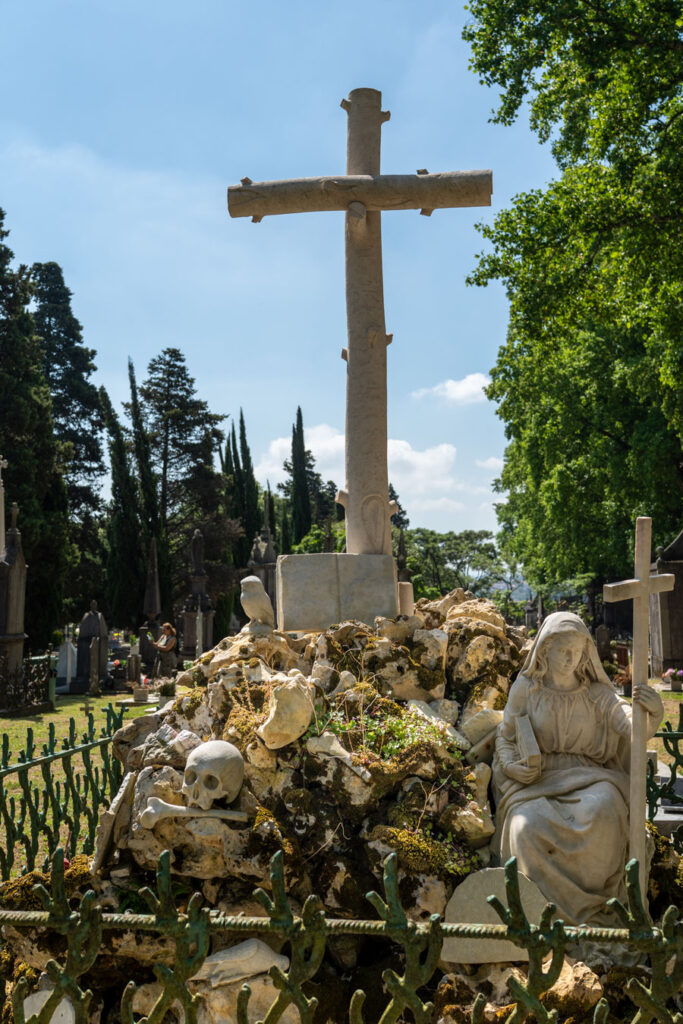
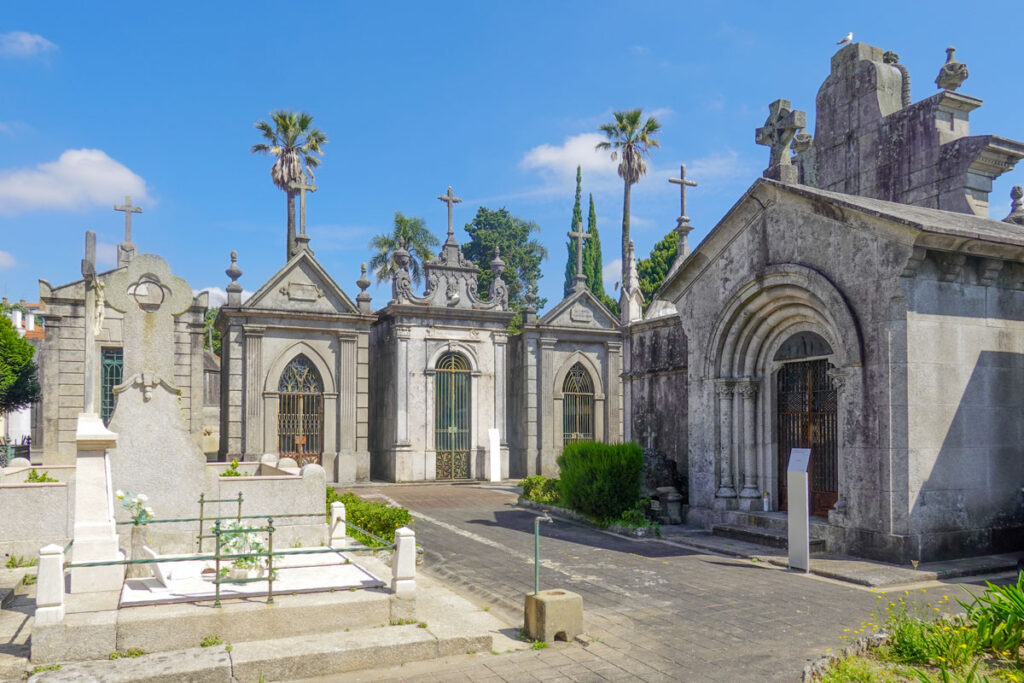
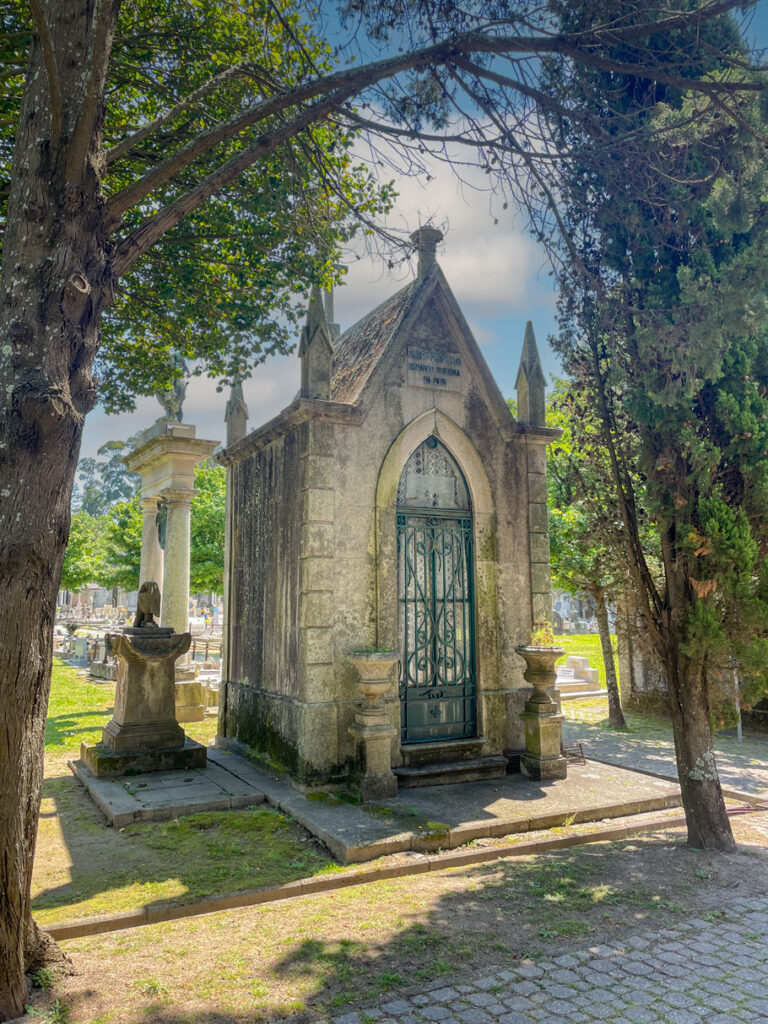
A short stroll from Gary and Athene’s home we come across the Prado do Repouso Cemetery. We are always fascinated by an historic graveyard, particularly when it looks so beautiful. We are attracted by the dramatic statue of a sad, howling doggie, presiding over a family mausoleum.
The cemetery was opened in 1839, as the first public cemetery in Porto, although for about two decades only the poorest inhabitants of Porto were buried here. Before this date people were buried inside churches but this was beginning to create a health issue as graves were having to be opened before bodies were fully decomposed. There were also moral dilemmas with people regarded as less religious or “sinners” needing to be buried beside the more pious.
“In 1833, the Siege of Porto led to an extremely difficult sanitation situation in the city with an outbreak of a deadly epidemic of cholera. Burial sites rapidly filled up, and the situation was exacerbated with the many bodies of soldiers who died fighting the Miguelists.” Hence the development of Prado Repouso.
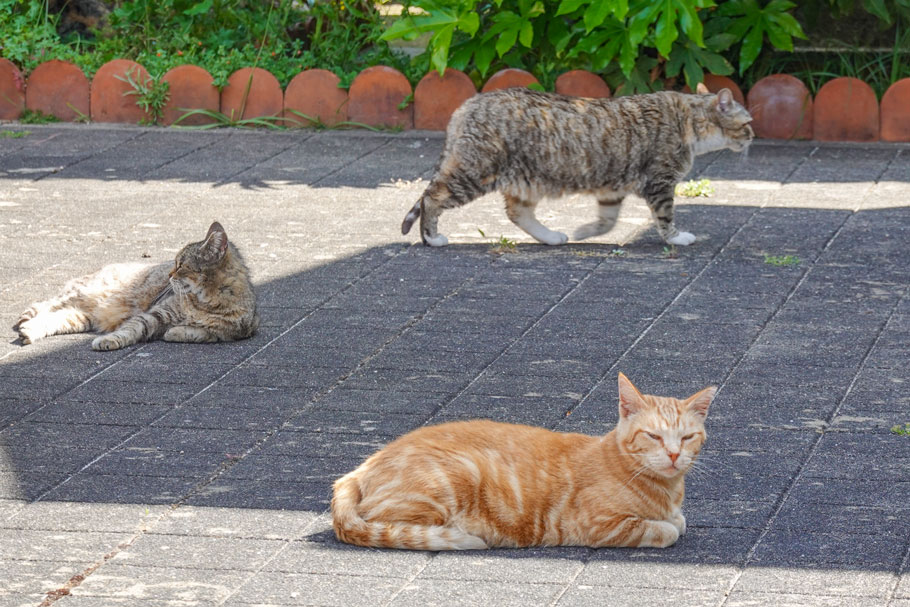
We spend a peaceful few hours wandering around and taking some photos. Like many European graveyards, the graves are lovingly tended to by relatives and volunteers who ensure that everything is just as it should be. The plots are adorned with flowers. We appreciate the shady trees over benches that surrounded the many pathways. We also are delighted that there is a cat area Colónia de Gatos, where we see some well-fed moggies relaxing in the shade of the tombstones.
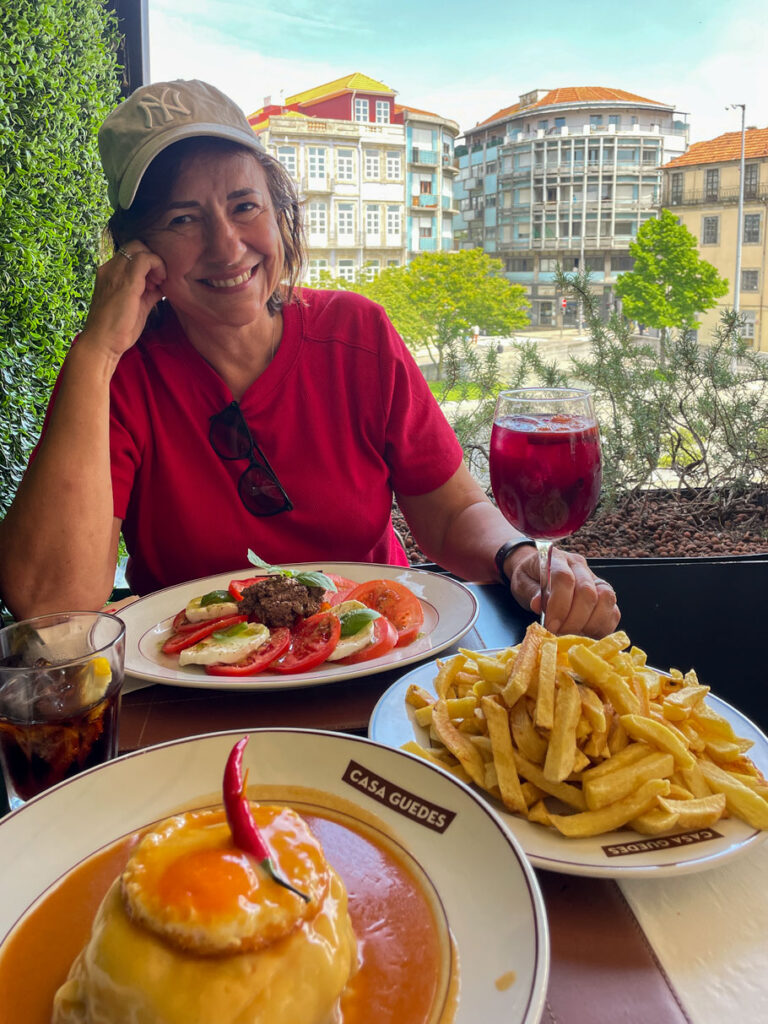
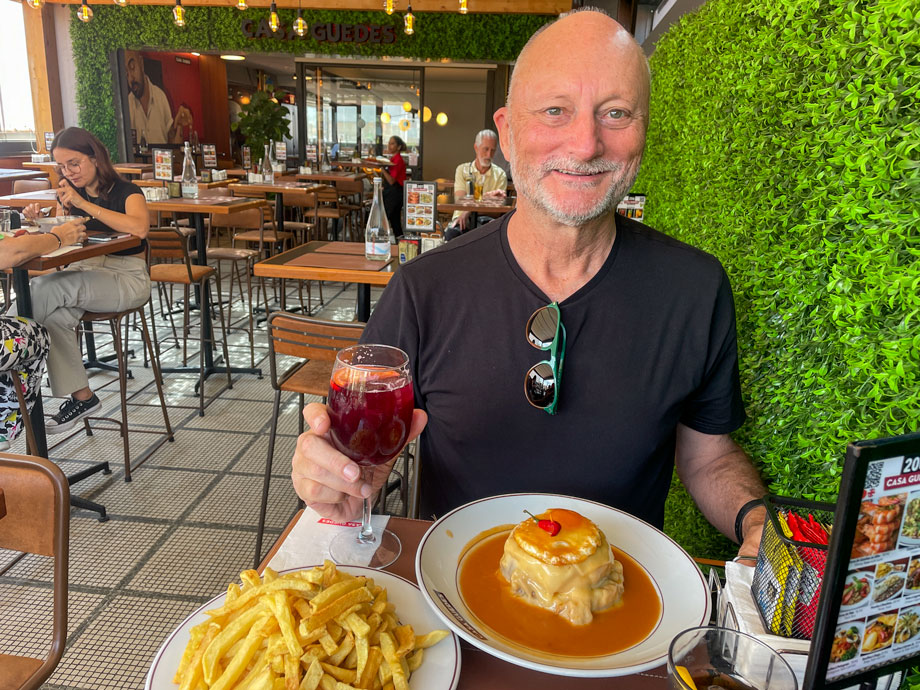
On the agenda for lunch is the Francesinha – Porto’s famous sandwich which is a hearty mix of ham, sausage, steak, and melted cheese and then, as if that is not enough, it is topped with a fried egg and drenched in a rich, spicy beer-based sauce that is a well kept family secret.
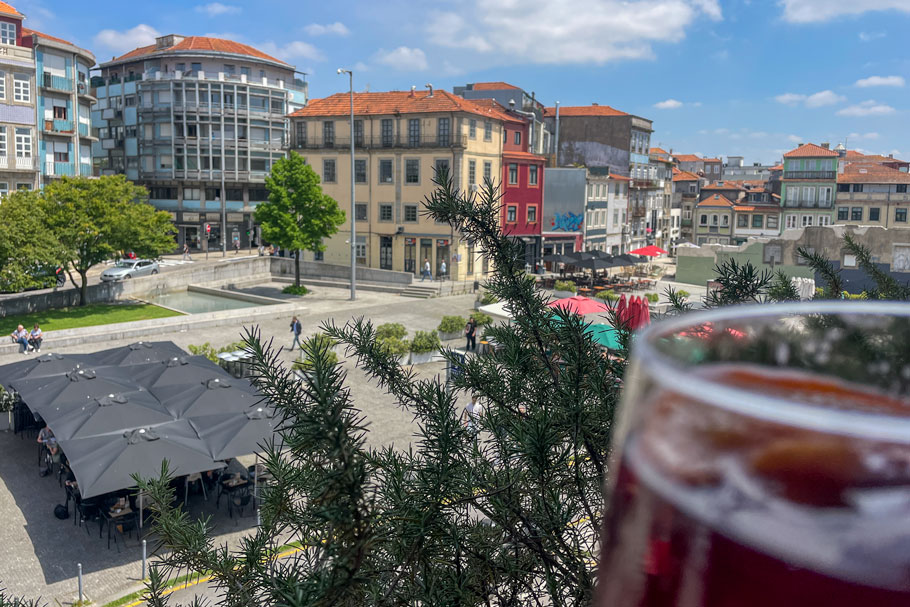
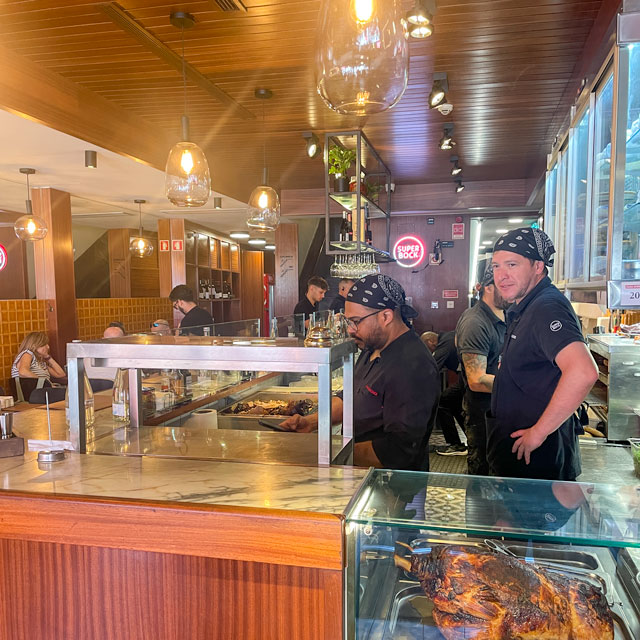
The Casa Guedes restaurant is high on the tourist agenda and we are efficiently whisked upstairs to the rooftop where we chat to adjacent diners who are visiting from the USA. We are offered a tray of delicious fried rissois and empanada style titbits as an entree, and find it hard to select only a couple. We also order a caprese salad. We sip our sangria and look down on the interesting square below.
We regret our order when the Francesinha arrives! It’s rather substantial, indulgent, messy and absolutely worth it. Did I mention that it also comes with chips.🤭
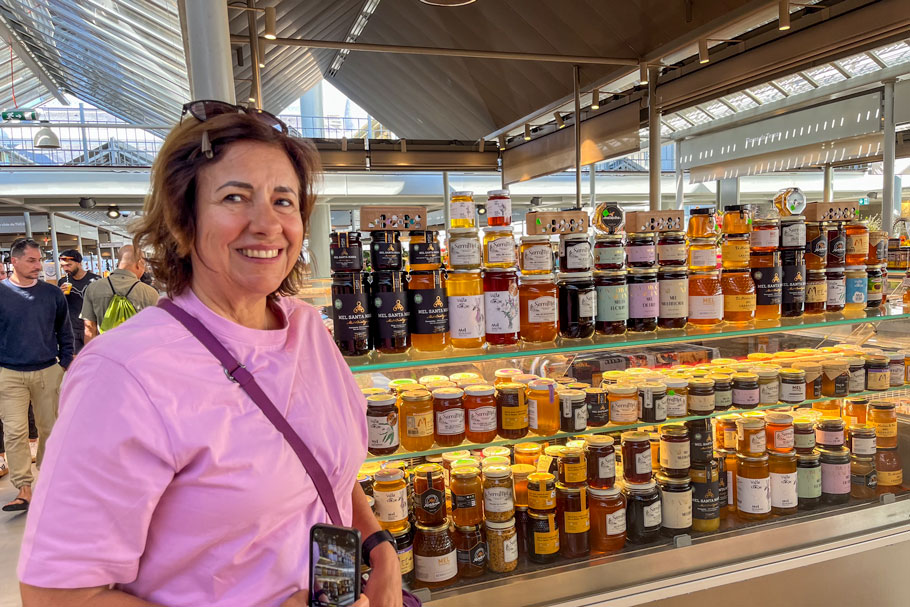
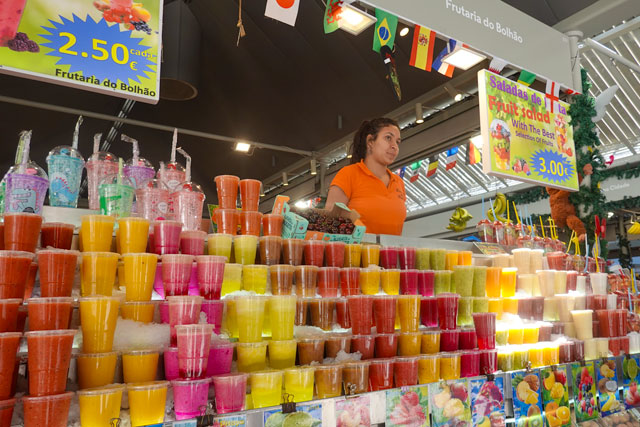
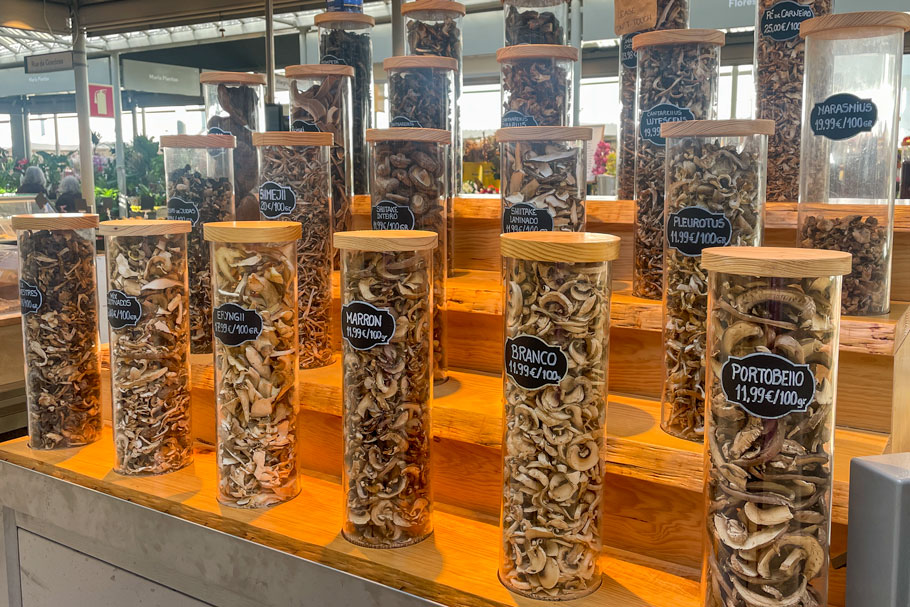
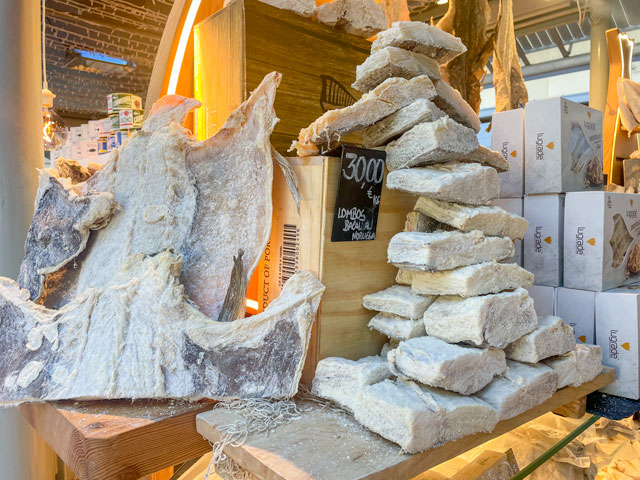
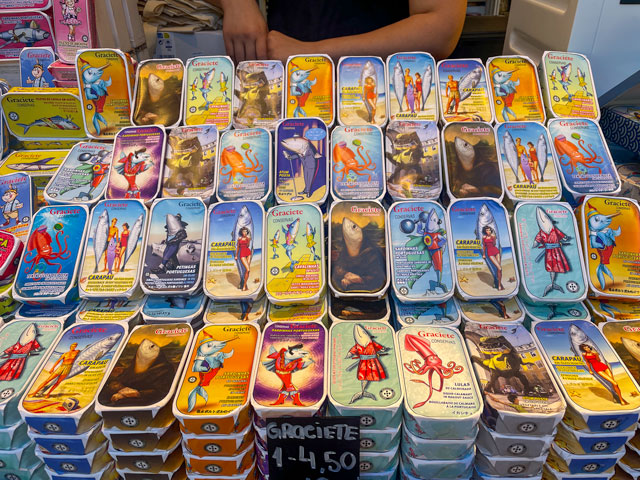
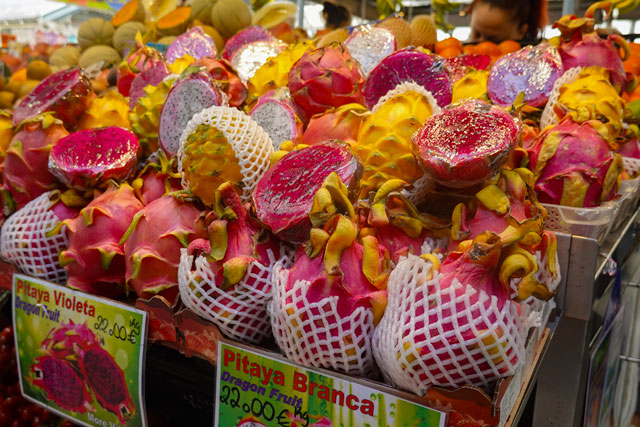
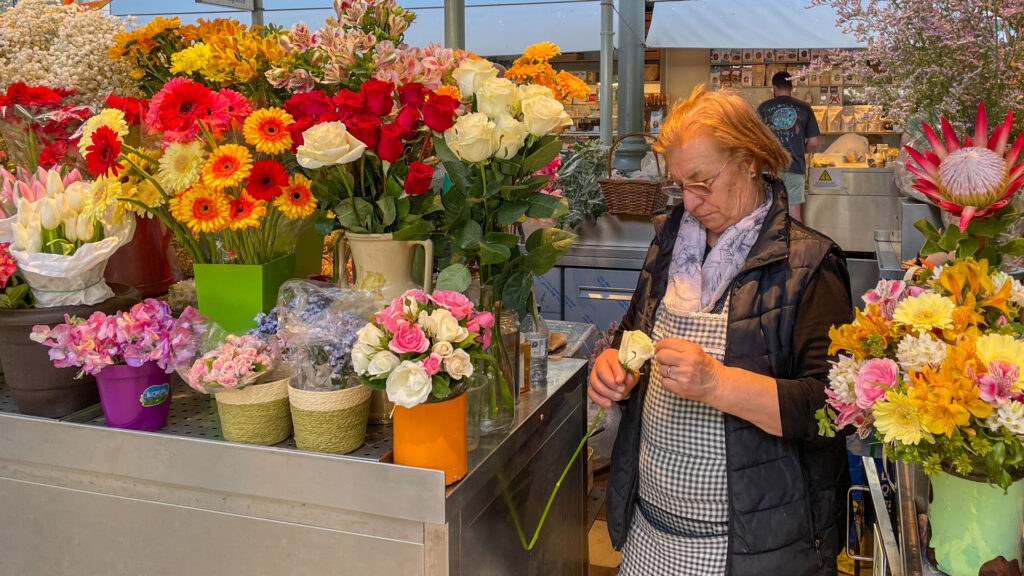
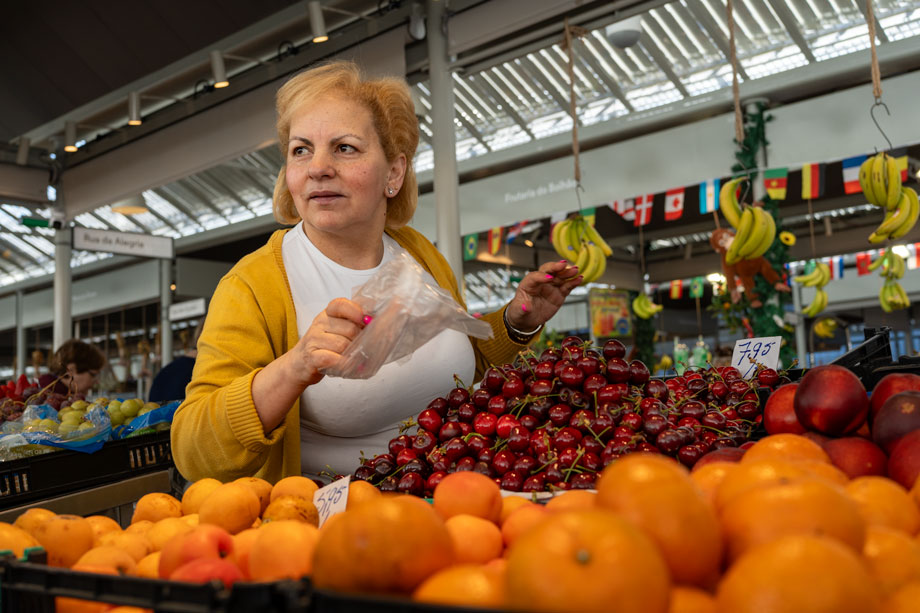
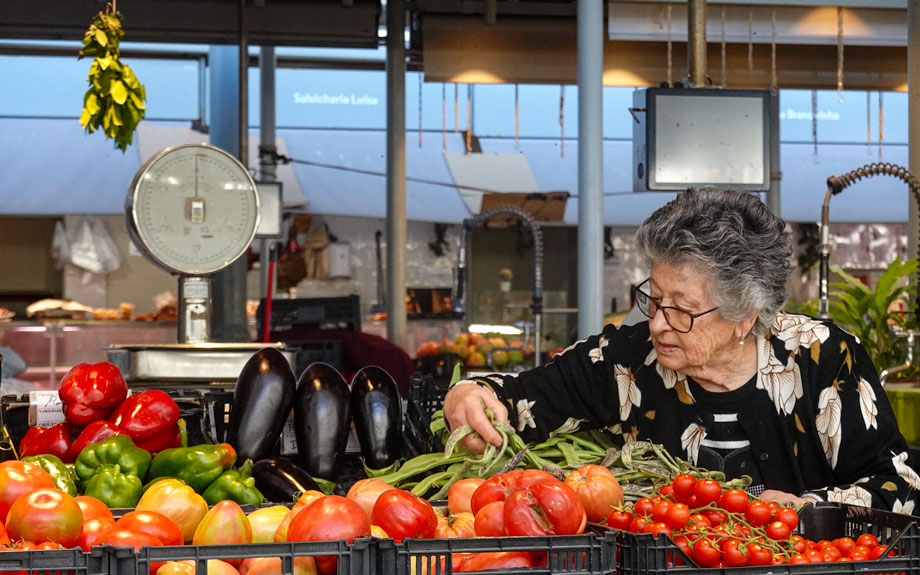
Close to Avenida dos Aliados is one of the most popular and lively markets in Porto. It opened to the public in 1914 and specialises in meat, fish, fruit, flowers, vegetables and other colourful products.
The 19th-century, wrought-iron Mercado do Bolhão reopened its doors in the autumn of 2022 after a major restoration project. Aside from an endless variety of produce, there are even a few restaurants where you can sit down for a bite to eat.
The market is divided into two main floors: the ground floor, where the bustling fish, meat, and vegetable stalls are located, and the upper floor, which houses various specialty products such as wines, spices, and local handicrafts. The lively atmosphere is filled with the sounds of friendly bartering and vendors calling out to passing customers, eager to show off their fresh goods.
What makes Mercado do Bolhão so special is its vibrant, authentic atmosphere. The market is described as “one of the last truly traditional markets in Porto, with a commitment to preserving its roots while offering a slice of Porto’s history”. As we walk through the aisles, we notice the tiled walls, worn wooden beams, and beautifully decorated facades. The market is a sensory overload, with the sharp tang of freshly caught fish mingling with the earthy scent of fresh seasonable vegetables and fruit and the hum of chatter filling the air.
We have fun with photography – hoping to cover off a number of our club themes ranging from “street” to “photo-journalism”.
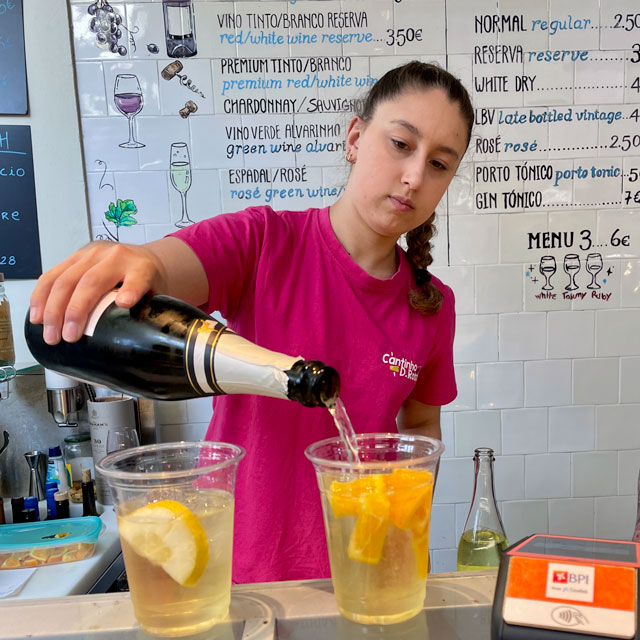
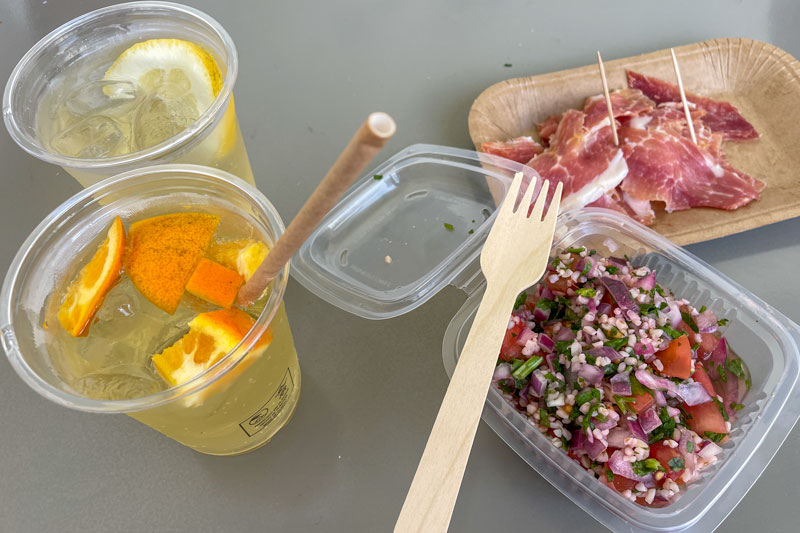
Like many of our trips, there are certain places that draw you back, over and over again. This Mercado is one of those. We are whipped away early when Geoff realises he has a coaching session beginning in 15 minutes! (Time-zone confusion). We dash back to the Van Mazijk’s house. However we do manage to return for lunch on another day where we sample the preserved meats, delicious salads and of course the go-to drinks of Porto Tonica and Caipirinha.
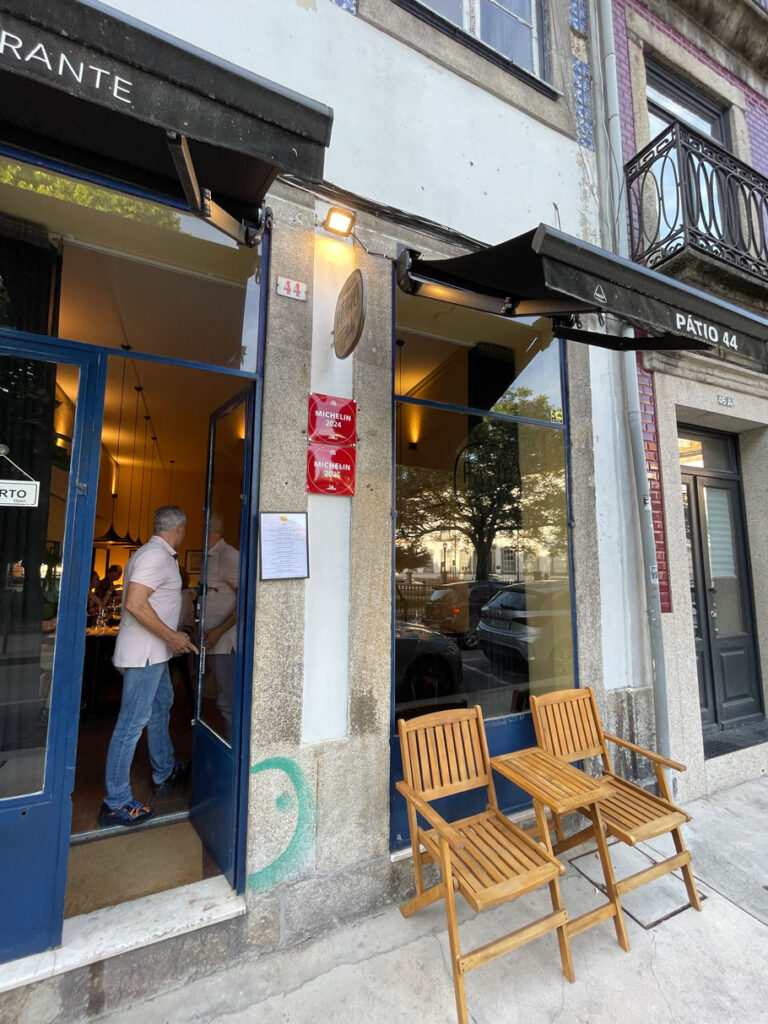
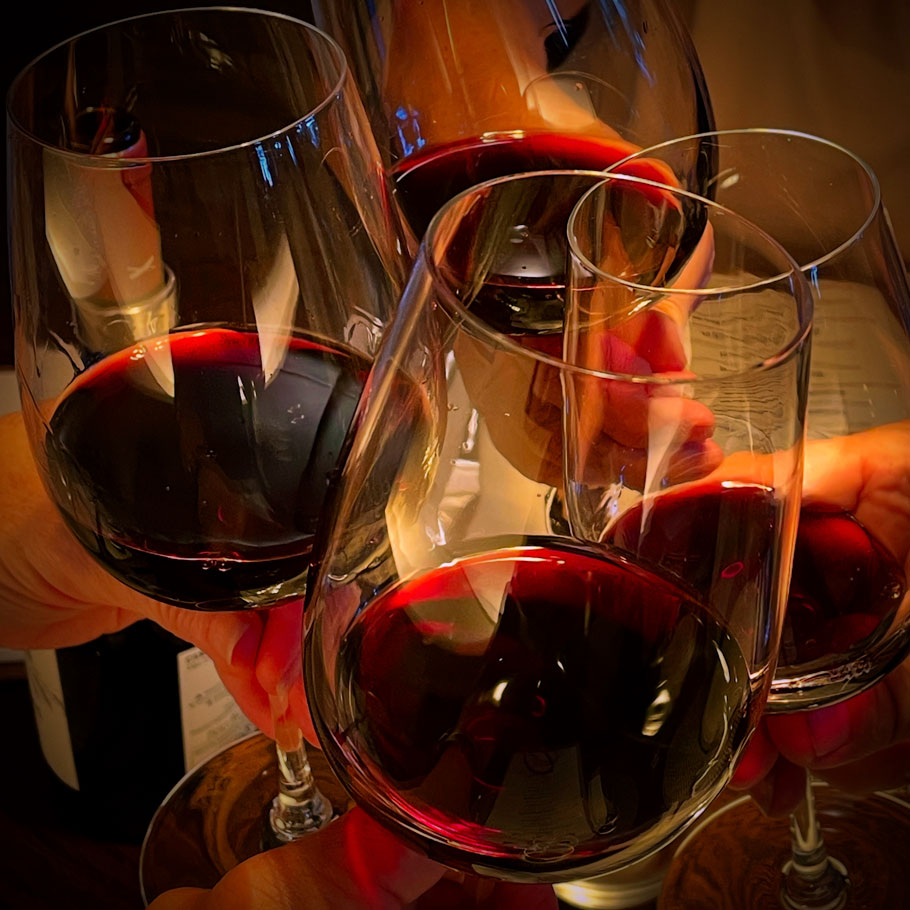
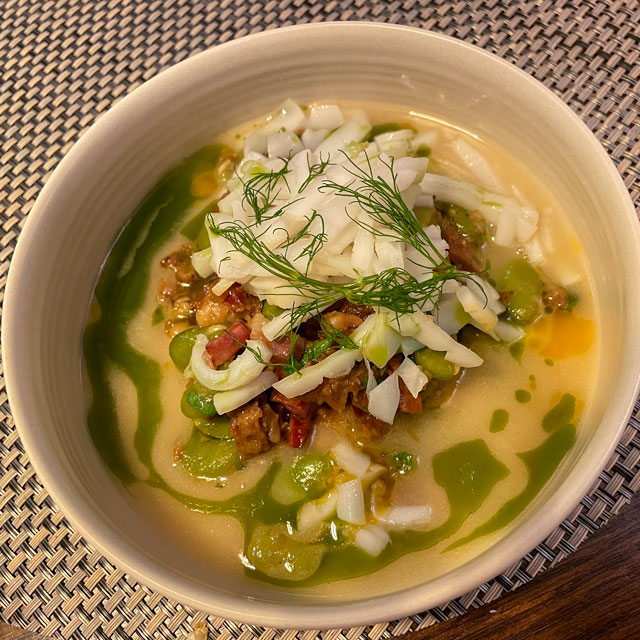
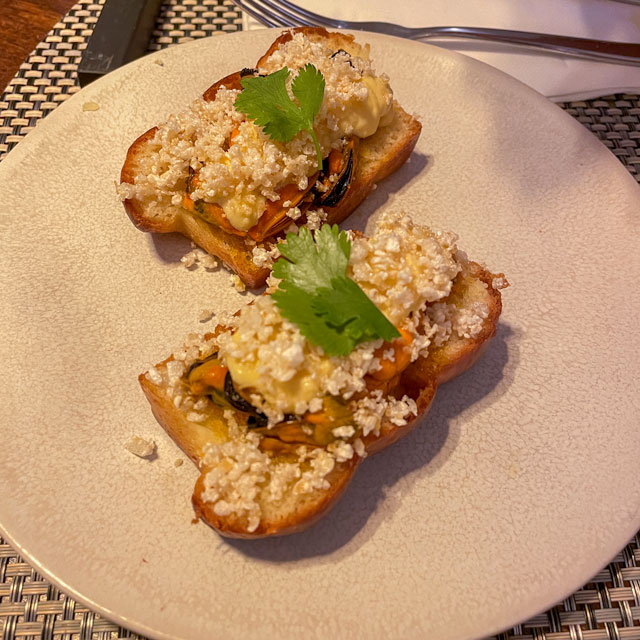
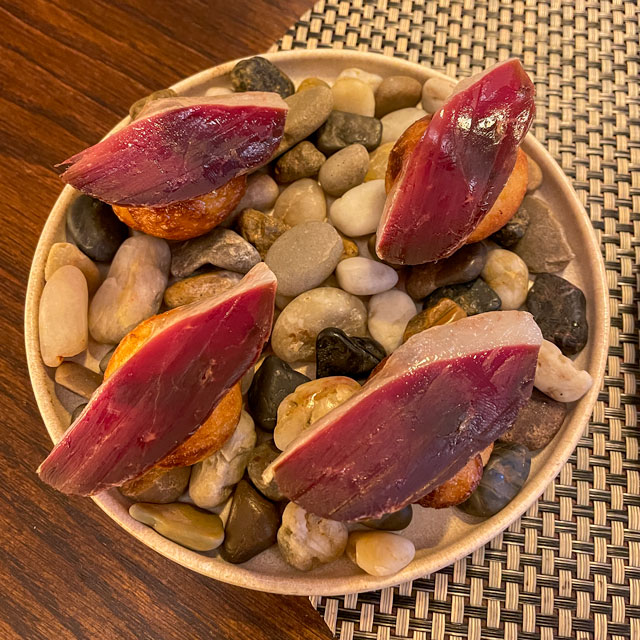
Nestled in the heart of Porto, Pátio 44 Restaurante offers a thoughtfully curated menu celebrating Portuguese flavors with a creative twist. Athene and Gary thought to book well in advance to share this experience with us.
Pátio 44 is recognized as a Michelin Bib Gourmand for its high-quality food at reasonable prices.
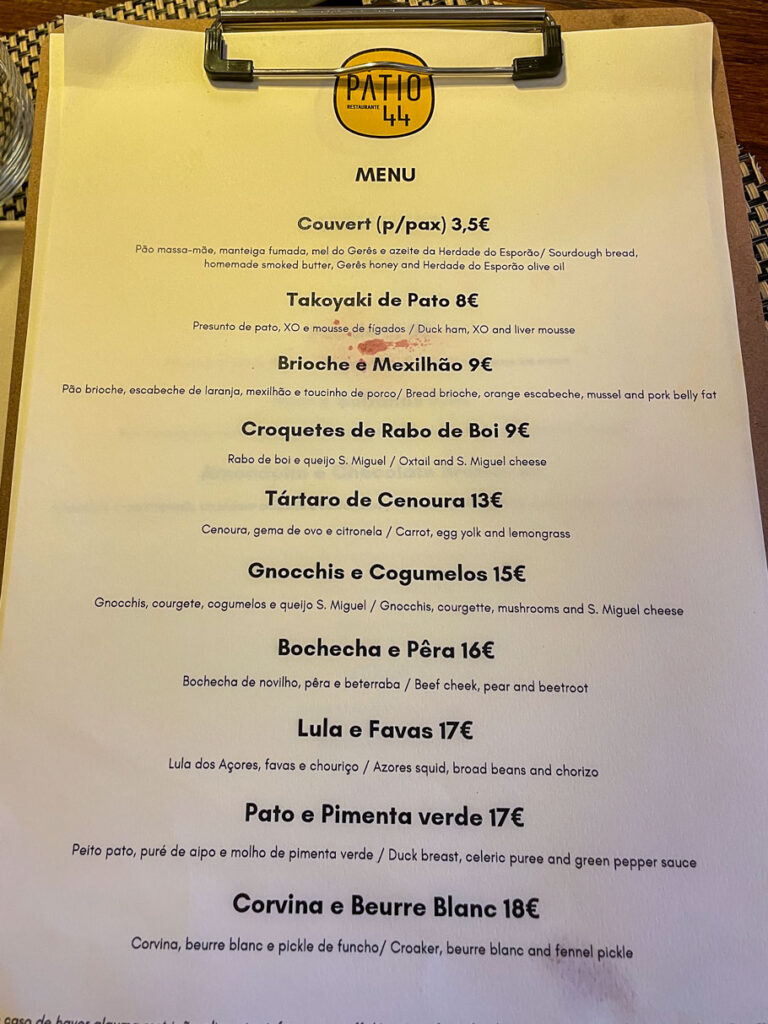
The couvert features sourdough bread, house-smoked butter, Gerês honey, and exquisite Esporão olive oil — a vibrant starter meant to awaken the palate – which it certainly does.
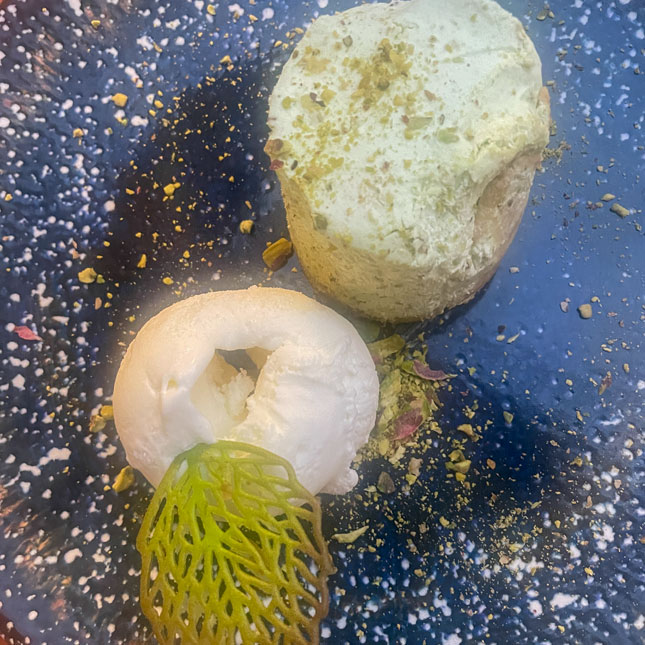
The main courses are equally delicious and we even have room to share some desserts. We take a peaceful stroll back home, marvelling at the perfect May weather and given that the week prior Porto had been subjected to heavy rains.
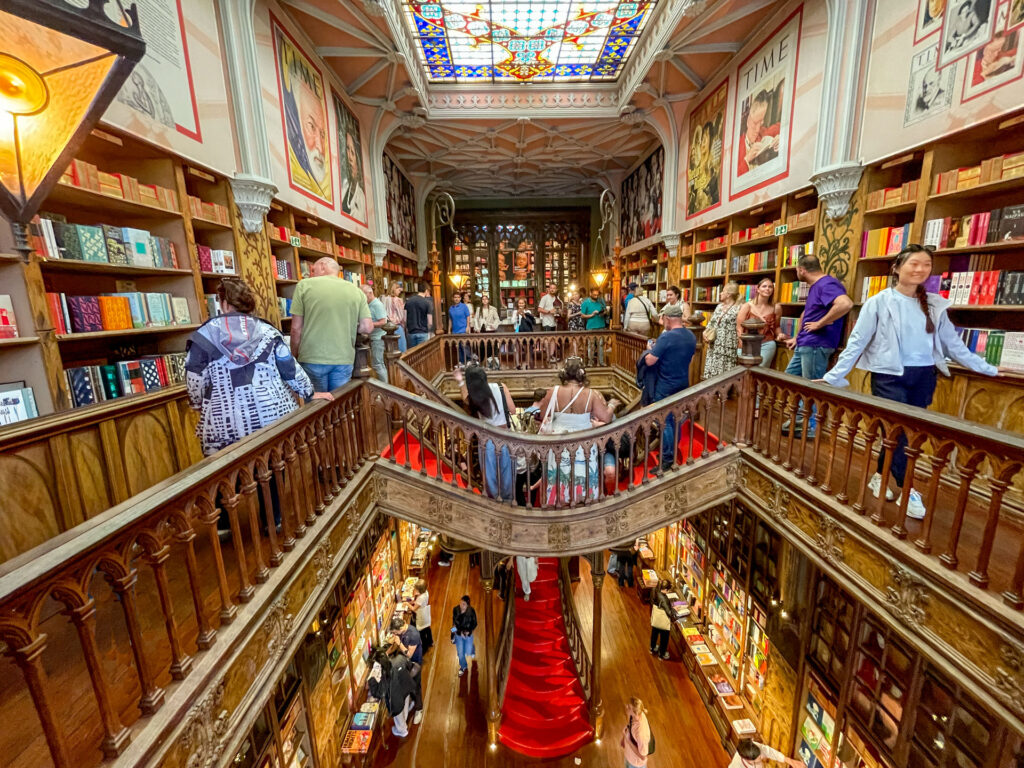
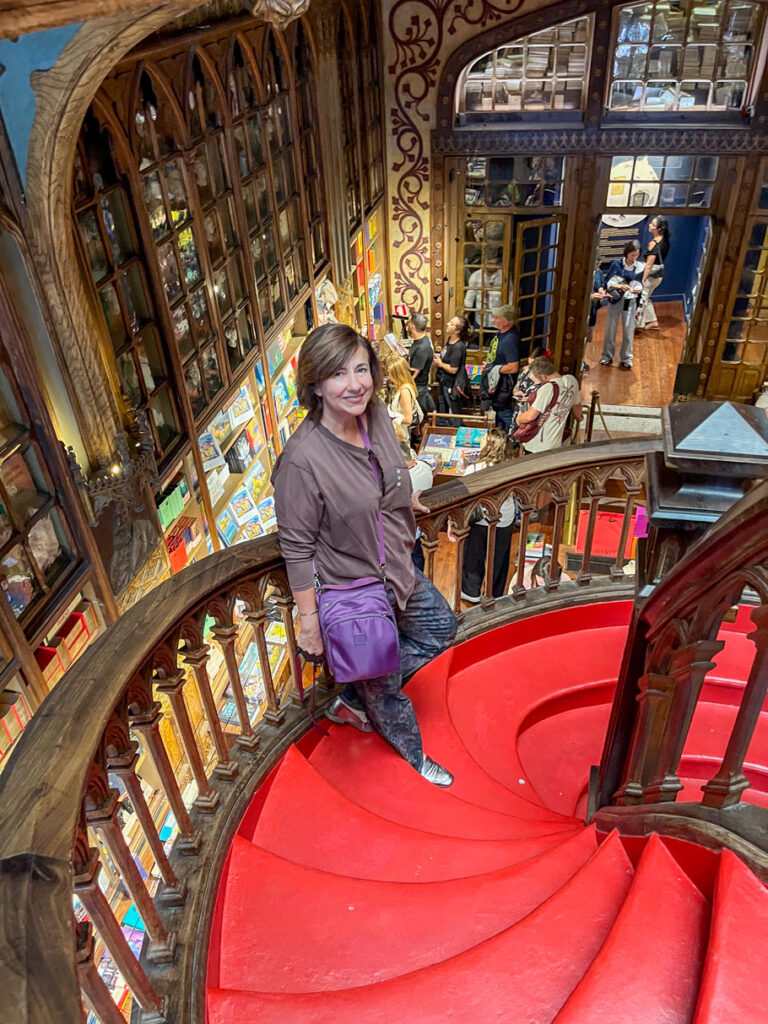
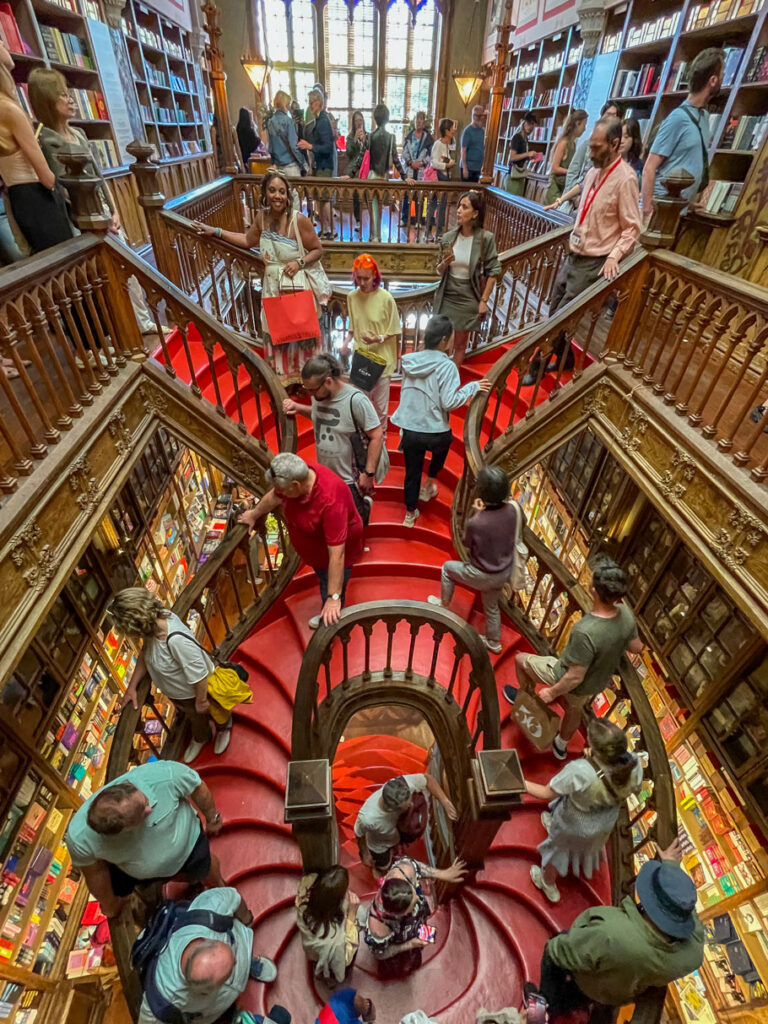
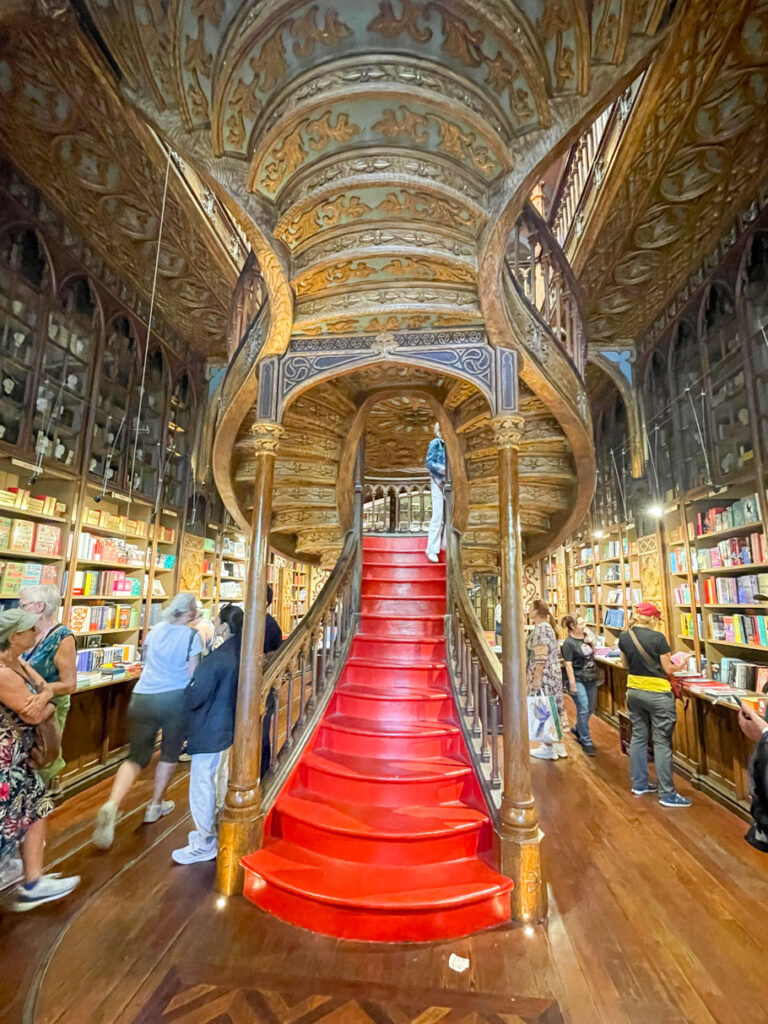
We have booked in advance for a visit to Livraria Lello, one of the world’s most beautiful bookstores, with its neo-Gothic design and fairytale staircase. It’s not hard to see why it’s rumored to have inspired scenes in Harry Potter.
The quaint little book store has become one of the most popular tourist attractions in the city with queues stretching down Rua das Carmelitas from the early morning hours, well before its heavy doors open at 9.30 am.
“The dream of the two brothers Lello, it was built in 1906 as a home for the studious, the curious, and the intellectual. Today however, the bookshop reflects the dramatic growth of Porto as a tourist destination, the impact of Instagram, and the effect of Harry Potter on this historic city’s own story.”
Legend has it that JK Rowling, during her years working in the city in the early 90s, was inspired by the glorious interiors for aspects of Hogwarts. The bookshop has very much embraced this, and Potter-mania is a big reason the small space and exquisite scarlet staircase attracts up to 4,000 visitors per day (more than Machu Picchu, for example).
Up until 2015 it was free to enter. Now you can recoup the cost of your ticket if you purchase any books.
It is challenging to take pictures in such a small space with so many people around, but the crowd management is fairly well done. We love the red staircase and the magnificent ceiling and breathe in the musty old books and delightful old world atmosphere.
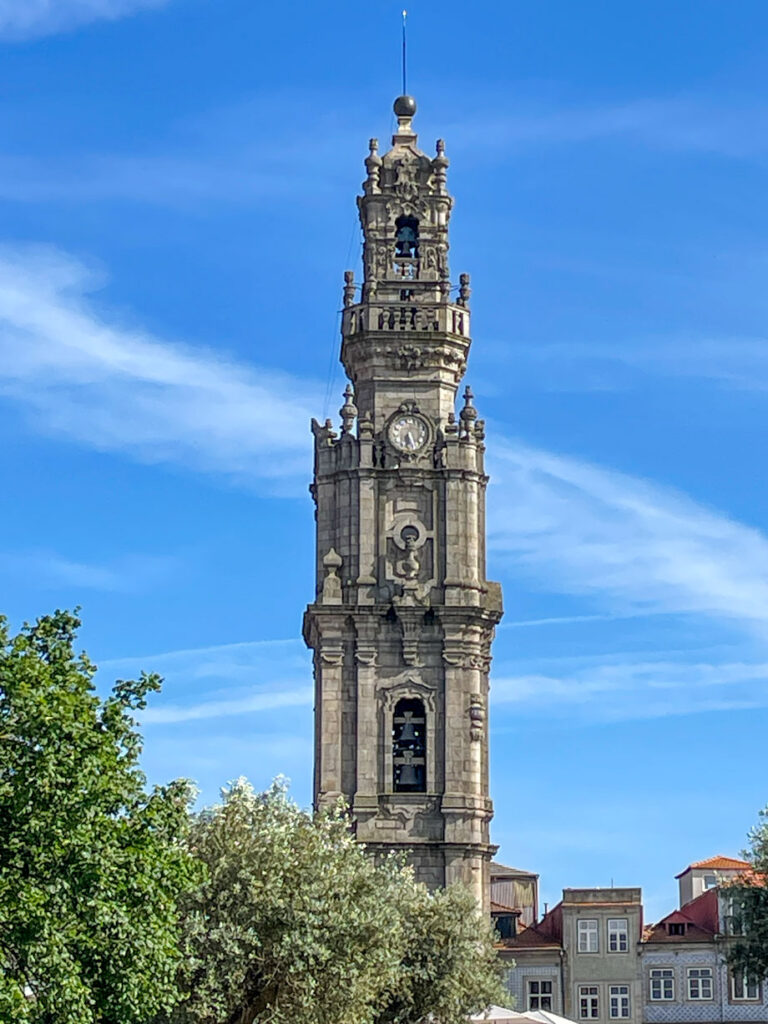
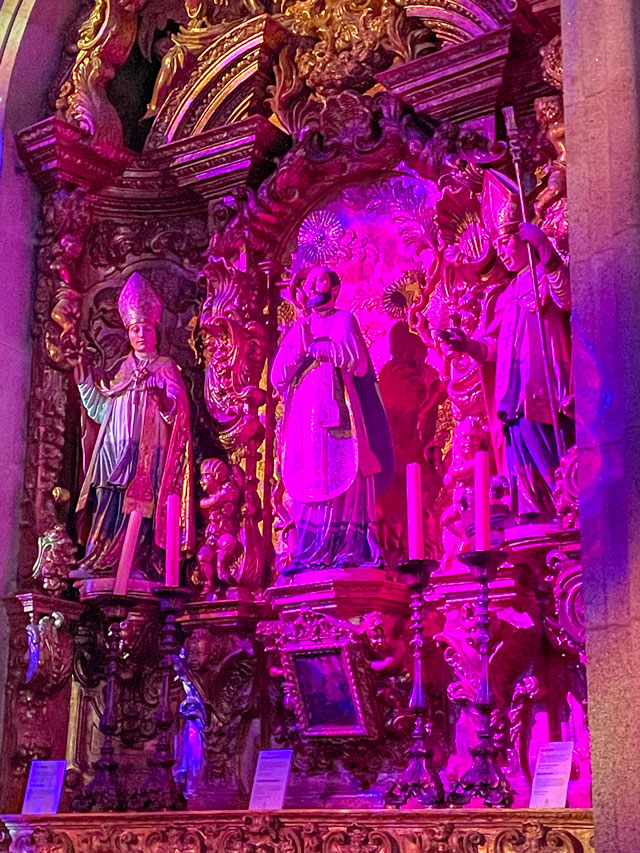
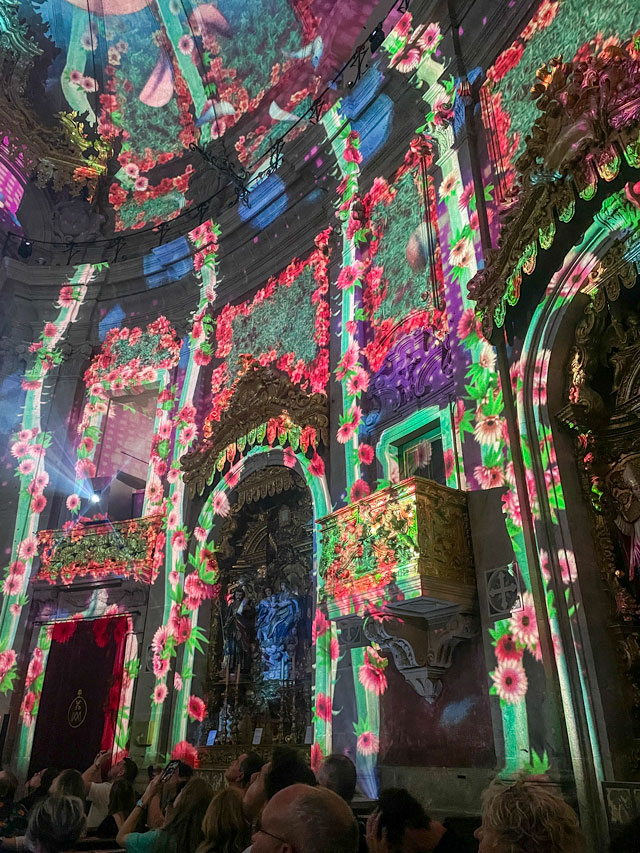
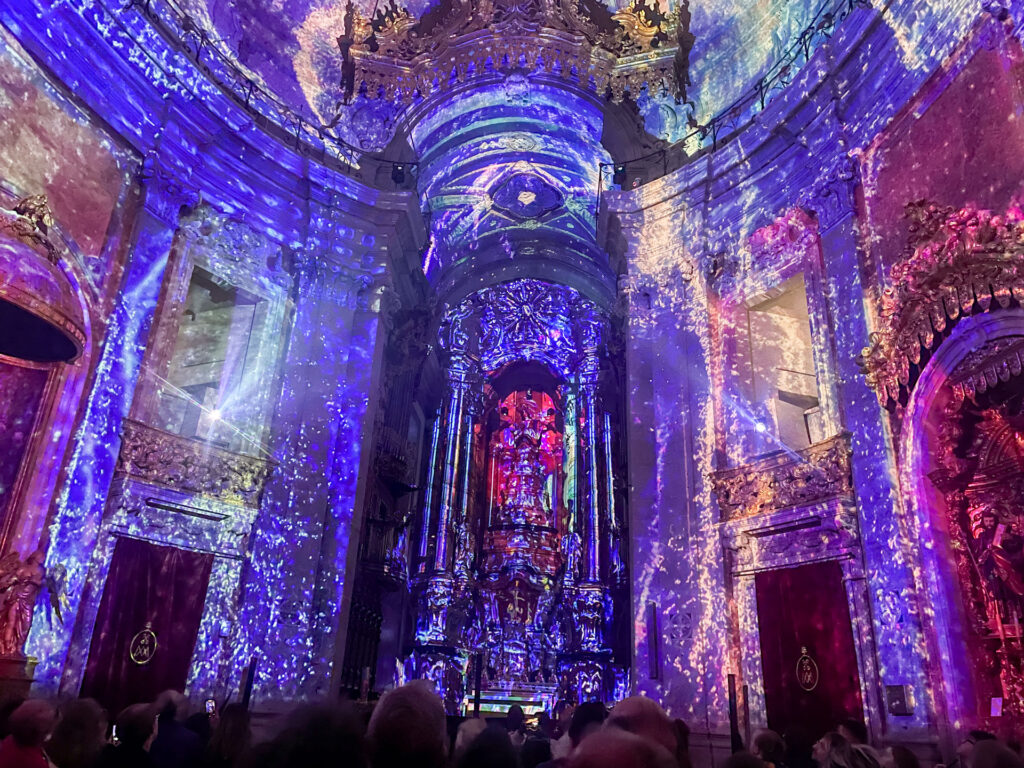
Athene has another surprise for us and has reserved tickets for us to attend Spiritus. This is a unique experience, particularly because we are entering the iconic Clérigos Tower.
“The 250-foot tall Clerigos Tower has dominated Porto’s skyline since 1763. Designed by architect Nicolau Nasoni, its elegance and grandeur offer breathtaking panoramic views of the city.
The complex was constructed on a site formerly used to bury criminals, known as the Alto dos Enforcados (Hill of the Hanged Ones).
The tower houses a carillon of 49 bells, which can be quite loud and startling if they ring while you are climbing.”
We sit inside the beautiful baroque church and suddenly a world of laser lights and 3D animation combined with powerful classical music comes to life.
It is so cleverly choreographed, with your eyes drawn to different parts of the church (the nave, sanctuary, apse and sacristy), highlighting different statues and recesses through the use of light and darkness, as well as by using silence contrasted with the building crescendo of the music. Ultimately it provides a deeply emotive and sensory experience.
Thank you Athene and Gary. This has been truly special!❤️
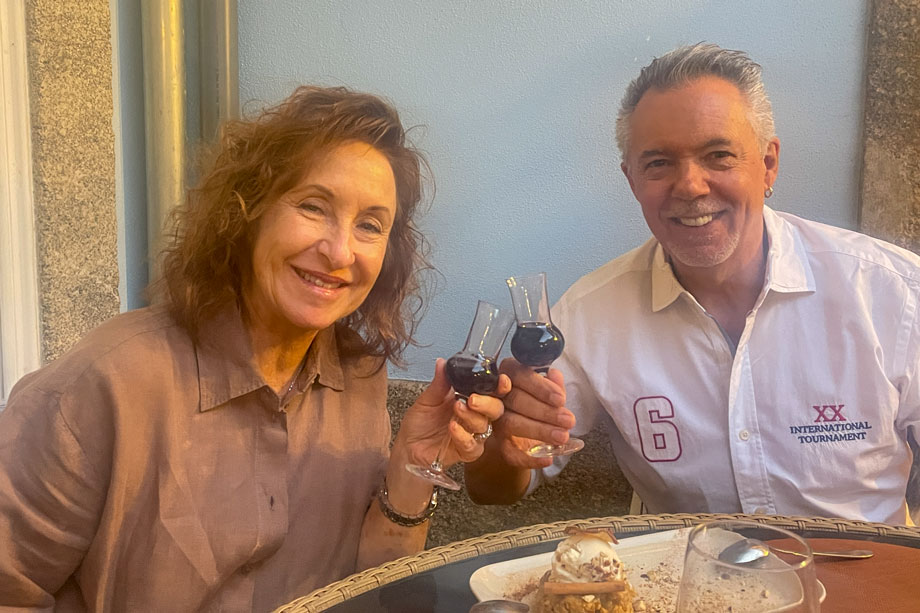
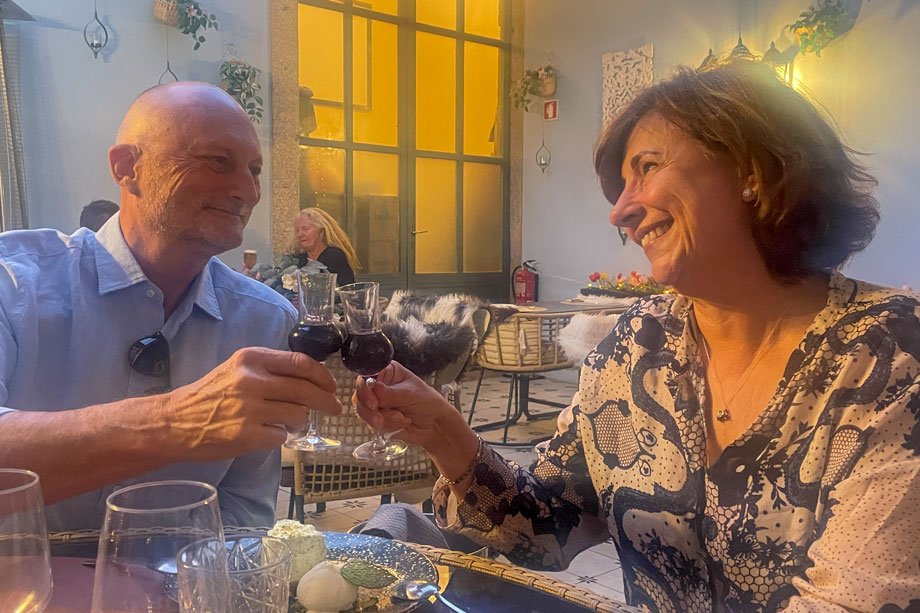
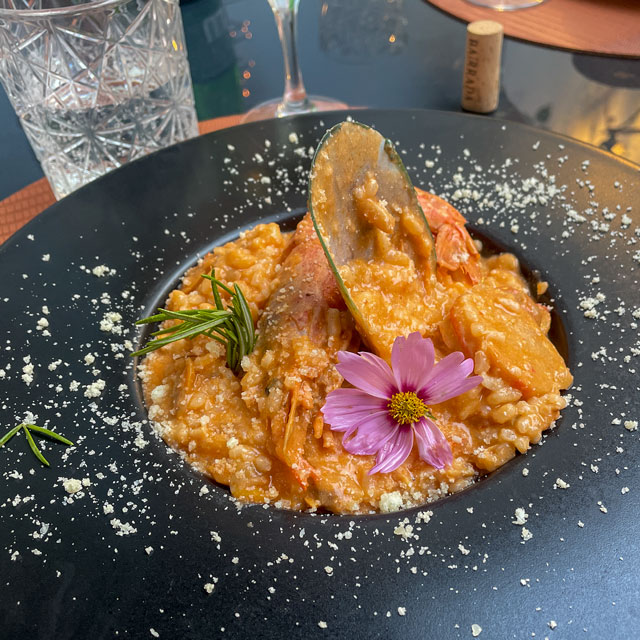
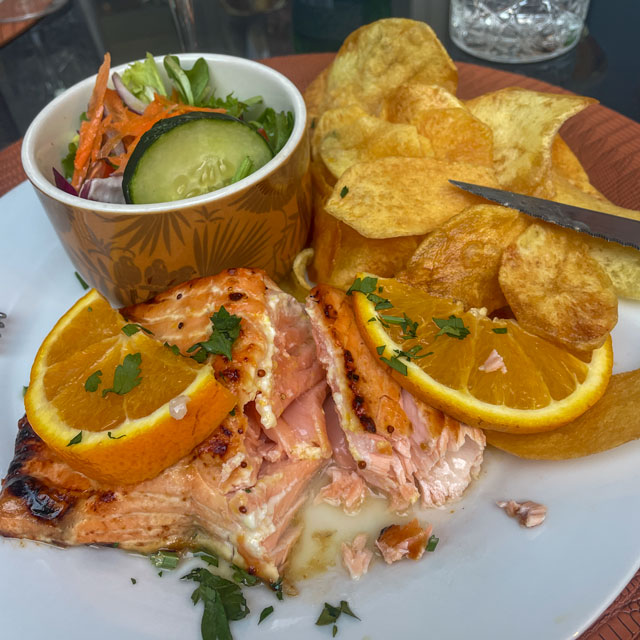
DoDuk Gastro pub is another lovely restaurant and we have an excellent meal in the best company. Both the Arroz Caldoso (risotto) with sea bass and prawns and the salmon are something special. Our friendly waitress brings us a complimentary ginja, which is a popular Portuguese liqueur made by infusing sour cherries in alcohol with sugar and cinnamon. It is a dark red, sweet but also tart drink commonly served as a shot and we make a note not to leave Portugal without a bottle in our suitcase!
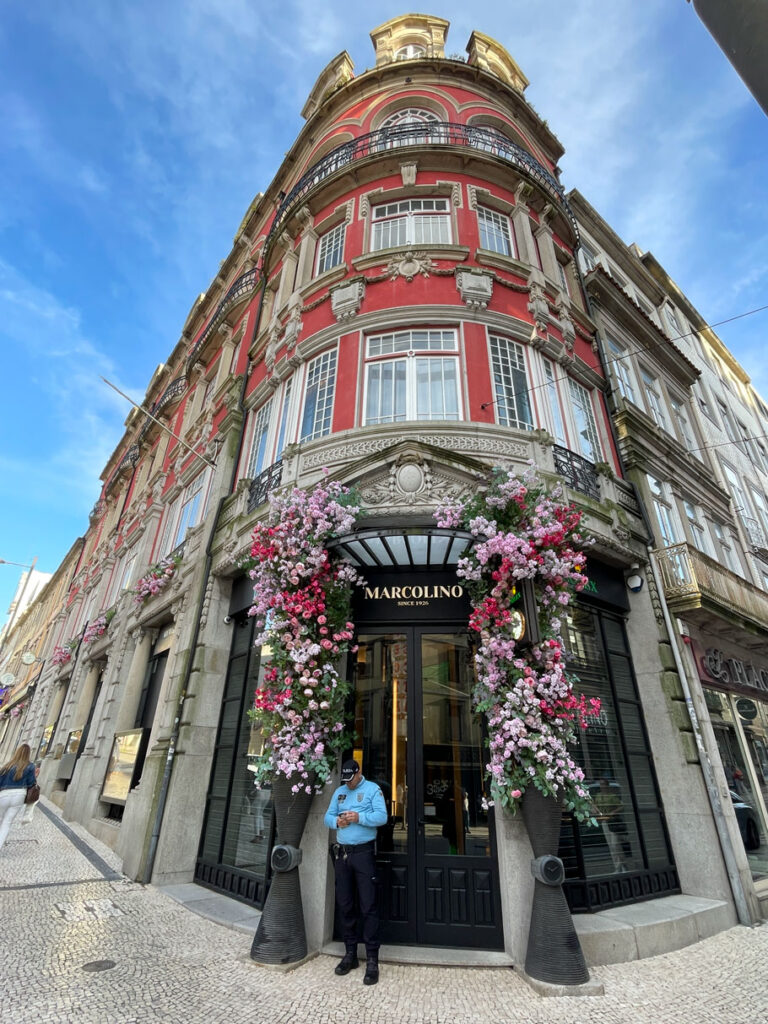
Another beautiful day and we are off to explore once again, becoming more familiar with the main streets and some of the amazing buildings that we pass now on a regular basis.
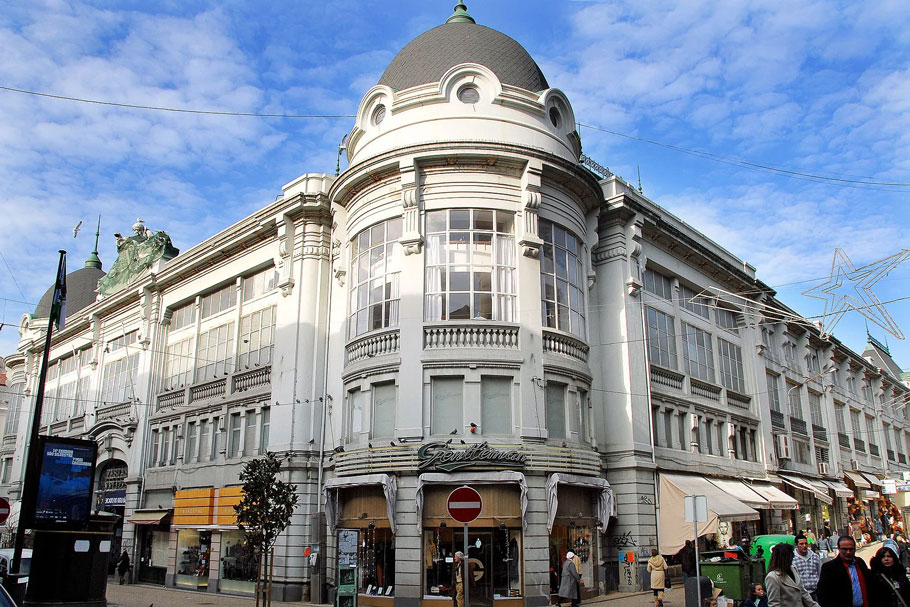
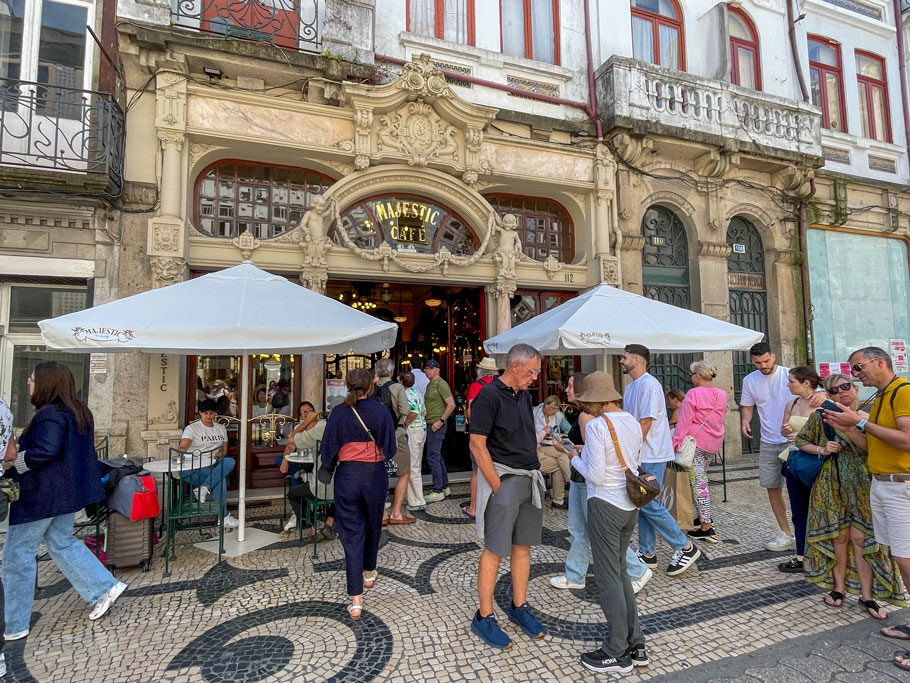
We wend our way toward Rua de Santa Catarina for a spot of shopping, pausing to admire the Belle Epoque gem – the Majestic Café.
We pop in to admire the intricate floral ornaments, carved wood, mirrors, and Belgian crystal, reflecting the refined, artistic vibe of the 1920s.
Upon reading about the place, once again J.K. Rowling’s name is mentioned, as it is rumoured that she wrote the first chapters of Harry Potter and the Philosopher’s Stone here while living in Porto. Very cool.
There is already a queue forming and it is well before lunch time.
The Church of Saint Ildefonso in Porto is a stunning 18th-century Baroque church near Batalha Square, famous for its facade covered in approximately 11,000 blue-and-white azulejo tiles, depicting biblical scenes (designed in 1932 by Jorge Colaço – the same artist who decorated Sao Bento.) Completed in 1739, its striking twin bell towers are the most compelling feature.
We spend some time admiring the exterior, but it is closed to visitors at the moment.
We’d passed by a restaurant called Honest Greens in Lisbon a few times and noticed that there was one in Santa Catarina.
It is already running a queue. You order at the counter, and the food is brought to the table.
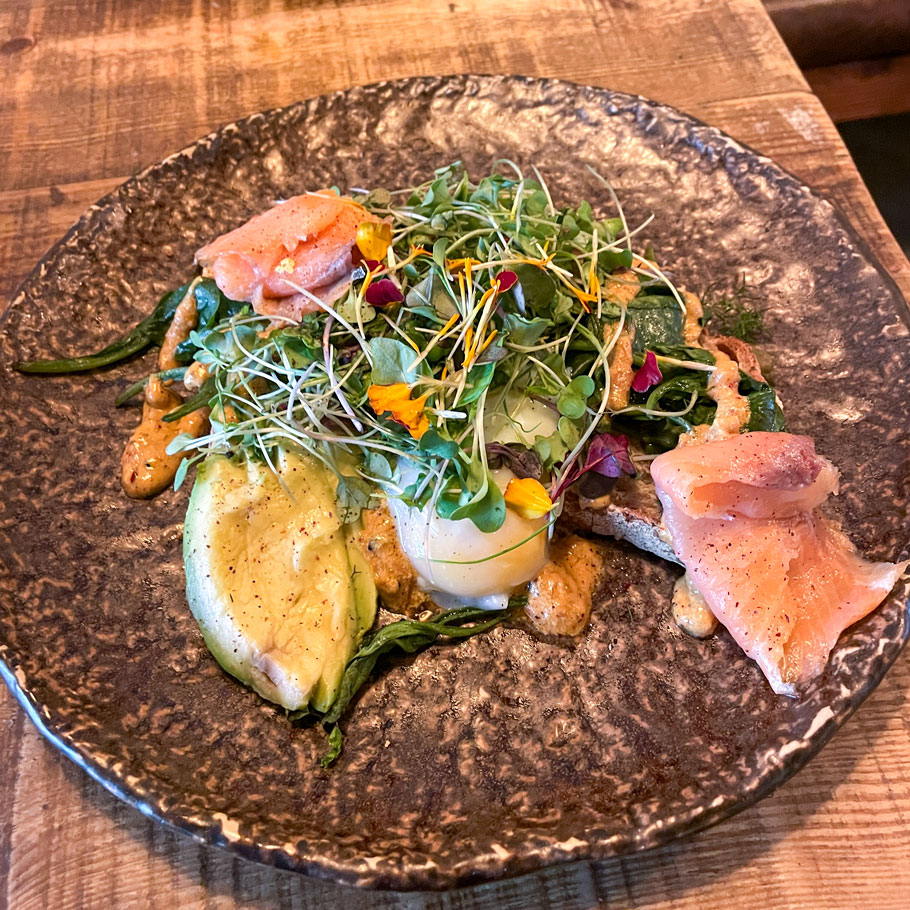
We decide to pop in for brunch. Honest Greens is positioned as a health-focused, fast-casual restaurant chain that specialises in “Real Food” made with seasonal, unprocessed ingredients. They have a very interesting menu with a variety of tasty garden bowls. We really enjoy our meal. We can’t believe the crazy long queue by the time we leave!
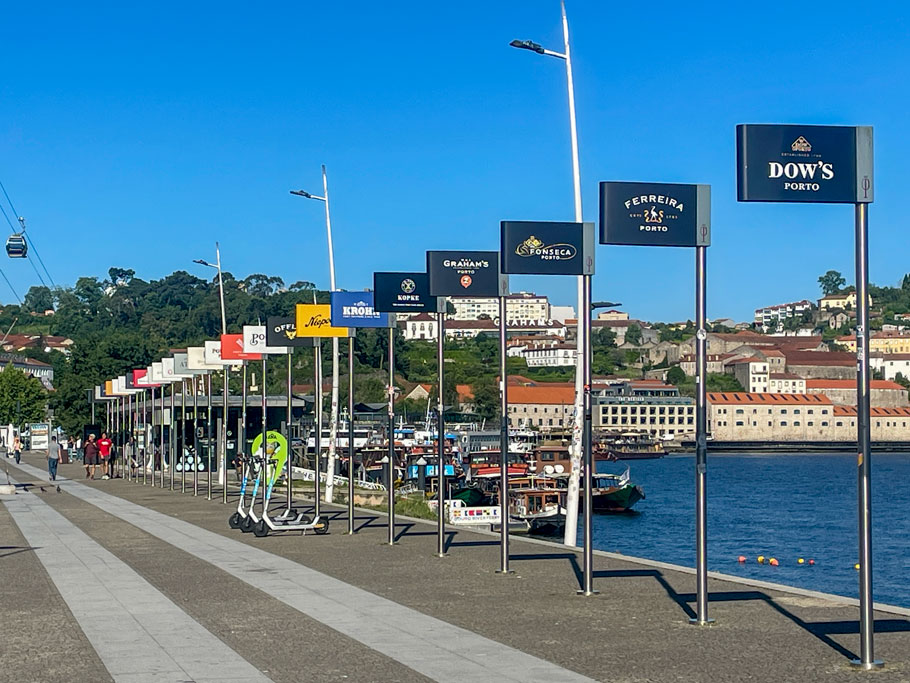
Today our plan is to visit Gaia. When one stands at the riverside in Ribeira and looks out across the Douro, the skyline is punctuated by a dozen or so large signs denoting the various port house producers which have been located here for centuries. This is the Vila de Nova Gaia, simply known as Gaia.
The actual aging, storage, and maturing of the wine has historically taken place in the cellars of Vila Nova de Gaia.
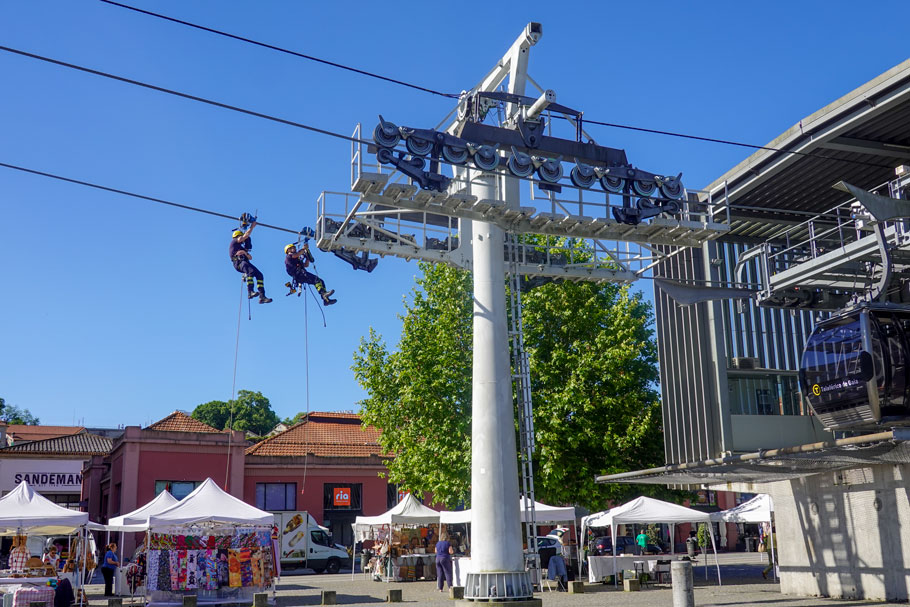
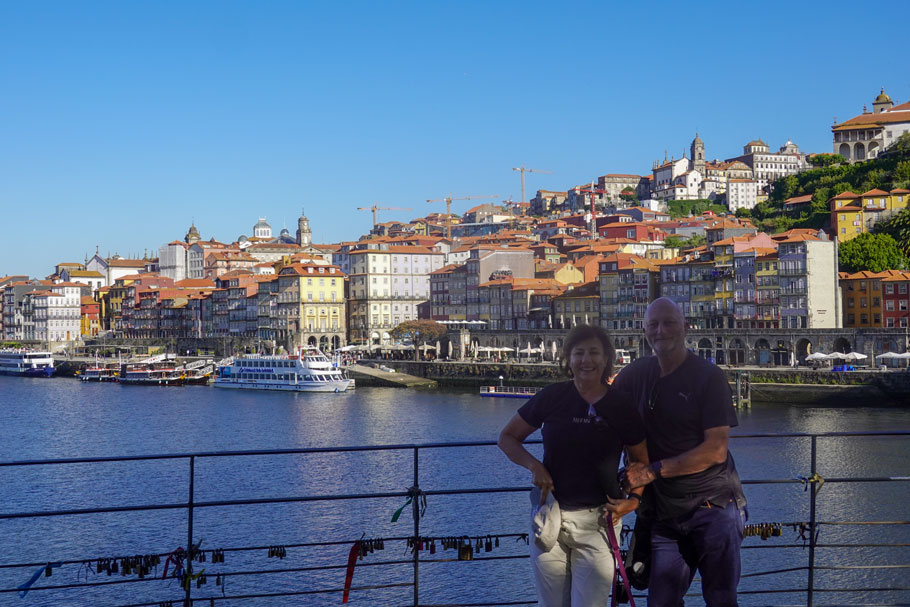
We stroll across the bridge and spend some time sitting on the banks of the river admiring the moored rabelo boats. The view of Ribeira from this side of the river is lovely. We are enthralled by workmen skilfully hauling themselves up onto the tracks for the cable car to repair or service the connections. The Teleférico de Gaia (cable car) provides a scenic connection between the riverfront cellars and the upper levels of the city near the bridge, helping visitors avoid the steep, hilly streets. We debate whether to take the cable car or walk back over the river and up the hill.
We wander deeper into the streets behind the port houses and come across our favourite Portugese street artist that we were introduced to in Lisbon.
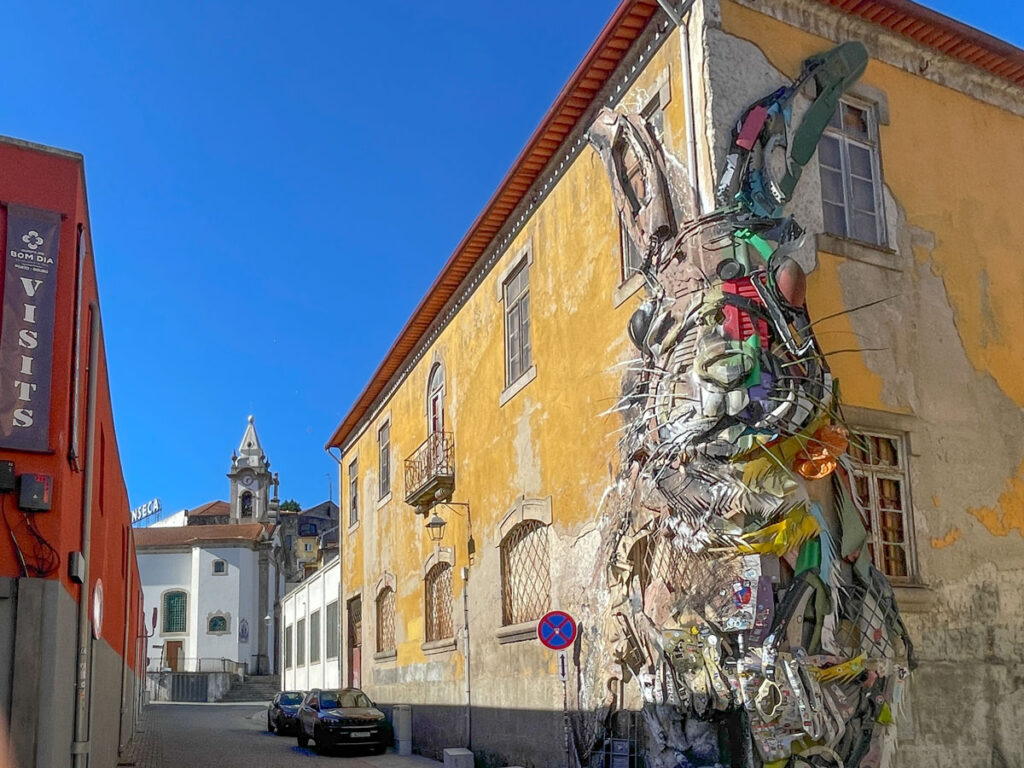
The “Half Rabbit” (or Coelho Meio) is a large-scale 3D street art sculpture created in 2017 by Bordalo II (Artur Bordalo). Like his other work, this is a striking example of eco-friendly art aimed at highlighting environmental destruction. It is created entirely from recycled materials and trash, drawing attention to wastefulness and environmental damage. We marvel at how something so beautiful can be crafted from components that are so ugly!
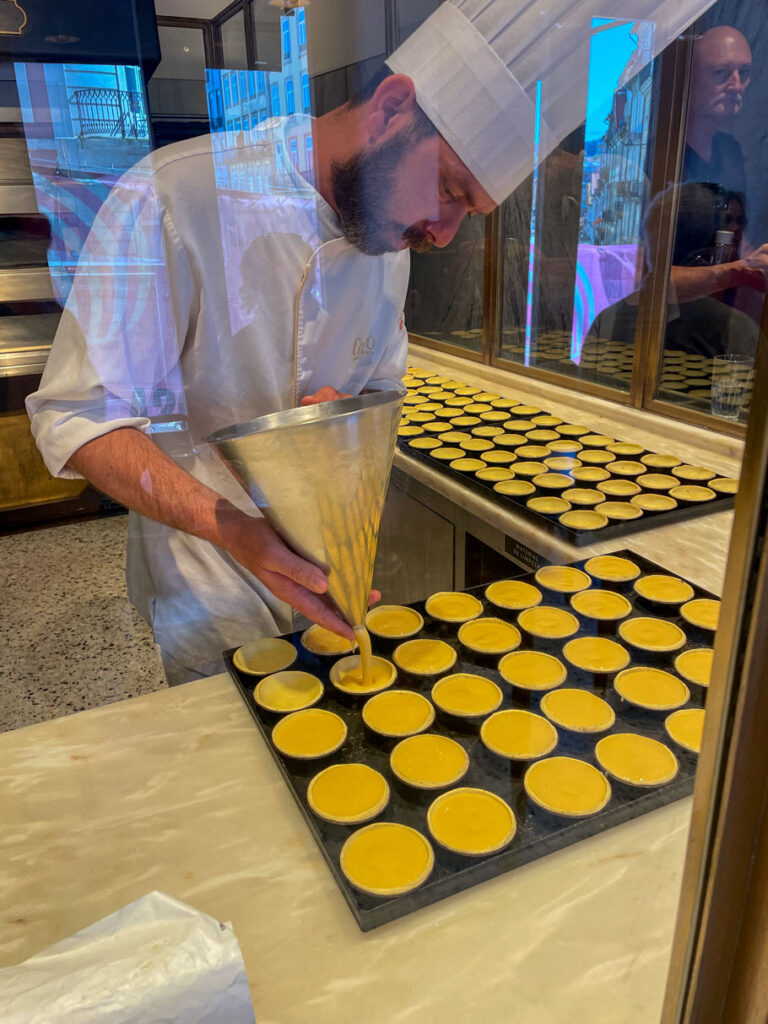
All this walking about means we are dying for our daily fix of Pasteis de Nata. We are delighted to learn that there is an Castro – Atelier de Pastéis de Nata in the Ribeira district. We’d voted these guys as the best in Lisbon. This decides us and we forgo the cable cars and head back over the river. Google maps leads us directly to Castro. Once again we are able to watch the chefs preparing those glorious golden tarts. I baptise mine generously in cinnamon. These are definitely up to scratch, and yes, the coffee is also excellent!
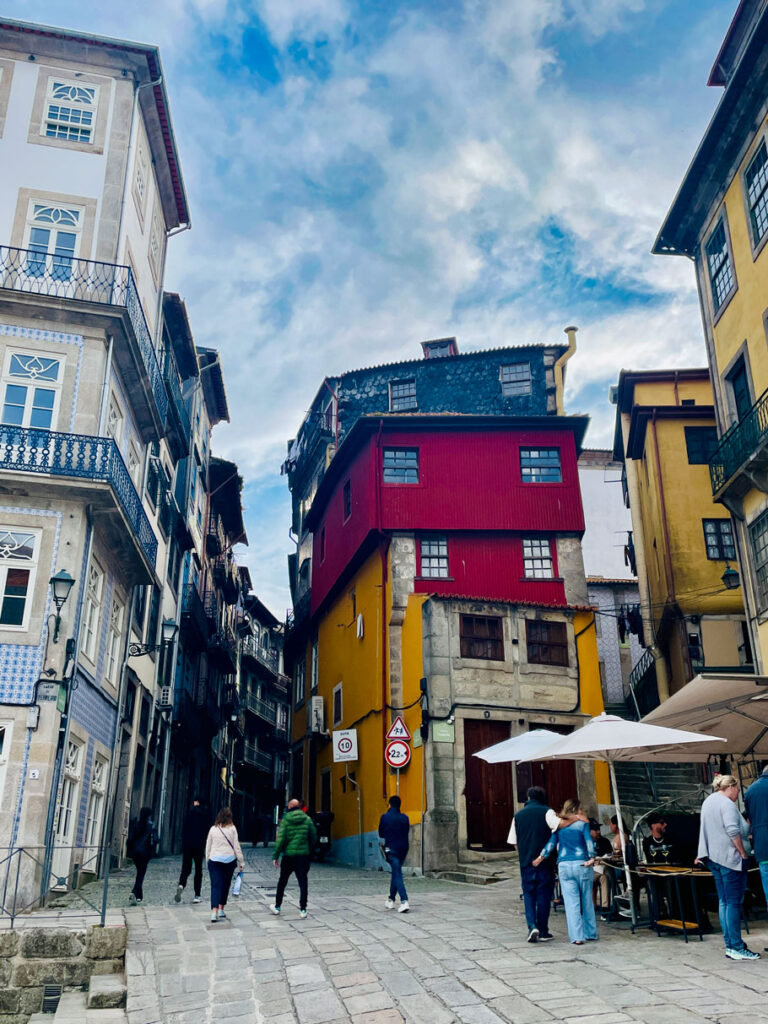
Suitably revived, we wandered more deeply into the Ribeira district. The houses are famously narrow and vertically stacked, often reaching five or six storeys. This distinctive shape was a result of the medieval tax laws, where property taxes were levied based on the width of the facade, rather than total square footage. To save money, residents built “up” instead of “out,” creating deep, slender homes with wrought-iron balconies that seem to lean over the cobblestone alleys.
Apparently, the bright colours of the facades used to help sailors and merchants identify specific buildings or businesses from the river.
Many of the houses are also clad in ceramic tiles (azulejos). Beyond their beauty, these tiles are incredibly functional—they protect the porous granite structures from the damp, salty Atlantic air and humidity rising from the Douro. A hallmark of the district is the ever present laundry hanging from balconies, which locals say is the “flag” of the Ribeira, signifying that despite the increase in tourism, it remains a real, lived-in community.
We learnt that much of medieval Ribeira was destroyed by the Great Fire of 1491. When the city rebuilt, it added the practical stone arcades now seen at the base of many houses today, providing sheltered space for market stalls.
In 1996, the Ribeira district was named a UNESCO World Heritage site to preserve its “urban morphology”, i.e., its unique maze of medieval streets and merchant architecture.
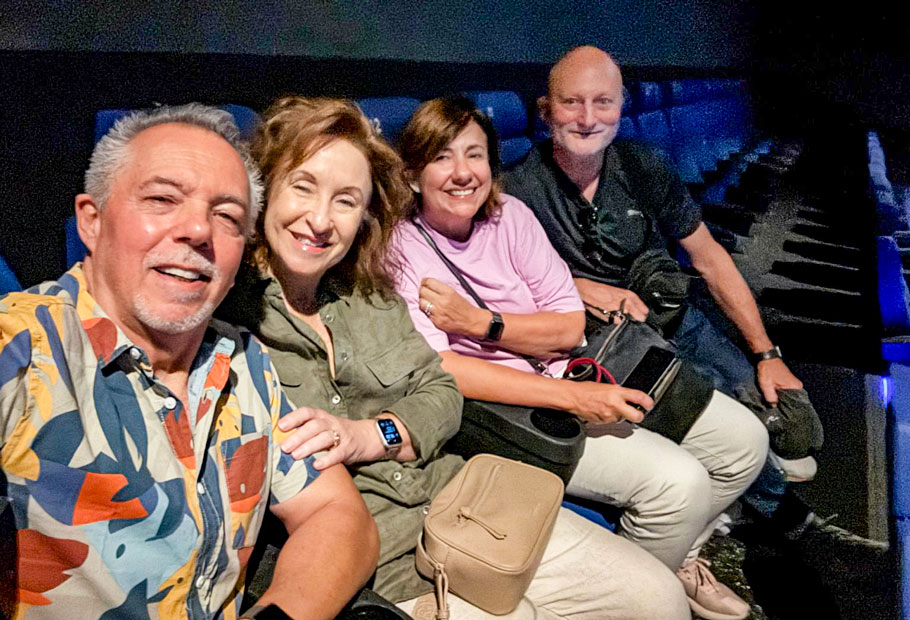
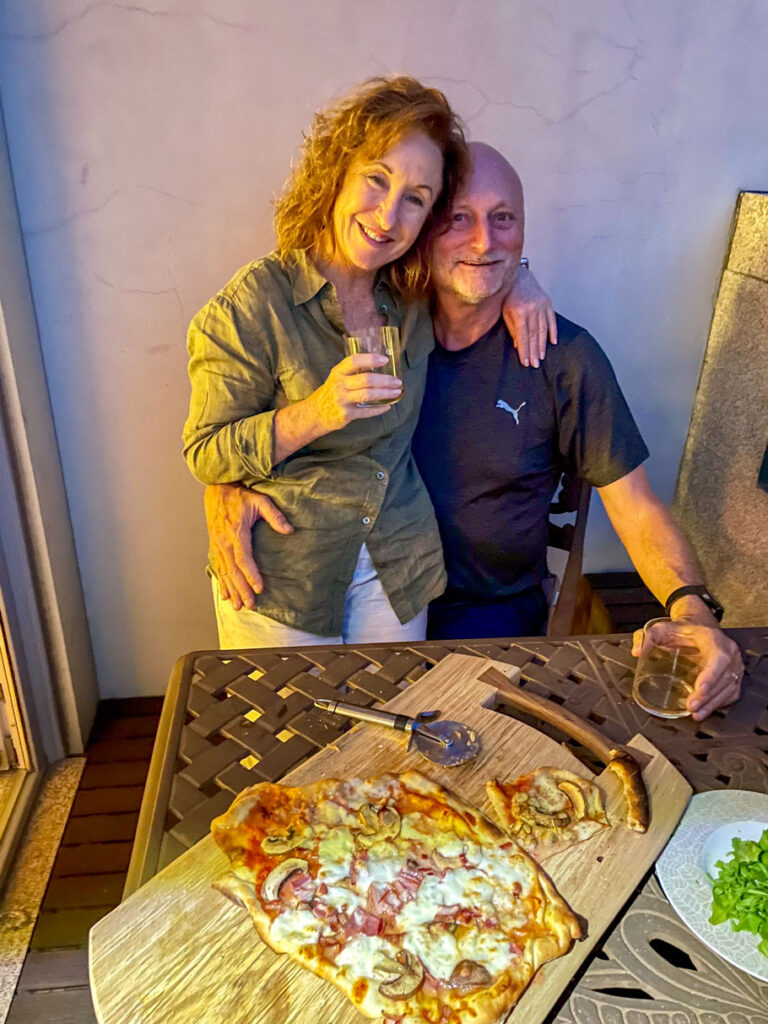
It’s our last day before the four of us depart for an adventure to the Algarve. We do some shopping at Centro Comercial Mar and then watch ‘Mission Impossible’ at the Imax theatre. That evening we enjoy a delightful meal of homemade pizzas in Gary’s nifty pizza oven.
Porto has been amazing and we can’t wait to return!