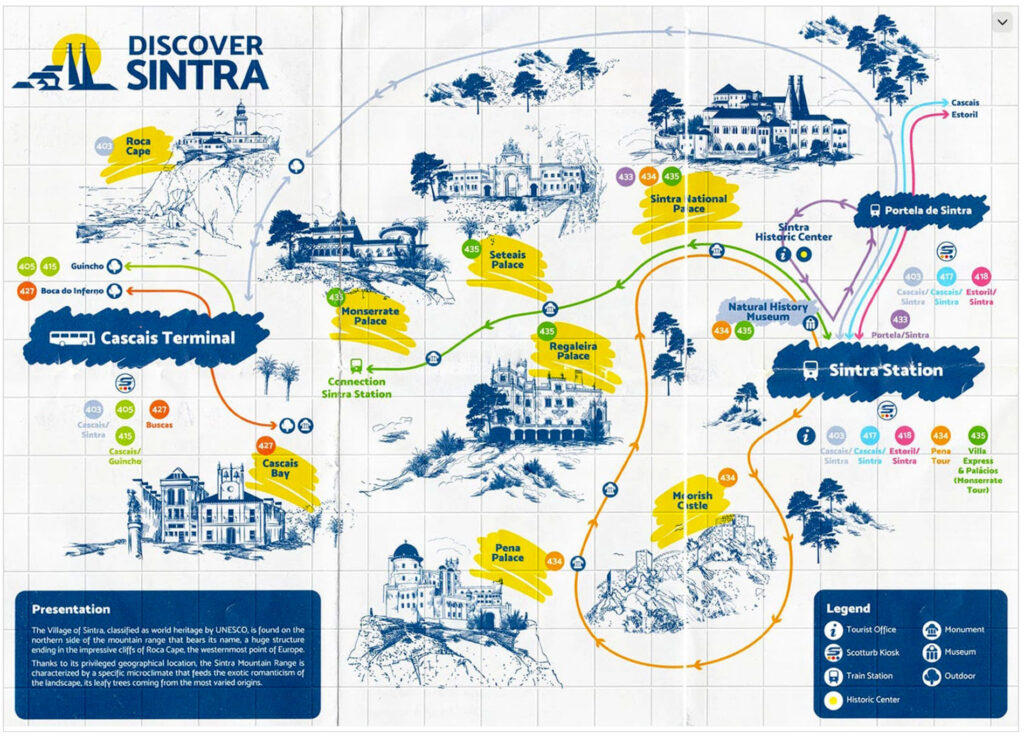
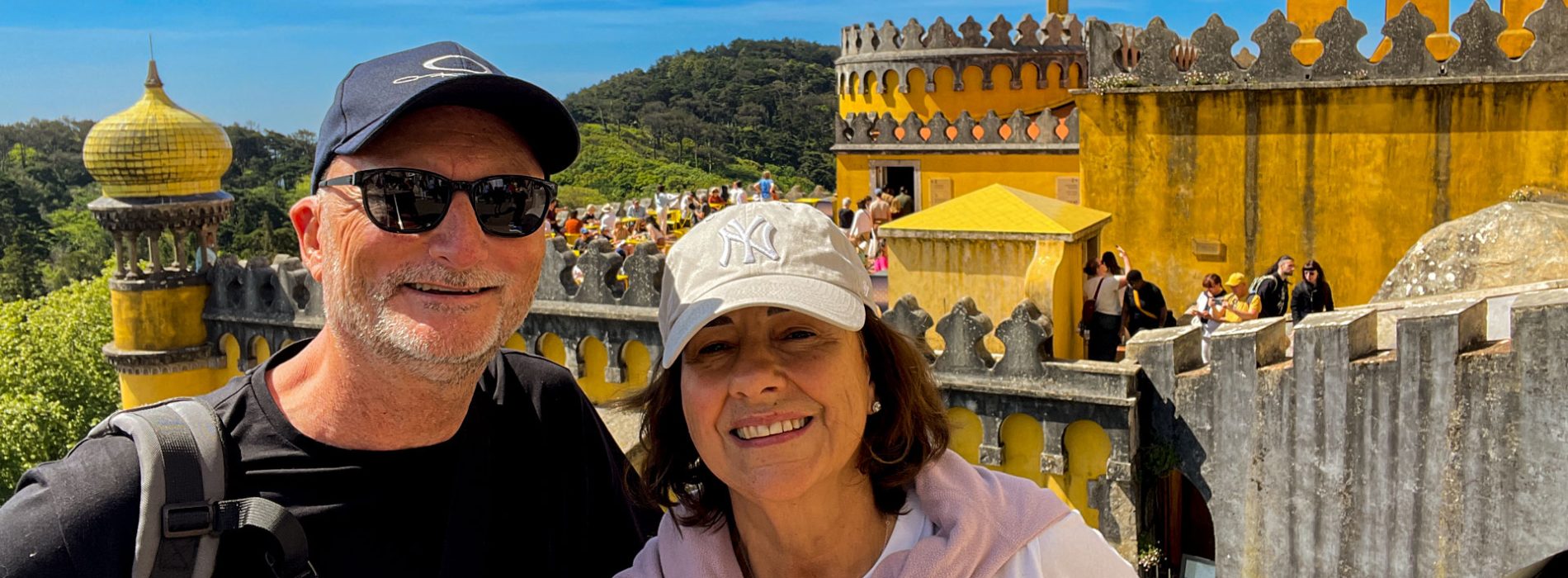
We have planned a full, ambitious day out to Sintra – Pena Palace as it opens at 9:15 followed by a short walk through the gardens to the Moorish castle. Then lunching in Sintra town before tacklingMonserrate Palace as it is less popular and the Regaleire Palace after 3pm once the crowds have left. Four destinations, 2 in the morning and 2 in the afternoon all based of rigorous research.
Alas, the plans of mice and men….
We leave a little later than expected and the train only gets to Sintra at 9:30. We buy the bus day pass as we will be doing quite a lot of traveling between the different sites.
Pena Palace
Luckily it is still early and the crowds haven’t arrived when the bus drops us off at Pena Palace. We’re still confused as to whether the garden ticket grants access to the terraces and does not involve timed entrance as we haven’t prebooked. Fortunately it does allow access to the terraces and does not involve timed entrance. So we buy tickets from the ticket machine. There is no queue at all! Not what have been led to expect.
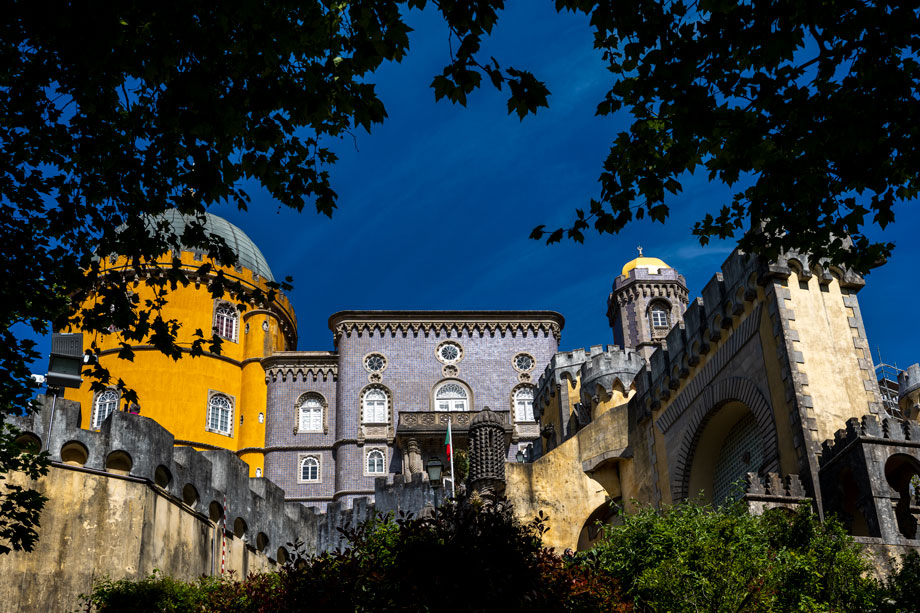
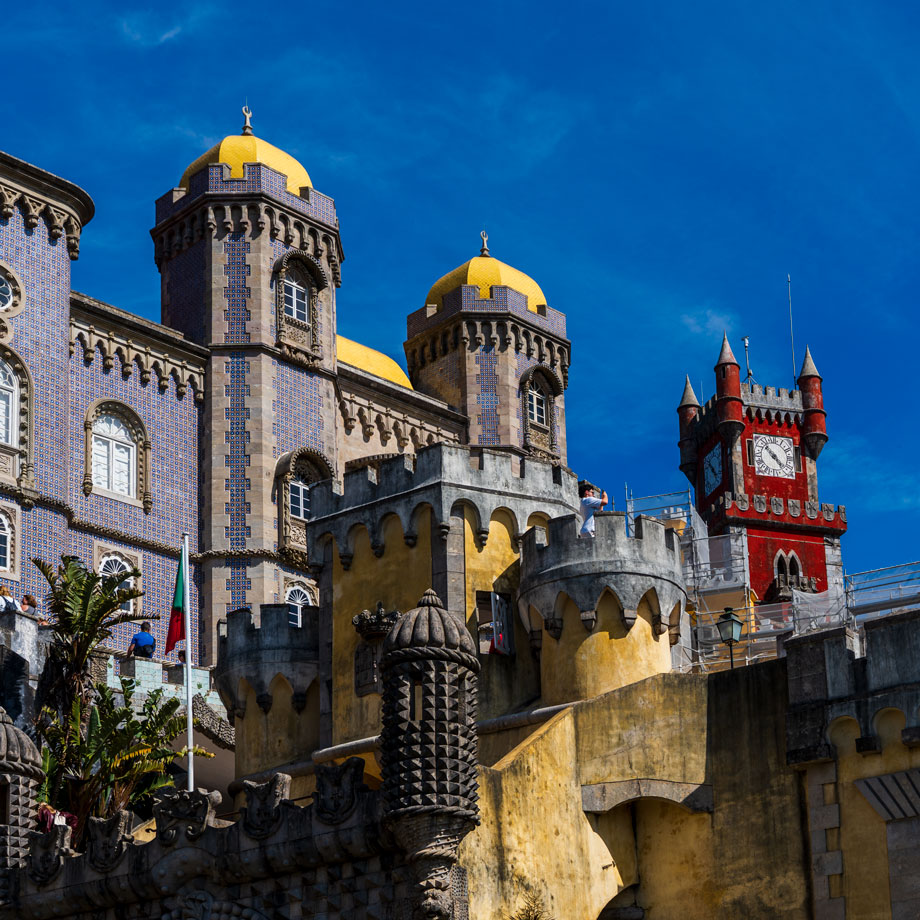
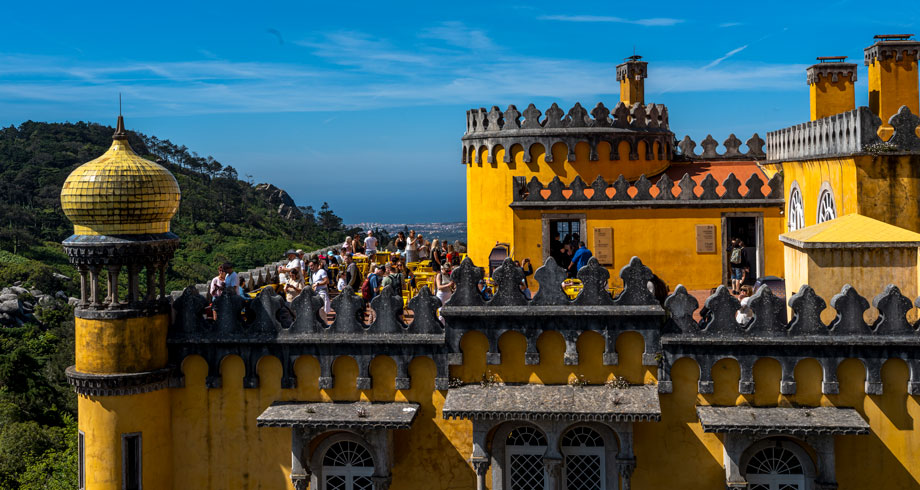
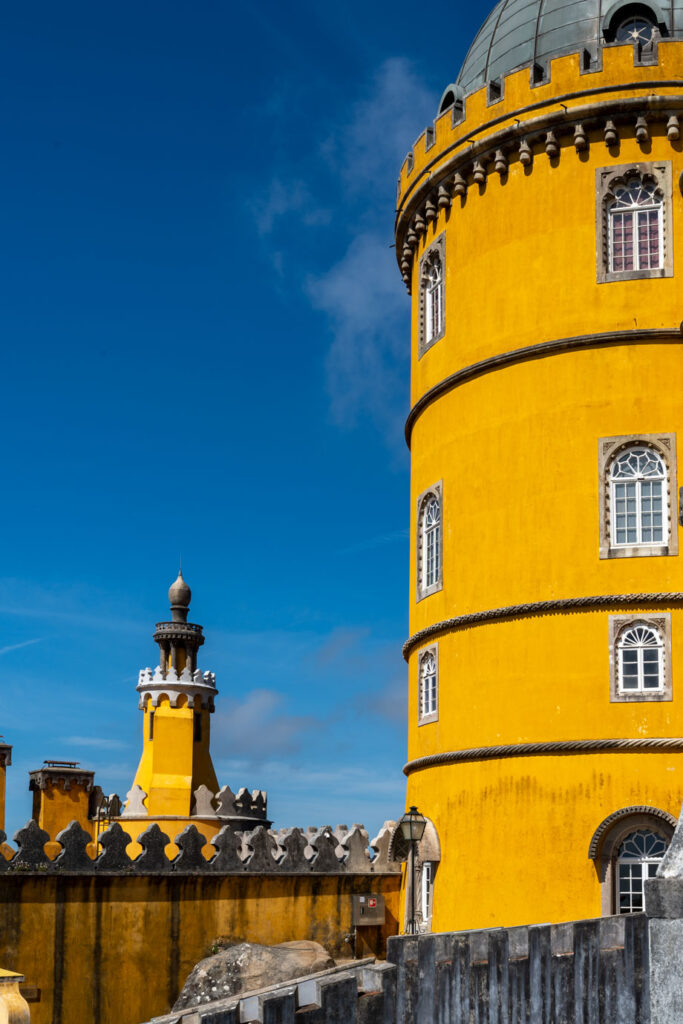
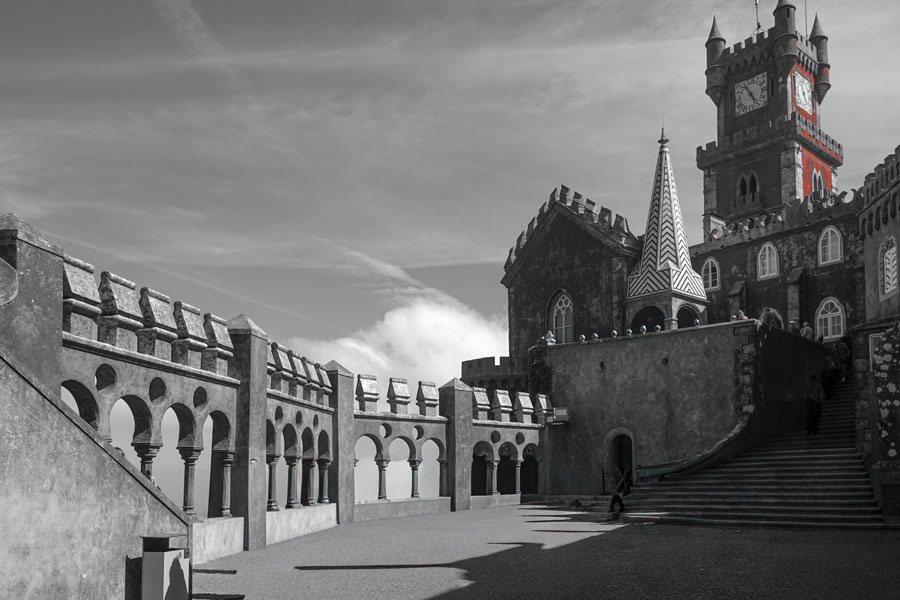
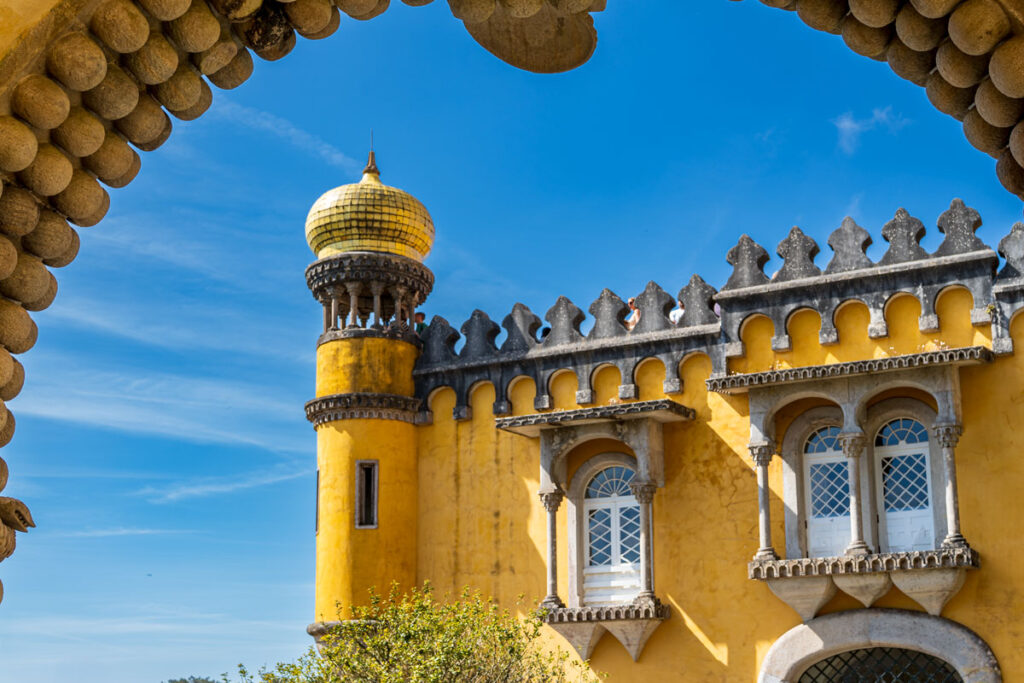
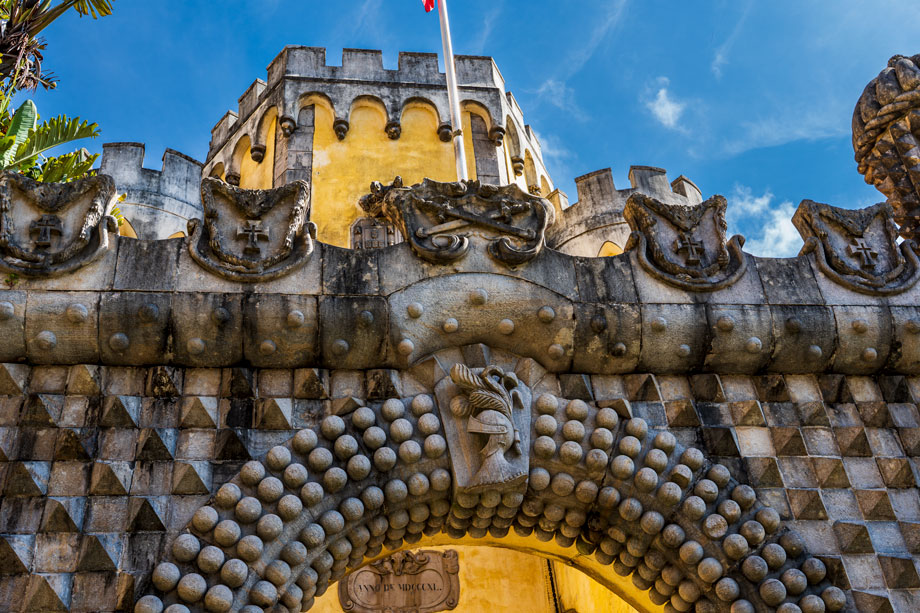
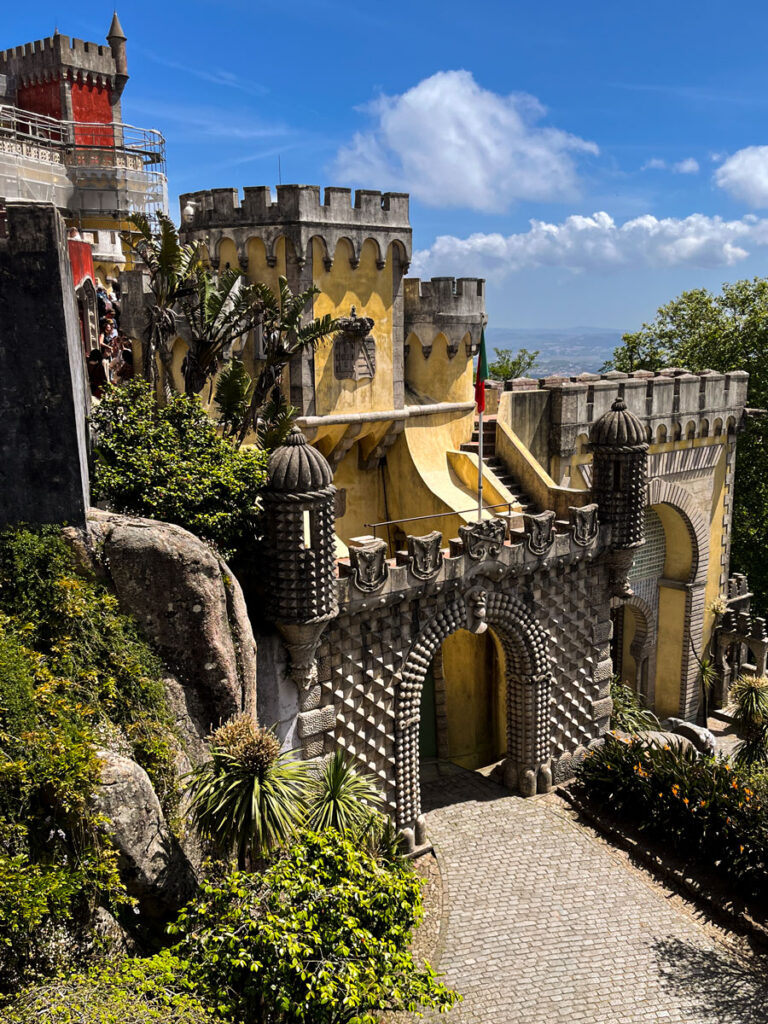
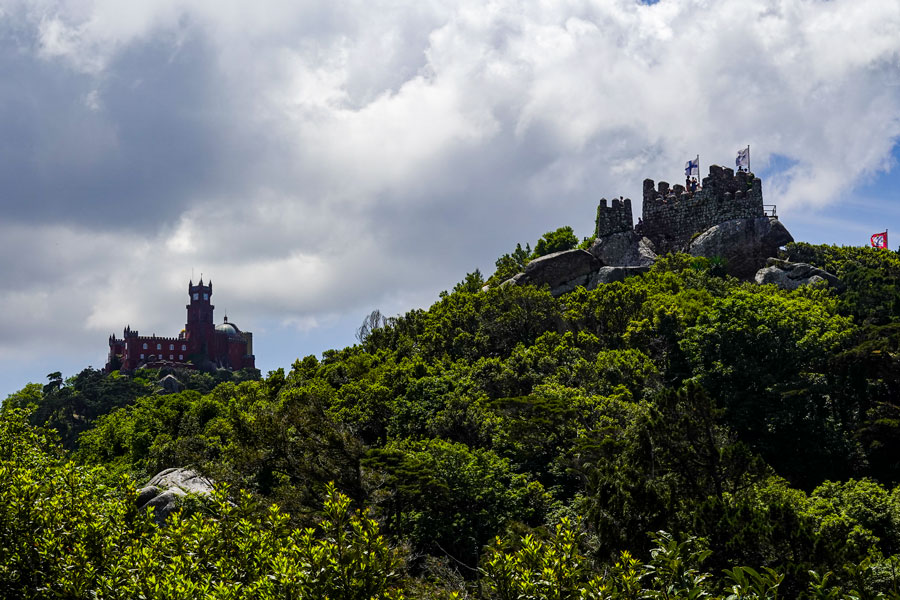
The palace is a marvellous combination of a ginger bread fantasy and Walt Disney or Brothers Grimm castle. At a distance it does look like something that should be eaten.
There is some theory that Walt Disney visited Sintra which inspired him to build Disneyworld – but there is no documented proof that he was ever there.
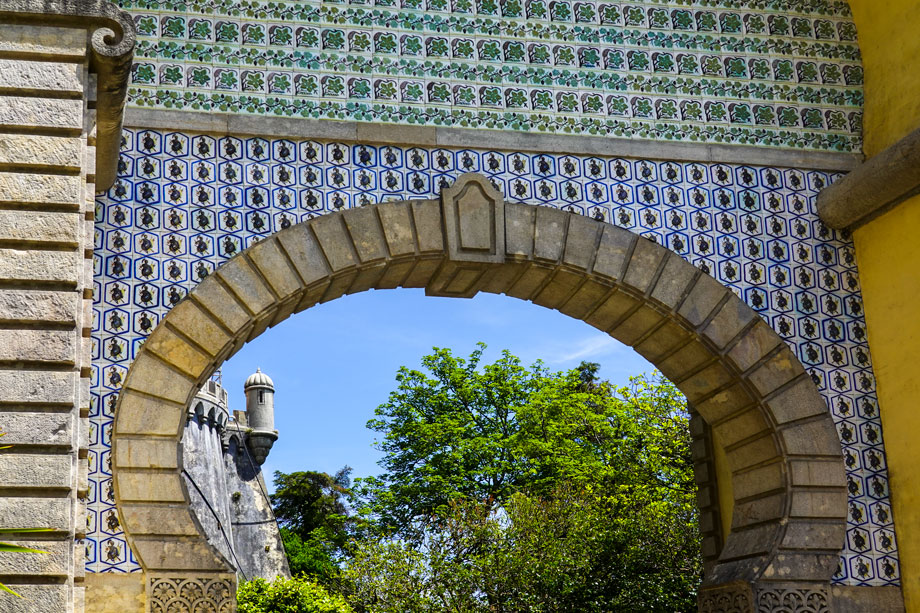
Many of the buildings are covered in 1000’s of hand painted ceramic tiles.
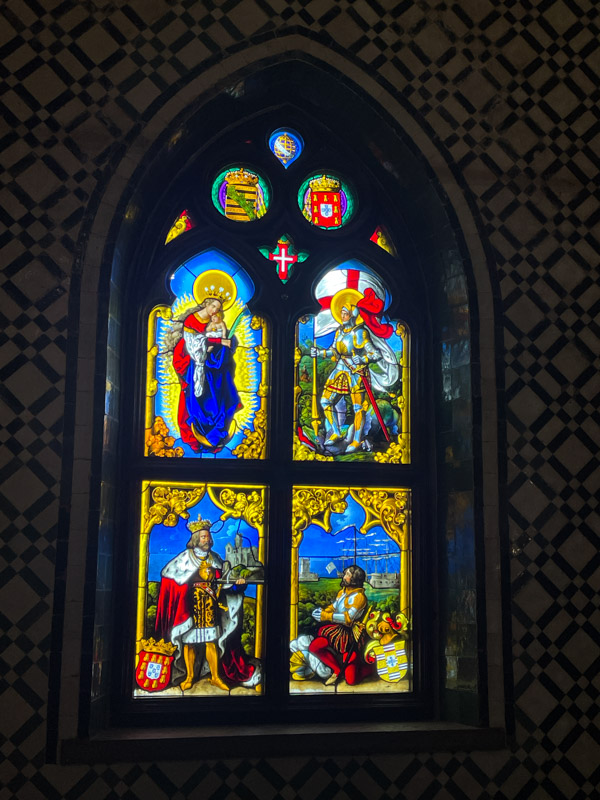
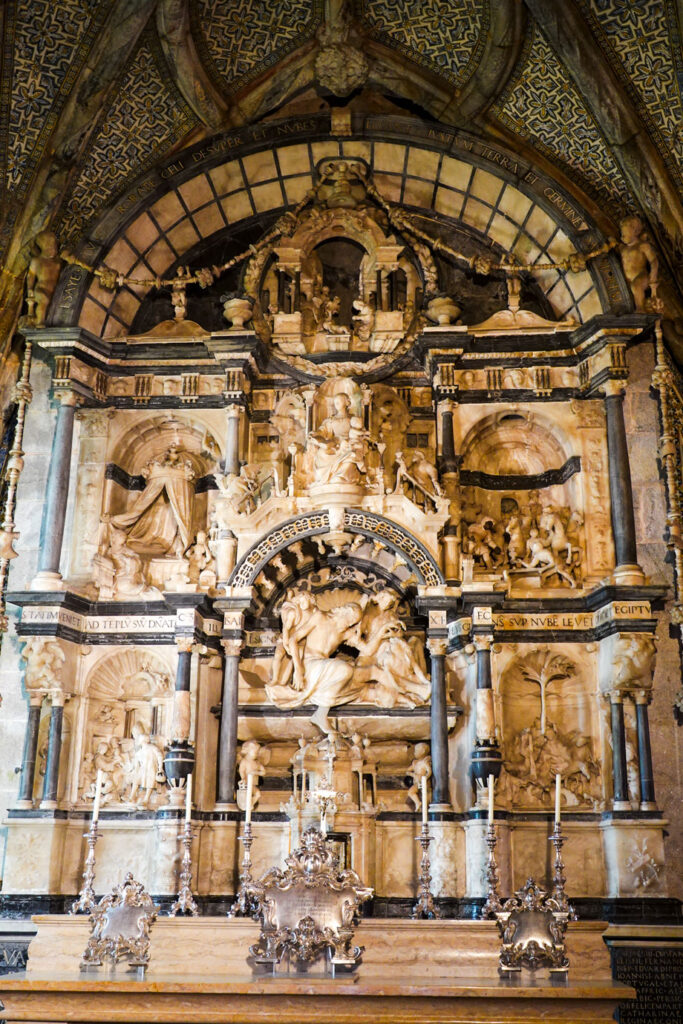
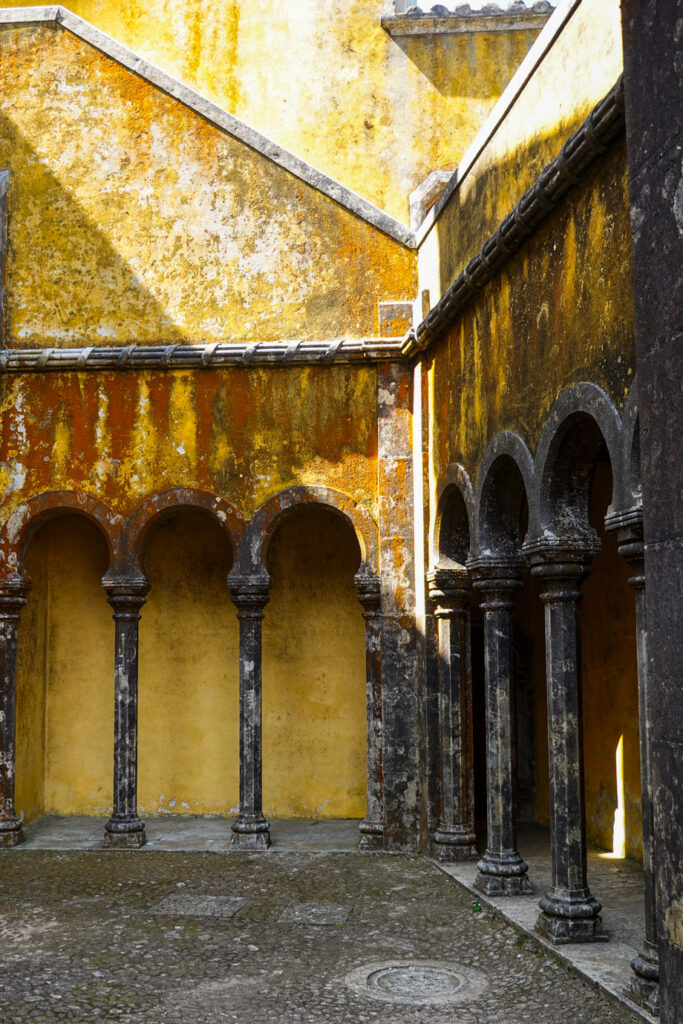
At the far end of the castle’s courtyard is the old chapel from the 12th century, the oldest part of the castle. When King Ferdinand II bought the area at auction in the 19th century, only the ruins of the old monastery and chapel remained here. The chapel has been completely restored
The site of Pena had been in use since the 12th century – as a church (allegedly constructed after an apparition of the Virgin Mary in the Middle Ages) and then an important Hieronymite monastery erected in the 16th century by King Manuel I.
The monastery suffered heavy damage during the earthquake that struck Lisbon in 1755, but it was only abandoned almost one century after, following the abolition of the religious orders in Portugal (aka. the monks were “fired”).
King Ferdinand II of Portugal undertook the construction of the Palace at Pena as a summer home, with works beginning in 1838. The palace was built in a grand romantic style by Prussian architect and engineer Baron Wilhelm Ludwig von Eschwege (who took some of his inspiration from the Neuschwanstein castle in Bavaria).
Preserving some of the existing structures (including the ruins of the monastery) and developing the entire site around them, the new palace was a grand fusion of Bavarian, Manueline Gothic and Moorish architecture and became one of the most prominent romanticist buildings of its time. After visiting Pena, the composer Richard Strauss wrote: “Today is the happiest day of my life. It’s the most beautiful thing I’ve seen…”
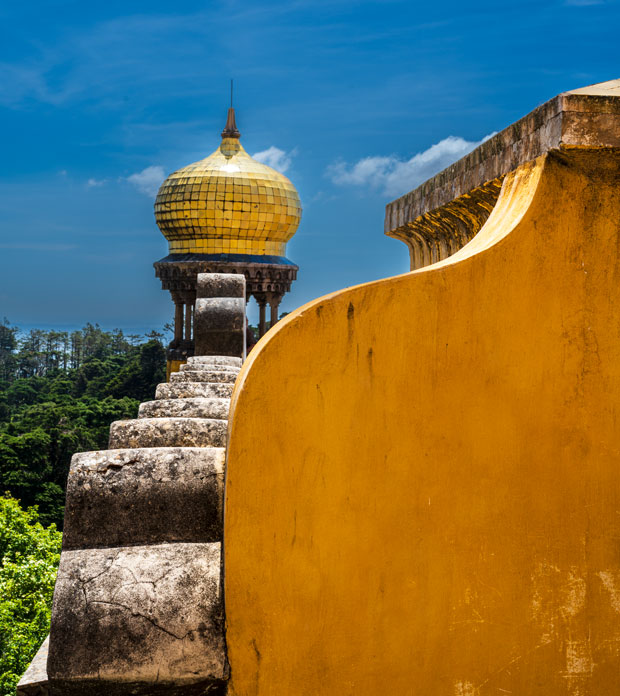
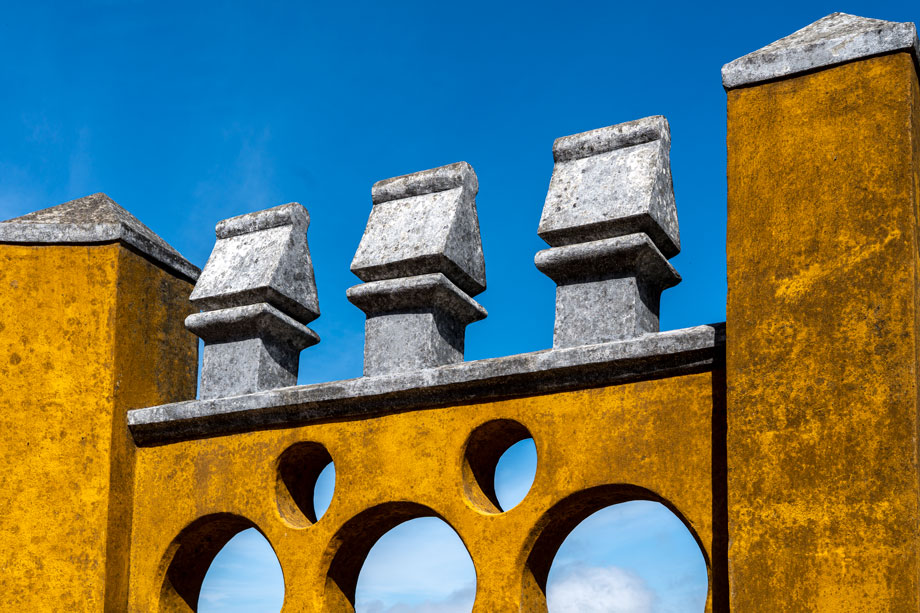
The colors of Pena Palace serve as a reminder of its various phases. The red portion of the palace is what remains from the monastery reconstruction, while the yellow denotes the newer construction, purpose-built as a palace.
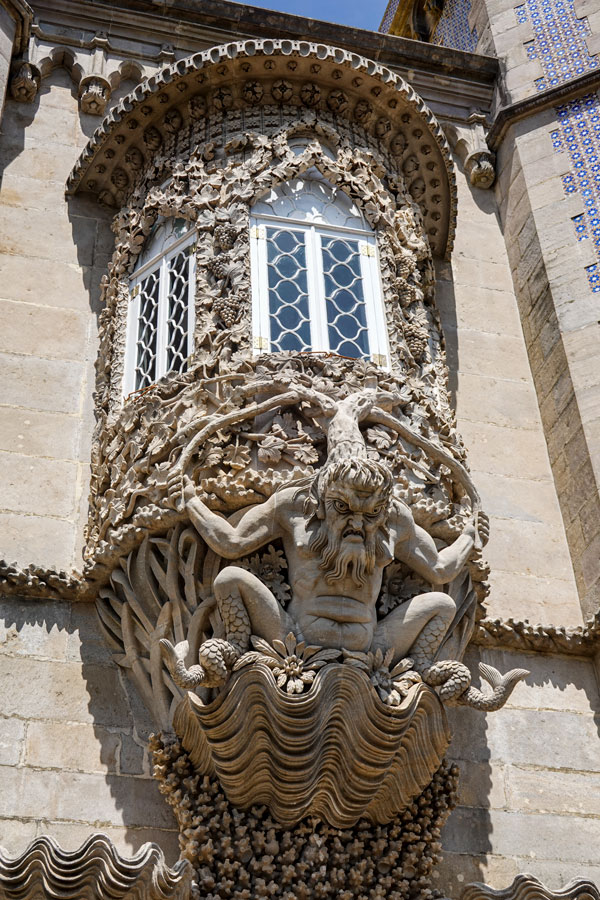
A statue of Triton guards the entrance to the palace.
I’m ot sure what we missed by not going inside the palace, but the outside and terraces are wonderful. Perhaps better vantage points for photos? … and we didn’t have to queue……
It is getting very hot, so we have a snack and drink in the courtyard and plan the next part.
Pena Gardens
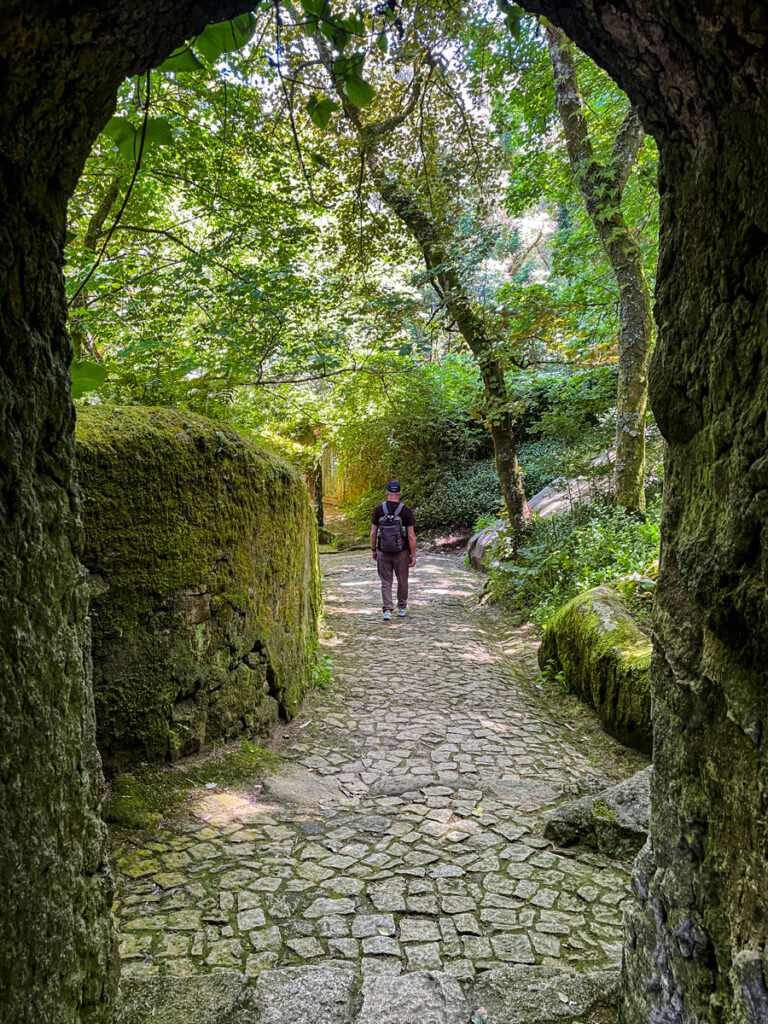
There is supposed to be short stroll to the Moorish Castle. Unfortunately I mistake a “castle looking” symbol as directions to the castle and we find ourselves wandering ever downwards through the Pena Gardens trying to find the route to the castle. We aren’t the only ones – everyone asking in different languages whether this is the way to the Castle? The upside is that we see a lot more of the gardens then we had planned for and they are certainly impressive. Trees towering overhead. The bad news is that our route is downhill and we know the castle is uphill! We embrace the journey, enjoying the scenery and the walk, although we do have some sense of humour failures along the way.😂 After several wrong turns and and retracing steps, we are really tired by the time we get to the castle .
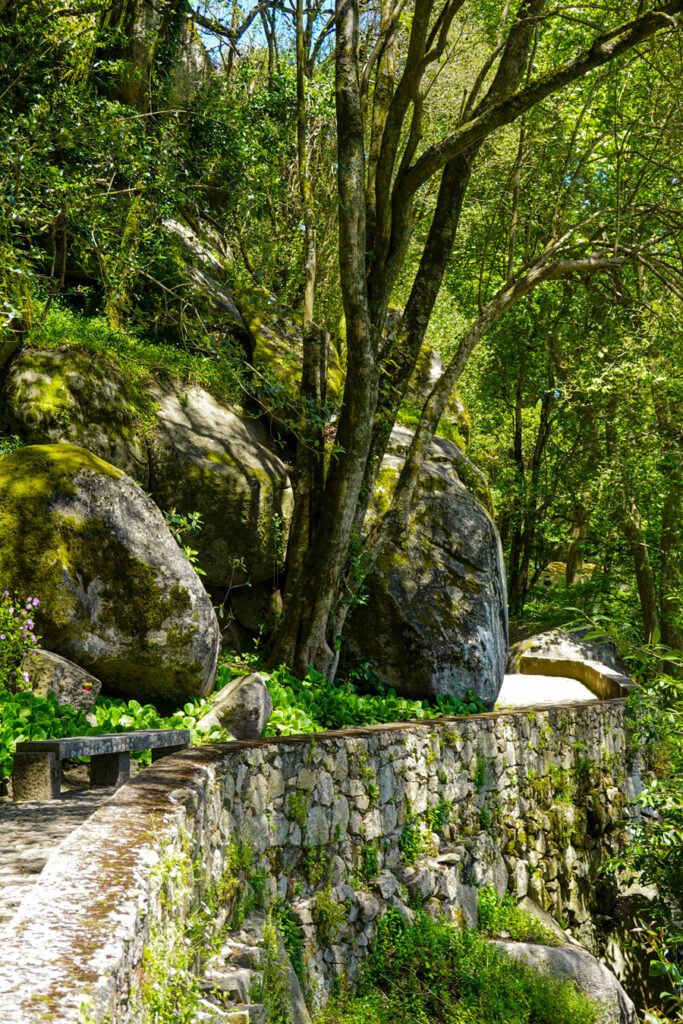
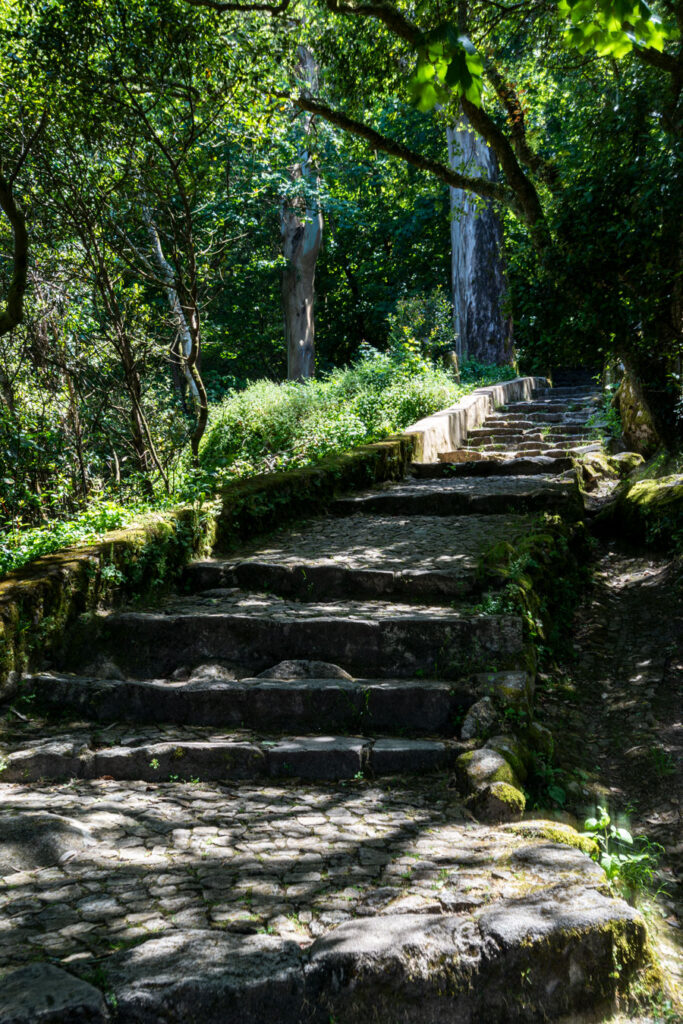
The path zig zags steeply down the mountain from the Palace
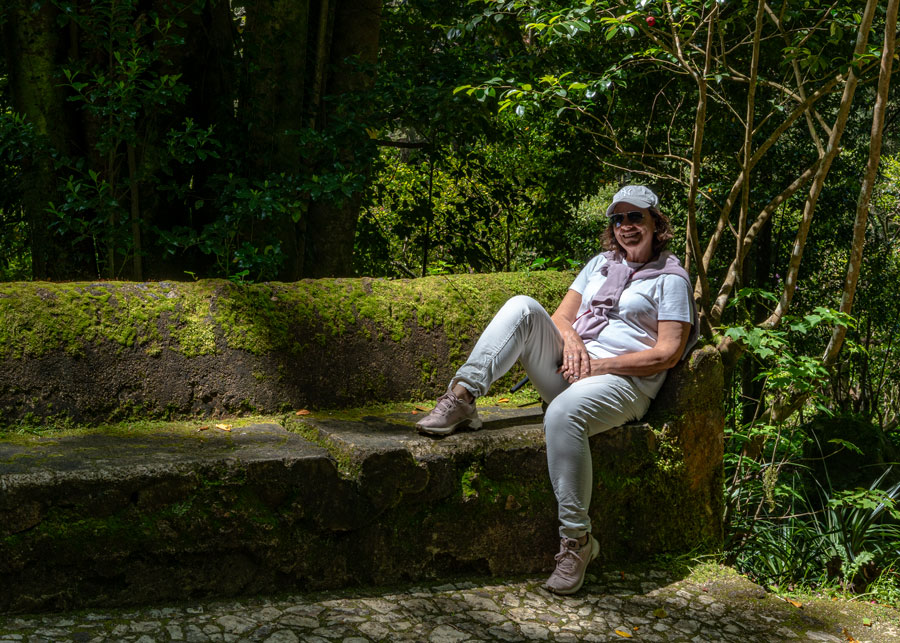
As it winds through the gardens there are many benches to catch your breath and enjoy the tranquility.
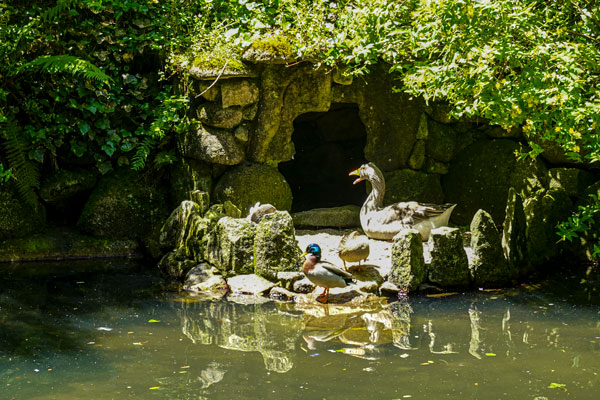
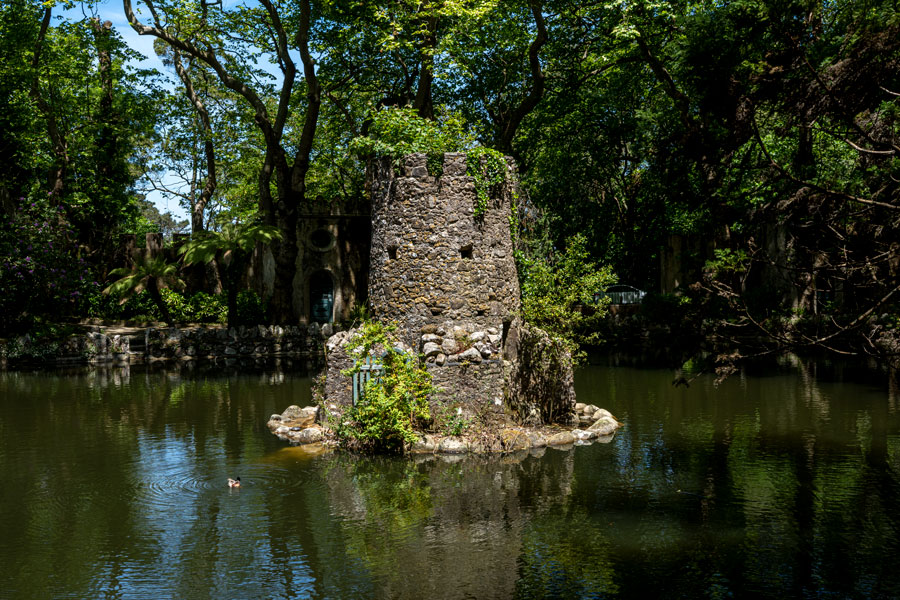
The many ponds cool the air
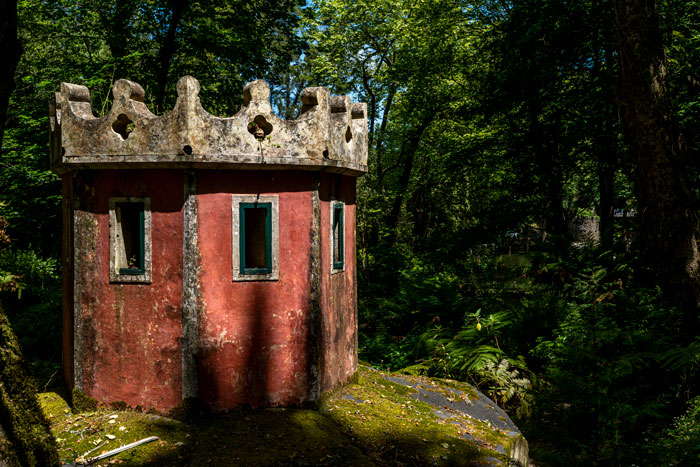
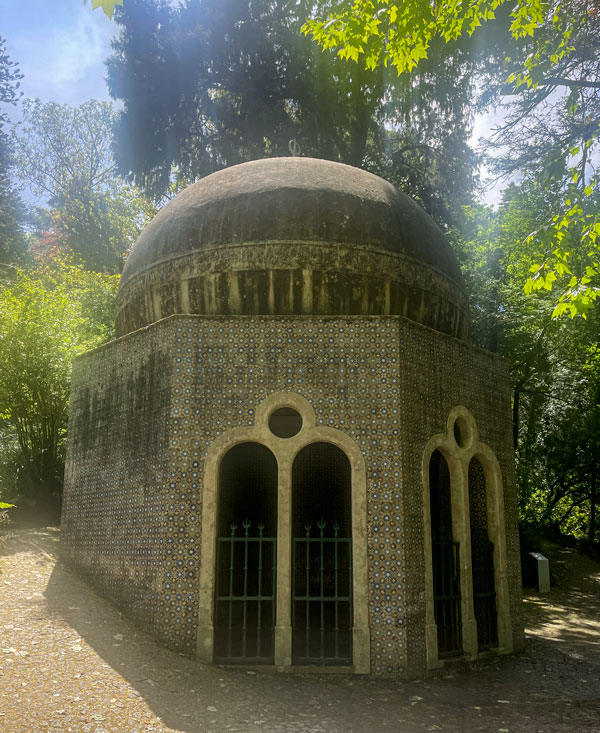
The Fountain of the Small Birds—a small Islamic pavilion situated between the Hot House and the Valley of the Lakes—is one of the more interesting and curious finds in the gardens of Palácio Nacional da Pena. It’s a 19th-century octagonal-shaped pavilion with a spherical dome and outer walls inscribed in Arabic.
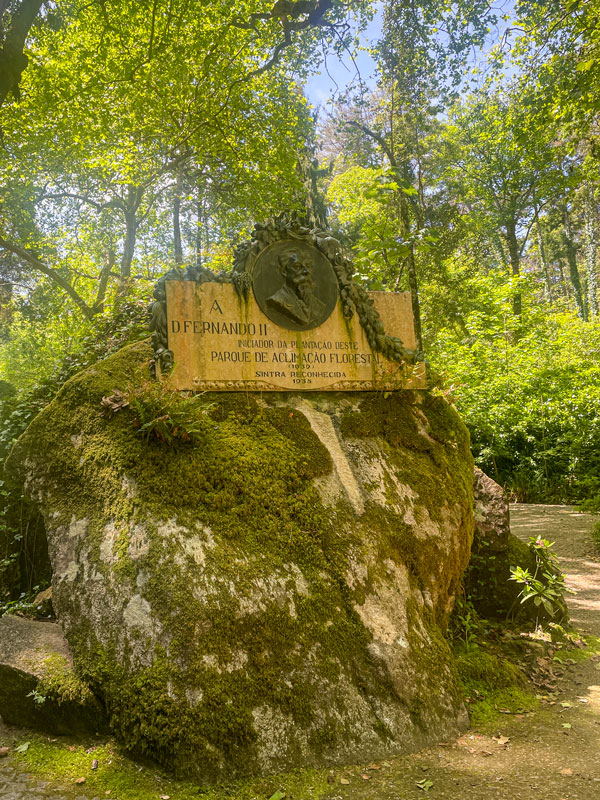
Pena Palace Park, is a spectacular garden surrounding the iconic Pena Palace. Designed by King Ferdinand II in the 19th century, the park symbolises the Romanticism movement with carefully incorporated artistic and architectural elements. The park spans over 200 hectares, featuring a diverse array of exotic plants and trees imported from various parts of the world, creating a unique botanical garden.
There are numerous trails to explore that lead to hidden caves, ponds, and breathtaking viewpoints. Some highlights include the Valley of the Lakes, which features several interconnected lakes, and the Queen’s Fern Valley, showcasing lush ferns and other greenery. The park also houses various pavilions, fountains, and sculptures that add to its gorgeous ambience.
The Chalet of the Countess of Edla, built by King Ferdinand for his second wife, is another significant feature of the park. This Swiss-style chalet, with its intricate woodwork and charming design, complements the park’s romantic setting. Overall, Pena Palace Park offers a serene and picturesque escape, inviting you to immerse yourself in its beauty and historical significance.
Fun Facts
– Lemon was a great source of revenue! In 1862, the flow of lemon production was not operating as it should have been – “the Abelheira has never had as much lemon in it as it has this year and it is so much better” – and, therefore, “the king’s secretary was very proactive to ensure that such a volume would not be wasted, and promoted sales that take into account the quality of the lemon”, reads the work D. Fernando II – Rei-Artista, Artista-Rei (King Ferdinand II – the Artist-King, King-Artist).
– King Ferdinand tried to create a big game reserve within the Park of Pena, “but the very rocky conditions of the Park itself and the difficulty guarding it posed major problems, to the point where several animals regularly turned up injured or dead. Displeased with the situation, King Ferdinand ordered the remaining animals to be transferred to Mafra in 1855: the stag, the two does, the fallow deer and the two fawns”, states the same book.
– Pena’s Jardim das Camélias stands out as a remarkable botanical treasure. These captivating species, hailing from China and Japan, were brought here by King Fernando II during the 1840s. Blooming during the winter, they have become synonymous with the enchanting beauty of Sintra. The diverse colors and shapes of these camellias enliven the gardens. French gardener Bonnard meticulously planted it, featuring not only popular 19th-century international cultivars but also noteworthy Portuguese cultivars, some associated with members of the Portuguese Royal Family at that time.
– There is a tree within the Park that is known as ‘The Giant of Pena’. It is a 35 m tall Thuja plicata, with a notable characteristic: it appears to be walking!
Castelo dos Mouros
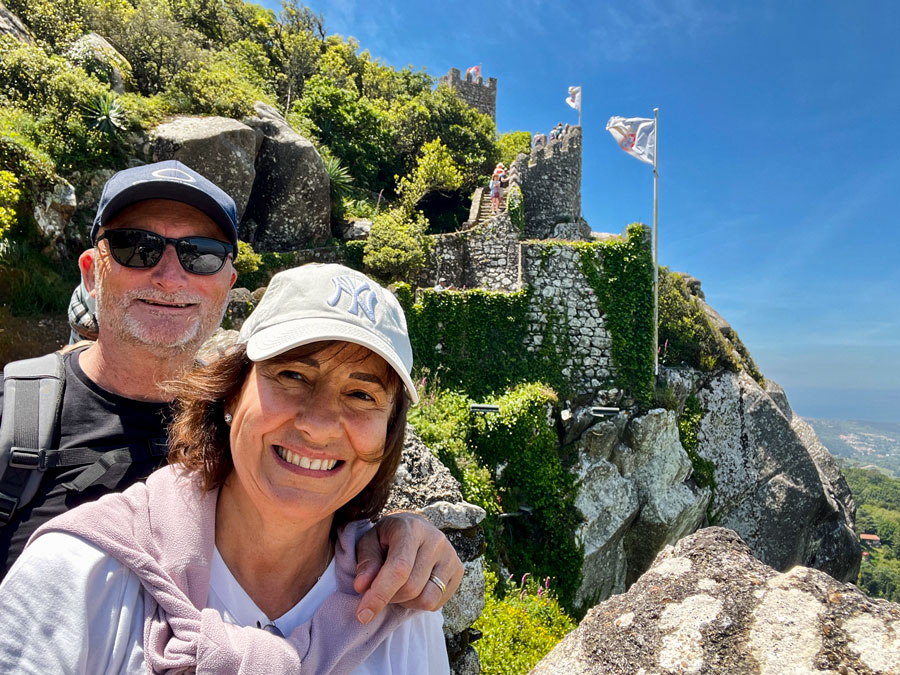
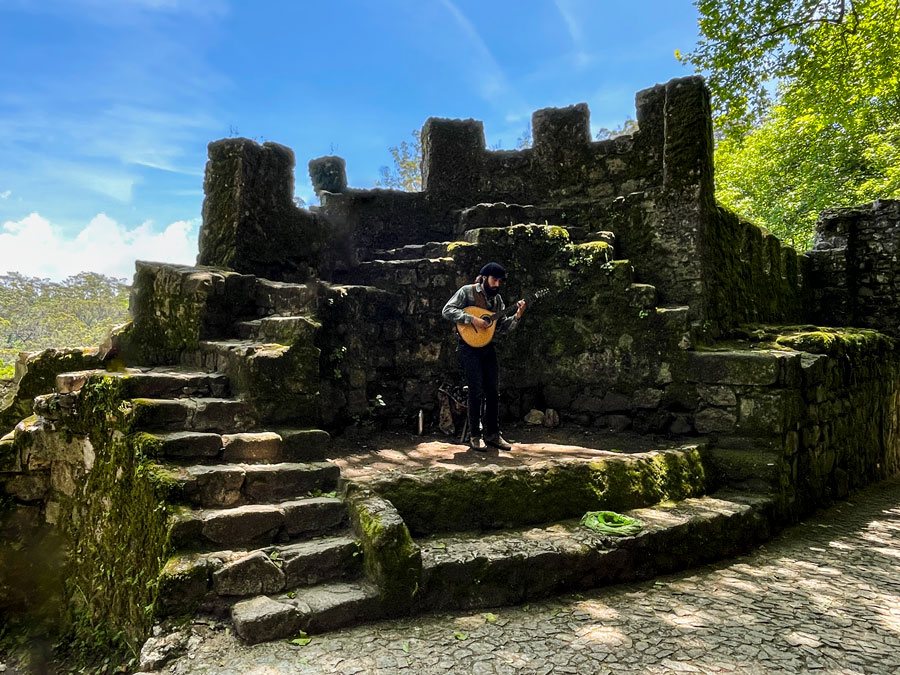
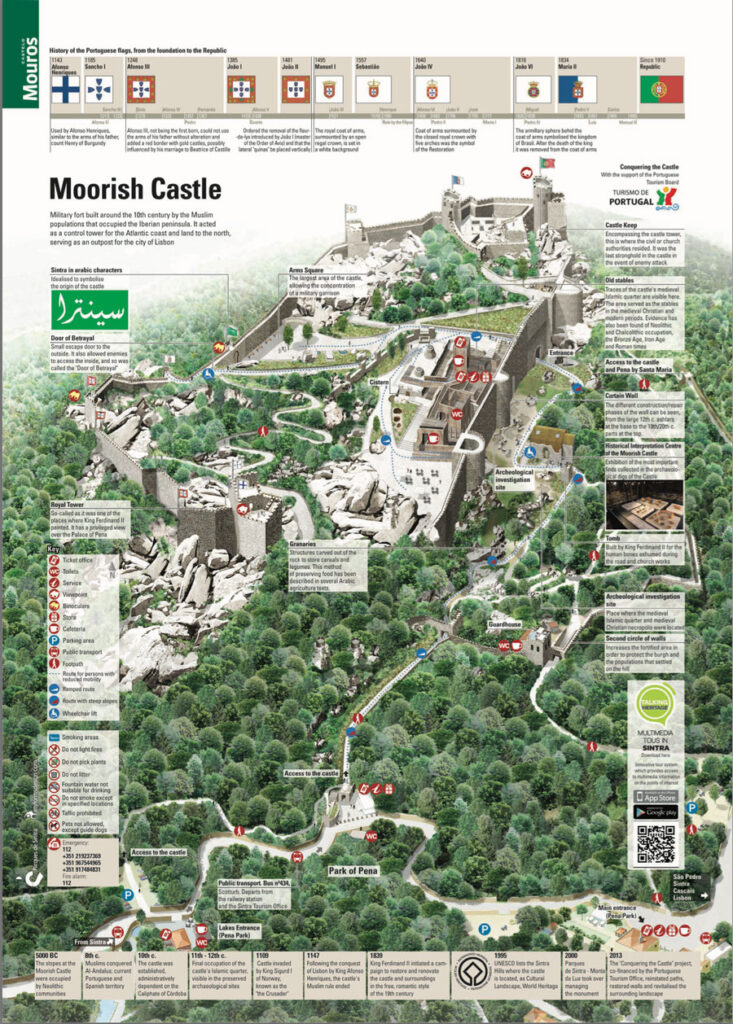
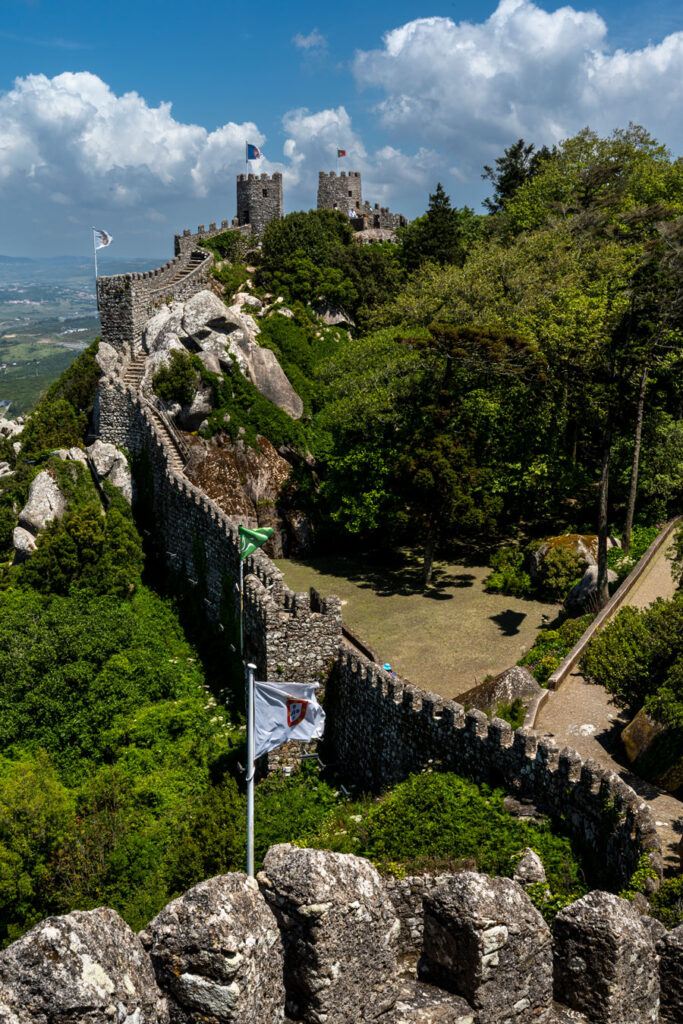
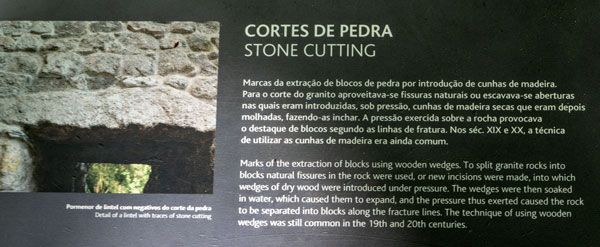
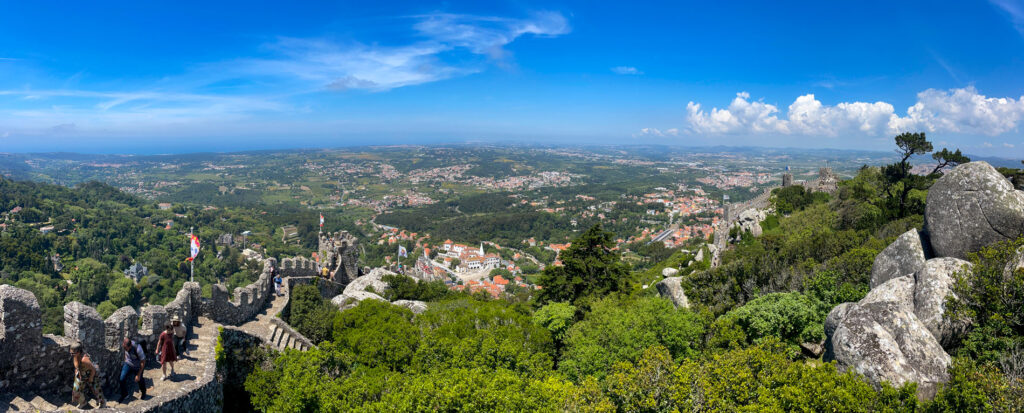
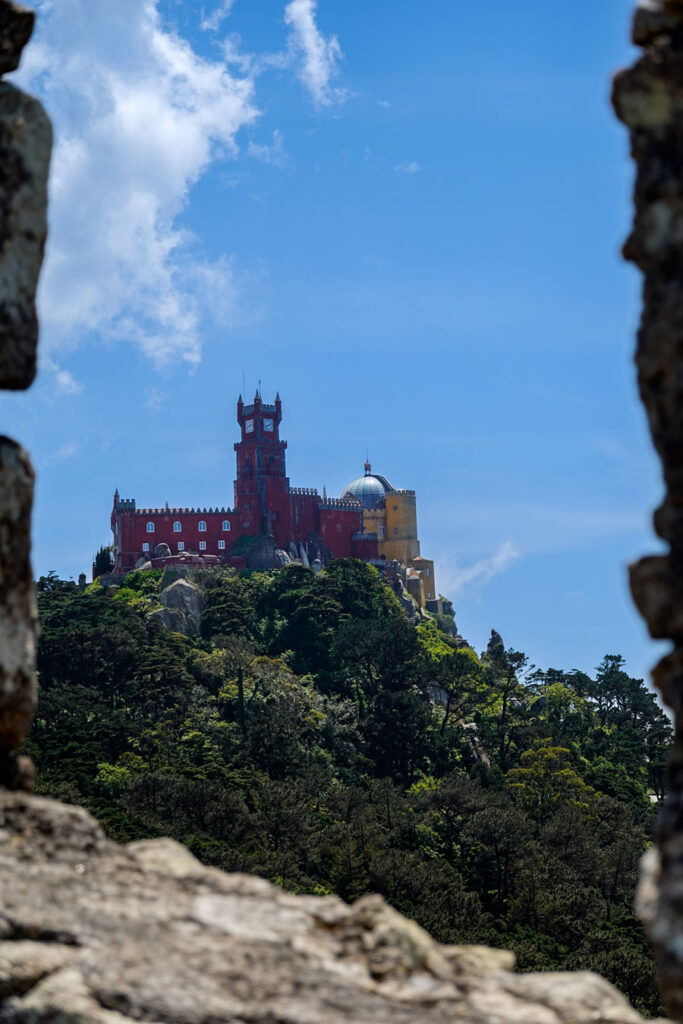
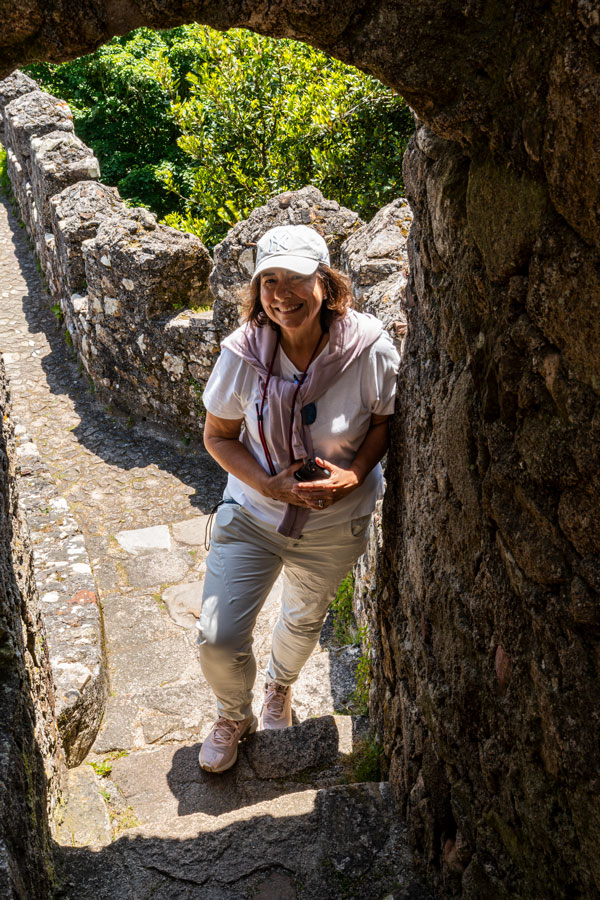
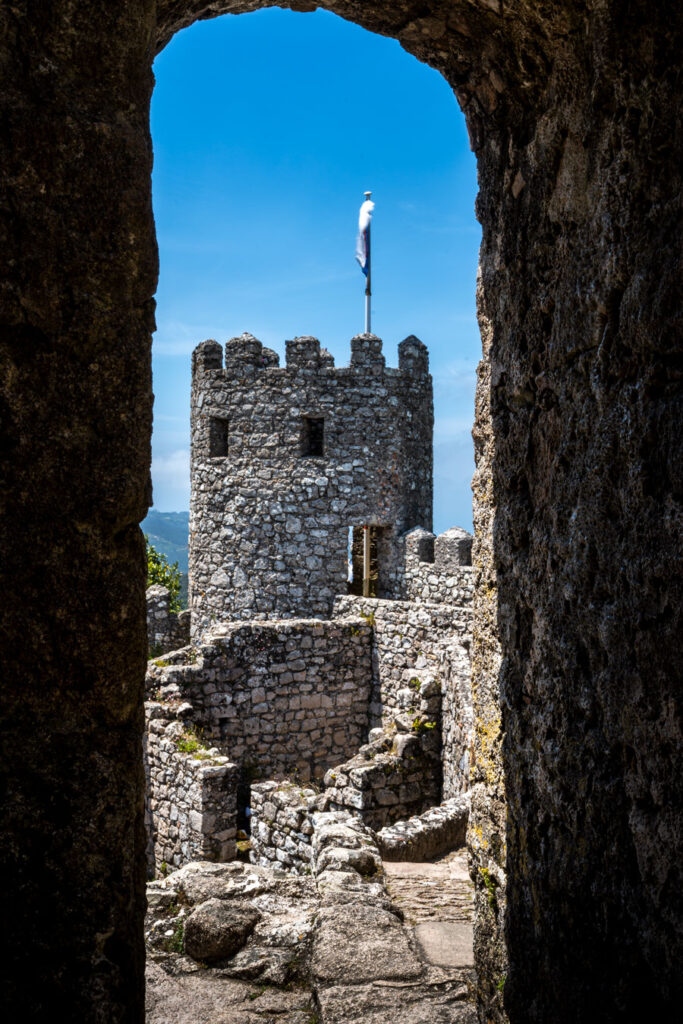
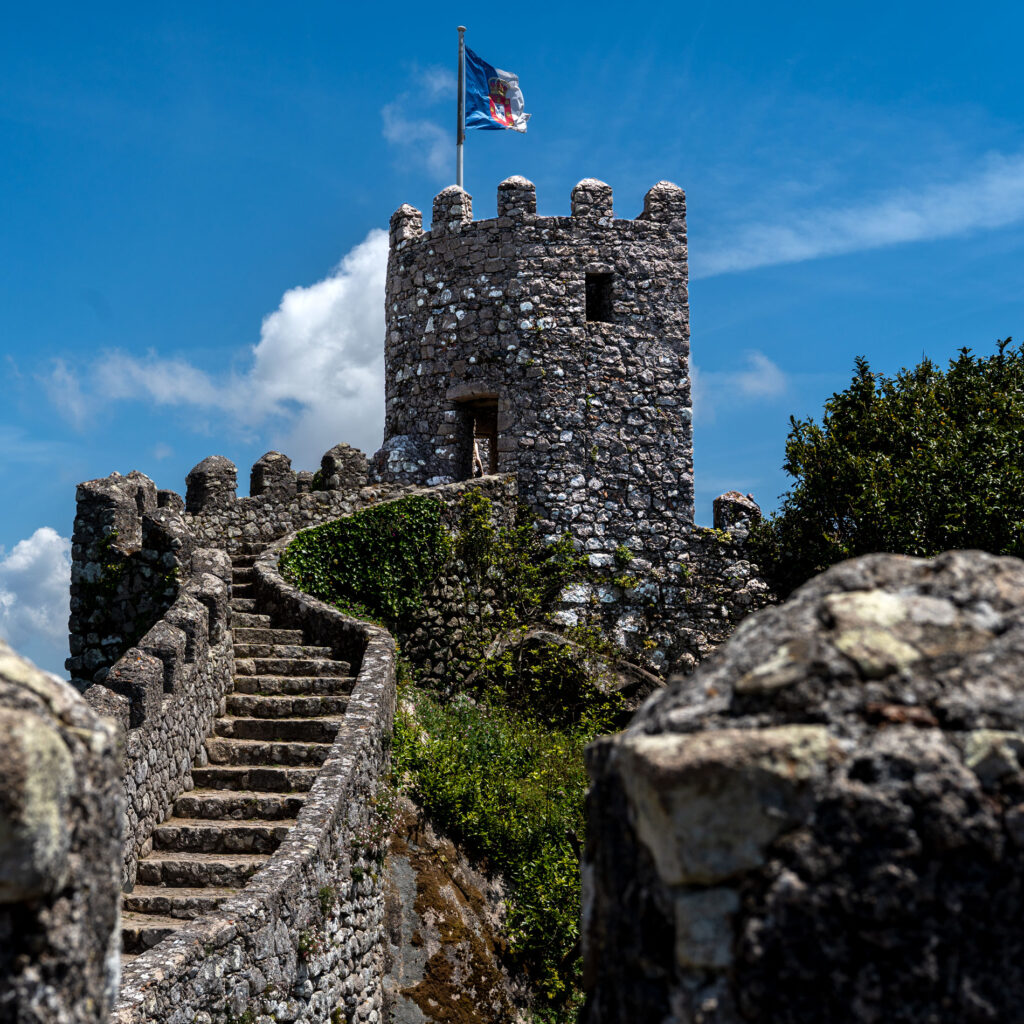
The walls snake across the hills with their granite blocks interlinking boulders and cliffs and its parapet walk provides stunningly unique views out over the town and the Palace of Pena.The walls are impressive and on reflection we prefer this to Sintra palace. We walk along most of the parapet walls admiring the construction and the views whilst trying to get that quintessential shot in the middle of the day.
The castle is thought to have been founded in the 10th century during the period the Moors ruled the Iberian Peninsula. occupying a strategic position for defending both the surrounding territory and the maritime access routes to the city of Lisbon.
After the conquest of Santarém, King Afonso Henriques besieged Lisbon for three months.
Although Sintra’s Castle was surrendered voluntarily after the fall of Lisbon, legend has it that the sovereign entrusted Don Gil, a Knight Templar, with assembling twenty trusted men to secretly observe the enemy’s movements in Sintra, in fear of a surprise attack on his forces by the Sintra Moors, and simultaneously preventing the Lisbon Moors from heading up the River Tagus into Sintra, via Cascais.
The crusaders set out in secret, under the cover of night and hiding out during the day, to avoid being sighted along the road from Torres Vedras to Santa Cruz, and along the coast to Colares, avoiding Albernoz, a feared Moorish chief from Colares who was infamous for killings Christians. Somewhere between Colares and Penedo, the Virgin Mary appeared to the fearful knights and said to them: “Não tenhais medo porque ides vinte, mas mil ides” [“Do not be afraid, there are twenty of you, but you are worth one thousand”].
Full of courage with the Virgin Mary on their side, at the end of five day journey, they took on the enemy, defeating them and conquering the Moorish Castle. In honour of this victory, the Chapel of Our Lady of Milides (“mil ides”) [“worth one thousand”] was erected in Colares.
The castle commands expansive views of Sintra and surrounds.
Pena Palance in the distance
Google says it is a 30 minute downhill walk to the town. Once again a really beautiful walk through towering trees. By the time we get to the outskirts of Sintra town we are really hot and bothered and we have run out of water.
We see a tuk tuk driver pull over and dash over to a fountain (Fonte da Sabuga) and fill up her water bottle. We rationalise that as there is little human habitation on the mountain, the water should be uncontaminated, so we do the same. So refreshing and cool
Finally we arrive in Sintra and we debate whether we should get a quick snack and catch the bus to our afternoon activities or sit down at one of the many touristy venues – neither options are inspiring.
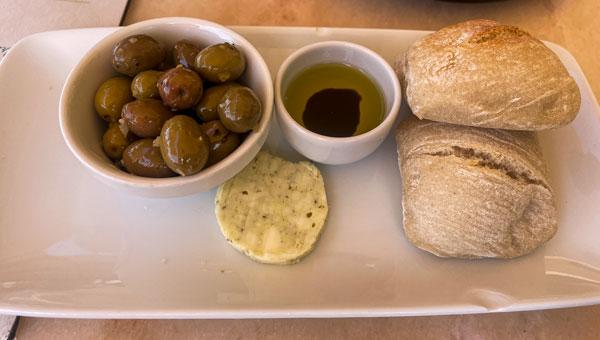
Luckily Nikki spots Donna Maria, a different grade of venue. Now we’re talking! We sip our Aperol Spritz and hite Sangria, munching on a bowl of olives and fresh bread sopped in olive oil and garlic butter, under crisp white umbrellas, taking in the beautiful view across the valley.
Fortified we go to the bus stop for the our afternoon activities. No buses arrive and after a while we wonder whether we are standing in the right place. We are running way behind on our schedule and we will have to rush through…
Nikki suddenly says “enough – let’s go home and relax”. What a wonderful decision. We take the next bus to Sintra station, train to Lisbon and then a stroll home. It is already 5pm. We would still be stumbling around more palaces. We leave something for the next time we visit Portugal.