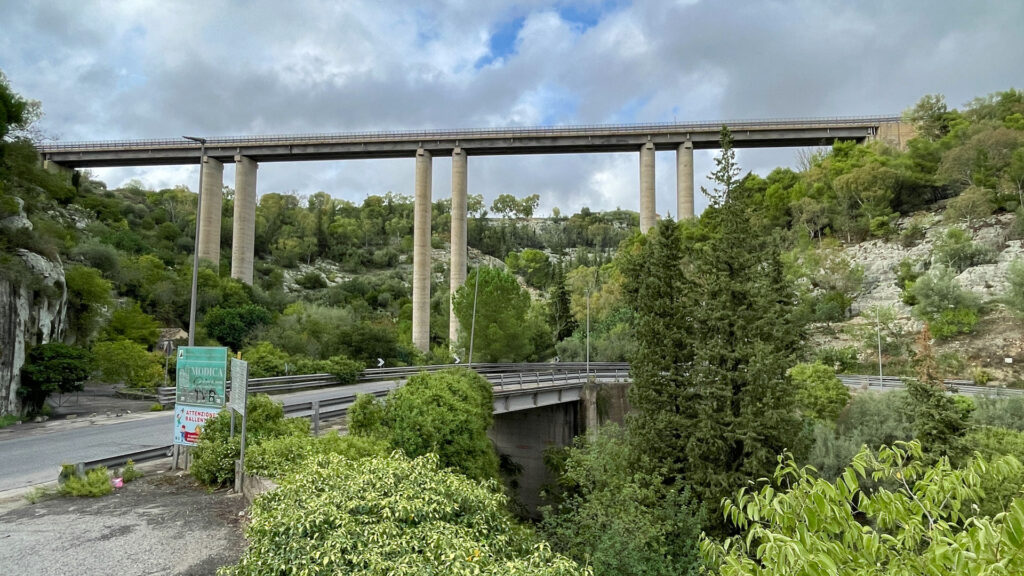
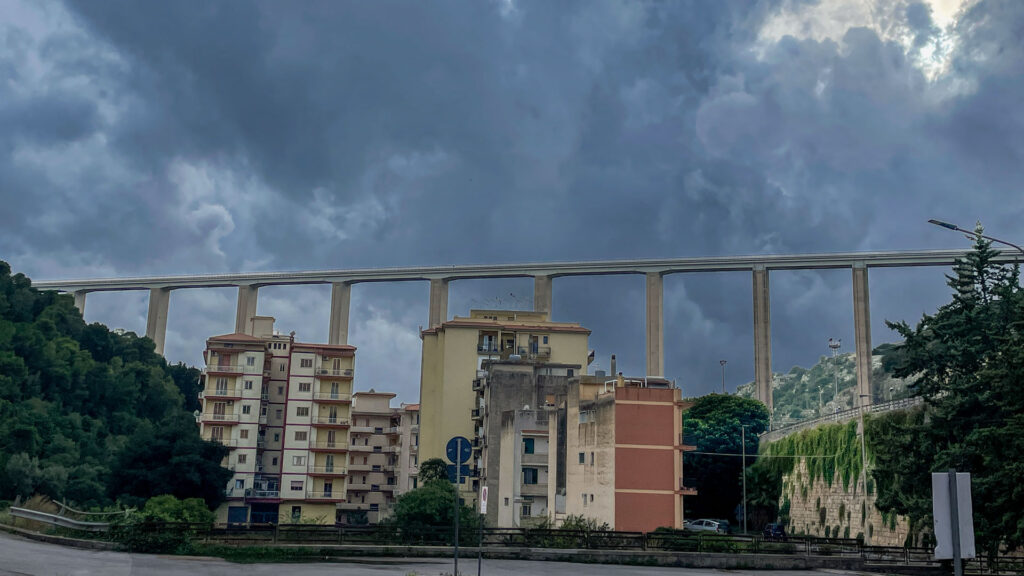
Driving from Syracuse to Modica was wonderfully scenic and we passed through the rolling, green, and rocky landscape of the Iblei Mountains. The drive took under 2 hours, We stopped to admire a ridiculously high bridge which turned out to be the 120 meters high. The Modica Viaduct built in 1968. When it first opened, it was considered the tallest road bridge in Europe. We loved the sweeping valley views and canyon-like scenery.
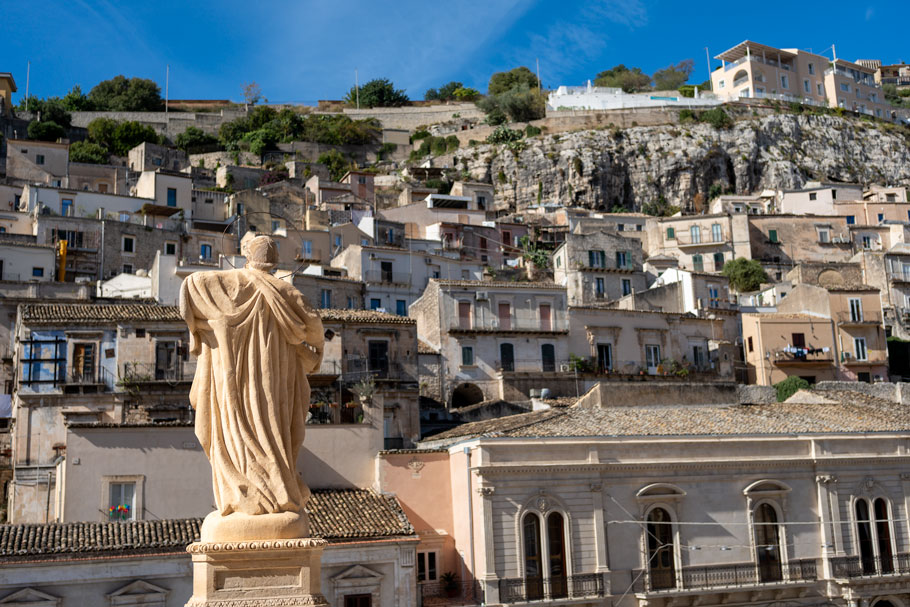
The charming town of Modica is divided into two areas: Modica Alta, perched on a hill, and Modica Bassa, situated below. Each section has its own character, with Modica Alta offering breathtaking views and Modica Bassa providing a vibrant atmosphere. Modica has a rich history dating back to 1360 BC and was a powerful state during the Middle Ages. It was shaped by Roman, Arab, and Norman rule, and rebuilt after it was flattened during the devastating 1693 earthquake.
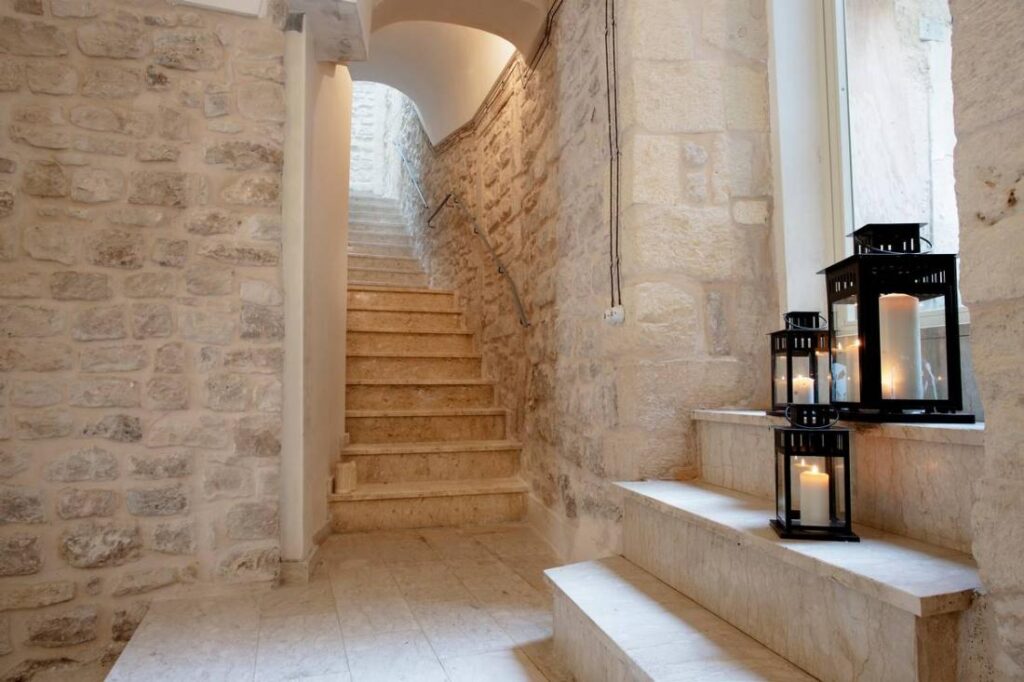
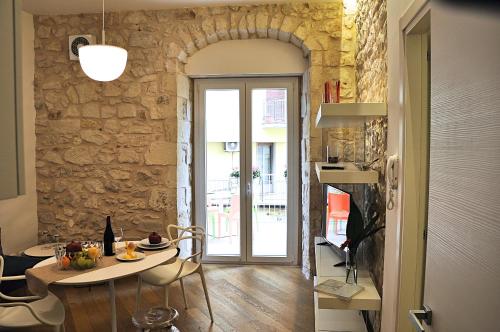
We had booked into Keys of Sicily in the Bassa area and were delighted to find a beautifully renovated and super modern apartment with its own small patio and (one of our favourite things on a lengthy roadtrip) a washing machine. The apartment was within walking distance of the main street and close to a grocery store and some promising restaurants.
We had a bit of a peculiar meeting with the Giorgio, the guy managing the apartment Our experience in Sicily has always been with such homely and welcoming owners and this felt more transactional. There was a confusing matter of a cash deposit that would be returned at the end of our stay. Perhaps it was just a language issue, because everything went smoothly and we wanted for nothing during our stay.
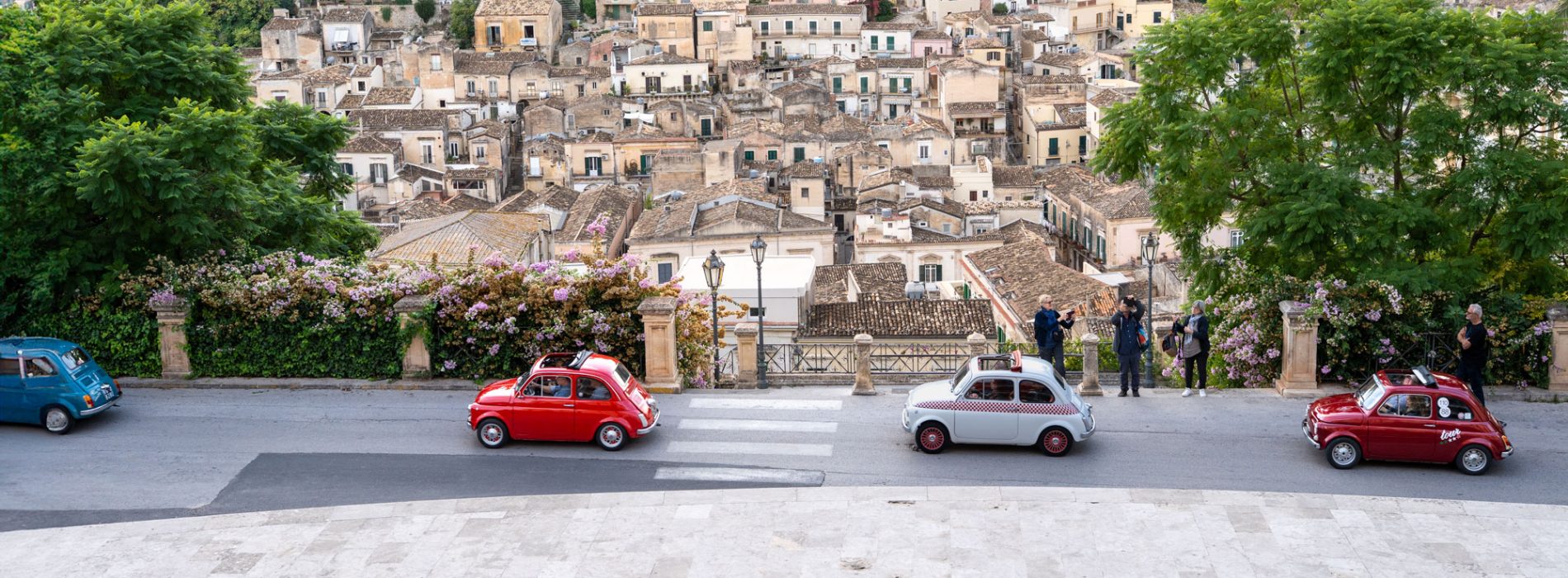
We set off to explore immediately and were charmed by the terraced houses on either side of the steep valley and the beautiful historic buildings with intriguing alley ways leading off in all directions. It was late afternoon and becoming quite picturesque.
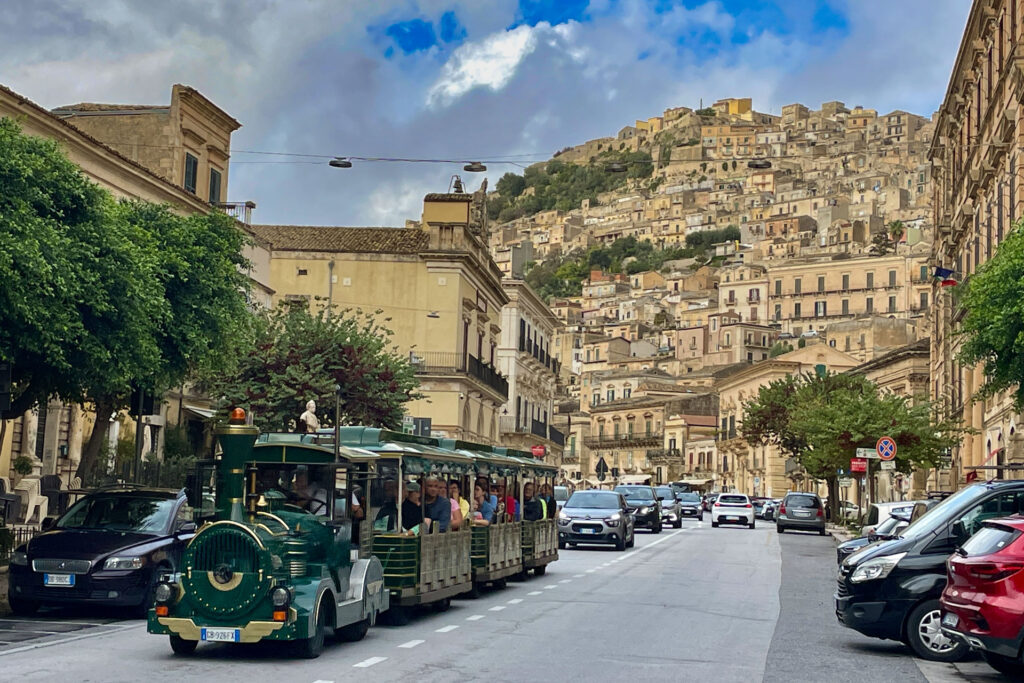
We noticed the quaint, green Trenino Barocco (Baroque Train) that transports tourists through the city’s centre, running between Modica Bassa and Modica Alta. (I thought this might come in handy for the steep climb to Alta at some point.)
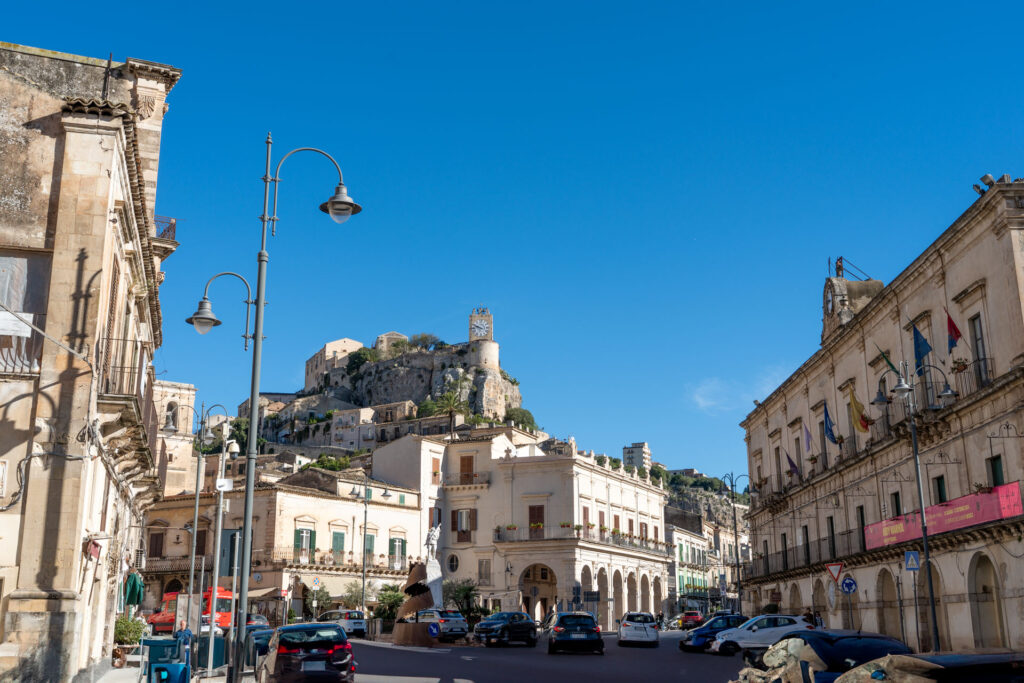
We wandered down the main street, Corso Umberto I, which is the bustling heart of this UNESCO-listed town, lined with historic honey-coloured architecture, shops, and restaurants .
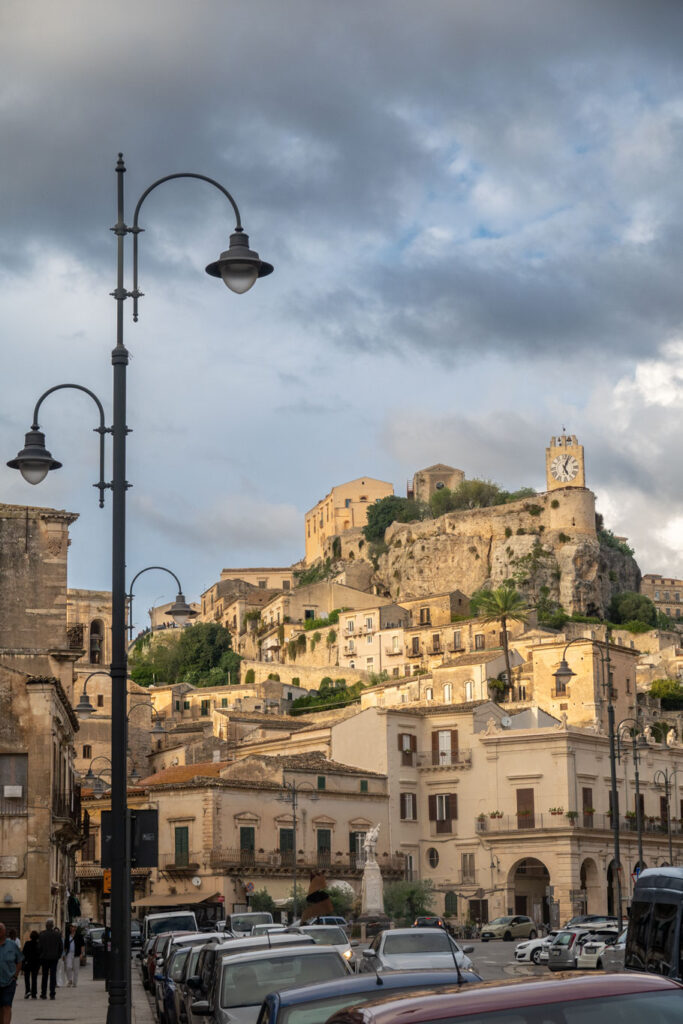
The Torre dell’Orologio (Clock Tower), is an iconic landmark that stands prominently above the remains of the Castello dei Conti.It was built in 1725 atop the ruins of a medieval watchtower that was destroyed in the 1693 earthquake. It serves as a central symbol of the city.
The clock is famous for its intricate counterweight mechanism, which is still fully functional. Municipal officials check and restart the mechanism approximately every 24 hours to keep it operational
Giorgio texted us the names of some restaurants and grocery stores and as the restaurant we were interested in was closed and as we were quite excited to try cooking in our nicely equipped apartment, we set off to shop at Decò supermarket.
We had a delightful meal and a peaceful evening doing washing and reading. An early night ready for a busy day of sight-seeing ahead of us!
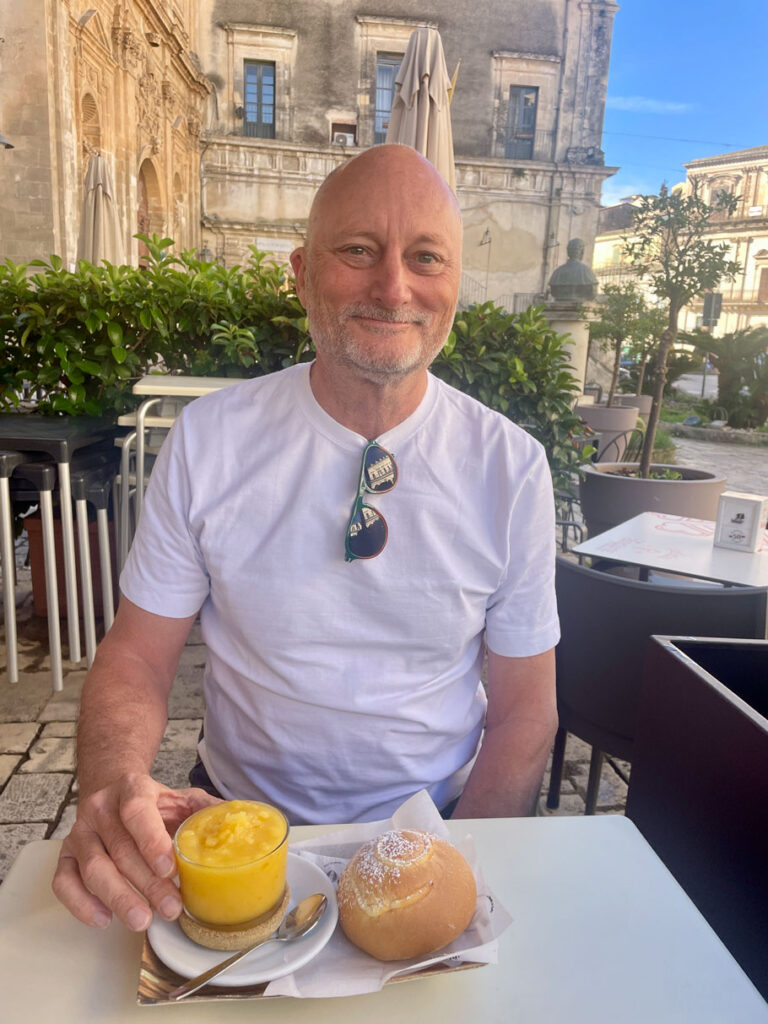
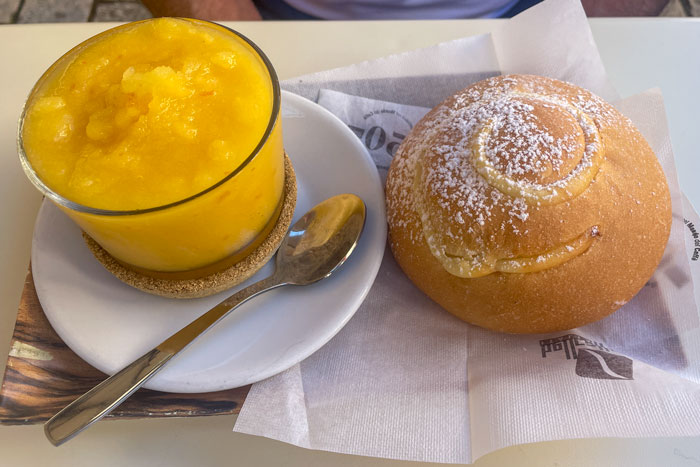
Geoff started the day with a bounce in his step, determined to have ice cream for breakfast. It’s a Sicilian tradition of starting the day with scoops of gelato stuffed into brioche. Completely mad I thought but – when in Rome…. Giorgio had recommended the little café, Fargione, for Granita con brioche. Well, I was amazed to find it super refreshing and fruity enough to feel like breakfast.
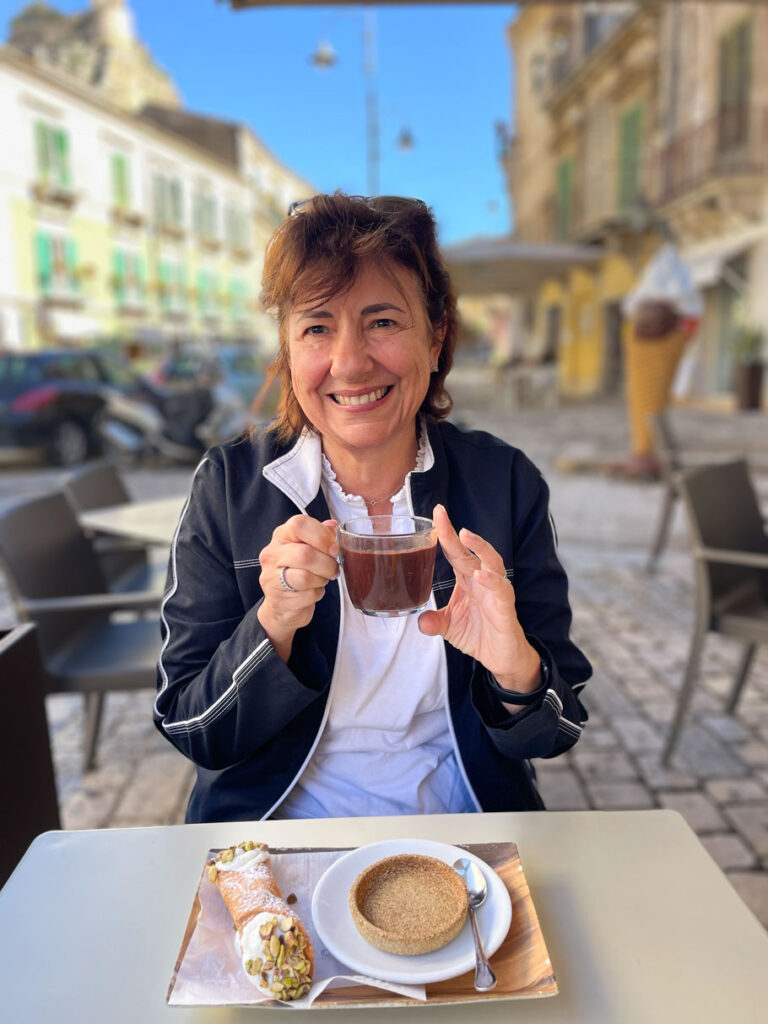
Not to be outdone, I, on the other hand, had decided to have chocolate for breakfast (as I was saying about Rome…)
Modica is known as the Sicilian Capital of Chocolate (more about that shortly). I do think that it’s a sign of an excellent hot chocolate when your spoon stands up straight in the glass.
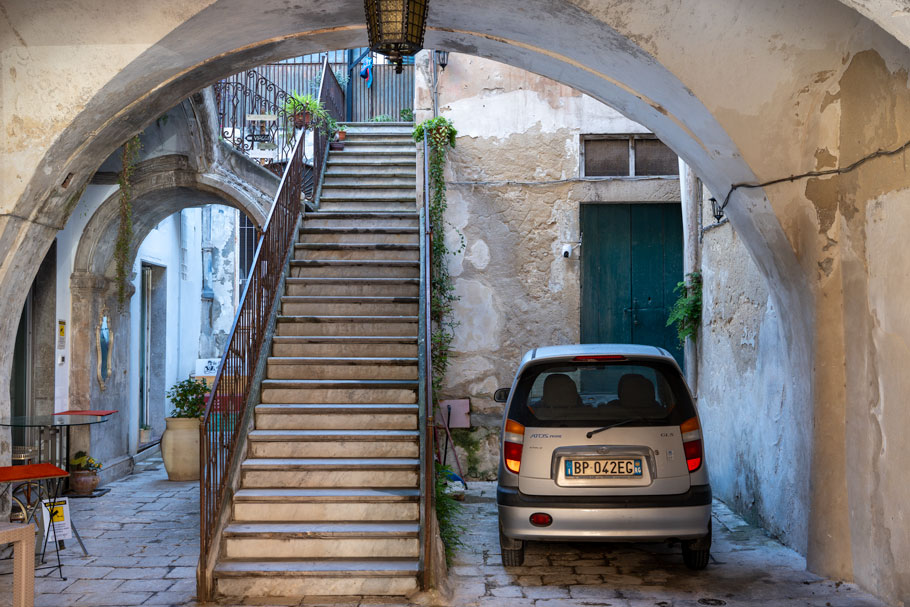
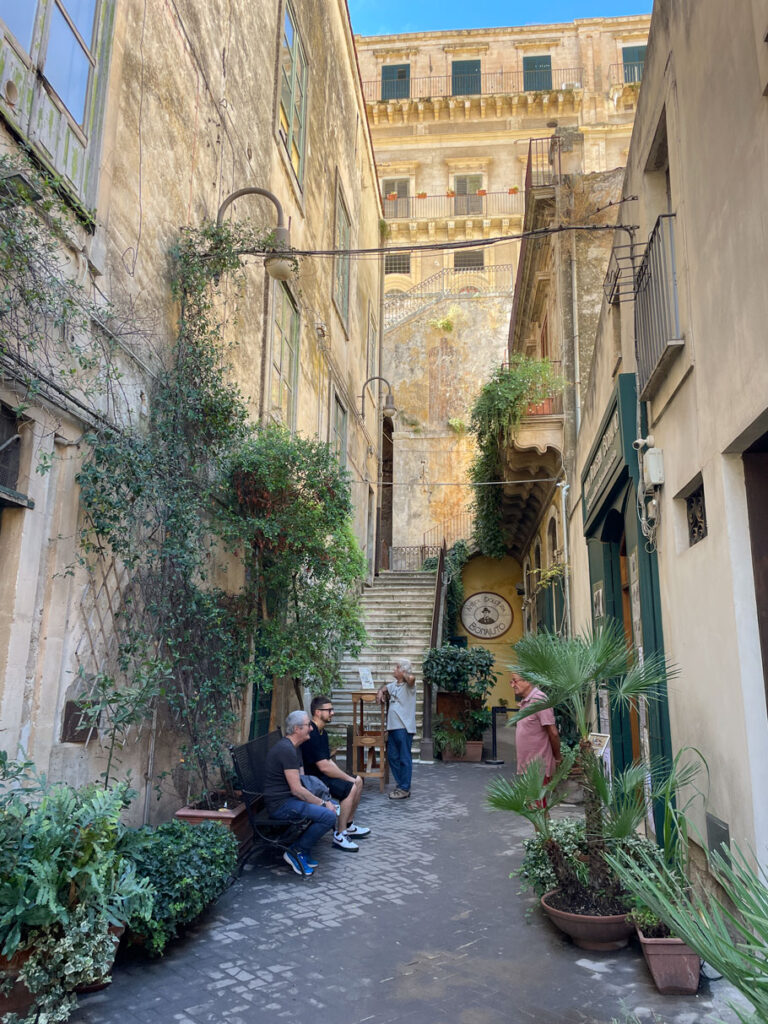
After breakfast we began meandering through the winding streets, occasionally losing our way. On the way we passed beautiful doors, intriguing stairways and ornate balustrades.
Modica is also known as the City of a Hundred Churches.
Most Italian cities have a main“Santo Patrono”the patron Saint who is said to protect the city. Catania has St. Agata, which draws hundreds of thousands of devotees to the streets; Palermo has St Rosalia to whom the people of Palermo are extremely devoted.
What’s unique about Modica is that it has two Patron Saints and respective Cathedrals: San Giorgio (St. George) and San Pietro (St. Peter) and they’re also rivals. 😉
The folk of Modica Alta were devoted to San Giorgio, whilst the people of Modica Bassa, to San Pietro and for centuriesboth groups claimed that only their saint was the legitimate patron of Modica. Apparently, the rivalry was so strong that the most devoted followers of one Saint, would forbid their sons or daughters to marry someone from the other faction!
We visited the San Pietro cathedral first. It is built in the era’s baroque style with a beautiful façade and is positioned in the heart of the Bassa city. What sets the exterior of this church apart is the apostolato – the statues beautifully positioned along the dramatic stone steps, each one representing one of Jesus’ 12 apostles.
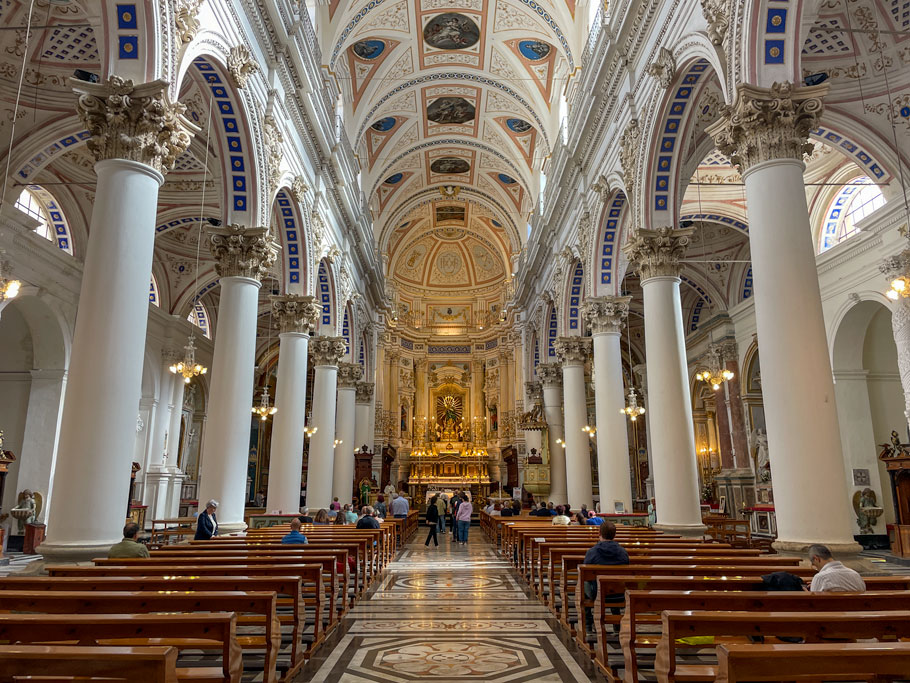
San Pietro has a total of 3 naves supported by 14 columns. The church is decorated with an abundance of paintings and frescoes depicting scenes from the old and new testaments as well as polychrome marbles. There is also a rather majestic ornamental pipe organ.
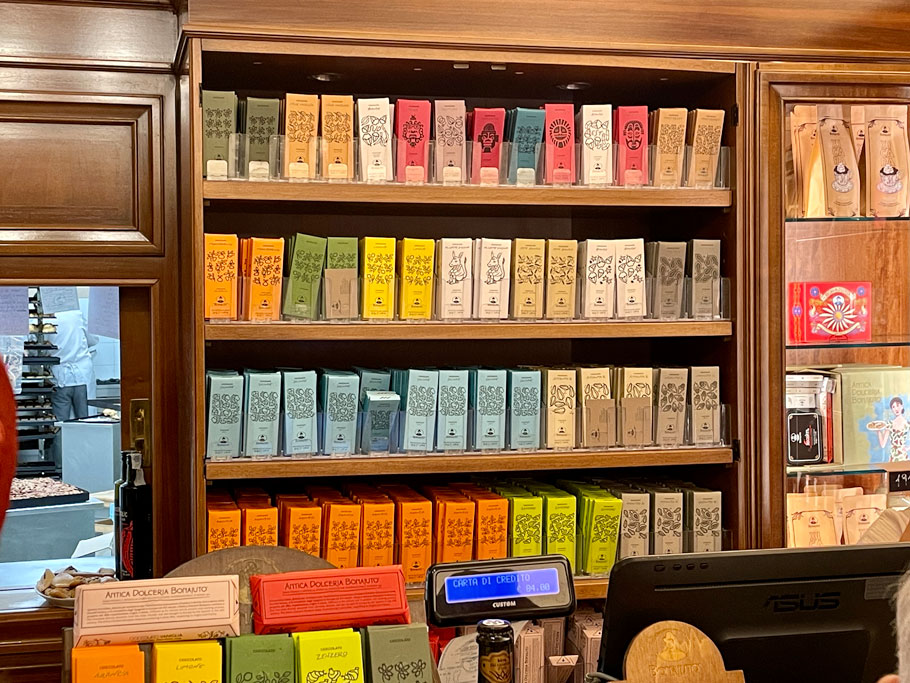
Time for a change of pace. Modica’s chocolate is famous, and there’s no better place to experience it than at Antica Dolceria Bonajuto. This place was also recommended by Giorgio. Although Modica chocolate is for sale in other shops, this store has been has been perfecting its craft since 1880.
Bonajuto specialises in traditional Modican chocolate, made with a recipe dating back to the Aztecs, using just two ingredients – cacao and sugar – creating a unique, grainy texture unlike any other with its distinctive texture and flavour. You’ll either love it or hate it. I liked the almost crunchy sensation and intense chocolatey taste.
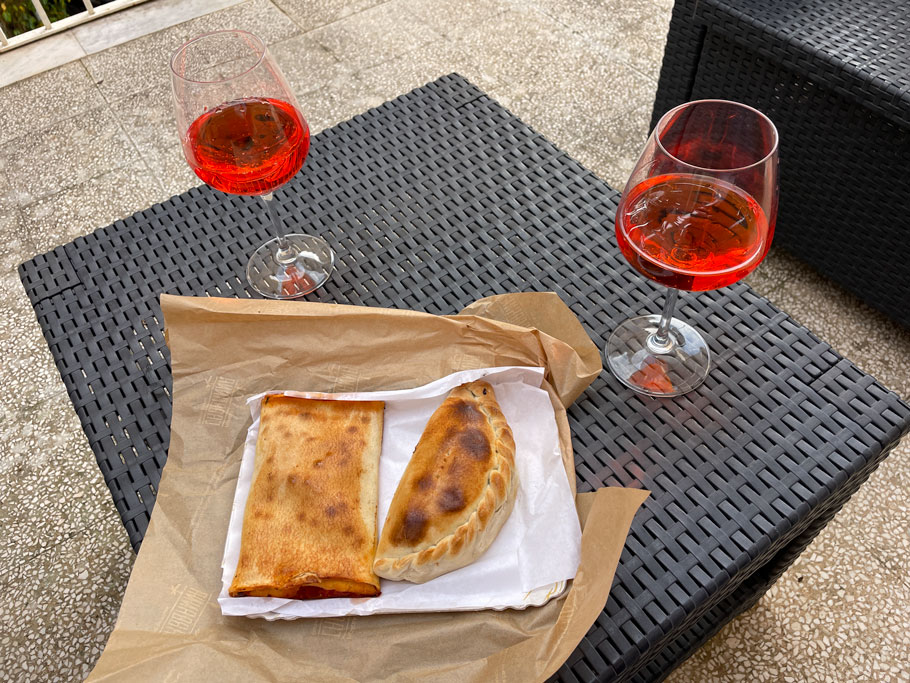
We took a break for lunch on the patio of our apartment. We picked up some traditional savoury pastries at a local bakery as well as some bottles of Aperol Spritz (what a convenient find!)
Modica’s most famous savoury-sweet pastry is mpanatigghi, a half-moon ‘pie’ filled with ground beef, Modica chocolate, almonds, and spices. We also tried scacce, a thin-layered, stuffed flatbread with filling of sausage and ricotta.
Later we made our way through the narrow uphill streets leading to the San Giorgio Cathedral.
Despite the fact that we’d already climbed a significant amount, we were faced with one last obstacle, the 181 steps leading up to the building. The view from the bottom of the steps was spectacular and we could see and smell the beautiful flowers.
From our vantage point, we admired the cathedral’s beautiful and imposing facade designed by Rosario Gagliardi, a true masterpiece of baroque architecture in Modica.
There are five ornate portals for entering the church. It was beautifully cool inside and a relief from the late summer heat (especially after all those steps!)
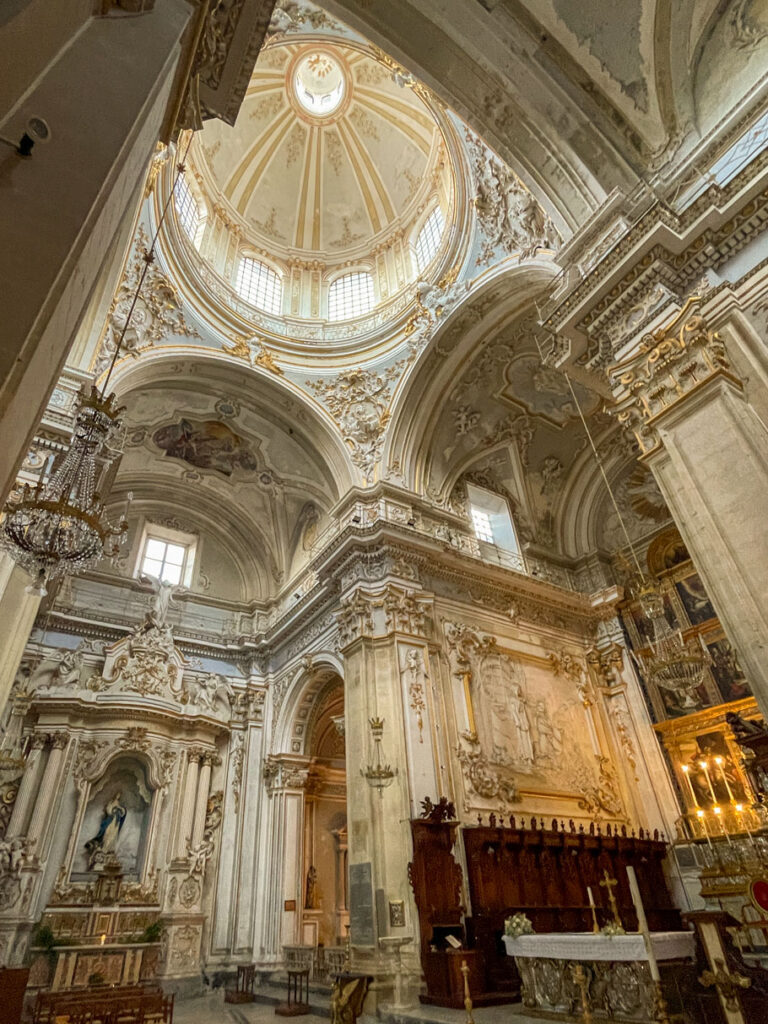
The 5 naves supported by 22 columns are adorned with intricate stucco work and beautiful frescos. In the centre, the beautiful dome soars to a height of 36 meters adding to the monumental presence of the building.
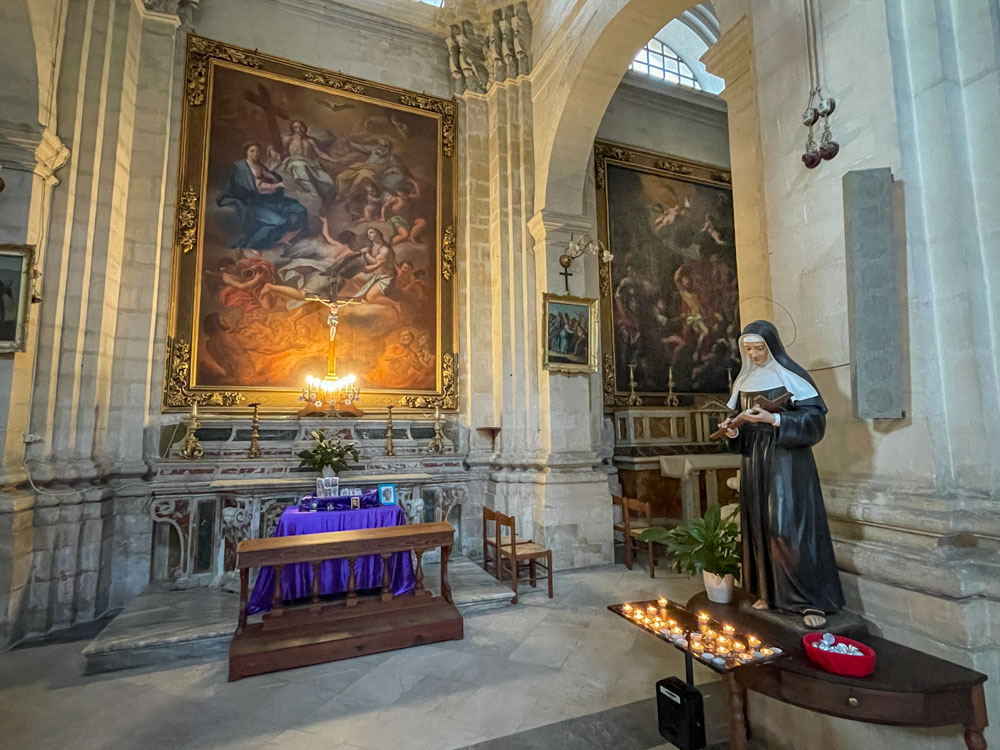
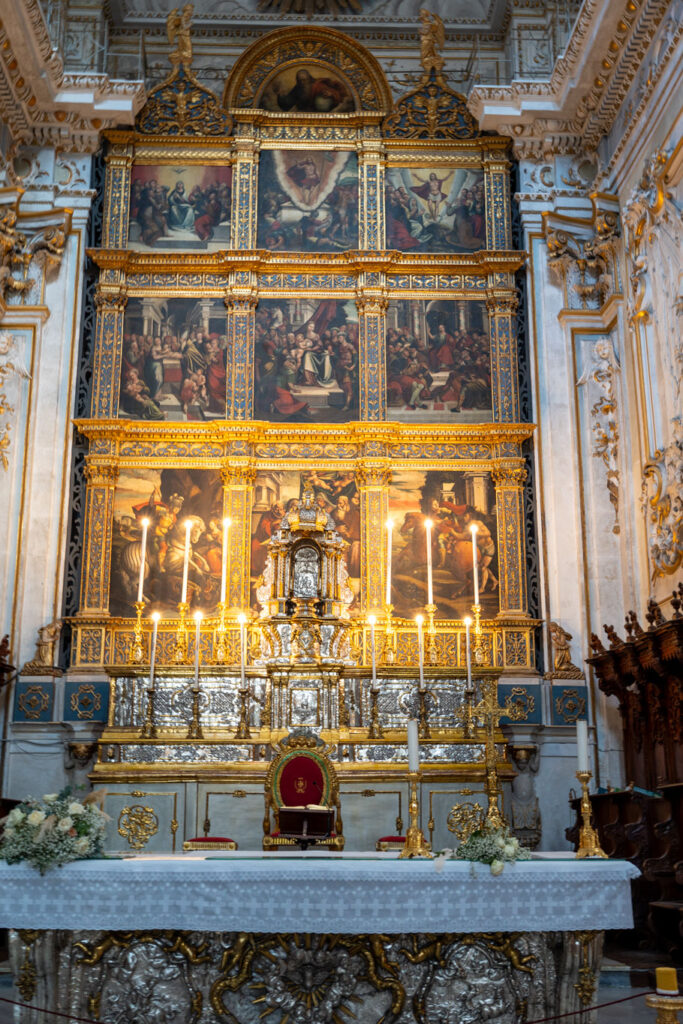
Modica Cathedrals are filled with beauty and treasures and the Duomo di San Giorgio is no exception, walking around we admired plenty of paintings, frescoes and sculptures and also a marvel of art, science and engineering – the sundial or “meridiana”
Every day at midday a beam of light passing through a small hole in the ceiling of Modica’s cathedral will land somewhere on this sundial showing what time of the year and which constellation we’re currently in.
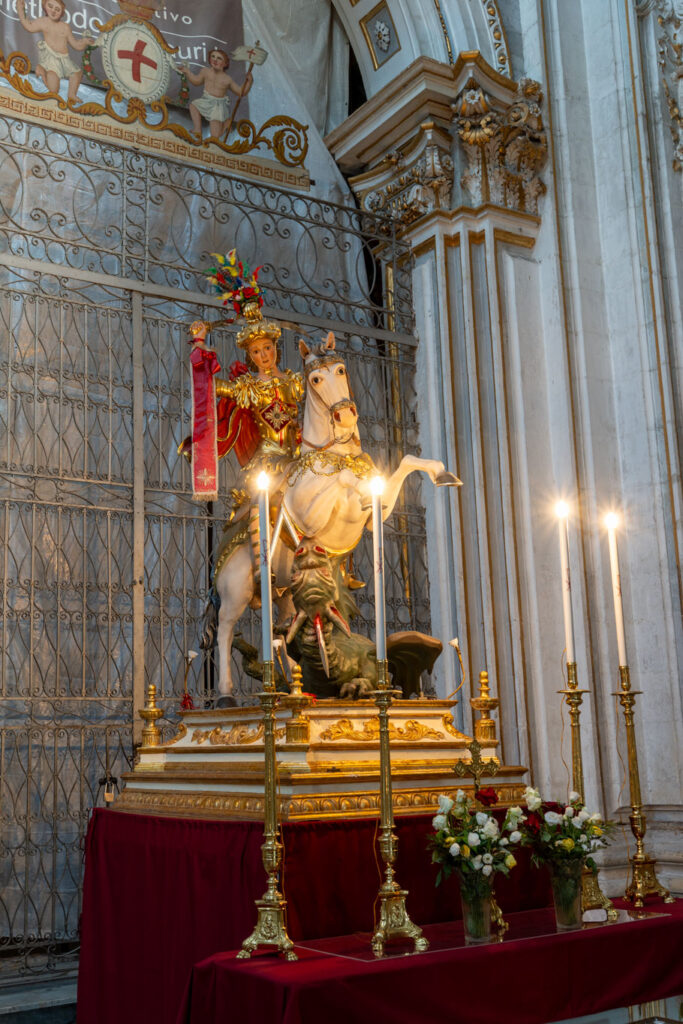
Not all statues of this cathedral in Modica are destined to stay inside, and once a year the statue of San Giorgio riding his horse and killing a dragon is taken out of the church on his feast day and paraded through the town.
We visited another pretty church – the 17th century Church of Santa Maria del Soccorso. It has a convex façade, known as the Jesuitical style and turns a lovely pink colour at sunset.
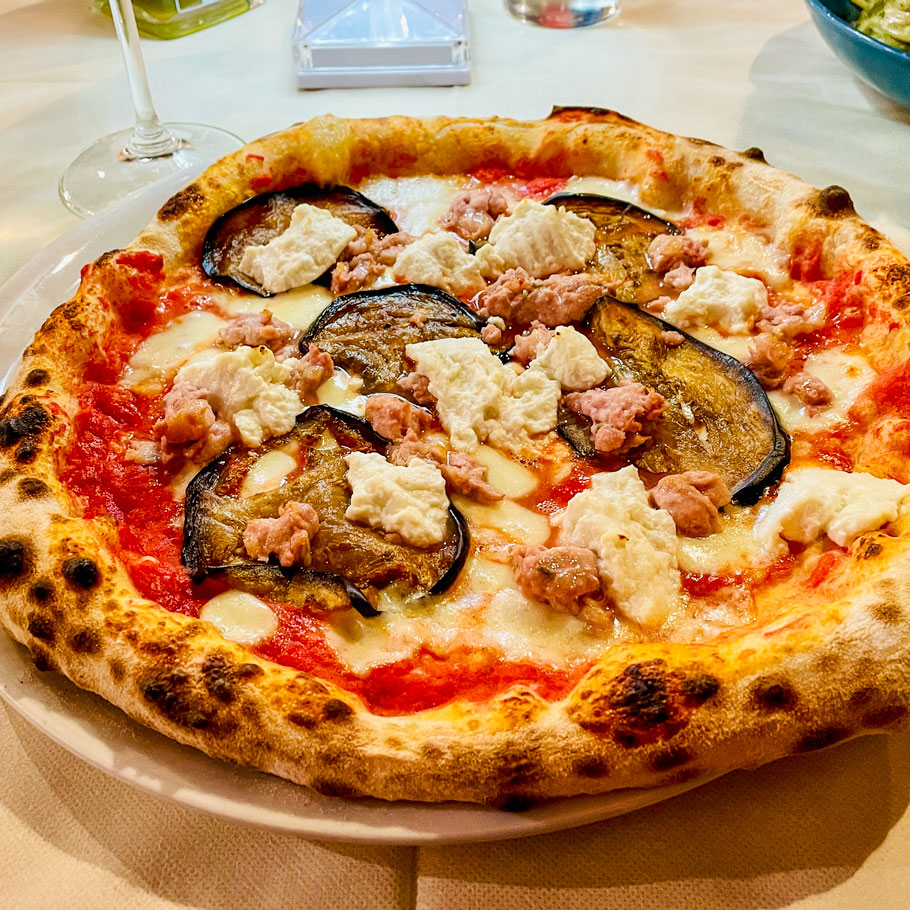
Our second evening and we decided to try the Pizzaria that we’d noticed from our patio. It turned out to be a good decision. we received excellent service and had a delicious pasta and a tasty pizza. A busy, active day with a busy active day planned for tomorrow too!