We had lots of ground to cover in a day – a visit to the nearby city of Ragusa – and then driving north-west to Caltagirone for an overnight stop.
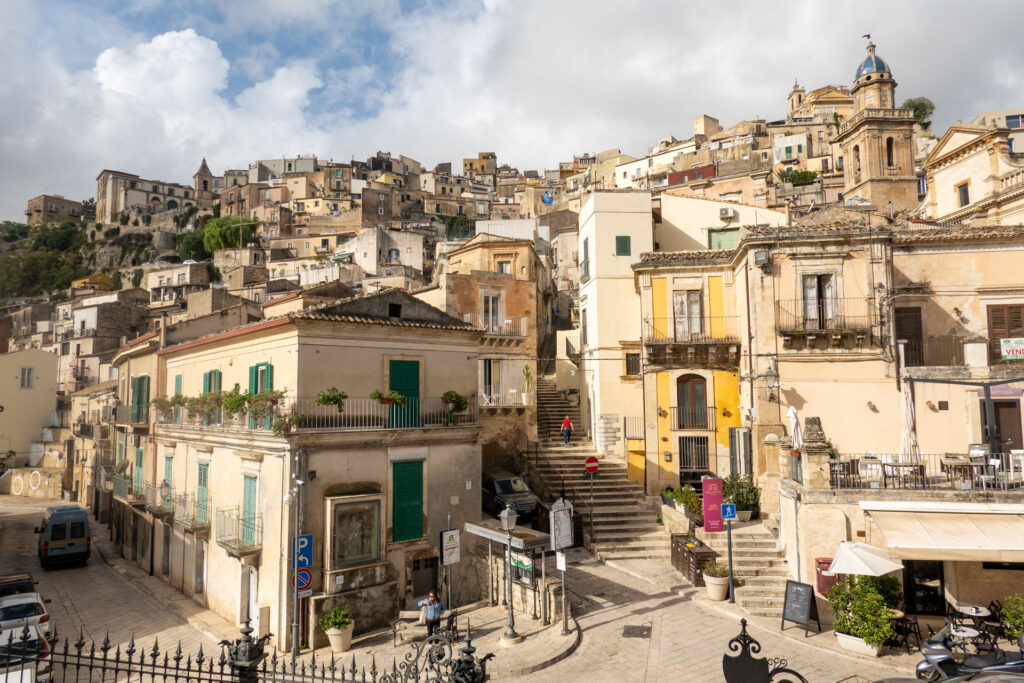
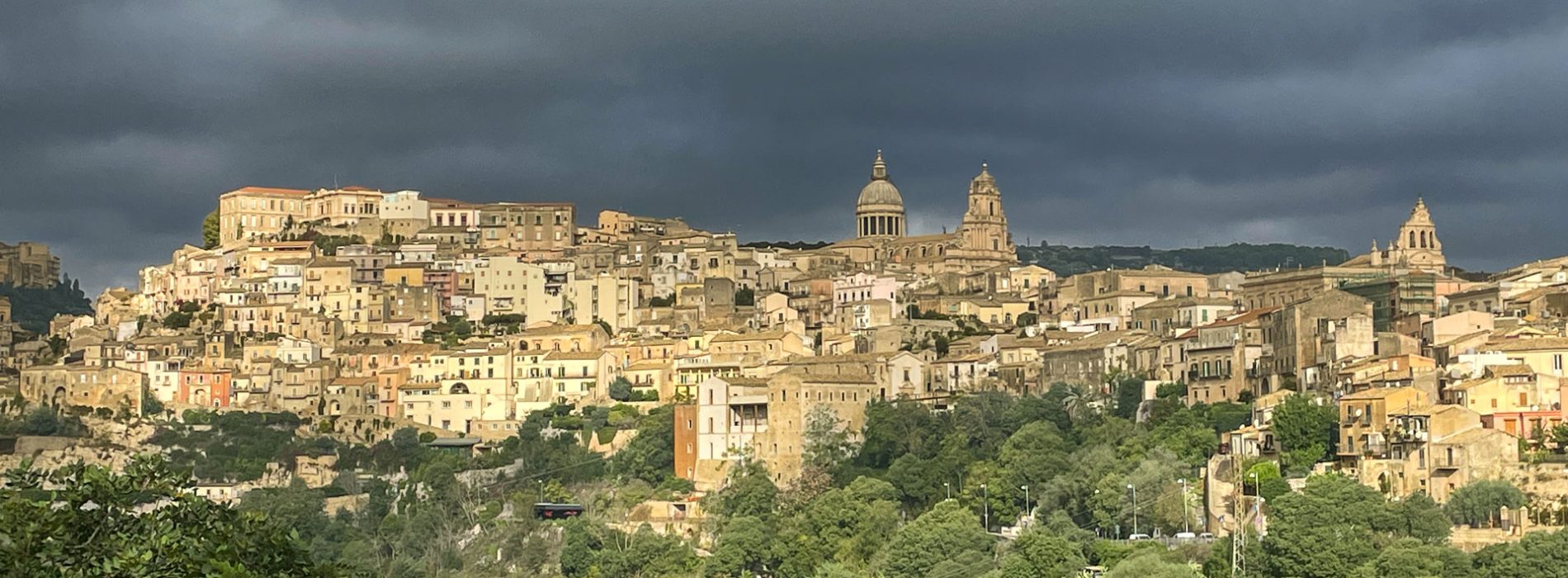
Like much of the region of south-east Sicily, Ragusa was reborn following the devastating earthquake of 1693. Many residents, sought to build their new homes on higher ground, directly above Ragusa’s medieval network of narrow streets.
As a result, Ragusa became a city of two halves and two souls.
Ragusa Superiore, is the more modern Sicilian hilltop town with fairly rational straight lines. Ragusa Ibla, below has a warren-like maze of cloistered and clustered streets lined with golden buildings, grand squares, as well as towering churches and elegant boulevard. It’s easy to see why Ragusa is a UNESCO World Heritage site; it’s a living, breathing, open air museum, and a fine example of how tragedy can lead to something positive.
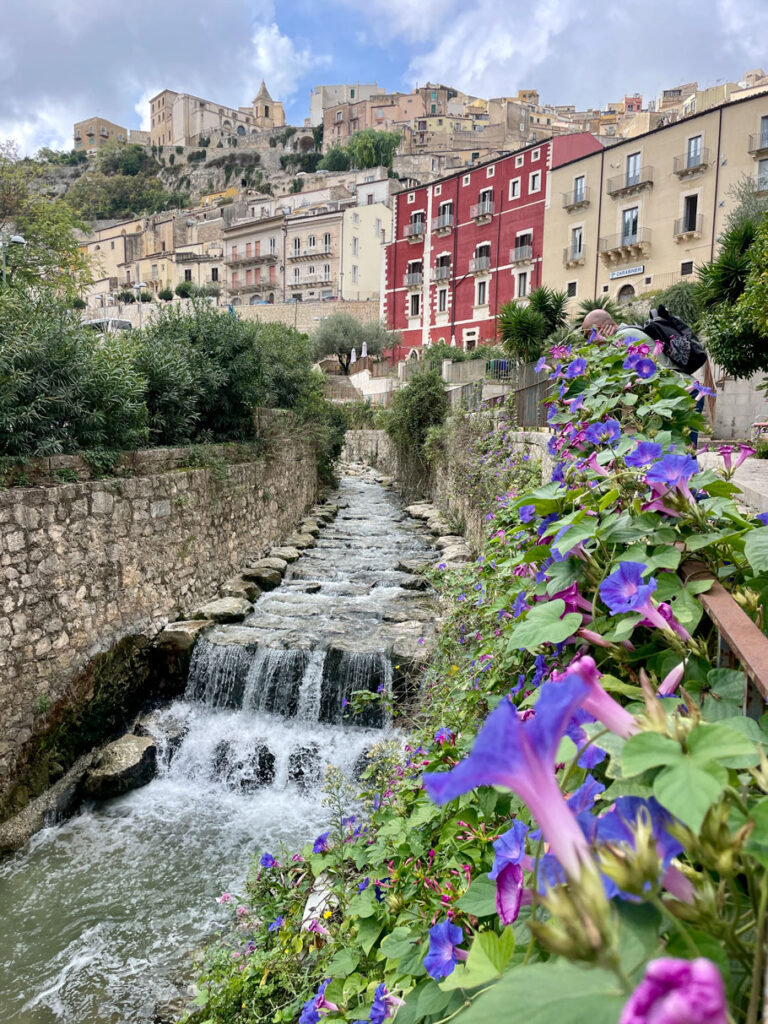
Our plan was to start early and grab coffee and cannoli in Ragusa. Things don’t open early in Sicily however. We found some parking alongside a pretty canal with a swiftly flowing river and gorgeous foliage.
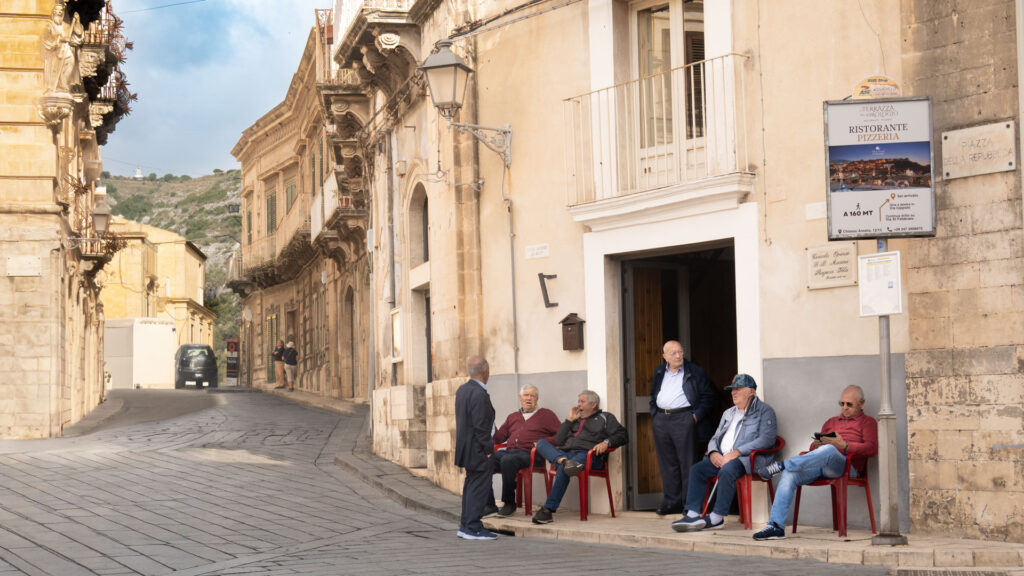
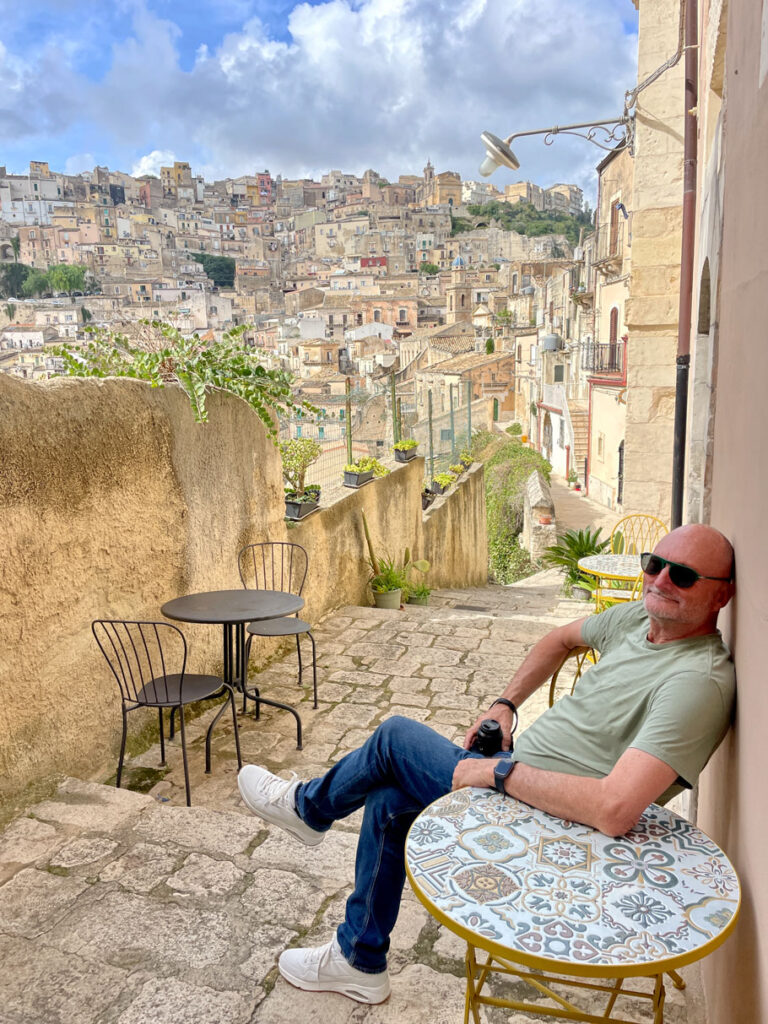
We began by wandering around the stone buildings, which seem to cascade down the hillside, linked by twisty staircases and hidden courtyards overflowing with bougainvillea. Before we knew it we were taking the turns and the winding steps.
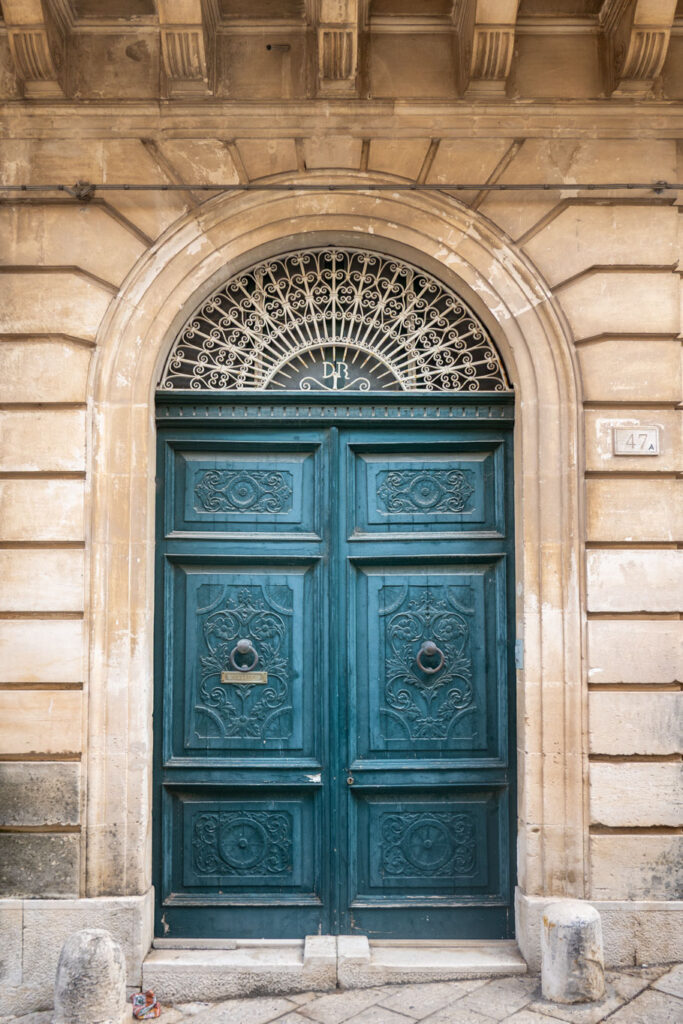
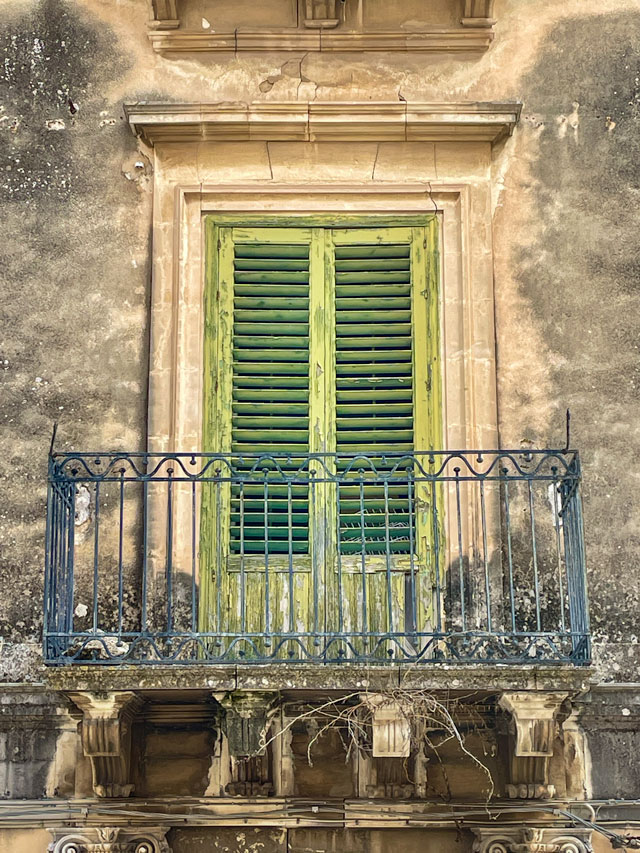
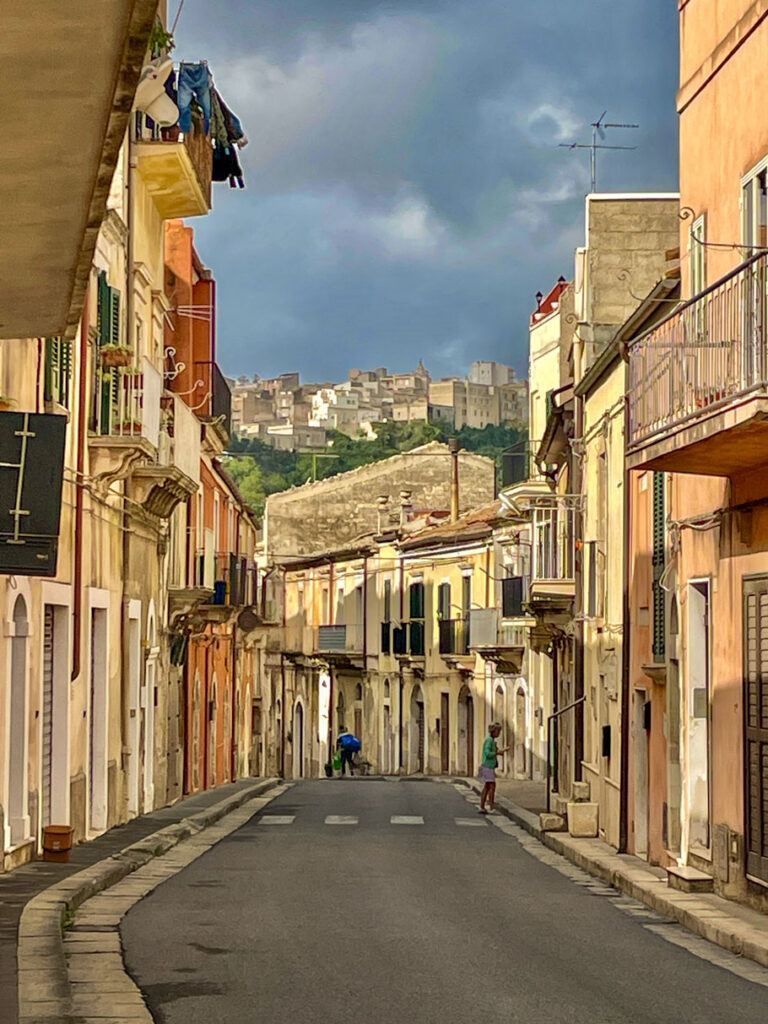
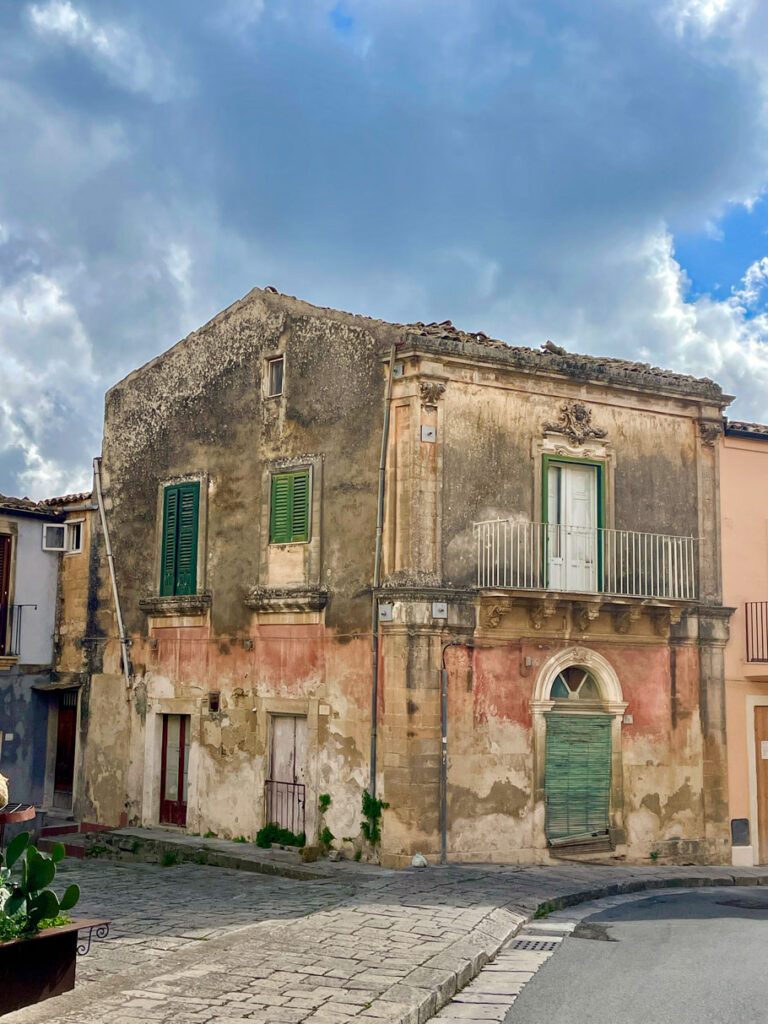
We passed by quaint homes constructed from the local limestone with wrought-iron balconies. Most of the 18 UNESCO buildings in Ragusa are located in Ibla
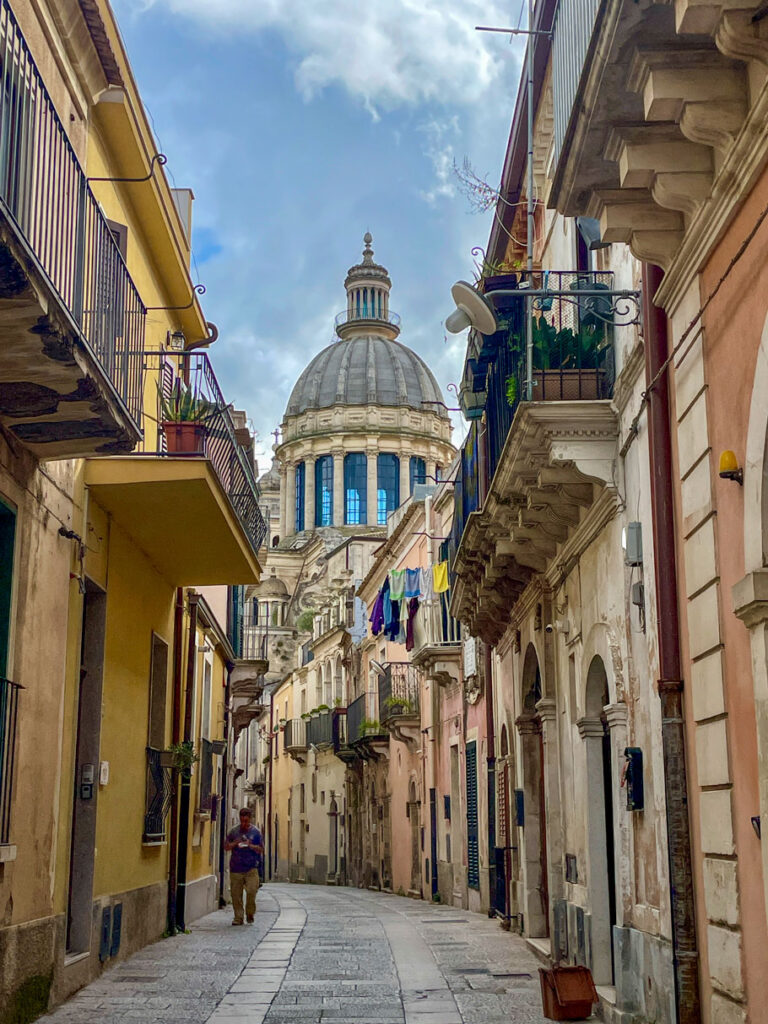
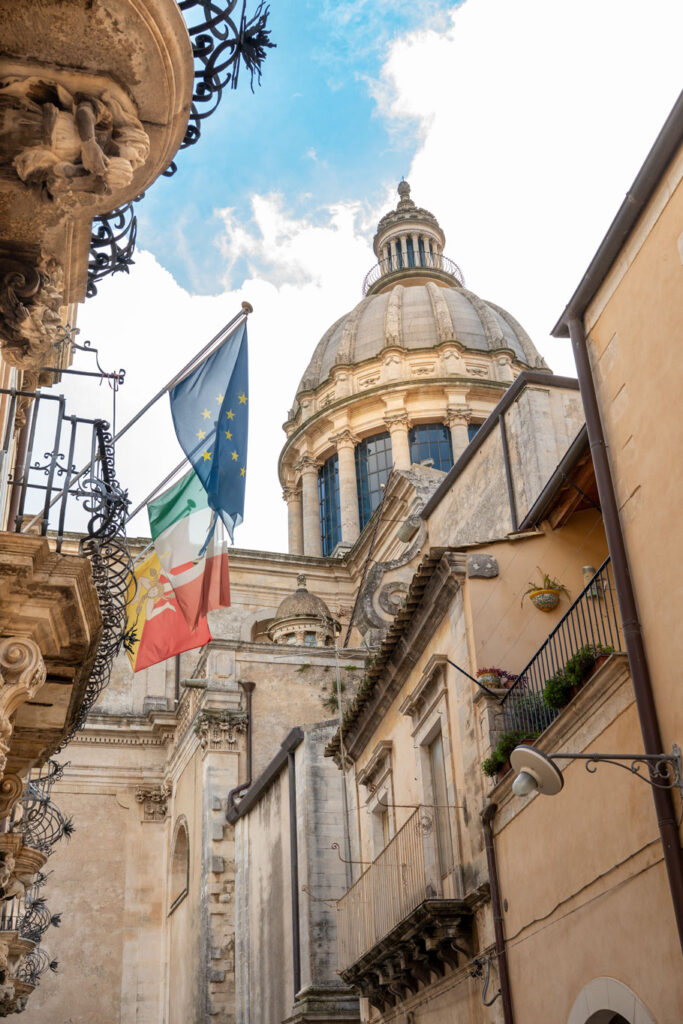
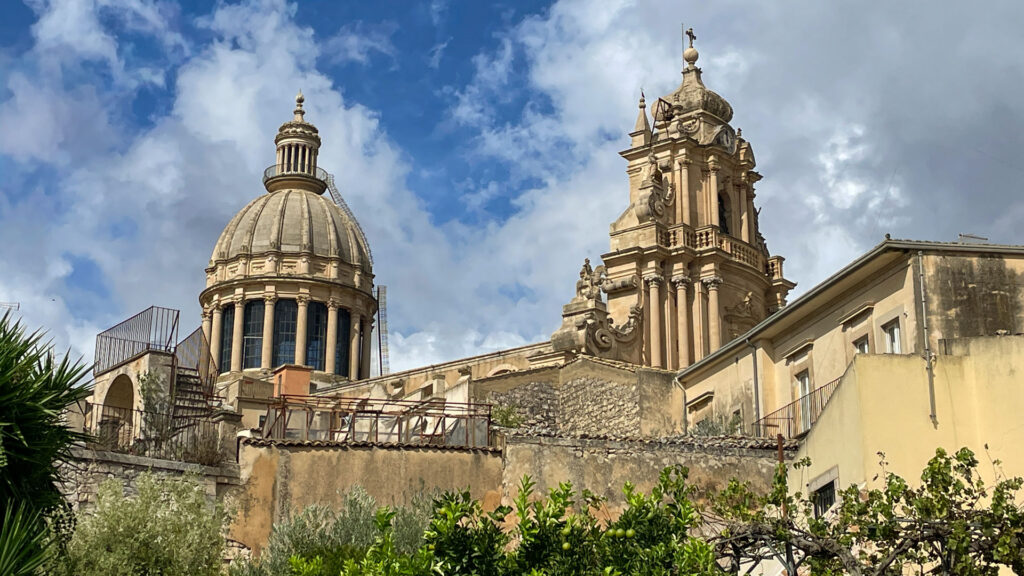
Every corner we rounded, revealed a breathtaking view, another charming little church, or an interesting building. We were mesmerised by glimpses of the tantalising dome as we wandered down the maze of narrow lanes and alleyways.
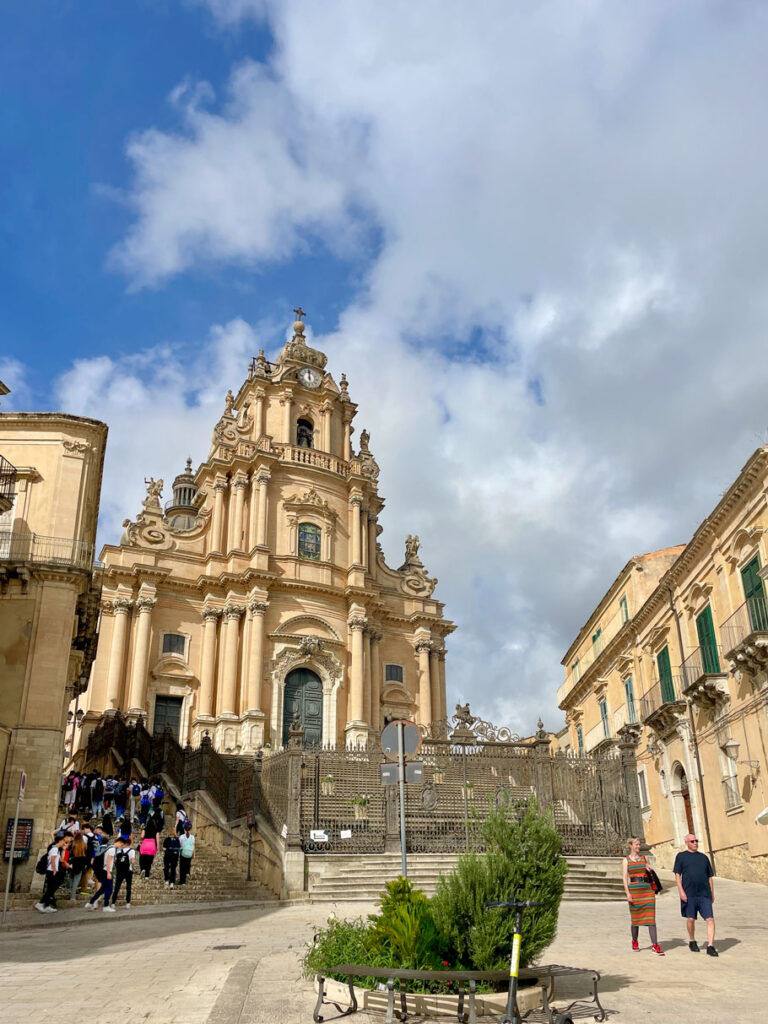
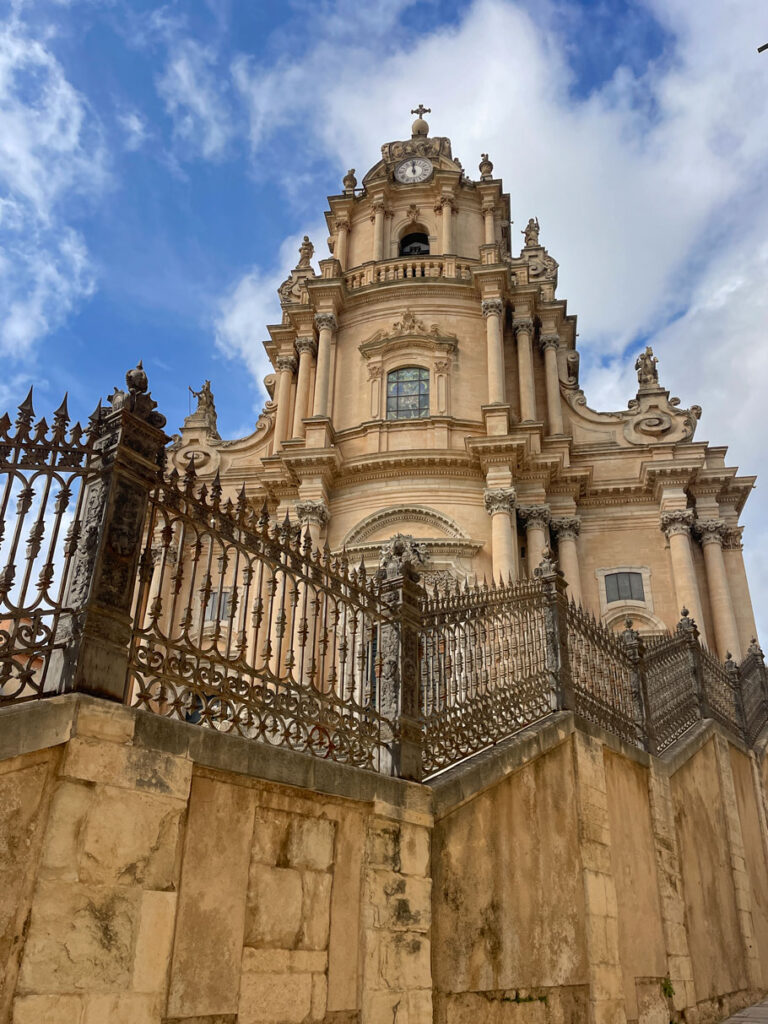
The Duomo of San Giorgio is distinguished by the majestic tower-like facade, unique in its design, incorporating the bell tower. The central body has a slight convex shape, creating a sense of upward movement typical of the Baroque style. The facade is adorned with free-standing columns and volutes connecting the different levels, providing a powerful impact. Its construction began in 1738 and ended in 1775.
The distinctive tower of the Duomo (made of Caltagirone ceramic tiles), was added later in 1820.
Statues of Saint George, Saint James, Saint Peter, and Saint Paul grace the niches on the facade.
Somehow whichever way we turned, we ended up in the main square, the Piazza Duomo, which was delightful for some people watching.
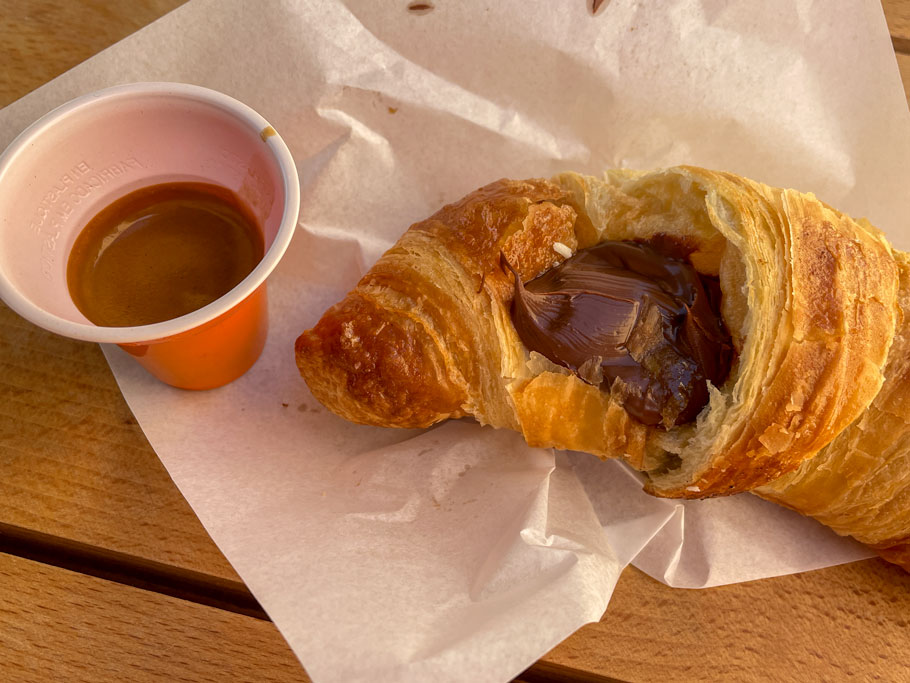
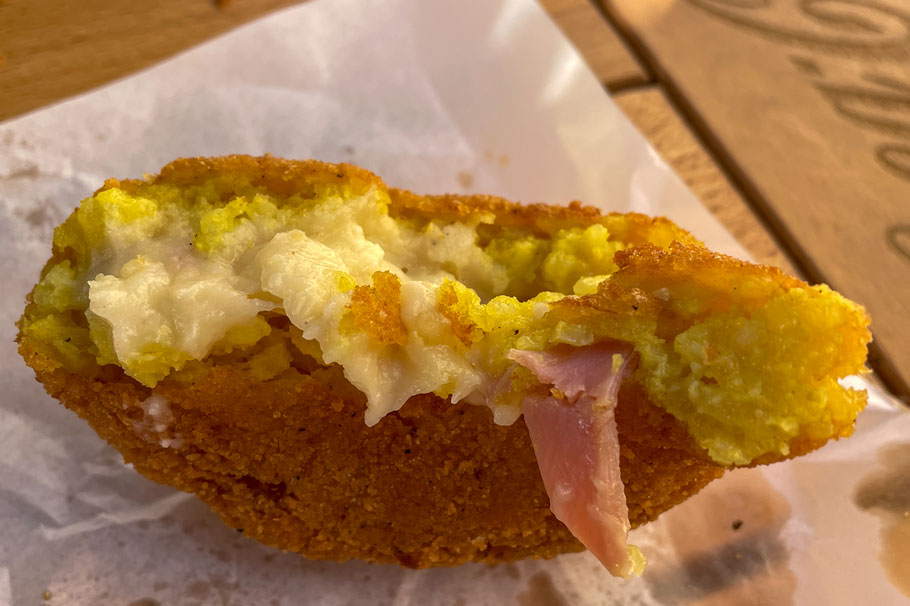
At this stage we were very hungry and despite reading that Ragusa isan ideal destination for foodies, we struggled to find a quaint bistro or cafe for brunch. We ended up grabbing some take-aways- a chocolate croissant and a ham and cheese arancini – with our coffee.
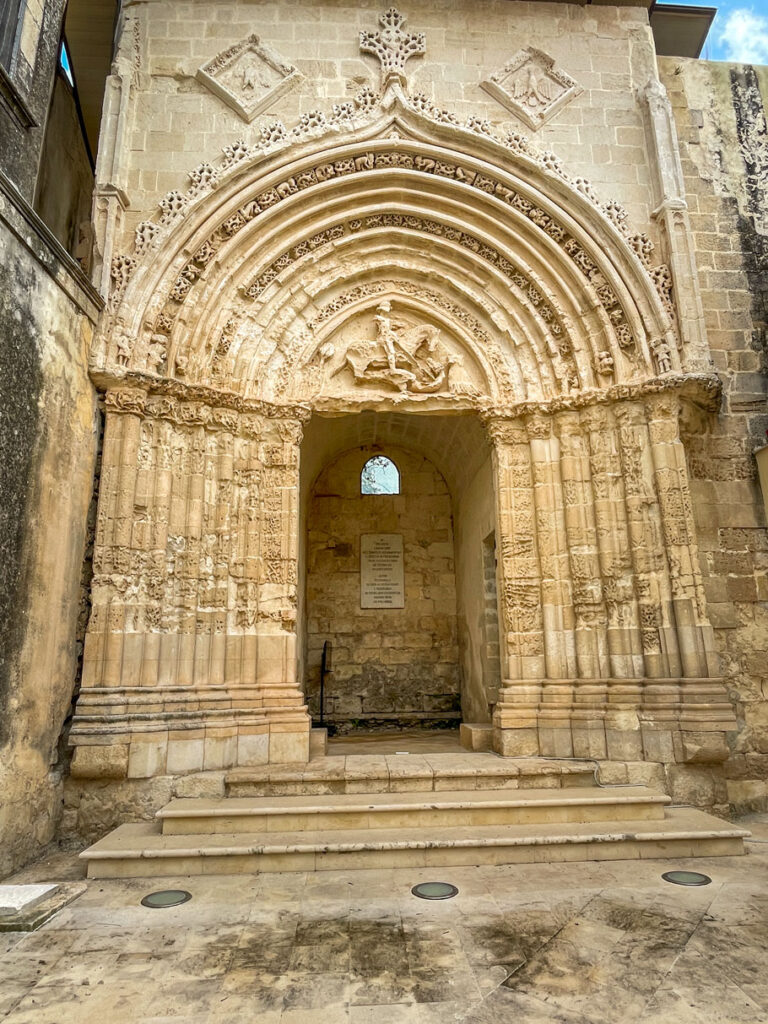
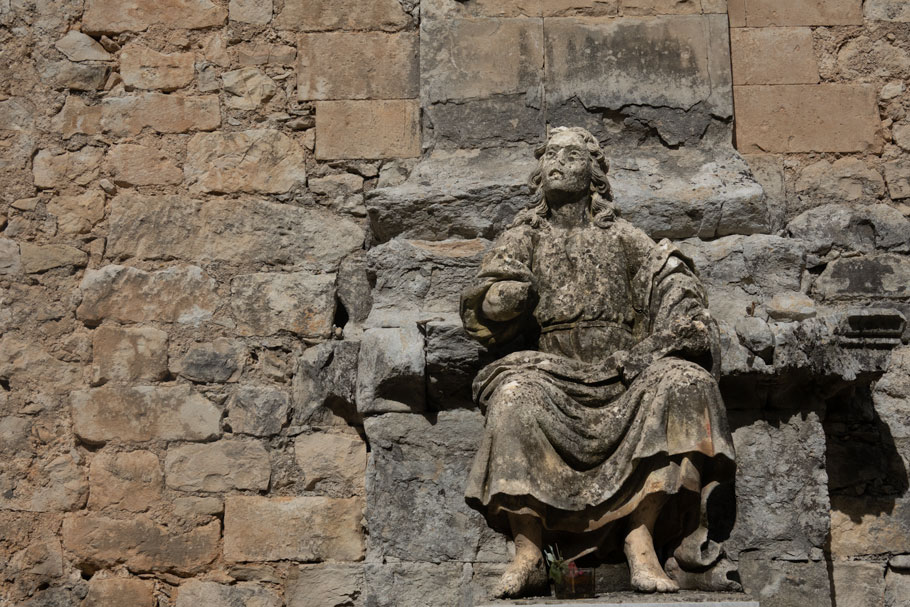
We paused to admire the Portal of San Giorgio, which has become a monument marking all that remains of the original church from the 13th-century, destroyed by the 1693 earthquake. This pink limestone structure, featuring intricate carvings, including St. George slaying the dragon, is a UNESCO-protected symbol of the city’s resilience. It is regarded as a beautiful example of Catalan Gothic architecture.
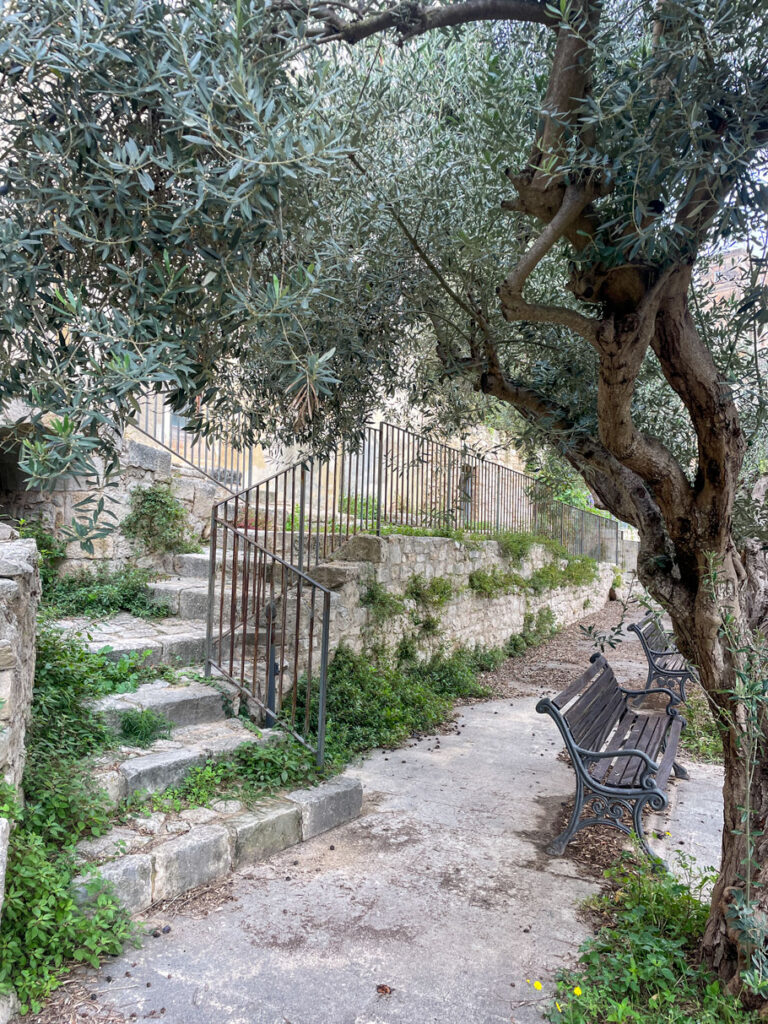
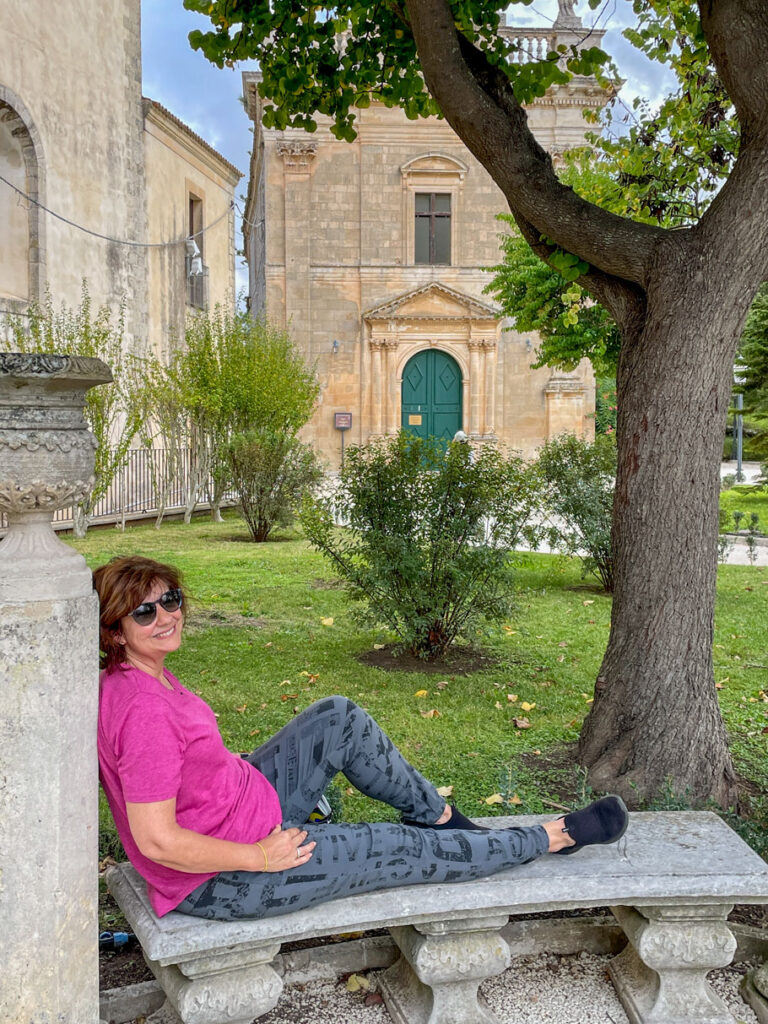
The Giardino Ibleo, or Ragusa Ibla Gardens, is a serene public park located in the historic heart of the city and was established in 1858. Situated at the edge of the town on a hill, it offers stunning views over the Irminio Valley, shaded walking paths, and a tranquil escape from the bustling Baroque streets.It’s a lovely park and we decided to take a break from all the endless walking as it also has gorgeous views of the countryside. It was also becoming quite warm.
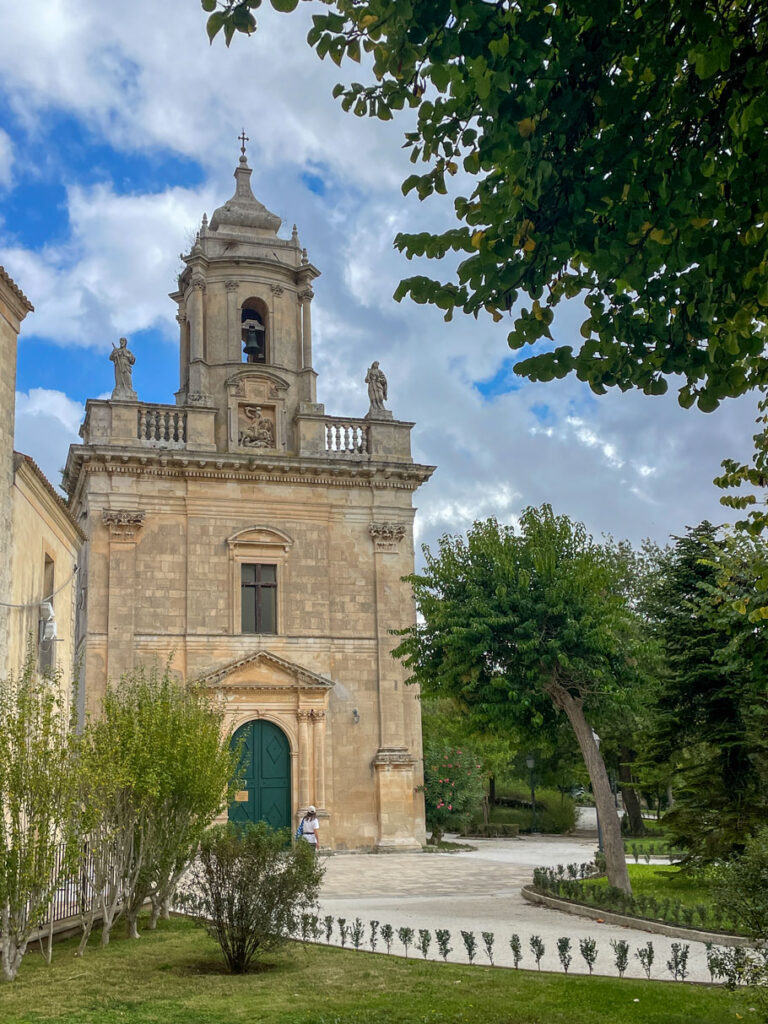
The park contains no less than three historic churches: San Vincenzo Ferreri, San Giacomo, and the Chiesa dei Cappuccini Vecchi. We wandered into one of them, amazed by the ornate interior and then lazed around watching the birds and squirrels.
Later we carried on walking through the winding streets, delighted to come across views of the entire city spread out before us, with the hills rolling away in the distance.
Although there was undoubtedly so much more to see and experience, we decided to get going as we had at least an hour’s drive ahead of us. Farewell pretty Ragusa!