I am not looking forward to Catania. By all accounts it is dangerous with very active pickpocket gangs. Some of the major car rental websites have prominent disclaimers stating that the insurance cover does not apply to Catania.
Nikki really wants to go, so early in the morning we set off. The road that leads up from the old town meets the main road to Catania at the apex to two blind bends. It is peak hour traffic and cars are hurtling in from both sides. I have no intention of having an accident or ending our lives, So I wait for a gap that never comes. Several impatient Sicilians give up hooting and shoot around us into the traffic finding time to gesticulate wildly at the same time. Eventually, with heart in mouth, I scream across into a gap that actually isn’t one. No one hoots or is fazed.
Getting onto the highway to Catania is easy, and we eventually pop onto a road that skirts the port and takes us straight the Parcheggio conveniently located near the Piazza Duomo and the Centro Storico.
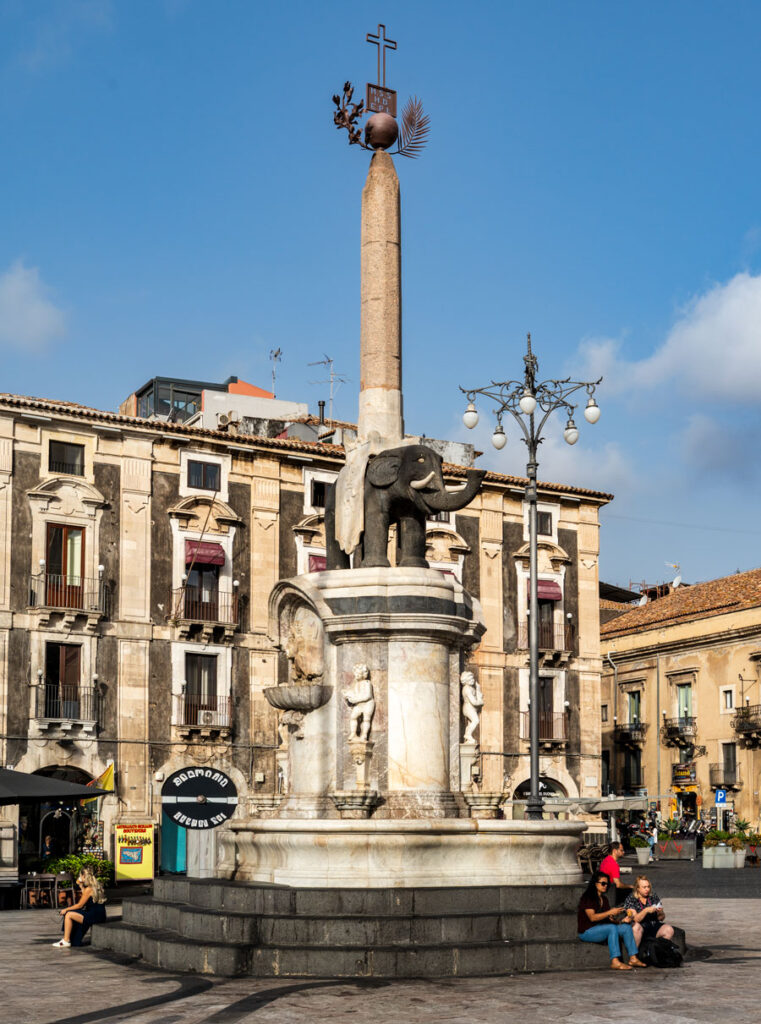
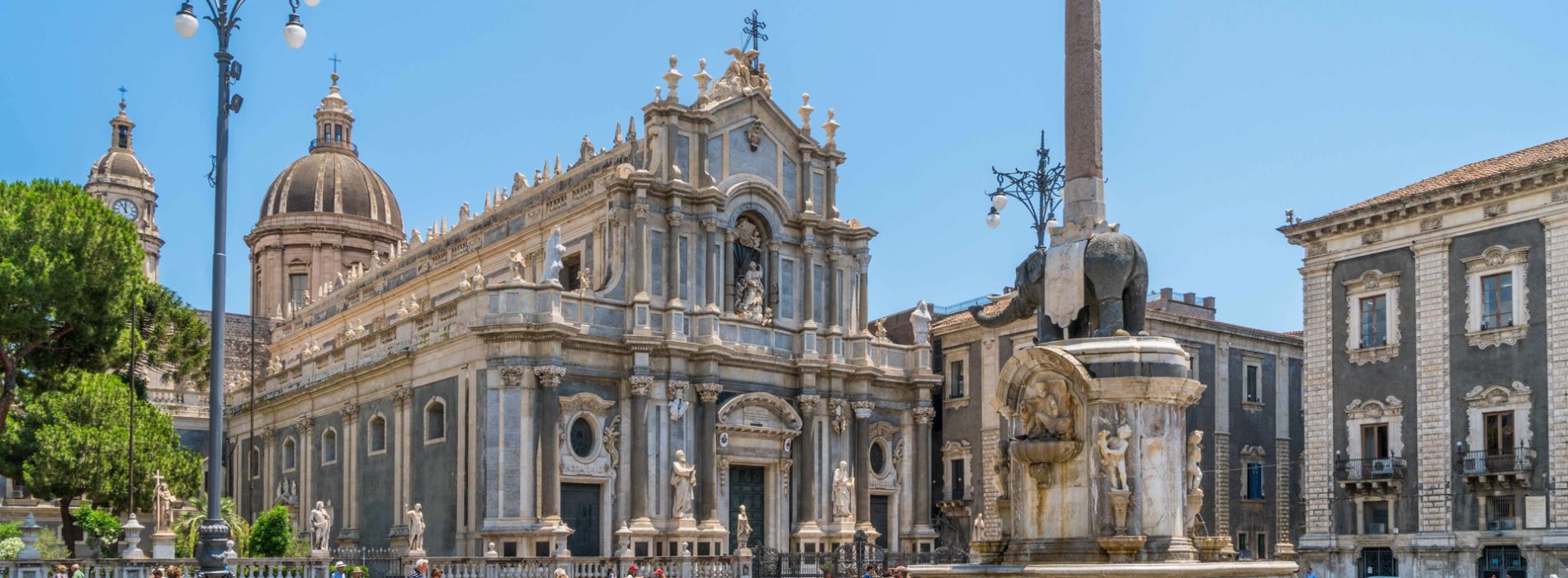
This square is an architectural masterpiece dominated by the Cathedral of St. Agata and the iconic lava elephant fountain, symbolising the city’s strength and resilience.
Cathedral of St. Agata
Catania is known as the Black City because of how prominently basalt features in its baroque architecture.
Catania was conquered by the Romans in 263 BCE, becoming Catina. Over the centuries, it suffered repeated destruction due to natural disasters, including earthquakes and volcanic eruptions (especially in 251, 1169, 1669, and 1693).
Despite these challenges, the city has flourished, particularly during the Renaissance, when it became one of Italy’s foremost cultural and political centers and established Sicily’s first university in 1434.
The iconic elephant made of lava in the middle of Piazza Duomo is the symbol of Catania. The Egyptian obelisk on the elephant’s back was erected by Giovanni Battista Vaccarini in 1736.
Fontana dell’Amenano locally known as “acqua ‘o linzolu” – literally water as a sheet – because of the “waterfall effect” but also because in the past the laundresses washed their clothes and sheets here.
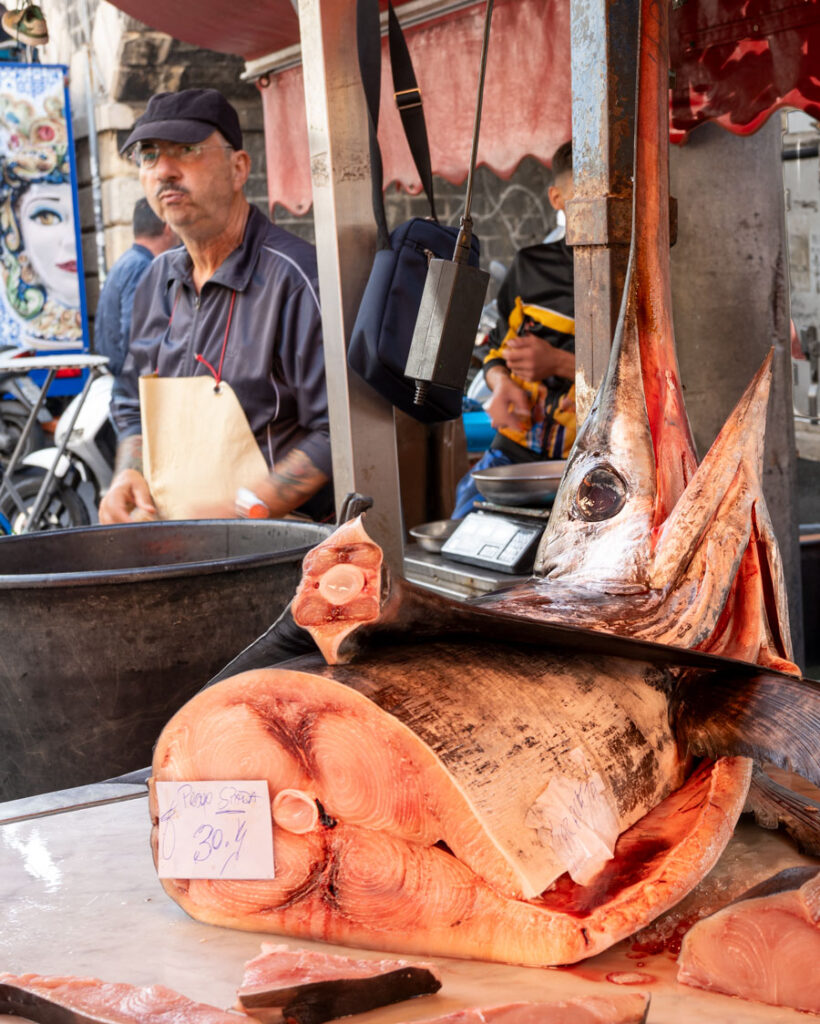
Swordfish is on the menu of every restaurant in Sicily
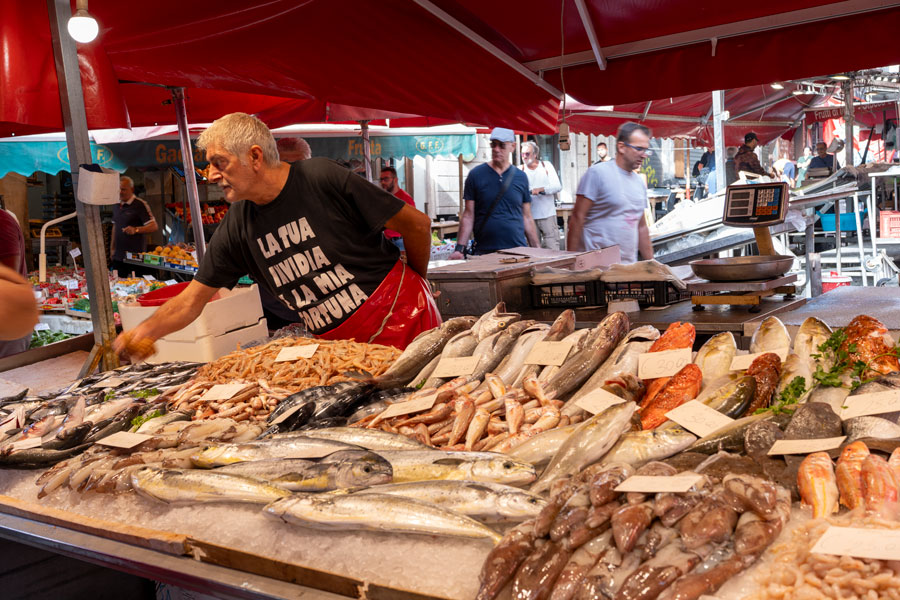
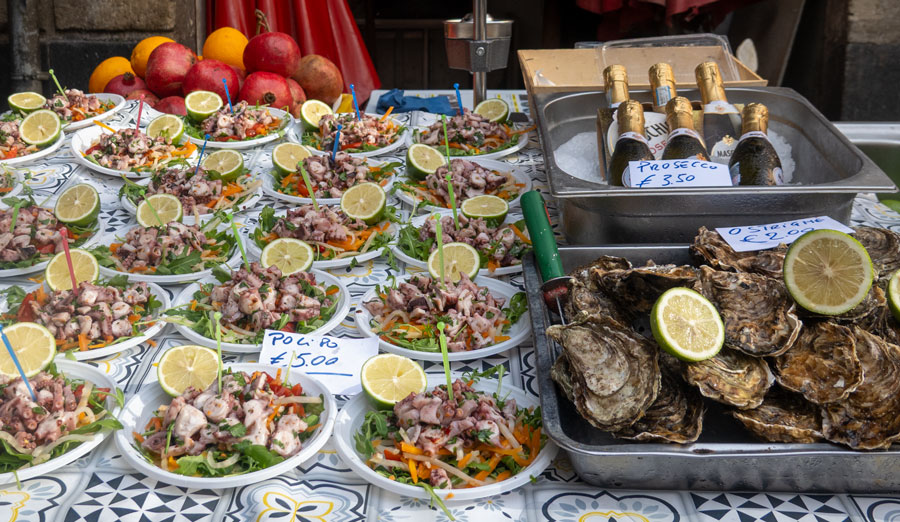
La Pescheria (The Fish Market) hasn’t changed in centuries. The fishmongers are artists, their calls (the vuciate) echoing in a dialect full of Arabic. There are swordfish heads, live octopus, glistening prawns, and trays of sea urchins. It’s a magnificent full-body assault on all the senses.
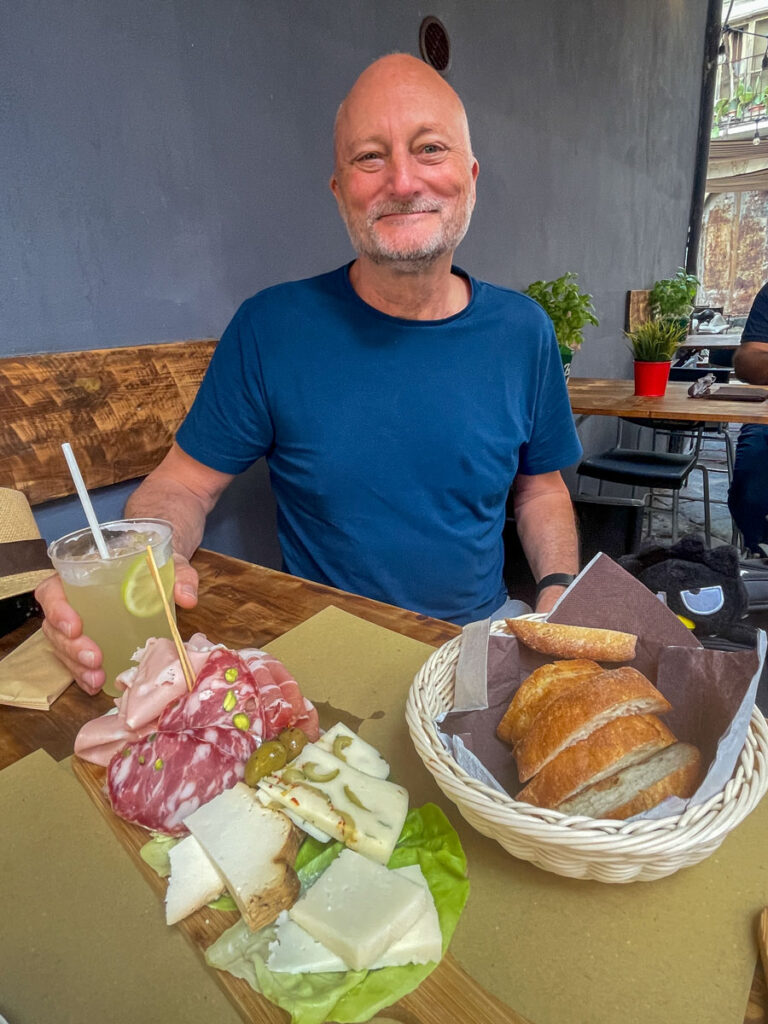
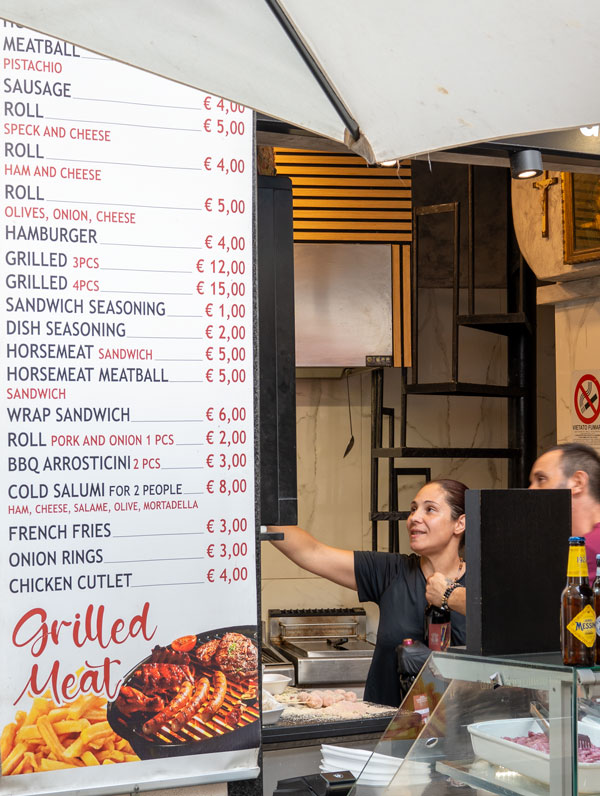
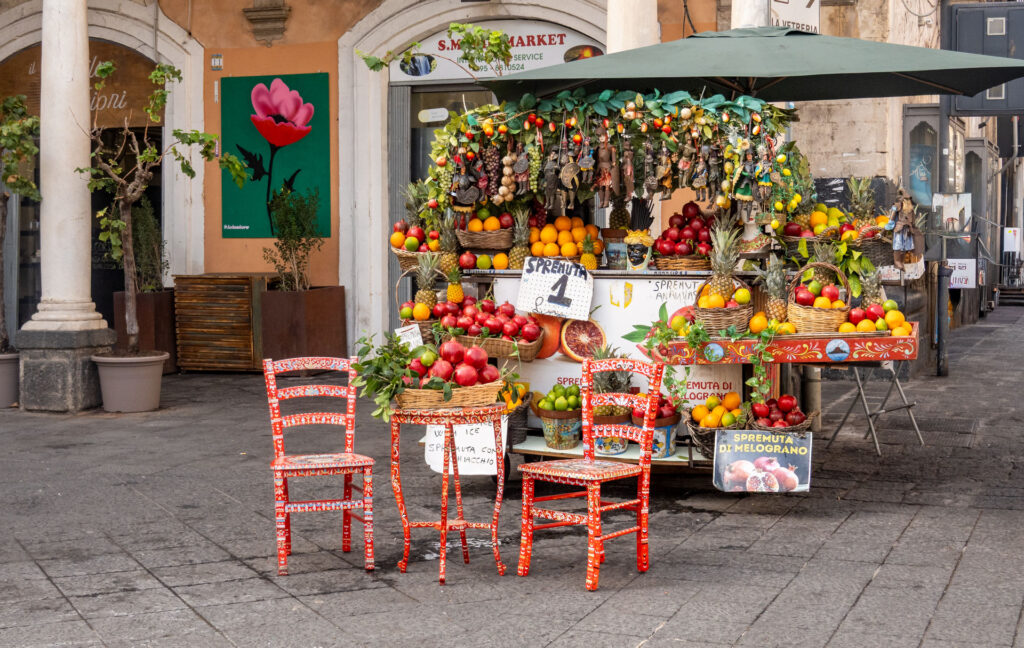
The outskirts of the fish market are filled with a diverse range of eateries – large, small, fish, meat, fruit drinks. It’s hard to choose, but eventually we have a bowl of delicious octopus salad and then sit down for a charcuterie board and fresh lemonade.
Unusually, I did not try the local delicacies😀
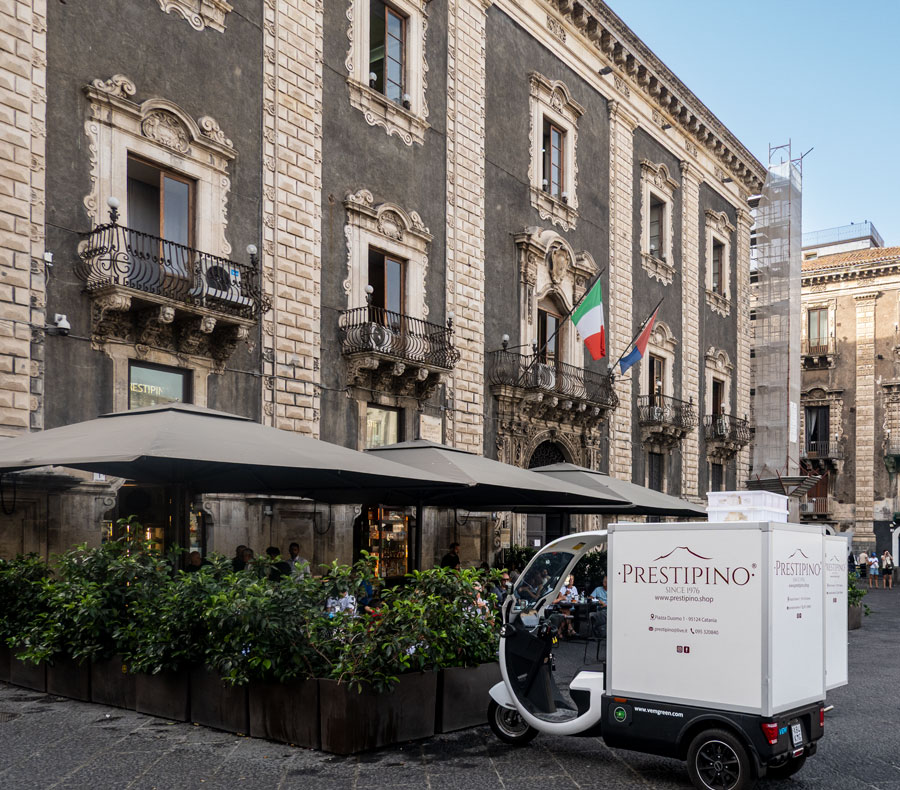
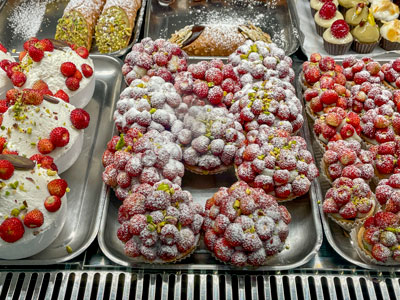
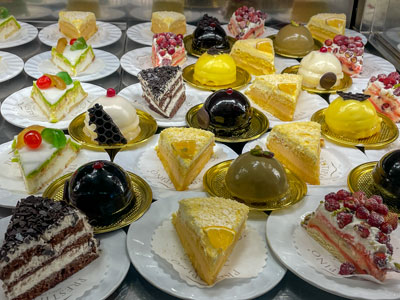
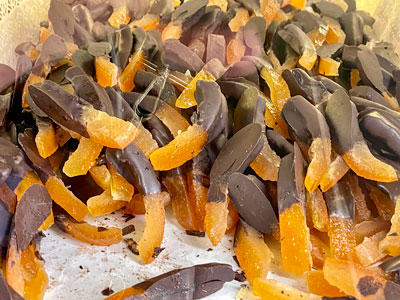
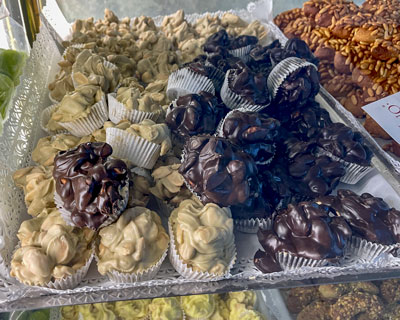
Back on the square we wander into the justifiably famous Prestipino for a little sweetness after lunch. There are all sorts of savouries, but it is the aisles of trays with enticing pastries that we are after.
Cassatelle di sant’Agata are made to honour St Agatha who’s breasts were cut off when she refused to marry a Roman prefect. They are round-shaped sweets made with sponge cake soaked in rosolio and filled with ricotta, chocolate drops, and candied fruit, such as oranges. The outside is covered in white icing and finished with a candied cherry on top.
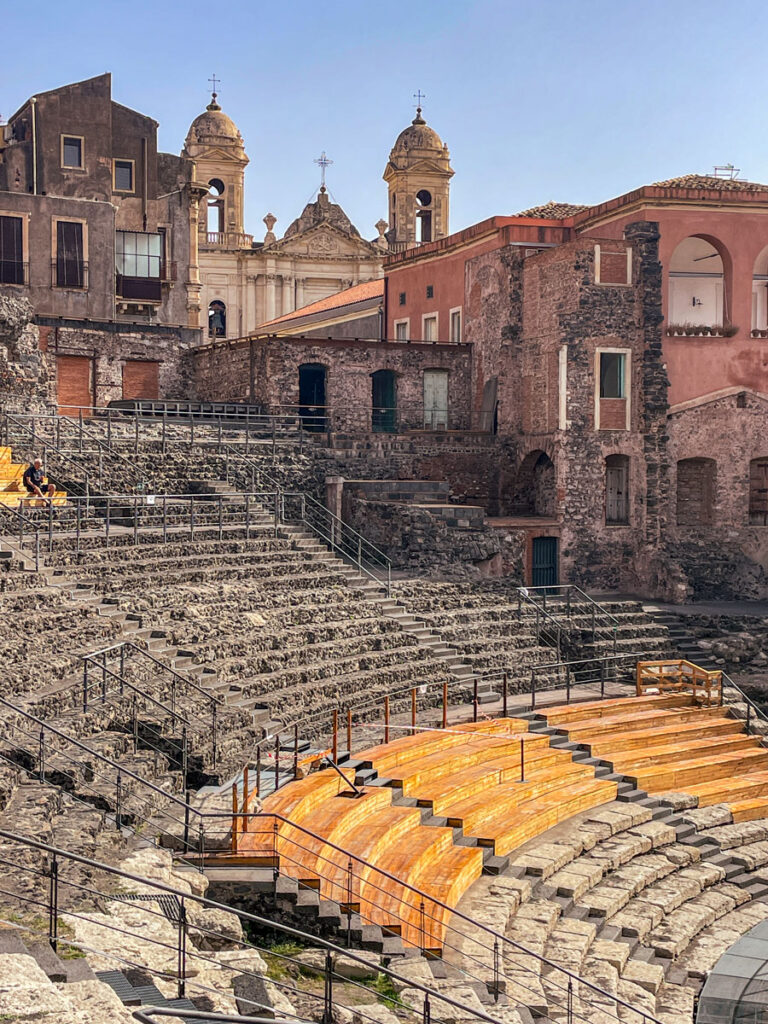
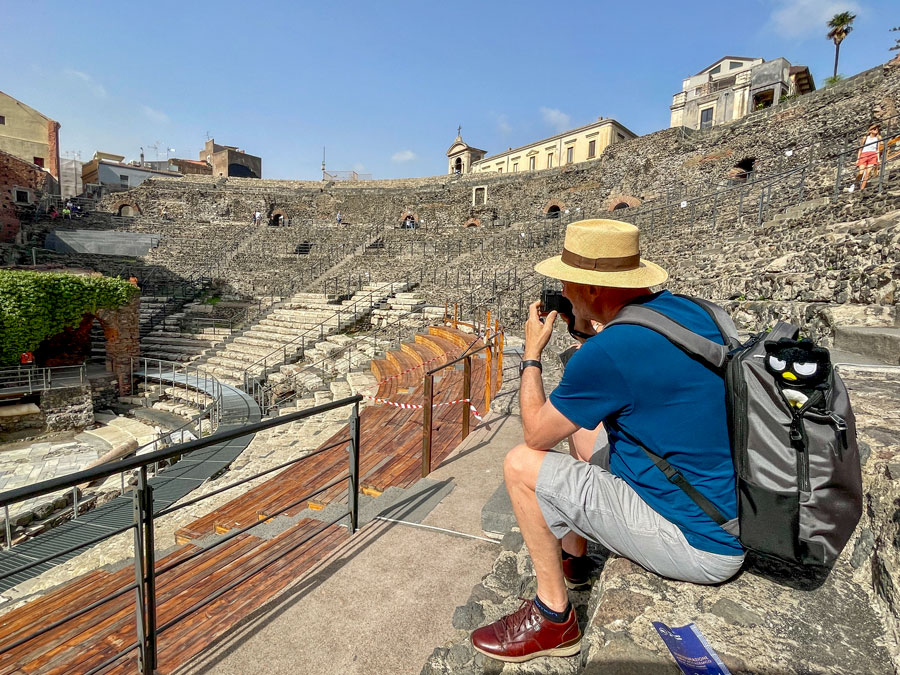
We stroll up Via Vittorio Emanuele to the Greek-Roman Theater which is well hidden as access is through an innocuous building. As we enter the amphitheater, we see that buildings butt right up to the edge of the theatre above us. (The site was not cleared of houses that had been built into the structure until 1959.)
It consists of an auditiorium with nine tiers that could hold 7000 people and a complex system of corridors accessing different areas of the structure. It is very sumptuous and shows Corinthian columns and an entrance through three doors that leads to the stage. There are many niches that once had statues. Still visible in the orchestra area is the marble floor in numbered sections.
Behind it there is the Odeon, a semicircular auditorium that was originally used as a rehearsal space for the actors. A series of outer walls enclose rooms that might have originally been used as shops
The theatre ceased to be used between the 5th and 6th centuries. It was stripped of marble and stone in 1098 by Count Roger, in order to speed up the construction of the St. Aghata’s Cathedral. Archaeological work on the site began in the 18th century under the Ignazio Paternò Castello, Prince of Biscari,[2] . Some of the marbles and artefacts recovered during excavations and restorations are on display in the adjacent Casa Pandolfo and Casa Liberti.
Catania has been amazing. I have thoroughly enjoyed every aspect and minute of our time here. (And I did not feel unsafe in any way at any time). So very glad Nikki insisted.
Now we are all walked, eaten and history’ed out so we head back to Aci Castello for a rest.