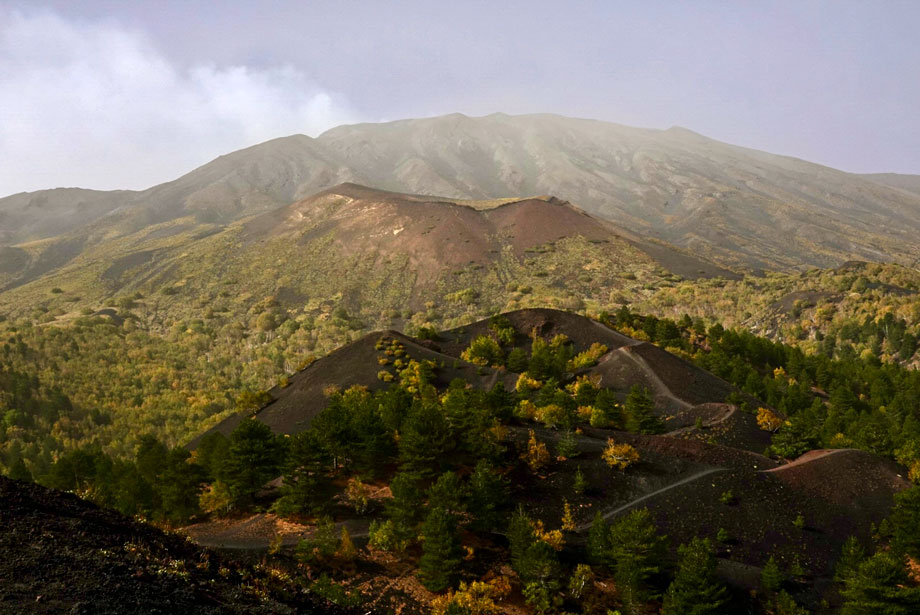
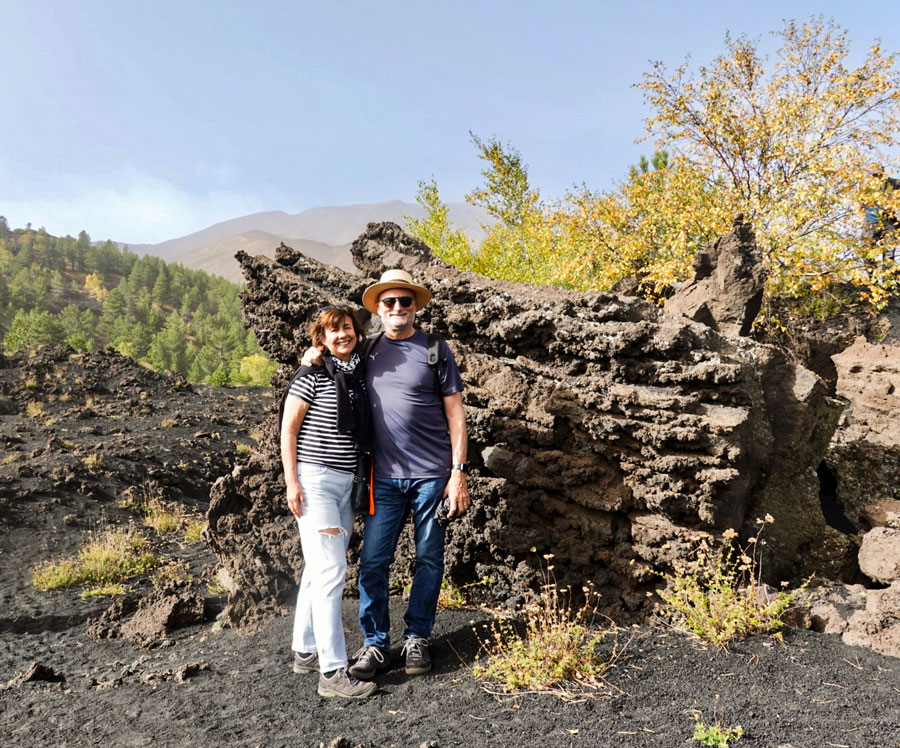
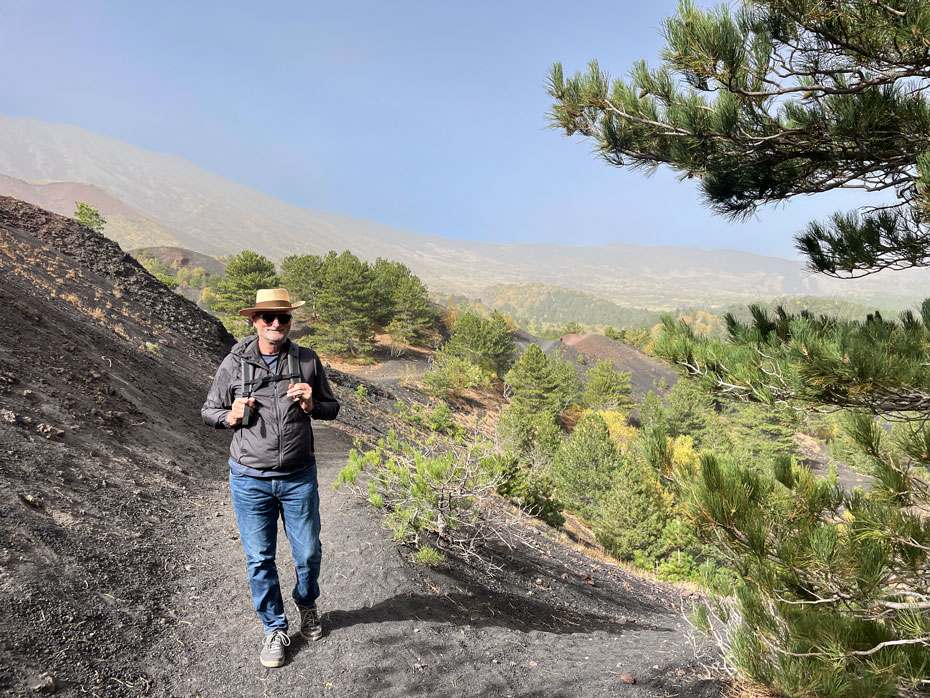
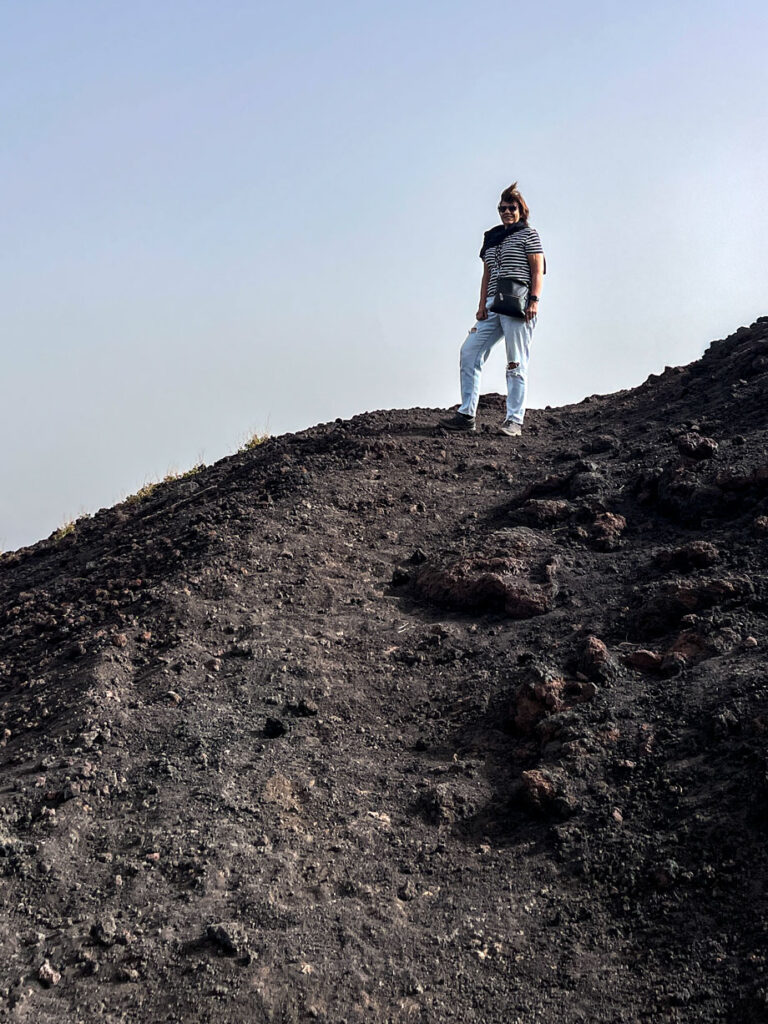
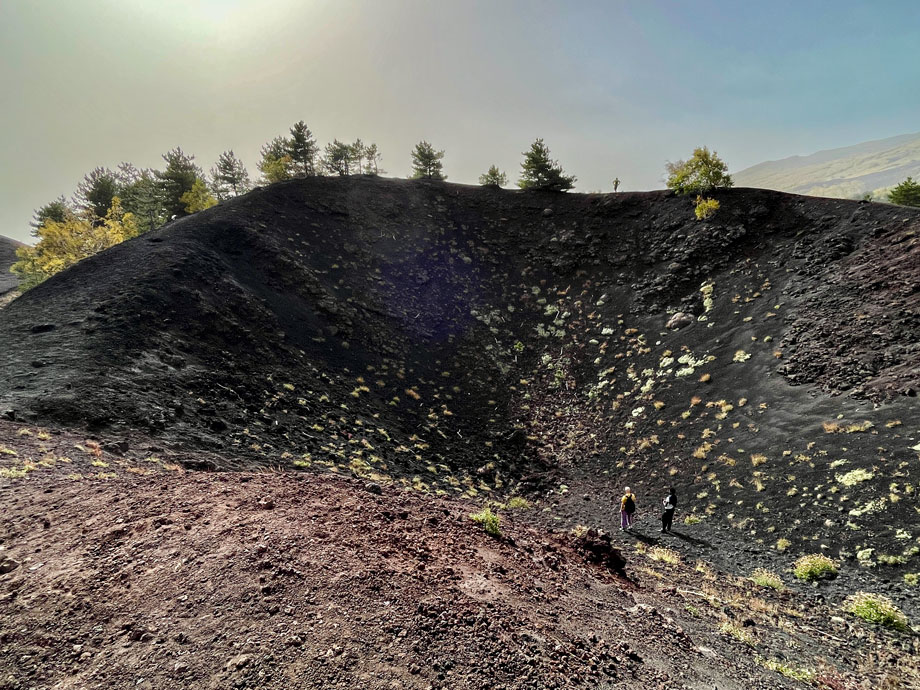
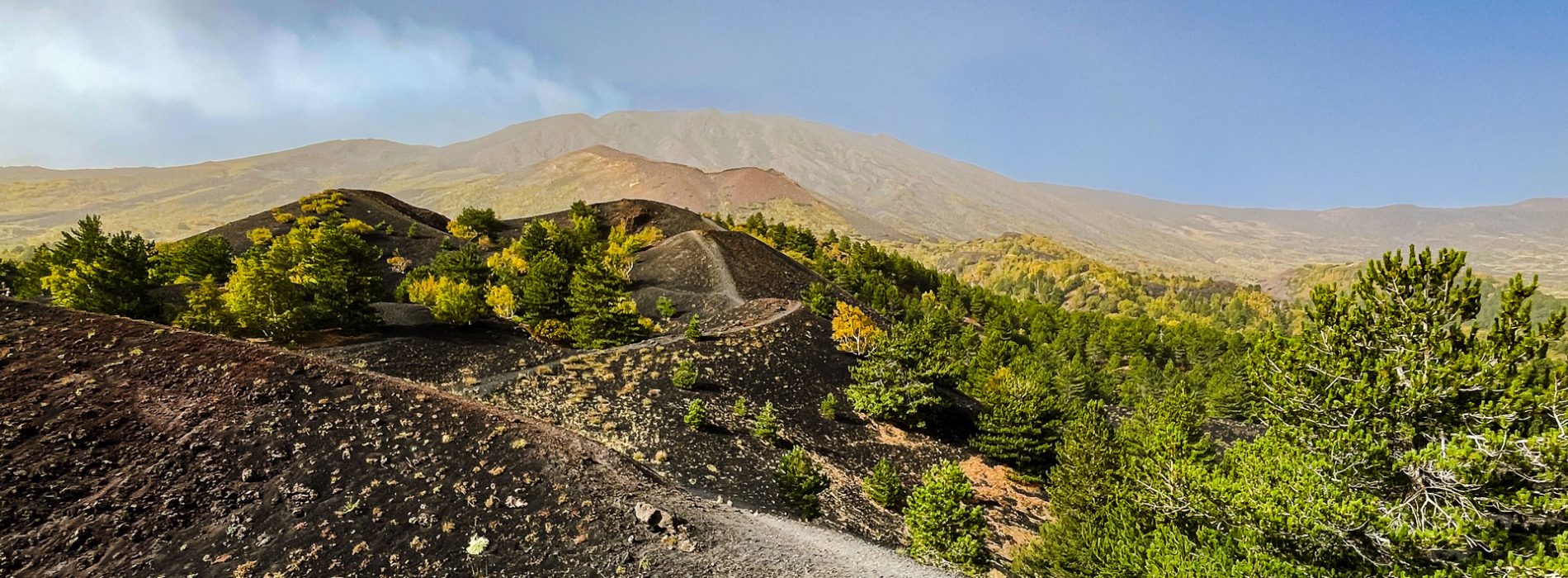
Mount Etna is high on our list of must-do’s in Sicily and as we make our way through the undulating landscape – it does not disappoint. The greens and yellows of trees and shrubs, some semi-buried from recent eruptions, contrast sharply with the dark ash.
As our first visit to a volcano, we are woefully ignorant. We had expected a classic single cone as seen in schoolbooks. Etna is anything but… the flanks are covered with cones, vents and fissures formed by eruptions over the centuries. Secondly we had thought that the area would be sterile, not this tapestry of natural and manmade growth. Thirdly we thought ash was fine not the granular, nutrient-rich “soil” that farmers in the area refer to as “the gift that falls from the sky”. Fruit orchards, vineyards, olive groves, and natural forests of conifers thrive here. There is even a forest of Silver Birches.
The path less travelled
The majority of Etna trips start from Rifugio Sapienza, the base station of the cable car that takes you up to 2500m (not to the summit craters as many people think – that still requires some serious walking). It has restaurants, souvenir stores, and a large parking lot. The Silvestri Craters, formed during the 1892 eruption are also nearby.
It sounded crowded and touristy, with queues for the cable car, followed by a fair amount of steep walking. We found Franscesco on AirBnB excursions and pre-booked before arriving in Sicily. His trip starts near the village of Zafferina on the South Eastern slopes of Etna, promising a gentle trip, suitable for old and young, much of the time being ferried around in his 4×4 jeep. We expected that at this stage of the trip we would have done a fair amount of walking already. Also we don’t particularly enjoy long hikes in the heat of the day so it would be nice to take a break, recover and see MountEtna in comfort. As it turns out we could not have made a better choice. Although we had spent the previous day in bed forgoing sightseeing, we are still quite weak from our flu, and are hoping we will have enough energy to manage even the little walking we will need to do.
We meet Fransesca at Murgo Tenuta Via Zafferana, Santa Venerina, one of the many wine farms that cover the slopes of Etna.
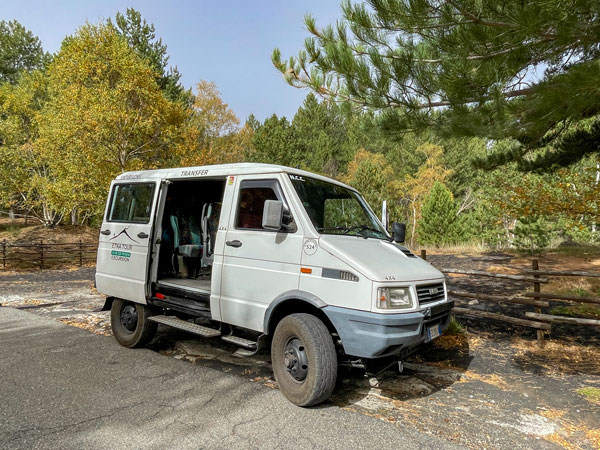
We choose special walking boots from his selection and set off in his specially adapted, comfortable 4×4 vehicle.
Mount Etna is the highest Mediterranean island mountain and the most active stratovolcano in the world. It is constantly active, erupting almost every year and as recently as the month before we arrived. And yet it is densely populated: Catania, with over 300,000 inhabitants, lies at its feet, and countless villages stretch up and around I its slopes .
The eruptive history of the volcano can be traced back 500,000 years and at least 2,700 years of this activity has been documented. The almost continuous eruptive activity of Mount Etna continues to make it a natural laboratory for the study of volcanic activity.
Franscesco is a font of knowledge and has a great way of sharing so that it isn’t a constant stream of touristy waffle.
A series of cones on the slopes of Etna show eruptions over the years.
There is a constant plume of steam from Etna. White steam typically indicates normal fumarole activity, while darker, high-altitude clouds signal more active, explosive eruptions.
Etna is a “complex system” with multiple summit craters—the Northeast Crater (1911), Voragine (1945), Bocca Nuova (1968), and Southeast Crater (1970s)—and numerous fissures and vents. Etna isn’t just one crater, it’s a complex system with over 300 side craters, fissures, and vents. This means eruptions can happen in multiple locations, often surprising scientists and locals alike. new cones formed.
The most violent historic eruption was in 1669, which lasted from March to July and produced large lava flows that destroyed villages and reached Catania. Lasting 112 days, it emitted approximately 600 million cubic meters of lava. A 17 km-long lava flow reached and damaged parts of Catania.
This eruption also recorded one of the first documented human attempts to divert lava flows. The Catanian townspeople dug a channel that drained lava away from their homes, but when the diverted lava threatened the village of Paterno, the inhabitants of that community drove away the Catanians and forced them to abandon their efforts
Despite the danger, over 25% of Sicily’s population lives on its slopes, benefiting from fertile soil used for agriculture (orchards, vineyards).
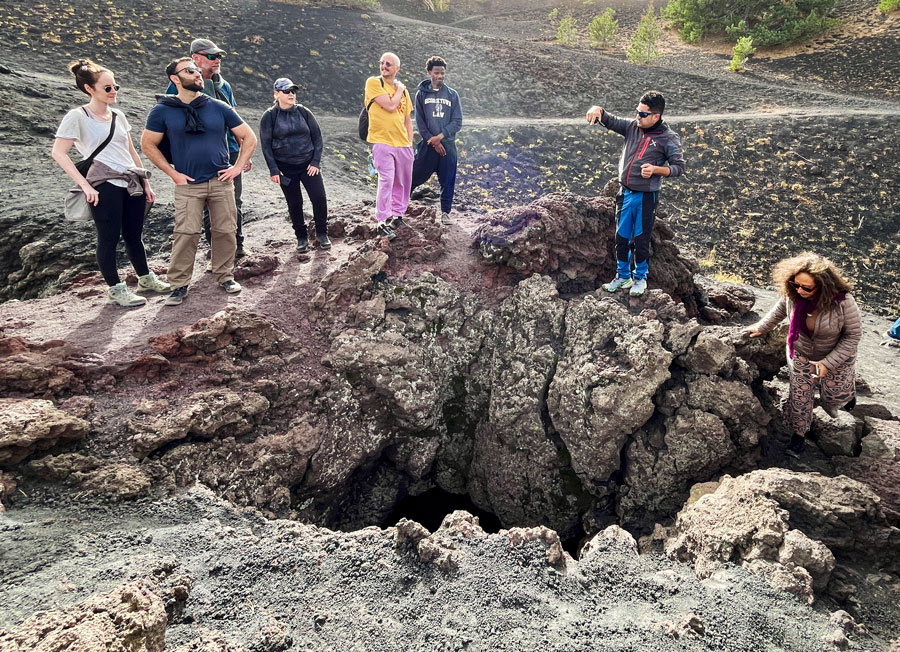
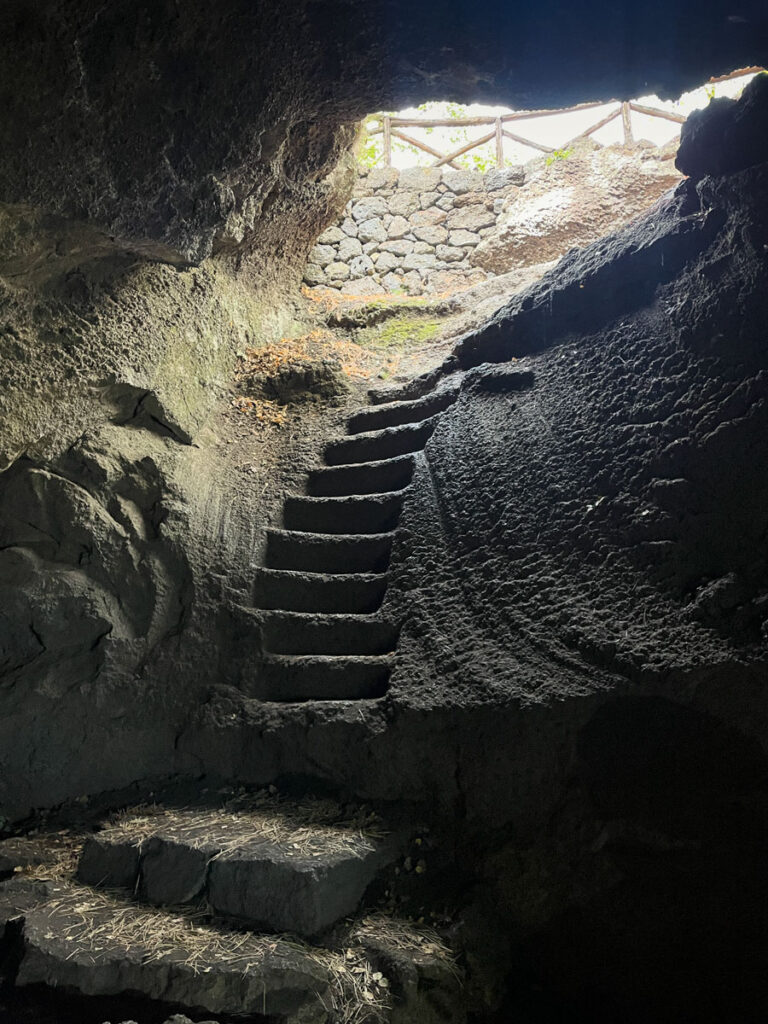
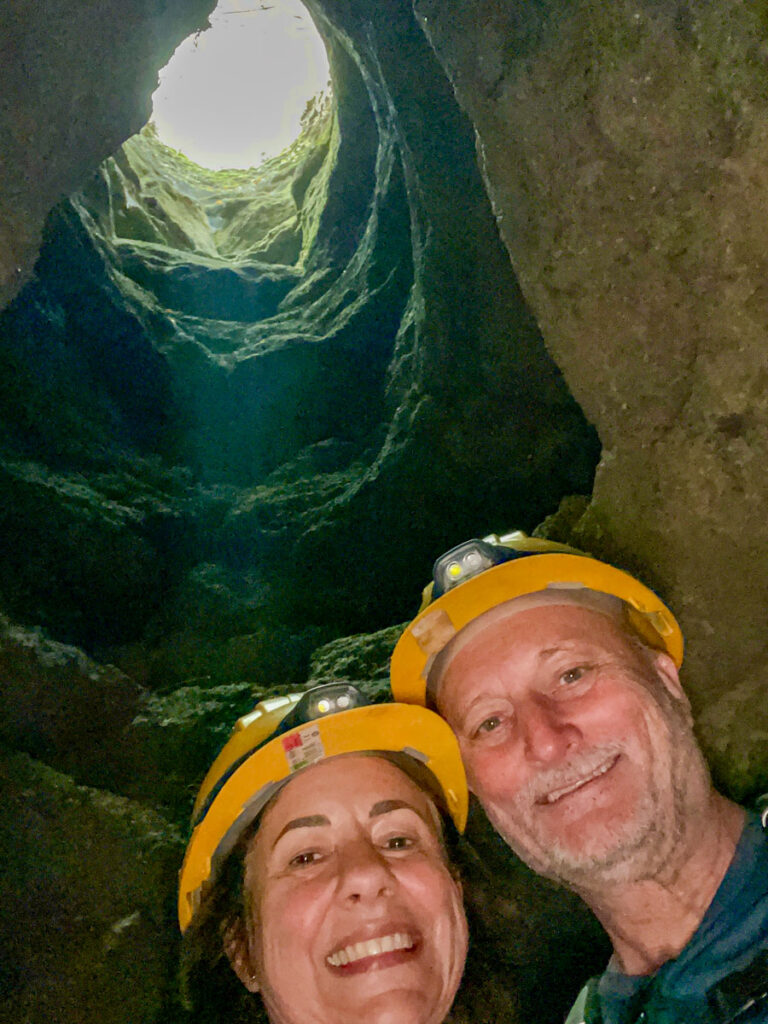
More than 200 lava caves have been identified. These volcanic tunnels formed when the outer surface of a lava flow cooled and solidified while molten lava continued moving beneath it. Once the flow drained, hollow conduits remained. Many of these lava tubes preserve clear evidence of flow dynamics, layered lava linings, and internal collapse structures, making them important geological features of the volcano.
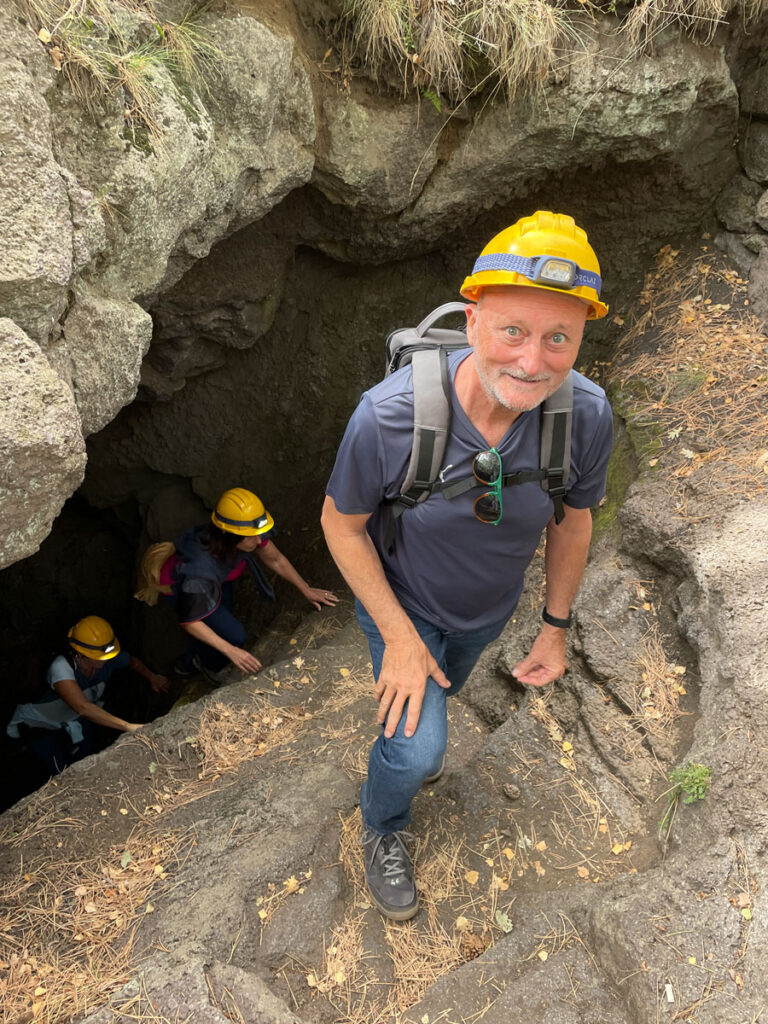
We welcome the cool, damp air as we descend using the steps cut into the lava.
The pace is easy with frequent stops to admire and be educated
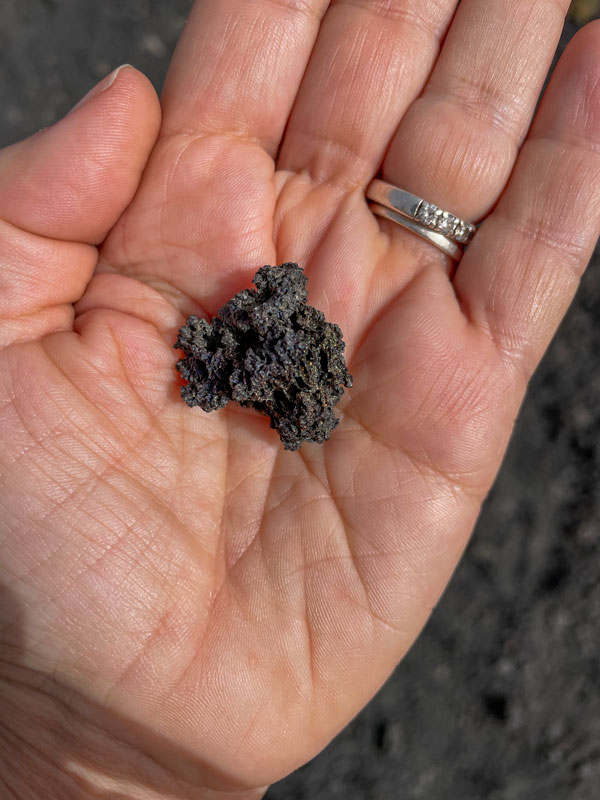
Aluminum flecks in 5 week old lava
This enterprising fellow has set up his stall as we exit. He provides tasters which are all delicious and we are unable to decide. So we buy multiple bottles of each flavour.
Zaferrana (Named for saffron which used to be a major source of income) is now famous for its honey – considered the gold of Etna. With over seven hundred “lapari” (beekeepers), Zafferana boasts the production of approximately 15% of national honey, with product varieties ranging from wildflower to orange, from eucalyptus to chestnut, and of course saffron.
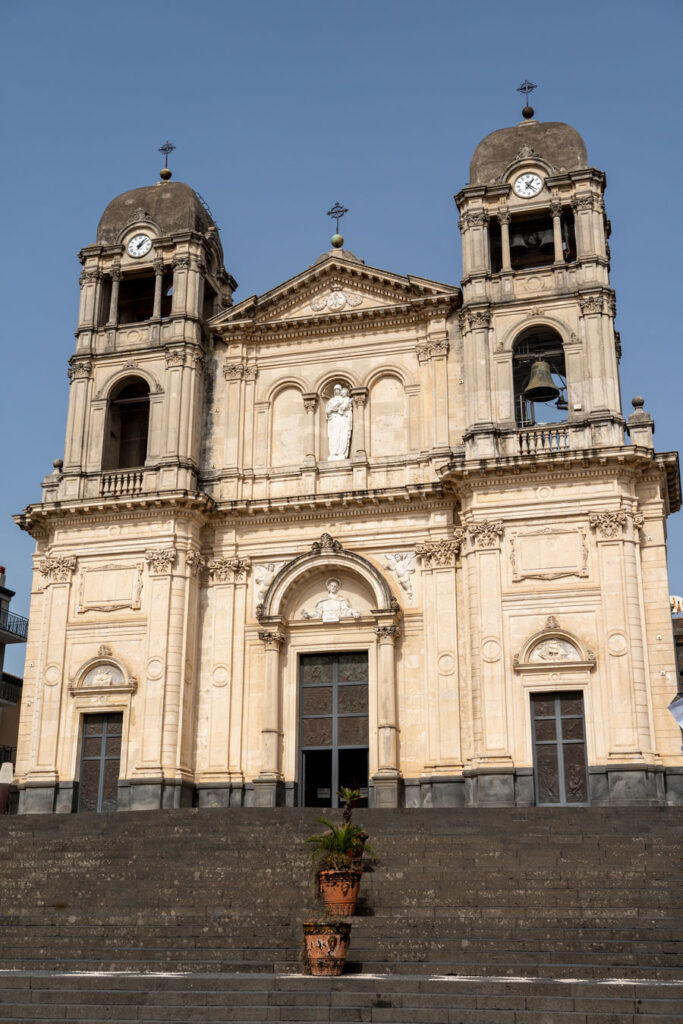
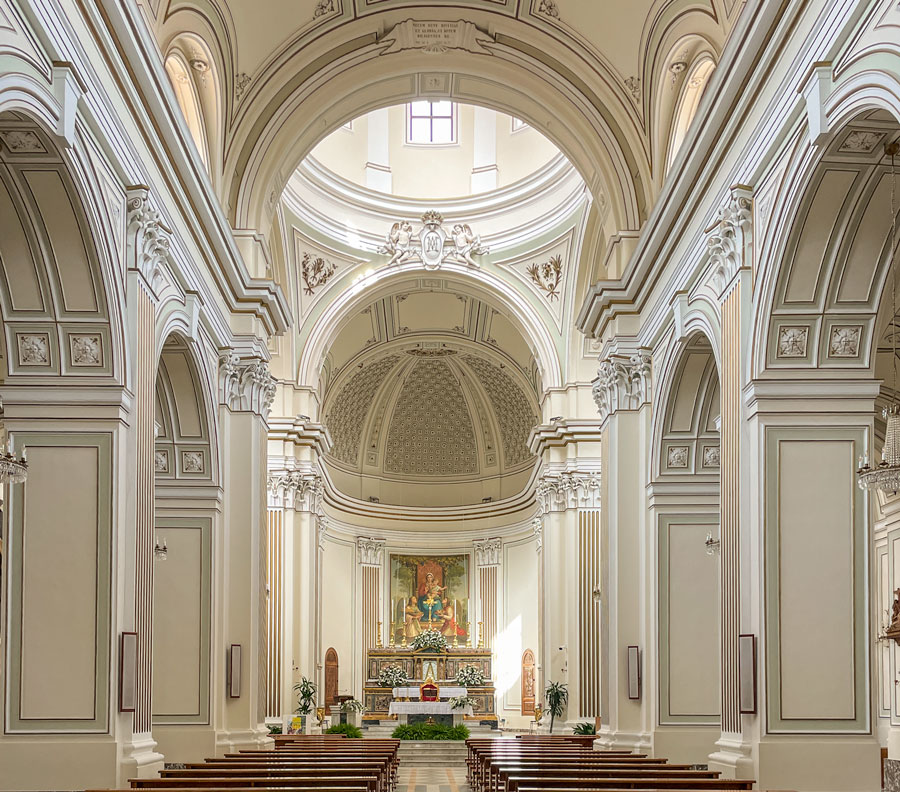
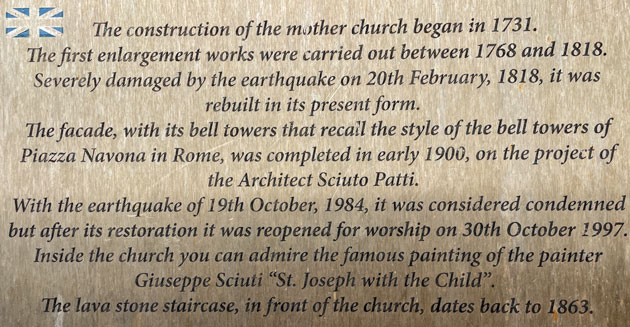
The road back passed through the town of Zaffarena. Hunger pangs “forces” us to stop. We couldn’t resist stopping into yet another beautiful church.
Bronze door depicting the lava flow during the eruption of 1792
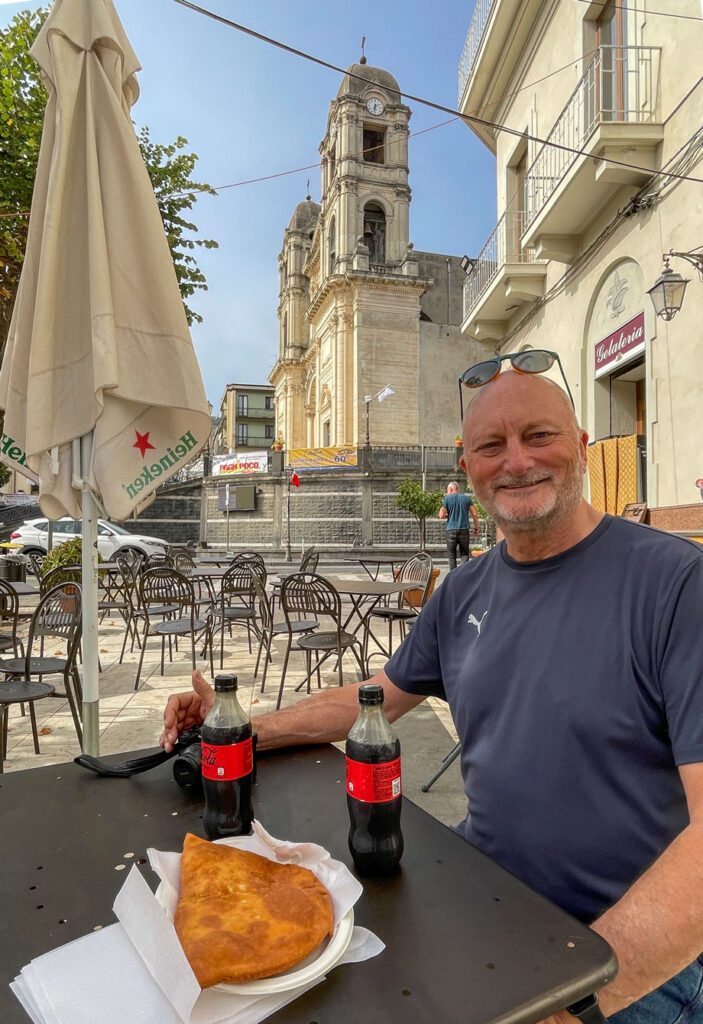
The town is quiet at midday. We find Pasticceria Donna Peppina on the Piazza and share a cheesy pastry. No idea what it is, but it's delicious
We debate whether we should go on to Taormina as we are half way there. We are tired though, and decide not push our luck and rather go home and build up some strength.