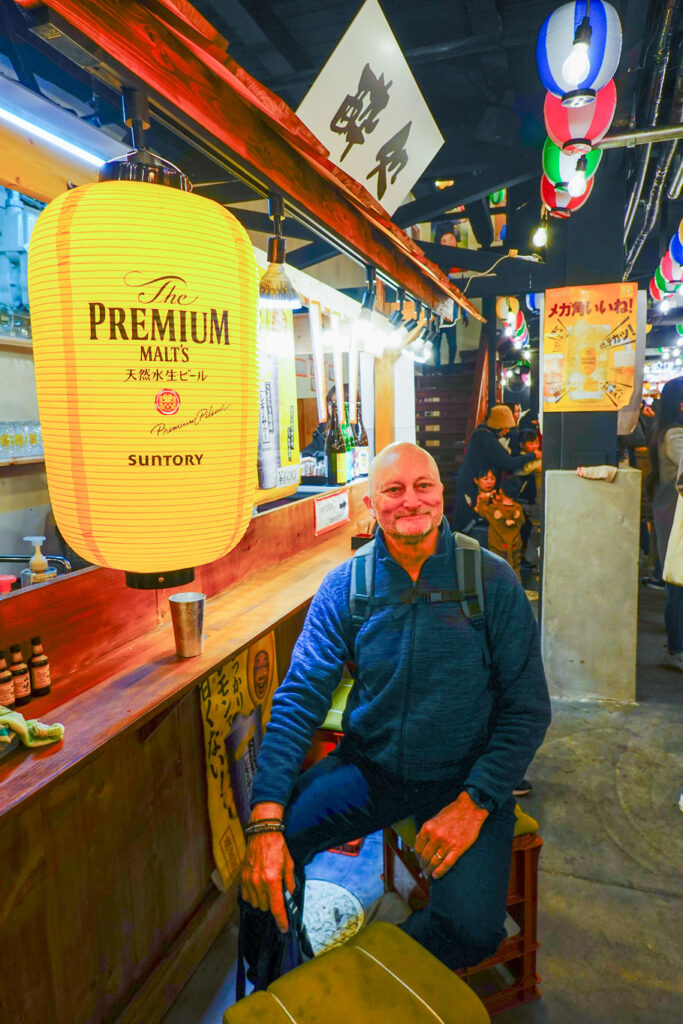
We took the Sakura Shinkansen from Fukuoko via shin-Osaka, to Kyoto (Hikari 652).
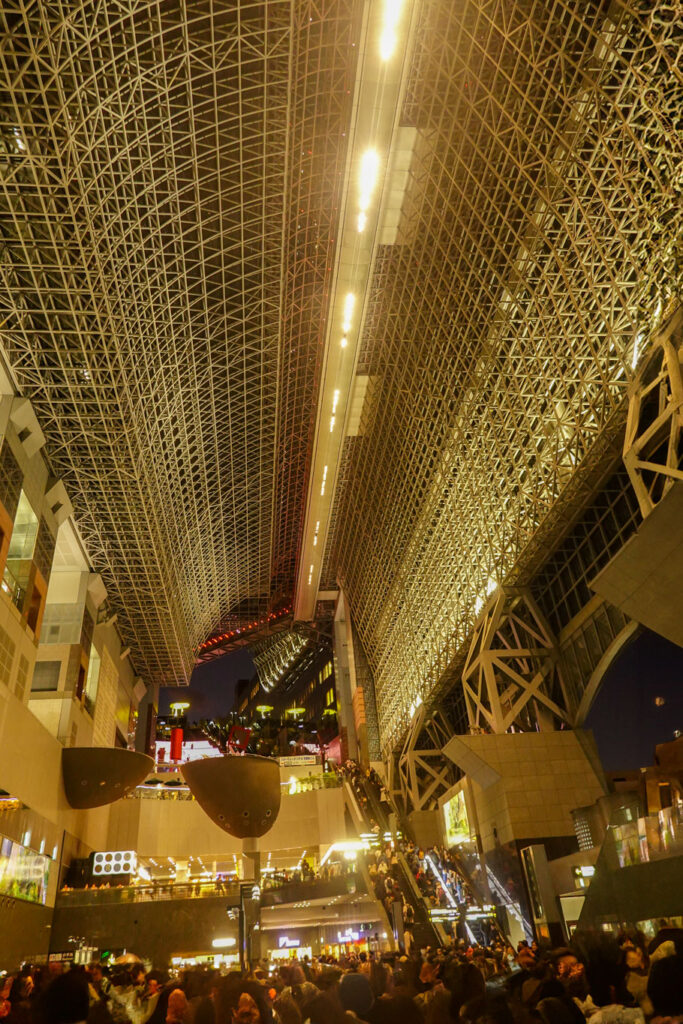
Even the Facebook tourist conversations did not prepare us for the literal sea of human beings in Kyoto station. The station is a major transportation hub for all forms of transportation in Kyoto. Someone had posted that they had arrived in the city and literally left immediately as they were completely overwhelmed by the sheer numbers of people.
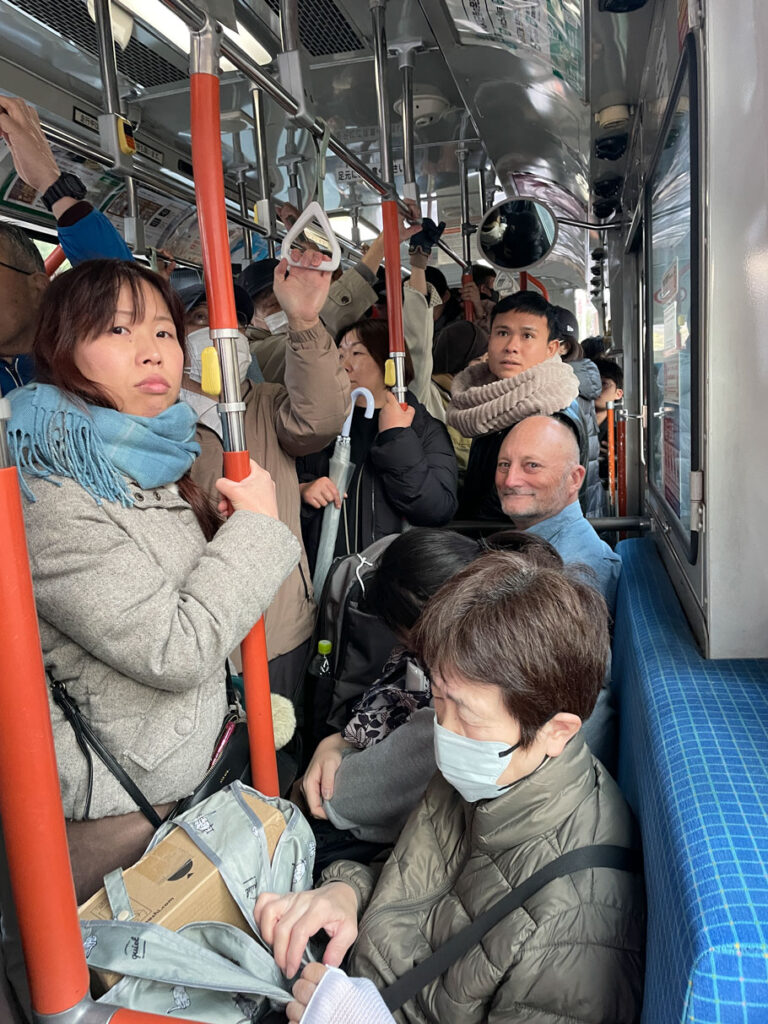
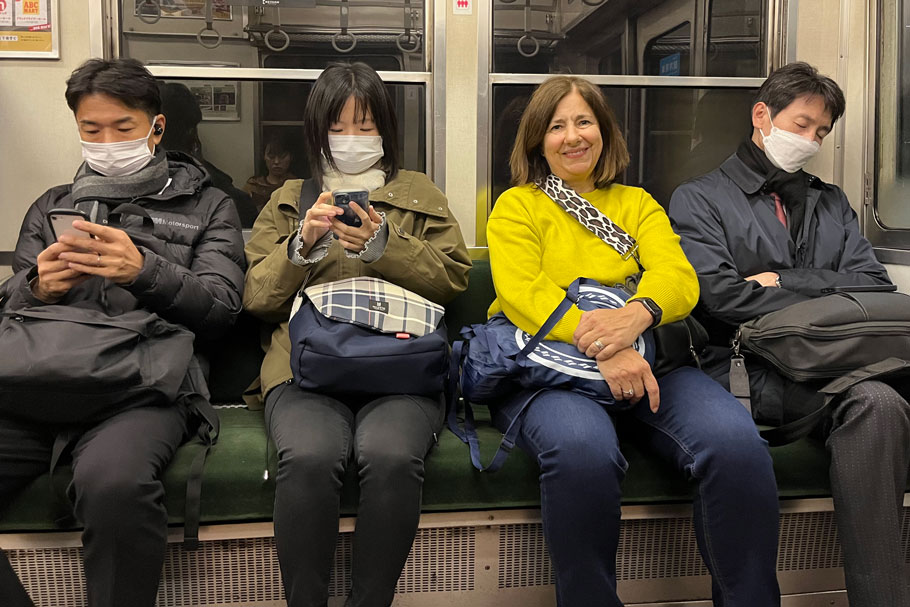
The bus was jam-packed with locals
For this reason, I was grateful that we had been to Kyoto in 2019 and seen some of the most important sights. As Kyoto would be our last stop for this trip, we’d allowed a slow 3 days to catch up on anything we hadn’t yet seen or wanted to see again otherwise the plan was to stroll around taking it easy.
Our stay began with the number one Japanese tourism nightmare – Geoff lost his Japan Rail Pass in all the chaos of moving our luggage off the train, finding the exit and navigating through the throngs of people in the station. In every guide to Japan, you are warned. Do not misplace your pass as it cannot be reissued! We had been managing them with ridiculous levels of care up until now. The fortunate thing was that it was literally the last stint but we still needed to get back to Tokyo in order to fly home.
We searched every pocket and bag a countless number of times. And then we searched again.
Eventually we decided to head to our accommodation.
We took the bus to Gion. (We used the superb bus system a lot of the time while in Kyoto). The advantage of the bus is that you get to see a bit of the city and start to develop a better sense of orientation than you do on the subway. The bus is easy to catch. Always someone around to help you queue in the right place. You enter from the back and pay with your Suica card when you exit the front.
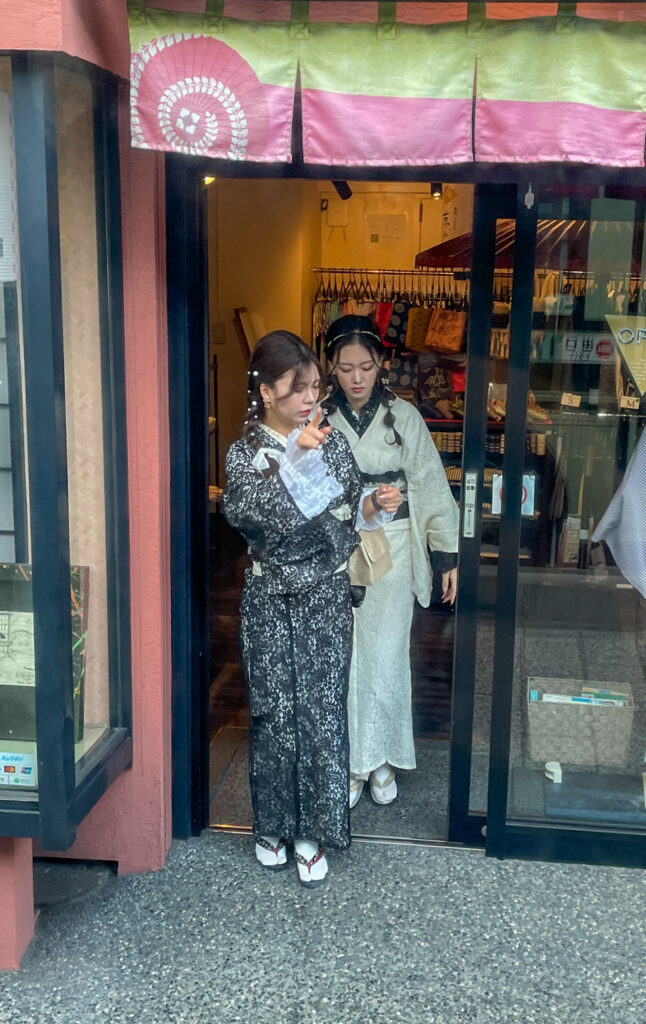
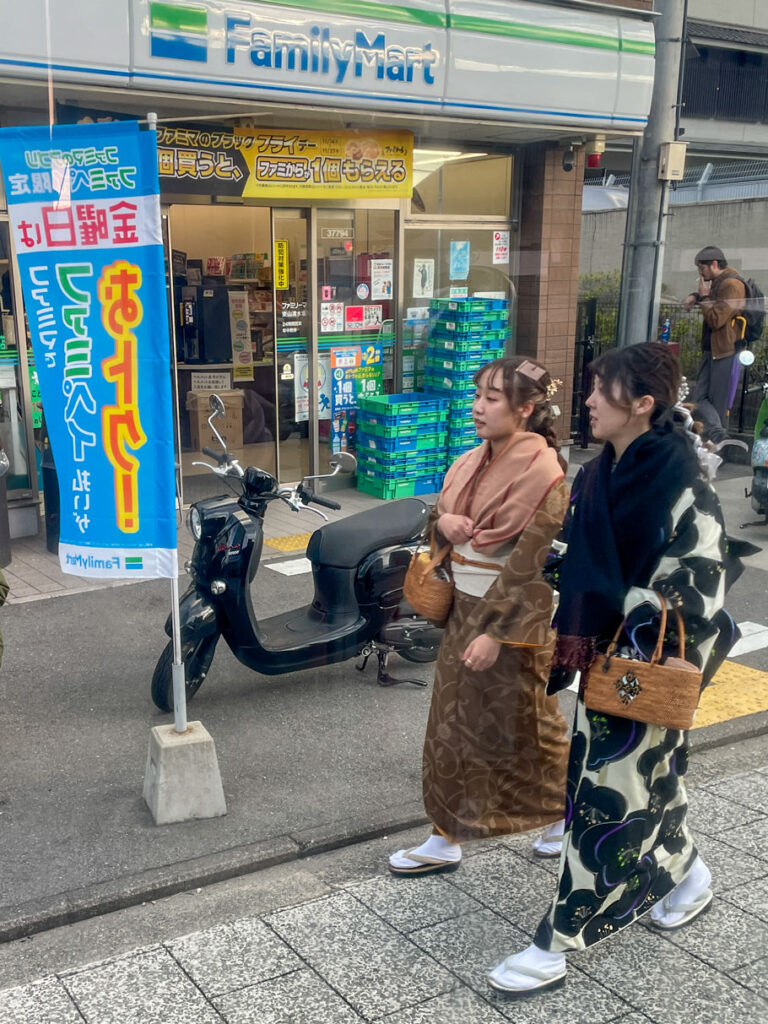
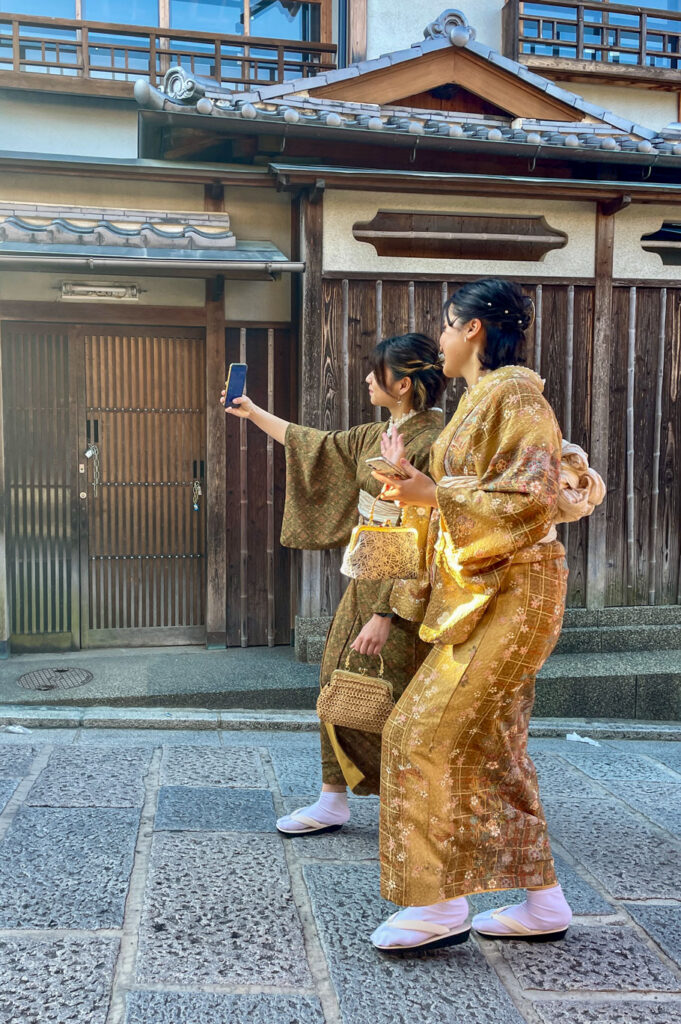
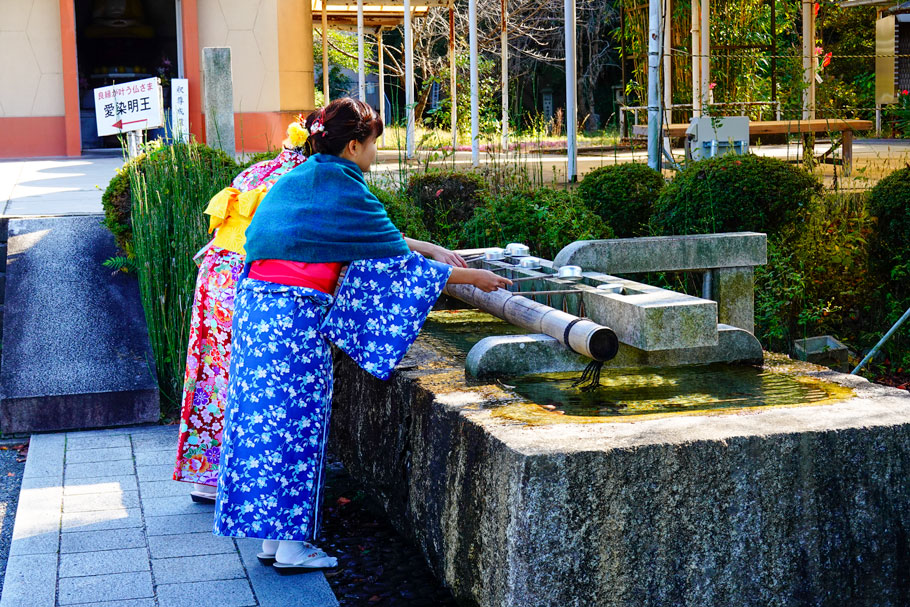
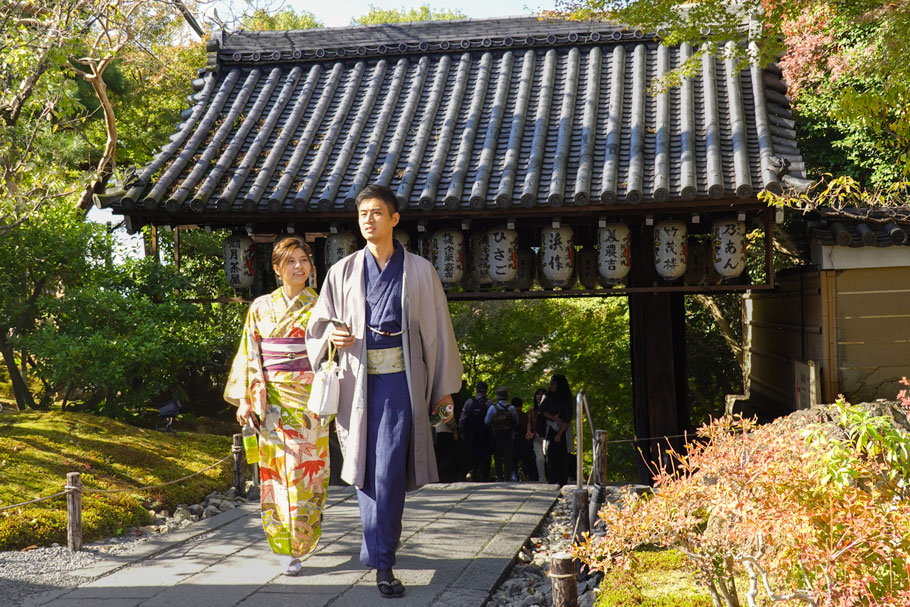
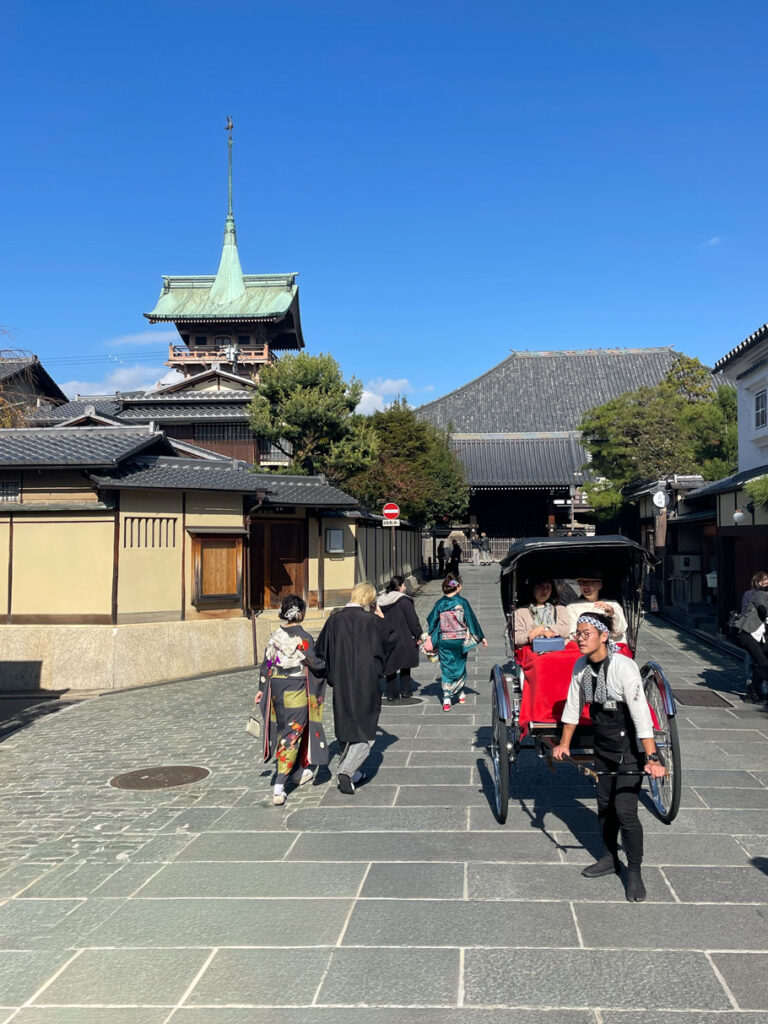
All along the pavements, young couples or groups of girls dressed in traditional dress wandered in and out of shops and shrines.
Google Maps turned out to be most helpful for guiding our bus travel. Once we entered our GPS location with both our starting point, and desired destination, we were shown you all the transportation options (walking, bus, train, subway, and taxi with estimated fare). What was great is that it would also indicate the nearest bus stop on the map, the bus number that we needed to take, the anticipated time the bus would arrive, the number of stops, and the anticipated time of arrival. Technology can be awesome! The only tricky part is working out in which direction you should walk in the first place. Which way exactly is south-east? After one or two attempts, Google Maps soon shows that you are heading in the wrong direction and you can turn the right way.
We were booked into the Kyoto Gion, which is a beautiful Japanese style hotel, right in the heart of Gion district.
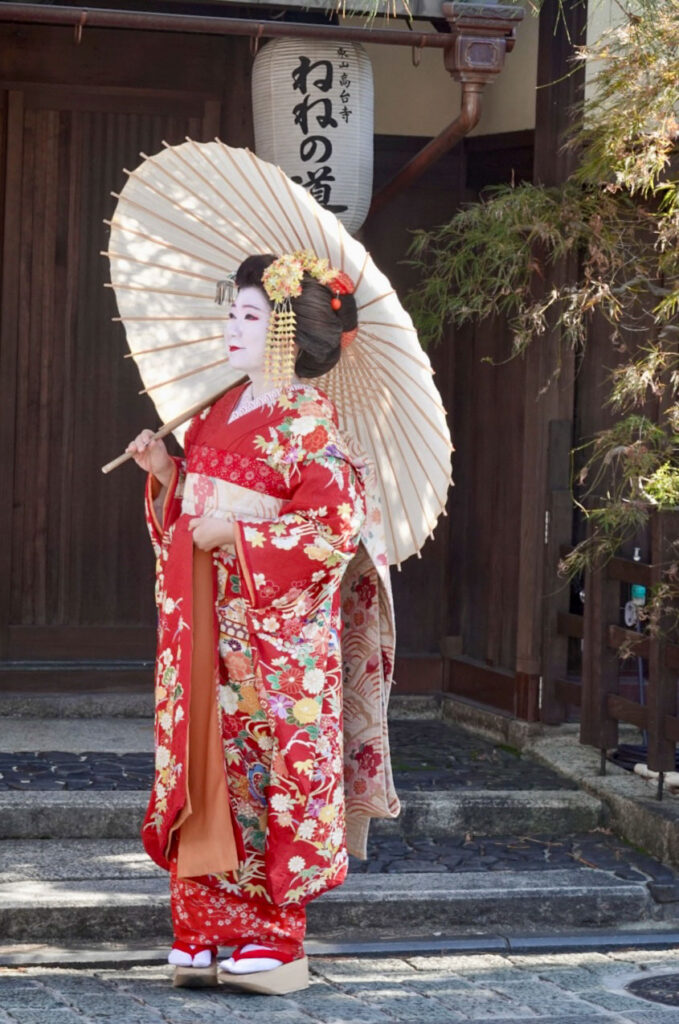
Gion is renowned as the city’s entertainment district, particularly for the refined performers known as geisha (or more properly geiko) who have enthralled their patrons for centuries. (Starting in April 2024, Kyoto banned tourists from private, narrow alleyways in the Gion geisha district to curb their harassment as they moved around doing their work) Such a pity that it comes to this.
As we turned into our street we were enthralled to see a Geisha in full luxurious kimono swish out of a taxi and vanish behind a bamboo screen into a tea house. We caught glimpses of geisha thereafter but we tried not to be too invasive with our cameras
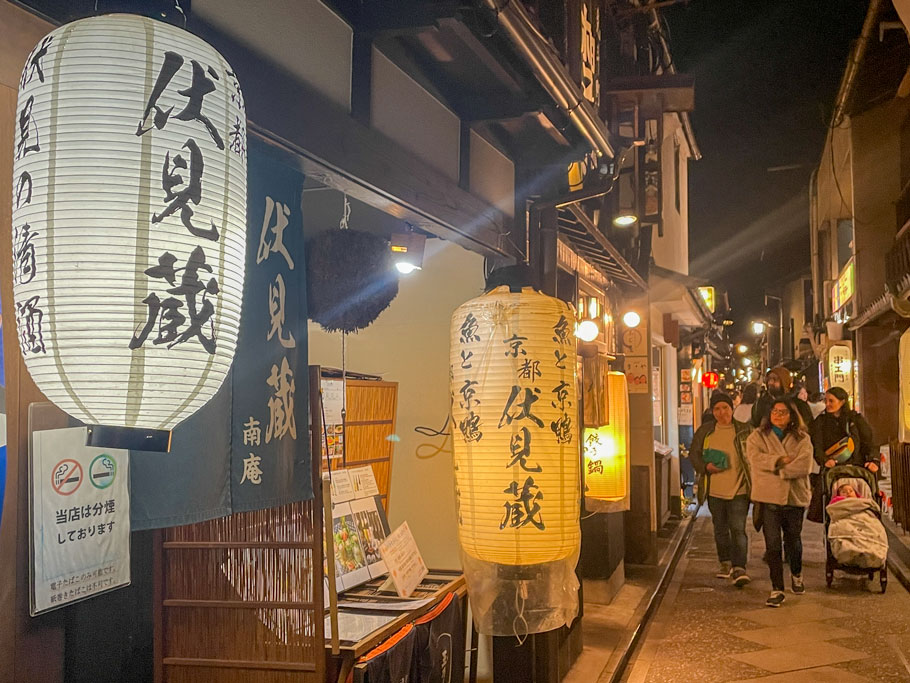
Gion is full of lovely, understated townhouses and teahouses, restaurants serving traditional Kyoto cuisine, and impressive temples and shrines.
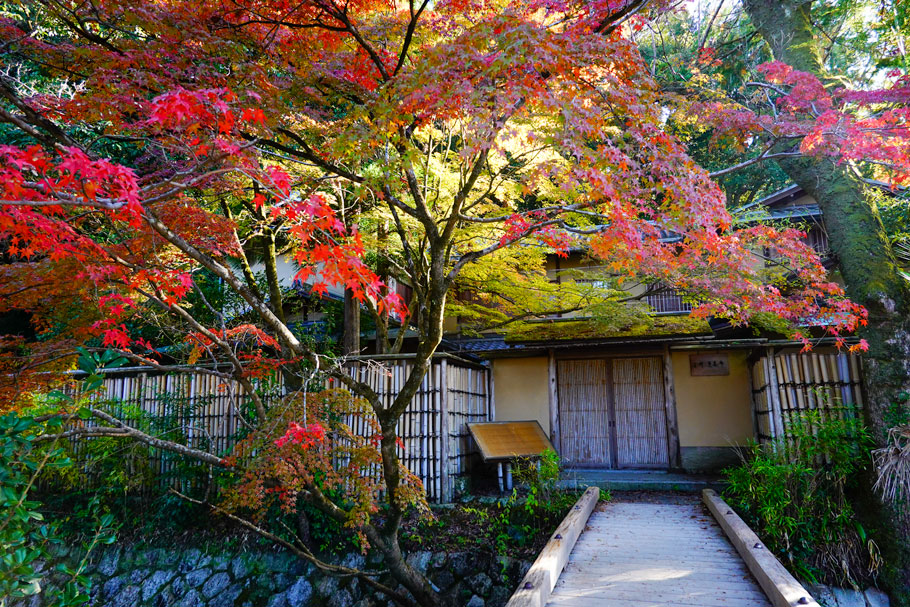
Entrance to our hotel
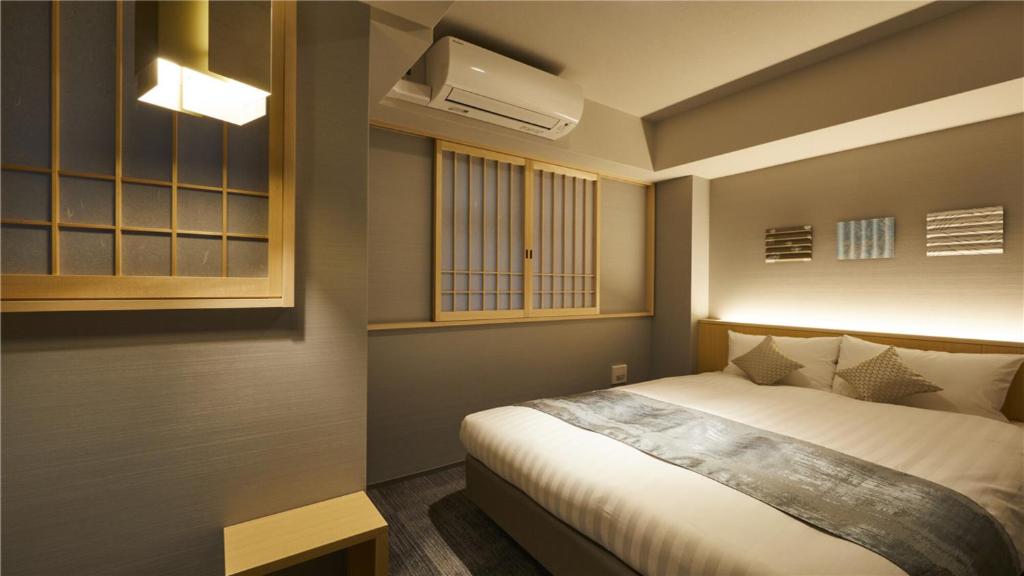
Our hotel room was small but beautifully designed in a Japanese style with paper screens and tatami mats, but a nice comfy western style bed. It was also quiet and spotless. It was ideal to be in walking distance of the bus stop and even some of the key sights. The room was well equipped and a little haven from the hustle and bustle nearby.
Our compact but comfy bedroom
Our luggage, shipped from Hiroshima, was waiting for us. We had all our luggage back together with us for the last few days. What a delight the Kitty-Kat service is for the traveler.
Having searched every flap, pocket and side compartment for Geoff’s JR pass for the umpteenth time, we decided we’d better head back to the train station and contact the lost and found people in case it was handed in. We took the bus back and it was starting to get dark although the throngs of people had not dissipated at all. This station never sleeps. The precinct is enormous and stretches over many entrances and levels. As a result there are more than one lost property stations or security offices. We were advised to report the missing pass to the police who were also conveniently located within the complex. They were extremely helpful and took down all our details. Alas, we never did get the pass back.
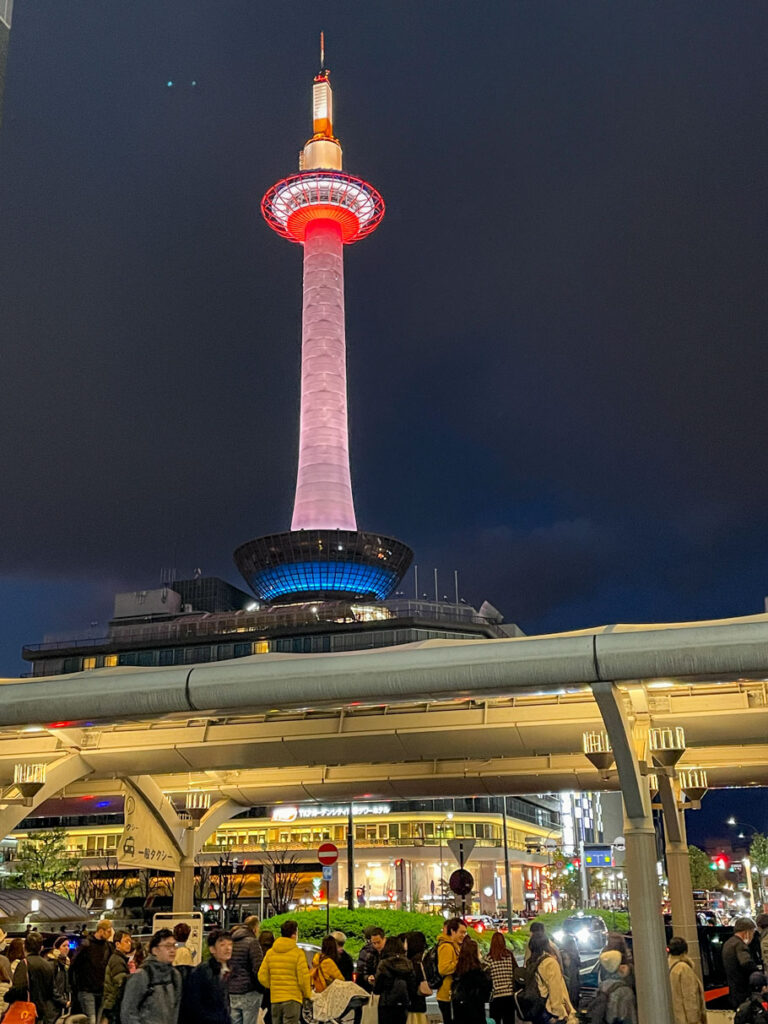
Night time at the station is quite exciting. The Kyoto tower is lit up and changes colours. It is designed to resemble a Japanese lighthouse, casting light over a city that has no sea, and stands 131 meters tall.
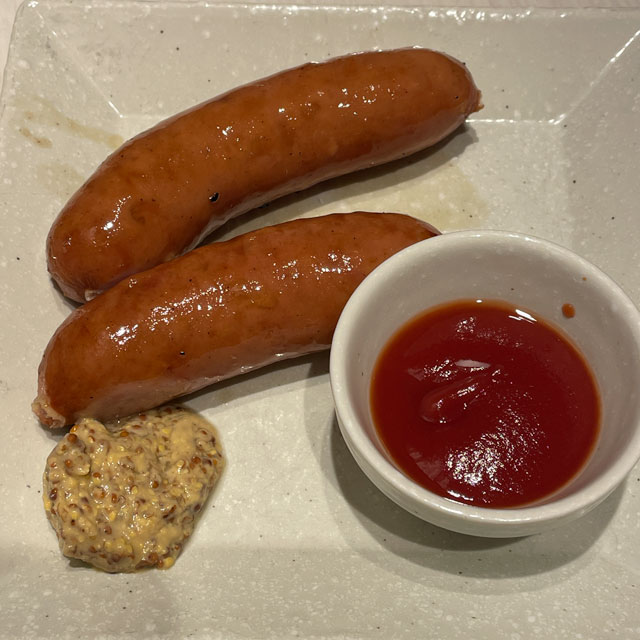
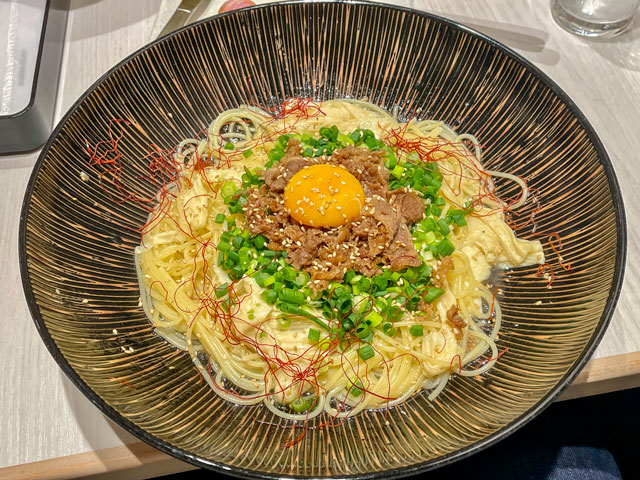
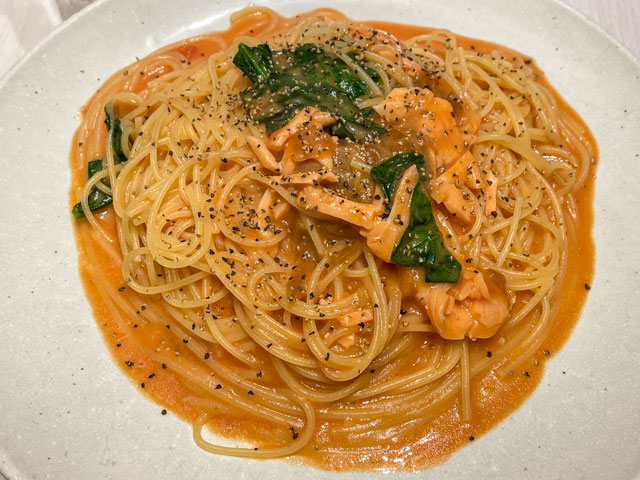
The lower level of the station is bustling with restaurants, not only fast food places. We decided to have supper there and as usual found the dishes to be excellent: Geoff couldn’t resist some German sausages and a noodle dish with a delightfully oozy egg and I had a pasta with salmon. (I’ve never come across a country so in love with the spring onion!)
Back by bus to our little bedroom and a well-deserved night’s sleep.
We were up early in order to tackle some walking through the local streets. Although our street was incredibly quiet, we were a short stroll away from some busy arterial roads.
We passed all three Japanese convenience stores in a matter of moments: Lawson’s, 7-11, and Family Mart, all known for brilliant sandwiches and unusual snacks, and within a few blocks of each other.
I believe that there is no other place in the world where I would hanker after the 7-11 sandwiches!
I am partial now to not only their egg mayonnaise, but would never have thought that strawberries or peaches and cream on white bread would become a thing for me! (Even typing this it sounds most unappealing).
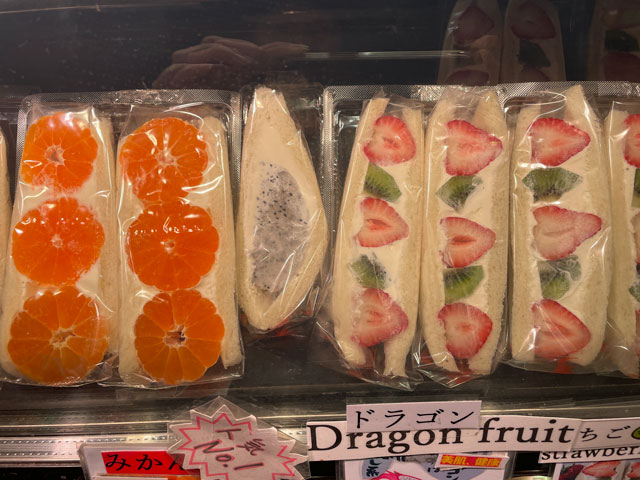
In the Nishiki market we came across orange and even dragon fruit sandwiches.
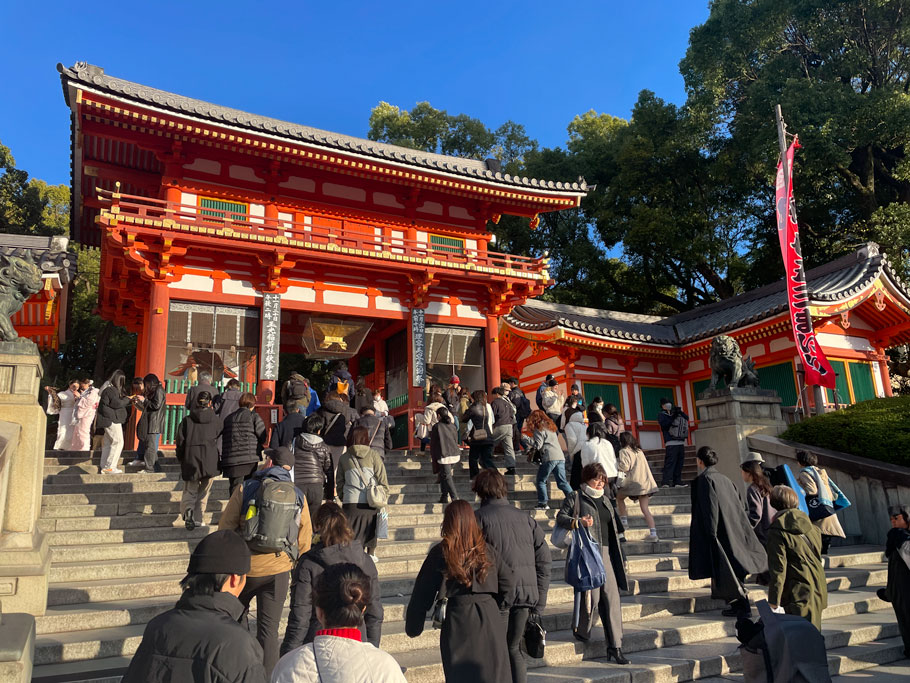
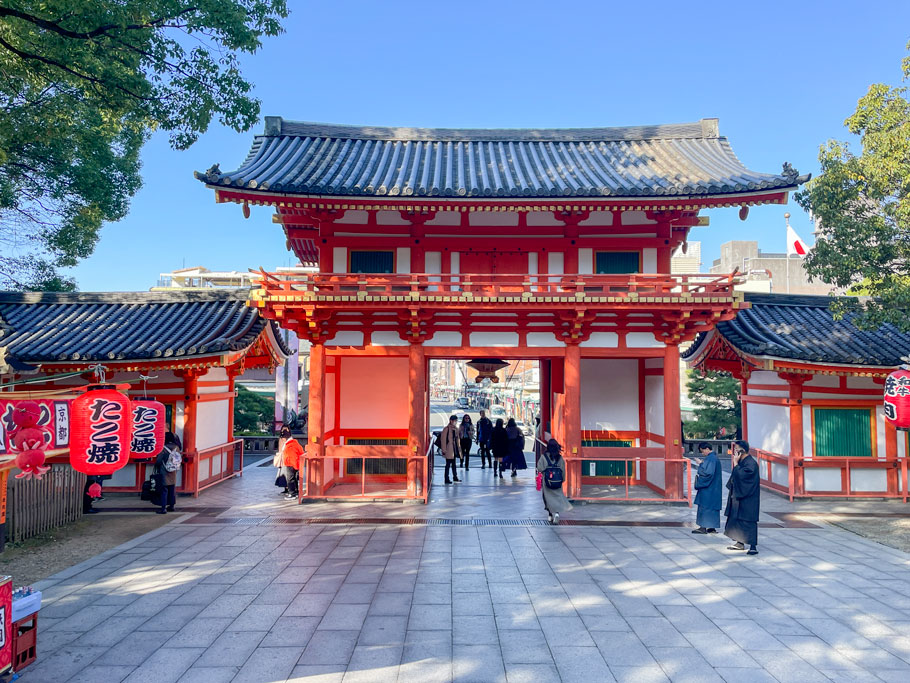
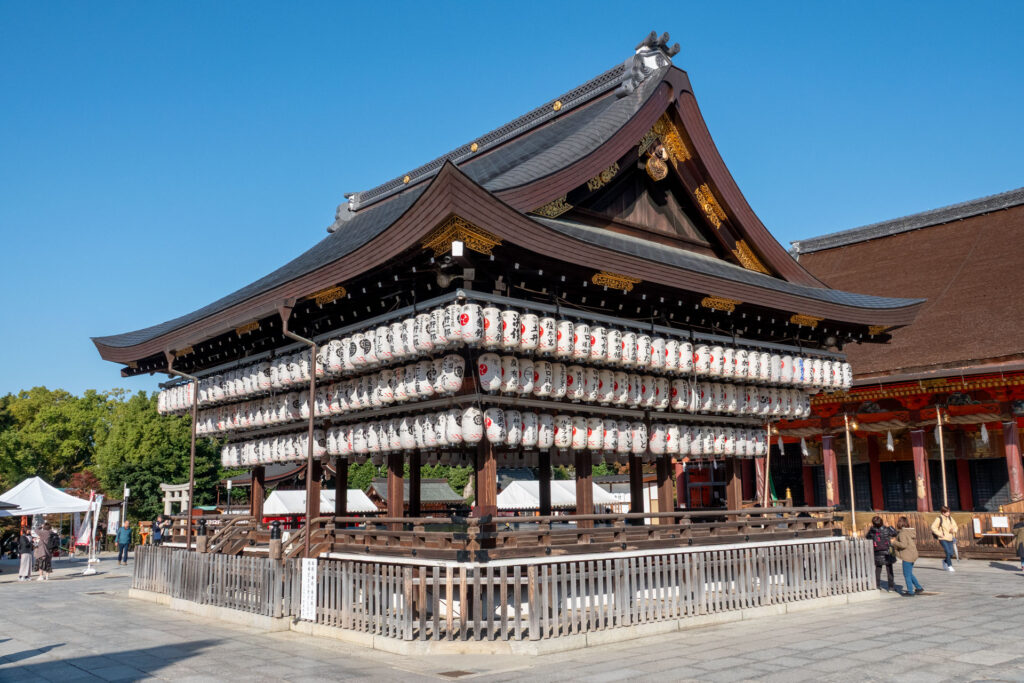
Within in a few meters we came across a beautiful temple called the Yakska-jinja Shrine. also known as the Gion Shrine, it is one of Kyoto’s most iconic and culturally significant Shinto landmarks. Founded over 1,350 years ago (c. 656 AD), it stands at the eastern end of Shijo-dori, serving as the gateway between the historic Gion geisha district and the scenic Higashiyama area. We took some time exploring the area beyond the gorgeous red entrance gates.
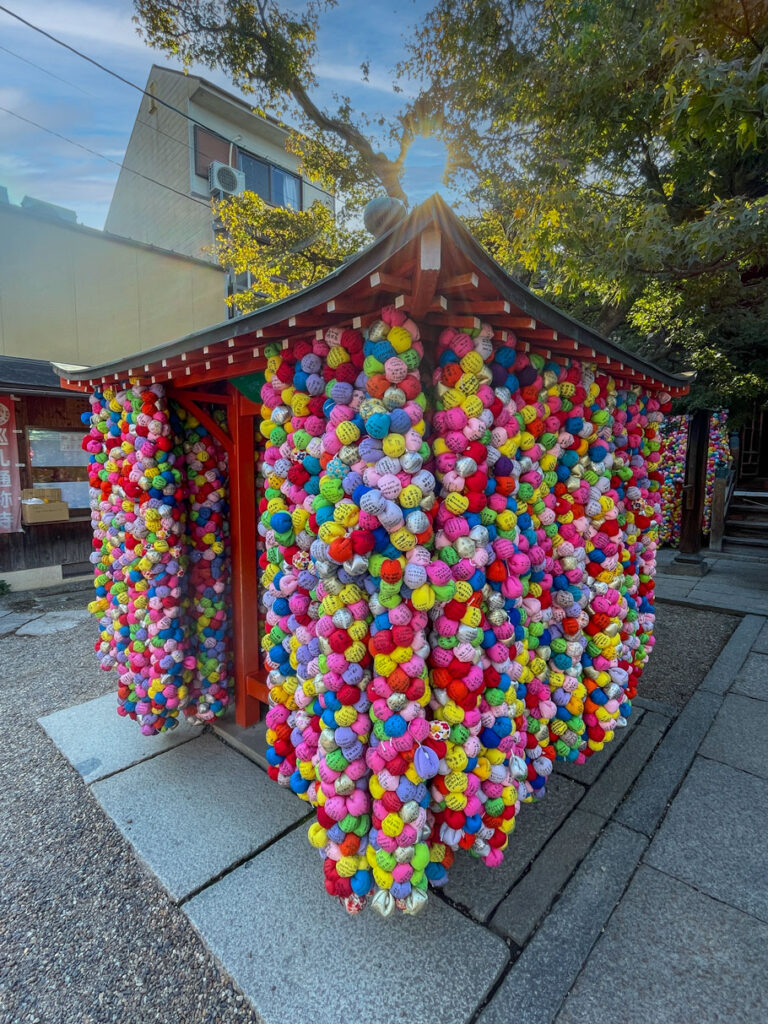
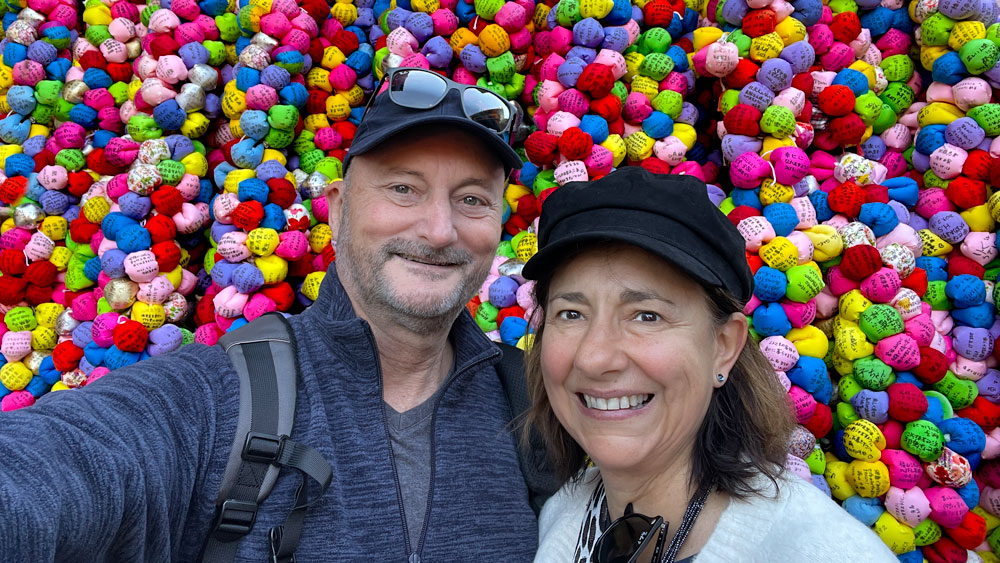
We came across this ’stall’ with thousands of colourful, small fabric balls with writing on them. They are called Kukurizaru and they are highly symbolic talismans meant to help visitors achieve their wishes by sacrificing a specific bad habit or selfish desire. The balls are designed to look like monkeys with their hands and feet bound together. In Japanese, kukuri means “tied” or “bound,” and zaru (saru) means monkey. Monkeys are considered messengers of Kōshin-san, the guardian warrior deity of this temple. The temple also honours the famous three monkeys: “see no evil, hear no evil, speak no evil” 🙈🙊🙉.
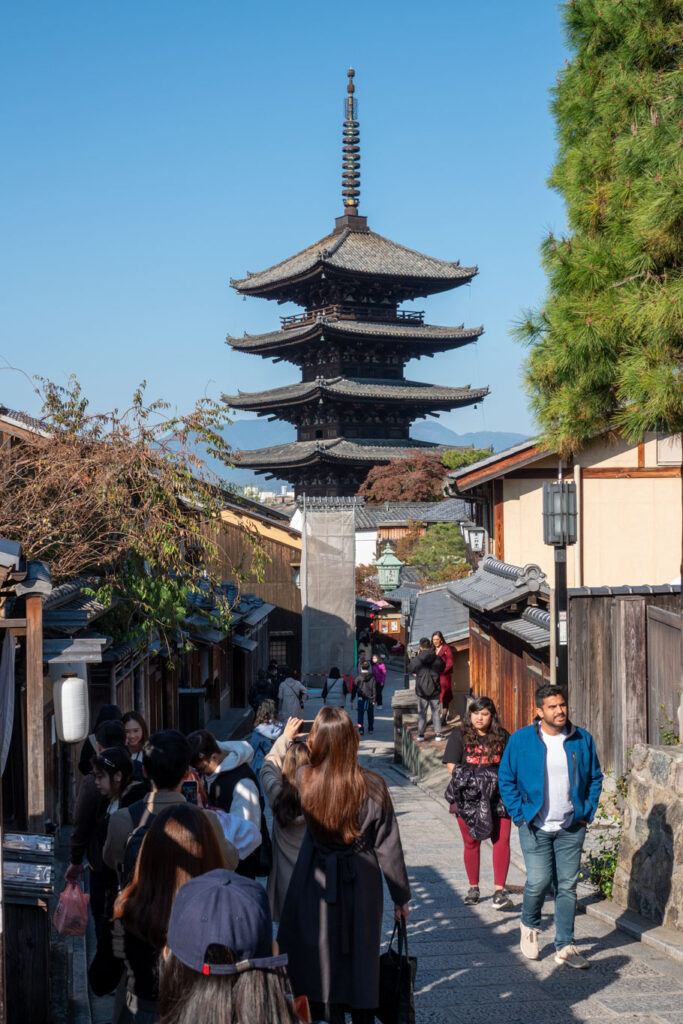
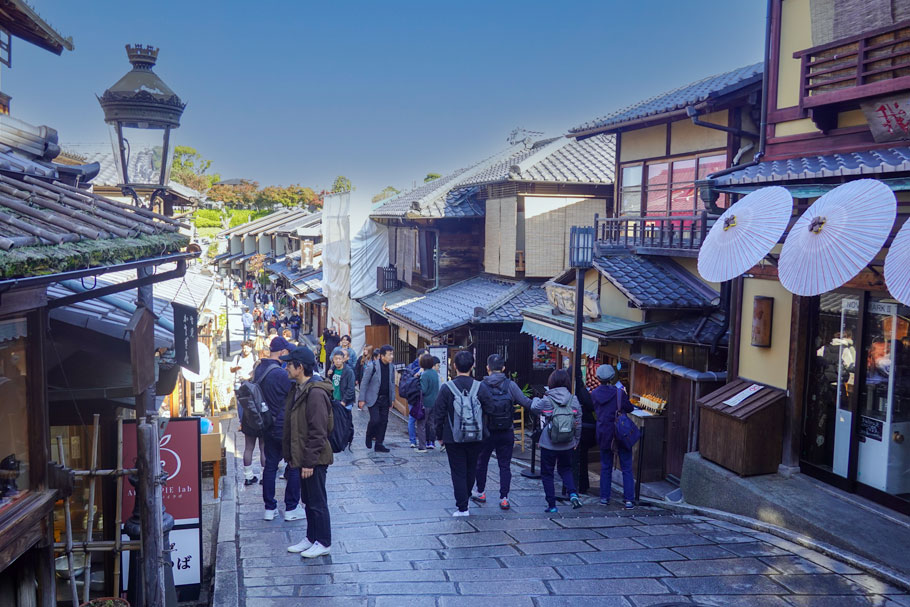
After leaving the temple, we walked northwest through the streets of the Higashiyama District. This charming neighborhood is everything you imagine when you think of rustic Japan – old buildings, narrow streets, small shops, hidden gardens. Then we walked around a corner and came across the towering pagoda of to Kyomizu-dera, built without a single nail 1250 years ago! It was mid-morning at this point but the streets were not yet too crowded
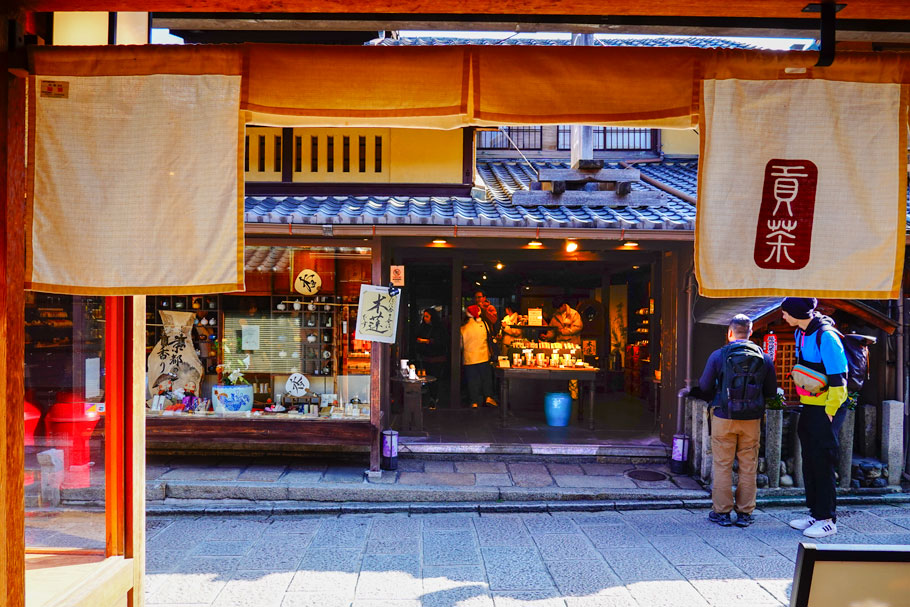
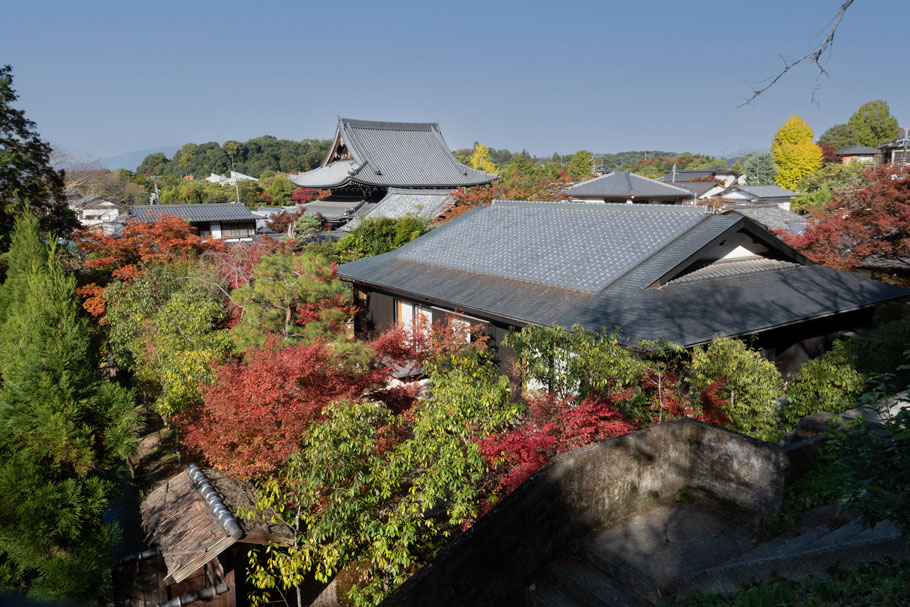
We wandered through the narrow streets for a couple of hours, soaking up the atmosphere and peeking in at the various shops. This area of Kyoto – called Southern Higashiyama is also lined with temple after temple (after temple) along the ridge of hills bordering Eastern Kyoto. It is impossible and would be very tiring to try and see all these temples even during a week-long trip – temple fatigue is a real condition 🙂 but it’s fun to pick and choose according to our mood while strolling through the area.
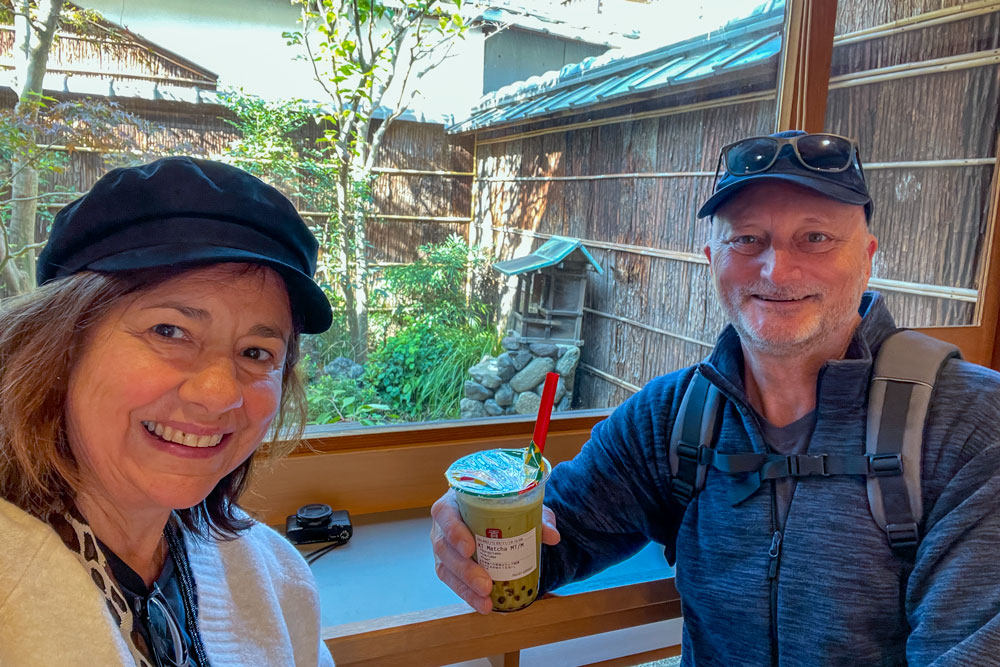
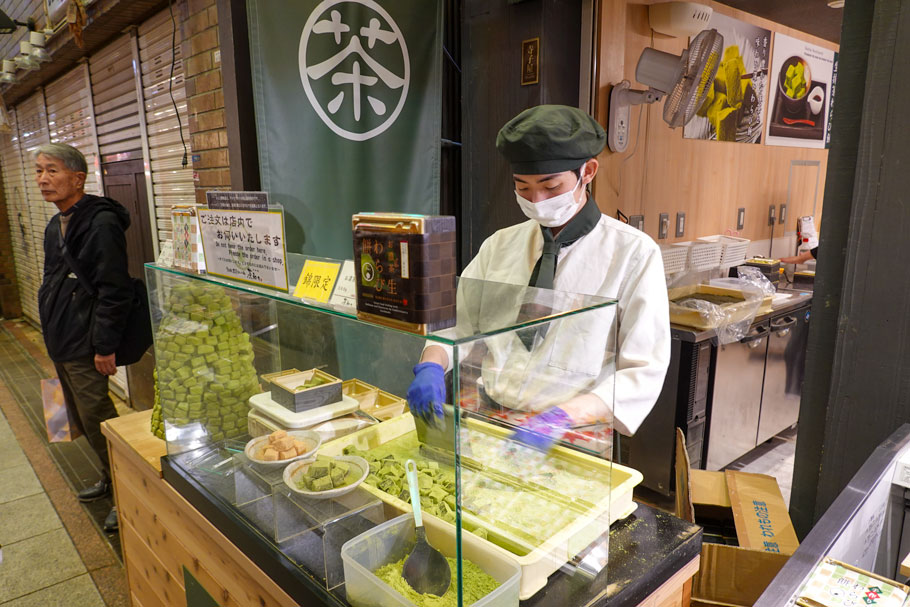
There were interesting autumnally themed snacks along the way. We recalled how in Spring, the food was often themed to align with the season and flavours of cherry blossom. We stopped for one of our favourite Japanese discoveries – Bubble Tea with matcha and brown sugar.
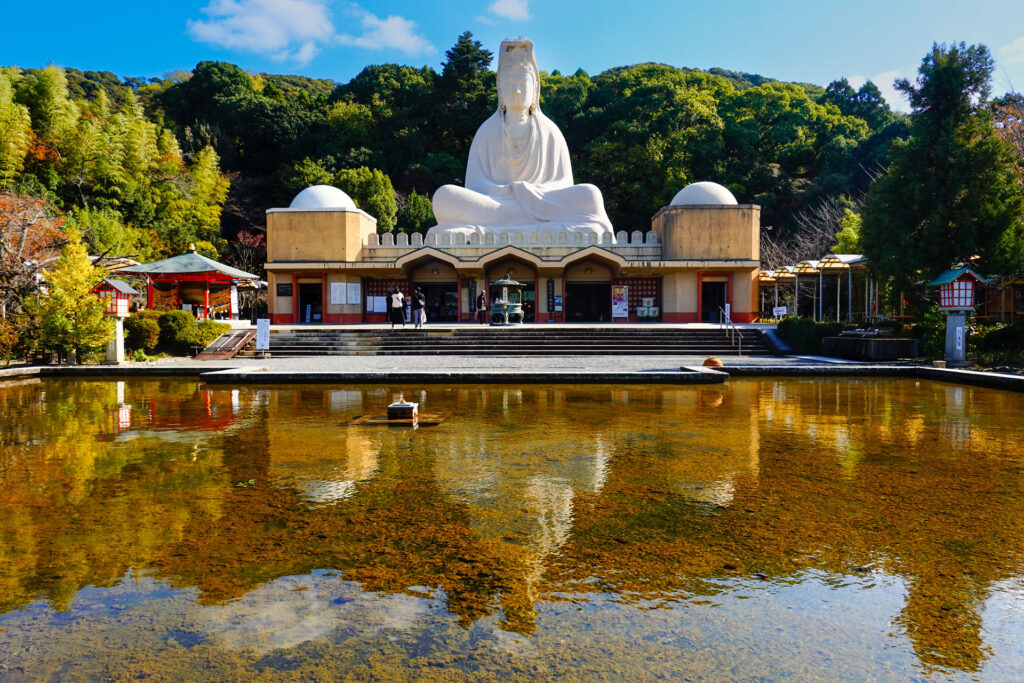
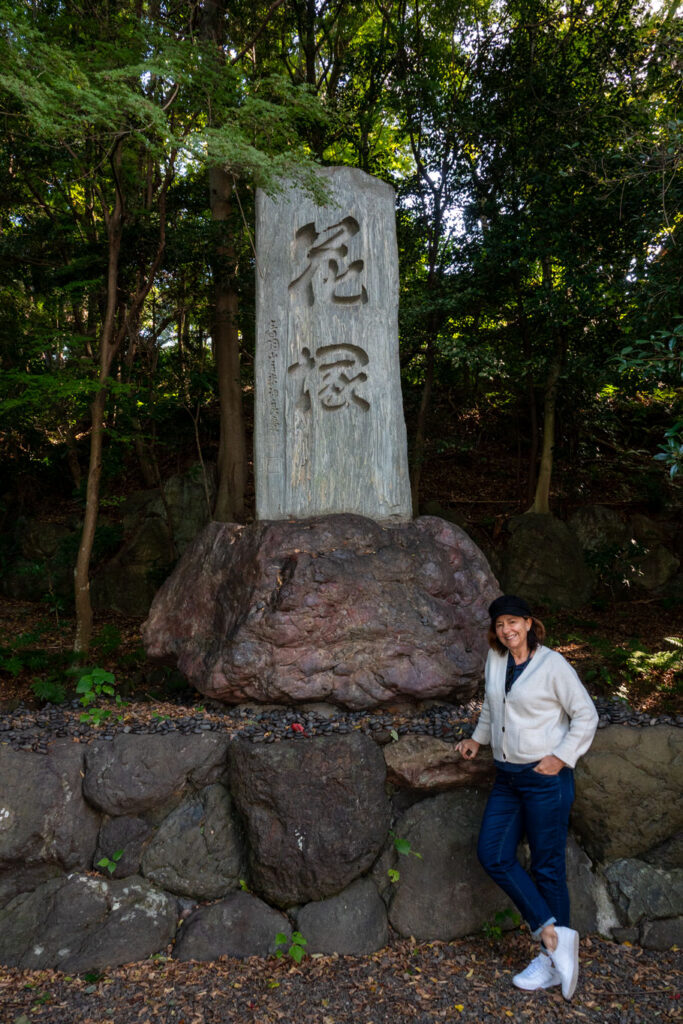
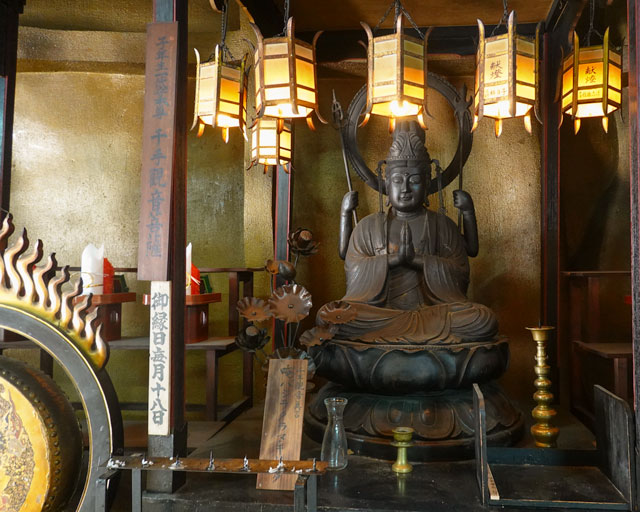
The Ryōzen Kannon is a war memorial located in Eastern Kyoto, commemorating the dead of the Pacific War l, regardless of nationality. This inclusive approach to memorialisation was groundbreaking for its time and remains a unique aspect of the temple today. The site contains memorials not only for Japanese soldiers and civilians but also for Allied prisoners of war who perished under Japanese control during the conflict. The statue is 24 m high and weighs approximately 500 tons. A large reflecting pool nestles in front of the Kannon statue, which has lotus blossoms in the summer months.
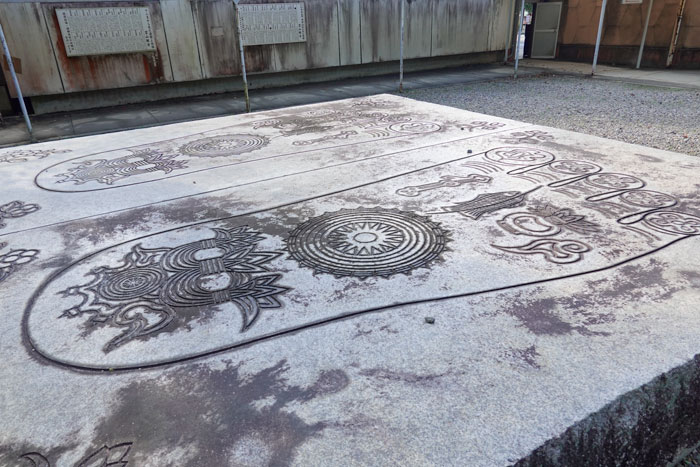
Both Raijin (God of Thunder) and Fuujin (God of Wind) are also enshrined here. The memorial is also home to memorial tablets for over 2 million Japanese people who died during World War II. There is also a stone representing the imprint of Buddha’s foot. At the back of the Kannon, there is a staircase which allowed us to enter inside the Kannon statue. Here we also saw the twelve zodiac signs represented.
We continued wandering through the streets and enjoyed the people watching.
Ever since Kyoto was founded by the Emperor Kanmu in 794, its temples, garden sanctuaries, artisan quarters, elegant back streets and superb inns and shops have lent credence to the city’s nickname, “Hana no Miyako,” the City of Flowers.
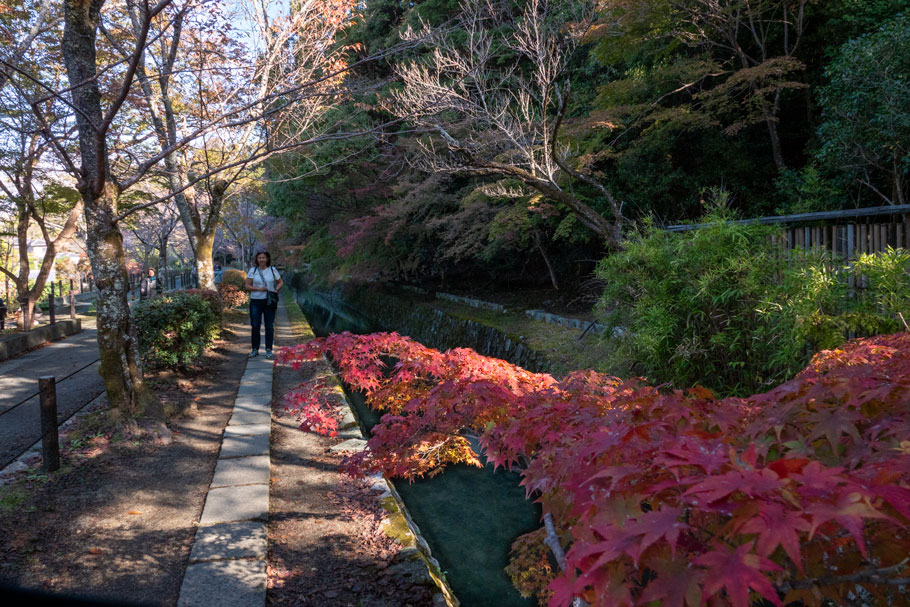
With its rivers, commercial canals, irrigation channels, artesian wells and garden ponds, is perhaps the most aquatic of Japan’s inland cities, though in such a subtle way that you would hardly notice. We were torn deciding on whether to visit old favourites again like the bamboo forest or perhaps the Golden Pavilion this time, but decided to go back to the Philosophers Path which we had loved so much during cherry-blossom season.
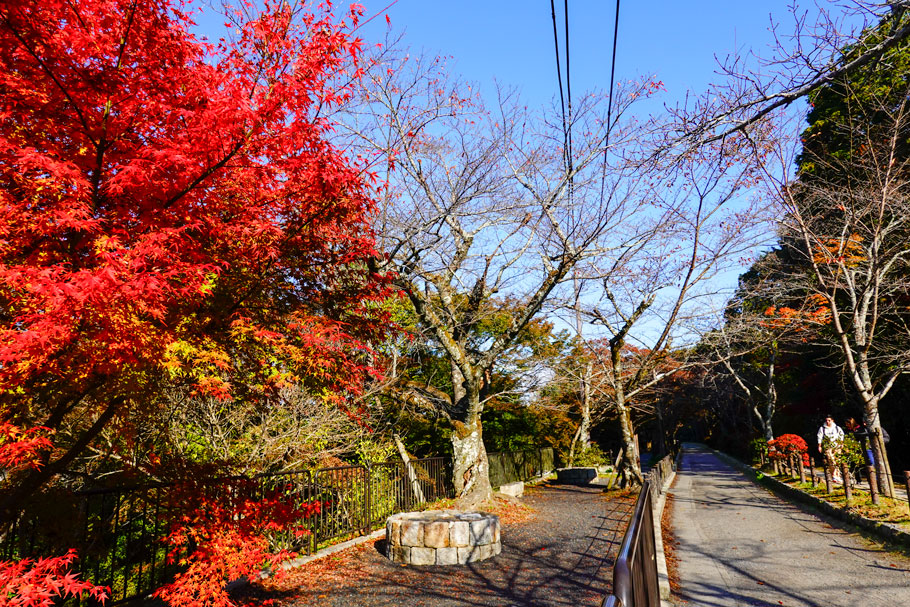
Though the cherry blossoms steal the spotlight in spring, the autumn leaves offer their own stunning beauty and we enjoyed the contrast between the colourful leaves and the calm water of the canal and enjoyed our peaceful walk.
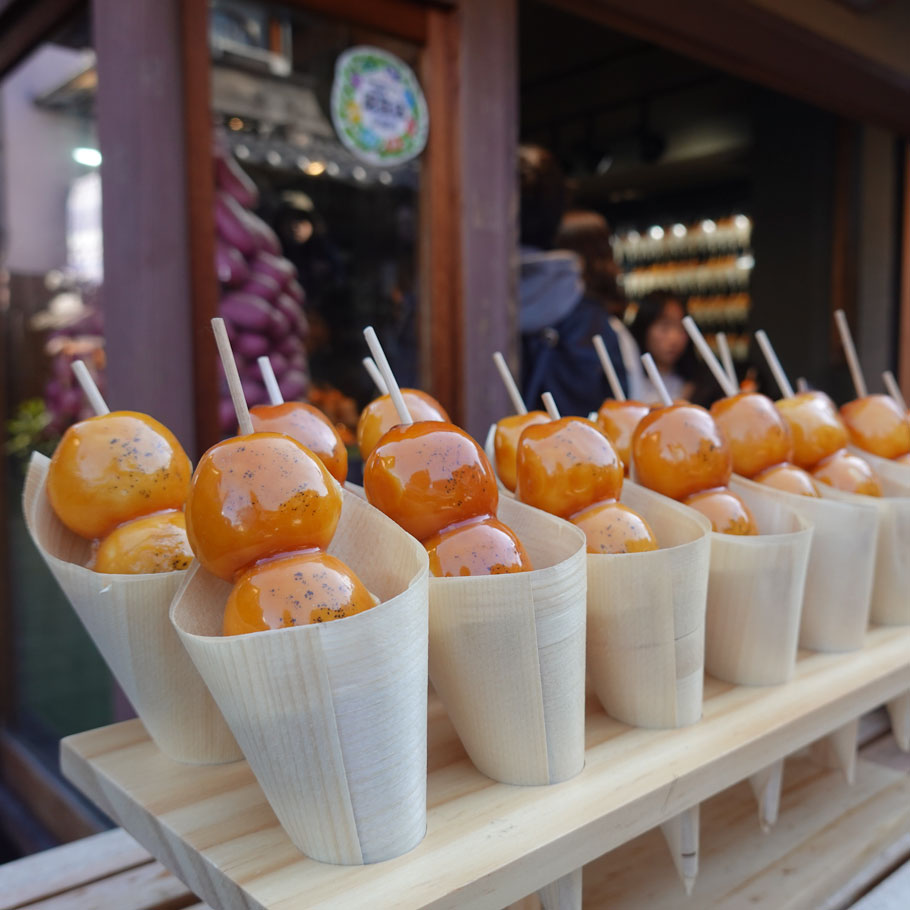
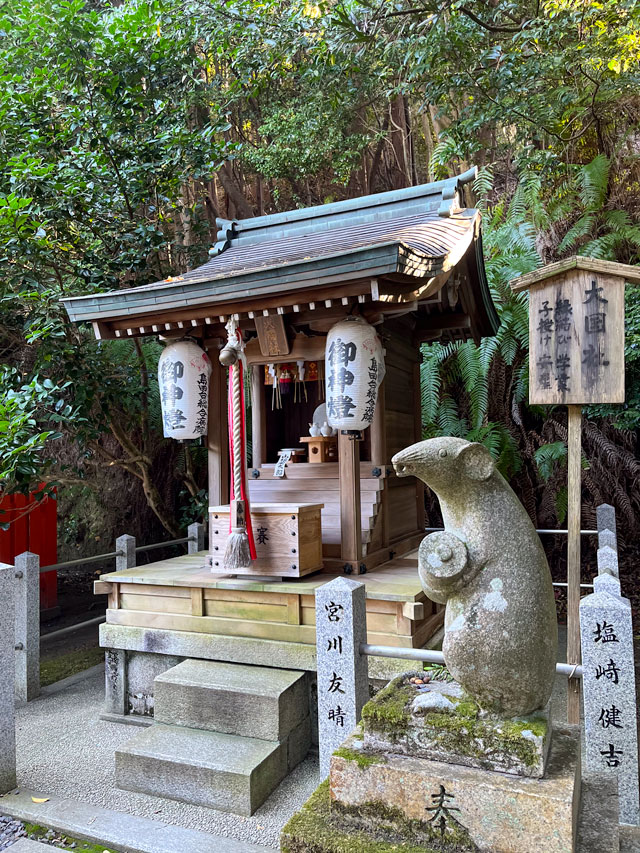
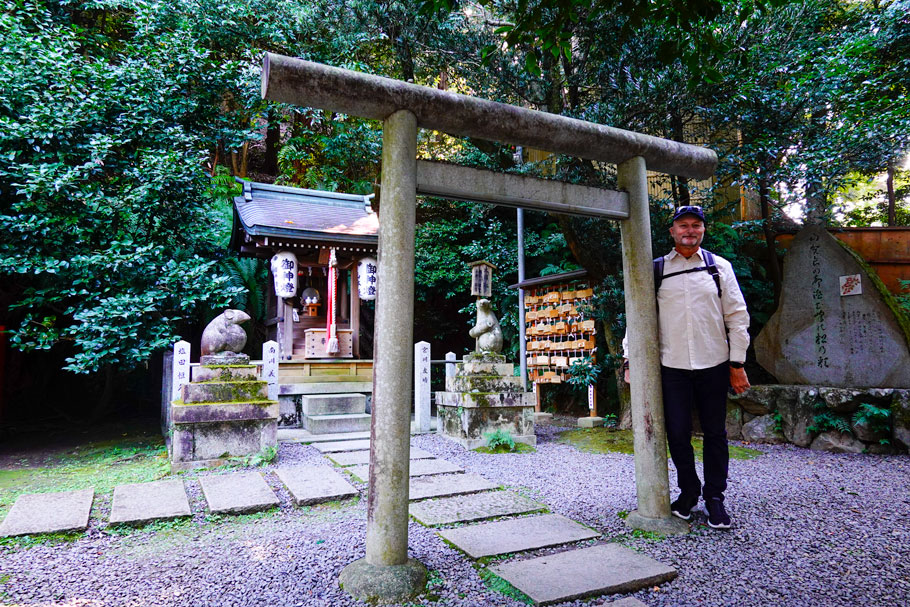
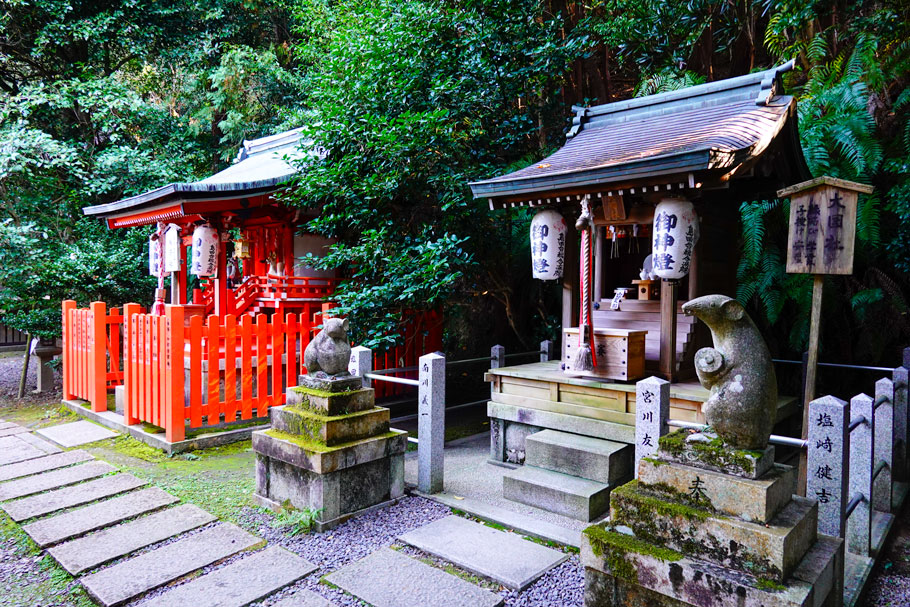
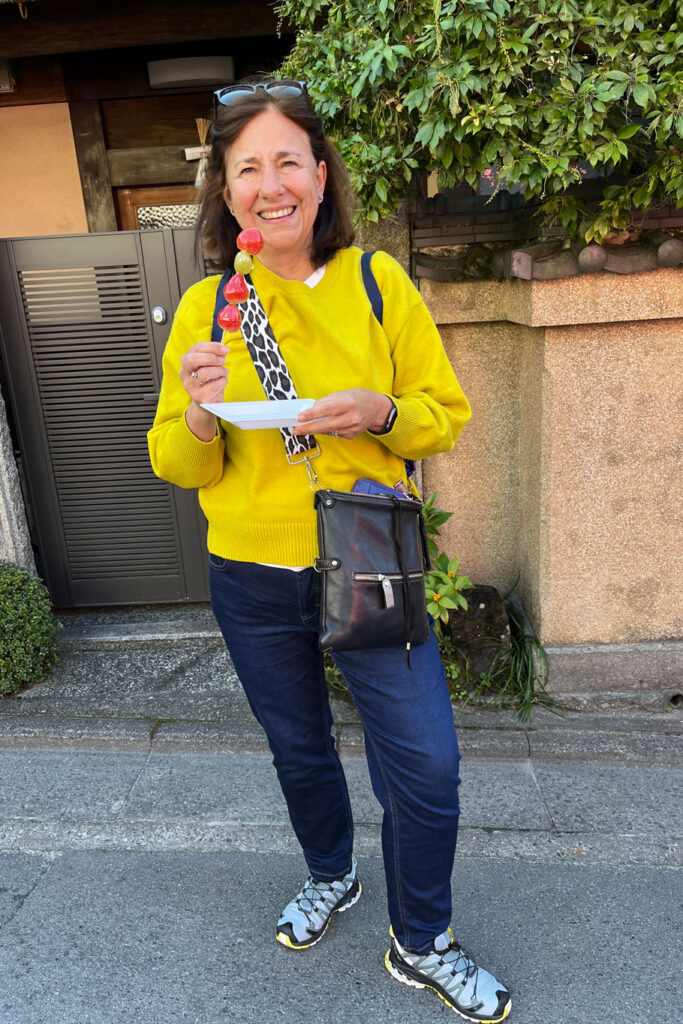
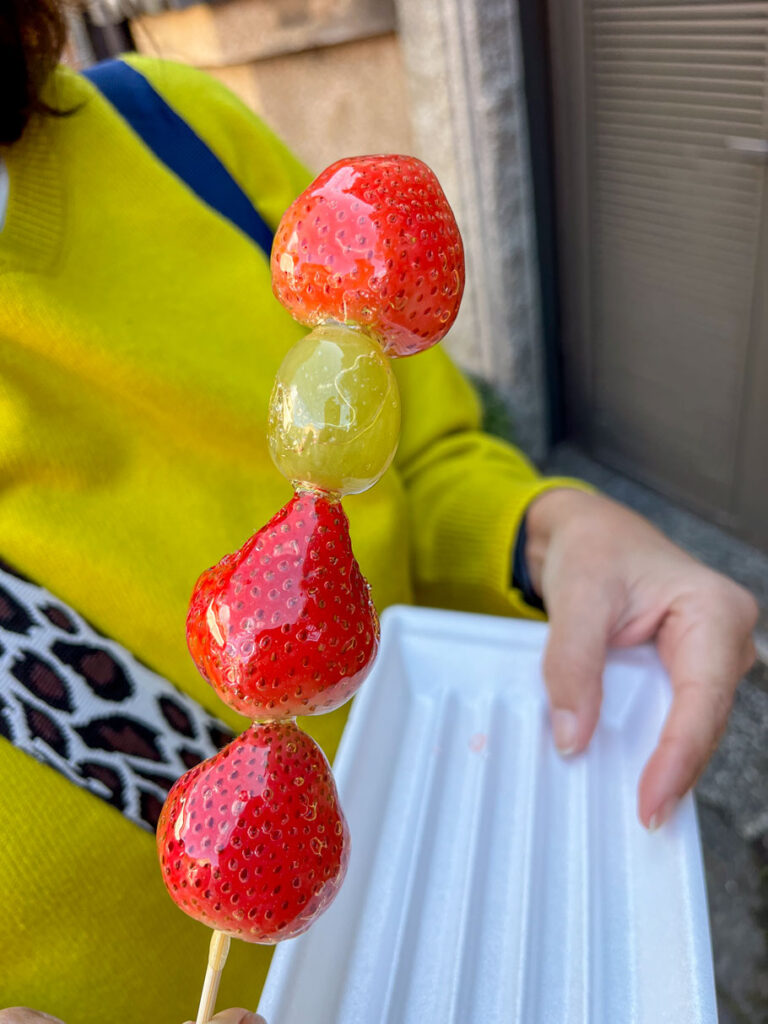
This time we paused at some of the many intriguing shrines along the way. And then stopped to sample some delicious sugared fruit, bursting with flavour beneath the crunch of the outer coating.
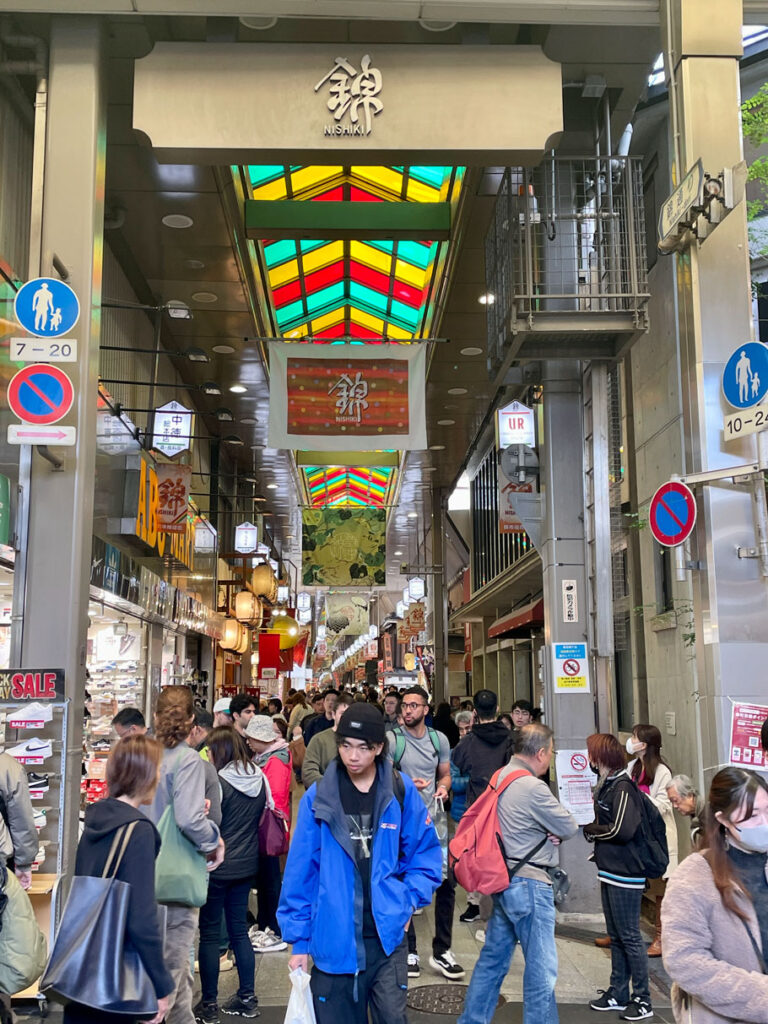
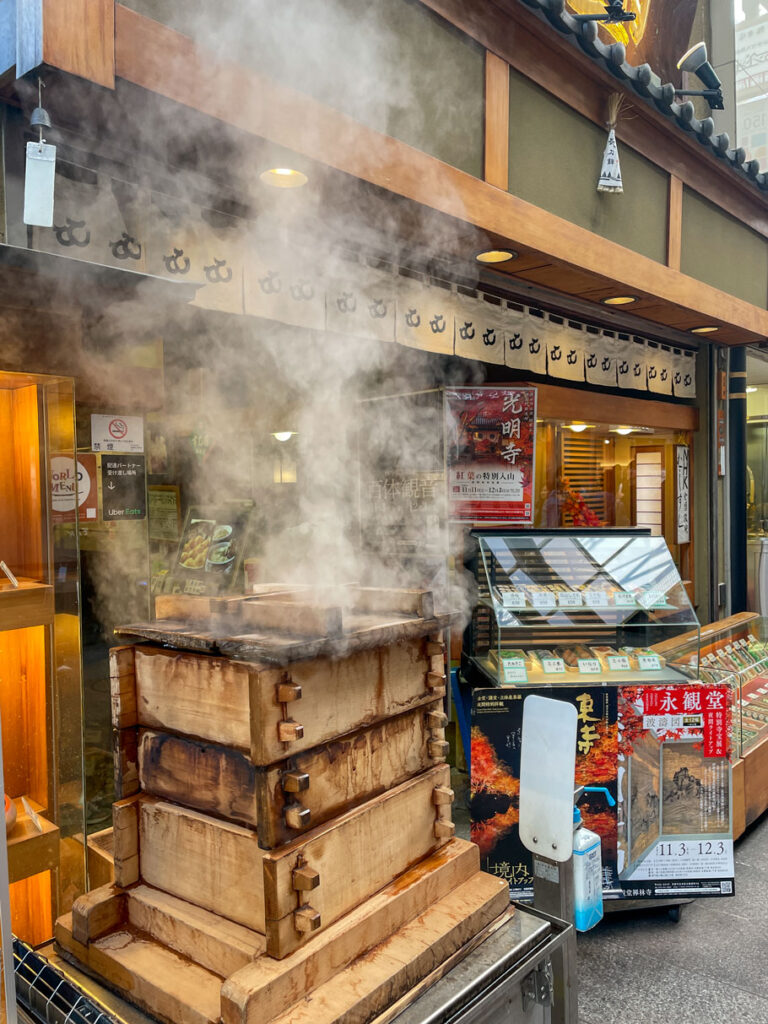
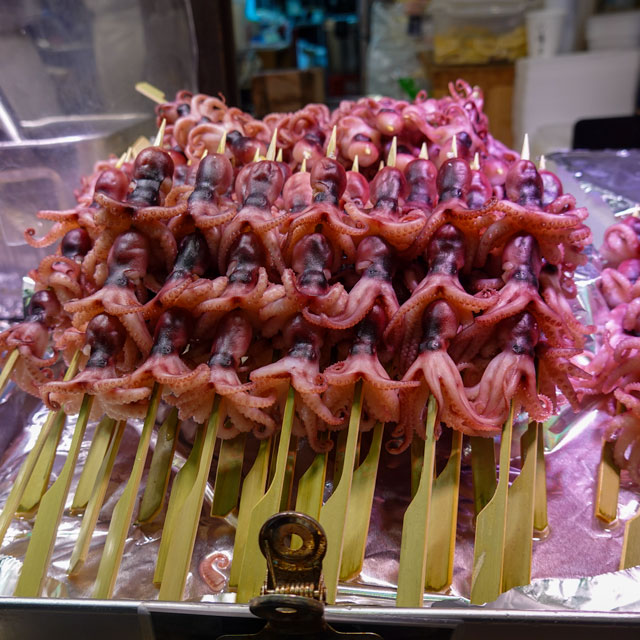
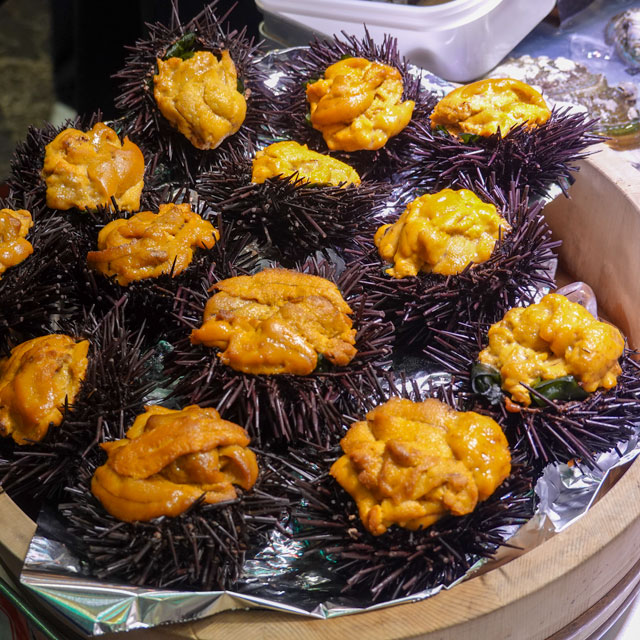
One should never try to recreate and experience that you particularly enjoyed on a previous occasion, but Nishiki Market, the ultimate place to eat all the weird yet tasty foods you can find in Japan, beckoned again.
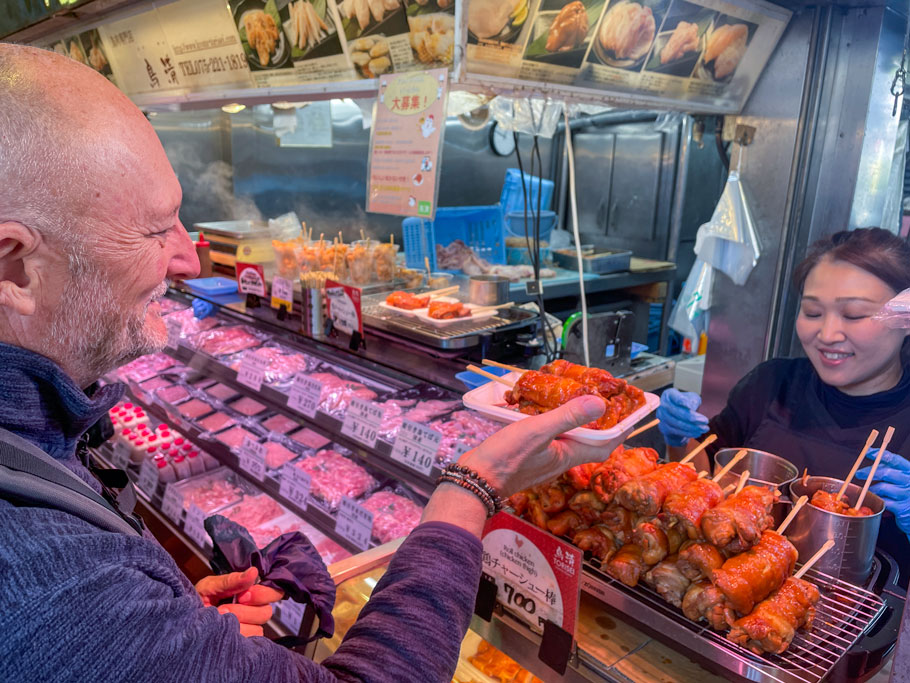
We strolled down the main hall admiring the range of foods on display and sidestepping the river of human beings. I’d held a secret passion to find the chicken vendor that we’d discovered on our last trip. We’d had the most tasty chicken thighs on a stick that we’d ever tasted. I’m excited to say that we found the place again and the chicken did not disappoint!
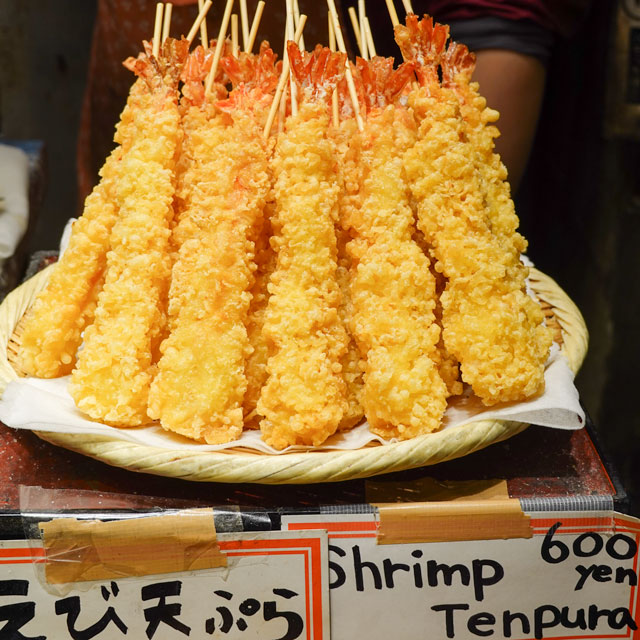
After munching our chicken standing up in the street, we were starting to feel tired. We found an interesting food hall off one of the corridors of the market. We chose some tempura prawns, oysters and gyoza and sat down to take a load off.
A little break in the afternoon and delightful afternoon snooze.
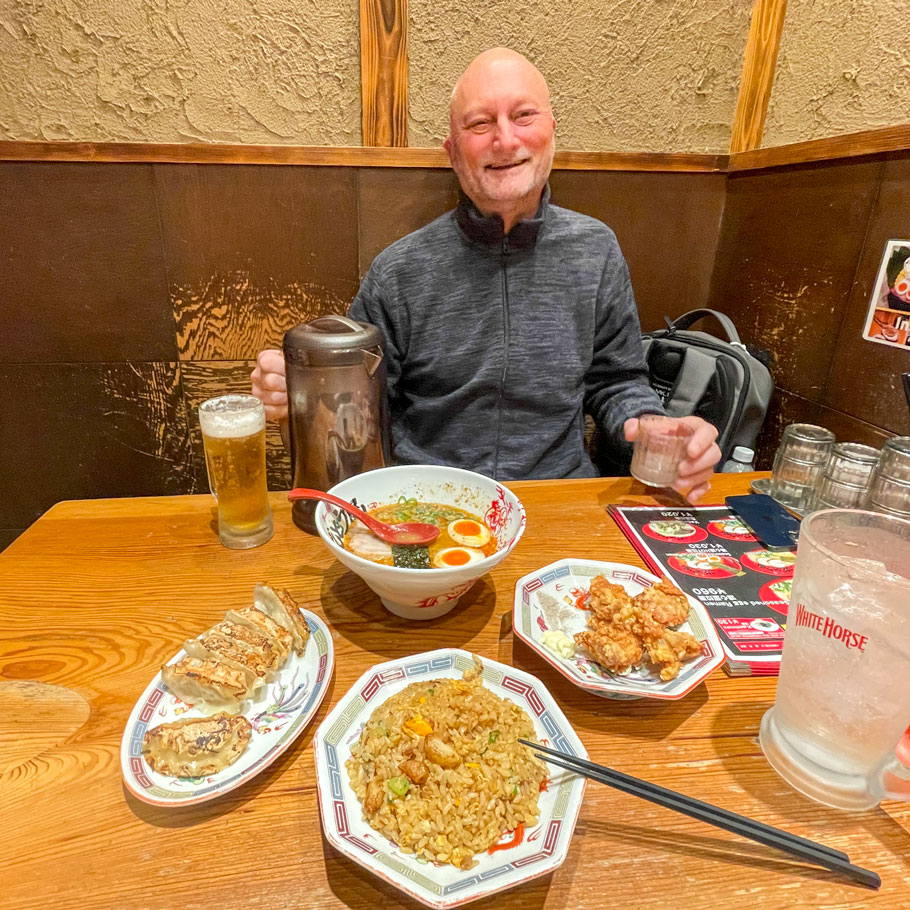
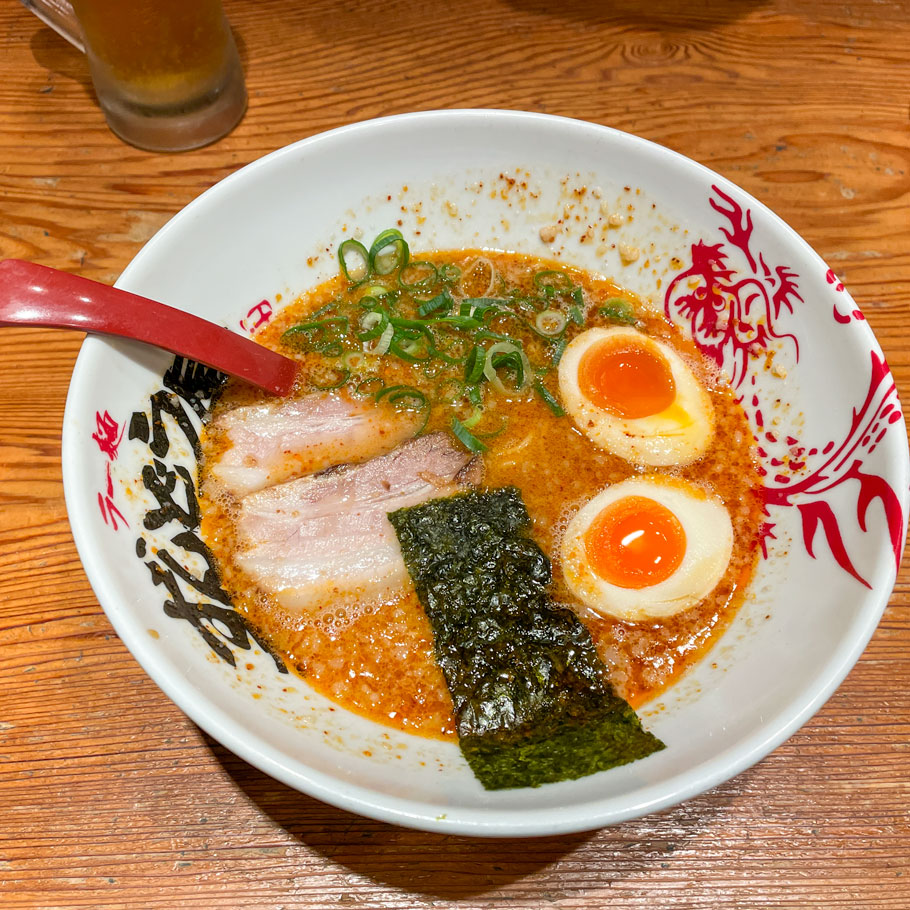
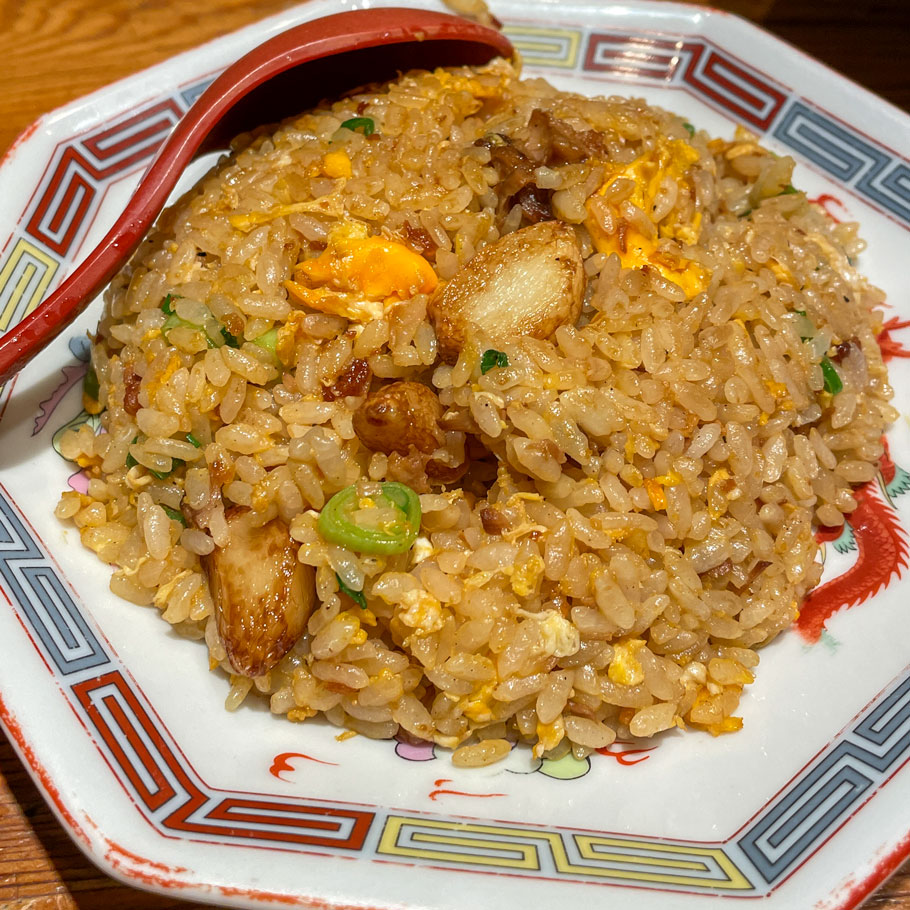
Later we set off towards the canal again. We tracked down the restaurant that we had visited previously and had served us the most tasty ramen with a touch of heat. It’s a bit nerve wracking ordering the same dish with the heightened expectations and memories. We needed have worried! We were brought a flavourful rich cloudy broth, chewy noodles, pork, perfect egg, and loads of spring onions. We ordered it with a sticky special fried rice and a side of the Japanese pork dumplings we simply adore – Gyoza.
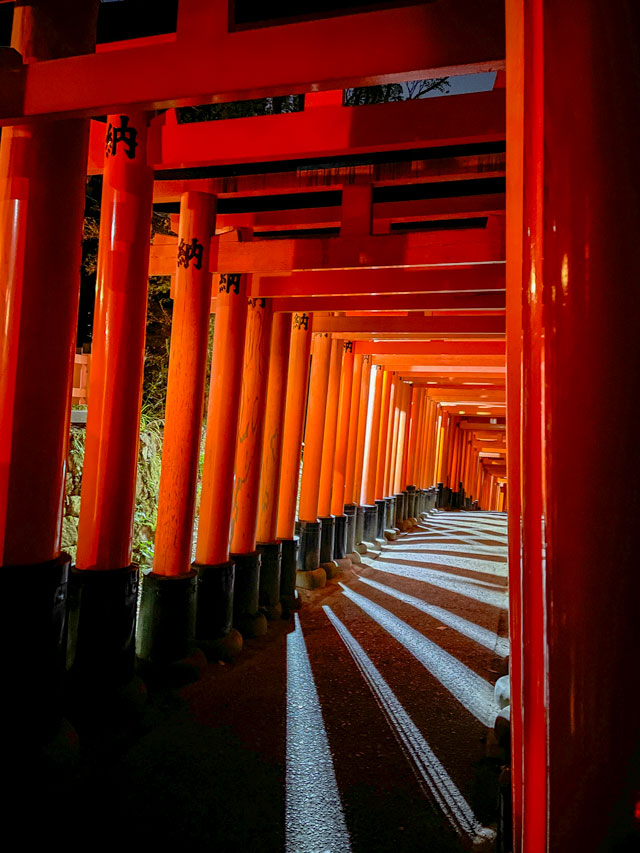
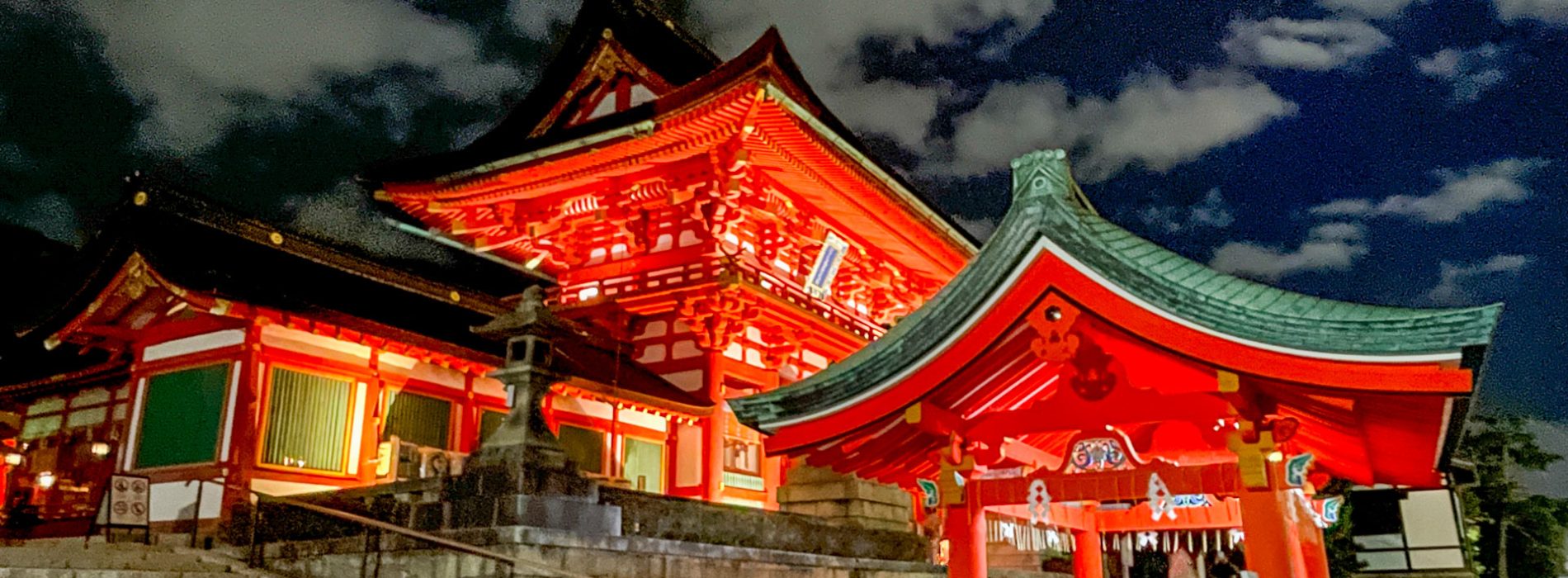
Fushimi Inari is a Shinto Shrine located in south Kyoto. It is famous for its thousands of vermillion torii gates and its many sub-shrines. We loved visiting it during the day when we were last here and enjoyed the lengthy stroll beneath the tunnels created by the torii gates. It is situated along the side of a mountain called Inari which is considered sacred. We took a train to the south.
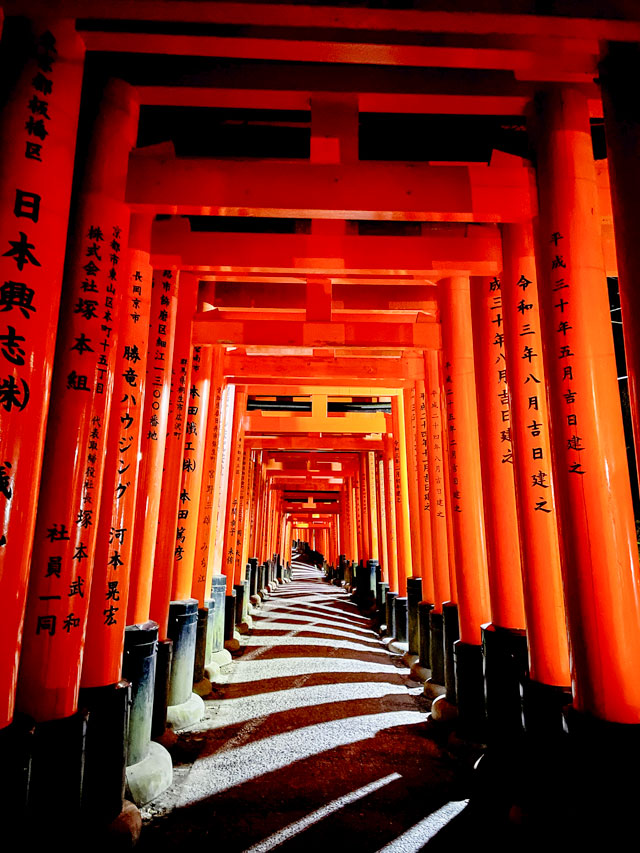
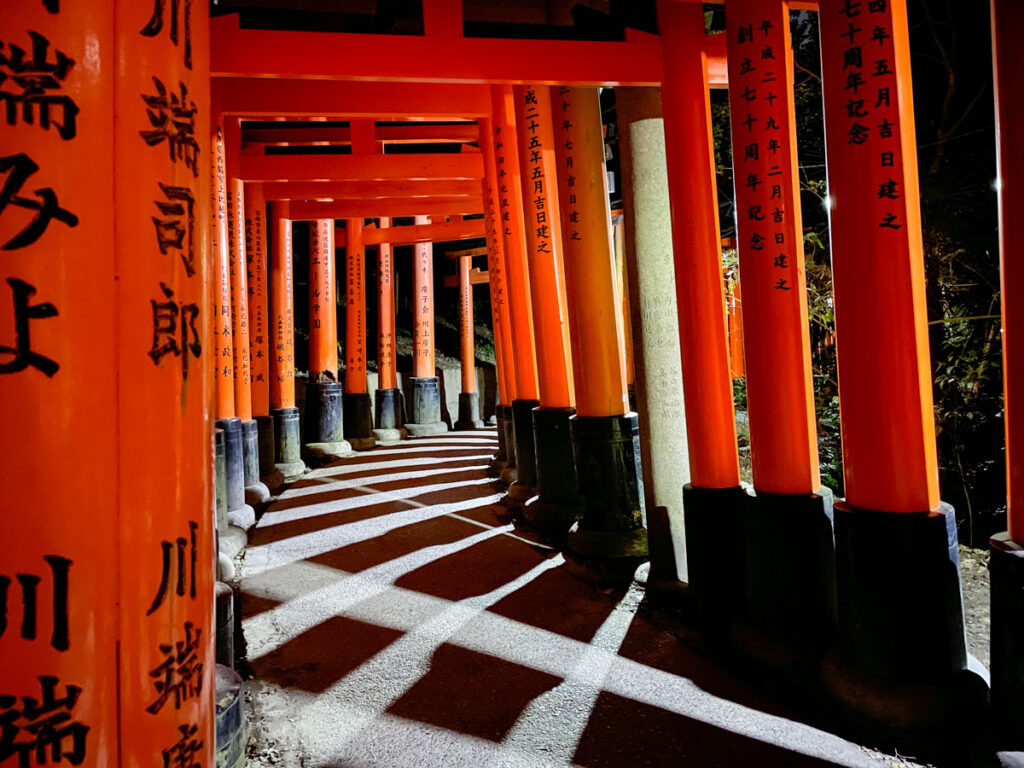
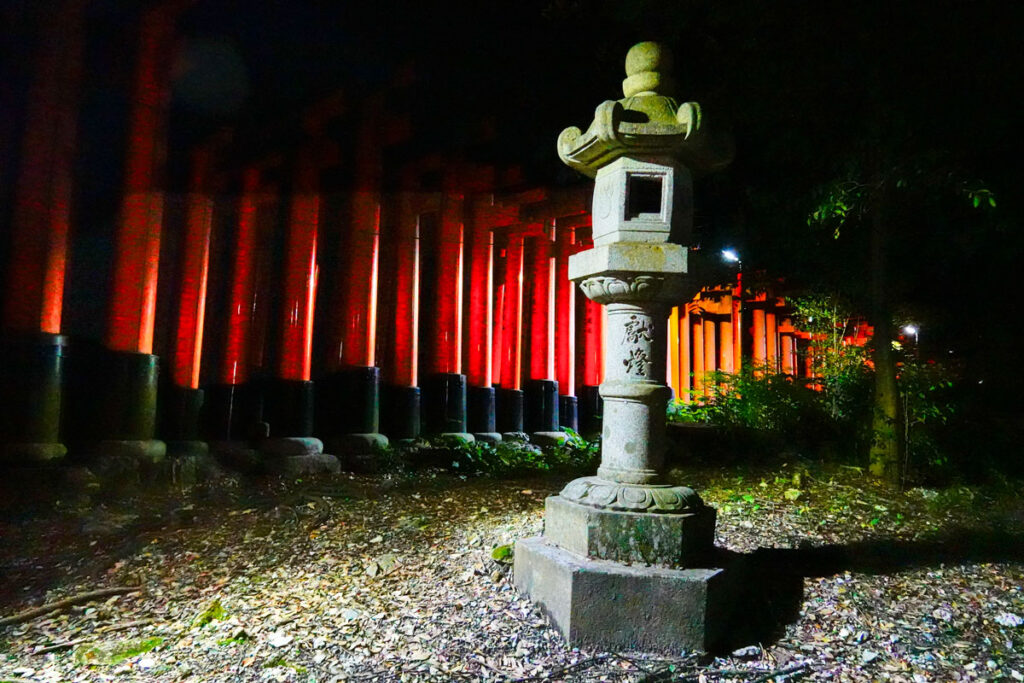
We decided that a night time shoot would be interesting. More than four thousand dazzling red Torii gates arch across the narrow pathway that leads to the top, casting dramatic shadows across the path. Each one of the gates that line the way has been donated by a Japanese business to ensure them luck.
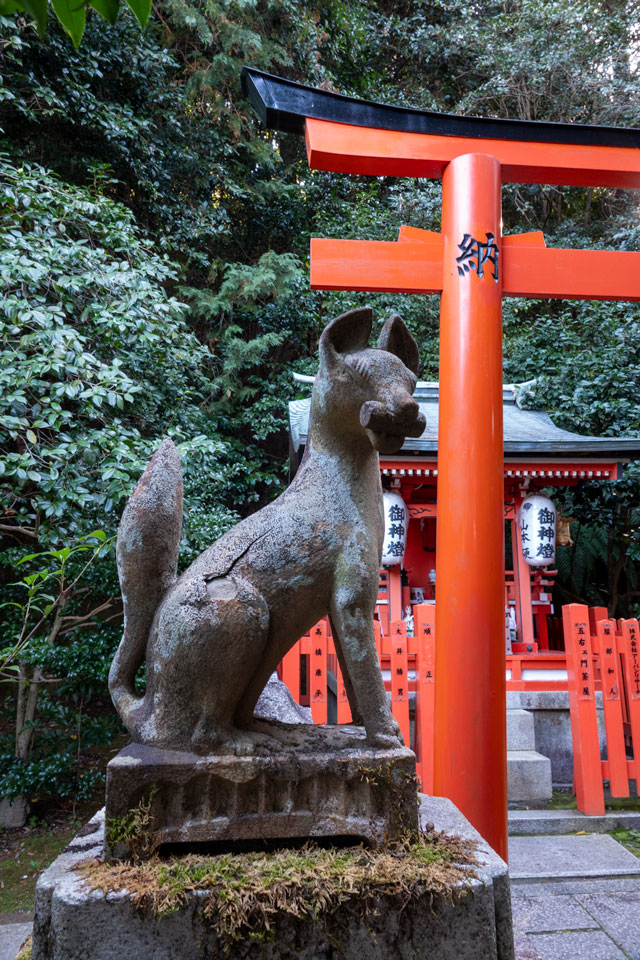
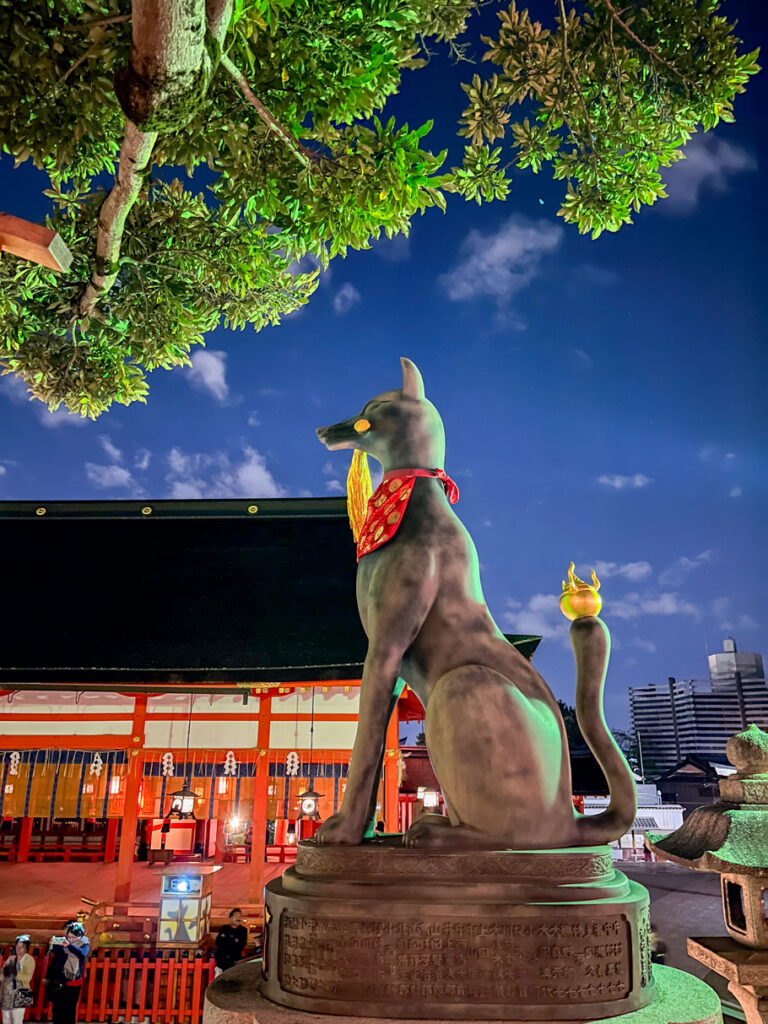
The fox is considered a messenger of Inari. These foxes hold symbolic objects, usually a key to the granary in their mouth. But a sheaf of rice or a scroll is also common.
In some places, the gates stand so tight together that even the sunlight has a hard time getting through. They form a glowing red tunnel that winds itself up to the narrow mountain path
It’s illuminated at night with just enough light that it’s not too dangerous to walk, but it’s also not so bright that the atmosphere is spoiled. In some places, it’s actually a bit spooky with the moonlight and spider webs, giving an almost haunting appearance. The interplay between the light and shadows is a photography dream. It is truly a surreal and magical experience. You can really sense that you are wandering along hallowed ground.
I read that locals believe that once you are past the main torii gates you have entered Kami’s (spiritual) domain. Anything off the main path is off limits for humans especially at night. Humans are supposed to stay within the torii vermillion gates so that their souls don’t wonder into the other world – hence the word “gate”.
“When we enter and exit, we always bow. We never step on the edge of the torii gates or we might “slip off”.”