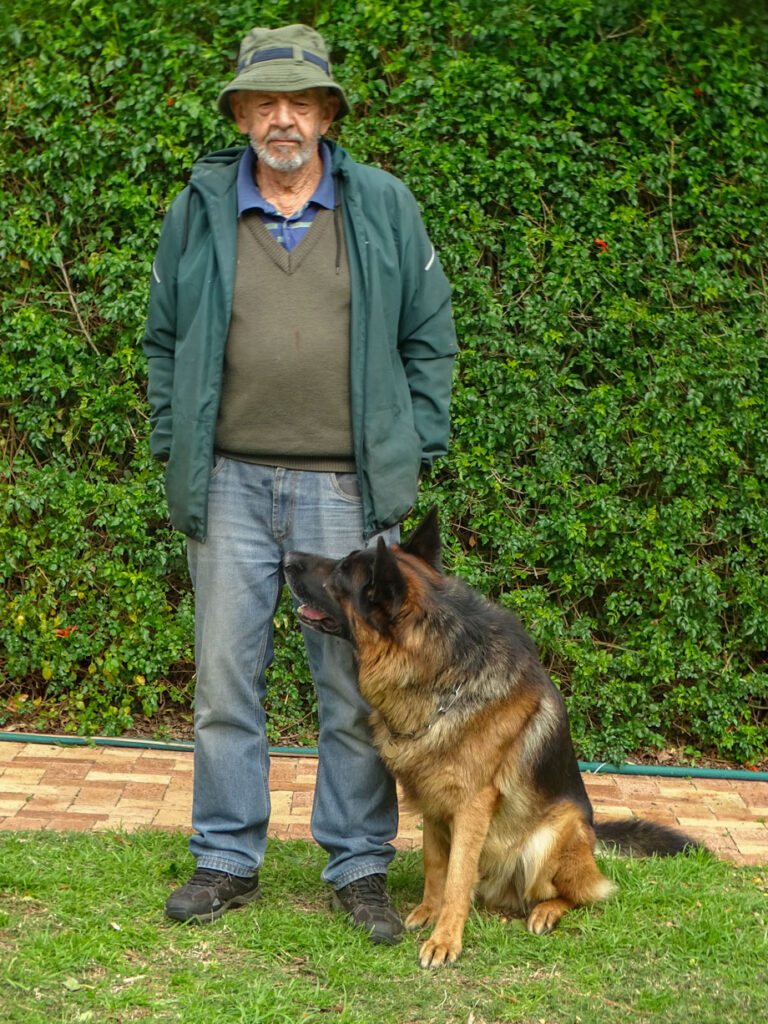
I well remember one afternoon in March 1959, because a chance meeting was ultimately going to be a life changer for me.
As I was going home from school, a pupil, Charles Bates, came running up to me and with great excitement asked, “Sir, do you want to buy an Alsatian puppy?” I was a bit bemused by his seriousness and asked how much the puppy cost. “Five pounds,” he said, and without thinking about the implications I said, “Yes.” Charles told me to wait and went to fetch the seven- to eight-week-old puppy for me to carry home.
Arriving home I told Phyllis that I had bought the Alsatian puppy for our home. We were both overcome with excitement and inspected every part of this cute little animal that was to become part of our newly found life.
However, only too soon the realization of what goes along with a puppy sank in. He had to have water and food, a bed and a place to sleep, a practical area to eliminate, a collar and a name, amongst other things. The last time I had a dog was “Basie,” the little Fox Terrier I owned when we still lived in Mossel Bay and I was about twelve years old. Basie couldn’t accompany us to Pretoria and stayed with friends until we returned to Riversdale.
Fortunately Phyllis’s dad had owned a number of Alsatian dogs, all called “Duke,” I am told. She knew a lot more about this breed and had fond memories of taking Duke with her to the beach, where she witnessed how protective he was of her. Unfortunately Duke had many fights with other dogs, mainly if they dared to come to close to her. This ended up with her having to help treat his various injuries from time to time.
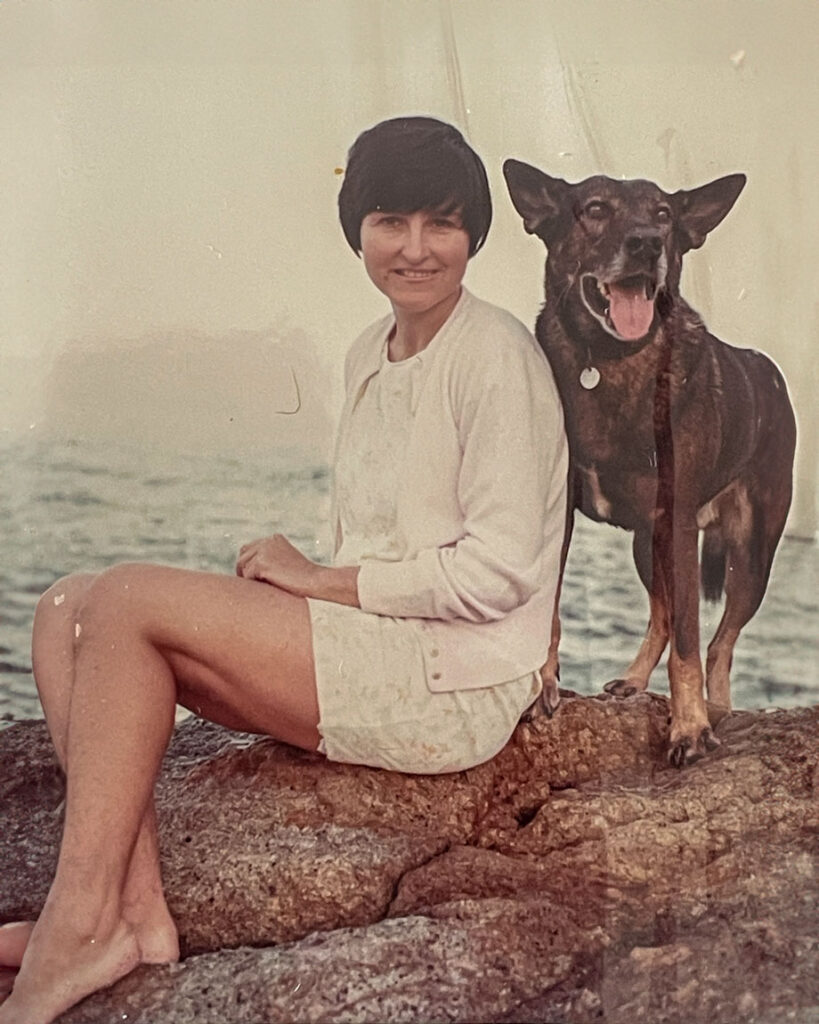
Phyllis and I were both born in the Lunar Year of the Dog and got married in the Year of the Dog, so it seems inevitable that we would have a special love for dogs in general. My mind was inquisitive and somehow I had a need to know so much more about this cute little fellow. But first he had to have a name, and that was not going to be “Duke.” No royal title for him. We lived in a naval base, so something nautical might be possible—and a naval rank at that.
The first naval promotional insignia is a little anchor on the arm of a sailor, and he is addressed as “Killick,” a French word meaning “little anchor.” The first thing schoolchildren wanted to know about a teacher’s dog is usually, “What’s his name?” As the only teacher’s dog living close to the school and regularly coming into contact with the children, Killick became a legend of sorts. Now when we meet past pupils of as long as fifty or sixty years ago, they always refer to Killick’s escapades at school.
Killick settled down very nicely with two schoolteachers and followed us almost everywhere. Going to the beach near our house was a clear favourite. He loved to play in the water and roll in the sand
In those days a married female teacher in South Africa automatically lost her permanent job to make place for a single woman. Phyllis was a popular teacher and was offered many relief positions, which meant that Killick had to stay home while she was at work.
We started noticing an unusual amount of beach sand in the house, particularly in the passage where Killick often slept. It turned out that during the day when we were at work, Killick had found a spot in the garden where he could jump over the boundary fence, wander down the road, cross the Main Street in order to spend time on the beach, and be home when he knew school was out and we would be returning home.
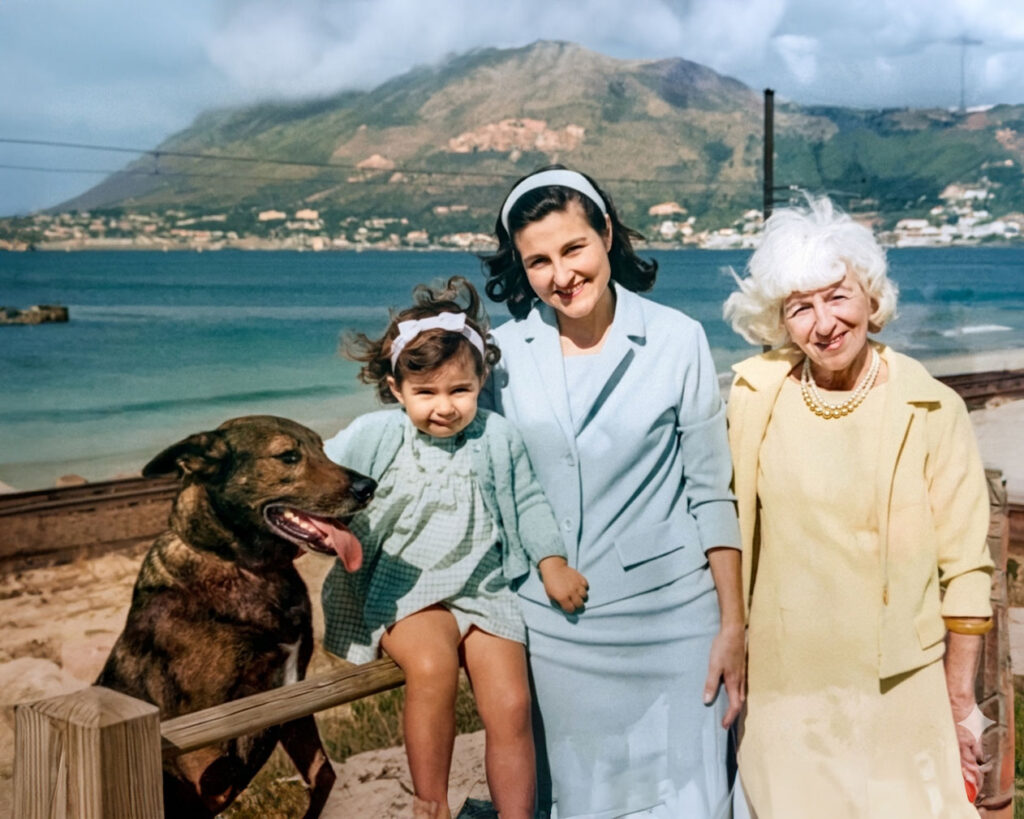
When we went to visit Phyllis’s mother at her house, about half a mile away, Killick would go with us and he would receive special attention from “Gnagna,” as she was affectionately called (Nikki couldn’t pronounce her name “Lydia” very well, and the nickname stuck). One evening when Phyllis was cuddling Killick, she noticed a message attached to his collar. It was a letter from her mother. We were not too surprised to find that he was a regular visitor to Beausoleil where her mom lived. Then followed many messages to and from between our homes with Killick acting as courier.
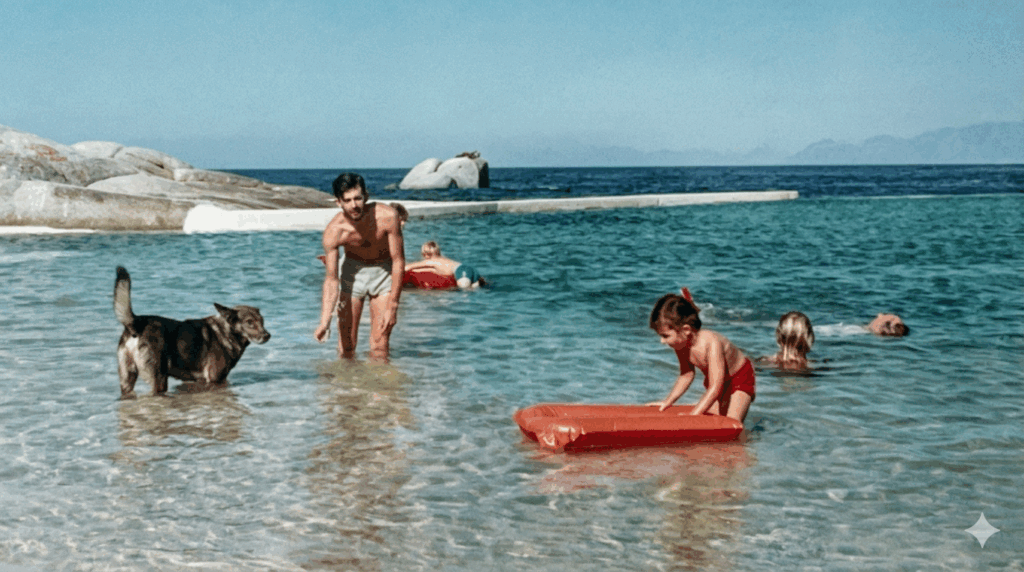
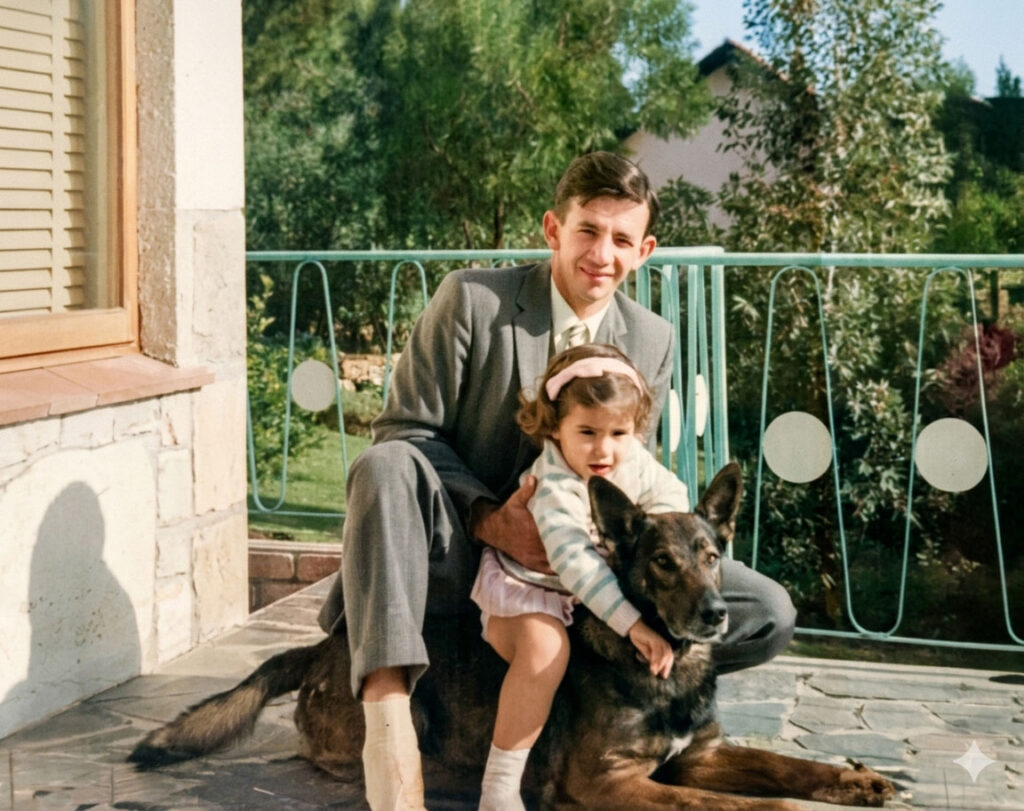
Killick was now about two years old, and I became more aware of his intelligence. He would wait for me at the school gate to walk home with me in the afternoon. This he would do rain or shine. If I took too long, he would often come into my classroom, catch hold of my jacket sleeve, and start tugging me towards the door and walk thus attached down the corridors and all the way home.
During school assembly, the teachers would be seated on the stage. Killick would enter through the back of the hall, and his toenails click-clack could be heard all the way as he made his way to the front, trotted up the steps and onto the stage, where he would gently nudge me before lying down in full view of the whole assembly. There was always a murmur from the auditorium and often a barely concealed giggle. Every child knew he was my dog. Mr. Gus Gain, the headmaster, would often on these occasions remark to the assembly about how obedient Killick was—an excellent example for all the children.
Nikki started ballet lessons at age three in the school hall, and he would accompany her and Phyllis (a short stroll to the school from our house), carrying her ballet slippers in his mouth.

During a visit to Gnagna on one occasion, I met her neighbour, a Mrs. Herd, with her two Border Collies and found out that she regularly entered obedience competitions with them. She offered to give me advice, which I gladly accepted. However, in order to enter for obedience competitions, only pedigreed dogs are allowed. I felt that a clever dog like Killick should have a history of intelligent parentage. So I went hunting for such evidence.
After asking around for a while, I found out that Killick’s breeder was a Mr. N. Vink, a resident in Froggy Farm not far from Granny’s home. His parents were Judy and Rex, and he was born two years after our marriage, also on the 20th of December but in 1960. Armed with this information, I went to see a Mr. de Beer in Fish Hoek, and Killick was given a South African Kennel Union number: 698651, “for obedience tests only.” Now it was my job to become a dog obedience trainer. Going for lessons with Mrs. Herd didn’t work out because we couldn’t find time for two busy people to meet regularly.
“Lassie Come Home” was the famous Hollywood dog and the flavour of the next few years, and people were in awe over this clever dog. I then turned to Hollywood for insights on how they trained this dog to be so very smart and obedient. I soon found books by what was reputedly one of the top dog trainers in America from PETS Publications in South Africa. Three books from William R. Koehler—Open Obedience, Utility Dog Training, and Guard Dog Training—were to “effectively guide to prepare you and your dog for competition.” This became my field of study for most of the next year.
My progress with Killick was too slow, so I decided that I needed more hands-on training and discovered that a club called the Western Province Alsatian Club met every Sunday morning at the Wynberg Fire Brigade premises at 10 o’clock. It was almost an hour’s drive away from me, but I hoped the trip would be worthwhile.
It turned out to be exactly what I had wanted, and Phyllis would accompany us there every Sunday morning. But shortly after training began, we discovered that she was pregnant with our first child and she suffered from morning sickness, which made the training hour and the journey unpleasant for her. But fortunately, due to her love for Killick (or perhaps me), she persevered. I enjoyed the basic obedience training and would not dream of giving it up. Killick’s scent retrieve ability was particularly remarkable, and he willingly participated in exercises I set up for him.
Around this time, Phyllis was given a teaching stint in the Simon’s Town school’s kindergarten section where the windowsills were lower than normal. The pupils would get a fright when Killick would sometimes leap through the window to pay Phyllis a visit. She would then, at the children’s request, show off his scenting ability. The pupils would lay all their pencils in a row on the floor, and then Killick would be blindfolded while Phyllis also placed her pencil somewhere in the row. She would then give him her scent by placing her hands over his nose and tell him to “Seek.” He would then, without fail, nudge out her pencil with his nose, gently pick it up in his teeth, and return it to her. This was a great treat for the class and something they would remember for years.
At the club we made good progress, and Killick was promoted from Special Beginners to Beginners and then to the Novice class. After becoming fourth in the club competition, we decided to enter for the W.P. Championship Test—Special Novice class—in the Rondebosch Town Hall. On completing the entry documents, I realized that it was to be an indoor test and we had only ever trained in the outdoors. Fortunately, the school didn’t object to my training with Killick in the school hall after hours.
On the day of the test I learned another important lesson. My dumbbell had rounded ends, and when I tossed it along the wooden floor, it continued rolling to beneath the spectator seating. Killick went and retrieved it in any case, and we achieved 91% in total and were placed eighth in the Western Province. This taught me a few things. I learned that my dumbbell had to have square ends, that you must be well prepared before entering a competition, and above all I was buoyed to realize that I had some ability to do dog training.
Obedience dog training was very popular in those days, and it was not unusual for Killick to be one of twenty-four or more competing in the same group. I had more to learn and concentrated on paying special attention to how the owners of the winning dogs handled their animals. In my first “away” competition with Killick, I was very confident about our progress until the retrieve exercise. Killick sat nicely, watching as I threw the dumbbell and waited for me to say “Bring.” Then he darted out as rehearsed, but ran right past the dumbbell, went to relieve himself on the far edge of the field before retrieving the dumbbell and giving it to me. Unfortunately the rules in those days were “no score” if the dog went out of the ring. That was another good lesson to learn.
In another competition, Phyllis sat in the stands with the spectators, and during the retrieve, Killick ran right past the dumbbell to where she was sitting in the stand, briefly greeted her before retrieving the dumbbell and bringing it to me. The only rule we changed thereafter was that Phyllis could no longer go watch our dog performing at obedience competitions.
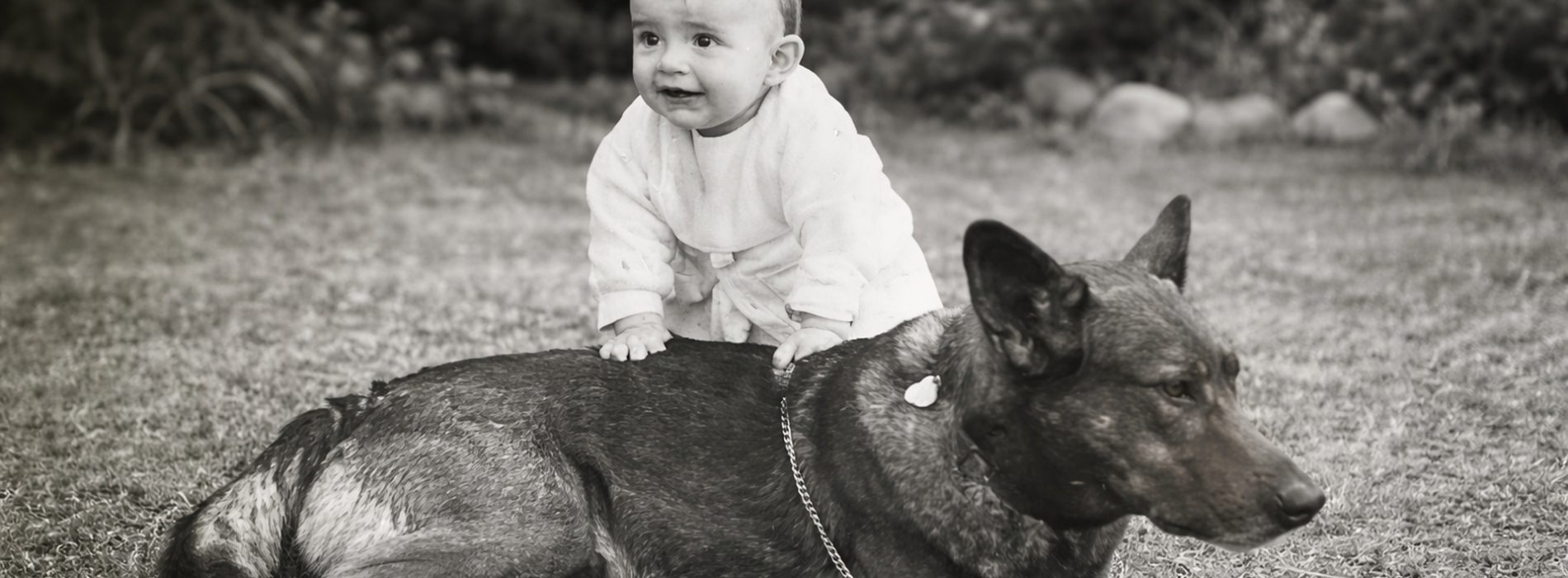
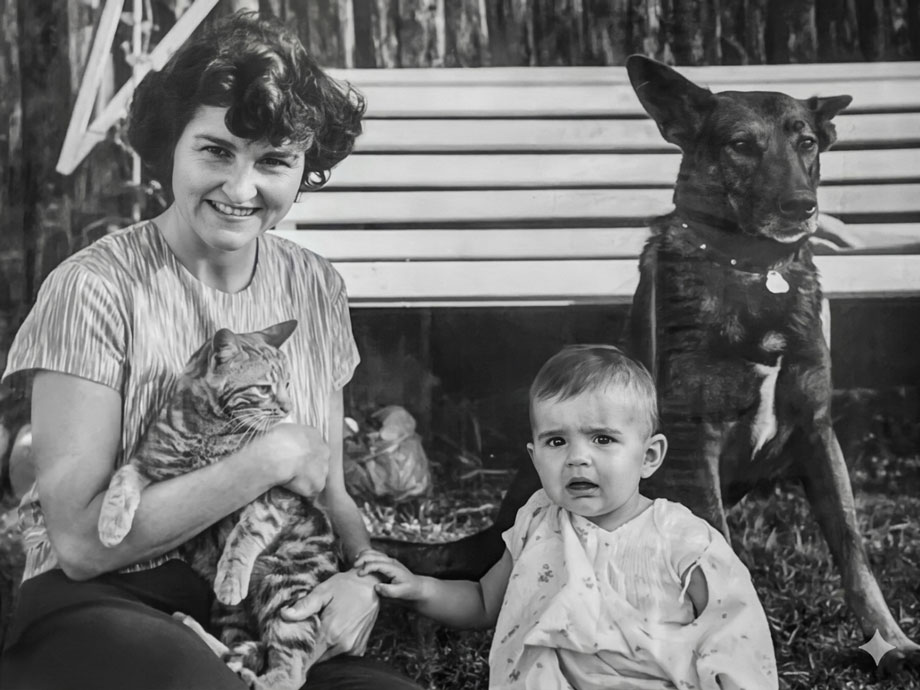
To our delight, Nicolette, our firstborn, loved Killick and he was very protective of her. In those days mothers had to stay in hospital for ten days, and we were unsure how he would react to being introduced to the new baby. We placed Nikki on the bed and allowed Killick into the room. He immediately knew there was a stranger present, walked round the bed, raised himself up the side, and after a sniff started trying to lick her.
Taking Nikki for walks in her pram, the neighbours and friends all wanted to see our lovely daughter, but Killick would immediately growl to prevent them from looking into the pram and he had to be restrained. One day I was walking with Killick while pushing the pram, when Mr. Gus Gain, our headmaster, joined us and wanted a closer look at Nikki, but Killick almost bit him when he suddenly leant into the pram. No one was going to get near to his little girl.
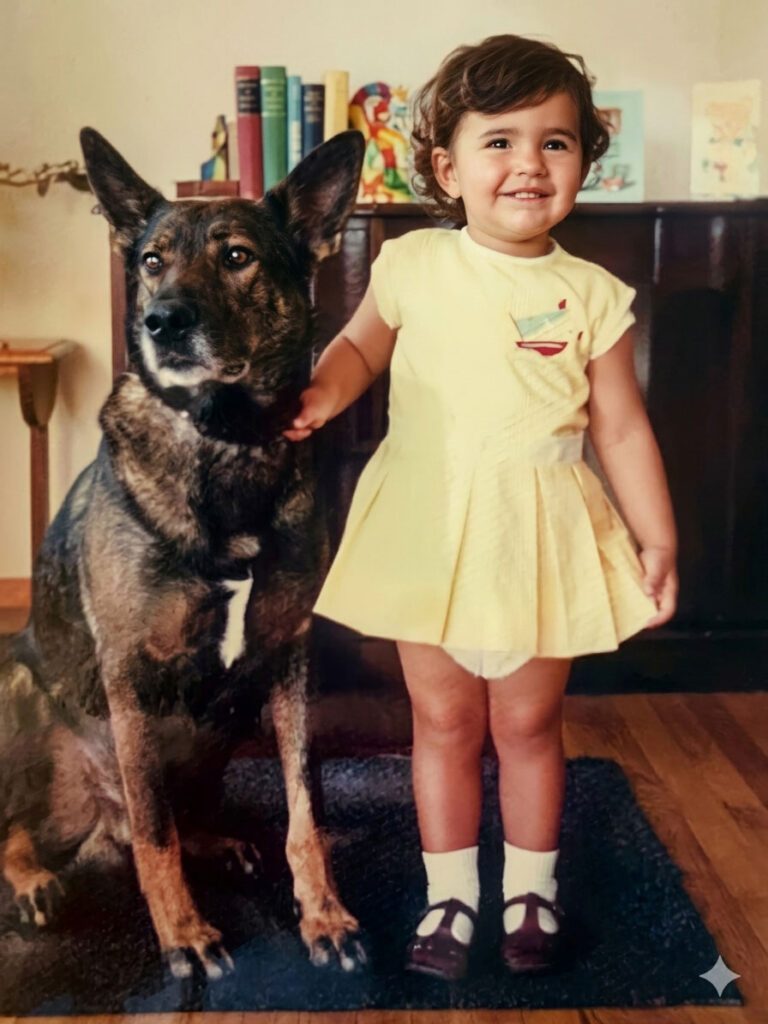
One evening some years later, Killick didn’t come in at bedtime. I called him a few times but eventually went to bed, leaving the back door open for him. Sometime around 5 in the morning I heard him come in and flop down to sleep in the passage.
Arriving at school that morning, some children came running to me and said, “Sorry about your dog, sir.” I didn’t understand and asked what they meant. “Because he was killed last night, sir,” came the reply. “Tell me more,” I asked. They explained that a motorcyclist, travelling at speed, crashed into Killick, who was not able to get out of the way fast enough and was killed. His body was dragged to the side of the road and left there.
I felt sure that it was a case of mistaken identity in that Alsatians can be very similar in looks and that it was likely another dog that was killed in the accident. When I arrived home that afternoon, I found Killick still lying where he had been when I had left for school that morning. I systematically checked every part of his body as far as I could, and apart from him coughing a few times, I could find nothing wrong. Then I opened his mouth and inspected his teeth. Unmistakably a piece of chrome from a motorbike was stuck to one of his fangs. This was clear evidence that he had collided with the motorcycle, was knocked unconscious, and left for dead. They don’t make dogs like that anymore.
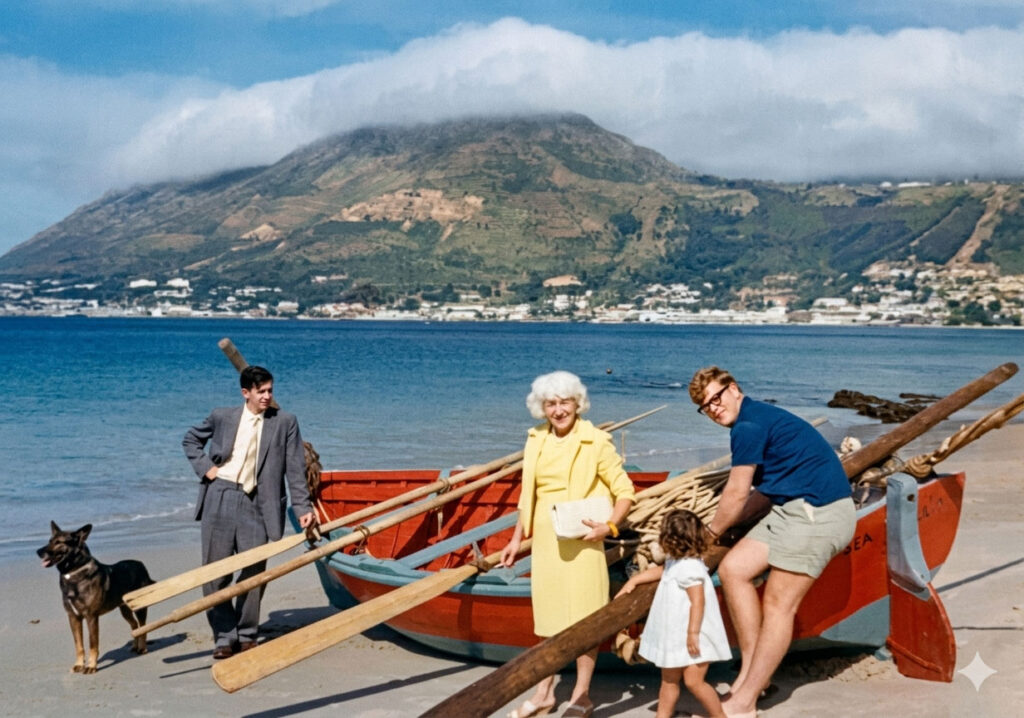
When Nikki was a year and a half, we went on an extended trip to Europe but mainly for me to meet all our French relatives and to show off our baby to them. What would happen to the free-living Killick while we were away for more than four months was indeed a worry. Luckily Uncle George and Gnagna would take good care of him, but we were concerned that he may start wandering and get lost or stolen over such a long period.
Upon our return home there was no sign of Killick at the house. We had been offloading our luggage and talking in the driveway with the gates wide open when I caught a glimpse of a dog arriving and pausing in the open gate. It was Killick. I called his name, he hesitated for a second, and then charged at me for a joyous reunion and he just couldn’t conceal his happiness that we had returned. Once back at school the teachers told me that he regularly visited the classrooms where we taught and during lunch break he would come into the staffroom to look for me.
Killick lived a good life as far as we were concerned. Visits to the vet were mainly for stitches for wounds collected in his fights. When he was a little over eleven years old, we noticed that his stomach was swelling. Our nearest vet then was in Plumstead, who diagnosed it as dropsy, which today is known as oedema and is generally caused by heart failure. Regular treatment by the vet was not successful, and we had to make the horrible decision to end it all. We loaded him back into the car and with tear-filled eyes drove him back to our home in Simon’s Town. He was buried in our garden in the spot where he loved to jump over the fence to his freedom.
To the schoolchildren who knew him, Killick was a legend. To our family he was the beginning of a lengthy love affair with dogs. He made me into a dog trainer, which led me to write a book on dog training that can be found on Amazon.