
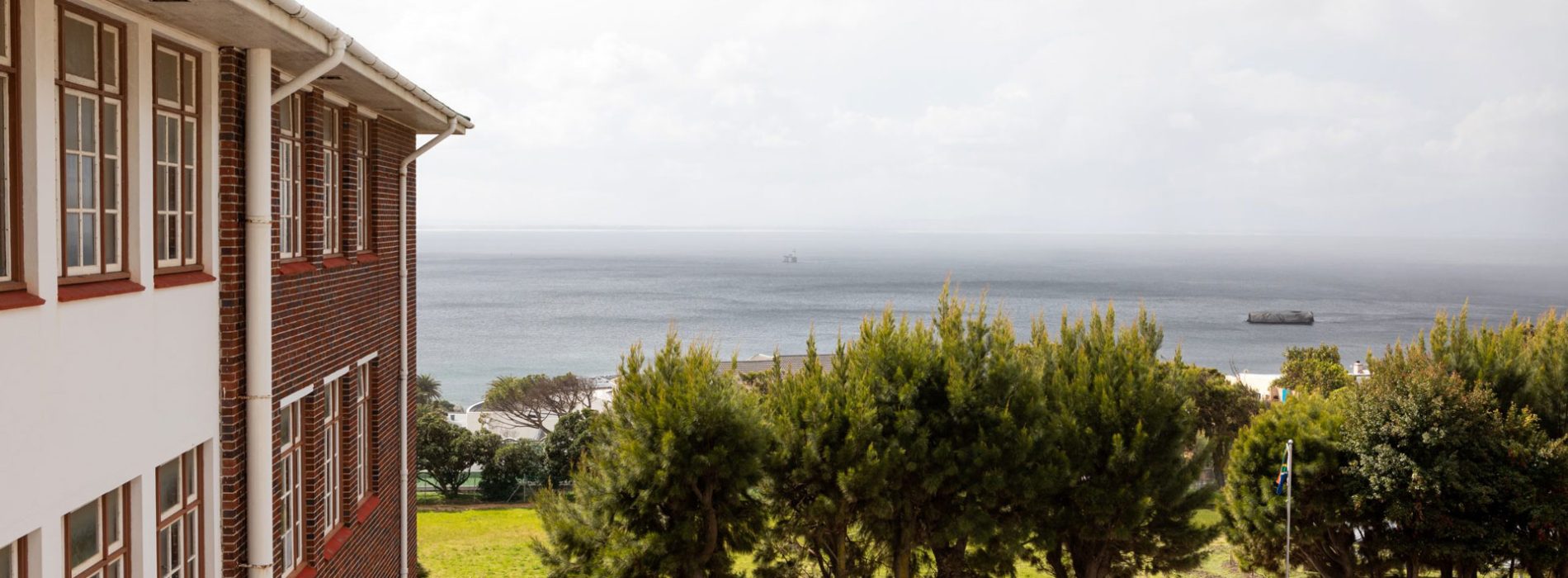
The Simon’s Town school offered many forms of extra-mural activities for pupils during the summer and winter terms. As a young teacher I was able to function at a level that the pupils enjoyed, and when they started winning their matches, their enthusiasm for that particular sport invariably increased.
All pupils were members of either “Protea” or “Erica” houses, which are the national flowers of South Africa and the Cape Province.
Hockey
I was given charge of the first boys’ hockey team that was entered in the fourth schools league at that time. Knowing very little about hockey, I had to find out the names of the different positions on the field and how a game is started—that is, with a bully. The offside rule, penalties, the reason for the different shape design of the head of a stick, the weight and how and where it should be used were all things that I relished absorbing. The rule book became very handy for understanding the nuances.
Having understood most of this information, I was able to slowly pass it on to the players and begin with tactics during practice games. Soon the competitive matches began on a home-and-away basis. We were playing the fourth teams of some schools but also sometimes the second hockey teams of others. We were delighted to go through unbeaten for the whole of the season and were very proud of ourselves.
We also won the third league unbeaten and the second league when we finally started playing the bigger schools with much larger numbers of pupils. We were able to hold our own, and my reputation as a hockey coach improved. The girls’ teams now also wanted me to help them. The headmaster thought it a great idea, and I was willing to do it, but travelling to games with a bus full of girls was not what I wanted to do. When a girl got hit on the leg, I was not going to be the one massaging the affected limb. I felt that a female teacher needed to accompany the team.
Cricket
I did play some cricket for Langenhoven school and had coaching from our PT teacher, but I also had no experience of how to teach the game. Once in Cape Town I spent many hours at Newlands and watched the Springboks being coached in the nets.
Annually, at the beginning of each cricket season, the MCC cricket organisation sent retired cricket coaches to Commonwealth countries like South Africa to help with school cricket coaching. They were paid coaches and enjoyed the hospitality of the host country where they worked. I was very glad to be able to watch how they coached cricket in the nets and was particularly grateful to receive an MCC cricket coaching manual.
At that time the Western Province Cricket Union had arranged a cricket course for coaches to test their knowledge of group coaching techniques and to teach the fundamentals of the game. I applied for the course, was accepted, and completed the programme.
I was tested at Newlands at the end of the year on the Newlands main cricket field and under the pavilion. One task I was given was to teach members of the Wynberg High School team how to play the “lofted drive.” I passed the test and was presented with a framed certificate—the MCC Youth Coaching Certificate. This was handed to me by Mr. Jackie McGlew, the popular South African cricket captain.
Being a cricket team coach meant that you were involved with travelling to different venues with your team and also being one of the umpires, which includes standing for half a day at times. You were also responsible for the wellbeing and safety of the kids until they were back home, which could be after dark. I remember a game in which my opening batsman had his left eyebrow split open by a new ball, and I had to take him to the nearest hospital where stitches had to be administered. It was dark when the train got to Fish Hoek, and his home was in Kommetjie some thirteen kilometres away. The father, who clearly had been drinking, said that I shouldn’t have bothered, but I replied that if his son ended up with an ugly scar in adulthood, he would forever blame “Mr. Meyer,” not his father.
One match that is emblazoned on my memory was one where I was asked to take a junior team to a match in Wynberg. Sometime during the match I saw two of our schoolteachers who were not cricket coaches standing next to the field. One was Mr. S.P. Green. The other one walked onto the field and said that he was taking my place as umpire. I objected, but he said I must ask “S.P.” why. I couldn’t work out what was going on and walked over to S.P., who firmly took hold of me as I got to him and told me that my dad had died and I must go home.
I burst out crying and couldn’t move for a while. After regaining some self-control, we moved to the parked car and S.P. got into the passenger seat and said, “You drive.” How I managed with tear-filled eyes to drive all the way to Simon’s Town I don’t know. I don’t remember any conversation on the way other than thinking how on earth do I get to Riversdale without a car and what is happening to my poor mother.
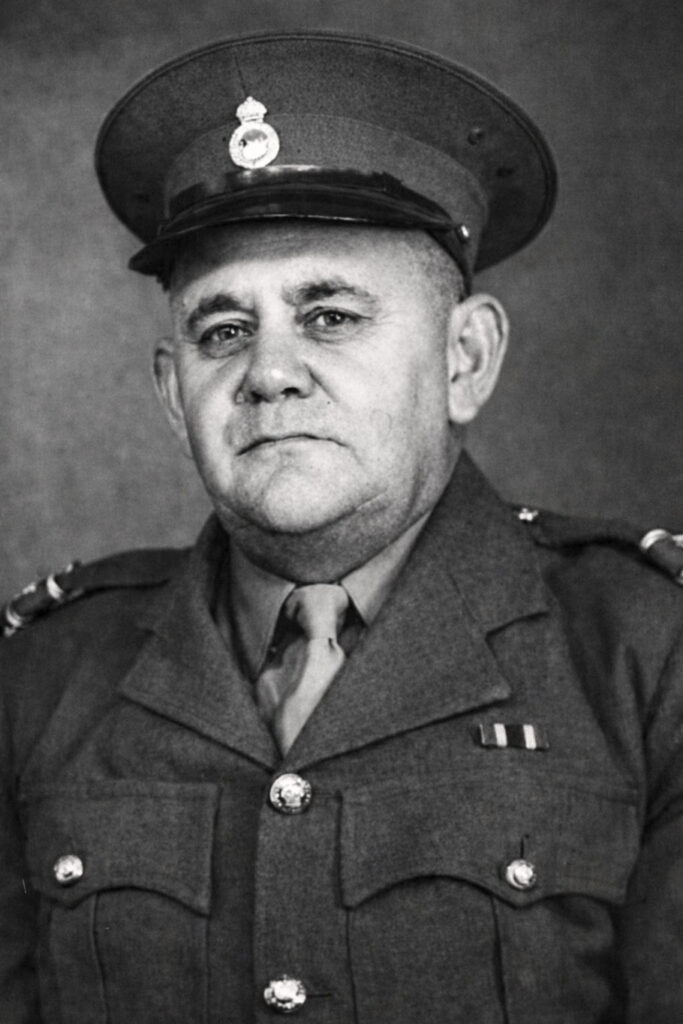
S.P. said that all my teaching duties were covered, and as soon as I packed my things he would take me to the station to get a train from Cape Town via Worcester to Riversdale. Luckily I didn’t have to wait too long for a train, but being alone and thinking about what awaited me at home was torture. Once we got to Worcester, I got out and walked along the train for some exercise to find that my Oom Hendrik (who had been on the White Train) was also the driver of this train. I had someone to talk to, and between some towns he even allowed me to ride with him in the engine. This was a great distraction and shortened the journey for me.
At Riversdale station I phoned home, and someone came to fetch me. Mom was very happy to have me with her and told me that they kept Dad’s body in the back bedroom so that I could have a last look at him. He looked so well, as if simply asleep. The only unusual thing was that his beard had grown quite a bit longer since I last saw him. Once the coffin was closed, I was told of the church and funeral arrangements. The Dutch Reformed churches require senior male members to wear black ties and armbands for at least ten days. My sister Linda and her husband Frans Joubert, my half-brother Bennie and half-sister Marenda, as well as many friends were there every single day to help us with arrangements for the funeral and the church.
I don’t remember much of the funeral service, of carrying the coffin, of the many people, friends, and relatives who wanted to commiserate with me. That was the part that I wanted to forget, wishing that it never had happened. I didn’t want to go see people, or go for walks, or anything. The school placed no restrictions on me. “Stay as long as you have to,” was their message.

My mother had to vacate the government house. She wasn’t able to drive, but someone could use the Chev to take her wherever she wanted to be. Bennie and Marenda had to go back to school. So there was much to keep me occupied before returning to Simon’s Town with a heavy heart, where the school staff did their best to try and make me feel at home once again.
I returned to Riversdale on my next holiday to check that my father’s matters had been satisfactorily attended to. My mother was now living in a larger house, and the children had also settled down without my father. I was comforted to see that my mom was satisfied with the situation and arrangement.
During one of my trips home, a friend told me that he thought my mother was too generous in allowing friends to borrow the car for an apparent short task only to then do long trips, even as far as Cape Town. He speculated as to how fast they would be driving and who would be servicing and taking responsibility for the car’s maintenance. Since I didn’t have my own transport, I discussed the situation with my mother, and we agreed that I would take possession of the car.
