
Wellington Training College
When I had to give up Latin as a school subject, it ended my dad’s vision that I should read law at university. He thought that I could still get into legal professional positions. He mentioned that I could aim at becoming a magistrate or the like.
The reality in South Africa at that time was that all males faced the challenge that if you were not continuing your studies, you had to do military service.
Coming back from my December holidays with my Matric qualification, I was confronted with a letter addressed to me, informing me that I was seconded to the 21st Radar Company and to receive training on Robben Island. This was not of interest to me, so I started looking at study opportunities.
At that time there was a great need for teacher training, and I was accepted immediately at the Teacher Training College in Wellington. Arrangements were made as quickly as possible so that I arrived only a week late after that year’s opening ceremony—but not too late for initiation of the first-year students.
Amongst other “challenges,” we were taken to a nearby nursery school and had to hide behind a matchbox and jump out to scare little girls or offer to carry the suitcases of a preschooler, which of course they would not allow you to do. Fortunately I had only one week of it.
Teacher training was aimed at junior school qualifications. I found the subject matter easy. The subjects included History of Education and Psychology, which were more to my liking. What I found difficult was to communicate with children below Grade 4 level. I decided that I was definitely not suited to kindergarten teaching.
I shared a dorm with six other guys and generally had an enjoyable but interesting time learning about their background, education, and attitude, which differed from mine somewhat at a cultural level. The people of the Boland are more Afrikaans than those brought up in the Cape where there is more of an English influence.
The primary teacher’s course consisted of some nineteen different subjects aimed at preparing you to teach from kindergarten to the end of the primary phase. They included lectures on childhood development, classroom management, discipline, handwriting, history of education, psychology, and practical teaching experience.
My first practical teaching experience was a disaster. We were taken to a school hall where I was introduced to a little girl that I was expected to connect with. She was only interested in being with her friends and soon disappeared. I suddenly realized that I could never teach children under Grade 5. I felt out of my comfort zone dealing with very small children—that is, in kindergarten.
Luckily nearly all of my practical teaching tests were with older children. We were sent to schools to observe experienced teachers teaching and how they managed discipline in the classroom and taught actual lessons.
Gradually, in our final year of study, we were sent to different towns where we had to gain experience with larger groups or whole classrooms. I was lucky to find teachers who handed over full control of their class to me for a week. You had to follow the timetable and prepare the lessons for each day as well as correct their homework. Their class teacher had to write a report on our conduct and abilities.
Each student teacher was regularly evaluated by a lecturer who would visit that town and quietly sit in the back of the classroom observing and listening to you. Your final practical mark consisted of, for example, giving a history lesson that you had to fully prepare and deliver.
A friend of mine beamed about the wonderful lesson he gave about a Dutch shipping disaster. He was heavily penalized for the dramatic sound effects and colourful language he used to describe the captain encouraging his sailors.
This guy was quite a character. He worked in a winery in the evening after college and brought armfuls of wine bottles to our room. In history we learned about the Medes and the Persians who toughened their bodies against the cold, so he slept on a table over an open window in winter, similarly to toughen his body against the cold.
He pasted a copy of his birth certificate on his room wall to “prove that he was born.” His parents lived in Bellville in Cape Town, and he invited me to stay with him some weekends. Much time was spent in the Sea Point swimming pool and at a roller-skating hall. Because I didn’t have skates and couldn’t pay hiring fees, we hatched a plan where I would push him through a store window for him to “loan” skates for me for a skating session.
Because he had to repeat a year, we drifted apart and met many years later when he applied for a job at my school. Needless to say, he did not accept an offer.
What I didn’t like about the college is that everything was run like a school. They called you “Mr.” but not much had changed about table manners and alcohol. I got called out because I was seen licking my knife. Punctuality was stressed. One afternoon four of my friends went to play tennis, and when we stopped we realized that we could be late for supper. I suggested we go to the local hotel and have a few beers so that no one would see us entering the building late.
At the hotel we had hardly settled down with our beers when in walked our lecturer with drinks in his hands, closely followed by the physical education lecturer who always wore very short skirts, much to the distraction of the male students.
Naturally I was called in the next day by the lecturer who wanted to know what I was doing in the hotel. “Same as you,” was my reply. He then went on telling me how important it was for a teacher to not be seen in hotels.
The bugbear of a poor male student was the lack of cash, so we always paid for the cheap seats when going to a movie, or climbed through the toilet window to sneak in. That meant that we always sat in the front two rows. The usherettes would shout at us to go to the front, then make many trips to check on us. One night we were told to go to the very front and stay there and not sneak back when the lights went out. So two of us went to the front, climbed up onto the stage, and sat down next to the screen, which obviously blocked some of the picture. The manager threatened us with expulsion, so eventually we had to concede and retreat to our seats.
One evening walking home from the flicks, I saw a mole in the gutter that looked like it needed to be rescued. I picked it up and put him in my pocket and then popped the cute animal in my bed when we got home. I realized that I couldn’t keep the little guy as a pet in my room. The housemother, who had frequently complained about me for hosting jukskei on the floor in my room, had a rose garden that was directly opposite my door. This seemed like an excellent place to deposit him.
The following afternoon while resting on my bed, there was a knock on my door and the housemother asked me to assist as a mole had ploughed through her rose garden. I followed her and tried to help find it. She thanked me for my help. The gardener managed to relocate the mole a week later. I hope the little guy found a safer home.
I again played in the college second team. During a game in which I played hooker, the scrum collapsed and I ended awkwardly at the bottom of it all with players piled on top of us. I distinctly heard the vertebrae in my neck cracking and was taken off the field because of the pain in my neck. I was taken to the local Paarl hospital for treatment. The X-ray picture gave me a clean bill of health and a discharge. I played a few more rugby games for local teams, but the one that mattered was still to come.
The Springbok rugby team decided to train in Wellington and wanted to use fast students to practice against in preparation for their match against the Wallabies. After running up and down for a while, the practice match was ready to start. Suddenly it was discovered that the student team was one short, and I was asked to play until the missing player arrived. To me it was a great honour to have been able to tackle a Springbok!
Annually in winter we had inter-college wars when we would raid other colleges, abduct students, and “humiliate” them for being at the wrong institution. All meant to be in fun? I was caught once and stripped, painted, put under a shower on a cold winter’s night, and given a brick to scrub myself.
I managed to escape but was still in Paarl and a long way from home in the dark of night. It was not safe to hitch a lift back home because “the enemy” had cars cruising around to pick you up and take you back to their college residence or university. Along with another student, we found a security guard who had a coal fire burning in a paraffin tin, so we enjoyed some heat for a while. At daybreak we spotted one of our own colleagues’ cars and got back to our residence again. These sorts of inter-college activities have long been discontinued (for good reason!).
As seniors, it was now our time to conduct the initiation activities for the new intake. Apart from the usual exercises to subject the new male students, we had a change of plan. Our campus residence was right next to a wine farm. The owner acknowledged to us that the area close to us did not produce many grapes because of student raids each year, and he didn’t mind as long as the vines were not damaged.
We ordered a group of students to go steal grapes for us from a particular area in a vineyard not far from our residence. We gave them clear instructions as to when they should go. What we didn’t tell them was that the local police were in on the ruse.
The police allowed them to collect their bunches of grapes before gruffly rounding them up and taking them in the back of a van to the charge office. Panic followed because they were worried about what would happen if their parents found out that they were in jail or couldn’t continue their studies for this reason. We received desperate calls for help and made a great show of appearing to assist them. We took all the “evidence” to our residence, and the police, who therefore had nothing, released them after a while. Hopefully this brush with a life of crime would stand them in good stead in the future.
I had a few scrapes with a lecturer or two about things that I didn’t agree with, but all ended well. We were qualified teachers at last. Most of my classmates got teaching posts and went to work. I had other ideas and decided to continue my studies.
I applied to Paarl Teacher Training College and was accepted.
Paarl Training College
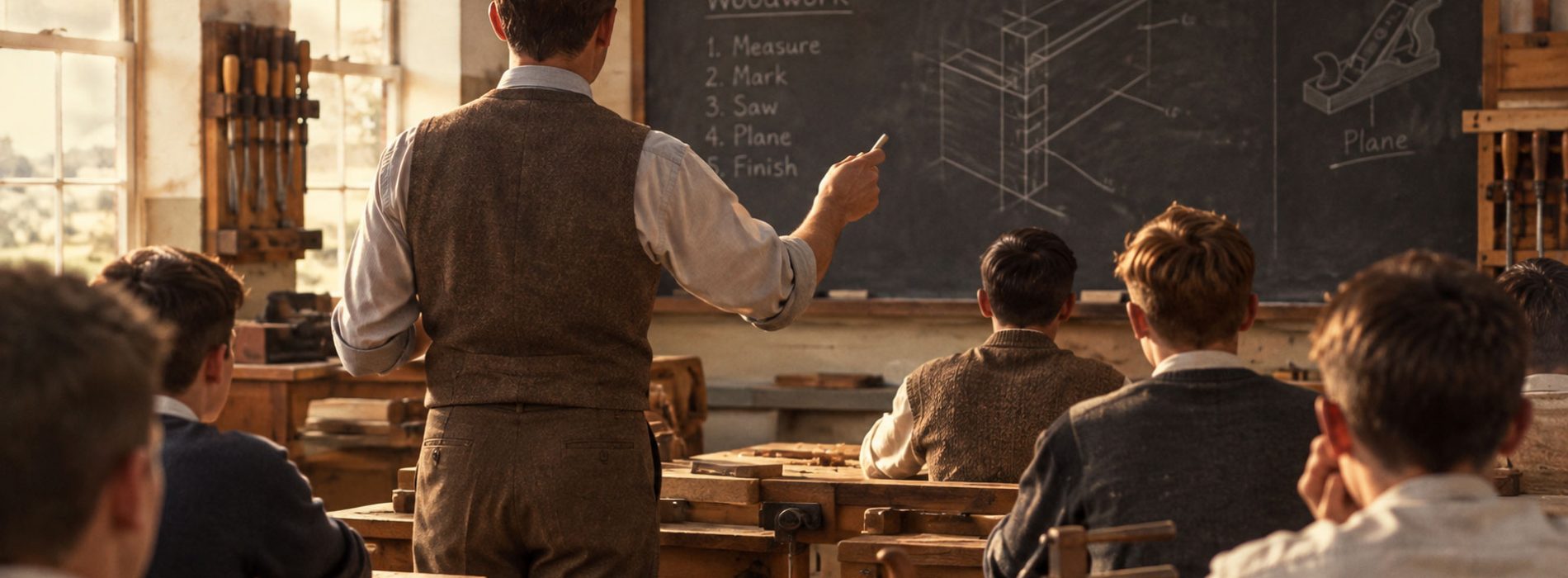
The teaching course I followed at the Paarl Training College would qualify me to teach woodwork and metalwork to high schools and technical colleges.
My dad managed to get the money needed for my studies and other living expenses.
To my surprise and delight, Morris Henry Hopwood Fox, my old schoolmate, was to be my roommate in our top-floor room in the college hostel. He enrolled for the Physical Education course, as expected.
Morris and I got on very well, but we did get into trouble with management because of how we arranged the furniture and the tidiness of the room. Apparently we also didn’t react correctly to their suggestions, so we were kicked out of residence (not the college) at the end of the first term of study.
That placed me in a predicament because I had nowhere to stay and I couldn’t tell my parents that I was ejected from res. My fellow students were worried about me, and I was told of a family who was willing to take me in for a fee. I kept it a secret from my parents but didn’t know where the money was going to come from.
However, I’m not sure why, but at the end of the next term I was told that I could return to the residence in my old room with Morris. I think they needed Morris to play rugby and they needed the money from my sponsor, which had been arranged by my dad.
The metalwork machines and lathes were new to me, and learning about different metals such as iron, brass, and copper and the different joints was most exciting. We started making our own tools like a metal screwdriver, set square, dividers, and so on.
The engineering drawings took up most of my free time. In fact, I started developing eye problems and ended up wearing eyeglasses for the first time in my life.
We had to line up for the lecturer to peruse each drawing to find out if we had correctly completed it before signing it. Once he thought I wasn’t paying attention in the back of the class and asked me to come and explain to the class what he had just done. Walking from my seat in the back of the class, I had enough time to know what he had explained. I went through the drawing but also pointed out a mistake the lecturer had made. From that day he didn’t study my drawings anymore. He would look at me and ask, “Is it right?” and then just sign it.
Once we had mastered the basics, we had to design and make our own items in different metals or woods. I achieved top marks for most of these items. That was difficult but essential to be able to teach the subject.

It was around that time that the head student handed me my college testimonial. It was nice, and I put it in my wardrobe.
Sometime around the middle of the year, I was called to the dean’s office. He introduced me to the headmaster of a school in Bellville somewhere. He was headhunting for a woodwork teacher for his school for a project he had in mind for the following year, and the dean was recommending I take it.
I said that I first wanted to know more about the school and what he had in mind. He had plans to have, from what I can remember, big changes to the stage area of the school hall and to build a new wing. It was not my idea to start my career building structures for the school, and I politely told him that I unfortunately would not want to teach at his school.
What I didn’t know was that you are not supposed to turn down a recommendation from the dean and the lecturers.
Woodwork practical had me in my element. We each had to design and make a large piece of furniture and make it for an exhibition at the end of the year. I designed a desk with ball-and-claw feet, scalloping all round, and linenfolds, all in imbuia wood. The lecturer said it was too big and difficult and discouraged me from doing it, but I would have none of it and worked extra time afterwards.
My end product was very pleasing, and at the exhibition of our work I had a visitor handing me his cheque-book and begging me to enter any amount I wanted. But I didn’t want to sell it, although I had no idea how I was to get it and all the things I made home.
During the last term of the year, the Educational Gazette with all the teaching posts is published. The woodwork teaching jobs throughout the Western Cape were listed, and the students, my classmates, rushed to apply for teaching positions at schools of their choice.
Some of the students came to my room in the evening and wanted to know if I was going to apply for certain jobs. When I asked them why they wanted to know where I was going to teach, their reply was that if I applied for that position, they wouldn’t get it. My stock reply was, “Go for it, I’m not applying there.” For some reason I cannot explain, the posts in Afrikaans schools didn’t attract me, and I didn’t actually apply anywhere.
Sometime near the end of term, I had a difference with one of the senior staff who reported me to the authorities. The upshot was that I was asked to return my testimonial to the office. I told them that if they wanted it, they could find it on the top shelf in my wardrobe in my room.
Came the end of term, we had to remove all our belongings—models, books, and clothes—out of our rooms and the college as soon as possible. I was one of the last students to be at the college because I had to plan a way to get my many and heavy items home. Someone with a lorry or van.
I was alone in a lecture room when one of the lecturers came in to say goodbye and asked where I was going to teach the following year. To his surprise I told him that I didn’t have a post because all the other students had taken them. He left the room and returned a while later and told me that the dean wanted to see me.
When I got to the dean’s office, he stood up from behind his desk and shook hands with me and said that we must forget about what had happened between us. I replied that I didn’t remember anything, which seemed to please him. He told me that the lecturers had told him that I would be the first to get any job I wanted. I must not give up and keep looking.
Upon arrival home in Riversdale, one of the first things my dad asked was where I was going to teach. When I told him that I didn’t have a job, he said that he wasn’t expecting me to be living with them after the money they had spent on me and I was actually a qualified teacher.
A week went by when a telegram arrived from the Cape Education Department offering me a temporary teaching post in Cape Town. Dad was pleased, and a couple of days later was upset when I told him that I had turned it down and didn’t want their temporary post.
Another week went by, and a telegram arrived offering me a “permanent” but “itinerant” post in Vishoek, Simon’s Town, and Plumstead! I had no idea where these places were but accepted the post.
Teaching
As a newly qualified teacher, I enjoyed the school holidays as much as the pupils. I accompanied my father and mother that holiday for a stay in Mossel Bay, my father’s favourite resort because he loved swimming in the sea. Poor Linda had started a new employment and unfortunately couldn’t accompany us.
Christmas and New Year festivities required all my attention, and school matters were hardly mentioned, although I sensed that the family and relations were proud to have a teacher in their midst. I noticed that I was treated differently and afforded more respect than in the past.
Upon our return to Riversdale, I had to begin preparing myself for my new professional life. What clothes would I need as a teacher? Where would I stay when I arrived there? What is an itinerant teacher, and how would it work, I wondered.
After consulting an atlas of the Cape Province, I found out where Vishoek, Simon’s Town, and Plumstead were—places I had never heard of previously. I noticed that they were also mostly written as Fish Hoek and Simon’s Town and that they could be bilingual medium schools. The previous three years I had spoken or heard hardly any English spoken, and I had to check on the terminology of all the woodwork equipment I had to teach about if I had to teach in English.
Fortunately, early in the new year I received a letter from a Mr. George Cook, the headmaster of Simon’s Town school, who wrote that he was informed that I was going to teach at his school and that he had booked accommodation for me in the Seaforth Guest House, which is near the school where I would start in January.
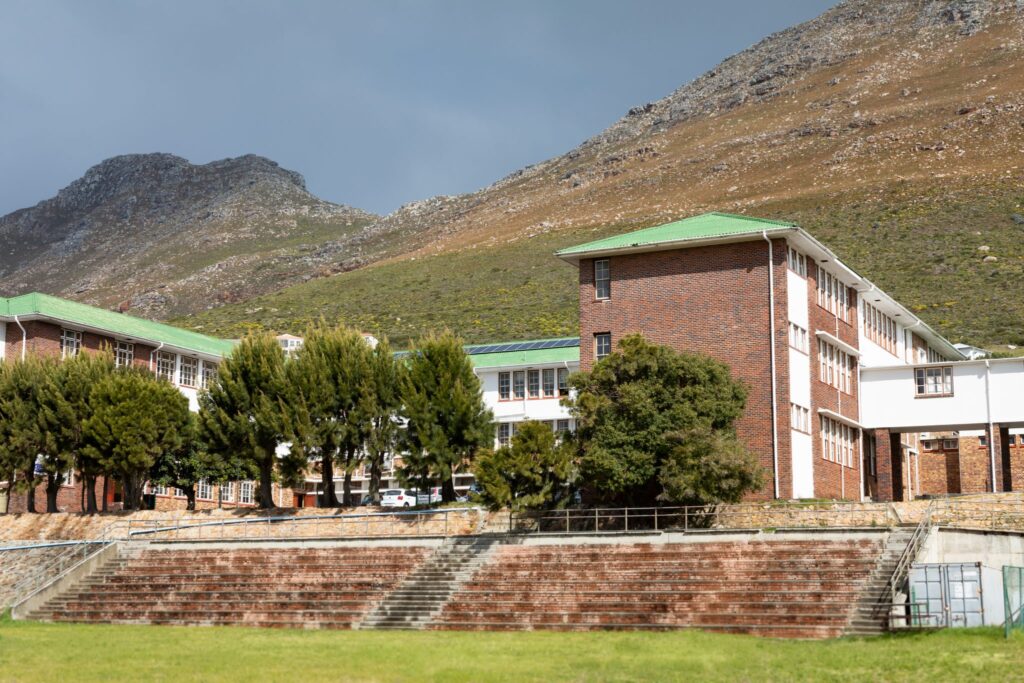
It was a miserable, windy Saturday afternoon when the train stopped in Fish Hoek and then went on to Simon’s Town. There was a bus waiting at the station to pick up arriving passengers, and the bus driver told me where to get off near the guest house, which was run by a Dutch family called Henk and Anja van der Keyl.
They showed me to my room, and I started unpacking the few things I had brought with me. Walking out on the stoep, the weather was still miserable and the sea rough. I suddenly felt very lonely and decided to go for a walk towards the town, but there was no escape from the wind.
I took a train back to Fish Hoek, but the wind seemed to be worse and blow one off your feet. I sheltered in a snooker room and played a game before returning to Seaforth Guest House, quite desperate to want to know more about my teaching positions as an itinerant woodwork teacher.
The first two school days were for the teachers only, and I found them very busy unpacking books and files. They were so busy that they didn’t seem to notice me. I saw the “Office” notice on his door, and Mr. Cook came out and asked if I needed help. I told him I was the new woodwork teacher, and he asked if I could speak English and said he would, when they had finished unpacking, tell me all about my teaching programme.
I was shown my woodwork room and started familiarizing myself with the layout, equipment, and documents available. The first few days before teaching commences is the time to check the inventory of all the equipment and to mark all items as correct. The Simon’s Town school is a beautiful newly built school, and the woodwork department was still incompletely designed and built. I had the unusual privilege to have the architect and builder allow me to change their plans so that the woodwork block, as we called it, was now slightly separate from the main school and had a storeroom, lecture room, and a woodwork room.
The second day Mr. Cook called me to his office and gave me the details and itinerary that I was to follow that year according to the Education Department. I would be teaching as follows:
Monday: Simon’s Town school the whole day.
Tuesday: Fish Hoek Primary 08:00 till 10:15, then back to Simon’s Town.
Wednesday: Timour Hall Primary school, full day.
Thursday: Fish Hoek High, full day.
Friday: Simon’s Town school, whole day.
This programme was subject to change as agreed by the headmasters.
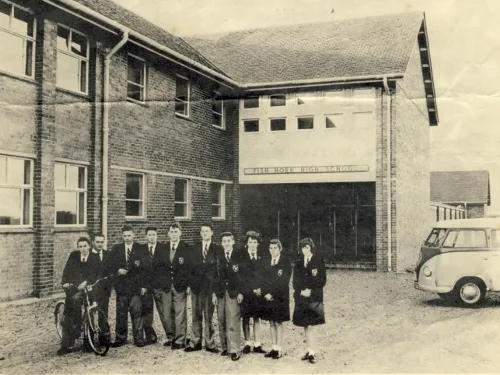
To get to the Fish Hoek High School, I had to catch a train to Fish Hoek station and walk almost a mile to the school because there was no bus service available in the town.
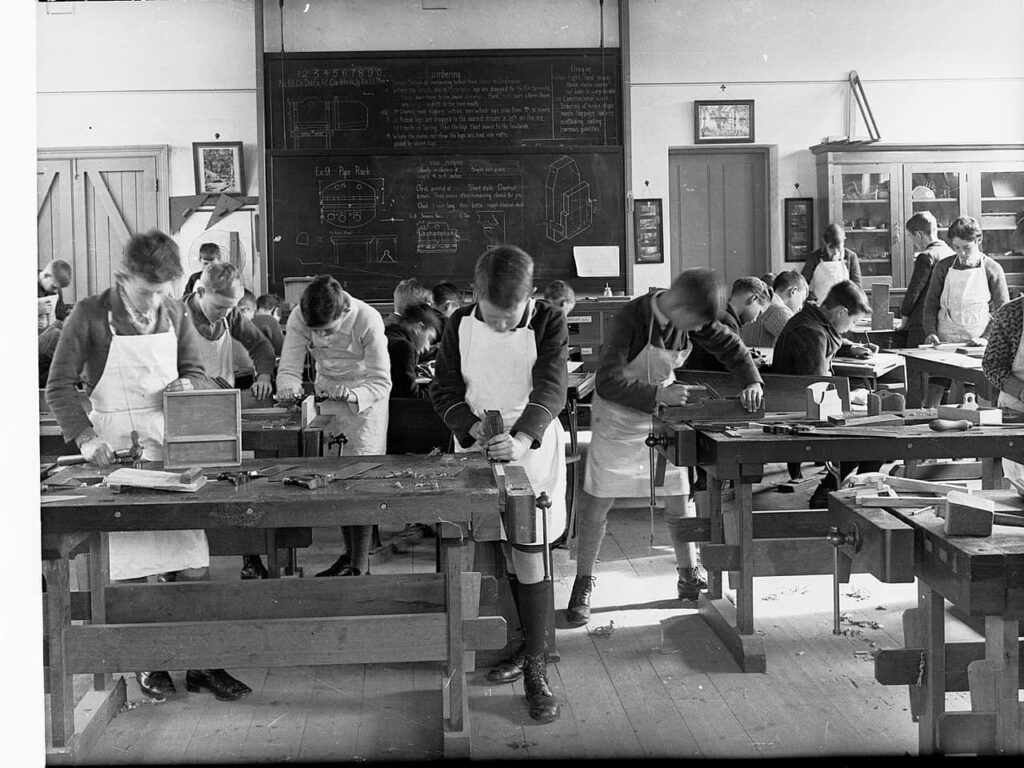
Arriving at the school, I met the headmaster, Mr. Don Saunders. He welcomed me and told me that their fairly new school didn’t have enough space for a woodwork classroom and that he had obtained temporary accommodation at the primary school for my woodwork classes. That was much nearer to the station, but woodwork drawing classes still had to be taught at the high school.
To get to Timour Hall Primary school, I had to use the train again and take a short walk from the station to the school. I found Dr. Midgley a dynamic personality—positive and full of energy. At break time he was not in the staff room but out on the playground with the children. The school had two staff rooms, one for men and one for women teachers.
Dr. Midgley and I had a bit of a tussle because I refused to start teaching before taking responsibility for the equipment and signing the inventory. Dr. Midgley had taken some of the tools to his home to do some personal woodwork. He said that I must trust him, and I said that I must see the tools first. I had to wait three weeks for the tools before I started teaching at his school. He accepted that I followed the correct procedure. Once the tools were back and checked, I started my woodwork classes.
Getting to the station by bus and then to the suburb followed by a walk to the school and then the reverse procedure to the next school was becoming a rather strenuous affair, considering books to take along and so on. So before long I bought a Honda motorbike, which made it much easier to go to and from schools.
I loved teaching at Timour Hall Primary school. The children, teachers, and headmaster made me feel at home. Having been teaching there for more than six months, I suddenly one day got a call from the headmaster to come to the office. Dr. Midgley showed me a boy whom he said had broken a number of window tiles and needed some punishment. He handed me a cane and said, “Give him three cuts.”
Suddenly I realized that over none of my three years of teacher training did we learn anything about how to administer corporal punishment. The boss told me to hit the boy, so I had to do it under supervision for the first time. I told the boy to bend, aimed at the seat of his pants, and administered the first stroke. “Harder” was Dr. Midgley’s reaction. I hit him a second time only to get a repeat, “Harder,” from the headmaster. I tried to hit a bit harder the third time. I’m not sure if that had any effect on his respect for school property. That was my first practical experience of giving “cuts.”
At that time it was government education policy that if a public holiday occurred on a school work day, it had to be caught up on the nearest Saturday. I would get a call from a headmaster telling me that they had decided to follow the Tuesday programme, and since I worked there on a Tuesday, could I be available. My answer then was that I wasn’t sure because Mr. Cook also wanted me. That headmaster would then say, “Don’t worry, we will use another day.” Using this method I could stay in bed a long time on that Saturday and only venture out to be seen once schools were out.
My time teaching at Fish Hoek High School was not ideal because the pupils had to walk to the primary school where I had two rooms—one for practical work and one as a storeroom where I could sharpen tools. One incident that could have had unpleasant repercussions for me and the school comes to mind.
During a lesson some of the boys experienced bluntness in their chisels, and I had to use a big sandstone grindstone to sharpen chisels. The problem occurred that one of the boys had to turn a handle to get it to turn and grind. This was also an opportunity to demonstrate to the boys how it was done. Because of the size of the room, some pupils had to remain in the classroom and await their turn to have their chisels sharpened.
Suddenly a boy came to me and said that one of the boys was cut with a chisel. Rushing into the room, I saw blood pouring from his wrist, grabbed him, and stopped the blood with pressure on the wound. I half carried him into the primary school, asked for a bandage and transport to the hospital because I didn’t have a car. They were wonderful in that within seconds he was on his way for treatment in the hospital and returned smiling before the end of the day with a neat bandage on his wrist.
I had to record everything as it happened and got eyewitnesses to give their account. The boy whose chisel caused the cut said that he was walking behind his friend and called his name to talk to him. The injured boy swung around when he heard his name and flung his arm into the chisel as he turned around. I read the accident report to the class, and they concurred.
Next I had to see Mr. Saunders in his office, and an official accident report had to be presented to the Education Department. The injured pupil returned to class for some time with the bandage in place, and I forgot about the incident after a few months until Mr. Saunders asked me to meet him in his office one afternoon. I arrived there as requested, only to find the boy’s father and his lawyer part of the meeting.
The father demanded medical compensation from the school. After recounting the circumstances in which the injury to his son had happened and our action, as well as I could point out that the boy had been seen playing rugby, they accepted that there was no negligence on the school’s part. The matter was resolved amicably.
As an itinerant teacher, it felt as if I was not really a member of staff. Some days I wasn’t there at all, and on other days I would arrive late for break and I didn’t have a chair like the seniors. Mostly I would take my tea and remain standing, talking to some man or woman teachers who were very friendly to me.
One day as I was talking to an Afrikaans woman teacher, a young teacher entered the room and went to sit down with her group. Mrs. van Vuuren said to me in Afrikaans, “See that girl, you must marry her. She is a Miss Price.” I didn’t have a chance to take a good look at her and promptly forgot about the suggestion although I would’ve liked to have the opportunity to chat to her at the time.
At the end of my second year of itinerant teaching, the Education Department informed me that all three of my headmasters had asked the department to have me at their school full time. They then asked me to choose which one I preferred. I chose Simon’s Town and became a full-time teacher there. It was in particularly the focus on sports that made it a great choice for me.
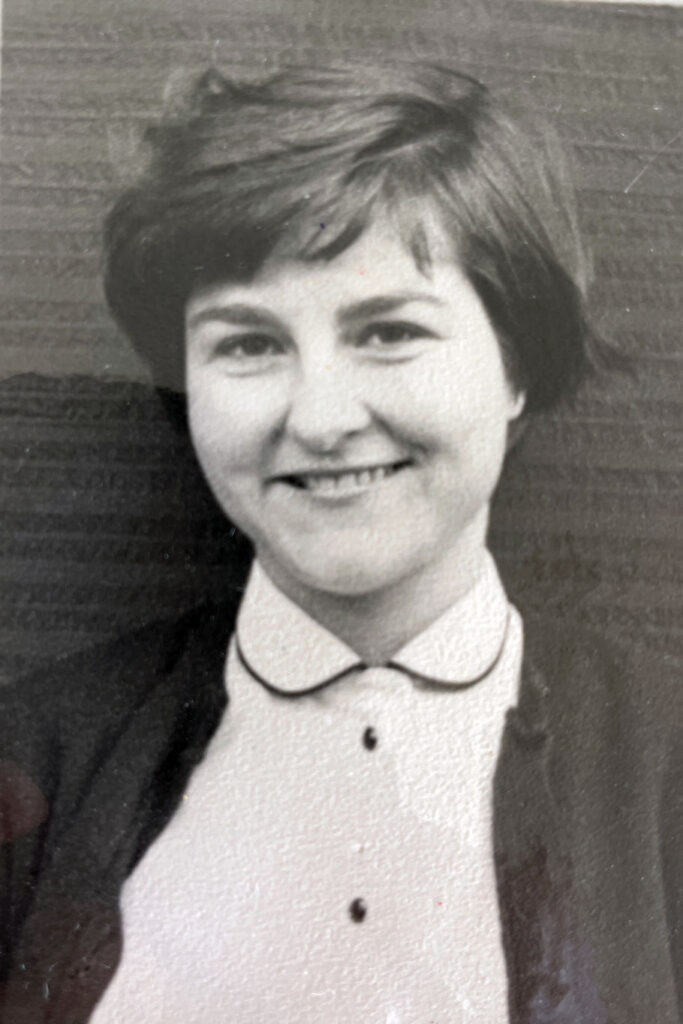
Now was also my chance to become better acquainted with Miss Price, only to be told that she had left the country and was teaching in England. This was also confirmed by her younger sister, Joanne Price, with whom I had often shared the early morning train trip departing from Simon’s Town. They were a noisy, fun-loving bunch who knew how to enjoy themselves.
One evening as I was walking home in fairly dim streetlights, I saw a young woman walking on her own in the middle of the road. On closer inspection I recognised Joanne Price, my frequent train companion. She said that she wasn’t afraid to walk on her own, but I insisted on walking her home, so I had both pleasant company and now knew where she (and her sister) lived.
However, coming back from lunch break one afternoon sometime later, a young scholar came running up to me and asked if I knew Miss Price. “Yes, why? She is teaching in England,” I replied. “Her house is on fire,” he said. Looking in the direction of the house where Joanne lived, I saw a huge pall of smoke reaching up in the sky above the houses. At that moment Mr. S.P. Green, a teacher at the school, came driving to the school. I stopped him and told him about the fire. We quickly raced towards the burning house to find the fire brigade had control of the fire. The wooden garage was saved, and only the fireplace and chimney were left of a model wooden house designed by Flegg and McCarthy, I learned later on.
My stay with the van der Keyl family made my time with them very homely in that I was treated as a son and invited to join them in the lounge. I was included in activities such as their bridge evenings when they were short of a hand. It also helped to improve my Dutch vocabulary since they communicated with me and each other in the Dutch language, and they attracted many friends who had emigrated from Holland. So my Dutch vocabulary started growing, and their non-stop disrespect in a funny, friendly way of Afrikaans versus Dutch pronunciation became a way of life between us.
