
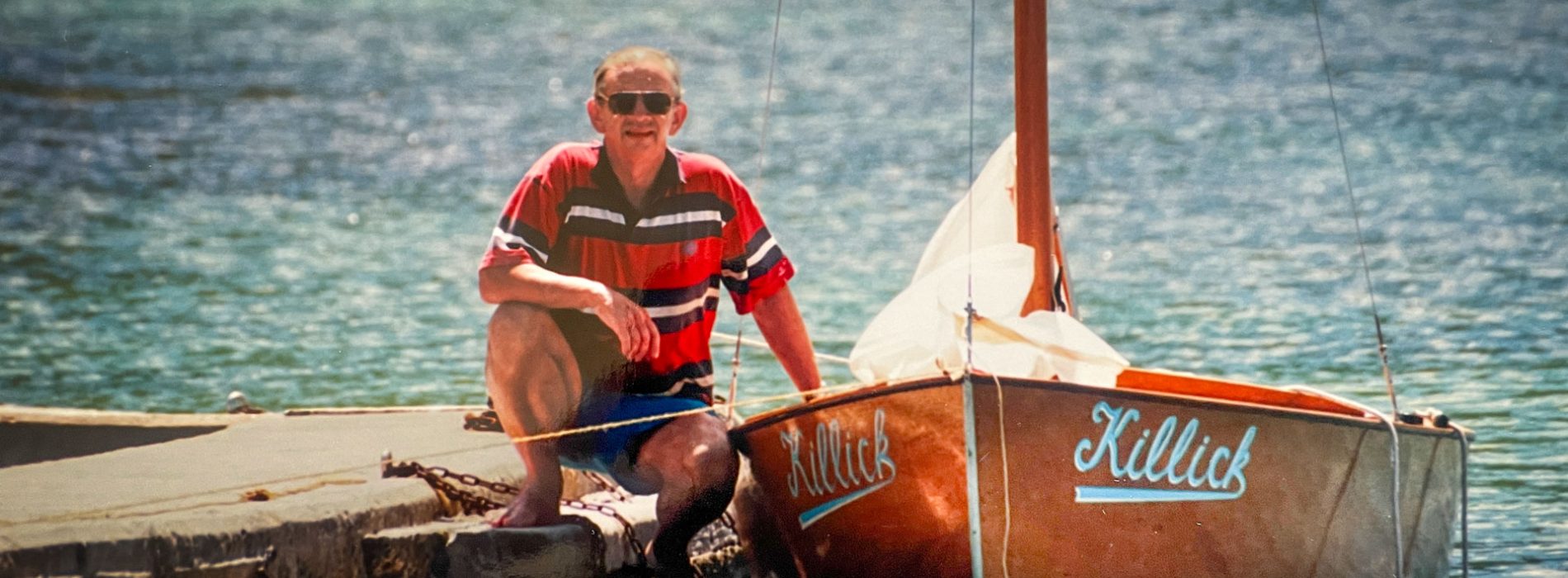
My involvement with Naval cadets had brought me closer to the sea and ships. I also regularly found myself watching members of the Simon’s Town yacht club sailing each Wednesday afternoon. From our home balcony, that overlooks the beautiful False Bay, I would select a yacht and follow its progress in the race.
Nikki and Geoff had been sailing their Hobie Cat on dams near Johannesburg where they lived and participated in the Hobie National Championships most years which were held along the SA coast and one year at Fish Hoek beach. They gave good account of themselves. When some of their sailing friends moved to Cape Town, we were also invited on sailing trips, and I enjoyed a few with Ian Unite, launching from the beach in Hout Bay.
Then Nikki and Geoff entered the Dubai Hobie Cat world championships and Phyllis and I decided to go with them and saw how wonderfully exciting yacht racing can be. Geoff is the expert and has numerous sailing qualifications to his credit. They often choose their vacation destinations by places where they can hire a yacht and spend time sailing, which is a holiday experience all on its own.
My personal experience and love for sailing started when I spent time at the Naval Academy in Saldanha Bay and a sailing instructor took us sailing almost every afternoon in the very safe and seaworthy whalers. The rudimentary lessons received at that stage, made me want to own my own boat and I hoped that when the children grew up that they might be interested in sailing and want to become my crew.

But first I had to choose a yacht that could easily be handled in a suburban setting, and I where I could join a local sailing club. Very popular at that time was a new Olympic size yacht that was making the news. The GP14 was described as a very versatile easy to handle boat. I realised that I had space in my woodwork area at the school, so I procured a set of plans and began building my own yacht.
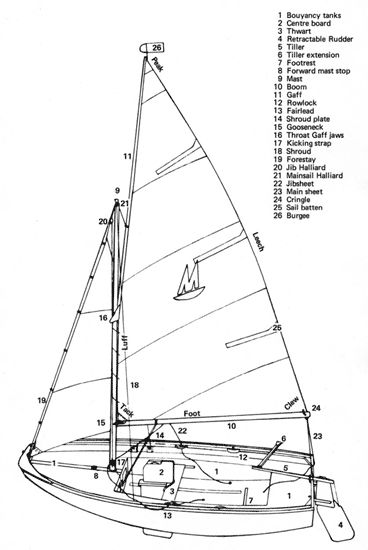
The GP14 (General Purpose 14-foot) is a highly versatile, double-handed, fractional Bermuda-rigged sailing dinghy designed by Jack Holt in 1949. Famous for its forgiving stability and spacious cockpit, it is ideal for learning to sail, family cruising, and competitive racing.
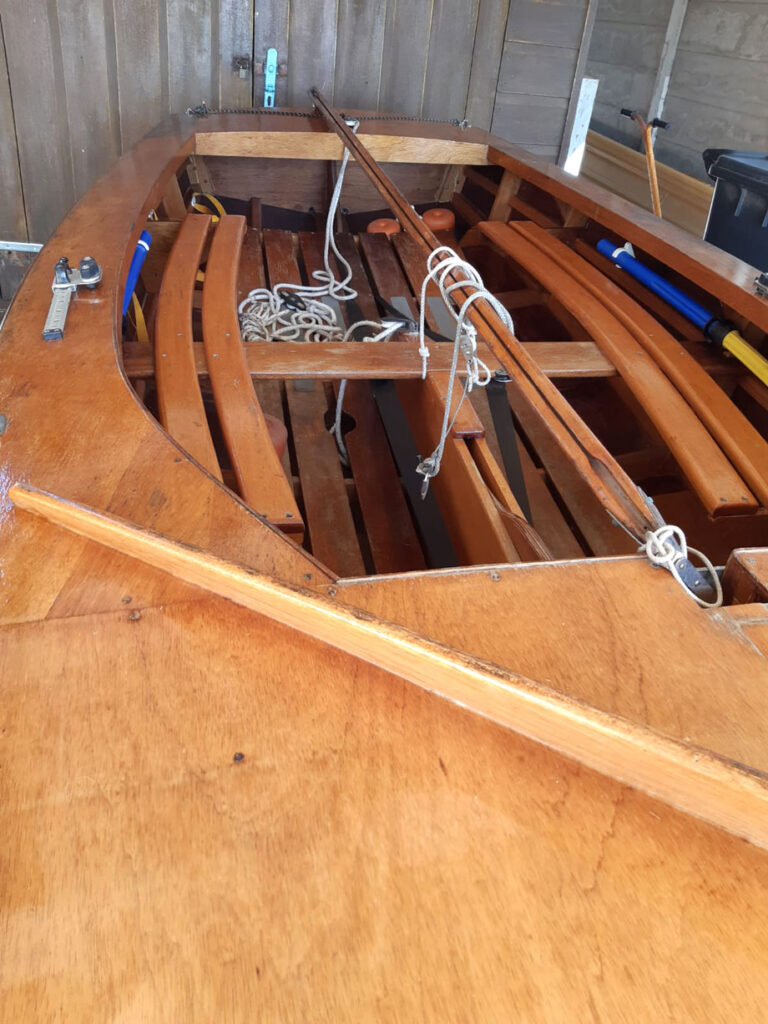
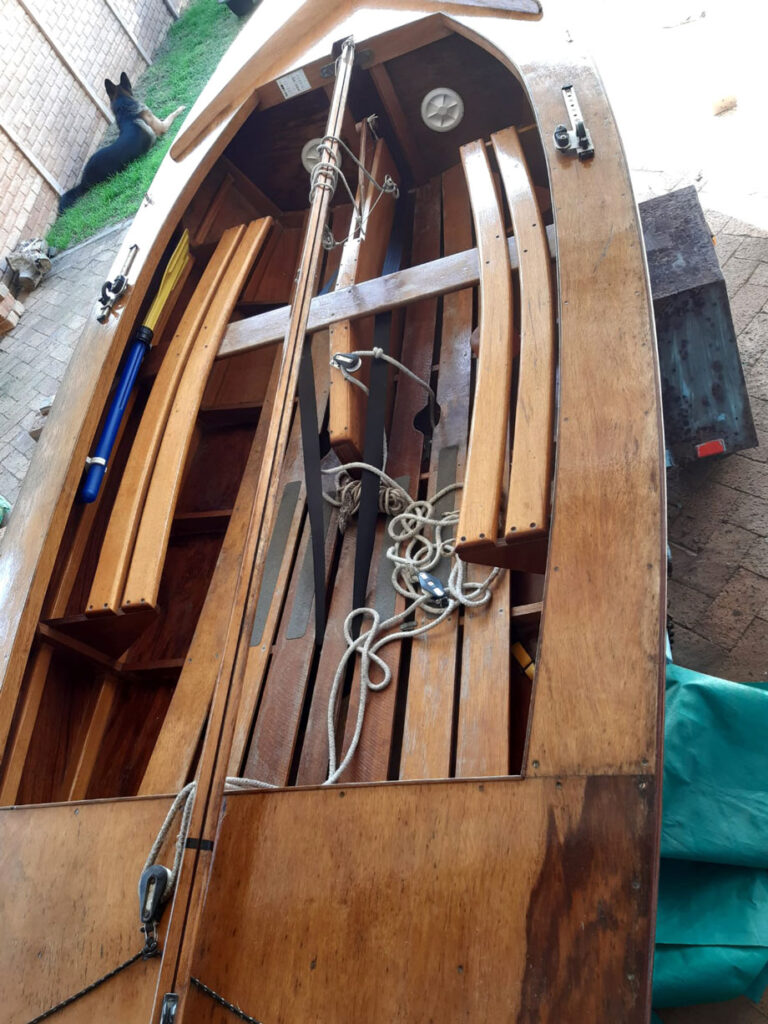
My woodwork complex at the school had double doors which were important for getting the boat in and out. The hull was mainly made of marine plywood so final manoeuvring out of the woodwork room would not be a problem. I spent many an afternoon working after school and on weekends lovingly putting it together.

Back home I engaged an experienced welder who fitted a series of rollers so that the boat could be launched into the water without disconnecting the trailer from the vehicle towing it.
Next followed the fittings, buoyancy bags, and the wooden mast according to very special specifications. The centreboard and floorboards were the last things I finished. It was a very exciting moment when I first was able to hoist the sails. The white sail with its distinctive bell looked beautiful against the golden wood of the boat. I then had to start familiarising myself with my handiwork and how everything that had taken quite some time to complete, would come together.

The GP emblem originates from the Bells of Aberdovey (Aberdyfi), a legendary mythical drowned city story in Wales. Local folklore claims that during rough winter storms or on quiet, calm nights, you can still hear the spectral Bells of Aberdovey ringing from beneath the waves of the estuary. Today, a physical Time and Tide Bell is installed beneath the pier at Aberdyfi, right next to the Aberdovey Yacht Club. As the tide rushes in, the movement of the ocean physically strikes the bell, keeping the ancient 6th-century legend alive for passing sailors.

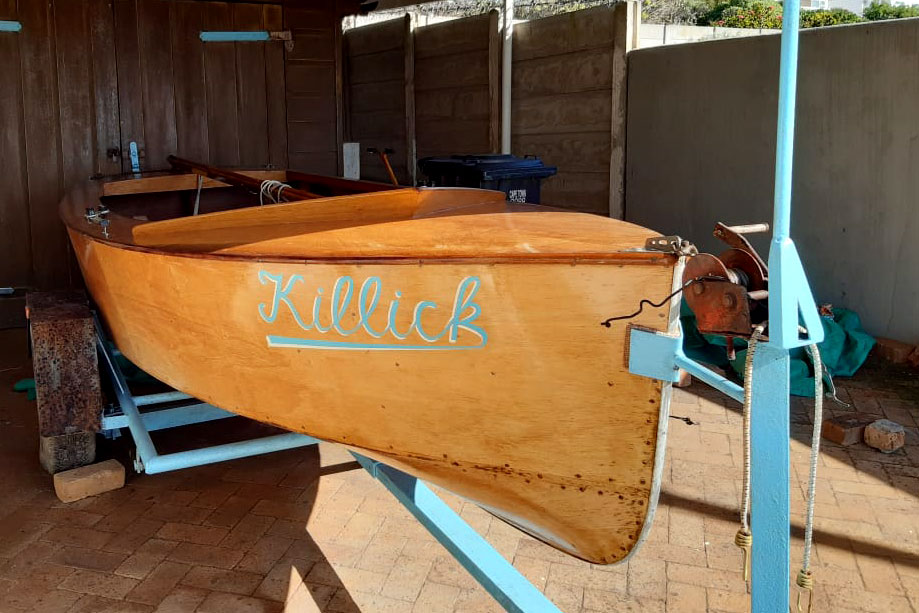
Once our chosen name of “Killick” was painstakingly painted on both sides of the hull we started looking for places to launch our boat. Trips to different launching sites made us choose “Rumbly Bay” at Miller’s Point as the most suitable of the nearby possibilities.
Ideally, I would have preferred a more experienced yachtsman to accompany us on the first launch with a new boat, but that was not to be.
I eventually decided that I could manage this maiden launch alone, and on a clear, calm morning we hitched “Killick” and drove down to Rumbly Bay. It was a beautiful clear and still day. The children dressed in their bright orange and yellow life jackets and were eager to get started.

Instead of going down the slipway, I unhitched the boat and pushed it onto a level sandy strip from where we could launch fairly smoothly. While I started sorting the rig and hoisting our crisp new mainsail, Nikki was already inside the craft, enjoying herself inspecting everything, the bouncy new ropes attached to the jib, stainless steel stays and running her hands over the smoothly varnished bench seats.
Next, I pushed the boat deeper into the water aimed at an opening between some rocky outcrops through which I planned to sail. Phyllis kept hold of the boat to prevent it from floating away while I turned to go and fetch my life jacket. Just then she let out a scream as a sudden squall caused her to lose her grip on the side and the wind caught the sails and sent 8-year-old Nikki bobbing away into the bay.
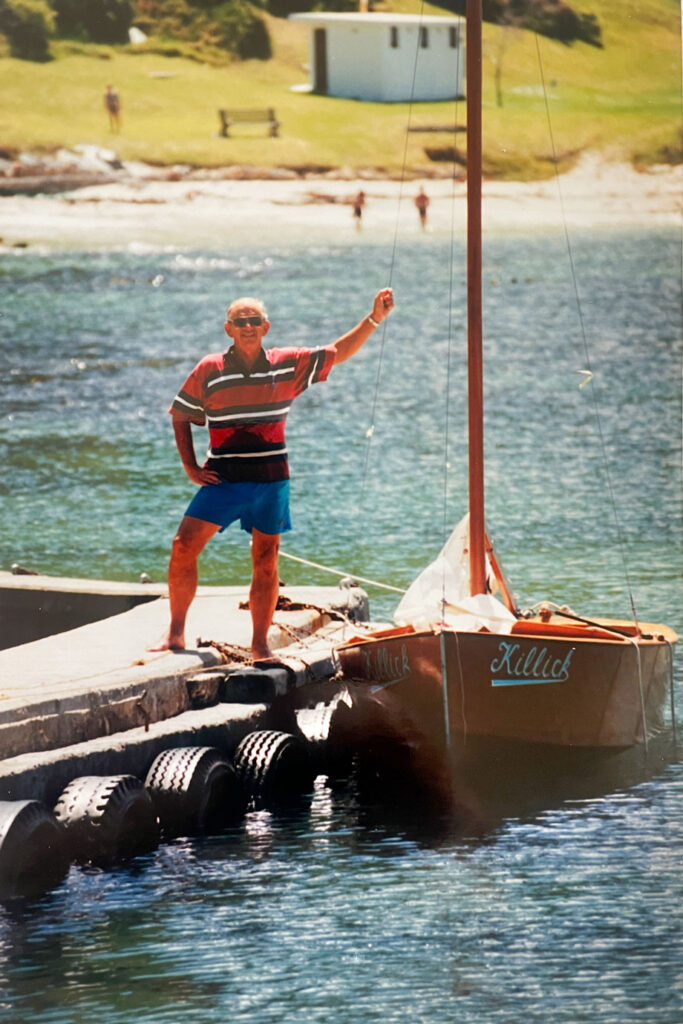
I turned, instantly assessing the situation, then ran and took a dive managing to get hold of the gunnel and was able to pull myself on board. Nikki got a huge fright and called out to me. I had to make sure she was calm and got her to sit down in the boat and gave her instructions to pull ropes according to my instructions. The GP is extremely light and moved far too easily in a wind that was getting stronger. Just then I noticed that we were moving sideways towards some rocks. We were heading for real danger and destruction of our new boat. I realized that the new centreboard was being pushed up by the kelp that we had drifted into and we had no steerage. Our only chance now was to sail into the bay or hit the rocks.

I yelled at Nikki to push the centre board down, but she wasn’t strong enough as it was caught in seaweed. I managed to force it down and got her to sit on it to keep it down. I had no tools and could not fix anything while sailing. By that time, I had forgotten to panic and concentrated on getting up some speed to get out into the bay and then go about. Luckily the wooden rudder behaved well and soon we were heading back from where we started. That was the first time that I could see Phyllis and the boys watching us panic-stricken from the beach.
Fortunately, I was able steer the boat back exactly to where we had launched. Phyllis had gotten an awful fright and had been unsure of what to do and was convinced that she might lose us. After resting for a while and realising that the new boat still needed some serious adjustments, and that the windy weather had settled in, we packed away everything and made our way home. What a scary event and close shave to remember for the rest of our lives!
It was most disappointing to have a beautiful boat that you have spent so time lovingly crafting, and not be able to make the most of it. We invited Gnagna and George to join us for a sail on Sandvlei lagoon near Muizenberg. It was a lovely afternoon together and it was good to prove that Killick could carry a family and still remain light to manage in the water.
Twice more I took Killick to the Dockyard slipway and with the help of a friend went for a sail in the bay. Going down and up the slipway is not easy, and I had not much in common with my crew, but I did gain more experience.
Then the years in Stellenbosch and Welkom kicked in and sailing was shelved for the next 15 years. My yacht was stripped of loose fittings and the body placed under cover but it unfortunately had to be kept outside. Those living close to the sea will know what coastal weather does to a trailer’s wheels and metal parts after being exposed to saltwater air!
Geoff and Nikki regularly sailed and competed in regattas on dams around the country such as Bronkhorstspruit, the Vaal and Sterkfontein, and kept urging me to get Killick ready for a sail when they came to visit us in Cape Town which was about twice a year.
Finally, I found the time to do the necessary anti-rust and small upgrades so that we could launch again. This time again at Miller’s Point, but at a newly built slipway not very far from Rumbly Bay. Geoff took control of things, and I remember some enjoyable sails with him and Michael, who regularly came along for the ride. I had also become a member of the False Bay Yacht club.
With Geoff’s guidance we became a bit of a team and thought that we could enter for the Nationals which was to be held in False Bay that year. I only had book experience of the complexity of the start in yacht racing, so we entered the race with Geoff as skipper and me as crew.
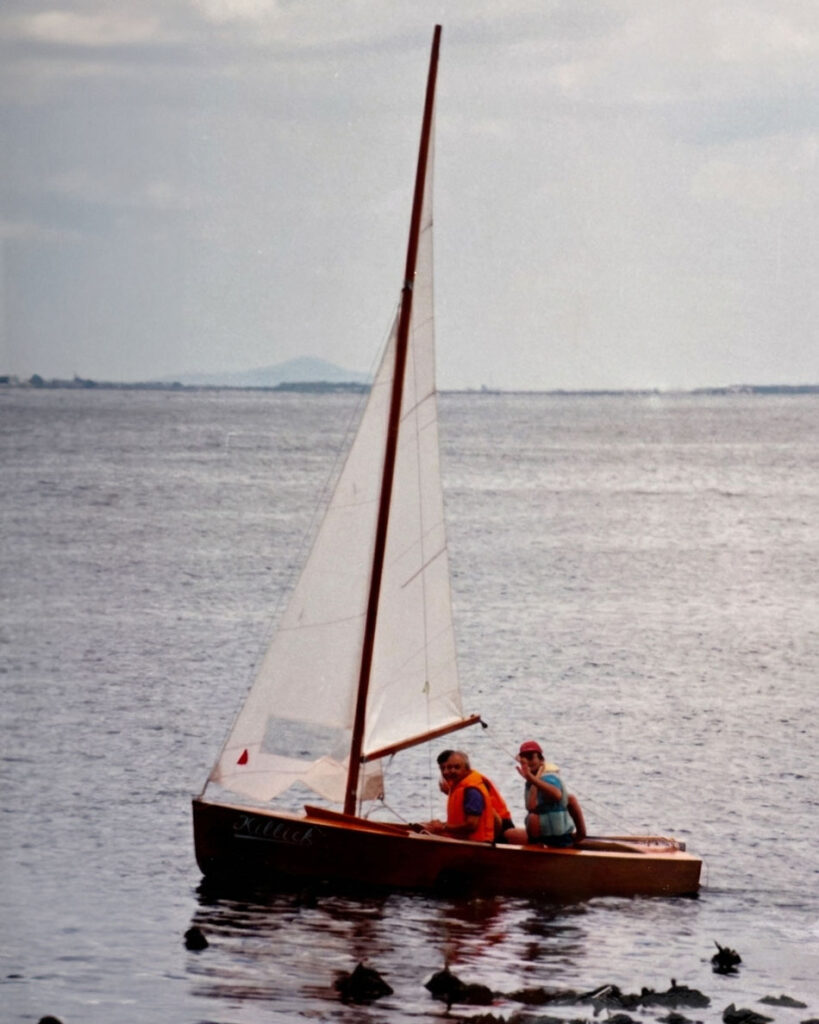
We were one of two wooden GP14’s (the rest were fibreglass) and received many an admiring and envious glance.
Geoff’s timing at the start of the race helped to keep us in a reasonable position all the way to the Lighthouse. Without a spinnaker, we were at a disadvantage on the long downwind leg of the course. What is nice is that while you keep watch of the other boats and buoys, you have time to chat to your partner and enjoy the experience at the same time.
During one race, as we rounded the buoy opposite Dixie’s in Glencairn, it was getting a little rough and the sea spray had gotten the deck quite wet. When we turned to port, I ducked under the sail and my foot slipped and I hit my head on the side of the deck. After a while Geoff noticed blood pouring from a gash above my right eyebrow. At the same time I felt some wetness running into my eyes. He suggested that we withdraw and have my injury seen to.
We were not in contention for anything according to our judgement, so this was a good call. I received excellent attention from the medics as well as three stiches to my eyebrow and had an enjoyable race to remember.
Michael often joined me sailing at the False Bay Yacht club and one evening we were sailing at the Milnerton Yacht club when a gale turned us over and we shipped a lot of water. We spent quite a while clinging to the boat before we were rescued.
When Michael left us, I no longer had a crew, and finally after many years I had to sell Killick, my much loved handiwork of which I was very proud.

2 thoughts on “Building a dream⛵️”
What a labour of love and what wonderful times we had sailing together.
Dad, our Rumbly Bay experience didn’t scare me off at all! ❤️