
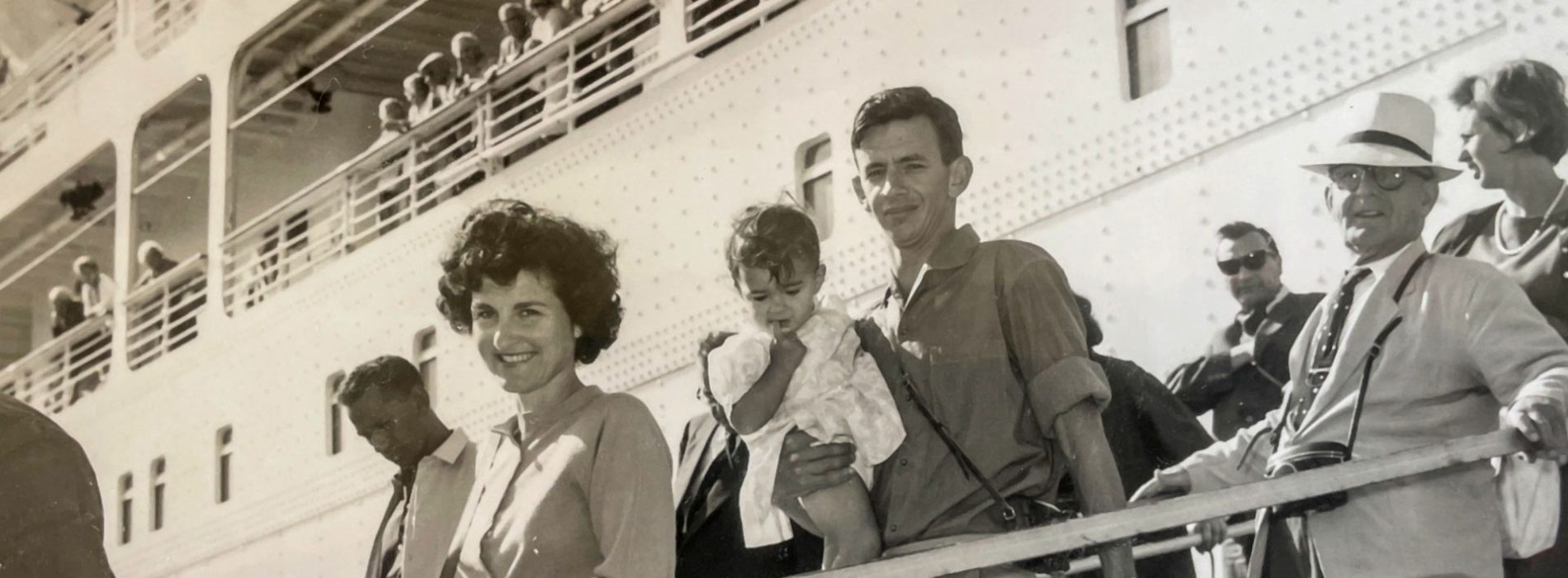
After Nicolette’s birth in 1963, we were ready to go visit Europe with the dual purpose of touring many different countries but also for me to be introduced to my newly acquired French family. In particular, I was looking forward to meet “Bambine” Brondolo, Phyllis’s grandmêre, as well as “Uncle Fidel” and “Tante Perrine” whom I had heard so much about, as well as other friends and family that Phyllis had not seen for many years.
According to my calculations, I would be entitled to three months long leave after 10 years of teaching service. Maximising the school holidays at each end of the period, could make it possible to have a 4-month trip to achieve most of our plans.

Planning our trip was made easier when we came across a “Cooks Tour” booklet that had a tour route that followed almost exactly what we had in mind. Our next challenge was procuring accommodation in London, and we were delighted to find that the Overseas Visitors Club “Kiwi House” had space for us. Transport would have to be procured in London. We knew that it would have to be a van of some kind that could accommodate our bed, cooking equipment, Nikki’s pram and all the paraphernalia that was needed for a 4-month journey across Europe.
Next, I discovered that I needed an international driver’s licence and had to join the AA (Automobile Association) because at that stage you had to buy petrol coupons in England for the period you are going to spend in Europe. Unused coupons would expire and could not be used in England again. This meant that you had to calculate accurately how much petrol you would use so that you would not run out of petrol while there. Quite a feat! Also, you could drive a car across to Europe, but it had to be returned, (even in scrap form) otherwise you face a charge of having exported that car! I hoped that I had uncovered the sum total of all the motor rules that applied in Europe.
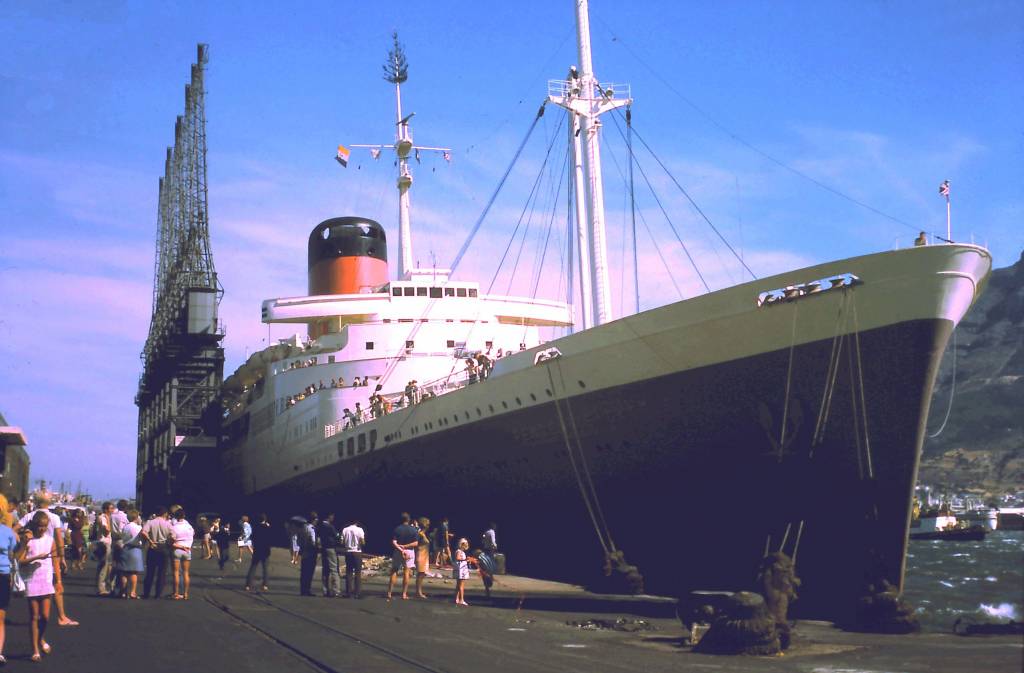
At last, the great day arrived for our 11-day cruise by ship to England. Gnagna and Uncle George saw us off, joining us on board for a short while before they had to disembark. They had promised to look after Killick and our house during our four-month adventure, giving us some peace of mind.
We were personally met by the captain before taken to our three-berth cabin. Nikki had her own bed complete with a safety net, as well as a call button linked to our cabin steward. That night we had dinner at the captain’s table.
The next day we took Nikki to the children’s crêche at the stern of the main deck, where she was given a neat apron with a big pocket. Later we discovered that she was skilfully stashing a supply of “stolen” chalk and crayons in the pocket of her apron.
We encountered our first problem when they could not find Nikki’s baby food which we had ordered before we left Cape Town. Phyllis then had to check what was available, make a new plan and hope that the change in diet wouldn’t affect her in anyway.
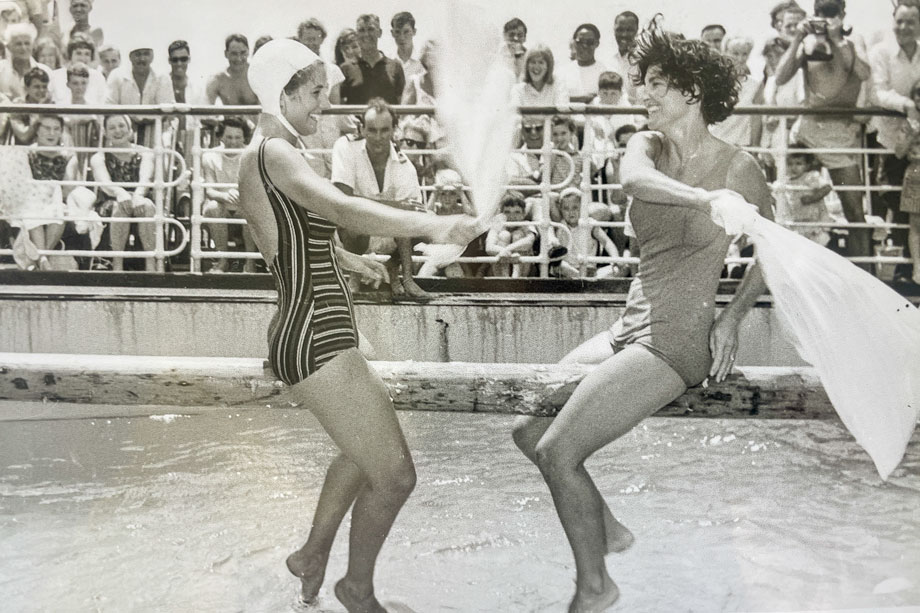
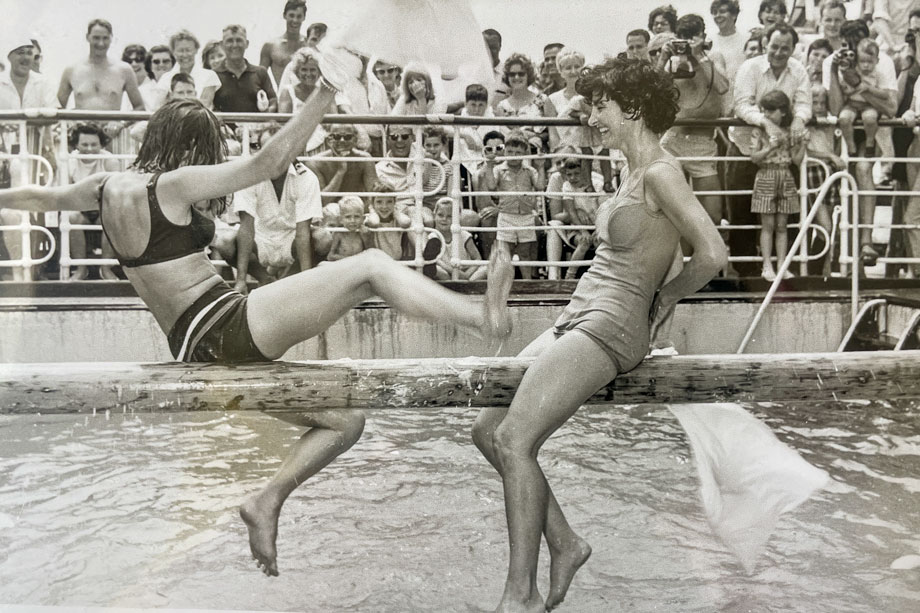
The ship’s swimming pool was well attended over the warm days that we encountered in the beginning of the journey. The “Crossing of the Line” (Equator) ceremony was a most enjoyable event. Phyllis did well in the ladies’ challenges while I kept an eye on Nikki.
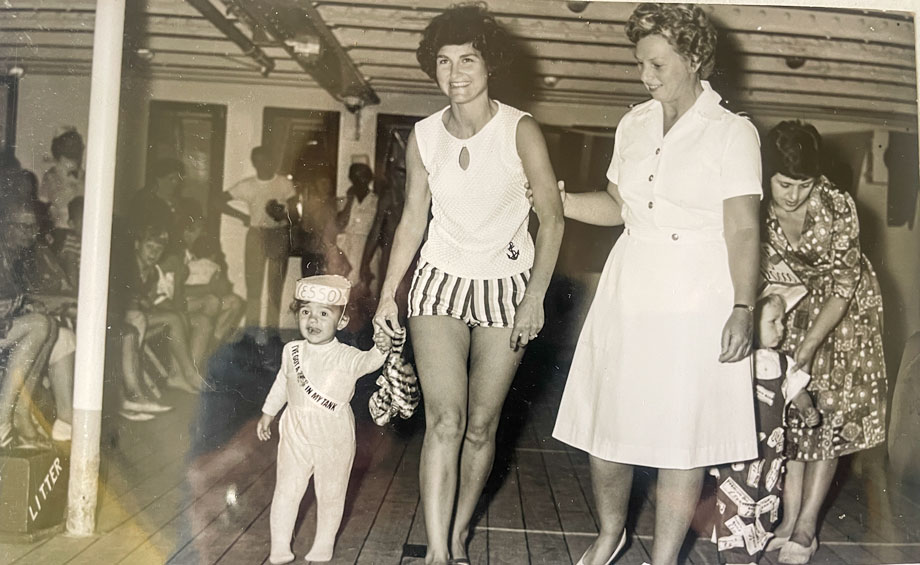
The ship provided lots of evening entertainment, both during daytime and in the evenings. Dances and Gala nights were frequent, concerts were performed on most nights and there were also cinema shows that we could attend. We used to feed Nikki, then wait for her to fall asleep before we would turn off the light and sneak out to one of these events. One night on returning to our cabin, to our surprise we found the lights on. Our cabin steward sat chatting to Nikki. He told us that she had rung the bell and that he had had an entertaining evening listening and talking to her. 😂
Arriving in Las Palmas days later, we used the opportunity to go on a guided tour to the ship’s lower deck and storage facilities. This led us to the kitchen and food storage rooms where lo and behold, we found all Nikki’s specially ordered food neatly stored on a shelf. When I drew attention to this, they agreed that we could have it all when we left the ship in Southampton. It would come in very handy on our road trip.
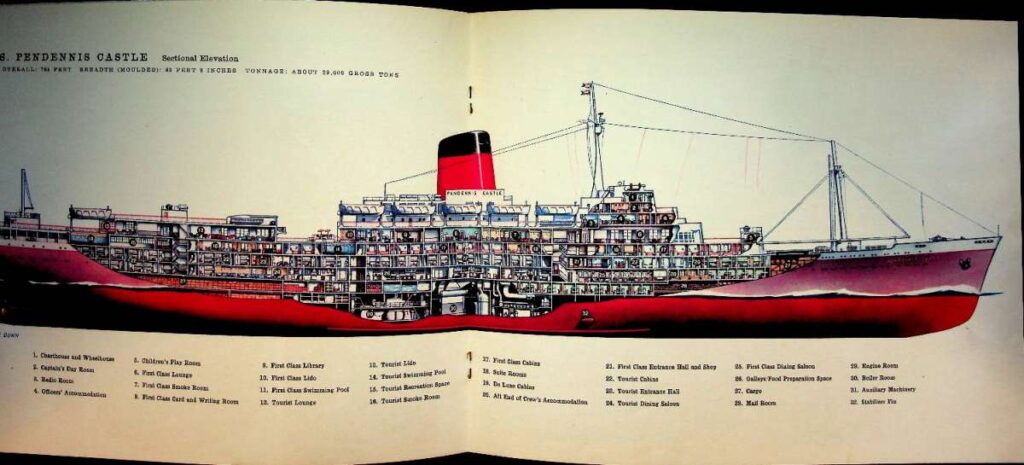
Our trip onwards to England was the most difficult part of the sea journey. As we entered the Bay of Biscay, the wind increased to “force 8” and the ship started rolling excessively so that at mealtimes, the protection strips that prevented items sliding off the edge of tables had to be engaged. Many passengers suffered from sea sickness and at times I was the only diner to be served. We later found out that one of the ship’s stabilising fins had broken, which had led to the excessive rolling.
Entering the harbour at Southampton had most passengers appearing on deck for the first view of England. I was particularly intrigued by my very first sight of a hover-craft crossing the bay by skimming above the surface of the water.
Willing hands helped us unload from the ship and after the formalities were concluded we again were assisted to the train station, from where we journeyed to the city of London and then to the Overseas Visitors Club – Kiwi House.
