There was a time that I knew nothing
About my mother and father.
Many times when I was extremely happy,
Also a time of great sadness,
Victories and defeats.
A time that I could do anything
I wanted to do.
Times to travel and times to consolidate,
A time of learning and
A time of using that knowledge,
A time of strength
And a time of weakness.
I now want to revisit those times
My Early Life on the Farm
The first three and a half years of my life and what happened to me is a mystery that I would gradually discover as time went by.
The earliest memory I can actually recall is living on a farm with my Oupa and Ouma, Oom Johnny, and the workers—mainly women who were all very nice to me. I don’t recall being carried about, but I saw pictures of me being carried by the workers.
The farm was named “Uitkyk” (Look Out). I spent most of the day walking and playing outside.
I don’t remember having shoes, so there was a nightly kitchen ritual when they washed my feet and would kiss my feet and soles to show that they were clean. This produced laughter, clapping of hands, and smiles from everyone.

Ouma did all the talking in the house and told everyone what they had to do. She was mainly indoors and made sure I got what I needed.
Oom Johnny didn’t seem to have a job. He was busy outside the house and talked differently to the other people. I spent much time with him. He had a short temper, and one day he wanted to push me into a dam because I was teasing him too much.
Later I found out that when he was in Grade 6 at school and came back to the farm from boarding school on holiday, the brothers played a game of hide and seek. He went to hide in a stable where one of the horses kicked him in the head. He spent a long time in hospital but never went back to school again.
In the mornings I would follow Oupa to the barn, which was a short distance behind the house. There the men who looked after the horses, sheep, and cows gathered each day. They did the tilling of the soil and harvesting, and on a sheep farm had much to do. The farm was very big to me, and the ground as a wheat farm was nice and flat.
Every evening the workers, after milking the cows, would bring the milk to the kitchen, and it became my duty to help Ouma by turning the big round handle of the separator machine so that butter and skimmed milk could be separated. Part of the fun in helping turn the separator’s wheel handle was that I could climb onto the kitchen table to reach the big handle, and they told me how big and strong I was. The butter was then placed into a mould and wrapped in a special way. I think they sold the butter to a shop in town. Another job Ouma gave me was to help stir the coffee beans when she was roasting them. This took a long time, and the beans had to be stirred continuously.
Grandpa didn’t have a motor car and used a two-horse-drawn carriage (Perdekar) for visits to other farms or to go to Riversdale—the nearest town. However, I saw my very first motor car, a Model T Ford, when my Oom Koos visited the farm. I remember it well because it was a convertible with a canvas top for rain and sun protection. Oom Koos took me for a spin, and I sat in front next to him. As we travelled down the country road, a horse was in the same road and started running down the road in front of us. As we caught up to it, I could see its hooves close to the car. I was getting worried, but Oom Koos just laughed and seemed to have enjoyed the chase.
As I grew older, I became aware that I had a father who would come to visit from time to time—possibly twice a year or when he had leave. A big fuss was made when he arrived, but I soon forgot about him. Once he suddenly arrived and brought me a tricycle. That was a great present, and I remember being able to pedal it alone. Unfortunately, it broke its axle in a pothole on the rough farm roads. This meant that I had to wait a long time for my father to visit again and take it back for repairs, and then wait until he came again. I do remember that when it was returned, there was a block of wood in the axle area.
Going to town with Oupa to do shopping was a great adventure for me. I opened farm gates, and Oupa talked and told me stories on the way. In town we couldn’t “park” the horses because they were hot and had to be walked to cool them. Local men from the shop attended to them and the carriage.
On the return home, we started with a fairly steep hill, and on the way the horses sweated in the warm weather. We had to stop for a while for them to be cool enough to continue the journey.
Two messages I remember to this day from my grandfather were: “Always respect age—that is, adults older than yourself” and “Don’t be ashamed to shake people by the hand, white or dark.”
After supper when the table was cleared, my grandfather took out his Bible for a reading of scripture. All the farm workers joined us around the table for this event, and we all knelt for prayers. The workers thanked Grandpa and then went back to their homes on the farm. I had to light my candle and carefully shield the flame with my hand to prevent it from being extinguished before I got to my room.
Annual sheep shearing was a most exciting time when a large number of men came to shear the sheep in the barn. A few sheep were sheared at the same time, and the men were able to separate the wool from the sheep in a single piece to be spread onto a table for inspection and evaluation. The curl in the wool decided how valuable that sheep’s wool was. I didn’t understand anything about what the wool quality meant to the farmer, but my Oom Attie travelled large distances and got paid by farmers to evaluate their wool by separating the good from the bad. He was regarded as an expert by many, I believe.
For me, the fun was playing on the huge bales of sheared sheep wool in the barn before it went to the market to be sold for Grandpa. The whole sheep shearing operation took about a week annually to complete.
Harvesting the wheat on the farm brought tractors and helpers to the farm and was another very exciting event that took place.
As I grew older and stronger, I climbed trees and got more involved with the farm animals. One afternoon my Grandpa told me that he wanted to release the mules from their stable and asked me to go with him. At the stable he told me to wait outside because they were not very tame. I went to sit close to the door and waited for them to be released.
The first one came out and must have been frightened by me sitting close to the door and kicked back at me, breaking the plaster on the wall close to my head. I got a big fright and was shocked but didn’t know what to do. The second mule also kicked at me and hit me under my right armpit, knocking me sideways. I cried, and my grandfather picked me up and carried me to the house. Fortunately nothing was broken, but I remembered being in pain for some time and wanted to go and live with my father.
By now I was about five years old. My father was going to get married again, and I would meet my (new) mother and my sister. School was waiting for me, and the next twelve years of my life.

My Mom
My concept of a “mother” figure—as someone who gave birth to you, provides love, care, and guidance—did not exist in me until very much later in life.
I found myself living on a farm with a wonderful family who provided me with everything that I needed to be safe and happy, but I didn’t have someone I could call “Mother.” The need to have a “mother” somehow did not exist in the first five-plus years of my life.
What I found out much later was that I actually had two mothers.
My biological mother was called Anna and had died when I was just one year and three days old. Mother Anna was only 31 years old and had died of a disease called leukaemia. These facts were never openly discussed with me, but I picked them up in conversations that I overheard or from my direct questions many years later.
What I was also unaware of was that I had a father called Lucas and a sister called Linda, and that my grandfather had decided that after the death of my mother they would care for me on the farm and that Linda would go and stay with Aunt Kitty in Wynberg, Cape Town.
What I found out much later is that Mother Anna, on her deathbed, had made her younger sister Maria—called “Miem“—promise to look after me on the farm. How long she kept this promise I do not know, but she eventually went to work in Riversdale. That may be why I don’t have a clear memory of her interaction with me.
I didn’t have a concept of time then, and no one took me to a clock to explain the time periods as far as I know. I don’t remember any birthday presents or fuss.
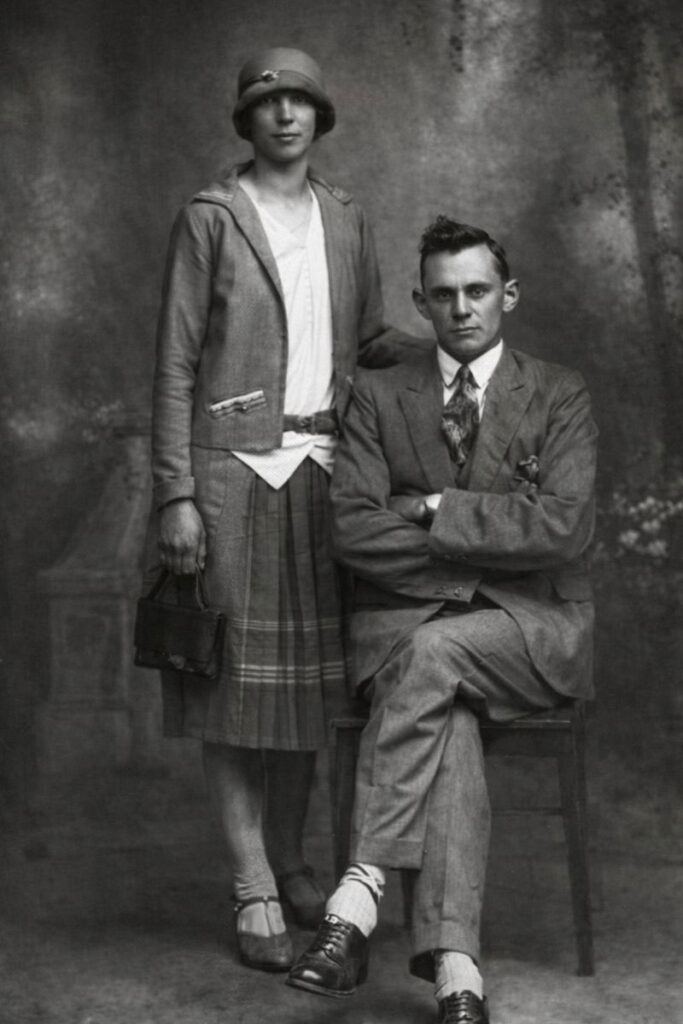
Just over five years after the death of my mother Anna, my father married her younger sister, Miem, in Cape Town and had the reception in Muizenberg. Linda attended the wedding but was peeved because she was not a “flower girl.” Typical of my sister, who turned out to have a rather dominant personality.
I knew nothing about the wedding, but when they came to fetch me, I accepted Mom Miem as if I had known her all my life. She was very nice to me, and I got away with being naughty. I remember one evening when I again did something wrong, my father said, “Your own mother would never have allowed you to do that.” Although my parents never discussed parenthood with me, that sentence confirmed that Mom Miem was not my biological mother.
I knew I was her favourite because when food was prepared for a meal and she knew that I didn’t particularly like something, she would make me my favourite food in a separate dish only for me and not for the family.
She made sure that I had all things needed for school like a hanky and ruler. She would then stand at the door to say goodbye. Occasionally she would feel the back of my pants and send me back to my room to add another pair of pants. This would then lead to the following discussion:
Me: “Why?”
Mom: “You are going to get cuts from the teacher.”
Me: “How do you know?”
Mom: “You didn’t do any homework yesterday. Now go back and put on another pair.”
She was stricter with Linda, and I remember hearing the occasional standoff when Linda back-chatted her.
Mom Miem was very kindhearted, and whenever she knew of some elderly person who was ill or just out of hospital, she would prepare some soup or food for him or her. She would ask me to quickly take her to deliver the food. Although she knew I didn’t have a driver’s licence, she would say, “Let’s go quickly before your father finds out.”
I was particularly pleased when, at my high school reunion many years later, one of my classmates remembered that my mother always gave me two packages for lunchtime—one for myself and another for boys who didn’t have food. The school hostel did not supply food for lunch.
My mother was exceptionally clean. Everything in the house was cleaned every day—the floors, door handles, anything in brass. As the prison head, my father had free labour. I remember my father complaining that whenever he came into our house, there was someone polishing the floors or washing the backyard.
After the evening meal, she would immediately lay the table in readiness for breakfast, and everything would be neatly covered with a net.
On Sundays, Dad wanted us to accompany him to church. She would mostly decline with her favourite saying: “The better the day, the better the deed,” which meant she had to prepare lunch for us.
Preparing food for us and people was her satisfaction. I remember going on holiday, and Dad and I would sit down for lunch waiting for Mom. Dad would send me to look for her. I would mostly find her in the resort kitchen having a whale of a time with the kitchen staff.


Life in Mossel Bay
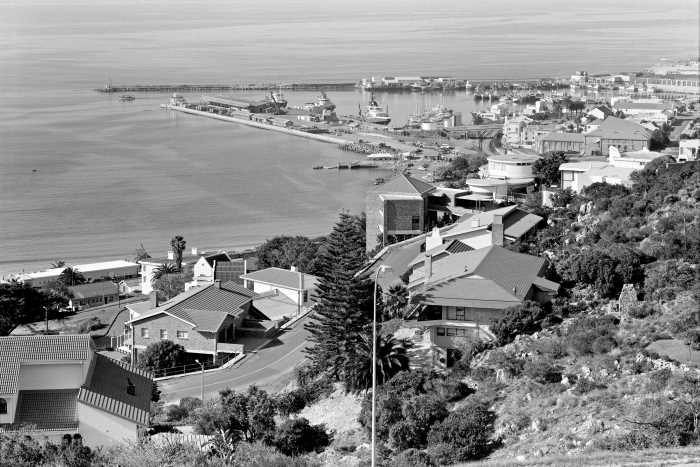
The Mossel Bay I found myself in at the beginning of the Second World War was a hub of activity. Military vehicles were commonplace occurrences, and campsites were full of people who were not necessarily holidaymakers. A boy named Adolph came from one of those makeshift camps to play with me every day and then suddenly disappeared again.
Across the road from us, a double-storey building was being repaired to house RN Wrens. While military camps were being established, we could only observe all the goings-on. This all changed dramatically as night fell into silence, only to wake up with a rush of activity the next morning. Gradually we began to get used to the war, although I remember Dad still, nightly, listening to some radio broadcast. He did not discuss the war with me, but I secretly listened to discussions he had with visiting friends.
All toys were about the war! Foot soldiers with guns, men on horseback with guns, trucks—all the same khaki-brown colour. We all played war games; the only problem was I didn’t have the money to buy them. Birthday presents would also include war toys, but I couldn’t wait that long, so I did it my way.
Armed with one of those orange bags used for keeping oranges, I went about on daily trips picking up old animal bones that I found along the road. People were encouraged to save and be thrifty, and I was paid for the bones that I collected. I went to garages and asked for any old batteries, took them home, and removed all the lead inside. I borrowed my mom’s primus stove, melted the lead, and made my own toys.
My dad, at that time, was still a smoker, and I saved his empty cigarette boxes. By filling the bottom half with plaster of Paris and impressing the only toy soldier I had halfway into it, I would let it dry out a bit. Next I filled the top half of the cigarette box with plaster of Paris and so created my own mould by impressing it on top of the bottom half. By carefully removing the toy soldier from the mould, I was able to pour lead into its place and so made my own toys. All that was needed was to find some green or brown paint.
We got used to and almost forgot about the war that went on for so long. The adults bore the brunt of the restrictions imposed by the war. I remember being sent to the shop by my mother to buy something when the shopkeeper bent behind the counter and handed me a package and told me to give it to my mother and tell her that a new consignment of sugar or rice had arrived. This was how they looked after their customers.
One afternoon I again went to the shop for my mother when there was a lot of excitement and news about the end of the Italian campaign where many South Africans fought. I also saw a picture in the shop window of the hanging of the Italian war leaders, with Mussolini hanged upside down.
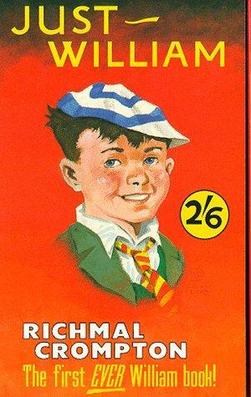
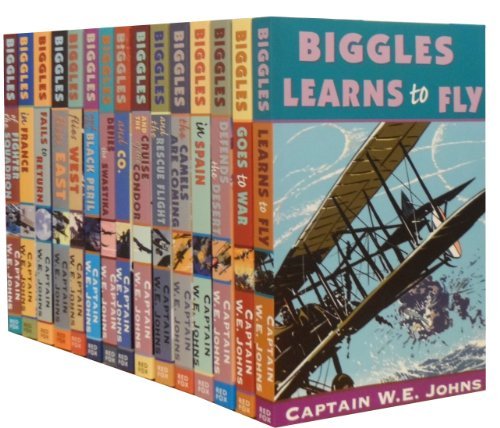
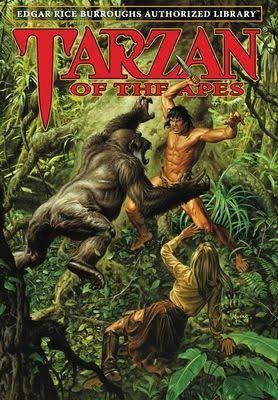
There were no Afrikaans-speaking boys near me, but across the road was Trevor Lewis, and two houses to our right lived Roy Graham. Both of them went to English schools. I think their parents encouraged them to play with me thinking it would improve their Afrikaans. Yet actually the opposite happened—my English improved greatly. In fact, as we talked about school and what they read, I discovered the William series of storybooks. My first book was Just William, and then More William, and then William Again. I don’t think I read the whole series, but it certainly had awakened in me a love for reading those English books. In fact, I read the Biggles series followed by the Edgar Rice Burroughs series of Tarzan of the Apes books.
My Dad
I really had to begin to get to know my father at age five-plus when I left the farm and joined the family in Mossel Bay after my father got married again. My mother was somewhat known to me, but I found out that I now also had a sister called Linda who shared our home. She was almost two years older than me and preferred to play with dolls.
Then war broke out, and he had to do military training after work like all able-bodied men. This meant that it was near bedtime for me when he came home in the evenings. On weekends he studied first aid classes with the St John’s Ambulance organisation, which took him away from home even more.
Because Mossel Bay was a port and the military suspected that German submarines could land in the night, dropping spies or military equipment, strong curfew deadlines were enforced. All windows had to have thick curtains to block out light. I remember a call at our front door one night and a policeman telling us that too much light could be seen from a front room. No play outside or loud noise was permitted. Cars could travel at night in an emergency, but the headlights had to have covers with a horizontal slot for light.
I started school at Park Primary School, and during the first holiday we returned to the farm to visit our grandparents. I played with the farm children, and we rolled the ripe prickly pears on the ground to remove their thorns.
Soon after our return home, I became ill and was diagnosed with diphtheria and immediately put under quarantine in the men’s section of the hospital. This meant that only my father (my mother was not a biological member) could visit me after work in the evening before going home. He would sit on the bed and talk to me for a while, but that was all I saw of him in a day.
It was a terrible time because I was not allowed out of bed to walk about. In those days the wards didn’t have curtains, so screens were placed around me. I could hear men talking to me and walking about, and occasionally a penny would fall on my bed to cheer me up. I spent a long time in hospital and missed bonding time with my new family.
I spent such a long time in bed that I had to recover at home before going back to school. Shortly after being at home and sitting on the stoep, the postman—who in the past wanted to chase and catch me—arrived. As he approached, I climbed up on the stoep railing, lost my balance, and landed below in the freshly pruned poinsettia tree in the garden. A deep, long scar (which can be seen to this day) produced lots of blood. My mother managed to stop the blood and bandaged it. I asked her not to tell my father what I had done to my leg. That evening I went to bed early, and when my Dad came into my bedroom to talk to me, he sat on my injured leg. I still remember how I suffered the pain rather than revealing the injury. I’m sure my mother would have told him of the injury and my request not to tell him.
Returning to school after my period of quarantine was over was a happy occasion. However, at the end of the year the school decided that I had missed too much work and had to repeat the school year. Working hard the following year, I was surprised and delighted to be promoted to the next class in June and so joined my old classmates with whom I started school originally.
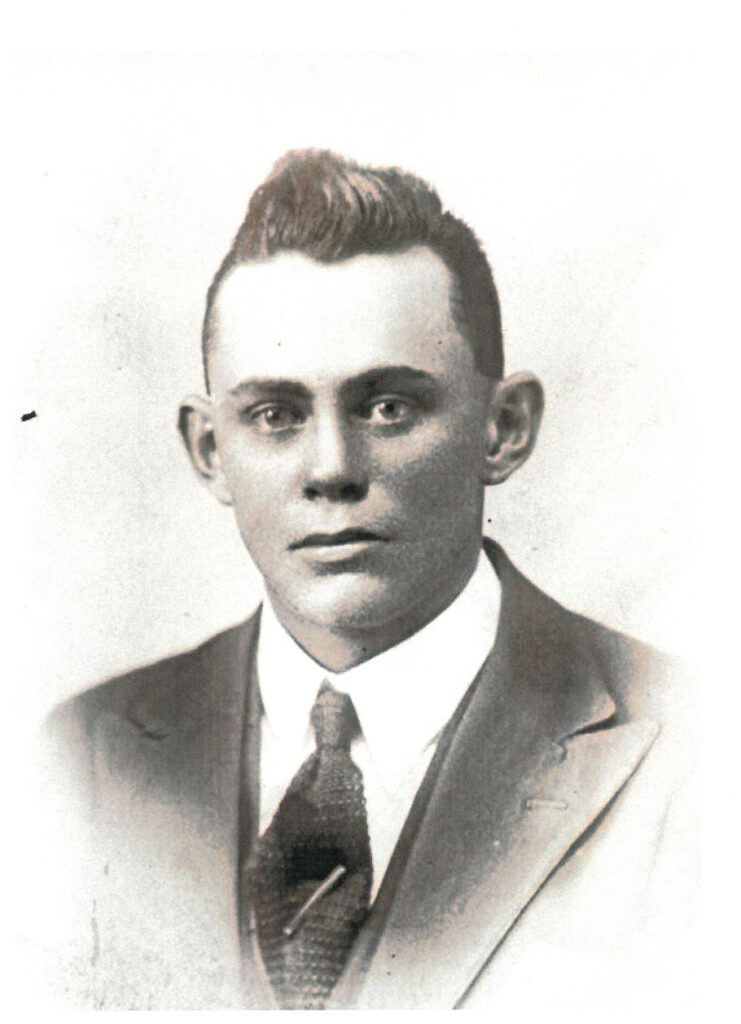
My father was a serious person who believed in honesty and hard work. He didn’t have time for frivolousness. If I wanted to talk to him or tell him something, he would always ask, “Is it a story or real?” before he would listen to me. He expected responsibility, discipline, and hard work from everyone. I know that the prisoners who worked in our house and would talk to me were scared of him. My school friends were scared of him and wanted me to go to their houses. Yet I have never heard a harsh or angry word in the house towards my mother or Linda or myself. He never once looked at my school books but was only interested in my reports at the end of term.
Much of what I know about my father is what I have heard of him in conversations with relatives. His family was of German extraction. They farmed in the Western Transvaal, and that is where he went to school. Once when we went to his sister’s farm, I overheard someone say, “The Germans are here,” soon after we arrived.
My father attended school in the area near their farm, and he seemed to have produced excellent results academically and by example at school because he was elected head boy and had his own office and a cane given to him, as was the educational system in those days.
However, that was also the time when the Great Depression was forcing farmers off the land. The agriculture sector was devastated. They had to deal with crop failures, drought, and locust invasions. His older brother stayed on the farm, so my father attended the Technical College in Potchefstroom. Once he completed his studies there, he joined the Police College for a year and graduated as a member of the SA Mounted Police Force. He seemed to have enjoyed his time there because he often told stories and pranks they got up to while studying there.
Many years later, while on a family trip, we passed through Potchefstroom again, and Dad stopped outside the Technical College and said that he wanted to have one more look at the place. He stayed away for a while, and when he came back, he had a college magazine, past pupil tie, and a blazer badge. It turned out that he was head prefect in his day and that they were very happy to see and meet him.
His first job in the mounted police was doing patrols in the country areas. That, however, had a limited area for expansion. He told of being on horseback in thunderstorms and how dangerous it was when lightning struck trees where they tried to shelter. He soon changed and was sent to the Western Cape, where he was posted in many different areas. Linda was born in Rugby, Cape Town, and I was born in Wolseley, district Tulbagh.
My father was no longer a policeman and had joined the prison service and was one of the prison warders with long working hours. He left home before I woke up in the morning and returned at about 5:30 in the evening.
Why my father left the police service was never discussed, but it could mean that he was headhunted by the prison service at the time or wanted a steady job nearer my grandparents because Mossel Bay is not very far from Riversdale in the Cape Province. Or it could be because at that time, policemen doing foot patrol didn’t have supporting vehicle assistance, and when they found one of the local women under the influence of liquor, they had to put up with attempts of hugging and being called “My boyfriend” or “My darling.”
I did overhear him telling a story of a very dangerous situation he once had at Roeland Street Prison in Cape Town.
One day he and another warder were left in charge of the prison over the lunch period. Dad said that there was a larger group of prisoners than usual working in the front area near the front door, and he had the keys to lock and unlock.
When the prisoners saw that there were only two warders in charge, they gathered in a group and demanded to be released. His partner offered to go get help and so left Dad on his own. The prisoners moved closer to the door, and my father was able to drag a table in front of him with his back now close to the outside door. As the demand to be released grew stronger and they moved closer to the table, Dad pulled out his revolver and threatened that the first one to take a step forward would be shot. He stayed like that until the other men came back after lunch. The guy who offered to get help brought no one.
We certainly didn’t read books in the afternoons, but a great deal of wrestling took place and running around. I read about underground tunnels, so I persuaded them to dig a shaft in Trevor’s garden, with me doing most of the digging and then tunnelling sideways, not realizing it could collapse on us. His parents stopped that dangerous game just in time.
Our play area mainly consisted of a grass patch, and we spent most of our time wrestling. I found that I could handle each of them with ease and at times could pin both of them down at the same time. This was good training for me, and that’s why I immediately joined the wrestling club when I arrived at my next school, I think.
One incident between Roy and myself I can remember well. We had been wrestling and play-fighting, and I punched him a bit hard and his mouth was bleeding. He ran home and didn’t come back to play for nearly a week. I went looking for him, and once inside the house, his mother got hold of me and with long knitting needles whacked me all over my legs. I knew I deserved a scolding, so we remained friends—no harm done.
What was very important was that both boys invited me to their Boy Scout meetings, which I enjoyed so much that I left Voortrekkers and joined the 2nd Mossel Bay Scouts club and was in Eagle patrol with green and black shoulder tabs. This was a game changer for me, and it also saddled my mother with the task of pegging the folds in my hat and cleaning my uniform. Passing my scout badges and going on expeditions and Jamboree rallies was a game changer for me. Passing my first aid badge in English was a nightmare of an experience, coping with the technical terms in English in the beginning.
I was restless and always wanted to find out how things worked. Knowing the right-hand bottom drawer of my father’s desk at home had bullets was a draw for me. I removed a long rifle bullet and carried it in my pocket for some time. I found a culvert starting near a wall, so I would stand in the open drain and throw the bullet as hard as I could against the wall and duck away should it fire. Alas, nothing happened no matter how hard I tried.
Next I placed the shell on a rock and dropped a stone on it, but all I did was bend the live bullet. Then I started a fire in a quiet lane behind our house and threw it into the fire. But then an elderly neighbour arrived and asked me what I was doing with the fire. I was sweating drops of ink and wanted her to leave, but a shot went off and struck a hole in the metal fence next to her. She reported me to the police, and I had a vigorous talking-to from my dad, who was able to sort the matter out with the police. Those were different times—a boy could carry a bullet in his pocket and escape with just a stern talking-to, though my father must have been both furious and terrified at what could have happened.
I also remember getting tiny little glass bottles and filling them with different kinds of flammable liquids like petrol, turpentine, methylated spirits, paint remover, benzene. Then I would throw each one into a fire to see how they combusted. This was the life I enjoyed. My father was at work all day; my mother supported me in all my adventures.
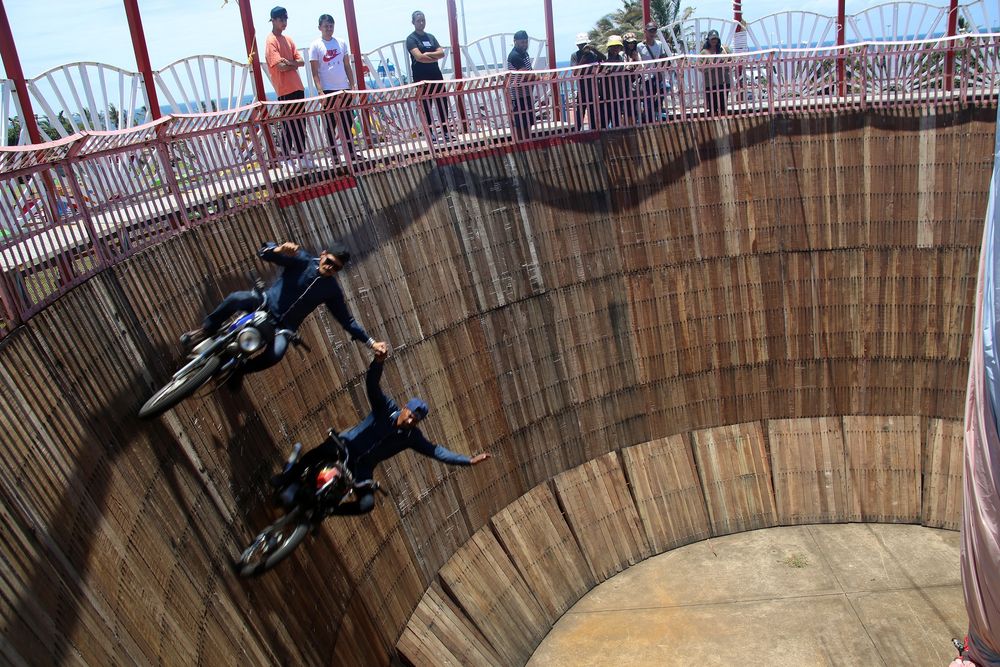
When a tour group arrived and used motorbikes to demonstrate their “Wall of Death” show with “life-defying tricks” by riding their bikes around on the wall of a wooden-framed pit to the delight of the spectators, we were all gobsmacked. Guess what I did? I got a few friends to help me, and we created a steep downward track and then a bend at the bottom to curve onto a vertical wall to see if we could ride a few feet along the bank before falling down.
Every Afrikaans schoolboy had a knife, and we had competitions and rules that applied to each event. Nobody got attacked or injured. Life was in a way kind to us, and school was enjoyable as long as you could toe the line and respect the teachers. My father only told me after perusing an end-of-term report to see to it that I didn’t end up in the special class; otherwise, he would send me to the Convent and the nuns would sort me out.
Mossel Bay had happy memories for me.

The Royal Visit
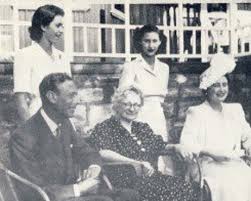
My interest in the 1947 Royal Visit through South Africa and other territories was drawn to this great event because it was the first visit by a reigning monarch to this part of the world. King George VI, Queen Elizabeth, Princess Elizabeth, and Princess Margaret would tour for three months and then go to a number of other countries north of us.
At first my interest was honed in on the battlecruiser HMS Vanguard that I was desperate to see close up, but then I found out that the tour group was going to travel in a special “White Train” covering 10,000 miles. Soon more information was leaked that the whole train would be painted in ivory and was described as a “palace on wheels” with air-conditioned saloons—something I had not even known existed. It was also going to be a very long train because on it would be the Royal staff and the members of Parliament who travelled with the King. That was something worth seeing, I thought.
Then I heard that my Oom Koos, my mother’s younger brother who worked for the SA Railways as an engine driver, was appointed to the Royal train as a stoker. He told me that they had to only emit white smoke as they travelled to avoid getting it dirty. Now my focus was on seeing the White Train when it got to Mossel Bay.

However, it didn’t take long for the bad news to be announced—the train was not going to stop at Mossel Bay railway station. I was not going to see the White Train after all. As far as I was informed, it was because of the shape of the Mossel Bay railway station. Trains entering the station cannot turn around, so the engine is uncoupled and turned and then reconnected at the other end for normal use. The long White Train could not turn around in that way and would therefore stop at the next town called George. That meant that a brand new curved railway line had to be dug and laid in order for the train to go directly to George. The Royal family would get off near Mossel Bay and travel by car to George.
The Royal family visited a number of places in Cape Town and attended various functions. One such visit was to the Naval Base in Simon’s Town where my future wife, Phyllis, and her family resided. Her father had a handshake from the King, and Phyllis attended a meet-and-greet with Princess Elizabeth when she met the Simon’s Town Girl Guides. Her sister, Joanne was selected to present a bouquet to Princess Margaret. I only found out about it much later when I related my adventures to see the ship.
Then, at a scout meeting, we were told that the Mossel Bay scouts were invited to do crowd control along the route the Royal family would take and that we had to be smart and bring our staves to help in controlling the crowd. I was just eleven years old when this event took place. Luckily the spectators wanting to see the Royal car flash by were not many.
We waited patiently for almost an hour on a beautiful, clear day. The people behind us were well behaved, and we all waited patiently to see the royals drive past.
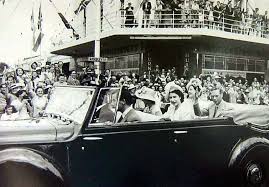
Cheering sounds told us that they were getting close, and then from around the road bend appeared a beautiful, shiny, open-topped black convertible. We had an absolutely clear view of the King, Queen, and the two princesses in the back seat. What is more is that the car came to a halt not more than about thirty metres from where I was standing.
The King met with somebody at what looked like a little park. The princesses seemed relaxed, chatting to each other. Then they left, and we had to return to Mossel Bay full of excitement and something most memorable.
Years later when I was in Grade 10 or 11, I used to, after supper, go to the room of Johannes Lebabo, a Lesotho national who worked for my father as a prison warder, to help him with his English vocabulary. I helped him with his English, and he taught me quite a bit of Sesotho that I can remember to this day.
I gathered that his father was a senior chief in his homeland and that he constantly wanted his son to return to Lesotho, where he would be met with ten white horses at the station.
Then he told me that he, Johannes, was on a white horse followed by nine others on white horses on the left side of the King’s car, and there were ten police on horseback on the right-hand side of the car during official travels. I again realized how many people close to us had been touched by the 1947 Royal visit.
I had one more opportunity to see Queen Elizabeth when the Royal Yacht Britannia stopped in Simon’s Town on its farewell voyage, and we could see the Queen walk on the deck from our home balcony
School days
Looking back over my school career, I have to admit that on the whole it was a very happy period in my life. It was not without problems but thoroughly enjoyable most of the time.

Park Primary School
Our home in High Street, Mossel Bay, was the second house from the park, so it was natural that I would start my schooling at the kindergarten section a short distance from the primary section. Soon I had to follow the teacher’s dictates and submit to the daily inspections we all had to undergo.
A nail inspection meant that there was a rush for the nearest water tap and whatever could get the dirt from under my nails. We had to place both hands next to each other on top of a clean handkerchief. This became so ingrained in me that to this day I cannot leave home without first checking that I have a hankie in my pocket. A slate with a wooden edge and a stylus with which we had to scratch words or sums completed the inspection.
One morning in Grade 2, I suddenly realized that I didn’t bring my hankie. My mom usually checked that I had everything I needed, but not that morning. Fortunately, this teacher was different, and her inspections were more relaxed. Our school uniform consisted of a white shirt and navy blue shorts with a white lining on the inside. In desperation I pulled out the white pocket lining, and the teacher walked on, accepting the pocket lining for a hankie.
This became standard procedure with me, and I told my mother that I didn’t have to take a hankie anymore. That was until the teacher told me to “take it out,” and when it got stuck, she hauled me out of my desk and took me to the front of the classroom. At that moment there was a knock on the door, and the principal walked in and asked what was going on. She told him that I was trying to cheat her. The principal decided that they had to make an example of me, and I had to get a hiding.
At the office there were two older boys waiting for their hiding, and each got three whacks. Both cried. I also received three strokes but was enormously proud of the fact that I didn’t cry. But then, he didn’t hit me as hard. So I was the first boy to get a hiding from the principal and a hero in my class.
My mother insisted that I wear shoes to school but didn’t understand that tough boys didn’t wear shoes. So I wore shoes to school and hid them in a hedge near the front gate. Arriving home after school without shoes, she wanted to know where they were, and I had to run back to school to retrieve them.
Once a teacher kissed me in class, and I didn’t go back until after she came to our home to find out what was wrong with me. My parents had no idea that I was not at school for a few days. I did get a dressing down and promised not to do it again.
The Grade 7 boys admired my Grade 4 “sturdy legs” and would ask for a piggyback ride. I had to resort to hiding from them because some of those boys were very heavy to carry.
I remember getting a lead role in a school concert, but all I can remember is when the curtain opens, I am sitting under a table on stage with a large tablecloth over it that kept me hidden for a while before I made an appearance.
Every Thursday children brought money to school for saving stamps to encourage us to save money. At some stage the teacher trusted me to, during school break, go to the post office with all the money and bring the stamps to be pasted in our individual savings books. This procedure kept on for a long time.
On the way to the post office, I walked through the park and used to play on the bandstand in the middle of the park. One Thursday a strong southeasterly wind was blowing and suddenly blew the stamps out of my hand. Panic set in, and I started searching for the stamps. I couldn’t go back to school without the stamps. For how long I kept searching for those stamps that must be miles away by now—no amount of searching got them back. The teacher had to pay for the loss and never sent me to the post office again.
Point High School
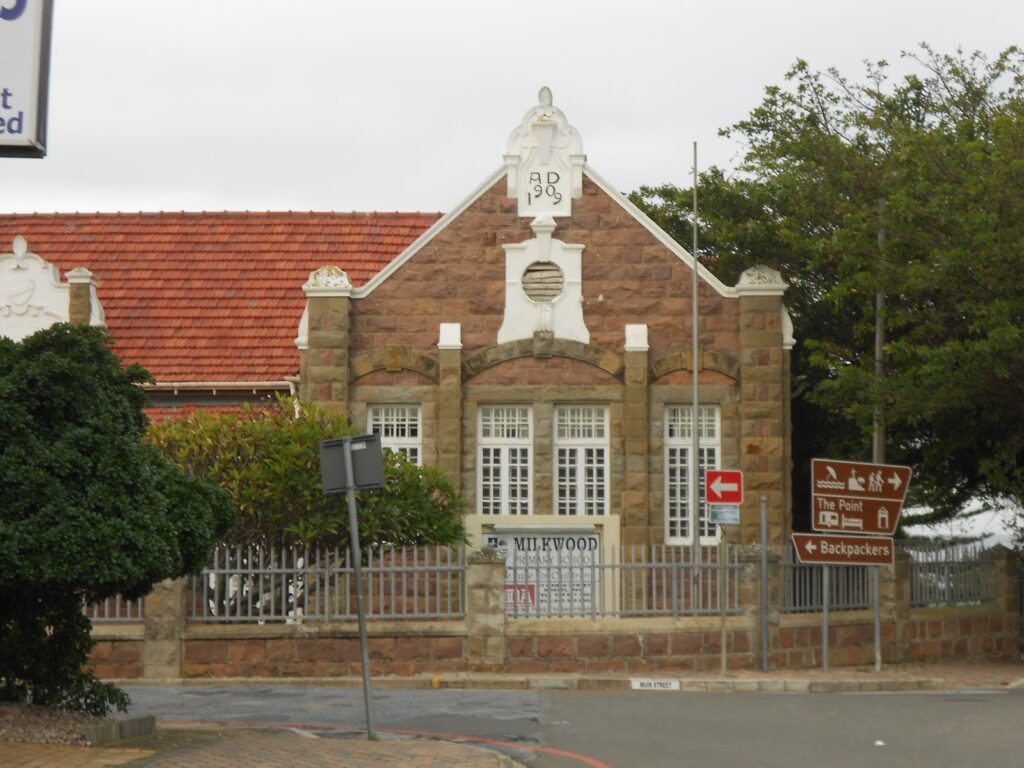
Happy days slipped by, and when in Grade 7, our class moved to Point High School because there was not enough classroom space at the junior school.
Most memorable was that the war was over, but we still wore regular army uniforms and had drill sessions at school. Each child at school was given a “peace medal.”
It was also during this time that the excitement of the 1947 Royal Visit swept through our town. My teacher told us that the Royal family—King George VI, Queen Elizabeth, and the two princesses—were on their way to South Africa aboard the battleship Vanguard with her six-inch guns, the size of three rugby fields. That I had to see! Then came the disappointing news: although the Vanguard was to visit all our ports, the Mossel Bay harbour was too shallow, so we could only see it in the distance out in the bay.
A school friend of mine whose father worked in the dockyard said that he knew how to get into the dockyard unseen and hide in the tug that was to take supplies to the Vanguard. We decided to bunk school and try to get a ride to the ship. Early on the morning the Vanguard arrived, we sneaked into the dockyard and hid below in the tug that was to tow the supplies to the ship, knowing that it was illegal.
We stayed hidden in the tug until we were well on our way out to sea. Then we were spotted, and the captain was informed. He was furious, and we were facing jail time, but it was too late to turn back. I remember travelling around the battleship and going alongside her and marvelling at how huge and magnificent a battleship is. Something worth getting scolded for but a memory to keep!
The next year in Grade 8, there were only two of us wanting to study Latin as a subject. My dad wanted me to read law after school. At the end of the second term, my dad was promoted to the Central Prison in the capital city of Pretoria. It was the largest all-white prison in the country and where the executions took place, so once again I had to go to another school.
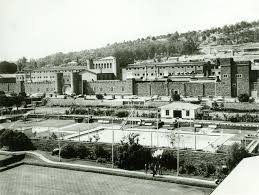
Soon after my dad was given the news of our move to Pretoria, the thalidomide epidemic, which affected forty countries including South Africa, had broken out. We heard about the fact that babies were born with deformities and that it could be because of something their doctors prescribed or due to something you eat. The children spread the theory at school that it was the white pith under the orange peel that was the cause. I remember how I struggled to peel my school orange handout to get rid of all the white skin.
However, schools closed earlier in the second term, and I could watch how our furniture was being crated for our move to Pretoria, which took three full days by passenger train in those days.
Afrikaanse Hoër Seunskool
Pretoria is both the capital city and executive city of South Africa and is also known as the “Jacaranda City” and is most beautiful, especially around the month of October.
Schools were still closed for another week, making it my longest school holiday ever.
This school is an Afrikaans high school for boys and is affectionately known as “Affies.”
When my dad finally took me to the school in Sunnyside in Pretoria, I was impressed that it was a triple-storey building with a big arch at the entrance. The school was also situated right next to the famous Loftus Versfeld rugby ground. Great was the excitement when the All Blacks toured South Africa and practiced on the field during the week. We also had the visit of the All Blacks captain addressing us during assembly.
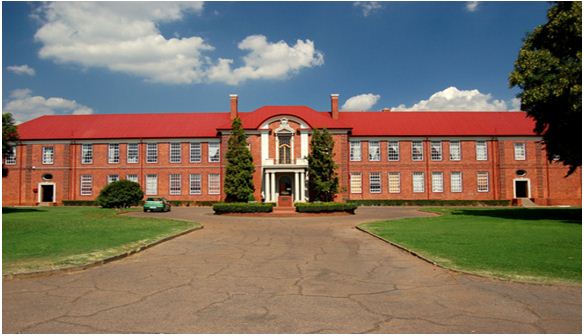
Everything was larger than I had experienced before. I felt lost in the beginning, being a scholar in a school with 750 boys. The grounds included a big tuck shop, two rugby fields, a swimming pool, an athletics track, and a wrestling club and equipment.
Discipline was maintained at a strict level by the prefects, and the head prefect could punish with detention or lines. Everyone stood during assembly, and if someone fainted, the prefects would quietly remove that boy. The teachers did not attend to these matters.
The pupils were mostly children of government or parliament employees. Sitting next to me in class was Ben Schoeman, whose father was Minister of Labour in the government, and at the back was the son of the Postmaster General. When Ben got into trouble, the teacher would after each stroke of the cane say, “Your father is Minister of Labour and you don’t work.”
When parliament was in session in Cape Town, some of their children would fly down for a weekend visit and come back without having done their homework and get into trouble. Our Latin teacher, Mr. Lubowski, was also a well-known chess player and chess champion after whom chess tournaments are held. When he would want to start the Latin test he had given for homework, one of the boys would then quickly ask him to look at a chess problem he had. We all had pocket chess sets and would begin playing chess, and the test would be postponed for the next lesson.
His nickname was “Libo” to us. One day he asked a boy to decline “Liber” (book), who then recited “Liber, Libri, Librium, Libo, Libo,” to which Mr. Lubowski interrupted him with, “What is this Libo, Libo about?” The whole class burst out laughing when he called out his own nickname. It was said that he could speak thirteen languages. Switching from a Latin textbook in English to one in Afrikaans was a bit different to adjust to.
Our music teacher was allergic to garlic, and so many music lessons were ended early because of crushed garlic on the classroom floor.
The swimming pool was at the end of one rugby field, and we had to hurry to be there and change before the teacher arrived on his bicycle. Towards the end of a swimming lesson, free pool time was allowed while the teacher went into his changing room to change. He would blow his whistle, which meant get out immediately, and anyone not quick enough could get cuts. Once, one of the boys who had been given cuts waited on the high diving board for the teacher to come out, then dive-bombed him to get water all over his suit. This got him into a lot more trouble.
We had to wait at the pool for the school bell to announce break before walking to school to put our bags down and then going to the crowded tuck shop. The teacher would not let us leave promptly for school until the day one of the boys noticed that the teacher’s bicycle wheels had wing nuts. They were loosened, and when the bell rang and he picked up the bike to turn it around, both wheels dropped off. We all got cuts because no one owned up.
Discipline was maintained inside the school, and little was overlooked. I sat near the top bench at the back of the science lab and saw “Whitey,” a fellow pupil, put the two sharp points of his dividers into the electrical power point. He then asked another pupil to hold the sagging head of the dividers. The moment this boy took hold of the dividers, Whitey switched the power on. The boy holding the dividers screamed, and the teacher demanded to know what had happened. He took the culprit to the office, and after a long wait, took all Whitey’s school books, said farewell to him, and we never saw him again.
One afternoon I was sitting in the detention class where we had to study when a “jumping jack” firecracker exploded under my desk. Naturally everyone thought that I was the culprit, no matter how much I denied it. The teacher said that no one would be allowed to go home until the guilty one admitted. Many requests for me to own up came my way. Eventually the boy sitting in front of my row owned up that once the flint caught alight, he threw it underneath the desks and it exploded under my desk.
For me, spending time after school training in the wrestling club was very exciting, especially because our coach and teacher was Mr. “Chappy” van Vuuren, who had won the heavyweight gold medal at the Summer Olympic Games of 1948 in London.
Many a day I stayed as long as possible and would get home very late, but it was something I really enjoyed, and gradually I received attention as I improved. At home nothing much was said about wrestling until I received my first trophy winning the Northern Transvaal championship. In fact, that was the only match my father attended.
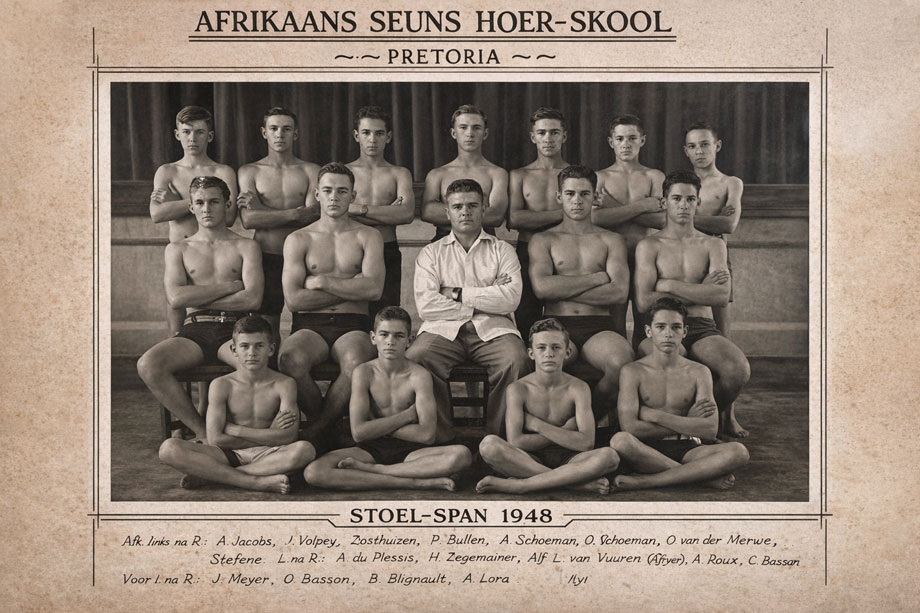
Wrestling provided me with many different experiences, and you learn to look after yourself. One night I was in the final for the Transvaal championship in my weight. We fought in a boxing ring, which has different rules. Near the end of the match, my right leg got hooked over one of the ring ropes, and my opponent got a better hold on me and won the match on points.
But we were now in Vereeniging, and I had to rely on lifts by car or sometimes even by bicycle. Often we were stopped by the police and had to wait for them to disappear before going further on the bicycle again. Arriving at the Pretoria railway station at midnight, a pal and I opened a train door and went to sleep inside on the soft green benches because there was no way to contact home for help. I was rudely woken up the next morning in a moving train. Fortunately a ticket conductor saw me and managed to stop the train. I walked back home and recognized my father’s car as he was searching for me. He was not impressed with my lifestyle.
There was talk at school that I would go to Port Elizabeth for the South African championships, but my father’s Christian upbringing and the fact that his position meant that he had to be at the executions got him a transfer to his own prison, and it was time for me to find a new school.
The school gave me a nice framed picture of the wrestling team as well as a picture in the school magazine that year.
Langenhoven High School
I’m in Grade 10 with my schooling, and once again my father moved for work opportunities, and it meant a new school for me. My dad became the head of the prison in a town called Riversdale in the Cape Province. It turned out to be not very far from Mossel Bay and near the ocean, which is what my father liked.
The high school in Riversdale is called Langenhoven High School and is named after C.J. Langenhoven, who is remembered as one of the most versatile writers in South Africa and also wrote the former South African anthem, “Die Stem.”
Dad had a discussion with the principal who afterwards told me that I was now the only Latin pupil in the school and that it was not possible to continue with that subject. I had to switch to German with barely six months to go before an external examination would take place according to a system which applied in those days. It allowed farm children to get exemption to legally leave school and help their parents with farming instead of remaining in town in school hostels.
My German teacher recommended I take an easy German reader home each day and read it at night. Soon I learned some more masculine and feminine words as well as plurals within German sentences as part of normal speech.
Having scraped a pass in Grade 10 German did not bode well for me as a subject to continue to Grade 12, so I switched to woodwork as a subject, which I got to love. I had spent many years watching my dad and later helping him in his woodwork room. He did woodwork, leather work, painted pictures, and some of his work was displayed in the national newspapers. In fact, I excelled in this subject, which later changed my life after school.
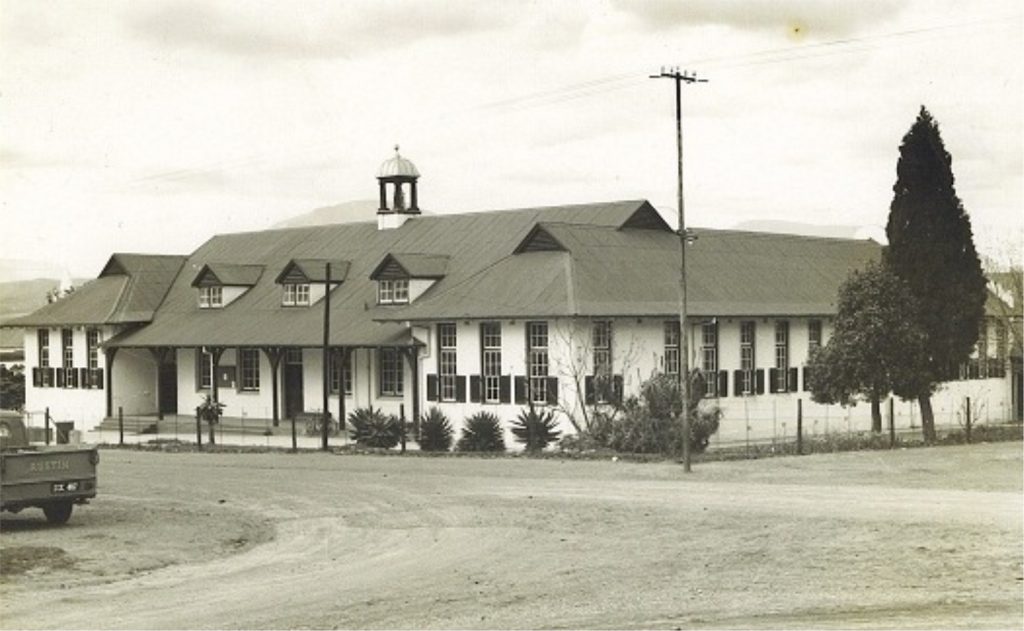
The boys in my class were mostly hostel dwellers with whom we had lots of fun at school, but they were not allowed free time after school away from the hostel, so I was limited to a few local friends. Le Roux Terblanche was my best friend with whom I shared an interest in stamp collecting and cricket. After school he temporarily worked for Die Burger newspaper and then disappeared without a trace. Leonard Nankin, a Jewish boy, lived in the street next to mine and became the head prefect and an orthopaedic surgeon. At school we mixed with all the hostel dwellers.
I enjoyed my time at Langenhoven High. I played second-team rugby for the school and went to most of the surrounding towns to compete against their teams.
During a match I remember running down the sideline trying to score a try when I was tackled from the side. The next thing I remember was that I was sitting in the spectator stand receiving much attention. I was told that both my opponent and myself slid across the athletic track surrounding the field and crashed into the spectator stand.
Because, on resumption of the game, I apparently kept playing for the wrong team, I was removed from the field. I developed severe headaches, and the doctor diagnosed it as concussion. I spent the next week in a dark room with medical treatment administered by my mother. Funnily, since that incident I have not had another headache again.
I was a leader in the debating society, became a keen stamp collector, had pen pals from countries like the USA, England, and Germany, and otherwise had a happy stay at school but for an incident near the end.
I liked history as a subject and received high marks for all tests and exams. By June we had completed the syllabus for the year, and our teacher made us write a test on a topic for almost each history period. He would tell us what to prepare and then give a more specific topic as class started and say, “Start writing.” I entered class that day as he said “Start writing.” I asked aloud, “What must we write?” The teacher seemed angry and shouted, “Don’t tell me that you didn’t study!” to which I replied, “What?” He suddenly charged at me, and I thought he was going to grab hold of me or something, so I grabbed hold of him protecting myself—I don’t know if I hit him. We were shaking each other a bit, and he acted as if I tried to attack him.
It turned out that the previous history period, another teacher wanted to discuss something with me, and I arrived in history class after he had told the class what to prepare. So I didn’t prepare.
However, he told me to go to the principal’s office for a caning, and he followed. The head was not in his office, and the teacher now started to search for him. I was left in the passage and getting angry for unfair treatment. The principal seemed to not be at school, so the teacher said I could go back to class. I said, “No, you wanted to hit me, now do it or I’ll report you.” I bent down, and he hit me three times.
So I have the record of being the first and the last in my class to get a caning at school.
Although my encounter with my history teacher left me with a somewhat sour taste for him and the school, I cannot forget about the fun and happy times I shared with my fellow pupils at Langenhoven.
Arriving in Grade 10 when most of the class had been together since junior school, they accepted me as one of them and made me feel at home almost from the beginning. Some of the boys were like big men, but as the years went by I caught up to them in size.
How can I forget Morris Fox with whom I retained a close relationship for many years and ended as roommates in our third year of further study?
He was a tall six-footer and first-team rugby player. As a baby he had an accident in his cot that injured his eye to the extent that he was fitted with a glass eye. He was relaxed about it, and it even produced some funny moments. He used to say, “My names are Morris Henry Hopwood Fox and I can’t speak English, and you are Jan Meyer—how come you can speak the language so well?”
I remember the day in Mr. Dry’s or “Num’s” class when he told us to take out our homework and mark it together. Morris picked up his case and put it next to mine. We opened them, and in his were his pyjamas and a brick. That sight was impossible for me not to burst out laughing. I had to apologize to Mr. Dry. At the hostel someone had replaced his school books with his pyjamas and added a brick so he wouldn’t notice by the weight of the trick. When Num left the class, someone threw Morris’s suitcase out the window, and Morris asked me to go with him and fetch it. On our return the classroom door was partly open, and most of the pupils were watching for Mr. Dry’s return. Morris took out his glass eye and made it peek into the room. The girls screamed in horror, loud enough for people from other classes to come rushing to our room.
Our science teacher was an elderly gentleman, Mr. van Loggerenberg, who was gassed in the First World War and as a result had some tremors that were constantly visible. We called him “Oom Loggie” and found him to be a good teacher until we found out that he was colour-blind. In some of the experiments, the result should produce a blue colour deposit. Naturally when he said, holding it up, “It is blue,” we would reply with all colours imaginable. This would result in repeats and lots of fun.
When we conducted experiments that would cause an explosion, he asked us to help and use the scales to measure correct quantities. He put chemicals together and asked if the amounts were the same. Our reply would be “more to the left” and then “more to the right” to get a bigger explosion, and then we’d go to the back of the classroom for the bang. Once, people from other classrooms came charging in to find if we were all right.
When we had to deal with electricity, he would hand the keys of his car to a boy and ask him to bring it close to the classroom. We would all go outside to do the test, but his plug wires would take some time to reconnect properly for him to be able to go home.
Foul-smelling gas always escaped into the school after our class produced it just before break. That was part of the good-humoured pranks that made studying enjoyable.
Our school was close to the railway station, and we always got advanced notification that Boswell’s Circus would be in Riversdale for a week. We were not allowed into the streets during break, and when the circus came to town we were also prevented from meeting “Tiekie” the clown there. However, this time they brought some llamas from Peru to their show. Morris said he had not seen a llama before, and since the hostel would not let them out, he was adamant that whatever happened, he had to see one and our class had to go since the train would be there during break.
At break time all the teachers were out in the street to prevent us from going to the station, but we left school in the opposite direction and took a roundabout route to the station where we could get close to the llamas. Getting back to school was a problem because the teachers were now at all the gates. We had to report and ended with school detention. Morris had a new nickname. He was called “Llama” from then on.
Our Afrikaans teacher was Mr. Rahl, but we referred to him as “Mannetjies.” One day we went to put our cases in his classroom before break. I was last in the room and noticed the gardener had just finished watering the flowers outside the classroom and had left the hose unattended. I jumped out the low classroom window and disconnected a section of the hose and took it back into the classroom. I put the front end of the hose into the inkpot hole of Morris’s desk and down next to the wall to where I sat back in class before going outside.
Mannetjies got us working on some boring Dutch prescribed book. Then I started making a noise in the pipe, and Mannetjies looked in Morris’s direction and said, “I know who it is.” I stopped and then started again. The teacher got up from behind his table and walked nearer Morris, who denied making any disturbance. This went on, and later he used a light stick to whip Morris’s long legs sticking out in front of his desk. He had Morris standing upright all the time, denying that he caused the disturbance.
Everyone in the class thought this episode was funny—that Mannetjies, who always told us how smart he was and degraded us, came up short. He said to me that he knew that one day I would ask him for a testimonial and all he would write was “Jan was born tired” and sign it A.F. Rahl. He did it for all the pupils. He said that when he walked in the road, he saw everything and we would see nothing. We knew he was just doing it to help us give detailed attention to all we do.
Lastly, during break the boys gathered and talked together. What I didn’t like was having the hostel boys watch me eating my lunch, so I told my mother about it. From that day onwards she would always hand me two lunch packets—one for me and one for the hostel boys. It didn’t really make an impression on me until at our fiftieth reunion when one of the boys still remembered the lunch my mother had sent for them. That was a great note on which to finish my Langenhoven period.
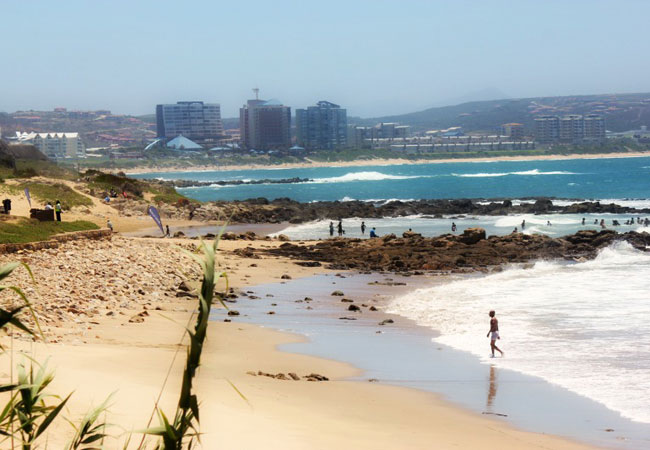
There was nothing much to do at Riversdale, so I went to Mossel Bay and pitched a tent at Die Bakke, a holiday beach resort not far from town. I could swim, tan, and generally relax to my heart’s content.
Towards the end of the year, the newspapers were speculating about the local schools’ results, but it didn’t bother me too much. Finally a message from Linda was received that I had passed. On my return to Riversdale, I went to look at the list of names pinned to the door of the council office and saw J. Meyer there and had to believe that I stood at the beginning of a new phase in my life. But what?