
It’s 1988 and Colin is doing his military service in the State President’s Guard. Michael is heading for his final school year. Nikki has completed her BA degree with English and Psychology as majors at the University of Cape Town and is working for the Edgars Group as a Business Systems Analyst. I am very involved in politics and was nominated to contest for a seat in Parliament representing the Democratic Party. Nelson Mandela is going to be released in the not-so-distant future, and the country is heading for turmoil.
In Welkom, Phyllis and I began discussing our future and agreed that we wanted to go back to Simon’s Town. Both boys could study at my old universities, Stellenbosch or Free State but Cape Town University, where Nikki studied, would be more convenient depending on their choice of subjects.
Once back in Cape Town for our holiday, I started looking for teaching posts that would not be too far from home. A deputy principals post at the School for the Deaf in Wittebome was not very far from home so I went to discuss the possibility of being considered for the position with the principal nun. They were delighted and would strongly support my application. After a lengthy wait I was finally told that I did not have the right skin colour for the post. That post was reserved for a “non-white” person.
Welkom’s mines were beginning to show signs of closing and scaling down in the late 1980s because the local gold seams started to peter out, the international gold price dropped suddenly, and deep-level extraction became increasingly uneconomic. We realised that we would had to sell our home too if we were going to leave for good. Later in that year I received a notice that Tafelberg school in Cape Town was advertising for a position of headmaster to start in 1990 and it was an invitation to apply for that position.
I immediately set about compiling my Curriculum Vitae and made sure to get it in before the closing date. Sometime later I was invited to attend the selection board on a Friday evening at the school in Cape Town. That meant getting leave from the Free State Education Department and to book our return flights from Bloemfontein to Cape Town.
We arrived in Cape Town via Upington and had a few days to settle before my interview which included members of the governing body and inspectors from the Cape Education Department. The tone of the interview was very friendly, and they seemed pleased with my registration as an Educational Psychologist by the Medical and Dental Council and that I had published articles in a number of educational publications.
I left the meeting feeling very positive and was told that after their deliberations they required a Cape Town telephone number through which I can be informed of their decision. The only number I had was that of our Uncle George Flight and it thus it was noted down by them. After the weekend our flight back was again via Upington, and we were hopeful that a position might be forthcoming.
Throughout the next week we were expecting a call from Uncle George (or someone else) but none came. The second week still nothing and so I began to make peace with the fact that I was apparently not successful and had to start my search all over because they had most likely had filled the vice-principal position.
One morning the following week, I got an irate phone call from a man who asked, “Don’t you want the job?” They had been calling me, but the number Uncle George had given as my contact had one digit wrong and they had persisted with calls and were determined to offer me the position and wanted to hear from me personally if I wanted it or not!
Much was about to happen, and various things needed to be taken into account. I had to resign my post by the end of 1989. Michael wanted to do Actuarial Science somewhere. Colin would have completed military service and would need to decide on what he wanted to study at university. The Welkom house had to be sold, and the furniture and all our belongings needed to be packed and moved to Cape Town.
The reaction to the news of my resignation in town, the heads of clinics and by the headmasters and teachers was to be expected. Most were sad to see us go. Others congratulated me. A few pointed out that the post of a new Head of Psychological services had just been advertised and I should apply. Surprisingly, a few members of opposition political parties came to visit me and wish me well. They said that although we held opposing views, they valued me for the way that I always treated them with respect.
Tafelberg school consisted of two main campuses with the high school in the suburb of Mowbray, a double story building right below the freeway leading into the city. I walked onto the premises two days before schools were opening to meet the cleaning staff and introduce myself. It appears that they were expecting a much older new headmaster.
At that time there was a lot of controversy about the early release of Nelson Mandela and militant groups had formed between those who approved and those who opposed his release and gun fire could be heard outside my office window on the second school day. There was a restless atmosphere in Cape Town and reports of violence were prevalent.
On my second day as headmaster, I received a call from an inspector of the Western Cape Education department demanding to know from me if I wanted the school premises we had been offered or not. I had not been aware of this offer and asked which school he was referring to, and he said that the Ellerslie High school for girls in Sea Point was offered to our department and I must urgently tell them whether we wanted it or not.
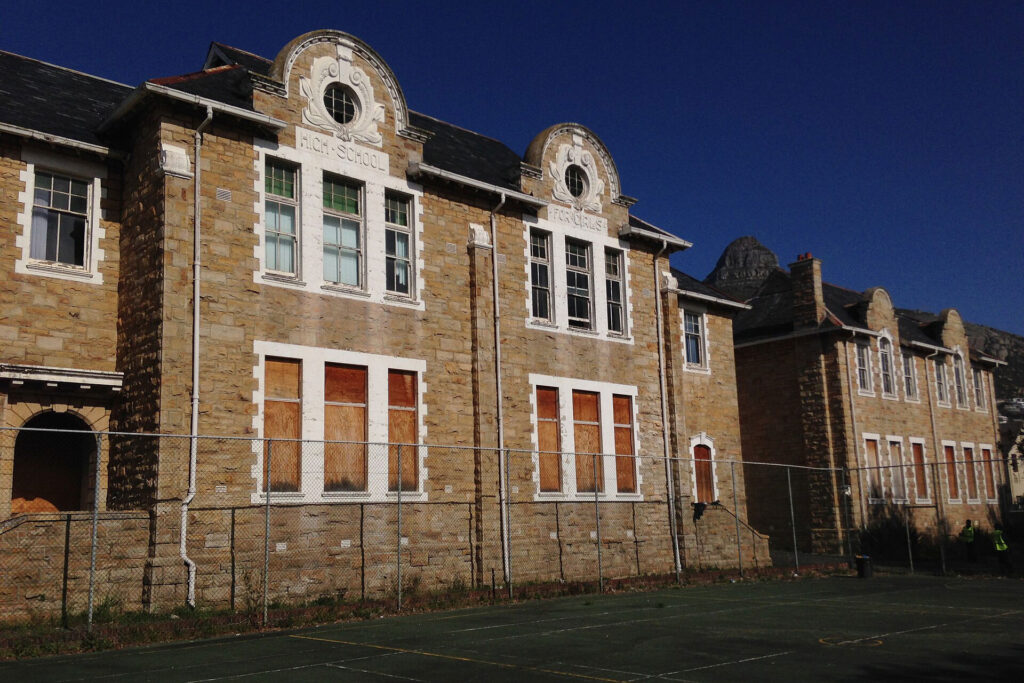
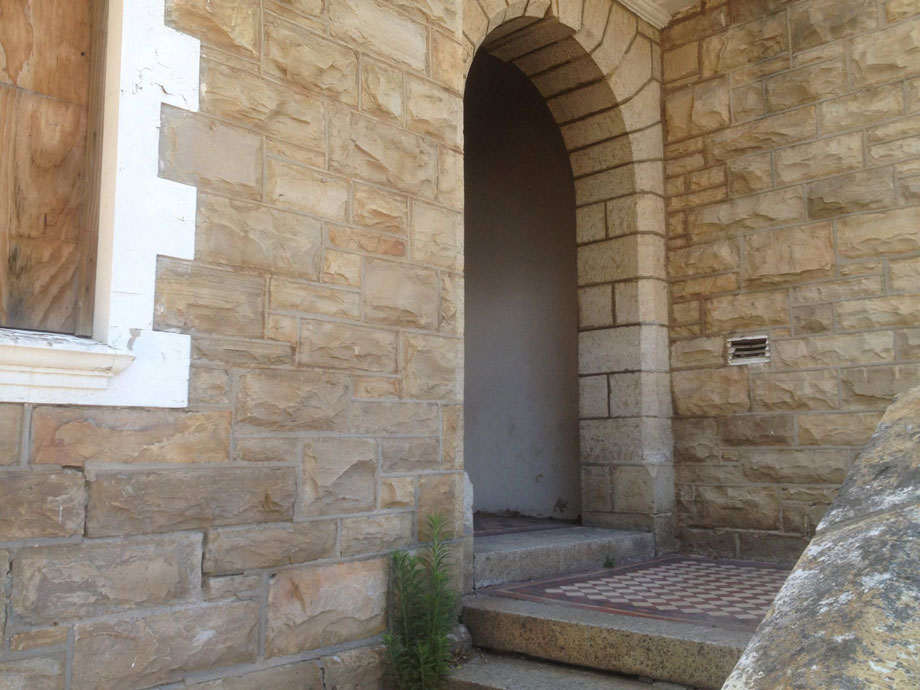
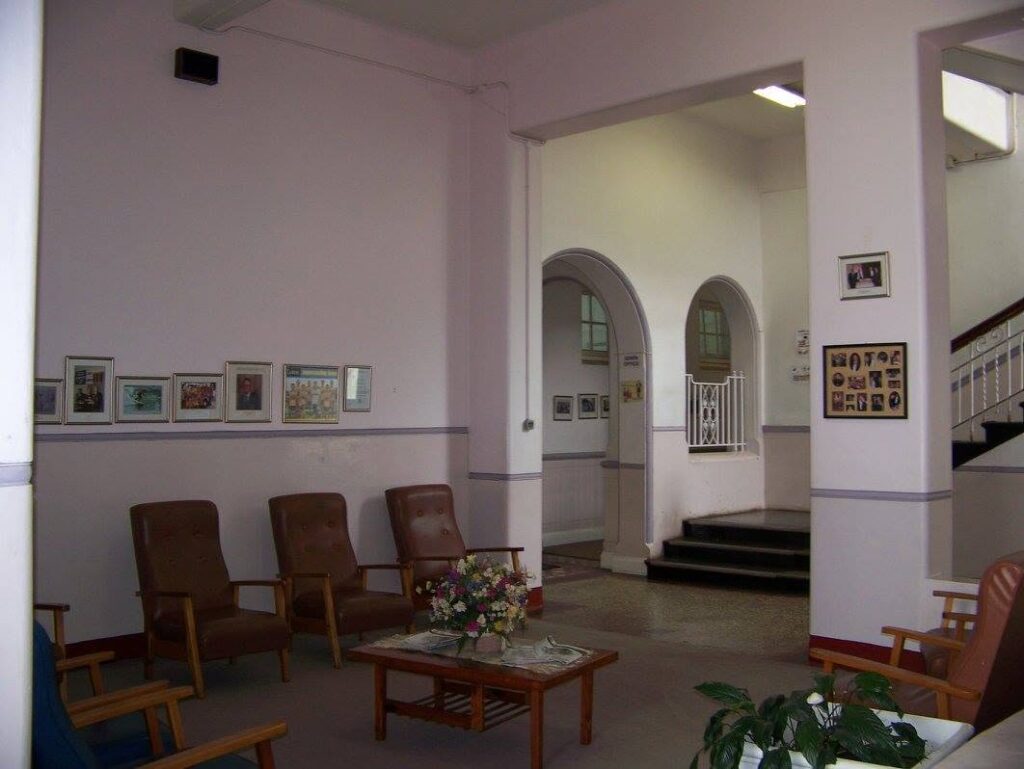
I called for transport and asked my vice principal and some staff to show me the school and to see what condition it was having been closed a few years earlier. It was clearly an impressive historic building on a large property in the Sea Point heartland. Left unattended it was already in a state of neglect.
We had no keys and the doors were overgrown with plants and rubbish and the grounds had clearly been used as sleeping places for vagrants. The graffiti artist had been at it for some time, and I could not have female teachers or pupils anywhere near the school before it was thoroughly cleaned. However, I fell in love with the place and decided that we were going to restore the school to its former glory. The inside was reasonably intact and just needed cleaning and painting.
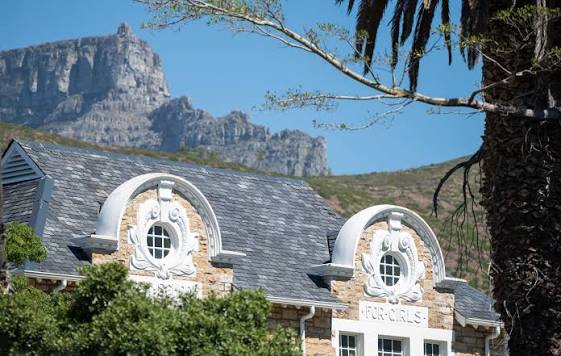
Ellerslie Girls’ High School was founded by the Colonial Government in 1899 on a property named ‘Ellerslie’ in Sea Point. The building was designed by Scottish architect John Parker in a late Victorian style with a stone facade and decorative gabling.Tafelberg School occupied the historic Ellerslie building from 1989 onward for its high school section, running alongside a junior site on Kings Road, until the school moved out of Sea Point in June 2010 to a new campus in Bothasig. The Ellerslie building was declared a provincial heritage site in December 1989 after closing and merging with Sea Point High School.
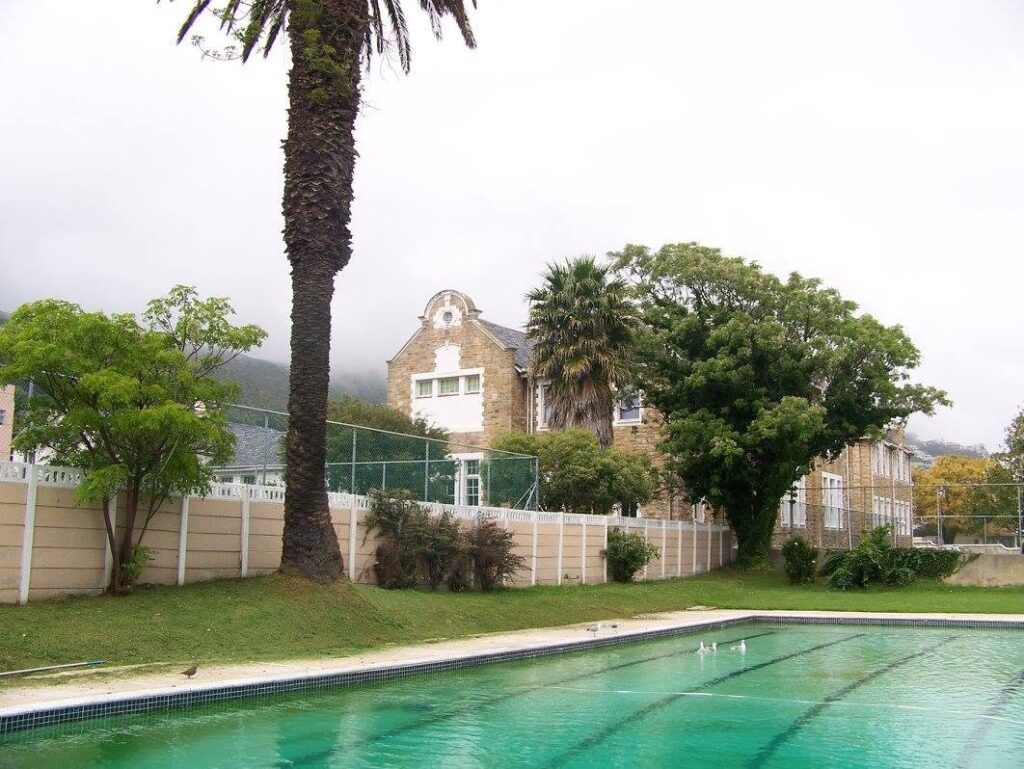
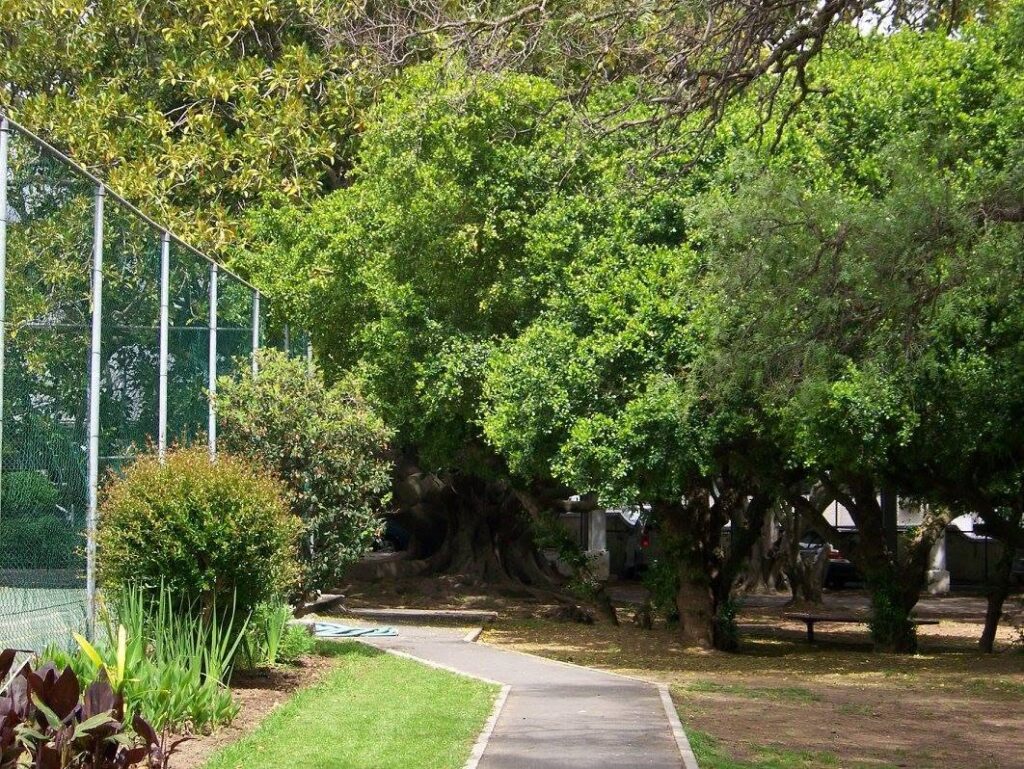
I informed the Cape Education department and our Head office in Pretoria about my decision and in due course they appointed an Architect, Quantity Surveyor and a Builder to repair the building to our requirements. I found out that minister Roelf Meyer had proclaimed the façade of the main building as a national monument, so I had to involve the Historical Society to approve the changes we wanted to make. The beautiful teak gates at the bottom of the front entrance had to be preserved and restored. The school had tennis courts, a swimming pool and netball court facilities that would be most welcome moving forward.
A few days later my secretary asked me to sign a demand from the fire brigade for extinguishing a fire on the school’s property. I asked her to explain where this fire had originated since I knew nothing about it. She told me that it was on a large plot in Milnerton where a new school was to be built. I asked for transport and to be taken to the property that I knew absolutely nothing about.
The Milnerton property was next to the one owned by the electricity department and vagrants from them had started erecting shacks on their property and moved onto our vacant land, erected shacks and started the fires that we had to pay for.
My next move was to meet with senior police officers. They pointed out that the owners of properties were responsible for preventing squatters on their properties. I in return explained that most of my staff were female teachers and we could not simply go and remove the shacks of vagrants or physically remove the occupants. It was police responsibility to remove the trespassers. They reluctantly agreed and I decided to sell the property in the light of placing full attention on the Ellerslie school.
At my next Governing Body meeting I explained how accepting the new school would benefit us and that we would no longer have to build a new school in Milnerton. I requested that they agree to inform the education department that we recommended selling the Milnerton property. The problem was that when educational property is sold, 95% of the money goes to the fiscus and only 5% to the school.
I then wrote a letter to the minister of Education and explained that we were refurbishing the Ellerslie school and would need funding to do so. I stated that we intend selling a property that will not be required and since we needed to renovate and rebuild sections of the school etc., the proceeds could be better utilised for this. The reply I received was that the school could benefit from the sale of the Milnerton property and use it as required.
One of the Governing body members obtained a R3 million offer for the vacant property and we suddenly became one of the richest schools in Cape Town! Later when other schools found out about our deal they also wanted to benefit by selling off land not used. Unfortunately, they let the newspapers find out what they were doing. This created a statement from the Western Province Education Department stating that school property is government property and was not to be sold for school funds.
In the refurbishing of the Ellerslie property, I made some changes of which the department strongly disapproved. I did not want to have special toilet facilities for non-whites in the school building. They threatened to remove the quantity surveyor and put the architect in charge. Fortunately, I was able to get my way to only have multiracial facilities, but we still lost the QS.
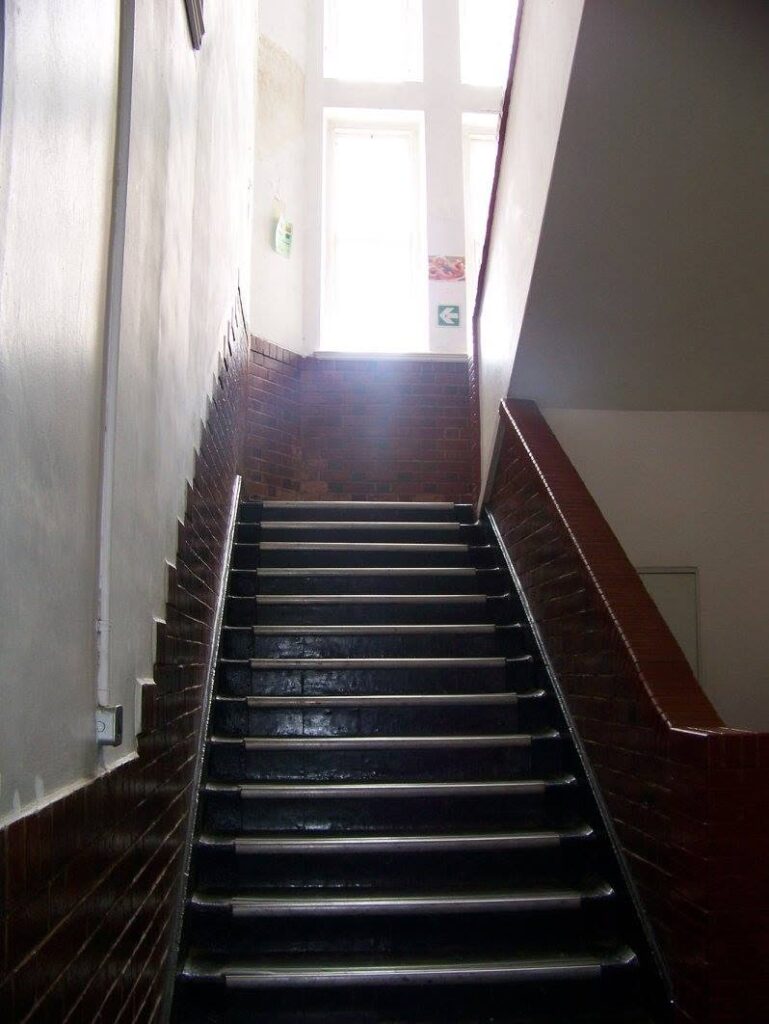
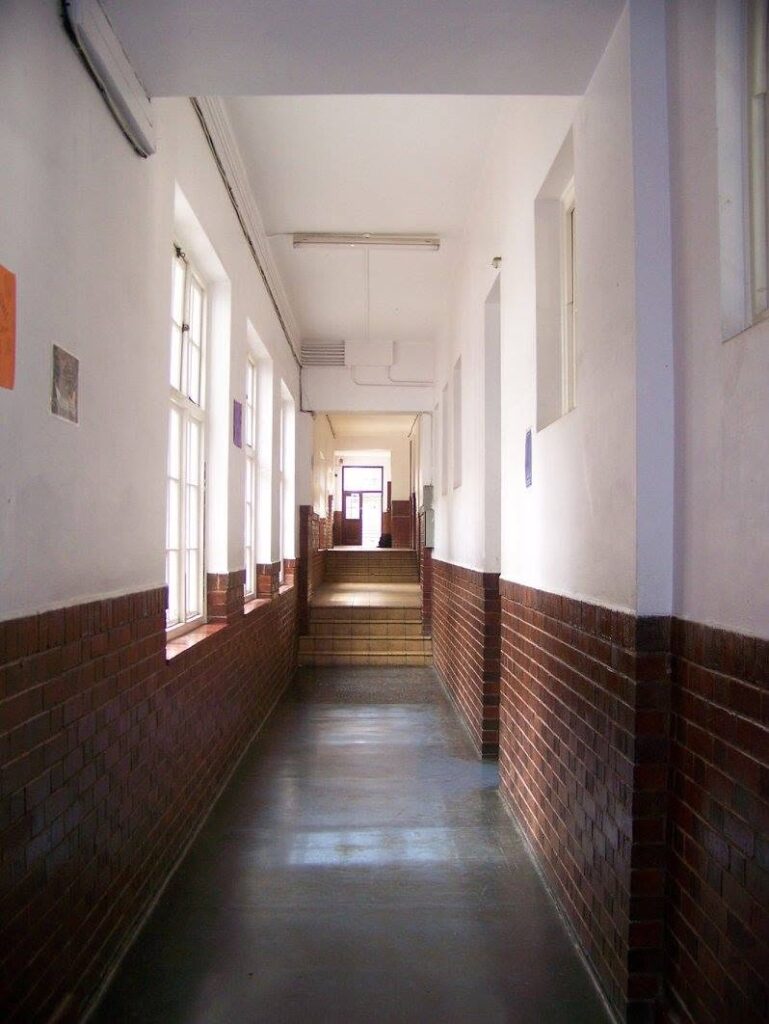
I wanted to add woodwork as a subject in the school and had special classrooms built for this purpose and a woodwork teacher was added to the staff team. The school occupied a whole city block. Room had to be set aside for school busses that transported scholars from all areas of the city. At the Mowbray campus I had five prefabricated garages. With the help of the city management and traffic department we had all five garages moved to the Ellerslie plot over a single weekend.
In August 1990, the apartheid government introduced the “Clase Models”:
The Clase Models were three governance and admission options introduced in 1990 by Piet Clase, the Minister of Education and Culture in the House of Assembly, allowing white state schools to desegregate under specific conditions: Model A, Model B, and Model C.
Model B allowed white state schools to vote on opening admission to students of all race groups while keeping their state funding. Parent bodies could vote to admit black, coloured, and Indian students. 51% would be White students.
I suggested to the governing body that we should allow the parents of our school to decide whether they accepted such a change or not. At the same time, I managed to get the chairman of the governing body to appoint Professor Richard van der Ross who was the first Coloured man to receive a doctorate degree in South Africa, and ultimately an influential inspector of education in the Western Cape, to join the school’s governing body. Previously Professor van der Ross and I had both served as psychological representatives of our educational departments.
Early in 1991we sent out a letter in which the school’s parents were asked to indicate their approval or otherwise to allow open admission of non-white pupils as stated in the new law. The date was set for a meeting to be held on the evening of 12 July in the school hall and 92% of the parents attended and voting was to be in secret.
The result surprised most of us in that 87% of the parents voted to open the school to all races. Only 5% did not vote for the option. As far as I know we were possibly the first school in Cape Town to open admission to children of all races. This was reported in The Cape Times the following day.
I was only in my second year at the school and had a really impactful start as the new headmaster. I wanted to raise the status of the school and at all formal school functions all teachers wore full academic dress and were usually seated on stage at Parent’s meetings. My staff were all very qualified and included two deputy principals, two additional psychologists, physio and speech therapists and a part-time medical doctor.
Jewish children were also enrolled in the school, and quite a few of their parents served on the governing body of the school. They would tell me, “Don’t ask for things you need, tell us what you want, and you will get it.” There was some concern voiced from the Jewish schools about the number of Jewish pupils in my school.
School assemblies and announcements were usually conducted by me, followed by a scripture reading and discussion. An Imam came to see me as he was concerned about the instruction for children of the Islamic belief. I made a classroom available for him to teach these children, but he had to do it for free. I applied the same ruling to the Jewish children who had their own teacher come every Monday.
A parent reported to me that the city airport had acquired 10 new computers and was donating their old ones to the school. This allowed me the opportunity to establish a computer training class in the school for learning disabled students.
My own programme kept me very busy. I was a guest lecturer at Stellenbosh university and the representative of our teacher organisation and received many invitations to different schools and teaching organisations. I also met with the Sea Point business leaders and obtained special rates for school purchases.
I received an offer from the education department for the use of a primary school in Sea point that had closed down. This was very convenient for my visits because four campuses could now be reduced to two. Phyllis started as a remedial teacher at the junior school which made it possible for us to travel together to and from school.
Throughout my time as headmaster, we had a waiting list of about 200 pupils needing specialised education. These were children recommended by their schools as having a learning disability and most needed weekly transport to and from their current schools.
Dr Bhadra Ranchod, deputy speaker in parliament was appointed as member of the governing body. His daughter was at our junior school. He invited me to a lunch session at parliament. I occasionally attended the bar mitzvah of pupils at the invitation of their parents. I also redesigned the school’s coat of arms and the school’s letter head in my spare time.

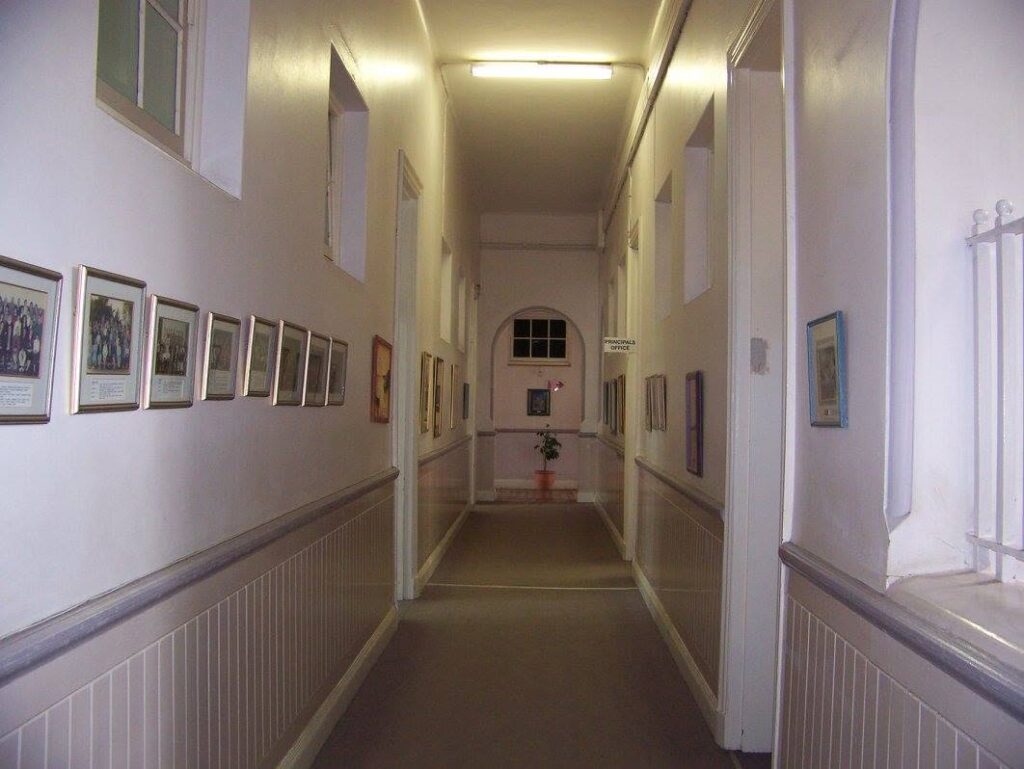
Having taken control of a new, beautifully renovated and painted Ellerslie, inspired me to have a music system installed in the main passages where soft classical music was played during the day. It had a calming effect although it took time for the school to get used to it but later, when the music stopped a teacher would send a child to the secretary to tell her that the music had stopped and needed to resume. Visitors to the school were very impressed.
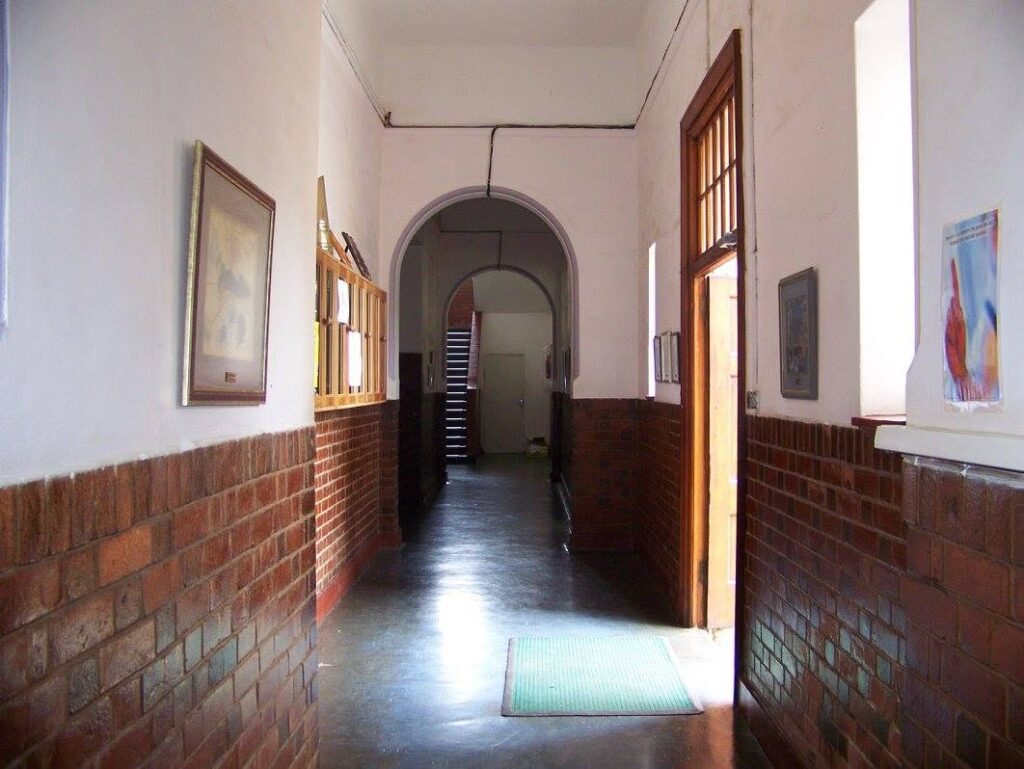
I appointed a cleaning company to clean the school in the afternoon as soon as the pupils had left for home. That meant that the school was thoroughly cleaned and carpets and curtains received periodic and continued attention. Parent and visitors complemented us on the condition of our school. As staff and pupils entered the school each day everything was spotless and in place.
Headmasters of the coloured schools told me that they could not invite me to their schools because the fences and school windows are broken. I pointed out that it was the parents of their schools that do our repairs and they need to get them to take pride in their children’s school.
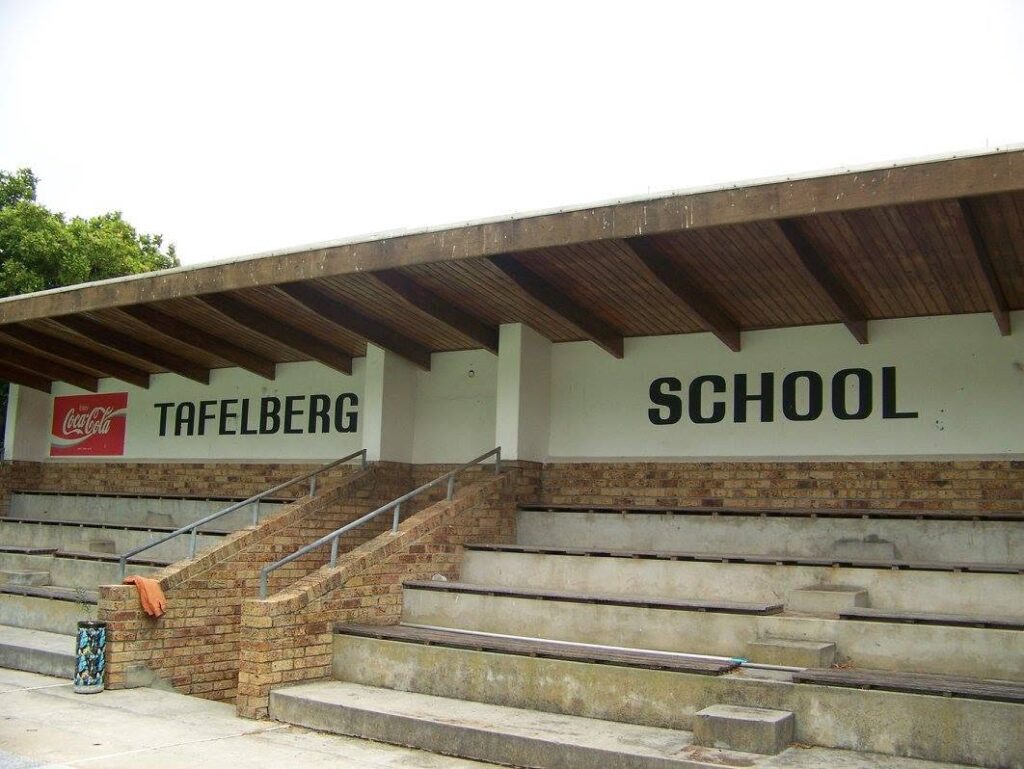
One day a black man came to ask if the school could kindly provide a training facility for his boxing club. He had been rejected everywhere and was on the brink of disbanding his club. I told him that beneath the pavilion next to the swimming pool was the only space I could allow them to use, but that the swimming pool was strictly out of bounds.

This worked well for both the school and their club, until the police informed me that one of the boxers had drowned in the pool. The autopsy revealed that the boxer had no water in his lungs. Apparently, he was chewing gum before jumping into the cold pool water which caused him to inhale sharply and the gum blocked his throat.
With the white and coloured education departments combining as apartheid became dismantled, there was now a surplus of teachers available in Cape Town with the result that teachers were offered early retirement. I turned it down because I was rather pleased with the state of the school and our achievements. We had a consistent 100% pass rate in our grade 12 class each year.
However, as representative of my teacher’s union, much of my time was now being spent at the education department where we debated changes to the education programmes with delegates from the governing ANC education desk. This meant that I often spent a whole day in those meeting and did not get back to my schools and occasionally got home to find the house in darkness and Phyllis already asleep.

This is when I made a snap decision and knocked on the door of the Head of Education and told him that I had missed the deadline for early resignation as was offered earlier. His reply was, “Write me a letter and complete the forms.” I wrote that letter on the 12th of March and the date of termination of service was set at 31stDecember 1996. This was after having completed seven exciting and gratifying years as headmaster of Tafelberg School.
A special farewell evening was hosted for Phyllis and me, including our family, in the school hall, where representatives from the governing body and local Sea Point community shared deeply touching speeches. In my response, I felt a mix of gentle sadness and profound gratitude for a happy, eventful journey at Tafelberg School—a truly fulfilling final chapter to my teaching career.
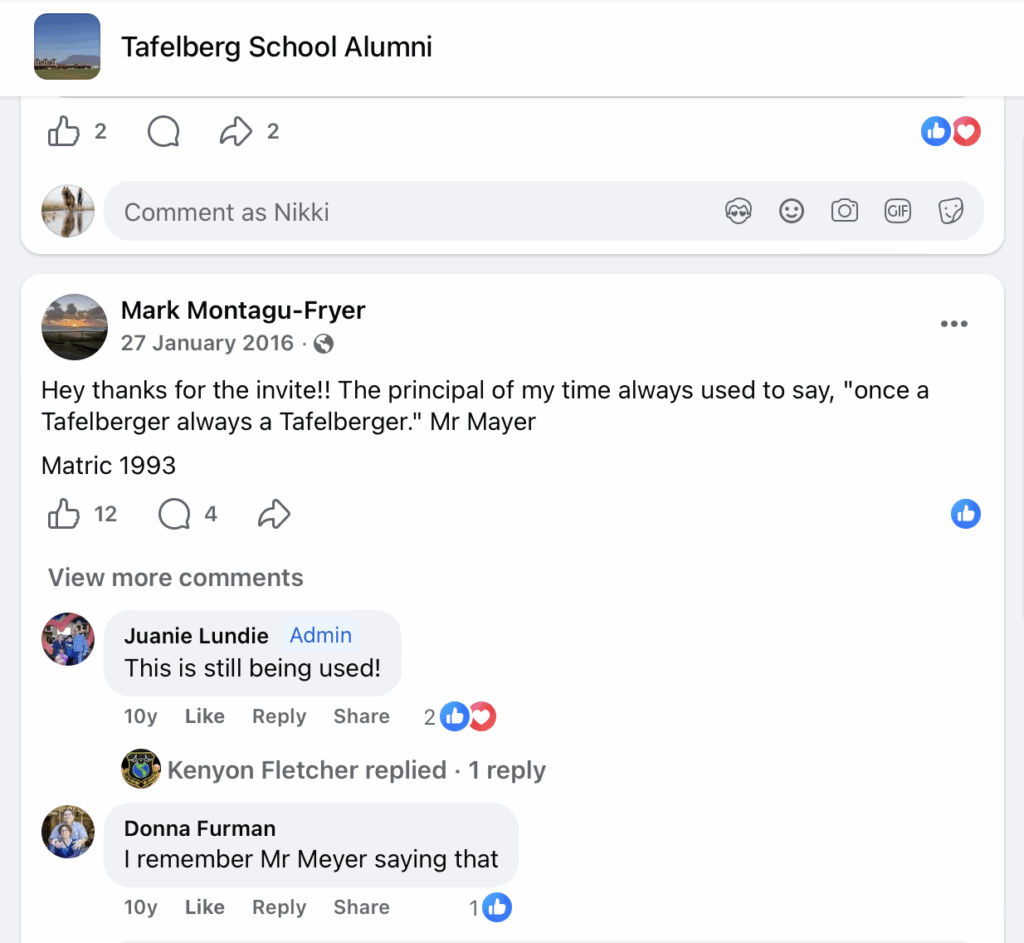
Nikki found this reference to “Once a Tafelberger, always a Tafelberger” on the FaceBook page of the School Alumni 😊
