
Armed with Thomas Cook Travellers cheques and a well filled “Dusty Bee” we started our European journey towards Dover. Closer to the town I started feeling and hearing irregular engine noises and spluttering. This was very worrying especially as we were only just setting off on our long “trek” across Europe.
I pulled into the nearest garage close to 1 pm. and asked the foreman if they could please have ‘a listen’ and see what the problem may be. “Sure can,” came the reply. “Just wait, I’ll get a mechanic to attend to you.” I went back to Phyllis and told her that we would have help soon.
We waited for 10 minutes, then 20 minutes but nobody came. By now I was becoming agitated and went to the foreman and demanded the attention he had promised. “It’s lunchtime now,” he said and explained that, in England, if he demanded that the men work during their lunch hour, all would leave the shop. Finally, we were attended to and were able to catch our ferry to the Ostend. (We could not get a booking across the channel from Dover to Calais, but a ferry to Ostend (Oostende)in Belgium was still available.)
It was quite an experience to drive the “Bee” onto and into the dark innards of the ferry and then go on deck and view the White Cliffs of Dover slowly disappear from view. After offloading and getting on the road I had to remember that we now had to keep right even with a righthand vehicle. We were now in Belgium and had to follow European customs.
It was 5pm when I entered the City of Brussels and I found myself in the middle of a 5-lane highway. Just as I was entering the city centre, I had a blowout of the back, left rear wheel. Two lanes of traffic to the left and two to the right and many vehicles behind us proved to be a nightmare to safely change the tyre, but the British flag in our rear window soon got us lots of helpers! Shortly afterwards we were able to find our first campsite for the night and relax for a while. What a first day to remember!
That evening was the first of many to get used to attending to Nikki’s and our own needs for food preparation and sleeping arrangements in the “Bee.” At campsites throughout Europe there were caterers for food and all essentials that travellers may need, especially good toilet and washing facilities.

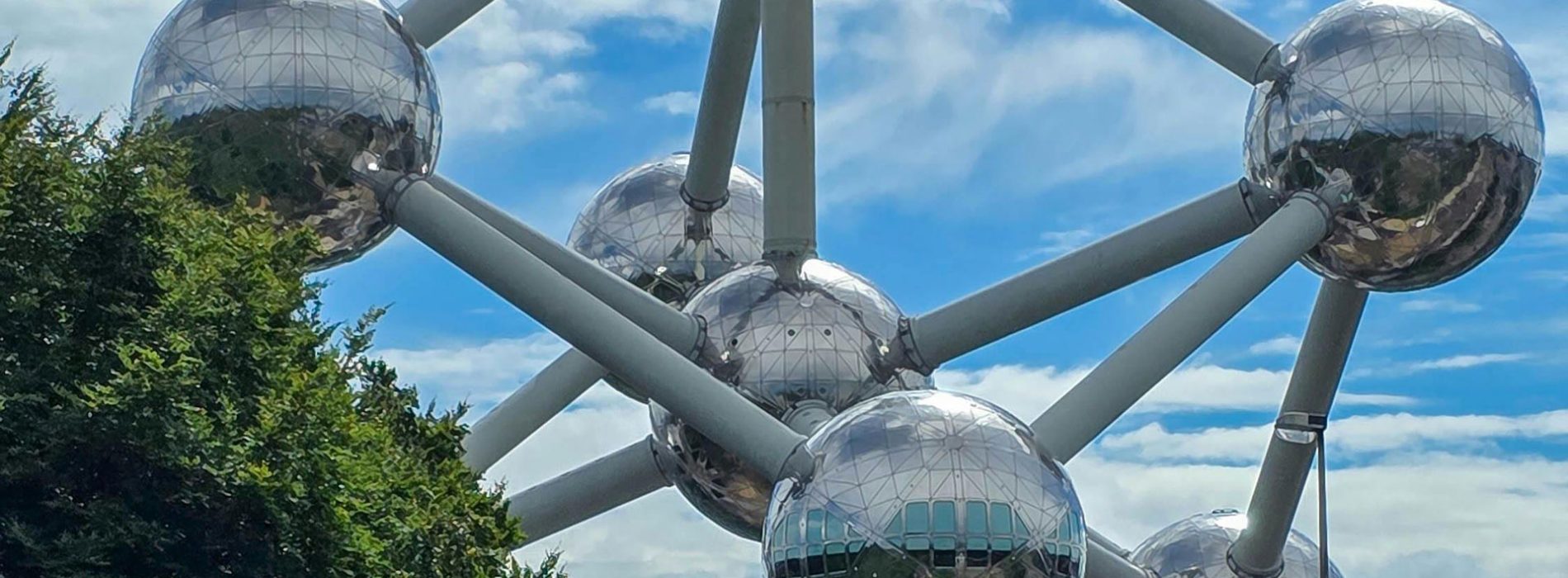
Brussels capital of Belgium. Brussels is a huge city and most famous for the Atomium. It is an iconic 102 -meter-tall landmark originally built for the 1958 World fair. It consists of Nine spheres, each 18 meters in diameter, connected by tubes containing stairs and escalators. It is both a museum and a cultural centre. We took turns in going up the tubes. Only the bottom three were open. It was originally only to stand for 6 months but due to its popularity was retained.
The “Manneken Pis” statue of a boy also received a lot of attention.
Brussels is a beautiful city with many historical buildings to admire. We spent a while walking through the main tourist area and then drove around some more before camping for the night.
Leaving quite early the following morning, going through the outskirts of the city, we were struck by the cleanliness of the suburbs. Women mainly, were sweeping the shopfront and road area.
They seem to take a particular pride in their area because it seemed to be something everyone was doing.
As we drove out into the country we could not get over how green everything looked. It was a green like we have never seen before. And then, the huge, colourful poppy fields as far as the eye can see is something very special to behold.
Travelling towards Holland we suddenly had to pull off the road to allow a most wonderful “Flower Parade” to pass by. They were clearly on their way to a flower festive event and we were lucky to have seen them. That night we slept near the Dutch Sea Wall, a 32-km long structure that keeps the North Sea at bay.
We decided to give the big Dutch cities a miss at this stage and chose to go towards Germany and then down in the direction of Liechtenstein. We could not get enough of the beautiful countryside, the flowers and windmills. Moving on towards Germany the following day we continued to travel through beautiful green tulip fields as far as the eye could see.
GERMANY
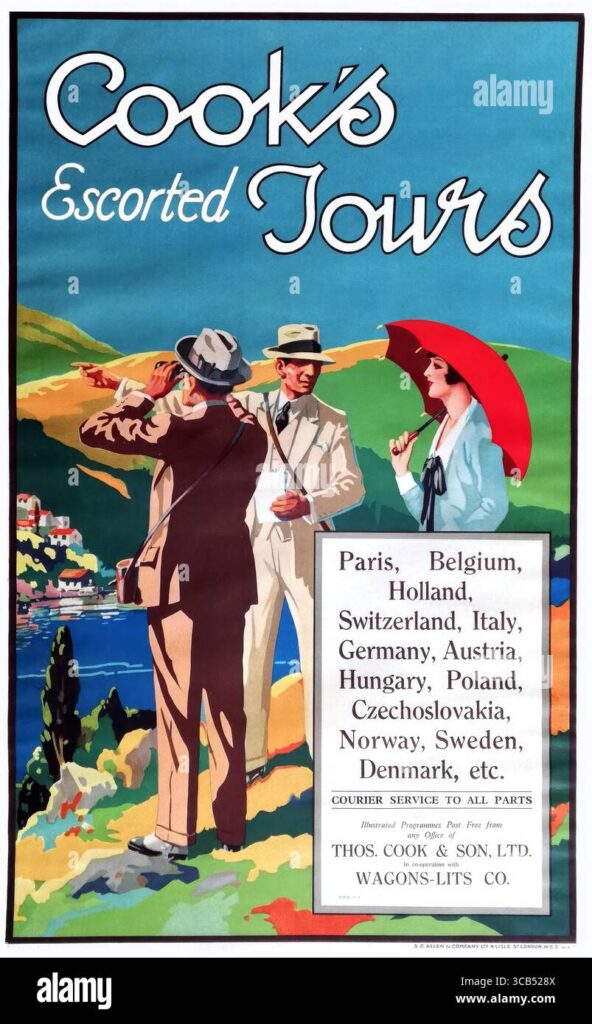
As we moved along towards Dusseldorf we were suddenly overtaken by a bus travelling at quite a speed. It was a Cooks’ Tour bus full of tourist rushing to their next destination. They went from one stop to the next clearly under pressure to complete their trip within a prescribed period. We now realised how lucky we were that we could do the same things but at our speed. If Nikki or either one of us were tired, we could simply rest because we did not have a deadline to meet.
The Cologne Cathedral (Kolner Dom) is a world UNESCO heritage site and Germany’s most visited landmark. Unfortunately, the many new buildings erected around the Dom prevented me from getting full picture of its impressive height. Moving further away meant that you had to also capture extra buildings.
The road to Bonn was where I began to enjoy the German concrete Autobahn. I found the road different from what I was used to but very smooth apart from the expansion joints between sections that reminded me of train tracks. There were no speed limit signs and cars simply shot by at speeds we have never experienced.
Entering the birthplace of Ludwig van Beethoven and former capital of Germany we find everything so green, a city next to the Rhine.
We stopped and relaxed next to the river and recover from being in the car for quite a while. The idea was to push on through Mannheim and Karlsruhe to the Black forest and Heidelberg. We felt very safe in Germany and stopped along the road for rest but preferred to sleep at campsites where possible.
The “Bee,” round about now started giving trouble in that it forced us to go to the nearest garage in a few places to get help. It was at one of these garages that I started talking to one of the mechanics. He saw the Union Jack in the back window and asked if we were from England. When I told him we were from South Africa his face lit up. He told me that he had been a prisoner of war and was sent to South Africa and was one of the men that helped build the Du Toit’s Kloof pass near Paarl. He also diagnosed the Bee’s problem and knew how to solve it! “On long downhill stretches the older, worn engine”, he explained, “allows the engine oil rise to reach the spark plugs causing the problem”. He insisted on giving me his name.
The Black forest is a huge, dense evergreen forest with picturesque villages. We saw many cuckoo clocksin the shops. It is a favourite holiday place for visitors and the German families.
Heidelberg is Germany’s oldest university city founded in 1386. I dropped Phyllis in the city to do some shopping and replenish our stocks.
Nikki and I went up and parked on the hill overlooking this beautiful city below us. The hill above the city has the Heidelberg Castle and has the world’s largest wine barrel. This is where we obtained our authentic German beer mugs. This is one place that you do not want to visit on a tour bus. They take you in and out so fast that you cannot appreciate this beautiful city. I’ve heard that this is a common complaint. This is a city with many historic buildings and castles and we were able to take our time to explore.
Lorelei The weather started changing for the first time since we entered Europe. We made our way to view the famous rock on a bend in the Rhine.
The legend is about an “alluring enchantress” or “temptress who lured sailors to their death with a special song. The Rine flowing past the steep rock is beautiful and despite a continuous drizzle we could not tear ourselves away from the spectacle. There was a steady stream of barges passing as we watched. I set about counting the number of Volkswagen Beatles parked on their decks. The light rain had us soaked after a while.
I noticed a hotel called “Lorelei” close by and we were fortunate to get accommodation, dry out and served great German meals. I remember the luxury duvet which was a far cry from sleeping in the “Bee” every night. It continued raining the next day so we had one last look before continuing our journey.
in Switzerland.
Bern, the capital of Switzerland is a UNESCO World Heritage site and one is struck by how it’s 12th century architecture has been preserved. In the inner city there is a medieval Clock Tower with moving puppets and the Cathedral that is the tallest in Switzerland.
Lucerne is also a typical Medieval/preserved city. You drive along a beautiful lake and green country side until you come over a rise and suddenly as you reach the top you see before you the most beautiful lake with blue skies and snow covered mountain. This vision of Zug I will never forget for its panoramic view.
Both Phyllis and I were smitten by the beauty around us so much that we had lunch at a restaurant where we could sit and enjoy looking at the picturesque picture confronting us. But in Switzerland you have beauty all around you.
Next we travelled to what is called the Rhine Falls which is the largest waterfall in Europe. It is also where the Rhine begins. When we were there the water flow was not very strong and it was not much of the dramatic waterfall we expected. Nikki loved going into the water and some people were able to go from rock to rock to reach the other side. We have seen picture where it was in full flood and it is very impressive and looked quite dangerous. There were viewing platforms but we did not need them then.
Our next destination was Liechtenstein. In 1965 all European countries operated independently with their own unique currencies and had strict border controls.
Knowing that the Liechtenstein Castle was the main attraction of the principality, we did not want to draw too much money for the visit. However, after taking our photos of the castle and the picturesque surrounds and as we made ready to depart we received news that the Arlberg pass was closed due to a snow storm and that it could be three days before reopening. The alternative was that we could use a train tunnel up the mountain.
Having seen the Muttersberg mountain and cable car and the beautiful resort high in the mountain, we decided to wait for the snow to melt before going up the mountain road and remained in Liechtenstein. The next morning the three of us took the cable car to the top of the mountain and Nikki had her first snow experience and we all enjoyed spectacular views.
Further snow reports were received so we decided to load the Bee with us on the train and take the 10.6 km tunnel trip up to Innsbruck and over the Brenner pass and finally end in Italy.
